Microbiology

Microbiology

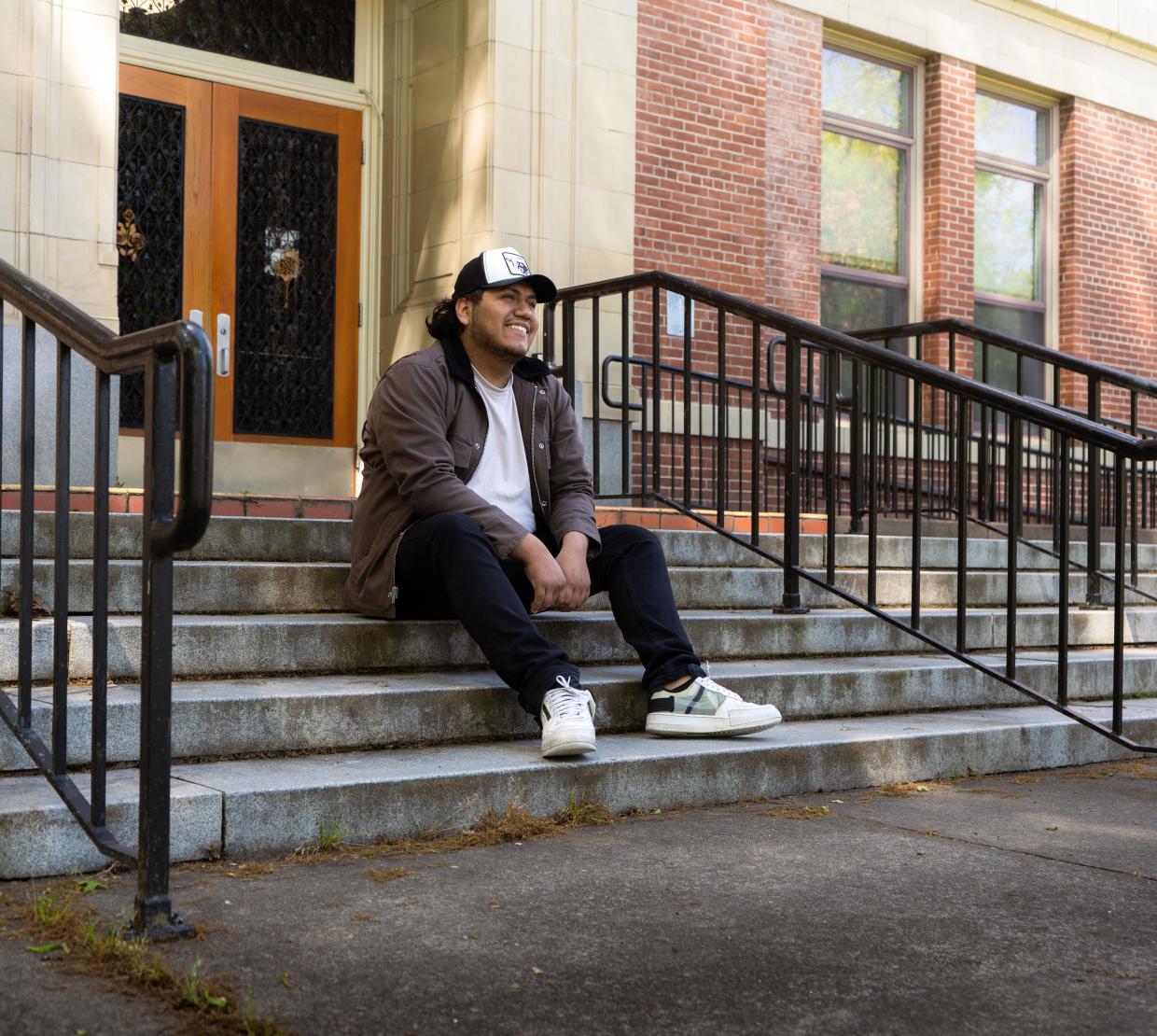
Bruno Salas Garcia sitting on the steps outside of Kidder Hall.

Microbiology graduate gives back to communities that have shaped him

By Grace Peterman

Oregon State is ten times the size of Bruno Salas Garcia's home town, but he's made an impact in both places with his commitment to community advocacy.

Bruno Salas Garcia almost didn’t come to Oregon State. “I finished my application probably a week before moving into the dorm,” the Microbiology graduate said.

Salas was all set to go to the Oregon Institute of Technology dental hygiene program in Klamath Falls, Oregon, but as the school year approached, “I had a nagging feeling that something wasn’t right,” he said. His supportive and understanding parents encouraged him to trust his own judgment.

Aware that a four-year university would give him more career flexibility, Salas decided to make the switch. “I’m glad I took that leap of faith to come to OSU, even though it was late in the application cycle,” he said. “I still feel that it was the right decision.”

Getting involved makes all the difference

Once at Oregon State, Salas looked for a major that would prepare him for dental school but could also apply to other healthcare careers if his goals changed. He chose microbiology, because viruses, bacteria and other microbes sounded interesting, and he knew that many of the prerequisite courses for dental school were built into the major.

Salas had always done well in science classes and took coursework at community college in during high school. However, intro science coursework at OSU initially caught him off guard.

“Day one, the professor was like, ‘Oh you probably all already learned this, I’ll just go through it quickly.’ I was like, ‘no, I haven’t!’” Salas said. Not used to having to ask for extra help, he quickly became overwhelmed by his coursework.

“In high school, even though my teachers were great, I didn’t have a lot of direction,” he said. “I didn’t know how to ask for help. I always just did well, and they told me, ‘you’re doing great, just keep it up!’”

Salas’ first term at OSU was a challenge. Sacrificing sleep to catch up on all the new material, he entered survival mode. Although he had a few friends to rely on, overall he felt disconnected from the OSU community. “I was a little isolated. I was kind of just doing what I had to, to survive, in this mindset of, ‘I have to do everything myself.’”

A feeling of isolation was exacerbated by the fact that Salas was far from home and in a town many times larger than where he grew up. In Irrigon, a small town of 2,000 people that is four hours from Corvallis, Garcia’s graduating high school class had 40 people. Introductory science courses at OSU may have as many 500 students. Although many resources and programs exist to give students individualized attention, like the Learning Assistant program, it can be difficult to ask for help if you’re already feeling stressed and overwhelmed.

By a stroke of luck, someone from Salas’ high school happened to be living on the same floor his first year. This friend was part of the College Assistance Migrant Program (CAMP).

OSU’s federally funded program that supports students from migrant and seasonal farm worker backgrounds during their first year in college. CAMP provides advising, mentoring, health services, financial assistance, social activities and more.

Salas' friend recommended he join CAMP, too. “I thought ‘Yeah ok, I’m not going to do this. I’ll just go and humor them,’” Salas said. “Besides, classes would start in a few days. It's not like I’ll get in,” he thought. He was skeptical that university programs could add value to his busy life. Extracurricular activities seemed like meaningless requirements, and he didn’t want to contribute to anything he didn’t believe in.

Once at CAMP, Salas’ view began to change, particularly through the influence of CAMP Academic Counselor Alexsandra Cortés, who made a strong case for the importance of mentorship and community.

Through CAMP, Salas was assigned a peer mentor who understood his cultural context, his experience as a first-generation college student and the difficulties of transitioning from a rural, small town to a large public university. Getting involved with CAMP increased Salas’ sense of ownership of his college experience. “CAMP helped me feel more at home at Oregon State, and from there, it gave me the confidence to go and try all these other things,” he said.

“I get to help, in the same way I was helped so many years ago. I’m glad to be able to give back to the program that gave me so much early on.”

In the years to come, Salas got connected to the resources he needed for success. He started asking his teacher's assistants, learning assistants and professors for help early and often. Today, Garcia invests in his college community as a mentor for CAMP and a peer advisor at the College’s Science Success Center (SSC).

“I get to help, in the same way I was helped so many years ago,” he said of working with CAMP. “I’m glad to be able to give back to the program that gave me so much early on.”

In the College's Science Success Center, he led tours of campus for prospective students and their families. “I imagined myself being in the crowd,” he said, “If I were visiting, what I would want to hear? I try to get them to see aspects of a university that they want to go to in Oregon State.”

Salas is also the undergraduate representative for the College of Science Equity, Access and Inclusion (EAI) Leadership Council, the team that implements the College’s Diversity Action Plan. Garcia said Goal 3 of the plan is especially meaningful to him: “to create a welcoming college climate to support a sense of belonging and equitable learning and training experiences.” As someone who experienced firsthand the struggle of being disconnected and how it makes asking for help even harder, “I could use my own experiences to help realize that goal, especially with having a sense of belonging and community.”

Human dimensions of science

Mentoring his peers has challenged Salas to get more out of his coursework. Going to office hours paid off in one of his favorite classes, Virology with Hannah Rowe, assistant professor of microbiology.

“I loved the material and the class structure,” he said. “I went to office hours a lot. If I was completely lost on a topic, she wouldn’t just give me the lecture again but would help me conceptualize it better by using my own understanding and working from there.”

Salas has also been a teacher's assistant in the same microbiology classes that he used to struggle with. “I got to see students progress from ‘I don’t know how to use a microscope at all’ to being able to pick out what we’re trying to find on the slide by the end of the term and also troubleshoot their own problems they had with the microscope or material,” he said.

Helping people understand science and helping people through science have always been important for Salas. In high school, he chose this career path because of its ability to make a difference in people’s lives. “Around that time, a lot of my friends had braces,” he said. “I could tell they were a lot more confident when they got them off. People’s teeth have an impact on how you feel about how you look. I thought, as a dentist, I can help people be confident about themselves and be happy with who they are.”

The importance of dentistry was also highlighted by growing up in a small town, where the nearest dentist office was a 45-minute drive away. “I knew I wanted to do something local,” he said. “For me growing up, I thought that was normal. I thought everyone had to drive to get good healthcare.”

Salas’ interest in how healthcare disparities affect rural communities led him to complete a public health minor while at OSU. “I felt that it was important for me to understand what the healthcare system here in the U.S. entails,” he said. “Part of that is better understanding the determinants of health, especially the social, environmental, etc., aspects that have a big influence on one's health as well the structural and socioeconomic barriers to healthcare.”

Eventually, Salas may return to northeastern Oregon to bring accessible dental care to rural towns like Irrigon. For now, he’s headed to a summer research internship at the OHSU School of Dentistry. He plans to apply to dental school next fall and work as a dentist with a local practice.

Three rocks jut up from Cannon Beach on the Oregon Coast during a sunset with pink clouds.

A sustainable future: Transformative marine stewardship

By Mary Hare

With areas of distinction in marine science, materials science, data science, biomedical science – and other research areas, OSU faculty and students are fighting climate change and moving the world forward to a greener future – whether that is through harnessing new materials, interpreting complex data or reimagining how organisms can adapt to changes. We share just a few examples in this three-part series.

With expertise spanning marine ecology, biofuel development, new modes of energy capture, evolutionary genetics and the microbiomes of coral reefs, student and faculty researchers at Oregon State University are committed to using science to help create a livable planet for the future.

Oregon State has firmly established itself as a world leader in marine science. Our faculty are frequently called upon for their expertise in coral reef bleaching, ocean acidification and coastal ecosystem preservation. They exemplify the College’s dedication to leadership on the world stage - with Distinguished Professor of Integrative Biology Jane Lubchenco currently serving as Deputy Director for Climate and the Environment for the Biden Administration, and several faculty holding leadership roles in other federal institutions.

The fight to save coral reefs in peril

Although coral reefs make up a small percentage of ocean floor coverage, scientists believe they contain even more biodiversity than a tropical rainforest – or anywhere else in the world. Home to nearly one-quarter of all known marine species, coral reefs help regulate the sea’s carbon dioxide levels and are a crucial hunting ground that scientists use in the search for new medicines.

Corals are made up of delicate living organisms, which live symbiotically with tiny colorful algae known as zooxanthellae. The zooxanthellae live inside the corals, and provide them with energy as well as their color. Corals are particularly sensitive to changes in temperature. Climate change-induced spikes in global temperatures cause corals to lose their zooxanthellae, which leads to starvation and often death. At extreme temperatures, distressed corals may die immediately, leaving a white skeleton barren of the nutrients the reef ecosystems depend on, which is known as mass bleaching.

The first mass bleaching event ever recorded occurred in 1998, and since then it has become an increasingly significant problem. A heatwave from 2014-17 caused a third mass bleaching event that affected more than 75% of tropical corals throughout the world. Since their first appearance 425 million years ago, corals have branched into more than 1,500 species, including the one at the center of this research: the critically endangered Acropora cervicornis, commonly known as the Caribbean staghorn coral.

In 2019, scientists in the lab of microbiology Associate Professor Rebecca Vega Thurber identified a new genus of parasitic bacteria that flourishes when reefs become polluted with nutrients, siphoning energy from the corals and making them more susceptible to disease. “The bacterial genus we’ve identified is found around the world and in multiple types of corals, but is most notably found in high abundance in the microbiomes of Caribbean staghorn coral,” said study co-author Grace Klinges, also a Ph.D. candidate in the Vega Thurber lab.

Meanwhile, biologist Virginia Weis has long been regarded as a world expert in the cell biology of coral-algae symbiosis. For more than two decades, her research has focused on the symbiotic association between corals and the algae they harbor within their cells, and the role of this mutualistic relationship in the foundation and sustenance of healthy coral reef ecosystems.

In her laboratory, Weis and her graduate students closely examine the molecular partnership between corals and algae, their communication and signaling patterns that regulate the symbiosis, and how dysbiosis or a breakdown in partnership results under conditions of stress induced by heat and environmental pollution. They are also investigating gene editing techniques that could alter the molecular cellular make-up of the symbionts of host animals. The long-term goal would be to provide the tools for engineering corals that are more resilient to bleaching.

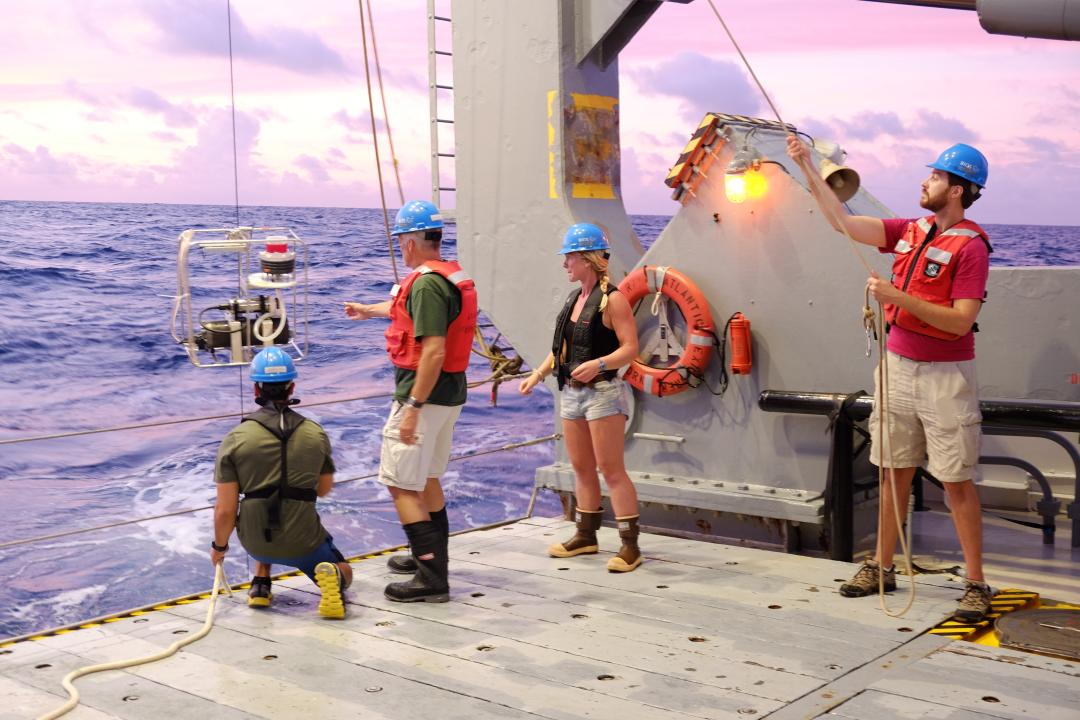
Giovannoni lab performs research off of a boat

Oregon State University microbiologists participate in BIOS-SCOPE, a five-year, multi-institutional research program for the study of microbial oceanography in the North Atlantic Ocean. BIOS-SCOPE leverages ocean measurements and ongoing research at the Bermuda Atlantic Time-series Study site, bringing new collaborations and technologies to study the ocean’s smallest life forms.

Standing up for Oregon’s oceans

Oxygen starvation in sea life close to home

The Northwest for two decades has had a “hypoxia season” that begins in mid-summer, said OSU marine ecologist Francis Chan, and climate change is making those low-oxygen seasons worse. When oxygen levels drop significantly, many marine organisms that are place-bound or cannot relocate quickly enough, such as Dungeness crabs, die of oxygen starvation. Hypoxia occurs because summertime north winds bring nutrient-rich but oxygen-poor ocean waters to shores – factors that are exacerbated by climate change.

Oregon’s coastal waters originate in the cold waters of the North Pacific off Japan and can take up to 60 years to reach us. Meanwhile, 25-30 percent of the pollution emitted from fossil fuel combustion is being absorbed in the ocean’s surface. Over time, this deadly combination has caused as much as a 30 percent increase in ocean acidity in the waters off the Oregon coast.

Last year, Oregon State was selected by the National Oceanic and Atmospheric Administration (NOAA) to lead the Cooperative Institute for Marine Ecosystem and Resources Studies, eligible for up to $37 million in funding over the next five years. With Chan as director, the institute will support collaborative marine research around the world, with emphasis on the Northeastern Pacific Ocean.

The quest to save a Pacific Northwest icon

The iconic sunflower sea star has been listed as critically endangered by the International Union for Conservation of Nature following a groundbreaking population study led by Oregon State University and The Nature Conservancy. Biology postdoctoral scholar Sarah Gravem was lead author on the study, along with University Distinguished Professor of Integrative Biology Bruce Menge. Populations of the sunflower sea star suffered dramatic crashes because of a marine wildlife epidemic event, referred to as sea star wasting syndrome, that began in 2013. “This listing is one step above extinction — and I don’t think they’re coming back without help like captive rearing and reintroduction and reducing direct harvest and accidental harvest,” said Gravem. More than 60 institutions joined the population study on the sunflower sea star, known scientifically as Pycnopodia helianthoides, which plays an important role in maintaining kelp forests, and thus sustaining marine life, along the West Coast from Alaska to Baja, California.

Working in Menge and Assistant Biology Professor Felipe Barreto’s Labs, biology student Kristofer Bauer assisted in the genetic analysis of sea stars to study their genetic resistance to sea star wasting disease. He witnessed first-hand the value of research. “I saw the impact that our research was having on understanding the effects of climate change on marine ecosystems and fisheries in Oregon. I saw that as something bigger than myself that I wanted to be a part of,” said Bauer.

Leadership on the world stage

Leaders of 14 major maritime nations have announced their commitment to achieve 100% sustainable ocean management of their national waters by 2025, acting on recommendations of global experts co-chaired by marine ecologist Jane Lubchenco. The group was commissioned by the High Level Panel for a Sustainable Ocean Economy (Ocean Panel), a group of nations representing nearly 40% of the world’s coastlines.

As Expert Group co-chair, Lubchenco helped coordinate experts from 48 countries, including OSU scientists Kirsten Grorud-Colvert and Jenna Sullivan, in the production of 19 peer-reviewed papers, plus an Ocean Solutions Report to the Ocean Panel. The results, the panel says, would include producing up to six times more food from the ocean, generating up to 40 times more renewable energy, lifting millions of people from poverty and contributing 20% of the global greenhouse gas emission reductions needed by 2050 to stay within the 1.5° Celsius limit of the 2016 Paris Agreement. “It is exciting and gratifying to see presidents and prime ministers ask for, listen to and follow scientific guidance,” said Lubchenco.

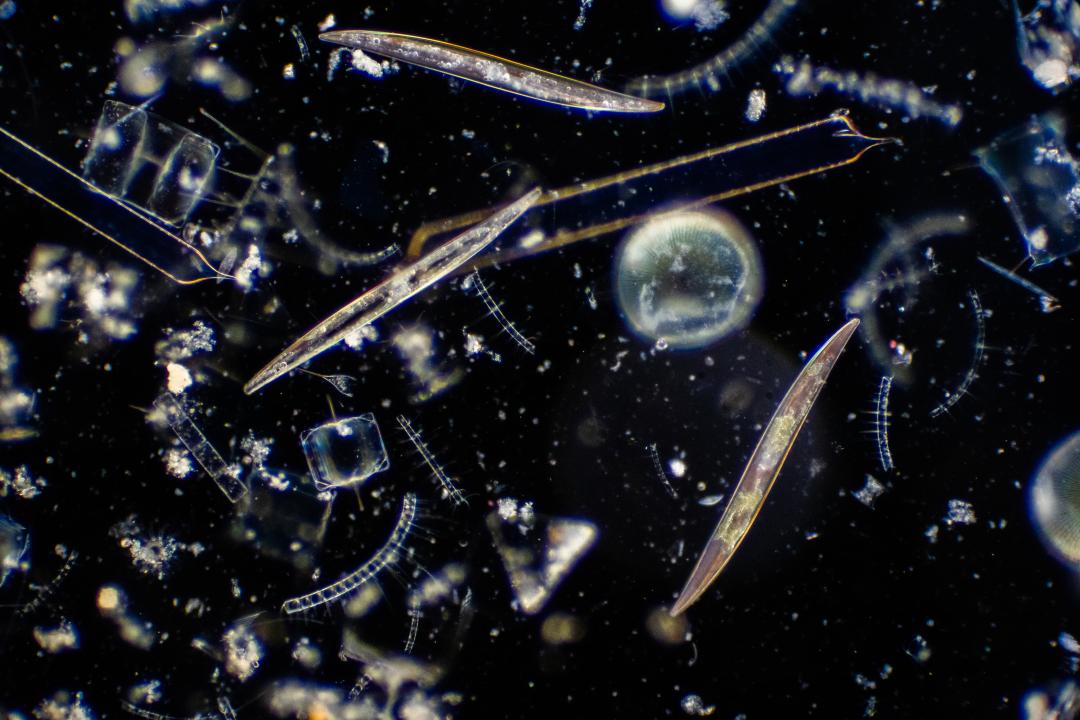
closeup view of phytoplankton

Like marine plants, phytoplankton have chlorophyll to capture sunlight use photosynthesis to turn it into chemical energy. The foundation of the oceanic food web, they store an immense amount of carbon - critical to preventing a future climate emergency.

The ocean as a carbon sink: Unexplored potential, and unforeseen risks

North Atlantic phytoplankton sampling

The ocean has long been regarded as one of the earth’s most important natural carbon sinks, storing around 80% of all carbon on the planet. Phytoplankton, aquatic microorganisms which serve as the foundation of the food web, consume carbon at a level equivalent to terrestrial forests. When they are eaten or decompose, the carbon dissolves into the ocean. Phytoplankton are responsible for almost all carbon uptake in the ocean, but just how this process will be affected by climate change remains uncertain. OSU microbiologists have made significant contributions to this field, questioning preconceived notions about which the world cannot afford complacency.

When considering the ocean as a carbon sink, the spring phytoplankton bloom in the North Atlantic is a clear winner. According to study author Steve Giovannoni, it is probably the largest biological carbon sequestration mechanism on the planet each year. In this yearly event, huge numbers of phytoplankton accumulate over thousands of square miles.

In the first-ever winter study of phytoplankton in the North Atlantic, microbiologist Steve Giovannoni and post-doc Luis Bolaños made a disturbing find. Diatoms, thought to dominate phytoplankton blooms in the North Atlantic, often were not a big part of the samples’ genetic profiles, and when they were a big part, the cells were small – either of the nano-phytoplankton variety or at the smaller end of the micro-phytoplankton scale.

Algorithms that predict carbon export from satellite-sensed chlorophyll tend to assign high export rates to phytoplankton blooms on the belief, based on observations from the eastern North Atlantic, that large diatoms dominate at their climax. The findings of this study, Giovannoni said, suggest that extrapolating those observations to the western North Atlantic may not be a valid practice.

Heterotrophic carbon cycling

In October, associate professor Ryan Mueller led a study that shed new light on the mechanisms of carbon cycling in the ocean, using a novel approach to track which microbes are consuming different types of organic carbon produced by common phytoplankton species.

As the ocean pulls in atmospheric carbon dioxide, phytoplankton use the CO2 and sunlight for photosynthesis: They convert them into sugars and other compounds the cells can use for energy, producing oxygen in the process. This so-called fixed carbon makes up the diet of heterotrophic microbes and higher organisms of the marine food web such as fish and mammals, which ultimately convert the carbon back to atmospheric CO2 through respiration or contribute to the carbon stock at the bottom of the ocean when they die and sink.

The collective respiratory activity of the heterotrophic microbial consumers is the main way that fixed dissolved organic carbon from phytoplankton is returned to the atmosphere as CO2. In his study, Mueller used stable isotope labeling to track carbon as it made its way into the organic matter produced by the phytoplankton and, ultimately, the heterotrophic microbes that consume it. The research is an important step toward forecasting how much carbon will leave the ocean for the atmosphere as greenhouse gas carbon dioxide and how much will end up entombed in marine sediments.

Photo of Glen Canyon Dam

Downstream of Glen Canyon Dam, researchers are implementing experimental flow releases as a way to minimize ecological damage to aquatic insects. Aquatic insect and sensitive taxa are negatively associated with hydropeaking intensity, which limits the composition and potentially the quality of the invertebrate food base.

New management solutions for river ecosystems

Hydropower dams are a renewable alternative to fossil fuels, but they are not without their downsides. Large hydropower dams alter the flow of the river by creating physical barriers that alter the river’s flow regime, as well as dissolved oxygen levels, nutrients and temperature.

Biologist David Lytle teamed up with scientists from the United States Geological Survey in a project to examine how the Colorado river’s seven large dams affect aquatic invertebrate biodiversity. While on a seasonal or annual scale, hydropower dams are known to reduce the average variation in the flow level, surges in power usage throughout the day cause a phenomenon known as hydropeaking.

As the earth continues to warm, rivers have experienced steep declines in water availability; last summer, only 30% of the average amount of water entered the Colorado, with other rivers experiencing similar trends. With water availability already limited, daily water-level fluctuations may prove intolerable for many species. While declining snowpacks and drier summers may be unavoidable, Lytle’s research may help provide strategies to manage water release from dams to minimize the ecological impacts. “Invertebrates are food for fish, birds and bats, and we want to enhance that food base by testing out different flow regimes that mesh with management ideas.”

In part three of this series, learn how OSU researchers are harnessing data to uncover new perspectives on resource management, using simulations to predict possible outcomes and using their unique skills to advance climate research across many disciplines.

Glass panes with data graphs in layers of gray, black, and white.

Microbiologist Jerri Bartholomew elevates microbes to fine art

By Grace Peterman

There Will be Good Years: 2009-2021 uses fused glass to depict a decade of data affecting salmon survival. Color corresponds to risk factor of environmental variables like temperature and water flow.

Knowledge is only as good as our ability to share it, and innovative science requires innovative communication strategies. Some of our students and faculty have danced their Ph.D. research, been featured in documentary films and created board games about ocean microbe ecology. The College of Science is full of creative researchers who explore how different media can help tell the stories they care about, convey the relevance of science to the public and foster engagement from diverse audiences.

Microbiologist Jerri Bartholomew epitomizes what it means to be a scientist-artist. For the last 25 years, the director of the J.L. Fryer Aquatic Animal Health Laboratory has created glass art inspired by her research on parasites that live in salmonids — fish within the salmon family.

“As a microbiologist and artist, I am fascinated by what occurs at the intersection between these disciplines,” said Bartholomew. “I use glass as a medium to express the beauty of the natural world I study, and through collaborations with other artists and scientists, I explore ways to encourage that curiosity and wonder in others.”

A new curation of Bartholomew’s work is on exhibition in The Little Gallery in Kidder Hall from March 7 to April 8, 2022. “Abstracted: Where Science Meets Art and Music” contrasts the scientific abstract with the artistic concept of abstraction. Collaboration with faculty from the College of Liberal Arts made this rich, dynamic show possible: Dr. Jason Fick, assistant professor and coordinator of music technology; Andrew Myers, instructor of fine arts, and Dr. Dana Reason, assistant professor of music. Bartholomew’s previous interdisciplinary collaborations have been covered by SciArt Magazine and MIT News.

Artwork, a piece of glass with screen printing of a DNA sequence inside of it.

Myxidium anatidum suspends the genetic sequence of a parasite species discovered by the artist within cast glass.

“Through collaborations with other artists and scientists, I explore ways to encourage that curiosity and wonder in others.”

In “Abstracted,” Bartholomew’s extensive work on endemic wild Pacific salmon myxozoan parasites becomes vibrant and accessible. In Murky Waters, a decade of temperature, water flow and parasite data is translated into sound in real time, allowing the listener to hear how climate change will affect salmon survival.

In video piece Weapons of Microdestruction, a piano performance and live drawing turn microscopic processes into a riveting drama. The original composition expresses the musical tension of the parasite-host relationship, while broad brushstrokes elucidate the flow of parasite development.

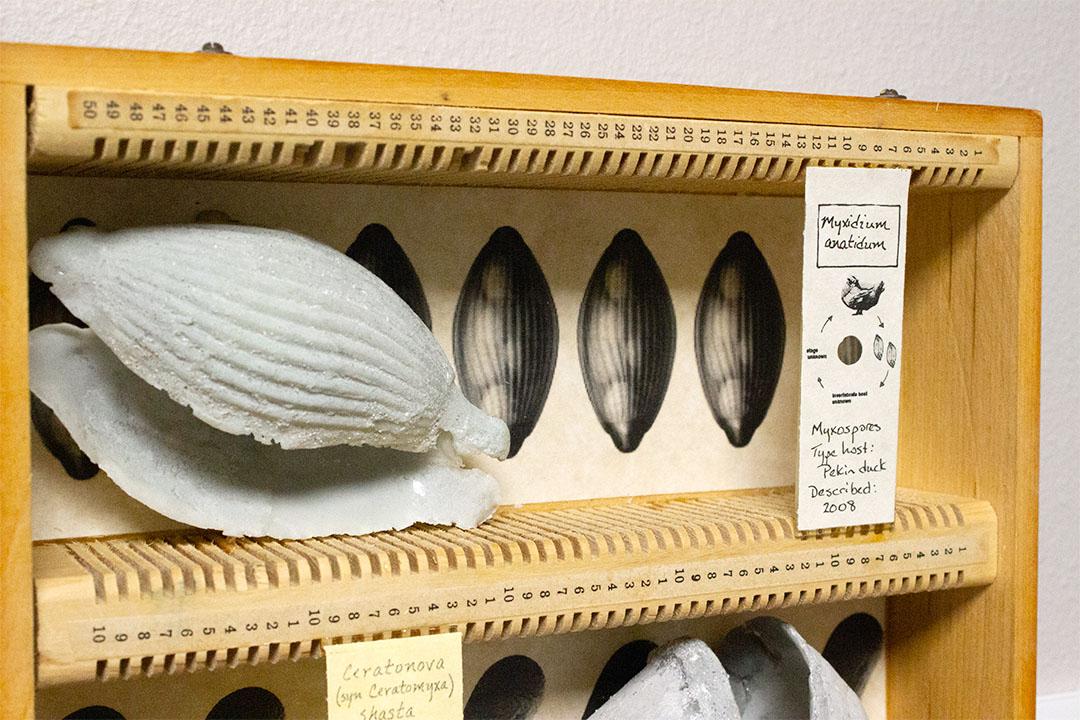
Microscope slide boxes and slides integrated into the show reference Bartholomew’s affection for her own research tools. “As a microbiologist, glass microscope slides are the tools of our trade, but every time I sit down at a microscope it is with the anticipation that something interesting or beautiful will be revealed,” she said. “I find microscope slides themselves to be magical; small pieces of glass that hold an invisible surprise that changes with magnification.”

A wooden microscope slide box with a model of a parasite and drawings inside.

Myxozoan Life Cycles features a pâte de verre casting of a lens-shaped parasite spore that infects both salmon and duck species, nestled within a microscope slide box.

Bartholomew believes scientists are obligated to disseminate their research and that dynamic, interactive communication can expand science’s impact. “Although the increasing specialization in science during the last century seems to have drawn a line between science and art, those lines are becoming blurred,” she said. “Scientists increasingly see the value of art in interpreting their research and in collaborating with artists in looking for solutions to the problems that face society.”

She encourages scientists of every level to experiment with artistic media, because creativity and curiosity are equally important for both art and science. Even artwork not directly linked to research can have a positive impact on your scientific potential.
“Art has largely been a tool for communicating science, but I believe there is room for a larger role,” Bartholomew said. “Being an artist has helped me, as a scientist, by providing a different perspective either through examining a topic using a new medium or through collaborations and discussions with other artists.”

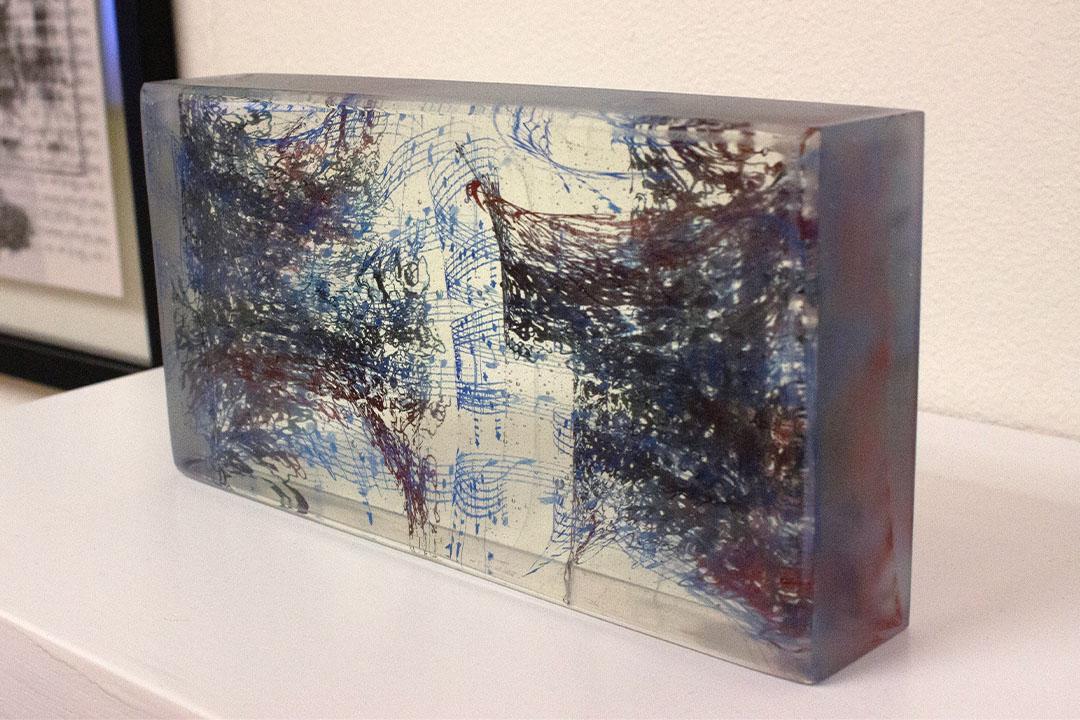
Artwork, a piece of glass with music inspired by the coronavirus spike protein flowing through it.

In COVID Sonnet, Bartholomew used a score by Markus J. Buehler that translates the the structure of SARS-Cov-2 surface proteins into music. The figures are transferred onto silkscreen, printed on a sheet of glass, fused and cast to create a series of increasingly abstract representations.

In 2017, Bartholomew led the formation of ART-SCI, an inter-college faculty network that sponsors events and offers curricula designed to foster discussions about the convergence between the arts and science. ART-SCI supports student engagement with interdisciplinary knowledge through the Seminarium, a student club dedicated to promoting art-science crossover.
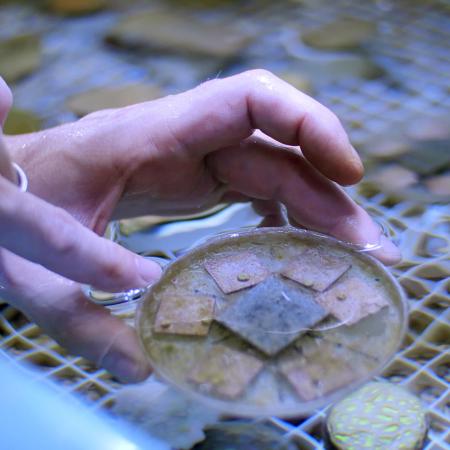
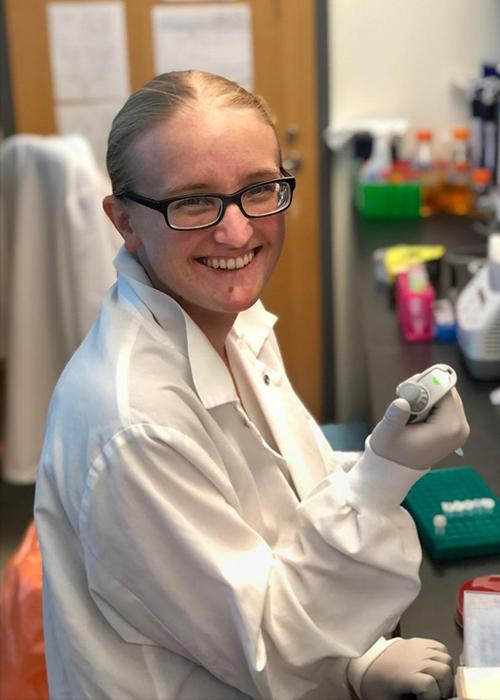
“For me, Seminarium has been an opportunity to work with folks who share my interests in using art to communicate science, and to expand my own horizons of how the two intertwine,” said Grace Deitzler, club co-founder and microbiology Ph.D. candidate.

“Seminarium has always been about bringing together the members of the OSU community who love art and science — whether they are scientists who are also artists, or artists who are also scientists, or folks who just enjoy both — and showing the beauty of the liminal space that exists between the two disciplines.”

“Scientists increasingly see the value of art in interpreting their research and in collaborating with artists in looking for solutions to the problems that face society.”

Students and faculty interested in exploring the connection between art and science are invited to apply to participate in the ArtSci Fellowship, a year-long program in which students will develop a creative project informed by active engagement in lab or field research under the mentorship of artists, writers, musicians and scientists from OSU and the local community. Fellows are awarded a $1,000 stipend, a modest materials budget, ongoing networking opportunities, art and science mentorship and more. Graduate and undergraduate students from any college can apply. For more details, contact Jerri Bartholomew.

group of people talking to each other at a social event

Health Professions Fair connects students with professional schools and careers in healthcare

At the annual Health Professions Fair, students can connect with professional schools and programs with specializations in the healthcare industry. The Fair is a wonderful opportunity to learn about graduate education and careers in health care. Admissions representatives from more than 60 health professions schools in Oregon and across the country will be on campus to answer your questions. The Health Professions Fair will take place on April 19, 2022 from 10 a.m. to 2 p.m. in the Memorial Union Ballroom.

These schools represent health professions programs in medicine, osteopathy, dentistry, pharmacy, chiropractic medicine, nursing, physical therapy, public health, health management and administration, medical physics, biomedical sciences and several others. More than 500 students attend the Health Professions Fair each year.

Students are welcome to stop by anytime during the health fair, which is free and open to all majors. Volunteers will be available to hand out a list of participating schools and a map of their table locations. Students can visit a school’s table and pick up information materials and speak with admission representatives.

Something for everyone

The health fair is open to all undergraduates and alumni.

First and second year students can explore health profession options, build networks and get tips from admission representatives on undergraduate preparation and co-curricular activities.

Juniors, seniors and alumni will have an opportunity:

  • to learn about specific programs from admissions representatives of various universities
  • collect application materials and obtain financial aid information,
  • get tips on writing a personal statement, the application process, and letters of reference.

Preparing for the fair

Students can interact with representatives of graduate health programs from schools such as Oregon Health and Science University, Idaho College of Osteopathic Medicine, University of Utah College of Pharmacy, Western University of Health Sciences in Pomona, California, Keck Graduate Institute of Claremont, California and many more. See a list of participating schools.

Students are encouraged to prioritize their list of schools to make effective use of their time at the fair. They can brainstorm questions they might ask admissions representatives. Here are a few ideas to get started:

  • What is unique about program X at your university?
  • What types of courses would I take in program X?
  • What experiential components does program X offer (internships, rotations, etc.)?
  • What does your admissions committee look for in an applicant?
  • I read about XYZ on your website. Can you tell me more about that?

According to U.S. News and other surveys, healthcare is one of the fastest growing industries. The Bureau of Labor Statistics predicts that employment growth in this sector will be much quicker than the average for all jobs by 2026.

Breanna Repp seated at a table and smiling.

BioHealth Sciences junior pursues a career in health advocacy

By Grace Peterman

Breanna Repp completed cancer epidemiology research with SURE Science and continues with her Honors College thesis.

Third-year BioHealth Sciences Major Breanna Repp got started on the path to healthcare early. Growing up going to anatomy exhibits at the Oregon Museum of Science and Industry (OMSI) and seeing healthy and diseased organs side-by-side made a strong impression on her. “My mom said, ‘That’s what your lungs will look like if you smoke. The body is a vessel,’” Repp said. “That lesson made it very clear what the body is for, and what can happen if you do certain things to your body.”

Repp drew on her early experiences of anatomy to inspire her research with the Summer Undergraduate Research Experience (SURE) Science program the summer after her second year. SURE Science allows students from the College of Science to conduct paid, full-time research over the summer alongside instructors from any college.

Under the mentorship of Yumie Takata, associate professor in the College of Public Health and Human Sciences, Repp explored the connections between alcoholism and lung cancer risk. While connections between smoking and lung cancer are widely known, links between alcoholism and lung cancer risk are much less so. Teasing out these connections to health outcomes motivates Repp.

Turning points on the path to healthcare

Repp grew up in Oregon City, outside of Portland. In high school, she attended engineering fairs and cheer camp at Oregon State, and the campus “just felt like a college,” Repp said. Although she visited several schools, “to me, college was Oregon State.”

Knowing she wanted to be on the path to healthcare, Repp found that the College’s BioHealth Sciences major was a great fit to pursue her interests and form a cohort of peers. With seven different pre-professional options, the curriculum combines a strong foundation in biological science with its application to human health and society. Repp’s pre-med option meets most or all of the requirements for admission to medical schools across the U.S.

“It’s able to pull in all these different topics, giving me a variety of perspectives,” said Repp of her major. “Most people I meet, we all know we went on this track to get a really comprehensive look at healthcare.”

A human anatomy and physiology course at OSU proved to be a turning point for Repp, when the class started working with human cadaver donors. “It’s a really special experience for students to work with the donors,” said the instructor for the course, Devon Quick. “It helps develop empathy for individuals who are in their most vulnerable state.”

The opportunity to learn from people who had donated their bodies to science, feel chest compressions and tug on muscles filled Repp with an immense sense of respect and responsibility, taking her understanding of what it means to be a healthcare provider to a new level. “I knew I would never learn science properly without seeing it on the donors,” she said. “That was a pivotal moment for me.”

Repp says that Quick modeled a whole-person approach to healthcare, combining a deep knowledge of biology and the underpinnings to diseases with attention to social topics. “She seems like she really cares about us and works hard to make sure we’re all doing well,” said Repp. “I really respect a professor when they can look at their students and ask themselves what do these people need other than this class — you know, behind the scenes.”

Uncovering the root of health outcomes

Feeling a responsibility to put her knowledge to good use, Repp got thinking about what contribution she wants to make to the healthcare industry. In the course of her epidemiology research, Repp came across a surprising fact: The U.S. has the highest maternal mortality rate among developed countries. “It’s something you don’t hear about, and it’s very alarming,” said Repp.

Though largely preventable, maternal deaths have been increasing in the U.S. over the past two decades. In comparison to other high-income countries, the U.S. has an undersupply of maternity care providers, especially midwives. The U.S. is also the only developed country that does not guarantee provider home visits after a birth and paid postpartum leave, despite the fact that most maternal deaths occur during this period.

“We’re really far advanced in innovation and new procedures in the U.S., but our outcomes are not lining up,” said Repp. “I’ve always been on the path to wanting to become a doctor. But will I just be contributing to an unjust system? Or can I change some things?”

Repp is considering a master’s in public health in addition to medical school, so she can one day have a voice in changing policy and making a difference on a systems level. “I think if I could choose,” she said, “I would be a doctor in a pretty large hospital, doing public health advocacy, health promotion, and facilitating teams to teach prevention and get resources out to people.”

In the meantime, Repp continues epidemiology research for her Honors College senior thesis, also with Takata. “With SURE, I was basically learning how to do research,” said Repp. “This time around, I’m taking it into my own hands a little bit more.” Like her research with SURE Science, her thesis will illuminate how unexplored components affect health outcomes, possibly focusing on women's health or reproduction.

“A lot of people have heard that breastfeeding reduces breast cancer; that’s conclusive,” she said. “What’s something that’s not conclusive, but we see some connection?” Digging into the factors influencing maternal mortality could reveal what policy changes would be most beneficial in bringing the U.S. up to a higher standard of women’s healthcare.

Self-care as a public health issue

With her background in epidemiology, Repp has developed a broad and systematic view on health — including the mental and emotional health of herself and her community. “I don’t know if I could do my classes without having a good group of people I’m able to study with,” she said. A strong network is vital for sustaining success as a science student. She advises future students to “really utilize your professors. I think College of Science professors are really good at giving you review times and office hours and really want you to learn and understand.”

Outside of her studies, Repp invests in her community as volunteer coordinator of the OSU Pre-Medical Society, which has adopted upkeep of a local park in partnership with the city of Corvallis. She is also an Academic Learning Assistant, mentoring her peers in strong academic habits and university resource engagement.

Throughout her rigorous academic program, Repp says her biggest challenge has been handling anxiety. Using mindfulness, she harnesses the energy that causes her anxiety as fuel for her ambition and high performance. Although compartmentalizing is a challenge, Repp stays grounded by reading fiction and spending time with her five nieces and nephews. “Sometimes I feel like I should be doing more, but then I remember: Mental health is important!”

A laurel leaf icon with a scroll, surrounded by a border of snowflakes.

2021-22 College of Science awards: Celebrating excellence in teaching and advising

By Grace Peterman

On February 22, the College of Science gathered to recognize excellence at the 2021-22 Teaching and Advising Awards. Driven almost exclusively by students’ nominations, these awards are an opportunity for our community to express gratitude and appreciation for each other.

The College celebrates the Teaching and Advising Awards winners below for their deep commitment to engaging with the student experience and application of mentoring and advising expertise to ensure student learning and success within and beyond the classroom. Effective teaching, advising and mentorship are the very heart of the College of Science’s identity as a robust and thriving community of students and scholars.

2022 Teaching, Advising and Mentoring Award Winners

Olaf Boedtker Award for Excellence in Academic Advising

Rachel Palmer, a woman with long hair, smiling.

Integrative Biology Advisor Rachel Palmer

Rachel Palmer, integrative biology advisor, won the Olaf Boedtker Award for Excellence in Undergraduate Advising for her tireless support, efforts and advocacy on behalf of undergraduate students. This award was established in 1988 in honor of Olaf Boedtker, a professor in the Department of Physics who served as Head Advisor in the College from 1973 to 1987. While at Oregon State, he provided exceptional service to students and to the College.

Several students nominated Palmer for this award, praising her dedication and ability to connect and encourage students to achieve their goals.

One student nominator wrote of Palmer: “Right off the bat, Rachel came across as a very happy-go lucky person. She has always been extremely kind and caring at every meeting, treating me as an equal adult and even cracking some jokes that set me at ease. She has always been able to answer every question I had, no matter how specific or vague. I can absolutely tell she wants to help me and set me on the best path possible. Rachel pays mind to each and every student as an individuaPassionate, inspirational, dedicatedl and she really knows her stuff!”

Another student had similar feedback for Palmer: “Rachel has made the beginning of my journey towards my Bachelors of Science in Zoology a wonderful experience even through uncertainty. She really goes above and beyond the call of duty, you would not think an advisor could be such a hero.”

“I admire how easily Rachel has helped me find a class schedule that works so well," wrote another student nominator. "She asks important questions, listens to your expectations and executes. One thing she does well is helps me find classes that work well together as far as content.”

Additional nominees for the Olaf Boedtker Award included:

  • Cody Duncan, advisor for integrative biology
  • Allison Evans, instructor of microbiology
  • Jen Olarra, advisor for biology
  • Kari Van Zee, senior instructor of biochemistry and biophysics

Loyd F. Carter Award for Outstanding and Inspirational Teaching (Undergraduate)

Kyriakos Stylianou, a man with a beard.

Assistant Professor of Chemistry Kyriakos Stylianou

This year’s Loyd Carter Award for Outstanding and Inspirational Undergraduate Teaching in Science goes to Kyriakos Stylianou, assistant professor of chemistry.

Every year since 1946, the Loyd F. Carter Award has been presented to two outstanding College of Science faculty members: one for undergraduate teaching and one for graduate teaching. The purpose of the award is to encourage and recognize effective and inspirational teaching. The final selection is based solely on student nominations and voting.

Stylianou’s students describe him as passionate, inspirational and dedicated. “This man is so incredibly intelligent but also one of the humblest people you will ever meet,” one student said.

“He has to be one of the best professors I have had here at OSU,” said another student nominator. “Walking into CH 233, I was super nervous. I heard it was the hardest of the chemistry series. With everyone feeling the burnout of virtual learning, he made sure to make his class engaging and put everything he had into every class.”

Many students praised the learning atmosphere Stylianou creates in his classes and his attentiveness to student needs. “He cares very much about his students and wants to see them succeed. He devotes a significant amount of time inside and outside of class to give them the opportunities and resources they need to be successful in his class, and beyond. He never tries to beat around the bush, always gives you an honest answer, and just wants to see the best in people. The jokes and wise-cracks in class always help to lighten the mood as well.”

Additional nominees for the Loyd F. Carter undergraduate award included:

  • Daniel Myles, senior instructor of chemistry
  • Devon Quick, senior instructor of integrative biology
  • Marita Barth, instructor of chemistry
  • Malcolm Lowry, assistant professor of microbiology
  • Nathan L. Kirk, senior instructor of integrative biology
  • Paul Cheong, associate professor of chemistry
  • Phil McFadden, associate professor of biochemistry and biophysics
  • Scott Geddes, instructor of chemistry
  • Stacey Vaughn, instructor of mathematics

Loyd F. Carter Award for Outstanding and Inspirational Teaching (Graduate)

James Molyneux, a man with a beard.

Assistant Professor of Statistics James Molyneux

This year’s Loyd F. Carter Award for Outstanding and Inspirational Graduate Teaching in Science goes to James Molyneux, assistant professor of statistics.

Students nominating Molyneux described him as caring, uplifting and welcoming, and praised his ability to adapt during the pandemic. "He consistently encouraged me and my cohort during the transition from COVID to campus, to keep up our spirits in one of the most difficult academic years of our lives," said one student. "Without him, I would not have gathered the courage to continue moving forward. He is brilliant in the classroom as a professor and a loyal mentor and advocate for our success."

Another student said the following of Molyneux: "He excels at making statistics, a subject which is generally taught dryly and without much passion, relevant to grad students' research and our daily life. He uses timely examples and highlights the nuance of stats, in a way that makes it fascinating instead of frustrating. He was always available for extra help or assistance outside of class, and always seemed willing to discuss other topics than just the class material! He is supportive and compassionate with graduate students, and was the best stats teacher I've had so far at OSU! He also made sure the class content was accessible to students in multiple ways by recording both Zoom and in-person classes, and making the lecture notes easily available. His high-energy and engaging teaching style was apparent in both the in-person and online class I took with him, which I have found to be a rare occurrence in a remote setting!"

Thomas Sharpton, associate professor of microbiology, was also nominated for the Loyd F. Carter graduate award.

Frederick H. Horne Award for Sustained Excellence in Teaching Science

Liz Gire, a woman smiling.

Associate Professor of Physics Elizabeth Gire.

This year’s Frederick H. Horne Award for Sustained Excellence in Teaching Science goes to Liz Gire, associate professor of physics.

This award honors Fred Horne, who served as Dean of Science at Oregon State from from 1986 to 1999. Fred passed away in 2021, a renowned researcher, scholar, teacher and leader.

Fred exemplified the values of our college, embracing a deep commitment to diversity, equity and inclusion in science. He was instrumental in establishing two programs that encourage students of color to pursue and continue their education in science, math and engineering: Science and Math Investigative Learning Experience (SMILE) and the American Indian Science and Engineering Society (AISES).

The purpose of this award is to recognize sustained excellence in teaching science by honoring a faculty member in the College of Science who has repeatedly demonstrated exceptional instructional qualities and has had a significant impact on students over a period of not less than five years.

Liz Gire has earned this award through her tireless dedication to support the holistic student experience. A plethora of students and colleagues wrote at length in support of Gire's nomination. One student nominator said, "Her level of dedication to the genuine support and inclusion of the students in her courses is something I’ve never seen in an educator before. She backs that up with her skill and experience in education and communication that makes difficult content still accessible and enjoyable to learn. She takes every opportunity to build others up, whether that be her students, her teaching team, her research partners or the many people in our department who aren’t any of those things, but still know they can come to her because she is the type of person who will help however and whenever she can."

Another student nominator said, "Liz is a wonderful professor because she is a master at reading the atmosphere of a classroom. Sure, part of this is an intuition that comes from experience, but more importantly, she takes time to ask questions. Each student is expected to grab a small white board and marker at the beginning class. Later when Liz looks out and says, 'write down something that you know about angular momentum' she can measure students’ level of confusion and use student responses to guide the classroom discussion. This makes everyone much more willing to participate in class because they know that she honestly cares for their well-being and success."

Congratulations to all the winners and all the nominees!

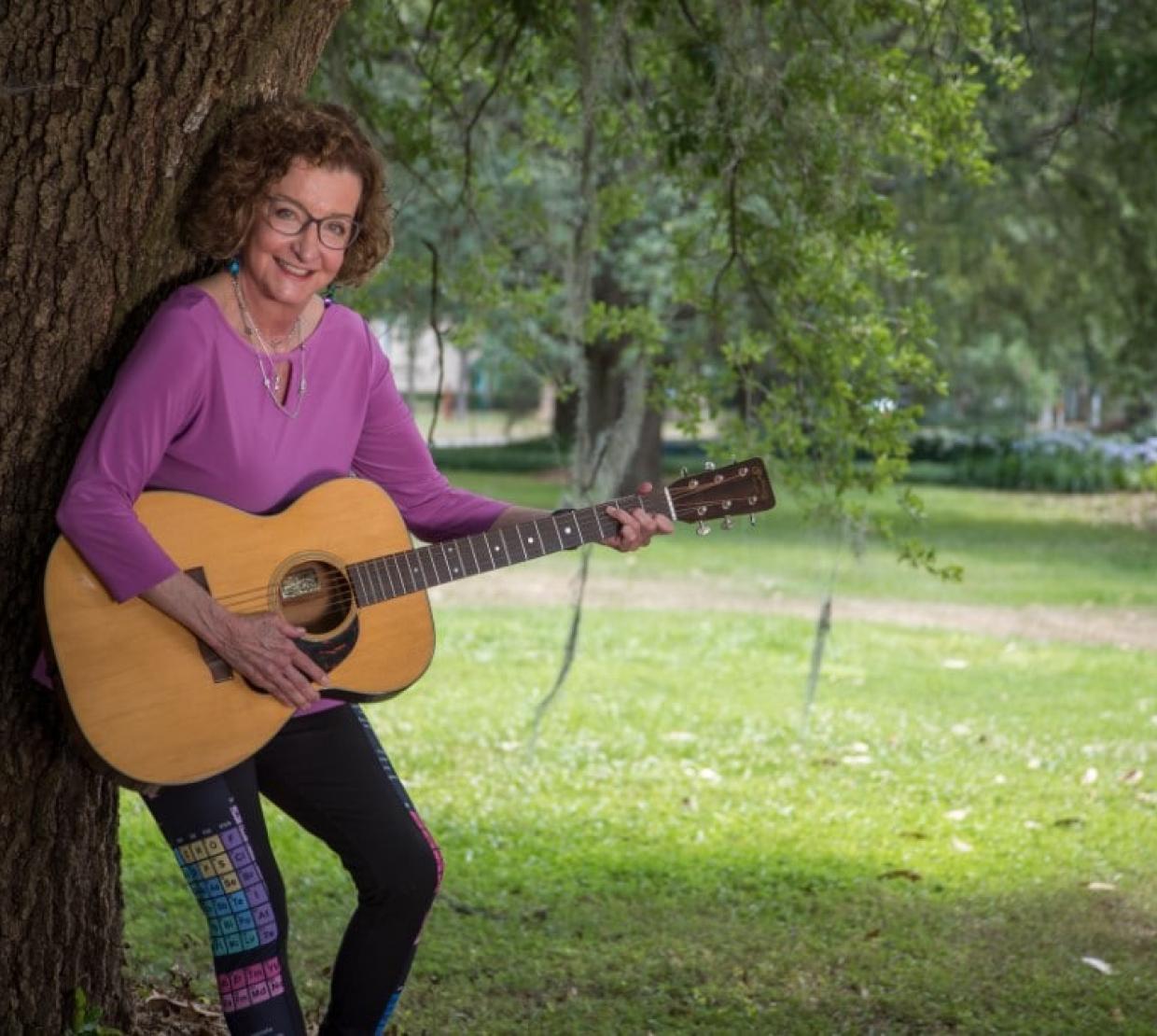
A woman in a purple shirt leaning against a tree and holding a guitar

Change Makers in Science - Celebrating International Women’s Day

By Vrushali Bokil

March 8, 2022, is International Women’s Day. The College of Science is celebrating the day with a Change Makers in Science talk by Laura Greene, Chief Scientist at the National High Magnetic Field Laboratory and physics professor at Florida State University. Her talk entitled, “Journeys from Music in Cleveland to Quantum Materials Worldwide,” will discuss her journey in physics leading to her position at MagLab and the exciting field of quantum mechanics. RSVP for this here.

Following the keynote speech, there will be a panel discussion on negotiation skills aimed at beginning scientists featuring accomplished and notable female faculty members in the College of Science. The panel members will discuss specific tools and approaches that increase one's effectiveness as a negotiator through the lens of gender, with an eye towards research on gender issues. Panelists joining Professor Greene include:

The panel will be moderated by Vrushali Bokil, associate dean of research and graduate studies for the College of Science.

The event will take place in Oregon State University’s Memorial Union Ballroom and online via Zoom. It is open to the wider Oregon State University and Corvallis community. RSVP now.

Laura H. Greene is a physicist and expert in quantum mechanics known for her discoveries and research in unconventional superconducting materials and high magnetic fields. A member of the U.S. National Academy of Sciences, Greene is the former president of the American Physical Society (2017), vice president of the Executive Council of the International Union of Pure and Applied Physics, and a member of the U.S. Department of State-supported COACH team, promoting success and impact of women scientists, particularly in developing countries.

Abstract: As a young folk-rock music girl in the east side of Cleveland, I had no idea I could consider a career in science. I don’t know if I was hard-wired for it at birth or “bitten by the science bug” at an early age, but it was just what I needed to do. I always feel lucky and honored to be a scientist; but there sure have been real challenges! I will discuss some of my journey in physics, always fueled by passion for this “seductive and consuming” field. Then, after a short overview of the MagLab, I hope to get across how exciting the field of quantum materials is – and how much we have to learn!

Agenda

Memorial Union Ballroom and virtually via Zoom
1:30 - 2 p.m. - Keynote speech: Dr. Laura Greene
2 - 2:15 p.m. - Q&A session
2:15 - 3 p.m. - Negotiation skills panel

Gut microbiome close-in

Research innovation and entrepreneurship combine to address critical global challenges

By Srila Nayak

Microbiologist Maude David's startup, Microbiome Engineering, analyzes environmental and human ecosystems and develops innovative technology for sensing the microbiome world.

The College of Science is at the heart of a flourishing new ecosystem of entrepreneurship and high-impact scientific and technological innovations. Among other breakthroughs, these include: high-performance thin-film technology to revolutionize electronics and energy; genetic studies of the human microbiome for better treatment of autism spectrum disorder; and the engineering of new proteins for therapeutic applications.

These path-breaking innovations from the College of Science at Oregon State University hold answers to critical problems in the environment, energy and healthcare.

Research innovations from the College have garnered global recognition and record-breaking competitive federal and industry research funds. In 2020-2021, the College’s research awards rose to $24.4M, a 55% increase over the average of the previous three years and one of the highest award levels ever. The previous year’s total was $15.82 million.

Seed funding from the College has helped support highly ambitious and expansive projects, making it possible for our scientists to delve into fundamental research discoveries that can be ramped up to revolutionary applications. Between 2019 and 2021, the College’s Science Research and Innovation Seed Program (SciRIS) provided $763K in seed funding to scientists leading research projects in both basic and applied science and mathematics with the potential to produce practical solutions for industry, people and the planet.

“OSU science leadership has literally reached across the globe. Our scientists achieved award-winning success even in the midst of pandemic challenges,” said Roy Haggerty, Dean of the College of Science. “They produced knowledge, generated innovations and inspired national policy to promote economic, social, health, cultural and environmental progress for the people of Oregon and beyond.”

Advancing clean energy alternatives

A $1.1 million award from the Department of Energy’s (DOE) Small Business Innovation Research will help University Distinguished Chemistry Professor Douglas Keszler ’s company nexTC Corporation pioneer innovations for a clean energy future. The funds will enable nexTC to develop new technologies to improve solar module performance and lower materials cost.

The awards are administered by DOE’s Small Business Innovation Research (SBIR) and Small Business Technology Transfer programs, which were established to encourage diverse communities to participate in technological innovation, as well as create a bridge between DOE-supported science breakthroughs and viable products and services for the commercial market.

Keszler, a renowned materials chemist and a leading figure in the field of new generation semiconductor and solar energy devices, is known for spearheading several companies at Oregon State and in Corvallis that are regarded as nationally important centers of chemical innovation. Keszler is the founder of nexTC and serves as its science advisor.

The corporation, led by CEO Cory Perkins, a former postdoctoral scientist in Keszler’s lab, has carved a niche for itself by innovating in the area of high-performance, low-cost state-of-the-art thin film manufacturing processes that enhance energy conversion and energy efficiency. NexTC is noted for inventing several thin-film technologies for environmentally friendly electronics and energy efficient products such as smart windows.

Associate Professor of Physics Matt Graham and colleagues received the College of Science Industry Partnership Award to support their project converting waste heat to electricity. This new award from the College’s seed funding provides critical resources for projects that take a new direction, utilize a new technology or are in the “proof-of-concept” phase.

This project will engineer a prototype device that converts waste heat to clean energy, in partnership with Peter Orem of ThermaWatts LLC, Renton, WA. The goal is to achieve a cost-performance level that allows the device to be viable for part of the potential power supply market, enhancing the accessibility of sustainable energy. ;

Taking microbiome research to new heights

Our scientists are spurring societal, environmental and economic impact with the support of Oregon State’s innovation and entrepreneurial centers such as the Oregon State University Advantage Accelerator. Among the several powerful startup concepts that have recently emerged from Oregon State is Microbiome Engineering (previously called Enoveo USA), which is redefining the study of environmental and human health through the lens of the microbiome resulting in the development of innovative technologies that address several challenging problems in environmental and human ecosystems.

The startup was founded by Maude David, an OSU assistant professor of microbiology, whose research focuses on the gut-brain axis and the impact of gut microbes on behavior, specifically in autism spectrum disorder (ASD) and anxiety.

With substantial momentum gained from a 2019 SBIR phase II $1.94 million grant, David and her team are exploring potential therapeutics for ASD by identifying differentiating factors within the microbiome of neurotypical children and those with ASD.

Endeavoring to carry David’s research-based innovation to the market, Microbiome Engineering is developing a gut brain chip that serves as a screening tool to rapidly assess the impact of gut microbiota metabolites on issues such as autism, depression and cognition.

Expanding the genetic code to engineer new therapeutics

A transformative project aims to bridge the gap between innovative biomedical research and the biotech industry. Professor of Biochemistry and Biophysics Ryan Mehl received two grants totaling $1.6M from a biopharmaceutical company partner for projects on the engineering of antibodies as therapeutics using genetic code expansion.

Mehl and collaborators received initial support from SciRIS Stage 2 seed funding that helped them develop the base technology for the engineering of nanobodies as diagnostic agents. Mehl and postdoctoral scientists in his lab will work directly with the partner's team on their projects to rapidly accelerate the project and achieve vital scientific milestones.

Mehl is also director of GCE4All, the world’s first Genetic Code Expansion (GCE) center, funded by the NIH at Oregon State at $5.6M. This newly-established center will accommodate burgeoning industry interest in GCE technology and catalyze advances to fabricate new nanomaterials and synthesize proteins with promising therapeutic functionalities.

“This is a new adventure for our lab working with Big Pharma. Another eye-opening change for us will be the pace of this project and important connections for future students. We expect this project will lead to valuable career options for our undergrads, grads and postdocs,” said Mehl.

Mehl’s collaboration with industry was supported by OSU Advantage programs, which has an impressive track record of driving cutting-edge research innovations toward commercialization and widespread societal utility and impact.

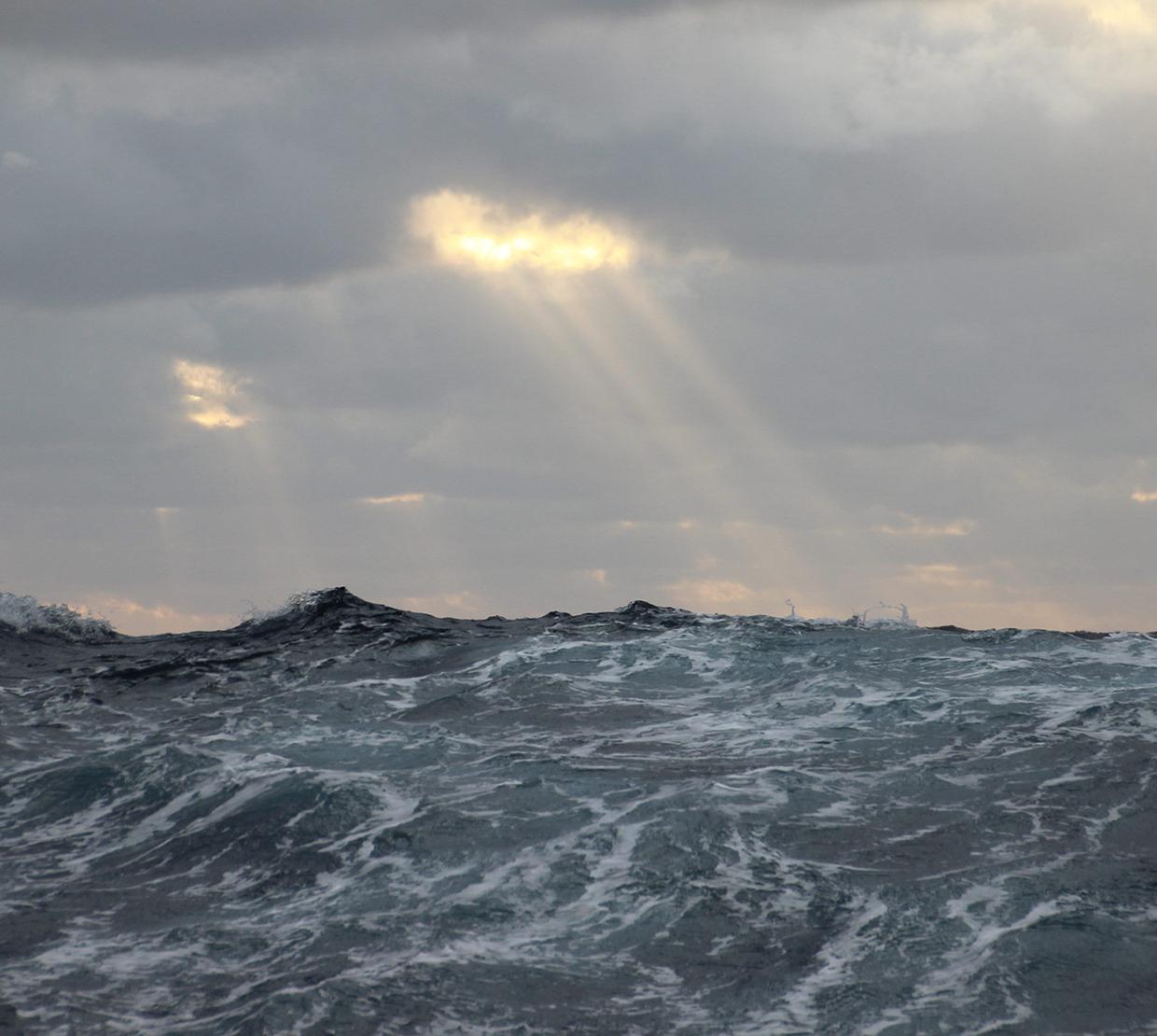
Ocean waves on a dimly lit day with the sun peering through the clouds.

Gas-passing plankton illuminate another piece of the carbon cycle puzzle

By Steve Lundeberg

The ocean's most abundant bacteria species prevents acetone from being expelled into the atmosphere. (Photo courtesy of Luis Bolaños)

The ocean’s most abundant life form, a type of bacteria discovered by the Department of Microbiology, consumes an organic compound commonly found in solvents like paint remover, a new study shows.

The research led by Associate Professor of Microbiology Kimberly Halsey and then-Ph.D. student Eric Moore revealed that SAR11 bacteria consume acetone, adding evidence to suggest that aspects of the marine carbon cycle, which pulls atmospheric carbon into the sea, are not being considered in the study of the cycle and its ability to buffer climate change.

Acetone and other volatile organic compound (VOCs) are produced by phytoplankton, microscopic marine algae, and are abundant in the surface ocean, from which they can move into the atmosphere and influence climate.

“It’s important to understand SAR11 and other bacteria’s potential to control the emission of climate-active gases because it helps our overall understanding of climate change and stability,” said Halsey.

Finding that SAR11 consume the gas is particularly significant due to the bacteria species’ massive abundance. “A single milliliter of ocean water might contain a half-million SAR11 cells,” said Distinguished Professor of Microbiology Stephen Giovannoni, who discovered the bacteria in 1990. SAR11 comprise 25% of all ocean plankton, and their combined weight exceeds that of all the ocean’s fish.

Find the full story here.

Hannah Rowe

Hannah Rowe

Subscribe to Microbiology