Microbiologist Stephen Giovannoni received a 5-year $1.2 million award to continue studying the microbiology of the Sargasso Sea, an ocean gyre that is representative of ocean regions with extremely low productivity that are expanding globally due to the warming of the ocean’s surface.
Meet a two new members of the Department of Microbiology, one who studies how pathogens survive and cause disease and the other loves teaching students how molecular mechanisms connect to evolutionary patterns.
A long-term analysis shows that a major Oregon reservoir abruptly swapped one type of toxic algae for another midway through the 12-year study period, absent any obvious cause.
Researchers in the College of Science, including faculty member Chris Suffridge and graduate student Kelly Shannon, uncovered how shifts in salmon diets may be fueling thiamine deficiency and widespread fry mortality.
A graduate student in Oregon State University’s Department of Microbiology working microbiologist Sascha Hallett's lab, Nilanjana Das is using art to give the invisible world of fish parasites new visibility — and new meaning. Through large, glowing sculptures made of tracing paper and reed, she brings public attention to the microscopic organisms threatening aquatic ecosystems.
Maude David’s research sits at the crossroads of microbiology, neuroscience and artificial intelligence — an intersection that may hold the key to understanding some of the most complex disorders affecting the human brain and unlocking the secrets of deep-sea ecosystems.
Founded in 2018, SciRIS funds interdisciplinary research projects that aim to create meaningful societal impact. This year, biologist David Lytle’s project focuses on understanding the complex interactions between multiple biotic components, including food base, disease landscape and microbiome in the lower Colorado River, including the Grand Canyon.
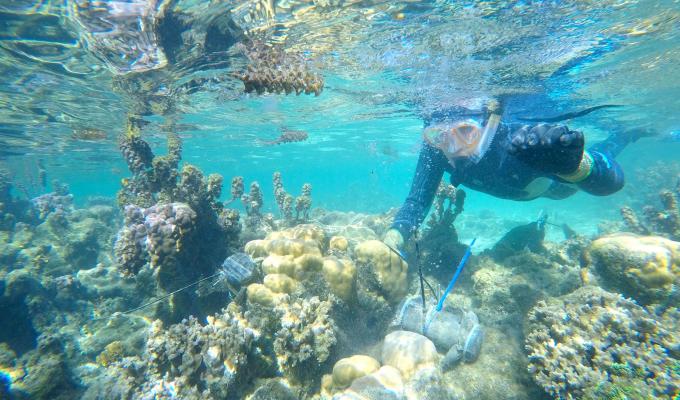
Some coral species can be resilient to marine heat waves by “remembering” how they lived through previous ones, research by Oregon State University scientists suggests.
The College of Science community recently gathered to celebrate this year’s Alumni Award recipients. These alumni distinguished themselves through their groundbreaking research, strong leadership and efforts to enhance equity, access and inclusion.
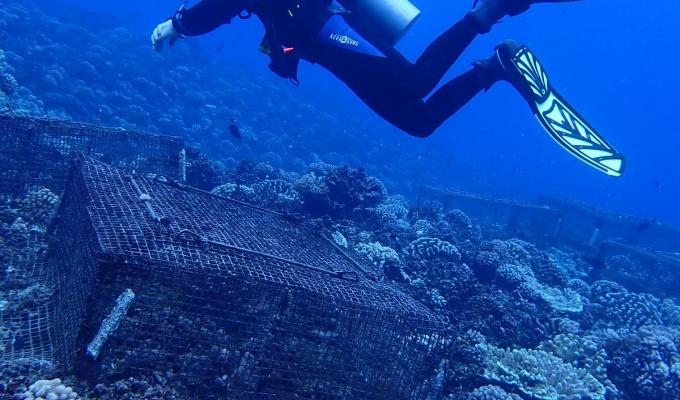
Sometimes knowing where not to deploy conservation efforts is the most valuable information. Oregon State Pernot Distinguished Professor of Microbiology Rebecca Vega Thurber and her team have received a half million-dollar grant to help grass roots conservation groups in French Polynesia identify ideal sites for coral restoration.