Join the Department of Microbiology as it hosts Vincent Racaniello, Higgins Professor of Microbiology and Immunology at Columbia University, for an upcoming lecture, "Pivoting from poliovirus to podcasts," as he shares his groundbreaking work in virology and how it led him to a dynamic science communication career.
Microbiologist Stephen Giovannoni received a 5-year $1.2 million award to continue studying the microbiology of the Sargasso Sea, an ocean gyre that is representative of ocean regions with extremely low productivity that are expanding globally due to the warming of the ocean’s surface.
This year’s research honorees are advancing knowledge at the frontiers of statistics, microbiome science and astrophysics, with discoveries that shape public health, global policy and our understanding of the universe. Their scholarship reflects both international impact and a deep commitment to mentoring, collaboration and research excellence at Oregon State.
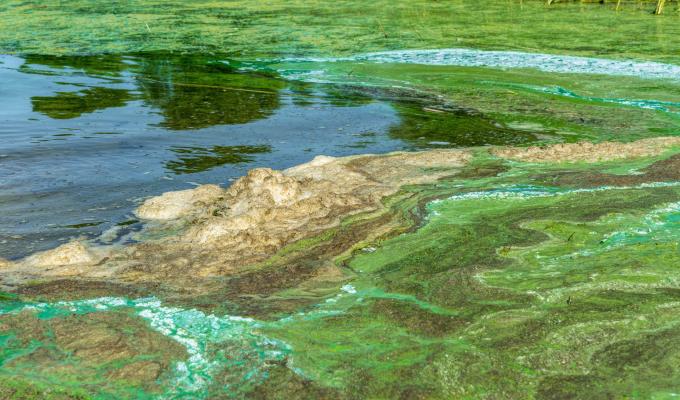
A research team including members of the College of Science has discovered a previously unknown chemical mechanism that may explain why harmful algal blooms are so persistent in nutrient-polluted lakes and reservoirs.
Meet a two new members of the Department of Microbiology, one who studies how pathogens survive and cause disease and the other loves teaching students how molecular mechanisms connect to evolutionary patterns.
A long-term analysis shows that a major Oregon reservoir abruptly swapped one type of toxic algae for another midway through the 12-year study period, absent any obvious cause.
For Jordan Indrawan, SURE meant channeling his own battle with cancer into studying the proteins linked to the disease. For Ashley Tran, it was finding a sense of belonging in a lab led by women of color. And for Matthew Hines, it was discovering a passion for research he once thought was out of reach.
Researchers in the College of Science, including faculty member Chris Suffridge and graduate student Kelly Shannon, uncovered how shifts in salmon diets may be fueling thiamine deficiency and widespread fry mortality.