A man in lab coat and gloves uses a pipet.

Shaping scientific careers through undergraduate research at Oregon State

By Hannah Ashton

Every summer, Oregon State’s Summer Undergraduate Research Experience (SURE) in the College of Science empowers students to turn curiosity into discovery, and in many cases, personal experiences into purpose. Backed by funding that allows them to fully immerse in research, students step into labs across campus to pursue projects that shape their future. From cancer biology to nutrition science, their journeys are defined by mentorship, resilience and the chance to see themselves as scientists.

For Jordan Indrawan, it meant channeling his own battle with cancer into studying the proteins linked to the disease. For Ashley Tran, it was finding a sense of belonging in a lab led by women of color. And for Matthew Hines, it was discovering a passion for research he once thought was out of reach.

Turning personal experience into purpose

At 16, Jordan Indrawan faced a life-changing diagnosis. During his junior year of high school, doctors discovered a germ cell tumor pressing against his lung. After months of chemotherapy and surgery, Indrawan survived the ordeal with a new perspective. “That experience was life-changing, of course, and made me realize that I want to contribute in some way to finding a cure,” he said.

That determination followed him to Oregon State University, where he found a home in the Department of Biochemistry and Biophysics. Originally a bioengineering major with an interest in prosthetics, Indrawan realized during organic chemistry that his true passion lay elsewhere. Encouraged by a friend, he switched majors and eventually joined the Accelerated Master’s Platform in biochemistry and biophysics.

“I’ve read research papers all the time, but I never thought I would be in one — at least at this stage."

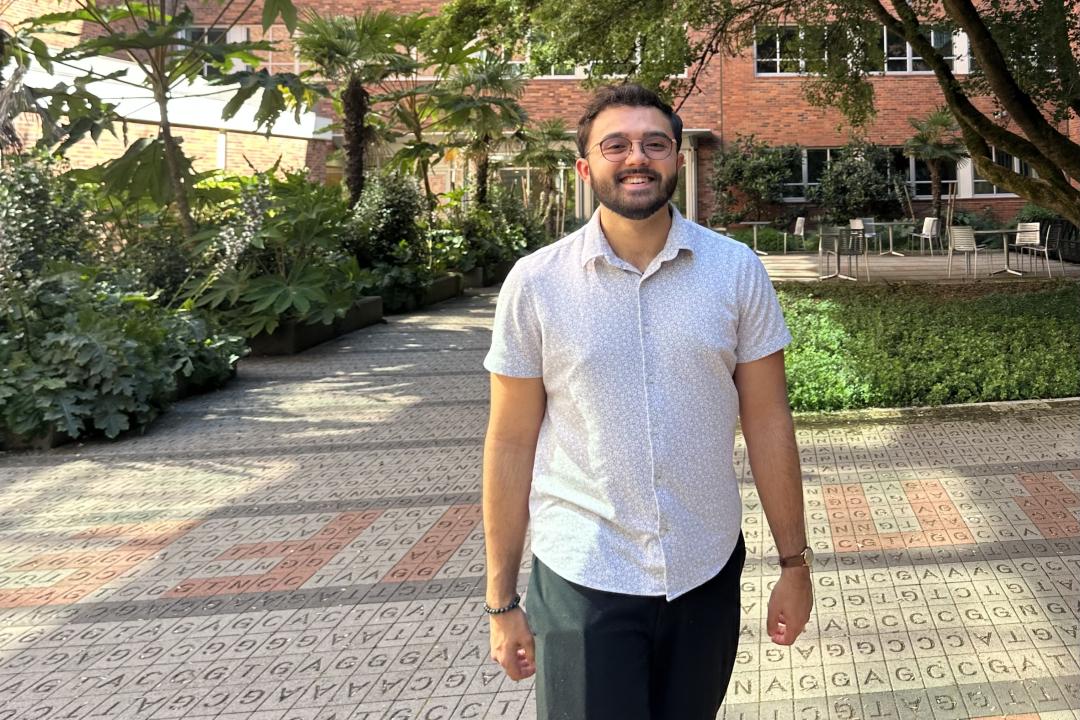
A man in a white shirt walks across campus

The Summer Undergraduate Research Experience (SURE) gave Jordan Indrawn the chance to work in biochemist Colin Johnson's lab.

The Summer Undergraduate Research Experience (SURE) gave him the chance to fully immerse himself in lab work. Indrawan joined the research group of biochemistry and biophysics professor Colin Johnson, whose lab studies a family of proteins called Ferlins, which play a role in cell communication, growth and repair. Misregulation of these proteins is linked to conditions ranging from hearing loss to cancer. “Our goal is to understand how these proteins work in the first place,” Indrawan explained. “By knowing how they function, we can hopefully contribute to further research on diseases like cancers, muscular dystrophy and hearing loss.”

SURE funding made a critical difference in his ability to focus on research. Instead of splitting his time between lab and a job, Indrawan was able to spend the summer mastering experimental techniques — from purifying proteins and DNA to cloning cells and running anisotropy experiments on a fluorometer. Ainsotrophy tracks how molecules move and interact.

“All of the different skills I learned can be applied to any molecular laboratory, so it’s very much universal,” he said.

The summer also brought a milestone Indrawan never expected so early in his career: authorship on a scientific paper. After contributing to experiments on otoferlin binding partners, he saw his name included among the authors. “I’ve read research papers all the time, but I never thought I would be in one, at least at this stage,” he said. “Seeing my name felt unreal and rewarding.”

For Indrawan, SURE confirmed his commitment to cancer research. Whether in graduate school or the biotech industry, he hopes to continue contributing to discoveries that will help patients facing the diseases he once fought himself.

Finding inspiration in mentorship

Walking into the lab of Emily Ho, director of the Linus Pauling Institute, Ashley Tran immediately saw something that reshaped how she imagined her future. She found herself among a research team full of accomplished women, led by Ho, an Asian American principal investigator. For Tran, it was a sense of belonging she had never experienced before.

“It really shows that there’s a place for everyone,” Tran said. “I think it’s truly empowering to work in that environment.”

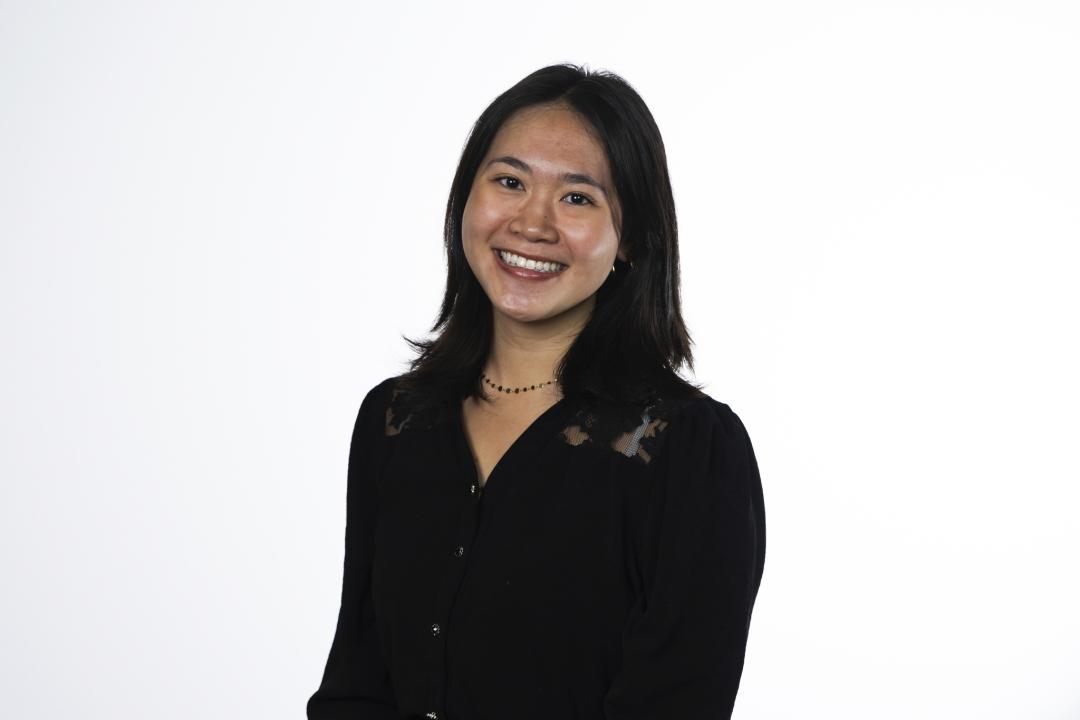
A woman in a black shirt poses for a headshot in front of a white background.

Ashley Tran, a junior biochemistry and molecular biology major, joined a research project investigating how eating walnuts might benefit memory, brain function and gut health in older adults.

A third-year biochemistry and molecular biology major from Tigard, Oregon, Tran was hesitant to try research. “I was a little nervous and definitely intimidated,” she admitted. The STEM Leaders Program, which serves a diverse group of first and second-year students, encouraged Tran to reach out to faculty, which led her to Ho’s health and nutrition lab.

Tran joined a project that was unique for undergraduate lab work, contributing to a clinical trial. Ho and her team are investigating how eating walnuts might benefit memory, brain function and gut health in older adults. Tran prepared walnut and control kits for participants, assembled urine collection supplies and processed samples of blood, stool and urine. “I am proud that I got over the fear of working with human samples,” she said. “At first the idea was shaky, but after a while it gets destigmatized and easier.”

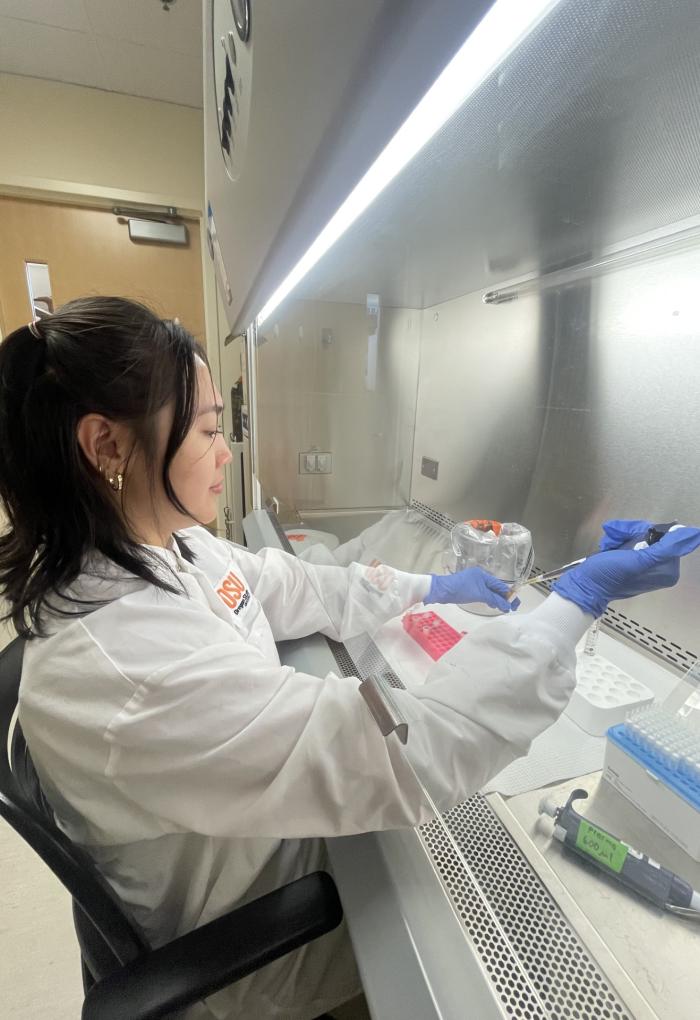
A woman in a lab coat works with a pipet.

Ashley Tran pipets plasma samples after centrifuging the blood from a participant in the walnut study.

The SURE program made it possible for her to commit fully to the project this summer. Commuting between Corvallis and her family in Tigard made unpaid lab work unrealistic. Without SURE, she would have missed more than just hands-on experience; she would have missed the power of mentorship.

Throughout the summer, Tran became close with Laura Beaver, a co-investigator on the study, who helped her find her confidence. “It was intimidating because they’re all incredible people who are very accomplished,” she said. “But once I got over that, it was all fine. You can ask questions because ultimately they want things to run smoothly and for students to succeed.”

That mentorship helped her navigate the challenges that came with the territory and experience personal growth as a scientist. Mistakes in processing samples or timing tasks were a part of the learning process. Tran also noticed how participants interpreted instructions differently, teaching her how variable human data can be.

Two women pose for a selfie holding ice cream.

Tran and her cousin (left) pose for a selfie with ice cream from the on-campus creamery.

Though research isn’t her long-term career path, Tran gained skills and perspectives that will support her future in medicine. She plans to continue shadowing neurologists and applying to medical school while holding on to the lessons she learned from her SURE summer. “Take note of opportunities. Even if you are scared, do it.”

From uncertainty to confidence

A year ago, Matthew Hines couldn’t see himself doing research. A BioHealth Sciences and BioResource Research double major from Tualatin, Oregon, Hines envisioned a career in healthcare but doubted he had the skills or confidence to thrive in a lab.

That changed thanks to the STEM Leaders Program and SURE. The STEM Leaders Program helped Hines connect with Bo Sun, a professor in the Department of Physics, while SURE allowed him to fully devote his summer to research.

“SURE gave me the chance to fully commit to the lab and prove to myself that I could do difficult things,” Hines said.

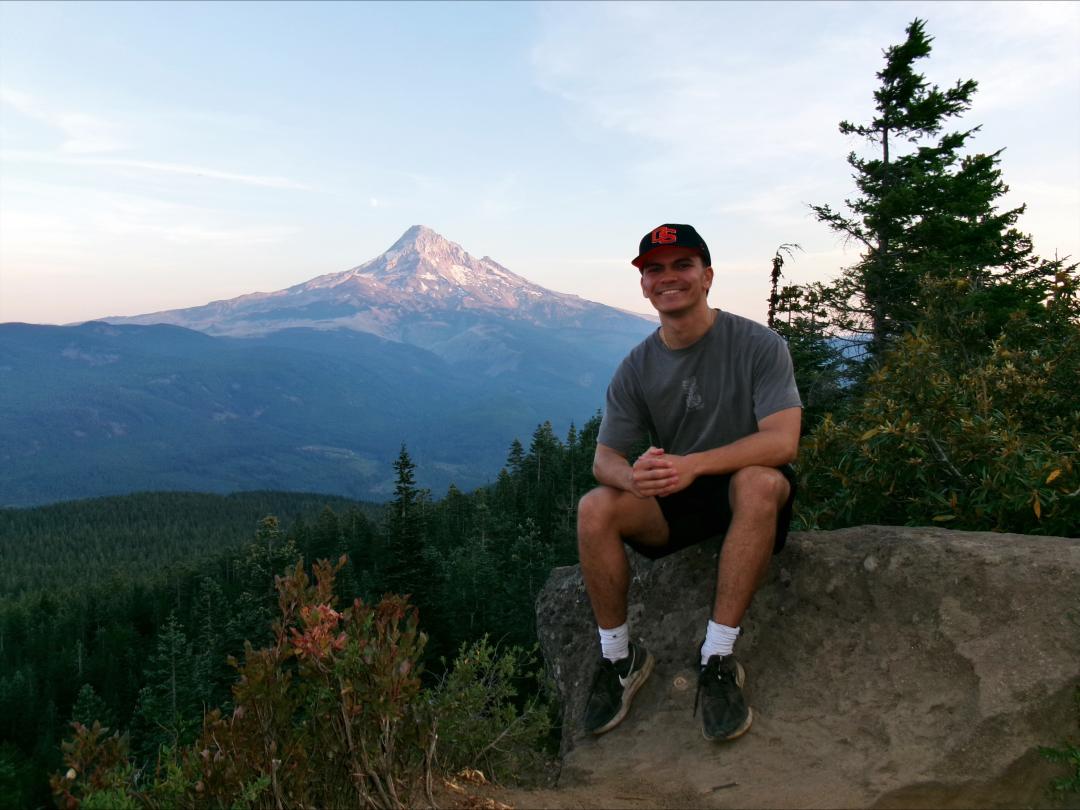
A man poses for a photo with a mountain in the background.

Matthew Hines poses for a photo while camping in Lost Lake, Oregon.

Sun’s lab is researching multifocal breast cancer metastasis, a form of cancer in which multiple tumors arise in the same breast, and cancer cell invasion. Hines developed numerous wet lab skills, including making his own breast cancer tumors (spheroids), which are clusters of breast cancer cells used to make samples and replicate actual tumors. He then imaged these samples over several days to track the invasion patterns of the cells using confocal microscopy to look for any persistence and/or biased invasion.

Finally, he performed data analysis by processing the images through a machine learning program that highlighted different phenotypes of the cells and created stacked images of the spheroids to visualize them in 3D.

“It is important to understand how invasion happens, how fast, where it goes, because that knowledge can help healthcare professionals better diagnose and treat cancer,” Hines explained. “It feels good knowing the work could have a real impact.”

The experience wasn’t always easy. To analyze his results, Hines had to learn coding from scratch, something that felt overwhelming at first. “If you mess up one character in your code, it doesn’t work. It was frustrating,” he said. “But focusing on the bigger picture kept me motivated. Every figure I produced showed me I was making progress.”

Four men pose for a photo wearing pacific islander clothing.

Matthew Hines (far right) poses for a photo before Pasifika Fest 2025. The event celebrates the richness and diversity of Pacific Islander cultures.

Beyond technical skills, Hines credits SURE with helping him see failure in a new light. In science, failure is common. “It made me more creative in problem solving and gave me confidence I didn’t have before.”

Mentorship was another defining element. Hines built a stronger relationship with Sun and the graduate students in the lab, who guided him through challenges and encouraged him along the way. “The environment and the people you work with are one of the most important parts of any job,” he said. “Without that mentorship, I don’t think I’d be as motivated to keep doing research.”

Now, Hines plans to continue in Sun’s lab as he works towards his BioResource Research thesis. The experience confirmed his passion for healthcare and sparked a deeper interest in research, something he once thought was out of reach.

A man in a backwards hat works at a lab.

Hines monitored the development of his spheroids, clusters of breast cancer cells used to replicate actual tumors.

Since 2015, the Summer Undergraduate Research Experience (SURE) has funded more than 300 College of Science students to spend their summers immersed in discovery. Undergraduate research is a hallmark of science at Oregon State, with about half of students participating annually through programs like SURE, the Launching Undergraduate Research Experiences (LURE) program during the academic year, discovery-based projects embedded in courses and mentorship in faculty labs. Together, these multiple pathways to hands-on learning prepare students to explore their curiosity and build successful futures in science.

To learn more about undergraduate research opportunities in the College of Science click here.