Faculty and Staff

Faculty and Staff

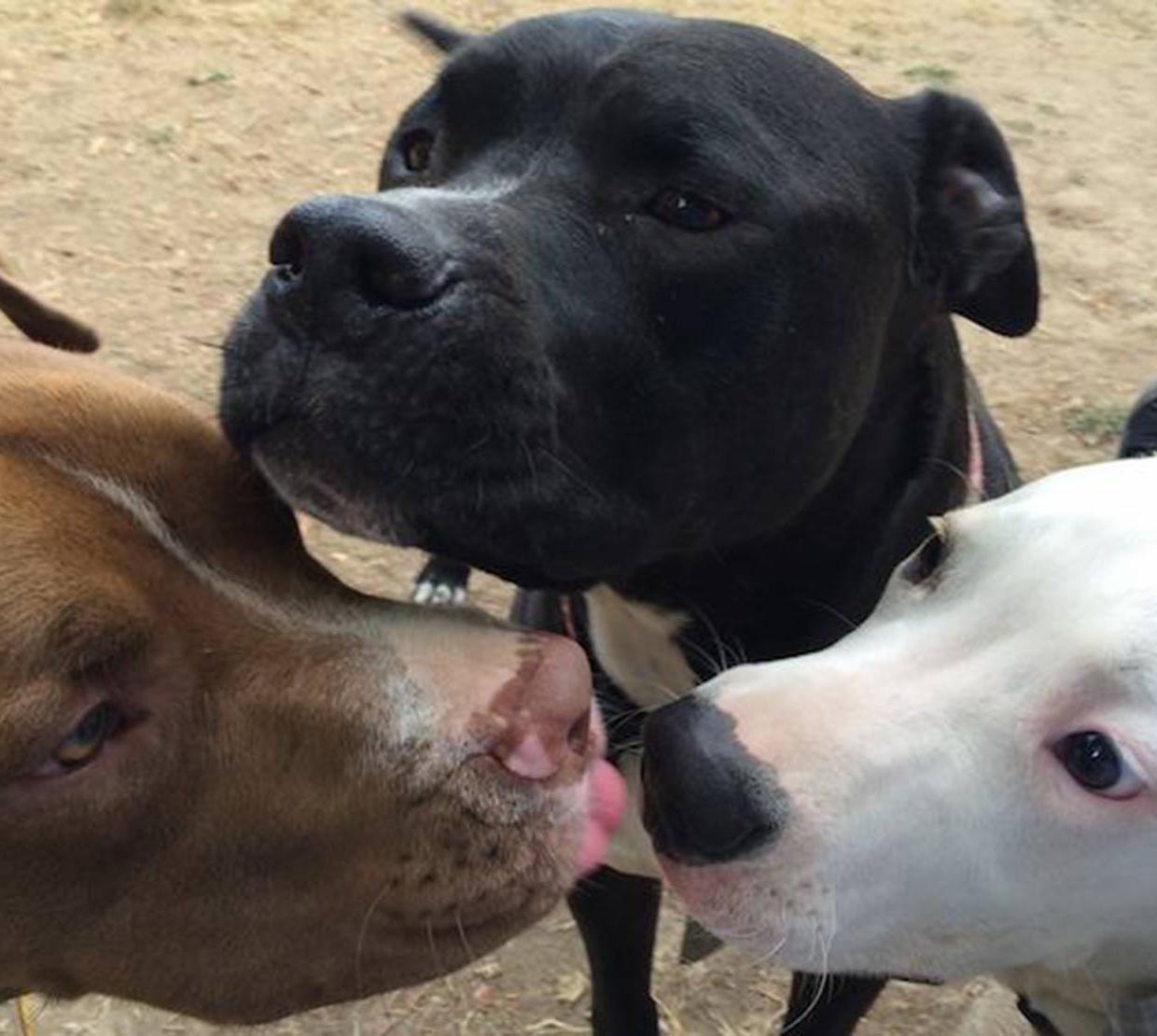
Rescue dogs licking each other in dog park

Sample of rescued dogs shows link between gut microbiome, aggressiveness

By Steve Lundeberg

Microbiologists study two dozen rescue dogs

Oregon State University microbiologists are part of a groundbreaking study of more than two dozen rescued dogs, some aggressive and some not, which shows a clear link between aggressive behavior and the microbes that live in the dogs’ guts.

The findings, published in PeerJ, stop short of saying the composition of a dog’s gut microbiome causes aggressiveness, or vice-versa – only that there are statistical associations between how an animal acts and the microbes it hosts.

Still, the work by Oregon State researchers represents an important step toward more effectively dealing with a canine behavioral disorder that daily puts both animals and people at risk of injury or even death.

“In terms of how microbes potentially influence dog behavior, this lays the foundation for how aggression and gut microorganisms may be connected,” said lead author Nicole Kirchoff, a graduate student in microbiology. “To our knowledge no other study has looked at the relationship between dog aggressiveness and gut microbes.”

Domesticated dogs have lived with humans for more than 14,000 years, are among the most popular companion animals and forge strong bonds with both people and other animals. But aggressive behavior nevertheless remains a common problem and in many cases leads to animals being euthanized.

The study involved 31 “pit bull type dogs,” 14 males and 17 females, who were living at a temporary shelter after having been rescued from a dogfighting operation.

Upon reaching the shelter, and prior to the start of the research, each dog was put through a series of tests by an animal welfare agency and categorized as aggressive or non-aggressive.

Animal welfare workers also collected a fecal specimen from each animal so the scientists could analyze the dogs’ gut bacteria.

Firmicutes, Fusobacteria, Bacteroidetes and Proteobacteria were the dominant phyla among all stool samples, but their abundance differed significantly between aggressive and non-aggressive animals.

The co-authors of the article include Thomas Sharpton, assistant professor of microbiology and statistics, and Monique Udell an animal behavior researcher in the College of Agricultural Sciences.

“We’re finding associations between types of organisms in the gut and aspects of vertebrate physiology we wouldn’t have hypothesized about prior to the emergence of microbiome research over the last couple of years,” said Sharpton. “The gut-brain axis, the reciprocal communication between the enteric nervous system and mood or behavior, is a rapidly growing and exciting body of research.”
Read complete article

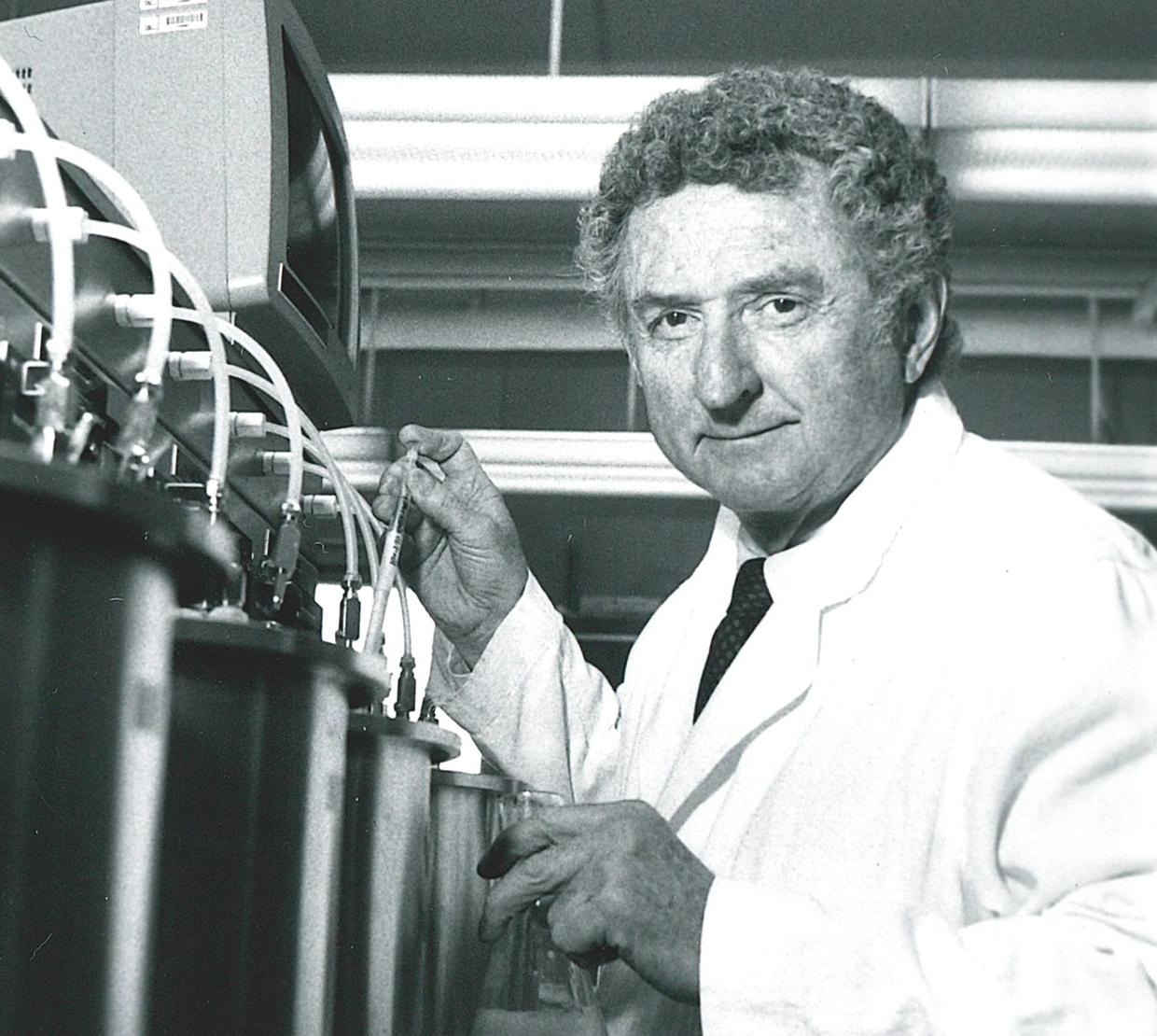
black and white photo of William Sandine working with lab equipment

Noted microbiologist William Sandine dies at 90

Microbiology professor William Sandine

Distinguished Emeritus Professor of microbiology William (Bill) Sandine died on November 28, 2018 at the age of 90 in Allen, Texas, with his wife Susan at his side. Sandine received his doctorate in food microbiology from Oregon State University in 1958, studying the physiology and taxonomy of lactic acid bacteria.

A fellow in the American Academy of Microbiology, Sandine joined the Department of Microbiology as faculty in 1959 and served for 35 years, becoming a distinguished professor before retiring in 1996.

Sandine received many awards and honors. He was named an OSU Alumni Fellow for outstanding achievements and service to society, and was honored by the American Dairy Science Association for his contributions to the industry. His research contributed to the development of fermentation, leading to improvements in cheese and other dairy products.

Sandine’s research focused on creating different “starter” cultures in the dairy industry, slowing spoilage bacteria to promote longer shelf life of products, using other bacteria to improve the flavor of cultured dairy products, and improving methods of ripening cheese.

He supervised 40 Master’s and 38 Ph.D. students and authored more than 200 publications.

In addition, Sandine garnered 22 patents for his work, for research ranging from the creation of new starter cultures to the development of different types of cheddar and cottage cheeses. These provided support for young faculty in the department.

During retirement, Sandine played a lot of golf, enjoyed his family, was active in church, drove his Model A, hunted for antiques, traveled and was an active member in Rotary serving humanitarian efforts. Sandine was a true gentleman and we will all remember his laughter and generosity of spirit.


Read more stories about: faculty and staff, microbiology


Thomas Sharpton with colleague looking at samples in lab

From scientific ideas to innovative solutions in the marketplace

Innovation Days

The College of Science is launching a transformative program to support and strengthen innovation and entrepreneurship that will enable us to better identify, validate, and develop the commercial impact of basic research. Innovation Days will bring together faculty, faculty research assistants and research associates to discuss and learn about moving basic research ideas and discoveries from the lab to commercial applications and practical solutions.

Co-hosted by the College of Science and the Office of Commercialization and Corporate Development (OCCD), Innovation Days will host its first session on January 7, 2019, 2:30-5 pm followed by a reception from 5-6 p.m. The deadline to register is December 14, 2018. Additional sessions to follow on February 4, April 1 and April 29.

Innovation Days is designed to build awareness and engagement with experts who will help advance and propel the OSU innovation enterprise. Workshop participants will learn about resources to:

  • Leverage basic research and research funding opportunities toward application
  • Increase the impact of basic research through patents and commercialization
  • Validate broader impacts of research projects to enhance proposal success
  • Connect with local innovation ecosystem and identify pathways to translate research to application
  • Create opportunities with industry
  • Integrate invention disclosures, patent applications, and company formation into day-to-day work to advance your career

Facilitators represent and support the many pathways available to successfully transfer technology and commercialize scientific research. The workshop series includes: Berry Treat, director of OCCD, who will provide an overview of his office and how it supports the research to industry pathway; Joe Christison, senior intellectual property and licensing manager at OCCD, who will introduce participants to technology transfer at OSU; Katie Pettinger, commercialization catalyst at OSU Advantage Accelerator, who will discuss startup support available to OSU researchers; chemistry professor Rich Carter, who will share his success story as an inventor; and Chris Stoner, senior industry contracts manager, OCCD, who will discuss the development of appropriate and effective research agreements with companies.

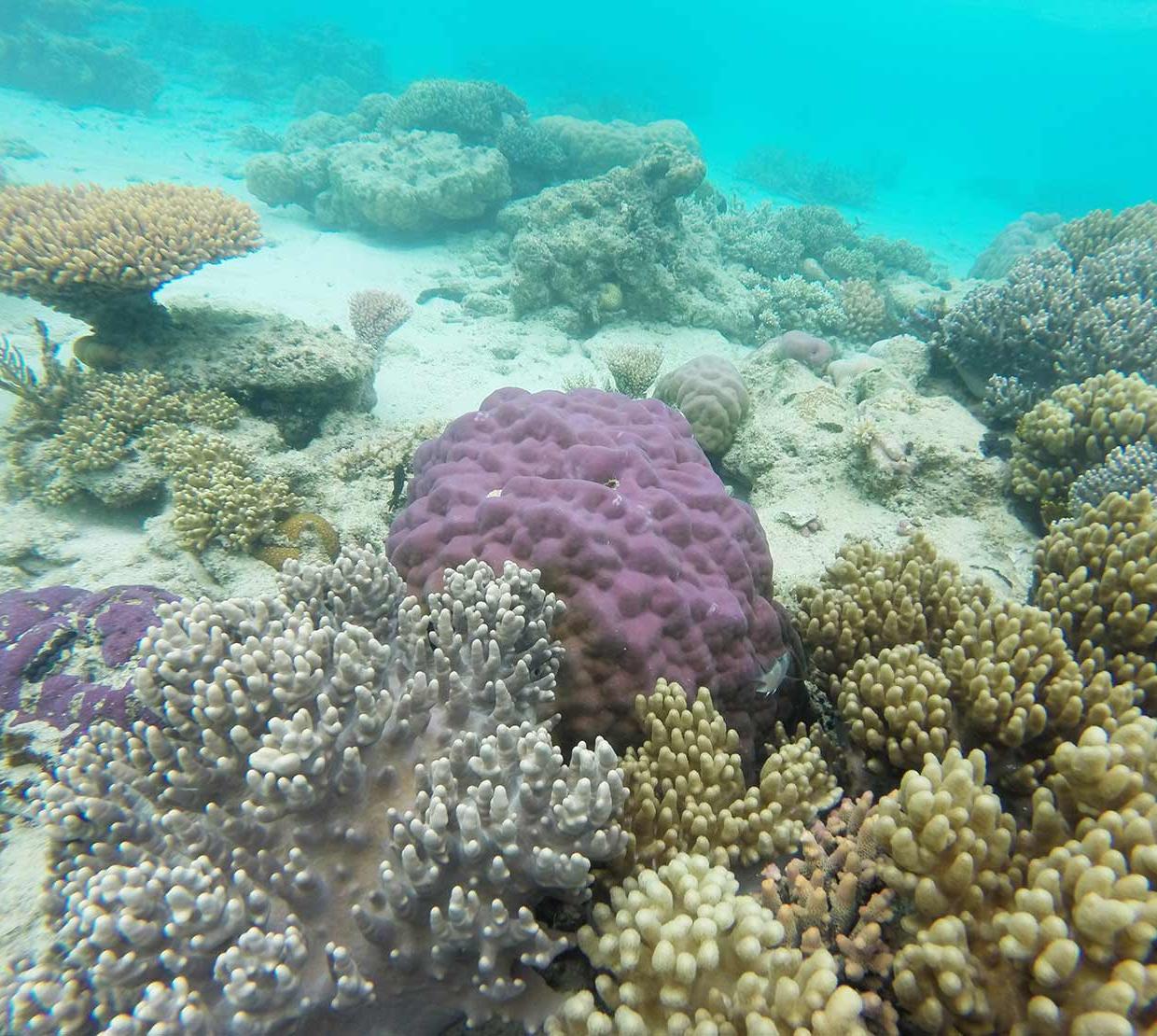
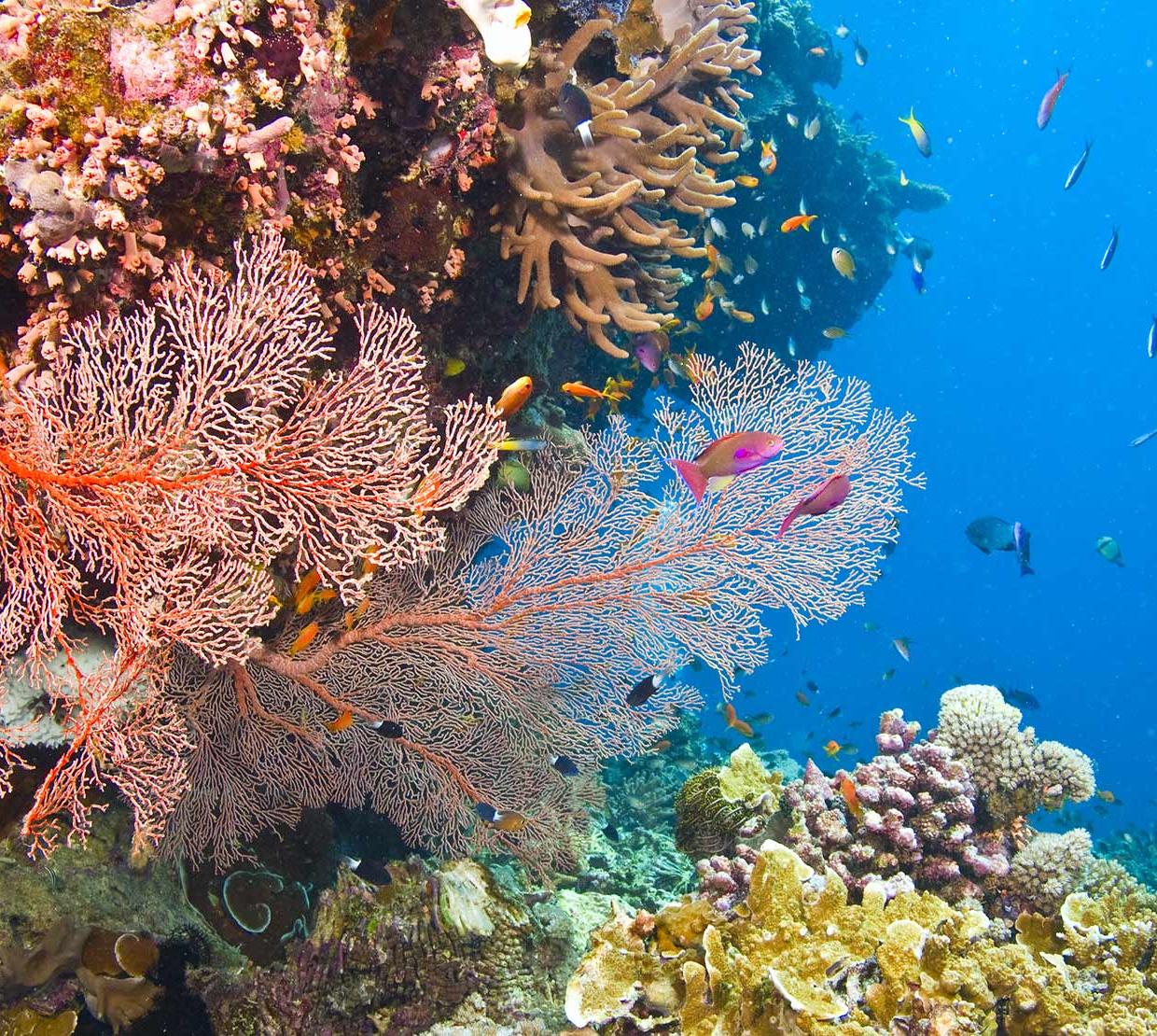
coral at bottom floor of shallow ocean

Corals and their microbiomes evolved together, new research shows

By Steve Lundeberg

Troubled coral reefs

Corals and the microbes they host evolved together, new research by microbiologist Rebecca Vega Thurber and her research team shows. The findings, published in Nature Communications, add fresh insight to the fight to save the Earth’s embattled coral reefs, the planet’s largest and most significant structures of biological origin.

Funded by the National Science Foundation, the study involved hundreds of samples of scleractinian corals – also known as stony corals – which since their first appearance 425 million years ago have branched into more than 1,500 species.

Many of those are major builders of coral reefs, which are found in less than 1 percent of the ocean but are home to nearly one-quarter of all known marine species. Reefs also help regulate the sea’s carbon dioxide levels and are a crucial hunting ground that scientists use in the search for new medicines.

“Many corals have gone extinct during industrialization and many others are threatened with extinction,” said study co-author Vega Thurber, who is featured in the 2018 Oregon State University-produced documentary “Saving Atlantis.” “If we see patterns of evolution between microbiomes and corals, that gives us an idea of which microbes to target – to learn what they do, how they help corals resist climate change, and how they help to buffer against nutrient pollution. We can look in more depth at the microbes and understand how they help or hurt their hosts.”

Modern corals are home to a complex composition of dinoflagellates, fungi, bacteria and archaea that together make up the coral microbiome. Shifts in microbiome composition are connected to changes in coral health.

“Likely the ancestral corals also harbored complex microbial communities but there’s a lot we don’t know about how these coral-microbe symbioses evolved or the key factors influencing microbial communities in modern corals,” Vega Thurber said. “Certain species of corals have distinct microbiomes, to the point where that occurred at some point in their evolutionary history. Not 400 million years ago, but there are specific groups of microbes that do show very strong evidence of evolving with their hosts more recently.”

Vega Thurber and Ryan McMinds, a Ph.D. student in her lab and co-first author of the paper, were part of an international collaboration that also included Penn State University’s Monica Medina and former Oregon State post-doctoral scholar Jesse Zaneveld, now an assistant professor at the University of Washington-Bothell.

The massive, computationally challenging research project involved taking 600 coral samples from 21 reefs off the coasts of Australia, spanning 17 degrees of latitude.

Read the full article.

cell icon above light texture

Recognizing research and administrative excellence

2018 Fall Faculty and Staff Awards

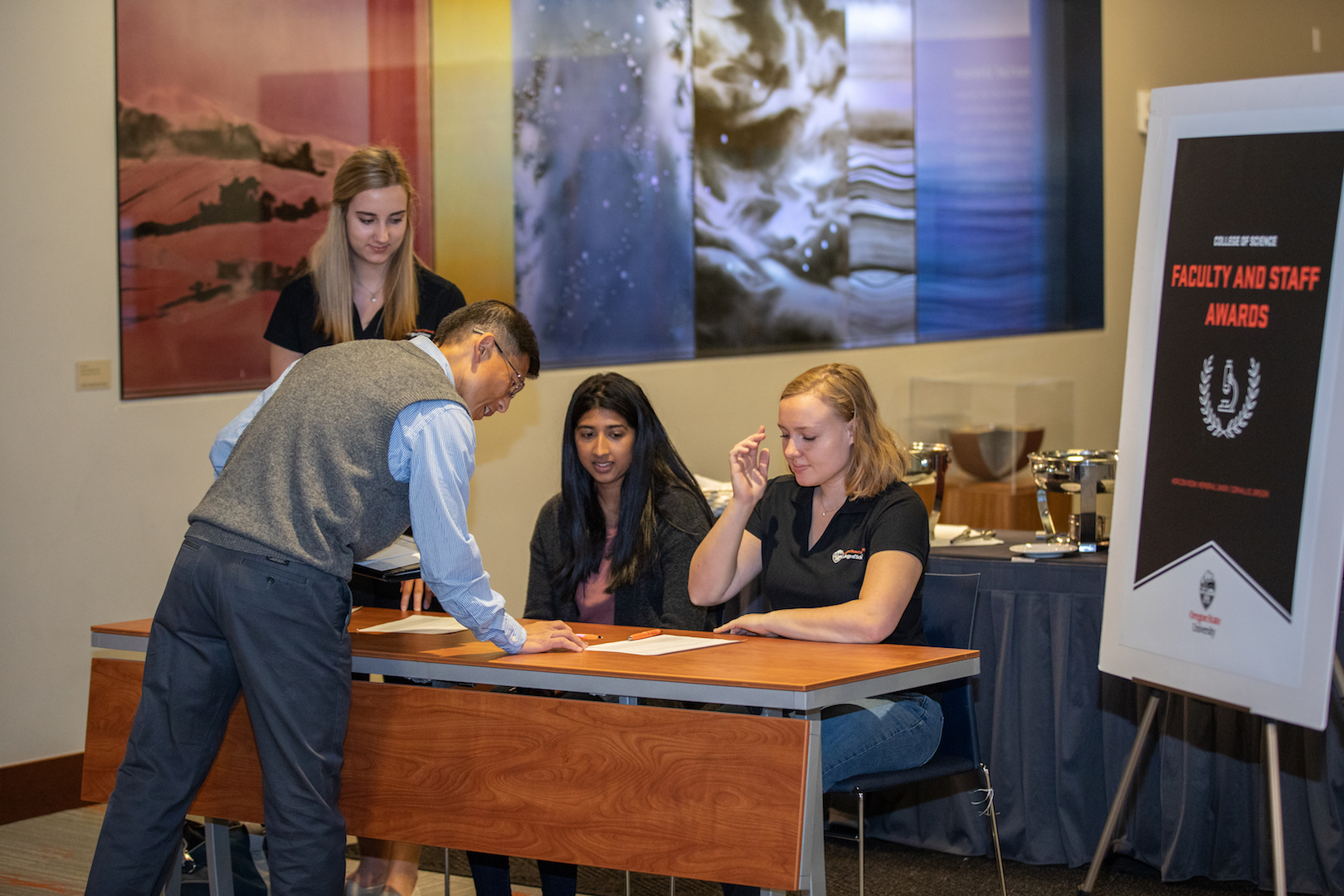
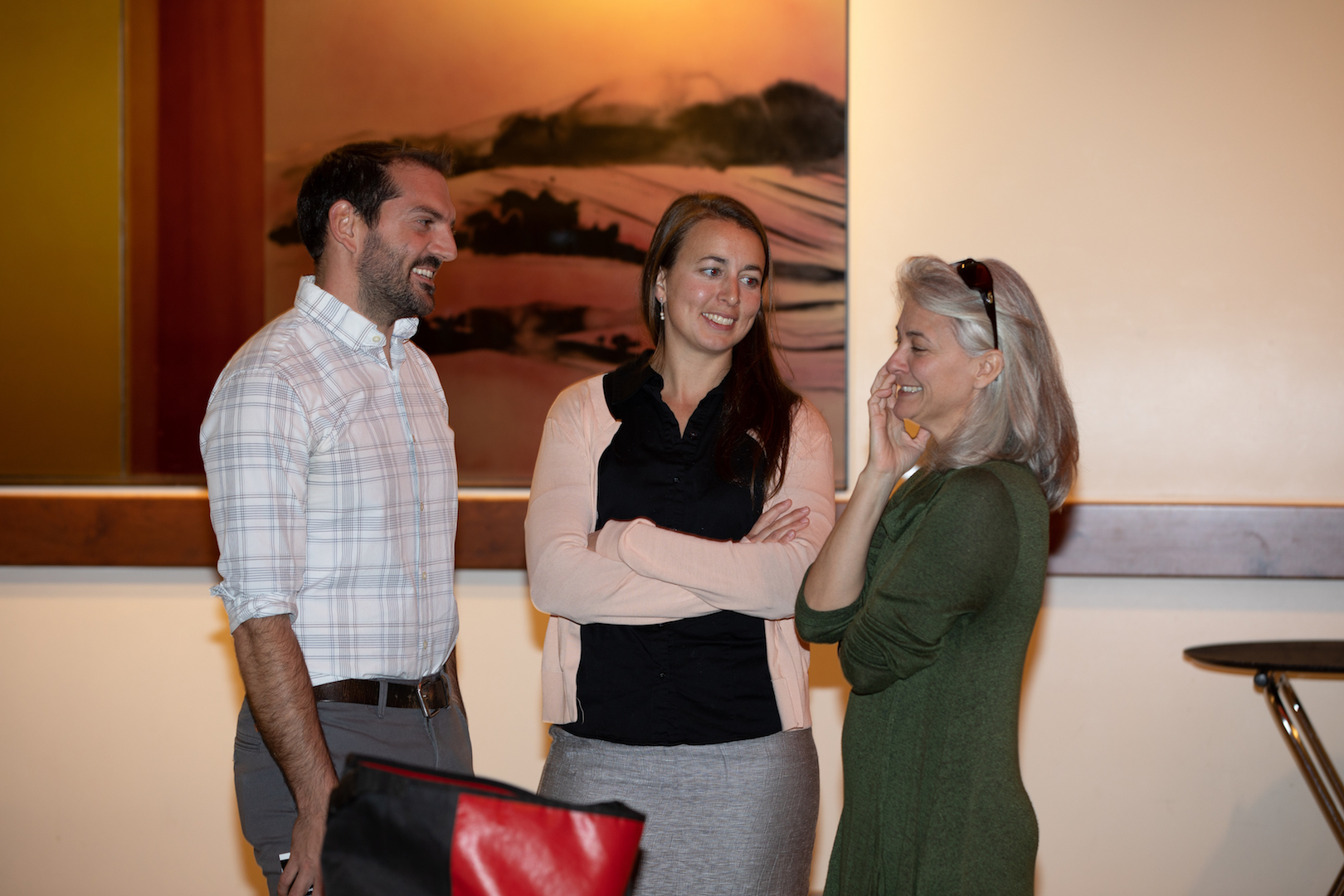
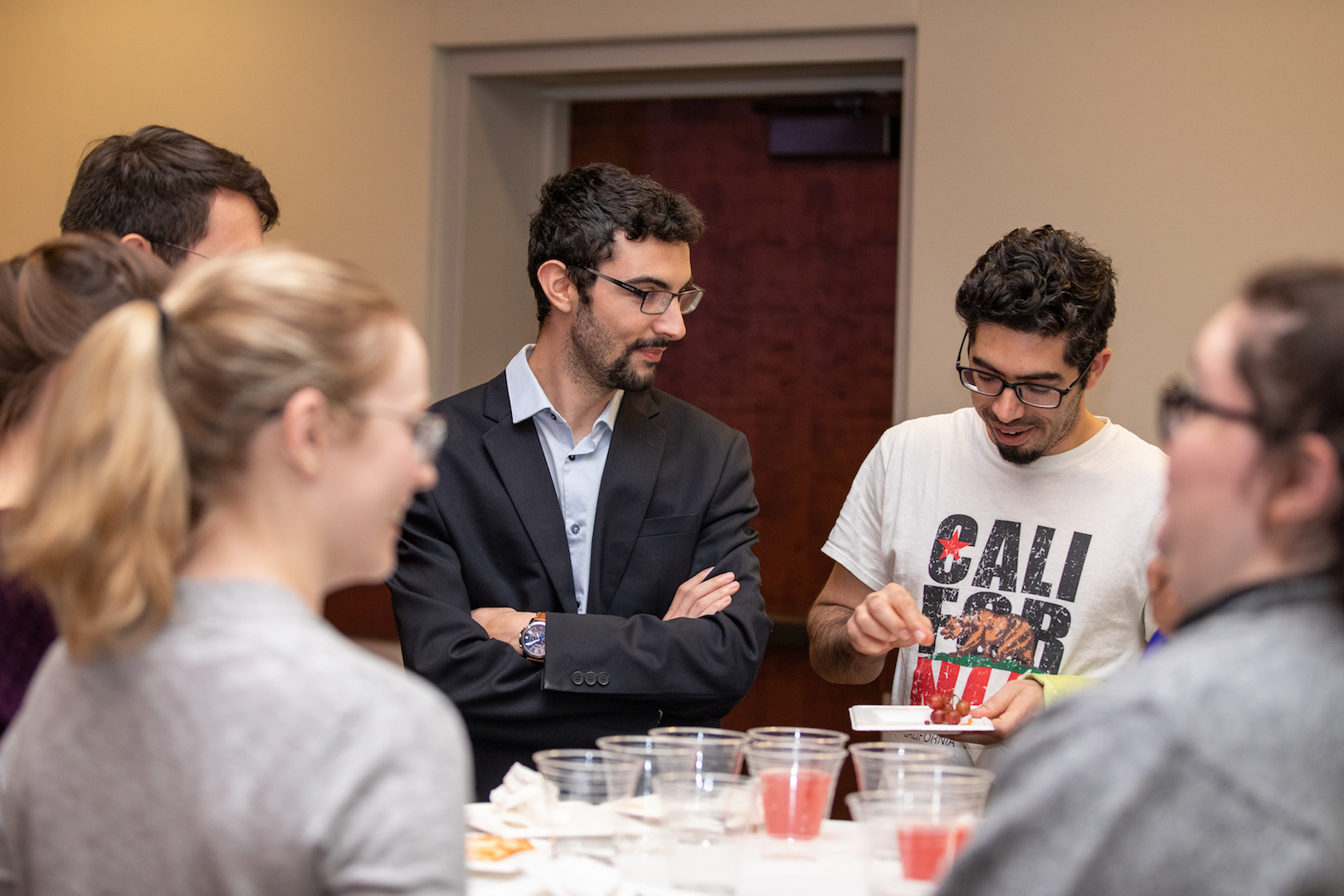
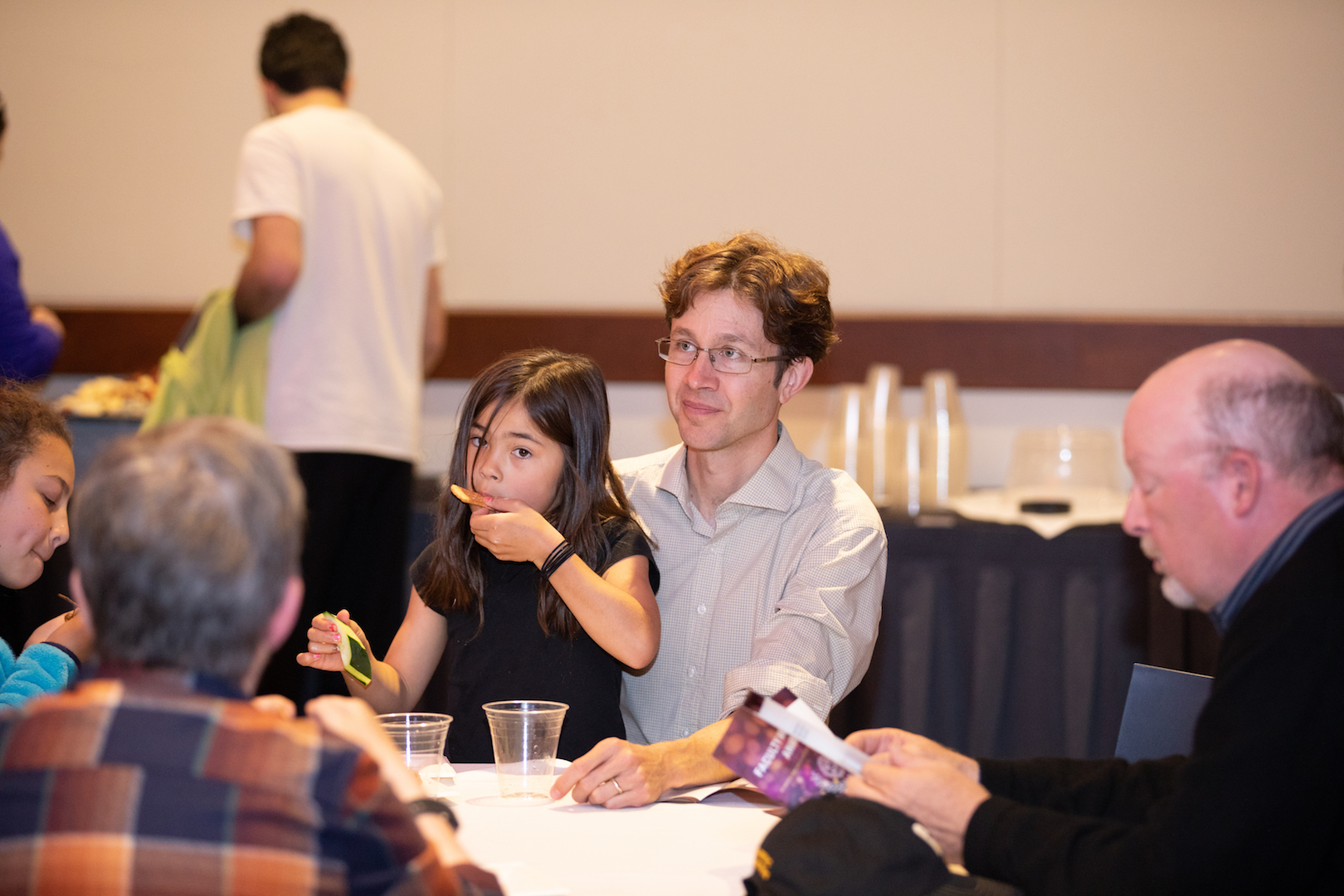
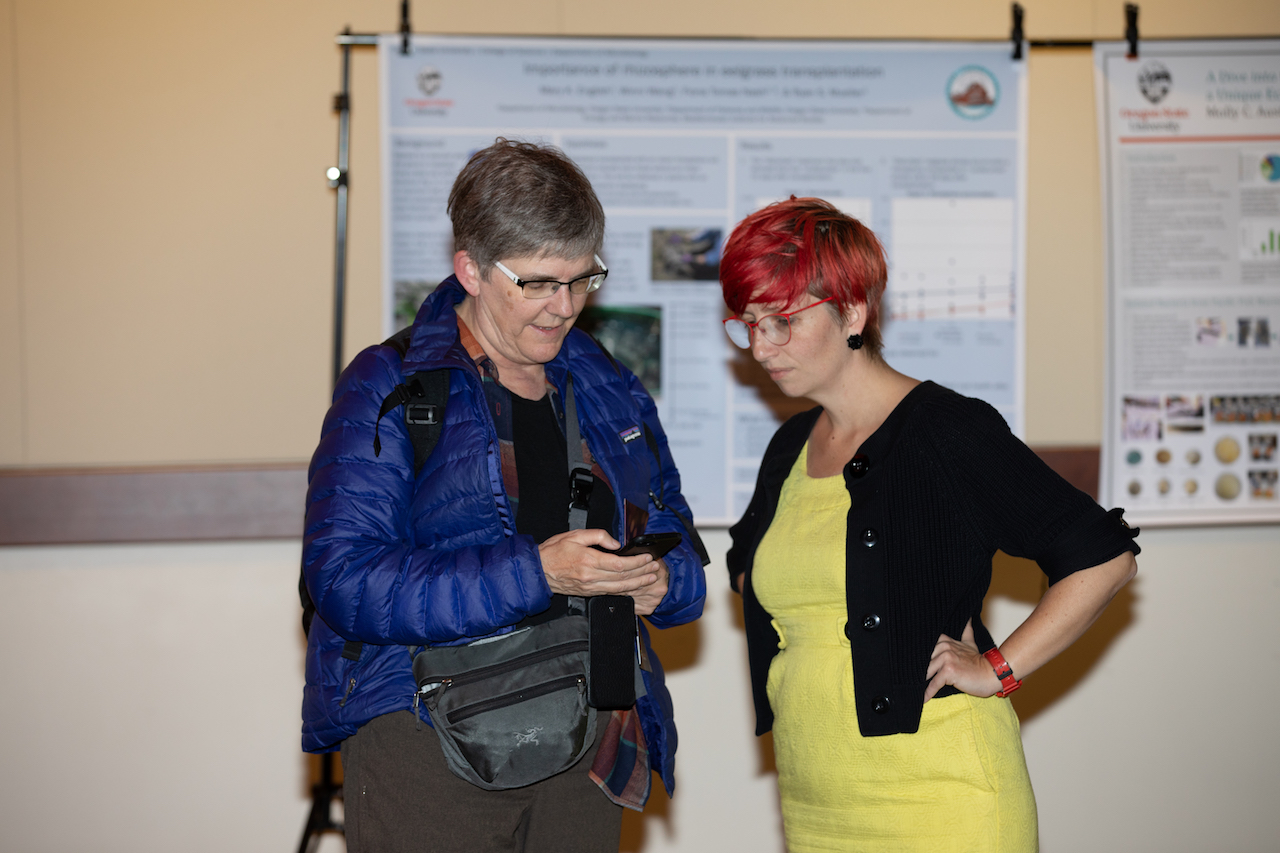
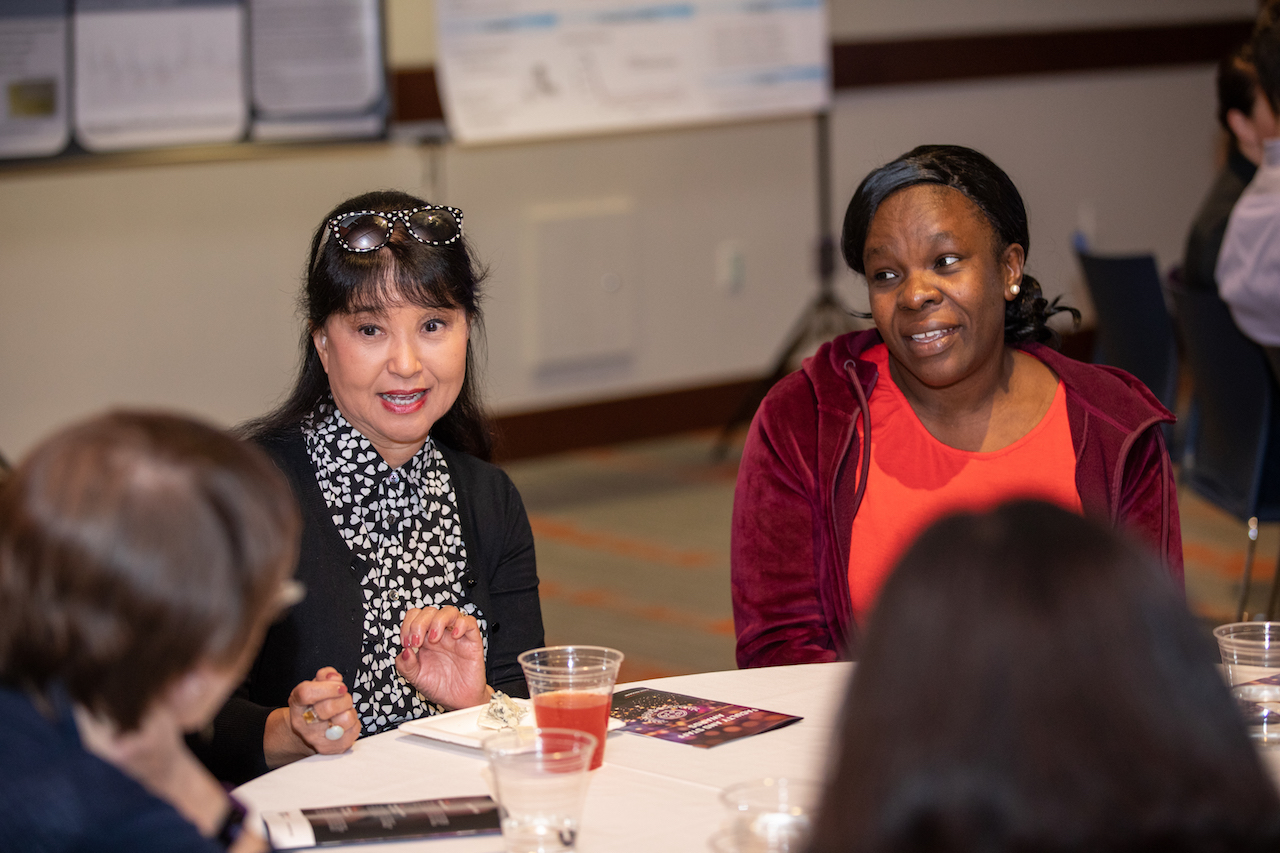
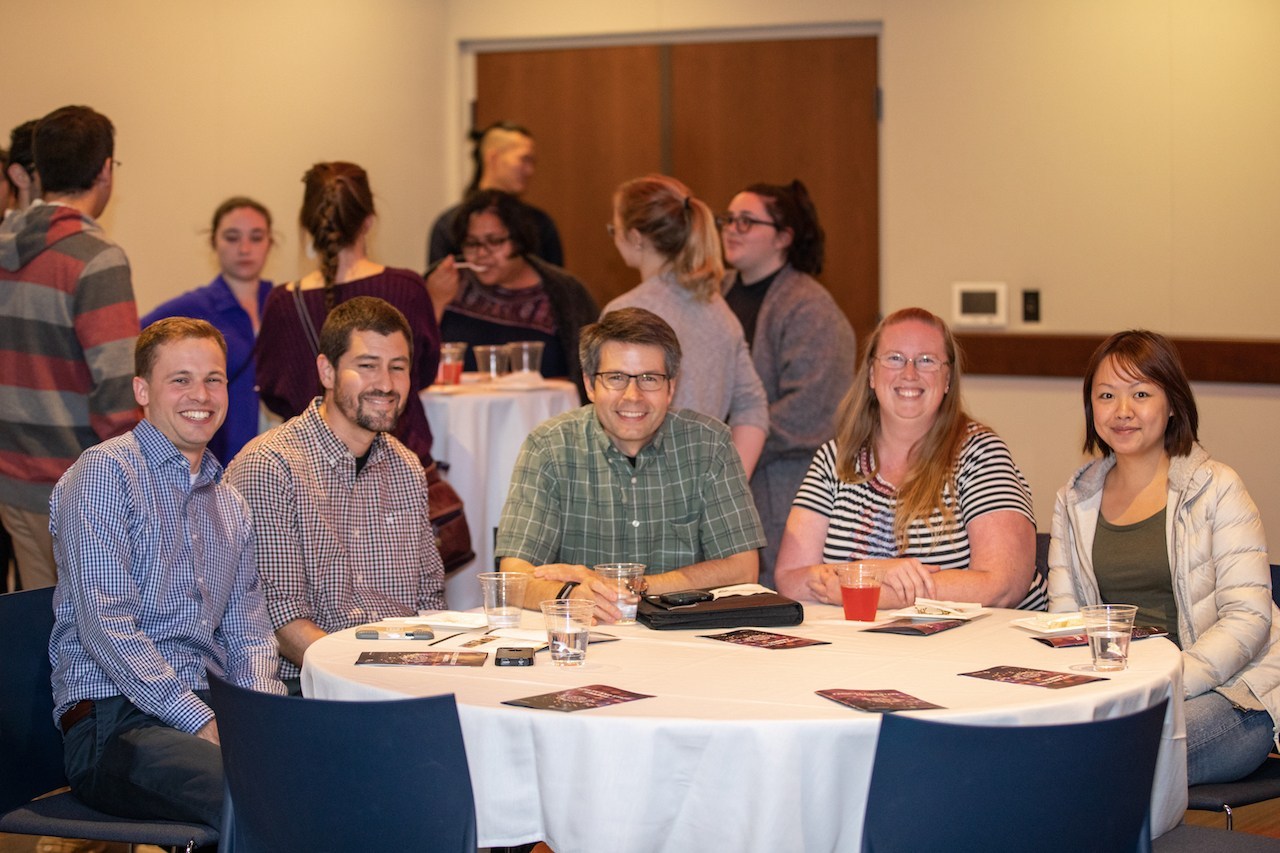
The College of Science celebrated research and administrative excellence at its 2018 Fall Faculty and Staff Awards ceremony and reception on October 11.

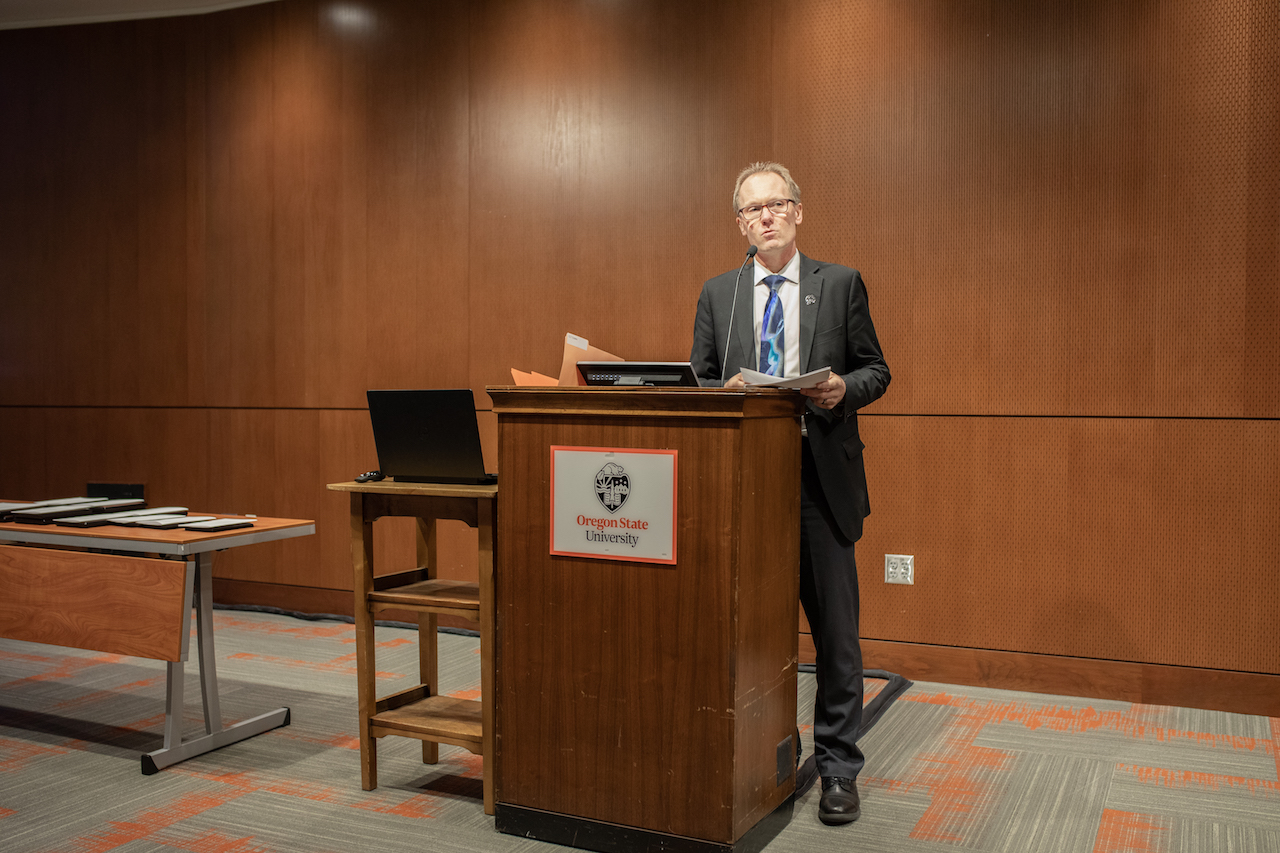
Dean Roy Haggerty delivered welcome remarks, sharing his priorities for the upcoming year in the areas of research and innovation development, student recruitment and retention, revenue growth for the College and diversity, inclusion and justice.

In keeping with the College of Science’s key objective to spur research and innovation, Dean Haggerty announced three new awards to support fundamental discoveries and collaborative scientific projects with the potential for substantial social impact. The Science Research and Innovation Seed Program (SciRis) provides funding in three stages for high impact collaborative proposals that build teams, pursue fundamental discoveries and create societal impact. The awards range from $10,000 to $125,000 for various stages of the proposal.

SciRis-II Award will provide up to $10,000 for an individual faculty who seeks to establish or augment research relationships with external partners, either inside or outside of Oregon State University, in academia, industry, or other organizations inside and outside of the United States.

The Betty Wang Discovery Fund, recently established by a generous endowment of $750K from the estate of Samuel Wang, will grant one or more awards to maintain state-of-the-art laboratories to advance fundamental discoveries in the basic sciences.

Hearty congratulations to these award-winning faculty and staff who were recognized for their outstanding achievements:

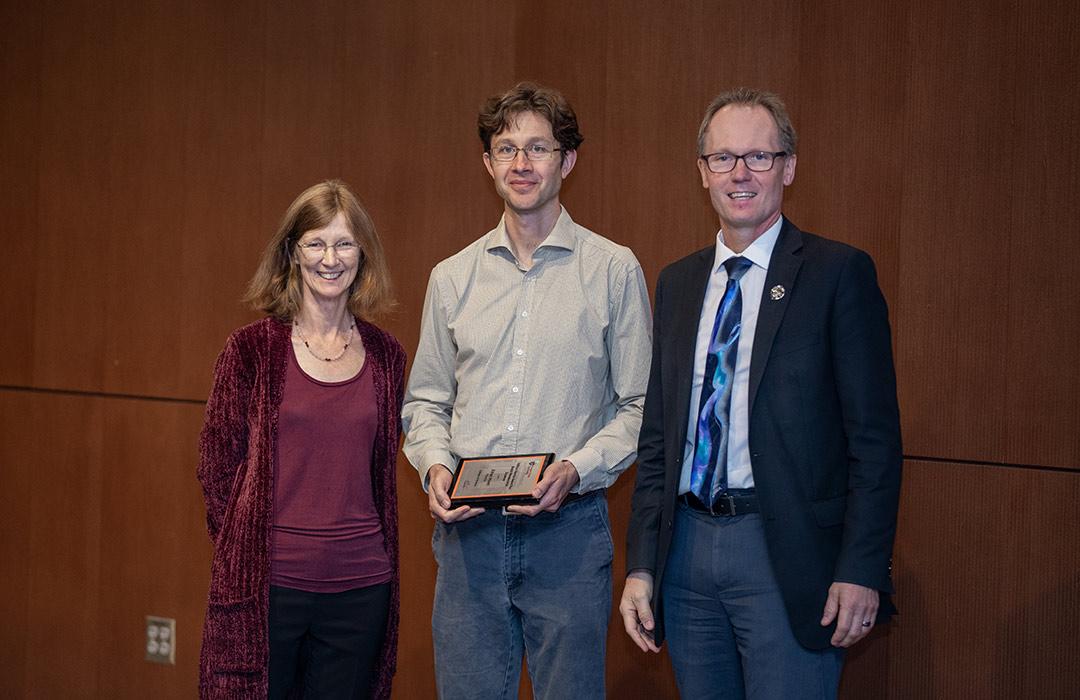
Ethan Minot receiving award from Janet Tate and Roy Haggerty

Physicist Ethan Minot (center) with Janet Tate and Roy Haggerty

Ethan Minot, associate professor of physics, received the Milton Harris Award in Basic Research for his impressive accomplishments as a scientist. At Oregon State, Minot has built a world-class materials physics laboratory for the study of the structure and properties of carbon nanomaterials and devices for nanoelectronics.

His research at Oregon State has pushed the limit of fundamental properties of nanoelectronic devices, which have a broad range of applications to biosensing and solar energy harvesting. Some of his achievements are: identifying the fundamental noise mechanism that limits the performance of graphene biosensors in liquid environments; becoming the first to electrically generate and detect single point defects; reaching a new level of control over point defect chemistry; and other pioneering advances in the development of high-quality nanodevices and biosensors.

“Using the exceptionally strong, flexible, stable and sensitive electronic materials Ethan has demonstrated that the carbon-based nanodevices can be intimately interfaced with biological systems. His research impact extends beyond the science he has produced. Ethan’s group is a highly-prized destination for graduates and undergraduates alike,” said Professor of physics Janet Tate.

Minot’s graduate and undergraduate students have gone on to successful careers in academic and high tech or medical tech sectors. His versatile research activities have led to many high-impact publications. During his tenure at OSU, Minot has published 34 refereed articles in prestigious journals such as Nano Letters and Applied Physics Letters.

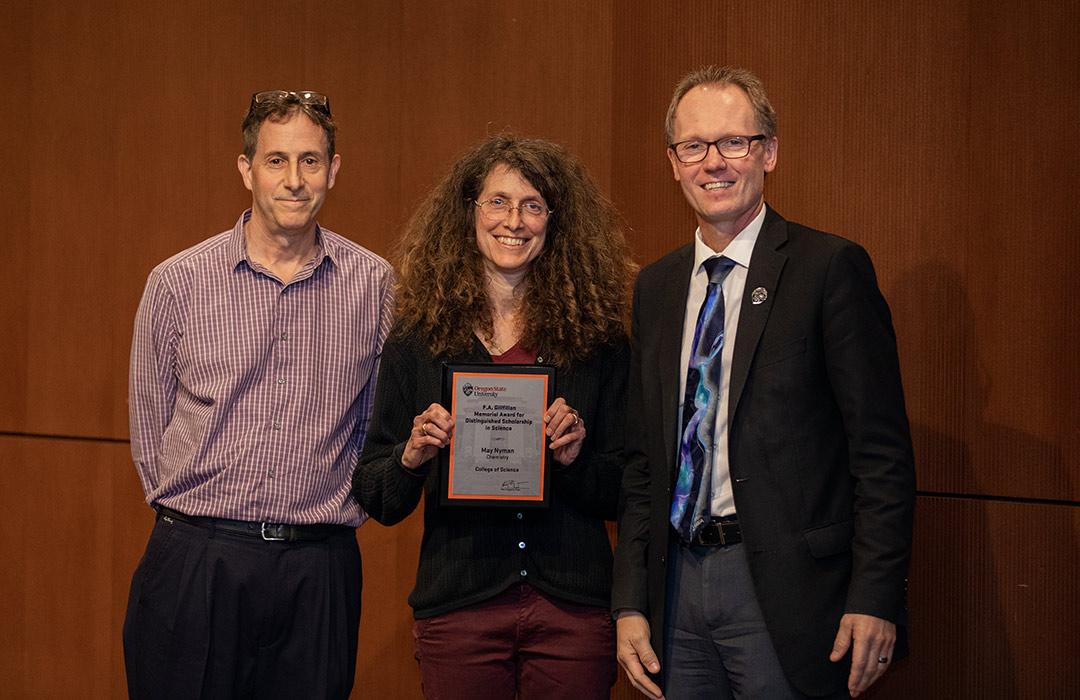
May Nyman receiving award from Michael Lerner and Roy Haggerty

Chemist May Nyman with Michael Lerner (left) and Roy Haggerty

Professor of chemistry May Nyman was honored with F.A. Gilfillan Award for Distinguished Scholarship in Science. The Gilfillan Award honors a faculty member in the College whose scholarship and scientific accomplishments have extended over a substantial period of time.

A leading scientist in the areas of metal-oxo cluster chemistry, X-ray scattering, aqueous ion-pairing and nuclear waste chemistry, Nyman joined Oregon State in 2016 after a distinguished career at Sandia National Laboratories where she developed new sorbents and other waste treatment technologies for nuclear waste management. Her work on Cs-139 removal technologies led to the licensing of a sorbent that is currently used to treat contaminated seawater at the failed Fukushima Daiichi nuclear power plant in Japan.

At Sandia, Nyman developed a powerful and effective sorbent for removal of strontium-90, plutonium and neptunium from cold war era nuclear wastes. The sorbent was commercialized and then produced at the Savannah River site for real world waste treatment. Through her work with applied chemistry technologies, Nyman made tangential discoveries that ultimately led to the development of an entire new class of polyoxometalates (POMs) that she termed the polyoxoniobates (PONbs). These new POMs opened up the field to new discoveries and applications that include the potential development of a new class of nerve agent degraders.

At Oregon State, Nyman has developed expertise solution characterization of clusters using X-ray scattering. She has now become a world leader in applying this technique to clusters. She continues to be an international leader in the field of POMs, PONbs and other metal oxo clusters formed from elements across the periodic table. Her research group’s latest discovery and paper on this topic show how PONb cluster geometries and nucleation are changed simply by the presence of alkali metal cations.

“This latter work is also one example amongst several from the Nyman group that suggests a revolutionary concept – that the standard Pourbaix diagrams collected and widely used by materials and chemistry researchers for several decades may be not be accurate without careful consideration of the electrolytes in solution,” said Michael Lerner, Head of the Department of Chemistry.

The broader impact of improving the model used in such fundamental chemistry is significant – aqueous chemical processes such as geochemical weathering, corrosion and energy production in fuel cells may all be improved. Moreover, through these studies, Nyman’s team learned how to make very high concentration Nb solutions with a neutral pH that can be used to deposit niobate materials for different energy applications. This future work can lead to new functional materials deposited by ‘green’ processes.

Nyman is a leading member of the materials science of actinides program at the Department of Energy’s Energy Frontier Research Center program—her roles include developing uranyl peroxide clusters for fundamental actinide science applied in the nuclear fuel cycle, and training the next generation of actinide scientists.

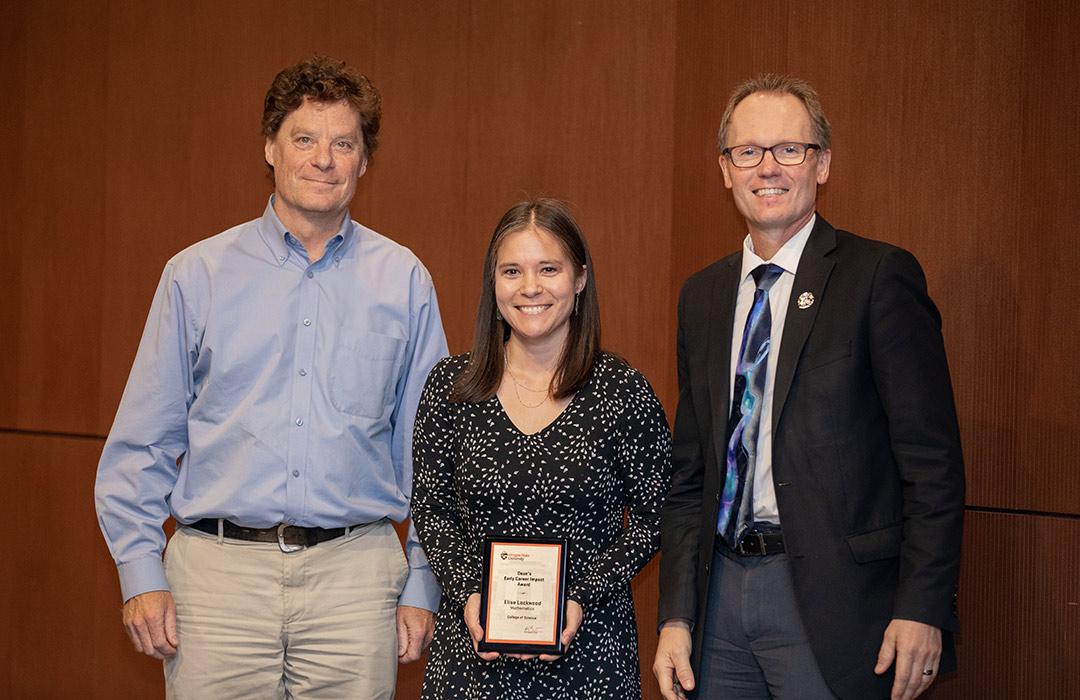
Elise Lockwood receiving award from Bill Bogley and Roy Haggerty

Mathematician Elise Lockwood with Bill Bogley (left) and Roy Haggerty

Elise Lockwood, associate professor of mathematics, received the Dean’s Early Career Impact Award for exceptional achievement in research and education by an early career faculty member. Lockwood has achieved international distinction as a researcher in mathematics education, specializing in Research in Undergraduate Mathematics Education (RUME). She is described as the “top young scholar” in RUME.

Lockwood’s prominence in the field is evidenced by her winning the 2018 Annie and John Selden Prize of the Mathematical Association of America, which is given to the top early-career mathematics education researcher in RUME. Her research focuses on the practical and theoretical aspects of the teaching and learning of combinatorics, a field of mathematics that connects with probability, computer science, and many diverse areas of science.

“Led by her internationally recognized achievements in research, Dr. Lockwood has assembled an impressive array of professional accomplishments that excels in all dimensions,” said Bill Bogley, Head of the Department of Mathematics.

Lockwood was awarded a five-year National Science Foundation CAREER Award—NSF’s most prestigious award for early-career faculty— for her project on developing undergraduate combinatorics curriculum in computational settings. The project focuses on the use of computational resources to help students develop as combinatorial thinkers.

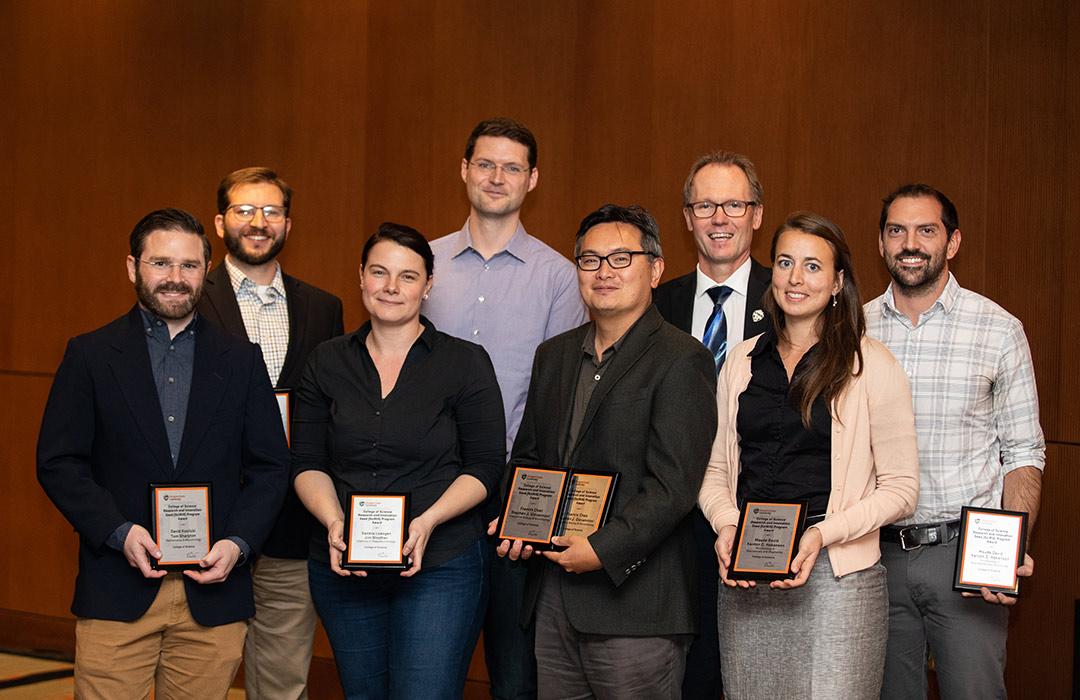
Koslicki, Loesgen, Chan, David and Hokanson receiving awards together

Front row (L to R): David Koslicki, Sandra Loesgen, Francis Chan and Maude David. Back row (L to R): Thomas Sharpton, James Strother, Roy Haggerty and Kenton Hokanson.

Four research teams won the Science Research and Innovation Seed Program Award (formerly known as the College of Science Impact Award) for projects that contribute to human health, drug development and marine science. The SciRis Award carries an amount of $10,000 for each team. The award-winning SciRis teams comprising:

Assistant Professor of Mathematics David Koslicki and Thomas Sharpton, assistant professor of microbiology and statistics, received the SciRis award for metagenomic analysis of voluminous microbiome data that are germane to diverse processes from global nutrient cycling to human disease. The project will enable Koslicki and Sharpton to create a leading-edge research portfolio of new algorithmic and data science solutions for the analysis and mathematical modeling of microbiome data and enhance research productivity by aiding OSU investigators in the analysis of microbiome data. The project will also recruit and train students in metagenomic science. In the long term, the researchers seek to “establish OSU as a center of excellence in microbiome data science.

Assistant Professor of Chemistry Sandra Loesgen and Assistant Professor of Integrative Biology James Strother will collaborate on a project to identify novel microbial natural products with antinociceptive, or pain-relieving, activity using a zebrafish-based behavioral assay, and to characterize the mode of action of new compounds using neural activity mapping. This innovative approach addresses major challenges in neuroactive drug discovery and is highly likely to produce potent new bioactive compounds to develop improved drugs for chronic pain.

This research combines the Loesgen Lab’s expertise with natural products and the Strother Lab’s experience in neuroscience to forge a bold new approach for neuroactive drug discovery.

Associate Professor of Integrative Biology Francis Chan and Stephen Giovannoni, Distinguished Professor of Microbiology, will pursue research on zero oxygen (anoxic) events in ocean ecosystems that are of greatest concern for ecosystems and fisheries. While scientists have developed a clear understanding of the climate-dependent factors that determine the formation of hypoxic (low oxygen) zones, the onset of anoxia remains both difficult to predict and surprisingly infrequent despite the prevalence of hypoxia.

Through recent research combining ocean climate science and marine microbial ecology, Chan and Giovannoni have discovered that oxygen availability has played an important but previously unrecognized role in shaping the evolution of metabolic pathways in microbes, and that such pathways may serve as climate-resilient barriers to anoxia.

Assistant Professor of Microbiology Maude David and Kenton Hokanson, instructor of microbiology and biochemistry and biophysics, will conduct molecular research to address anxiety disorders that affects 40 million people in the U.S. Although women are twice as likely as men to suffer from anxiety disorders, most research at the molecular level has exclusively studied male humans or animal models.

David and Hokanson aim to bridge this knowledge gap by integrating functional, molecular, and behavioral data to identify the role of specific microbial metabolites produced by a bacterium linked with anxiety in humans. This project will be conducted in female mice, maximizing their work’s impact on the large and underserved population of females affected by anxiety disorders.

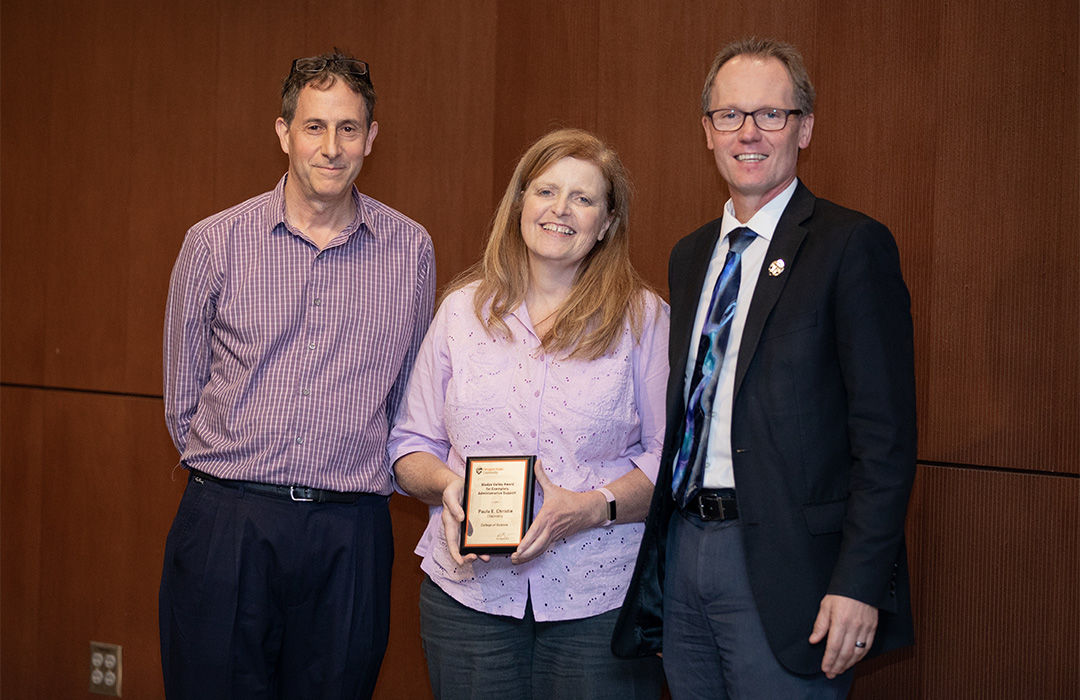
Paula Christie, assistant to the head of the Department of Chemistry, received the Gladys Valley Award for Exemplary Administrative Support. Christie was appreciated for her hard work, professionalism and exemplary administrative abilities.

“Paula’s single best characteristic could be described as excellent and dedicated customer service. Her customers in this case are the entire department, from leadership to entering students to our staff,” said Michael Lerner, Head of the Department of Chemistry.

Jie Zhang from the Department of Chemistry received the 2018 Outstanding Faculty Research Assistant Award. Zhang has served as a faculty research assistant (postdoctoral fellow) in Professor Wei Kong ’s group since 2010. This award recognizes a faculty research assistant who has a record of outstanding job performance and contributions.

“From conversations with Wei Kong and from my observations, Jie Zhang has been as a key factor in the Kong group’s vitality and longevity. Wei gives Jie full credit for numerous important experimental breakthroughs, and also for the continued success in her research grant applications,” said Michael Lerner, Head of the Department of Chemistry.

In addition to her many achievements in the Kong lab, Zhang has trained several graduate students from start to completion, and the acknowledgements from those students’ theses are effusive. “Everybody needs a Jie Zhang in their lab,” said Kong.

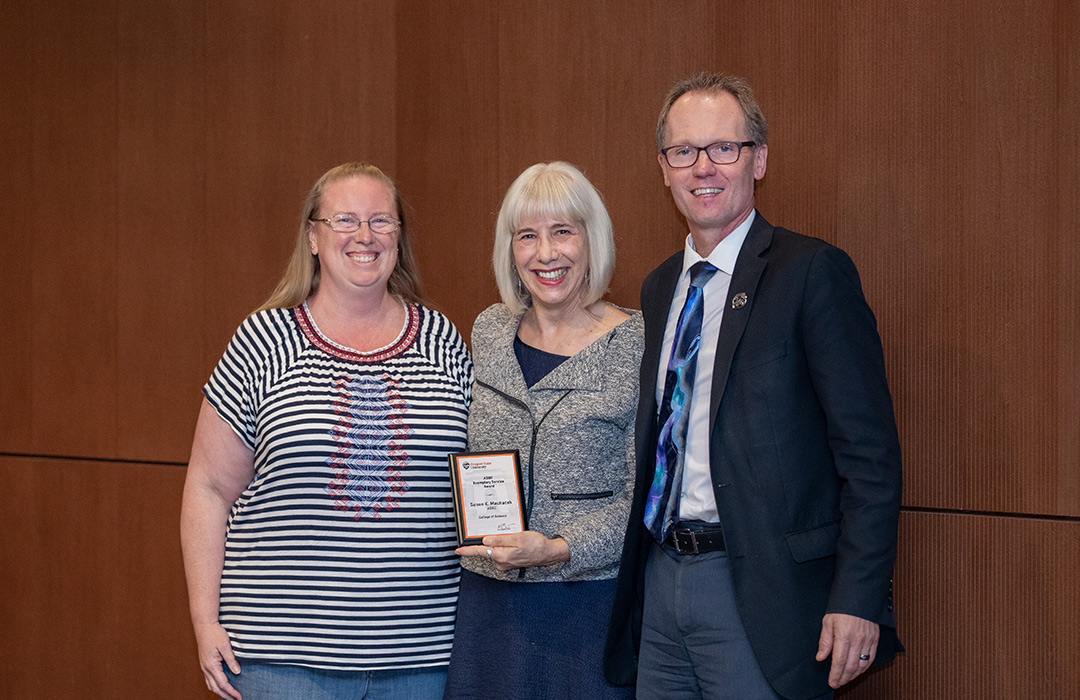
Susan Machacek, an accountant in the Arts and Science Business Center (ASBC) received the ASBC Exemplary Service Award. This award recognizes exemplary service by a member of ASBC to the colleges within the Division.

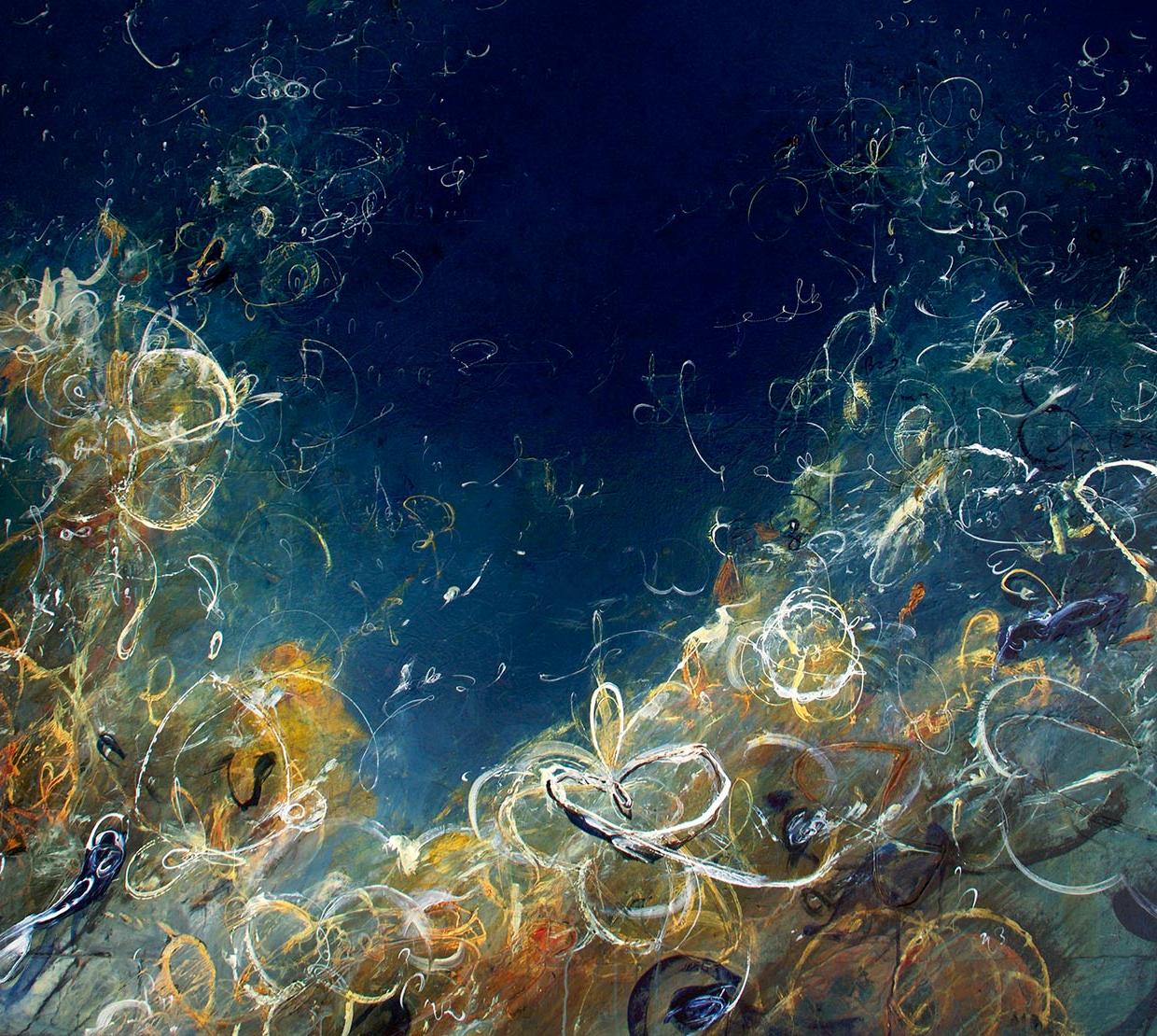
Michael Schultheis painting of ocean shore made of mathematical imagery

Math on the canvas: Acclaimed artist explores mathematics as art

By Srila Nayak

Michael Schultheis's Venn pirouettes: Changing the way the world sees math

Renowned painter and sculptor Michael Schultheis presents “Venn pirouettes: Changing the way the world sees math,” as part of the ART:SCI Lecture Series. This public talk will take place on October 24, 2018, in OSU’s LaSells Stewart Center in the Construction & Engineering Hall at 7 p.m. followed by a reception.

The lecture series is hosted by the College of Science and the Departments of Mathematics, Microbiology and Physics; the College of Liberal Arts’ School of Arts and Communication; and the OSU Research Office.

Schultheis was trained in economics and mathematics and worked at Microsoft as a software developer for a number of years before becoming an artist. Through an art style termed “analytical expressionism,” Schultheis employs the timeless language of mathematics on the canvas, constructing geometric models and overlapping mathematical notations to capture human experiences.

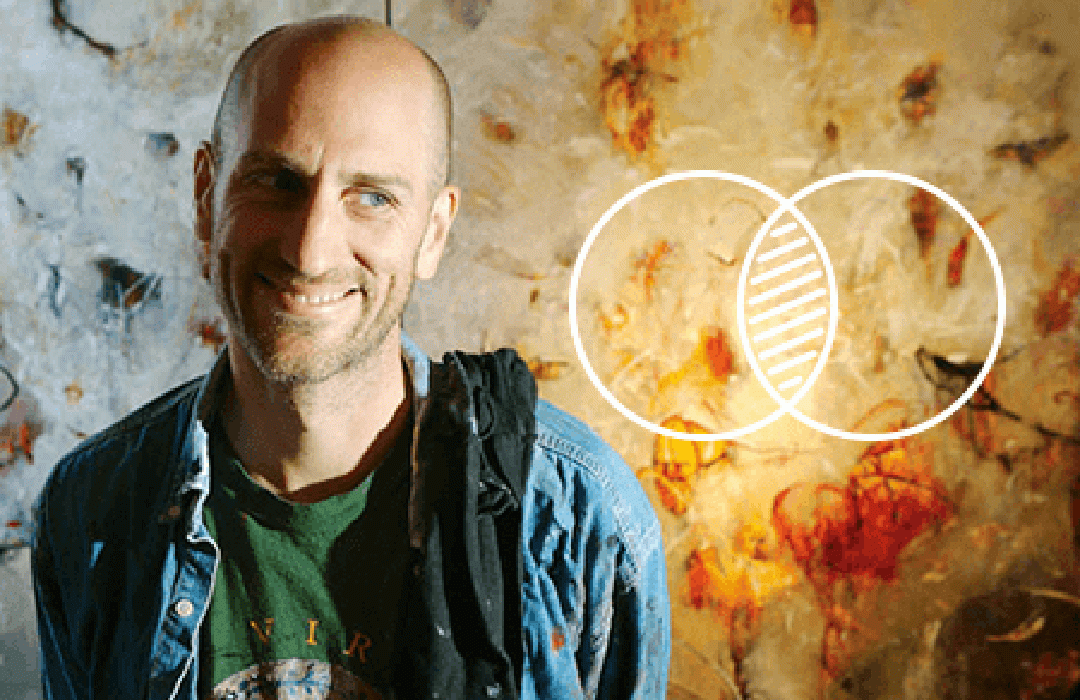
Michael Schultheis standing in front of his paintings with intersecting circle icon

Michael Schultheis: A renowned painter and sculptor trained in mathematics and economics.

The chalkboard in Schultheis’s mathematics classes in college and the whiteboards on which he brainstormed ideas and wrote equations at Microsoft had always struck him as aesthetically pleasing and beautiful in their own right. Their surfaces marked by layers of written, rewritten and half-erased equations continue to influence the composition and size of Schultheis’s paintings.

Art critic Patricia Watkinson has hailed Schultheis as a painter uniquely influenced by the ancient Greek mathematician Archimedes. The economist mathematician turned artist goes beyond the “simple high school geometry used by practitioners of Geometric Abstraction” to employ “a broader range of non-Euclidean methodologies as well as calculus, econometrics and trigonometry” in his paintings. Yet one doesn’t have to be a mathematician to appreciate the beauty of Schultheis’s conceptual paintings.

His latest series of paintings “Venn Pirouettes” is on display in a solo exhibition at the Winston Wachter Fine Art gallery in Seattle, Washington, until October 17. The paintings reflect the abstract world of numbers by mingling expressionistic, luminous brushstrokes with actual equations resulting in a unique depiction where human life and relationships are translated via mathematics as “velocity, eccentricity and radius.”

In a video, Schultheis explains the theoretical basis of his art in Venn Pirouettes.

“I am mapping out interior consciousness and interior portraiture, not the exterior of someone but how they move through life with another person in a relationship and how that relationship changes over time. By including the element of time in the equations, I am introducing variation and dynamic visual storytelling within the geometry of paintings.”

Venn pirouettes depict two time variables to map how a person’s consciousness changes (tau) and when that occurs in their lives (phi). The interplay gives rise to shifting geometric forms. “Visually, this is similar to the geometry mapped out by a ballet dancer who creates a gestural form with their arms, and then spins up into a pirouette,” observes Schultheis.

Schultheis has presented work in over 60 solo exhibitions across the country. His art appears in collections by the National Academy of Sciences in Washington D.C. and U.S. Embassies in Greece and Switzerland. He has lectured at various universities and his paintings have been featured in several national media including The Wall Street Journal and NPR.

2016-2017 was the year of SPARK at Oregon State University, a yearlong calendar of more than 60 events that celebrated the rich convergence and partnership between arts and science on campus and in our society. The ART:SCI Lecture Series continues Oregon State’s enthusiastic support and encouragement for multidisciplinary innovation that transcend the boundaries of arts and science.

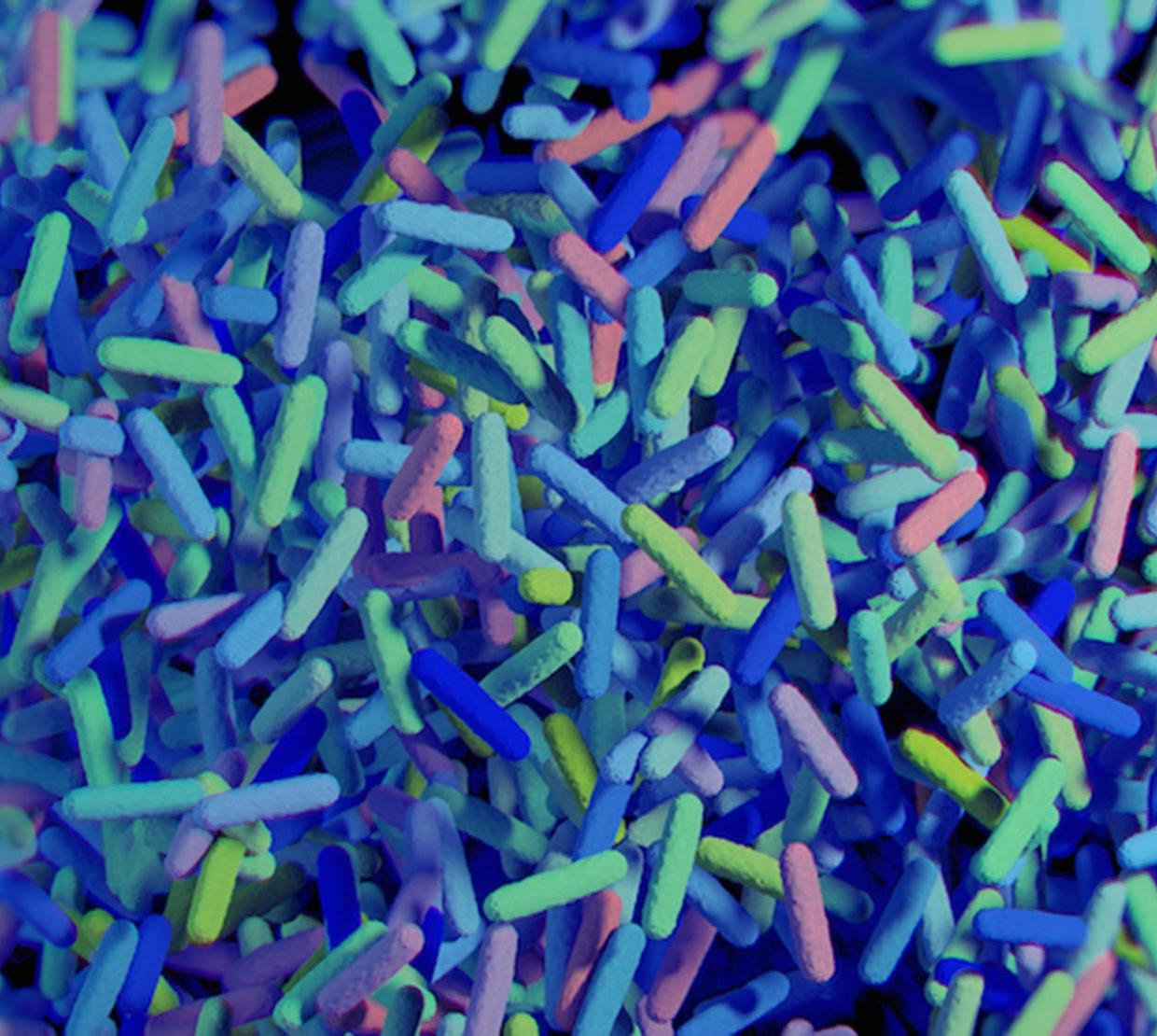
picture of Microbiomes

Understanding gut microbes’ role in mammals’ evolution

By Steve Lundeberg

Gut Microbiota

An international collaboration led by Oregon State University microbiologists has made a key advance toward understanding which of the trillions of gut microbes may play important roles in how humans and other mammals evolve.

Researchers came up with a novel way of classifying the microbes – a taxonomy that groups them based on their ancestry and common distribution across mammals.

Findings were published in mBio.

Known as ClaaTU – short for cladal taxonomic units – the new algorithm and corresponding software sharpen and fine-tune the focus needed to clarify potential ecological or evolutionary mechanisms, said corresponding author Thomas Sharpton, an assistant professor of microbiology and statistics.

A clade is a group of organisms thought to have descended from a common ancestor.

“The gut microbiome matters to the health of mammals like humans and mice, so perhaps it also affects a mammal’s ability to survive and reproduce in nature,” said lead author Christopher Gaulke, a postdoctoral scholar in Sharpton’s lab. “If so, then the gut microbiome may influence how animals evolve such that individuals that carry the proper set of gut microbes are more likely to thrive.”

Gaulke and Sharpton worked with collaborators in the Department of Microbiology and College of Veterinary Medicine and at the University of Illinois and University of Quebec at Montreal to develop ClaaTU.

ClaaTU identifies microbial clades that manifest across multiple sets of mammal communities more frequently than expected by chance. Those that do – the ones that are “conserved” in the mammalian microbiome – possibly played and continue to play important roles for their hosts.

“Identifying gut microbes that link to mammalian evolution is the first step toward evaluating this bold idea that gut microbes influence evolution,” Sharpton said. “We were able to uncover an expansive array of such microbes by using our new approach to compare microbiomes across mammalian species.”

Another find: Humans living “Western lifestyles” – i.e., eating diets high in fat and low in fiber – tend strongly away from gut microbiome clade diversity when compared with non-Western humans and non-human primates. That suggests changes in lifestyle, environment and/or genetics that go along with Westernization are connected with the conservation of gut bacterial clades.

“It’s an observation that elevates concern that industrialization may have impacted the gut microbiome that our human ancestors evolved to harbor,” Sharpton said. “But future work will be needed to determine if the gut microbes identified in this study actually affect mammalian physiology in a way that could matter to their evolution.”

The National Science Foundation funded this research.

This article originally appeared on OSU News.

University day table centerpiece

Science faculty recognized for excellence at 2018 University Day

By Debbie Farris

2018 University Day

The College of Science is proud to announce that science faculty were among this year’s recipients of OSU’s most prestigious annual awards for scholarship, teamwork, mentoring and service. A total of eight faculty were recognized for their distinguished accomplishments at OSU's 2018 University Day on Tuesday, September 11, including chemist Xiulei (David) Ji who nabbed two awards.

“I am extremely proud to see the outstanding accomplishments of our faculty recognized at the university level,” said Roy Haggerty, dean of the College of Science. “I commend them for their scholarship, teaching and mentoring and the collaborative spirit to connect their efforts to a broader community.”

Congratulations to these faculty for their perseverance, dedication and exemplary achievements.

A distinguished career

With dual appointments in the Colleges of Science and Veterinary Medicine, Professor of Microbiology Michael Kent received the OSU Alumni Association Distinguished Professor Award for his superior academic performance, professional renown and service to the University and to the public. Award criteria include exceptional scholarly achievements and publications, strong teaching in terms of reputation and quality, active participation in University affairs and visibility and recognition in Oregon, the nation and the world.

Kent’s research is focused on two major research areas: diseases of zebrafish in research facilities and the impacts of pathogens on wild salmonid fishes. Specifically, he studies chronic infectious diseases. Kent’s work has been supported continuously by the National Institutes of Health’s Office of Research Infrastructure Programs (ORIP) since he arrived at OSU in 1999. He is also a co-PI at the Zebrafish International Resource Center, where he assists with health studies and their diagnostic service.

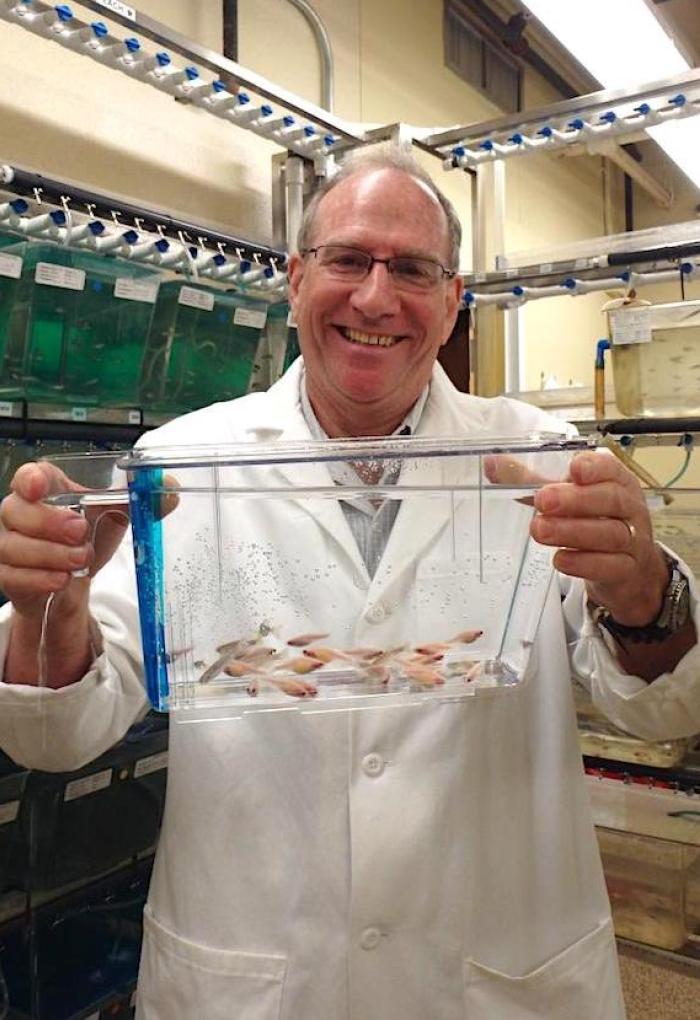
Michael Kent holding up tank of fish in lab

Michael Kent, Professor of Microbiology

Kent established a Specific Pathogen Free (SPF) zebrafish research colony at OSU in the Sinnhuber Aquatic Resource Center in collaboration with Robyn Tanguay, a Distinguished Professor of Molecular Toxicology at OSU. Their work is supported by the NIEHS Environmental Health Sciences Center and NIH’s ORIP, the latter of which enables them to provide biomedical research training to veterinarians using aquatic models.

In collaboration with colleagues at OSU and across the country, the Kent Lab is developing zebrafish as models for infectious diseases in humans. They were able to demonstrate that zebrafish can become infected with Toxoplasma gondii, a pathogenic parasite that infects about one-third of the world population and the second most significant cause of lethal food-borne infections in the United States. This was the first time this infection was reported in a fish.

Achieving excellence in mentoring and scholarship

Associate Professor of Chemistry Xiulei (David) Ji received the Excellence in Postdoctoral Mentoring Award, which recognizes and encourages outstanding mentoring of postdoctoral appointees by OSU faculty. The award is given to faculty who best exemplify the role of a mentor and who has provided exceptional mentoring to one or more postdoctoral scholars during the past year. The interaction between the faculty mentor and postdoctoral scholar plays a crucial role in the professional development of a postdoc.

Ji also received OSU’s Promising Scholar Award, which recognizes the scholarship of junior faculty. The award criteria include outstanding scholarly and creative activities that represent significant intellectual work validated and communicated through peer review.

Ji leads a highly motivated team of graduate students and researchers from all over the world in his chemistry lab, which is focused on pushing the boundaries of ion storage chemistry in solids. In 2017, he and graduate student Xingfeng Wang developed the world’s first battery to use only hydronium ions as the charge carrier, which shows promise for sustainable, high-power energy storage. This summer he received a $475K award from the University of California, San Diego for his project “Aqueous Iron-Sulfur Batteries.”

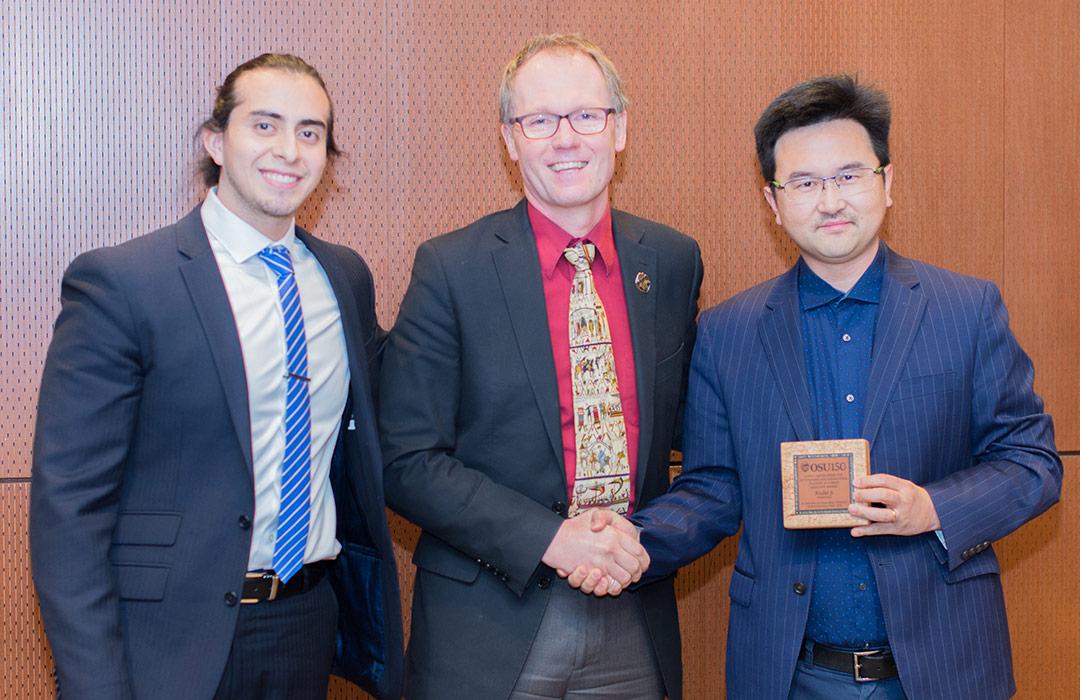
Xiulei Ji receiving award from Ismail Rodriguez and Roy Haggerty

Chemistry graduate student Ismail Rodriguez Perez (left), Dean of Science Roy Haggerty (center) and chemist Xiulei (David) Ji (right)

Last winter, Ji received the College of Science Loyd Carter award for his inspirational and superb mentorship and teaching of graduate students. He was nominated by chemistry graduate student Ismail Rodriguez Perez, who presented him with the award.

“Dr. Ji is an outstanding professor,” said Rodriguez Perez. “In my eyes, what makes him inspirational and outstanding is his true passion for the subject at hand, which makes me want to learn more. Dr. Ji also does a fantastic job relating his teachings to real-world applications, which is quite inspiring.”

In 2016, Ji received a prestigious National Science Foundation CAREER Award for five-year grant of $530K for his project, “Carbon Anodes in Potassium-Ion Batteries.” The award is NSF’s top honor for junior faculty with outstanding and innovative research and effective application of that research.

In this video, he reflects on his own path in science.

Advancing student success

Team Math received the 2018 Student Learning and Success Teamwork Award! The award recognizes departments or interdisciplinary teams at OSU that have demonstrated exceptional teamwork in creating and sustaining an exemplary teaching and learning environment to advance the university’s strategic goal of student success and excellence.

Team Math as they have become known across campus has been working for more than a year to improve student performance and learning in introductory pre-calculus courses at OSU, which have been identified as having the strongest impact on the success and retention of STEM students.

Math faculty standing together outside Kidder Hall

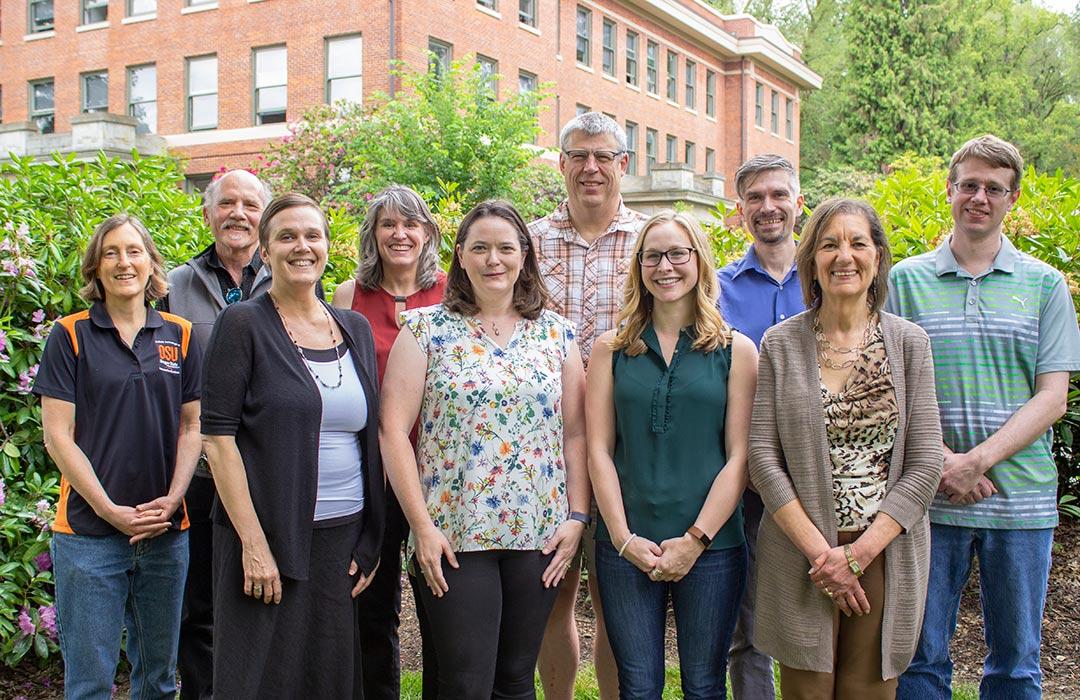
Team math, aka the department of mathematics faculty

Team Math includes mathematics faculty Sara Clark, Scott Peterson, Lyn Riverstone, Dan Rockwell, Katy Williams and David Wing as well as campus colleagues Susan Fein, an instructional designer in Ecampus, Lynn Greenough in Academic Technology, Liz Jones, a mathematics instructor in OSU’s Educational Opportunities Program and Cub Kahn, coordinator of the Hybrid Course Initiative.

Since spring 2017, the group has redesigned college algebra and algebraic reasoning by integrating active learning technologies and other innovative student engagement strategies. They achieved very encouraging results: they created a successful teaching and learning environment in precalculus courses that is welcoming to students, empowers faculty to challenge students in their understanding and enhances student participation—a significant achievement in the introductory mathematics classroom at OSU.

fish and coral in their underwater ecosystem

International symbiosis conference to feature public talk by science writer Ed Yong

9th International Symbiosis Society (ISS) Congress at OSU

The 9th International Symbiosis Society (ISS) Congress will take place at Oregon State University. Anticipated to bring together 400 symbiosis scientists from 20 nations, the Congress will also feature a keynote talk by acclaimed science journalist Ed Yong, who is currently staff writer for The Atlantic and author of the bestselling book on the microbiome in the human body, I Contain Multitudes (2016).

The conference will be held July 15-20, 2018 at the CH2M Hill Alumni Center. Yong's keynote address, entitled "I contain multitudes: Telling stories about microbes and the people who study them," will take place on Monday, July 16, 8-9 p.m at the Austin Auditorium in the LaSells Stewart Center.

Yong's public lecture is free and open to all to promote awareness and appreciation of the intrinsic value of symbioses, their importance in all ecosystems and to human health and well-being.

Held every three years, the ISS Congress is the primary international meeting focusing on symbioses, including complex interactions between hosts and their microbiomes. The participating scientists will present the latest research on symbioses, their ubiquity in nature and their impact on all environments on the planet. The Congress will include theme-based cross-disciplinary sessions aimed at sharing new discoveries and cutting edge approaches across the traditional taxon-based areas of symbiosis.

OSU associate microbiology professor Rebecca Vega Thurber is a plenary speaker at the Congress. She is one of eight plenary speakers hailing from Vanderbilt University, the University of Minnesota, the University of Alberta, Canada and other institutions.

Integrative Biology Professor Virginia Weis is the program committee chair of the 2018 ISS Congress. Thomas Sharpton, assistant professor microbiology and statistics, is also a key member of the program committee. The Congress is generously sponsored and supported by the College of Science, the College of Agricultural Sciences, OSU Research Office and The Gordon and Betty Moore Foundation.

Star icon above vibrant galaxy

Faculty excellence: Promotions and tenure 2018

Promotions and tenure 2018

The College of Science congratulates these 20 faculty on receiving promotions and/or tenure for the 2017-18 academic year.

“The success of our faculty is essential to the success of our students,” said Roy Haggerty, dean of the College of Science. “I am proud of our faculty who are outstanding researchers, scholars, teachers and mentors to our students.”

'I want to also thank our Promotion and Tenure Committee for devoting a significant amount of time engaged in the intense review process to award the best candidates for promotion and/or tenure,” added Haggerty.

Tremendous consideration goes into each promotion and tenure decision. The Provost’s Office, the College of Science Dean’s office, department heads, Promotion and Tenure Committee members, faculty, external reviewers, student evaluation committees, and individual faculty members all spend many hours preparing, processing and reviewing the documentation.

Congratulations to the following science faculty!

Biochemistry and Biophysics Department

(Photos in order)
Dr. Adrian “Fritz” Gombart will be promoted to Professor of Biochemistry and Biophysics, effective September 16, 2018.

Dr. Ryan Mehl will be promoted to Professor of Biochemistry and Biophysics, effective September 16, 2018.

Integrative Biology Department

(Photos in order)
Dr. Andrew Bouwma will be promoted to Senior Instructor I of Integrative Biology, effective July 1, 2018.

Dr. Sarah Henkel will be promoted to Associate Professor, Senior Research of Integrative Biology, effective July 1, 2018.

Dr. Mark Novak will be promoted to Associate Professor of Integrative Biology and granted indefinite tenure, effective September 16, 2018.

Dr. Rebecca Terry will be promoted to Associate Professor of Integrative Biology and granted indefinite tenure, effective September 16, 2018.

Mathematics Department

(Photos in order)
Dr. Mary Beisiegel will be promoted to Associate Professor of Mathematics and granted indefinite tenure, effective September 16, 2018.

Dr. Vrushali Bokil will be promoted to Professor of Mathematics, effective September 16, 2018.

Dr. Elaine Cozzi will be promoted to Associate Professor of Mathematics and granted indefinite tenure, effective September 16, 2018.

Dr. Torrey Johnson will be promoted to Senior Instructor I of Mathematics, effective September 16, 2018.

Dr. Elise Lockwood will be promoted to Associate Professor of Mathematics and granted indefinite tenure, effective September 16, 2018.

Dr. Holly Swisher will be promoted to Professor of Mathematics, effective September 16, 2018.

Dr. David Wing will be promoted to Senior Instructor I of Mathematics, effective September 16, 2018.

Microbiology Department

(Photos in order)
Dr. Kimberly Halsey will be promoted to Associate Professor of Microbiology and granted indefinite tenure, effective September 16, 2018.

Dr. Ryan Mueller will be promoted to Associate Professor of Microbiology and granted indefinite tenure, effective September 16, 2018.

Dr. Martin Schuster will be promoted to Professor of Microbiology, effective September 16, 2018.

Physics Department

Oksana Ostroverkhova in front of shrubbery

Dr. Oksana Ostroverkhova will be promoted to Professor of Physics, effective September 16, 2018.

Statistics Department

(Photos in order)
Katie Jager will be promoted to Senior Instructor I of Statistics, effective July 1, 2018.

Juliann Moore will be promoted to Senior Instructor I of Statistics, effective September 16, 2018.

Dr. Lan Xue will be promoted to Professor of Statistics, effective September 16, 2018.

Thanks to all of the committee members who served on the College of Science Promotions and Tenure Committee this year.

Elisar Barbar (rotating off)
Kate Field (rotating off)
Alix Gitelman (rotating off)
Margie Haak
Henri Jansen (chair, rotating off)
Patrick De Leeneer (rotating off)
Sastry Pantula
Indira Rajagopal (rotating off)
Vince Remcho
Janet Tate (rotating off)
Barb Taylor (rotating off)

The following faculty have been elected to serve on the College’s Promotion and Tenure Committee for 2018-19. These faculty were elected to serve by a vote, according to the College’s P&T rules.

Vince Remcho, 2016-19, committee chair in 2018-19
Rich Carter, 1 remaining term, 2018-19
Dee Denver, 1 remaining term, 2018-19
Tom Dick, 2 remaining terms, 2018-20
Michael Freitag, 3 remaining terms, 2018-21
Steve Giovannoni, 2 remaining terms, 2018-20
Margie Haak, 1 remaining term, 2017-19
Sally Hacker, 3 remaining terms, 2018-21
David McIntyre, 3 remaining terms, 2018-21
Sastry Pantula, 2 remaining terms, 2017-20
Scott Peterson, 2 remaining terms, 2018-20

Subscribe to Faculty and Staff