Students

Students

Saki Nakai sitting outside in a forest.

Mathematics graduate to research cross-cultural psychology for Fulbright

By Grace Peterman

France, Japan and Luxembourg: international experiences give Saki Nakai a rich, interdisciplinary perspective.

Saki Nakai is not your average pre-med student. The graduating senior double majored in mathematics and psychology at OSU and has spent the last two terms studying abroad in France to complete a French minor. She is also one of two College of Science students and alumni to receive the 2022 Fulbright Student Award. This award will support Nakai for one year of independent study in cultural psychology at the University of Luxembourg.

Nakai was drawn to OSU for its Honors College and the opportunity to weave her diverse research interests into a thesis project. She started as a psychology major, but she became really interested in how math could be used to answer questions relevant to medicine and psychology.

Using math to support mental health

Completing the math major on top of her pre-med courses was a challenge, but Nakai is glad she did. “Sticking with the math major gave me a more enriching college experience,” she said. “The nature of the subject requires you to take time to do the homework, so people just naturally come together and collaborate in the Math and Statistics Learning Center (MSLC).”

Embracing teamwork and collaboration paid off for Nakai during the pandemic, when she took one of her hardest courses, MTH 343 Introduction to Modern Algebra, over Zoom.

“The entire class time is spent doing math problems, and the instructor Filix Maisch would hop around between Zoom rooms to help us,” she said. “I did struggle with it a lot, but the challenge really brings students together. I made some of my best math friends in that class.”

“Sticking with the math major gave me a more enriching college experience.”

Growing in confidence as a mathematician, Nakai took on research that combined her two majors, math and psychology, through the Summer Undergraduate Research Experience (SURE) Science program. Exclusive to the College of Science, SURE Science allows students of any year to get paid to do 11 weeks of full-time research over the summer with faculty from any college. Nakai completed a project using ordinary differential equations and dynamical systems theory to model bipolar disorder, under the mentorship of Vrushali Bokil, professor of mathematics and College of Science associate dean of graduate studies and research.

“SURE was a completely new perspective on medicine,” said Nakai. “The project was important to me because it was the first time I saw how I can use mathematics to actually answer questions in psychology and medicine, and that’s my ultimate career goal.”

Nakai also used applied math in her research project for the NSF-funded Research Experiences for Undergraduates program, a fully funded research experience which she completed at the University of Nebraska-Lincoln summer of 2019. Nakai’s project investigated reciprocal and non-reciprocal support in an Inuit community in Labrador, Canada using social network analysis. “My poster won first place in sociology at the REU program, and I got to go to the Emerging Researchers National Conference in STEM in Washington, D.C. to present it,” she said.

Cultural identities at home and abroad

Both of these projects were meaningful to Nakai because her motivation for pursing medicine is to help vulnerable populations and expand acceptance of diversity. Nakai was born in the U.S. to Japanese parents, so cross-cultural competence deeply informs her perspective. “That aspect of my personal experience has been a big part of the research I’ve done,” she said.

After high school, Nakai took a gap year to work in an international primary care clinic in Japan. “Since it was an international clinic, we had both Japanese- and English-speaking patients. The doctor spoke English, but some of the nurses didn’t,” she said. Nakai worked as both receptionist and translator wherever she was needed in the clinic.

Being immersed in both Japanese and U.S. cultures, Nakai researched some of their differences in her psychology coursework. She did a statistical analysis comparing the manifestation of shyness in Japan and the U.S. “Rates of shyness are higher in Japan, but a lot of it comes from cultural differences,” she said. Japanese culture is more collectivist, while the U.S. is more individualistic. How self-expressive or reserved people are is influenced by these cultural mindsets. Thus, we cannot apply the same scale to measure shyness in Japan that we would in the U.S.

“Doing that kind of research is empowering because it gives a voice to people who might not otherwise be heard,” Nakai said.

An internationally-informed physician

For the last six months, Nakai has been studying abroad at the University of Poitiers in west-central France. Living with a host family and studying exclusively French for six months has brought a new dimension to Nakai’s multicultural awareness.

Inspired by the experience, she will use her Fulbright award to complete a research project on cross-cultural psychology in Luxembourg, a small country that borders France, Germany, and Belgium. The project will explore identity construal and acculturation in American and Japanese expatriates living in Luxembourg’s unique multicultural and multilingual setting.

Nakai will use hybrid images and visual primes to analyze how people respond to cultural mixing. “I might show American participants a picture of a hamburger, a picture of a typical Luxembourgish lunch, and also a hybrid image, for example, a lunchbox with both. I can then ask them what they feel about these images, and with the hybrid image, do they think it’s the best of both worlds, or do they react to it with disgust?”

“Doing that kind of research is empowering because it gives a voice to people who might not otherwise be heard.”

Nakai has embraced living in the best of both worlds during her time in France. She and her host family have traded off cooking Japanese and French foods for each other. “I made sushi for them, and they were pretty fascinated by the whole process,” Nakai said. In return, they introduced her to delicious raclette and boeuf bourguignon.

Ultimately, Nakai wants to be a physician, and she anticipates that all of her multicultural experiences will enable her to be a dynamic, effective communicator with many different types of patients. She sees herself eventually serving Japanese-American communities in the U.S. “Multicultural Luxembourg will serve as a blueprint for the multicultural U.S. I want to make a society that would really value diversity,” she said.

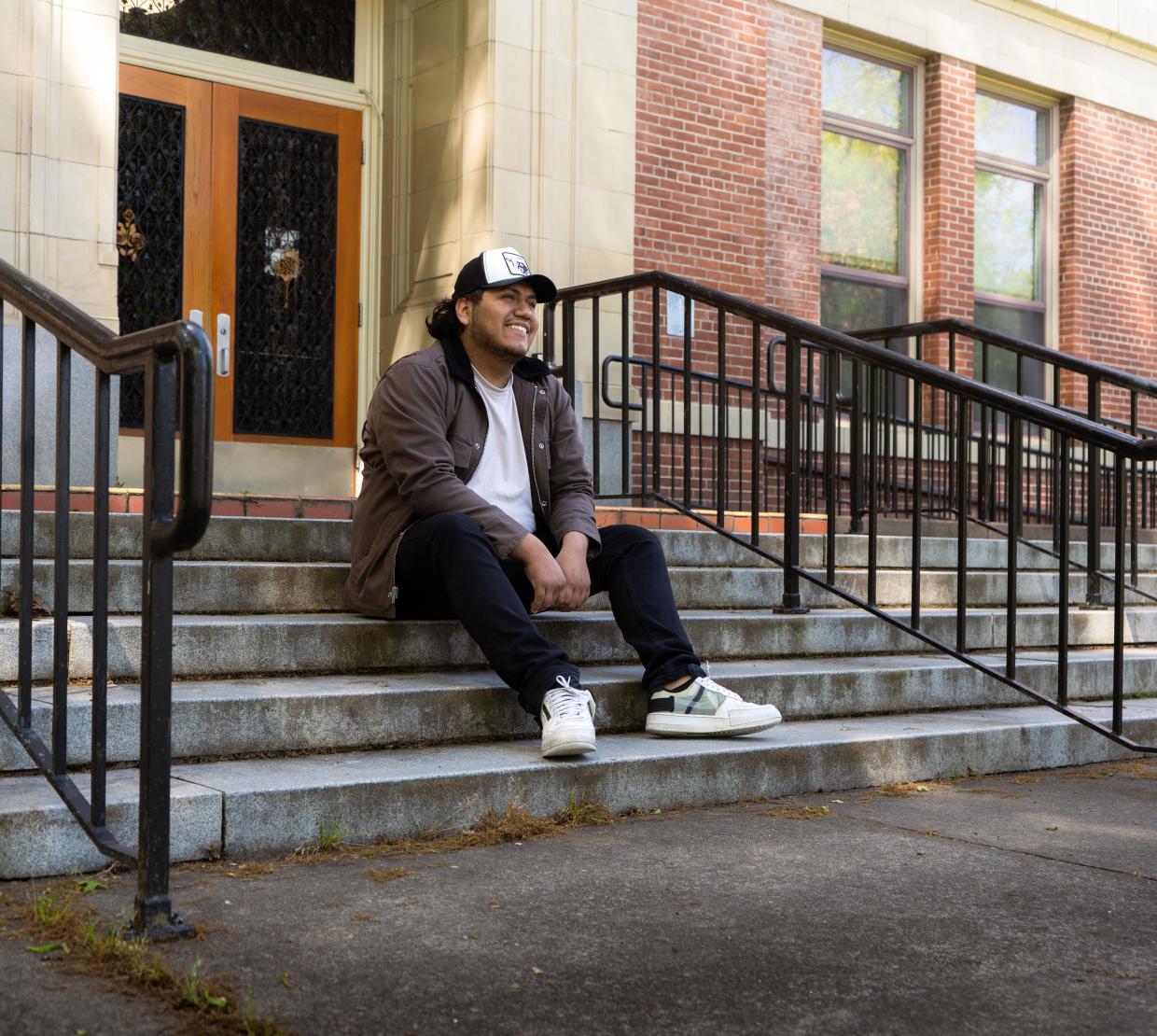
Bruno Salas Garcia sitting on the steps outside of Kidder Hall.

Microbiology graduate gives back to communities that have shaped him

By Grace Peterman

Oregon State is ten times the size of Bruno Salas Garcia's home town, but he's made an impact in both places with his commitment to community advocacy.

Bruno Salas Garcia almost didn’t come to Oregon State. “I finished my application probably a week before moving into the dorm,” the Microbiology graduate said.

Salas was all set to go to the Oregon Institute of Technology dental hygiene program in Klamath Falls, Oregon, but as the school year approached, “I had a nagging feeling that something wasn’t right,” he said. His supportive and understanding parents encouraged him to trust his own judgment.

Aware that a four-year university would give him more career flexibility, Salas decided to make the switch. “I’m glad I took that leap of faith to come to OSU, even though it was late in the application cycle,” he said. “I still feel that it was the right decision.”

Getting involved makes all the difference

Once at Oregon State, Salas looked for a major that would prepare him for dental school but could also apply to other healthcare careers if his goals changed. He chose microbiology, because viruses, bacteria and other microbes sounded interesting, and he knew that many of the prerequisite courses for dental school were built into the major.

Salas had always done well in science classes and took coursework at community college in during high school. However, intro science coursework at OSU initially caught him off guard.

“Day one, the professor was like, ‘Oh you probably all already learned this, I’ll just go through it quickly.’ I was like, ‘no, I haven’t!’” Salas said. Not used to having to ask for extra help, he quickly became overwhelmed by his coursework.

“In high school, even though my teachers were great, I didn’t have a lot of direction,” he said. “I didn’t know how to ask for help. I always just did well, and they told me, ‘you’re doing great, just keep it up!’”

Salas’ first term at OSU was a challenge. Sacrificing sleep to catch up on all the new material, he entered survival mode. Although he had a few friends to rely on, overall he felt disconnected from the OSU community. “I was a little isolated. I was kind of just doing what I had to, to survive, in this mindset of, ‘I have to do everything myself.’”

A feeling of isolation was exacerbated by the fact that Salas was far from home and in a town many times larger than where he grew up. In Irrigon, a small town of 2,000 people that is four hours from Corvallis, Garcia’s graduating high school class had 40 people. Introductory science courses at OSU may have as many 500 students. Although many resources and programs exist to give students individualized attention, like the Learning Assistant program, it can be difficult to ask for help if you’re already feeling stressed and overwhelmed.

By a stroke of luck, someone from Salas’ high school happened to be living on the same floor his first year. This friend was part of the College Assistance Migrant Program (CAMP).

OSU’s federally funded program that supports students from migrant and seasonal farm worker backgrounds during their first year in college. CAMP provides advising, mentoring, health services, financial assistance, social activities and more.

Salas' friend recommended he join CAMP, too. “I thought ‘Yeah ok, I’m not going to do this. I’ll just go and humor them,’” Salas said. “Besides, classes would start in a few days. It's not like I’ll get in,” he thought. He was skeptical that university programs could add value to his busy life. Extracurricular activities seemed like meaningless requirements, and he didn’t want to contribute to anything he didn’t believe in.

Once at CAMP, Salas’ view began to change, particularly through the influence of CAMP Academic Counselor Alexsandra Cortés, who made a strong case for the importance of mentorship and community.

Through CAMP, Salas was assigned a peer mentor who understood his cultural context, his experience as a first-generation college student and the difficulties of transitioning from a rural, small town to a large public university. Getting involved with CAMP increased Salas’ sense of ownership of his college experience. “CAMP helped me feel more at home at Oregon State, and from there, it gave me the confidence to go and try all these other things,” he said.

“I get to help, in the same way I was helped so many years ago. I’m glad to be able to give back to the program that gave me so much early on.”

In the years to come, Salas got connected to the resources he needed for success. He started asking his teacher's assistants, learning assistants and professors for help early and often. Today, Garcia invests in his college community as a mentor for CAMP and a peer advisor at the College’s Science Success Center (SSC).

“I get to help, in the same way I was helped so many years ago,” he said of working with CAMP. “I’m glad to be able to give back to the program that gave me so much early on.”

In the College's Science Success Center, he led tours of campus for prospective students and their families. “I imagined myself being in the crowd,” he said, “If I were visiting, what I would want to hear? I try to get them to see aspects of a university that they want to go to in Oregon State.”

Salas is also the undergraduate representative for the College of Science Equity, Access and Inclusion (EAI) Leadership Council, the team that implements the College’s Diversity Action Plan. Garcia said Goal 3 of the plan is especially meaningful to him: “to create a welcoming college climate to support a sense of belonging and equitable learning and training experiences.” As someone who experienced firsthand the struggle of being disconnected and how it makes asking for help even harder, “I could use my own experiences to help realize that goal, especially with having a sense of belonging and community.”

Human dimensions of science

Mentoring his peers has challenged Salas to get more out of his coursework. Going to office hours paid off in one of his favorite classes, Virology with Hannah Rowe, assistant professor of microbiology.

“I loved the material and the class structure,” he said. “I went to office hours a lot. If I was completely lost on a topic, she wouldn’t just give me the lecture again but would help me conceptualize it better by using my own understanding and working from there.”

Salas has also been a teacher's assistant in the same microbiology classes that he used to struggle with. “I got to see students progress from ‘I don’t know how to use a microscope at all’ to being able to pick out what we’re trying to find on the slide by the end of the term and also troubleshoot their own problems they had with the microscope or material,” he said.

Helping people understand science and helping people through science have always been important for Salas. In high school, he chose this career path because of its ability to make a difference in people’s lives. “Around that time, a lot of my friends had braces,” he said. “I could tell they were a lot more confident when they got them off. People’s teeth have an impact on how you feel about how you look. I thought, as a dentist, I can help people be confident about themselves and be happy with who they are.”

The importance of dentistry was also highlighted by growing up in a small town, where the nearest dentist office was a 45-minute drive away. “I knew I wanted to do something local,” he said. “For me growing up, I thought that was normal. I thought everyone had to drive to get good healthcare.”

Salas’ interest in how healthcare disparities affect rural communities led him to complete a public health minor while at OSU. “I felt that it was important for me to understand what the healthcare system here in the U.S. entails,” he said. “Part of that is better understanding the determinants of health, especially the social, environmental, etc., aspects that have a big influence on one's health as well the structural and socioeconomic barriers to healthcare.”

Eventually, Salas may return to northeastern Oregon to bring accessible dental care to rural towns like Irrigon. For now, he’s headed to a summer research internship at the OHSU School of Dentistry. He plans to apply to dental school next fall and work as a dentist with a local practice.

Three rocks jut up from Cannon Beach on the Oregon Coast during a sunset with pink clouds.

A sustainable future: Transformative marine stewardship

By Mary Hare

With areas of distinction in marine science, materials science, data science, biomedical science – and other research areas, OSU faculty and students are fighting climate change and moving the world forward to a greener future – whether that is through harnessing new materials, interpreting complex data or reimagining how organisms can adapt to changes. We share just a few examples in this three-part series.

With expertise spanning marine ecology, biofuel development, new modes of energy capture, evolutionary genetics and the microbiomes of coral reefs, student and faculty researchers at Oregon State University are committed to using science to help create a livable planet for the future.

Oregon State has firmly established itself as a world leader in marine science. Our faculty are frequently called upon for their expertise in coral reef bleaching, ocean acidification and coastal ecosystem preservation. They exemplify the College’s dedication to leadership on the world stage - with Distinguished Professor of Integrative Biology Jane Lubchenco currently serving as Deputy Director for Climate and the Environment for the Biden Administration, and several faculty holding leadership roles in other federal institutions.

The fight to save coral reefs in peril

Although coral reefs make up a small percentage of ocean floor coverage, scientists believe they contain even more biodiversity than a tropical rainforest – or anywhere else in the world. Home to nearly one-quarter of all known marine species, coral reefs help regulate the sea’s carbon dioxide levels and are a crucial hunting ground that scientists use in the search for new medicines.

Corals are made up of delicate living organisms, which live symbiotically with tiny colorful algae known as zooxanthellae. The zooxanthellae live inside the corals, and provide them with energy as well as their color. Corals are particularly sensitive to changes in temperature. Climate change-induced spikes in global temperatures cause corals to lose their zooxanthellae, which leads to starvation and often death. At extreme temperatures, distressed corals may die immediately, leaving a white skeleton barren of the nutrients the reef ecosystems depend on, which is known as mass bleaching.

The first mass bleaching event ever recorded occurred in 1998, and since then it has become an increasingly significant problem. A heatwave from 2014-17 caused a third mass bleaching event that affected more than 75% of tropical corals throughout the world. Since their first appearance 425 million years ago, corals have branched into more than 1,500 species, including the one at the center of this research: the critically endangered Acropora cervicornis, commonly known as the Caribbean staghorn coral.

In 2019, scientists in the lab of microbiology Associate Professor Rebecca Vega Thurber identified a new genus of parasitic bacteria that flourishes when reefs become polluted with nutrients, siphoning energy from the corals and making them more susceptible to disease. “The bacterial genus we’ve identified is found around the world and in multiple types of corals, but is most notably found in high abundance in the microbiomes of Caribbean staghorn coral,” said study co-author Grace Klinges, also a Ph.D. candidate in the Vega Thurber lab.

Meanwhile, biologist Virginia Weis has long been regarded as a world expert in the cell biology of coral-algae symbiosis. For more than two decades, her research has focused on the symbiotic association between corals and the algae they harbor within their cells, and the role of this mutualistic relationship in the foundation and sustenance of healthy coral reef ecosystems.

In her laboratory, Weis and her graduate students closely examine the molecular partnership between corals and algae, their communication and signaling patterns that regulate the symbiosis, and how dysbiosis or a breakdown in partnership results under conditions of stress induced by heat and environmental pollution. They are also investigating gene editing techniques that could alter the molecular cellular make-up of the symbionts of host animals. The long-term goal would be to provide the tools for engineering corals that are more resilient to bleaching.

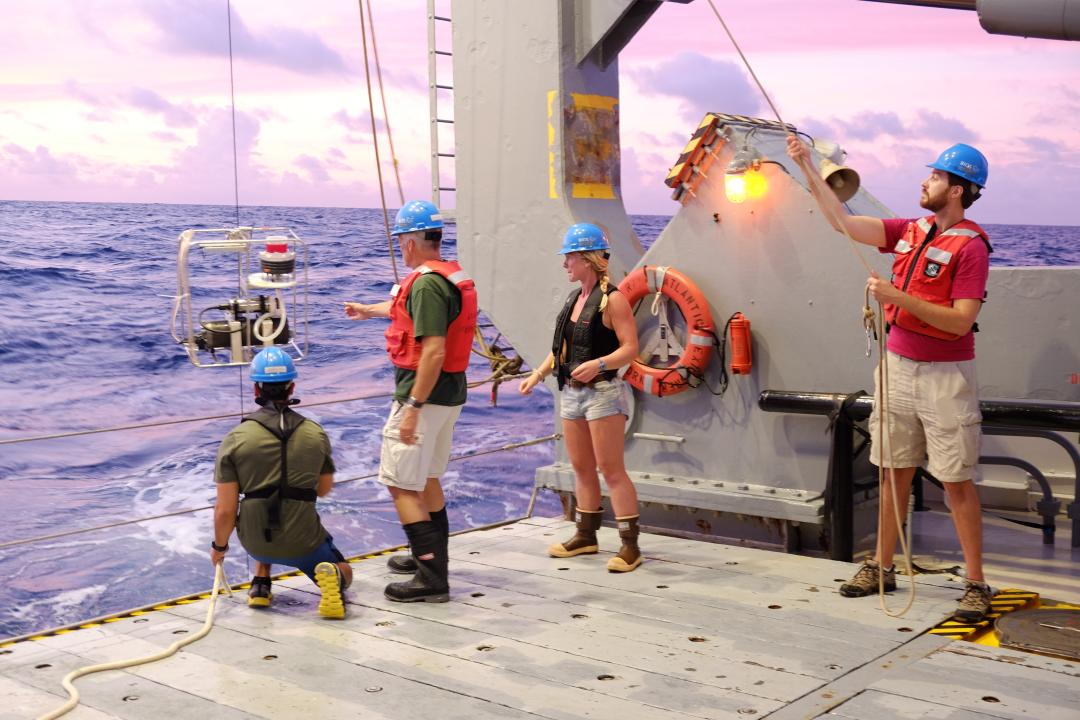
Giovannoni lab performs research off of a boat

Oregon State University microbiologists participate in BIOS-SCOPE, a five-year, multi-institutional research program for the study of microbial oceanography in the North Atlantic Ocean. BIOS-SCOPE leverages ocean measurements and ongoing research at the Bermuda Atlantic Time-series Study site, bringing new collaborations and technologies to study the ocean’s smallest life forms.

Standing up for Oregon’s oceans

Oxygen starvation in sea life close to home

The Northwest for two decades has had a “hypoxia season” that begins in mid-summer, said OSU marine ecologist Francis Chan, and climate change is making those low-oxygen seasons worse. When oxygen levels drop significantly, many marine organisms that are place-bound or cannot relocate quickly enough, such as Dungeness crabs, die of oxygen starvation. Hypoxia occurs because summertime north winds bring nutrient-rich but oxygen-poor ocean waters to shores – factors that are exacerbated by climate change.

Oregon’s coastal waters originate in the cold waters of the North Pacific off Japan and can take up to 60 years to reach us. Meanwhile, 25-30 percent of the pollution emitted from fossil fuel combustion is being absorbed in the ocean’s surface. Over time, this deadly combination has caused as much as a 30 percent increase in ocean acidity in the waters off the Oregon coast.

Last year, Oregon State was selected by the National Oceanic and Atmospheric Administration (NOAA) to lead the Cooperative Institute for Marine Ecosystem and Resources Studies, eligible for up to $37 million in funding over the next five years. With Chan as director, the institute will support collaborative marine research around the world, with emphasis on the Northeastern Pacific Ocean.

The quest to save a Pacific Northwest icon

The iconic sunflower sea star has been listed as critically endangered by the International Union for Conservation of Nature following a groundbreaking population study led by Oregon State University and The Nature Conservancy. Biology postdoctoral scholar Sarah Gravem was lead author on the study, along with University Distinguished Professor of Integrative Biology Bruce Menge. Populations of the sunflower sea star suffered dramatic crashes because of a marine wildlife epidemic event, referred to as sea star wasting syndrome, that began in 2013. “This listing is one step above extinction — and I don’t think they’re coming back without help like captive rearing and reintroduction and reducing direct harvest and accidental harvest,” said Gravem. More than 60 institutions joined the population study on the sunflower sea star, known scientifically as Pycnopodia helianthoides, which plays an important role in maintaining kelp forests, and thus sustaining marine life, along the West Coast from Alaska to Baja, California.

Working in Menge and Assistant Biology Professor Felipe Barreto’s Labs, biology student Kristofer Bauer assisted in the genetic analysis of sea stars to study their genetic resistance to sea star wasting disease. He witnessed first-hand the value of research. “I saw the impact that our research was having on understanding the effects of climate change on marine ecosystems and fisheries in Oregon. I saw that as something bigger than myself that I wanted to be a part of,” said Bauer.

Leadership on the world stage

Leaders of 14 major maritime nations have announced their commitment to achieve 100% sustainable ocean management of their national waters by 2025, acting on recommendations of global experts co-chaired by marine ecologist Jane Lubchenco. The group was commissioned by the High Level Panel for a Sustainable Ocean Economy (Ocean Panel), a group of nations representing nearly 40% of the world’s coastlines.

As Expert Group co-chair, Lubchenco helped coordinate experts from 48 countries, including OSU scientists Kirsten Grorud-Colvert and Jenna Sullivan, in the production of 19 peer-reviewed papers, plus an Ocean Solutions Report to the Ocean Panel. The results, the panel says, would include producing up to six times more food from the ocean, generating up to 40 times more renewable energy, lifting millions of people from poverty and contributing 20% of the global greenhouse gas emission reductions needed by 2050 to stay within the 1.5° Celsius limit of the 2016 Paris Agreement. “It is exciting and gratifying to see presidents and prime ministers ask for, listen to and follow scientific guidance,” said Lubchenco.

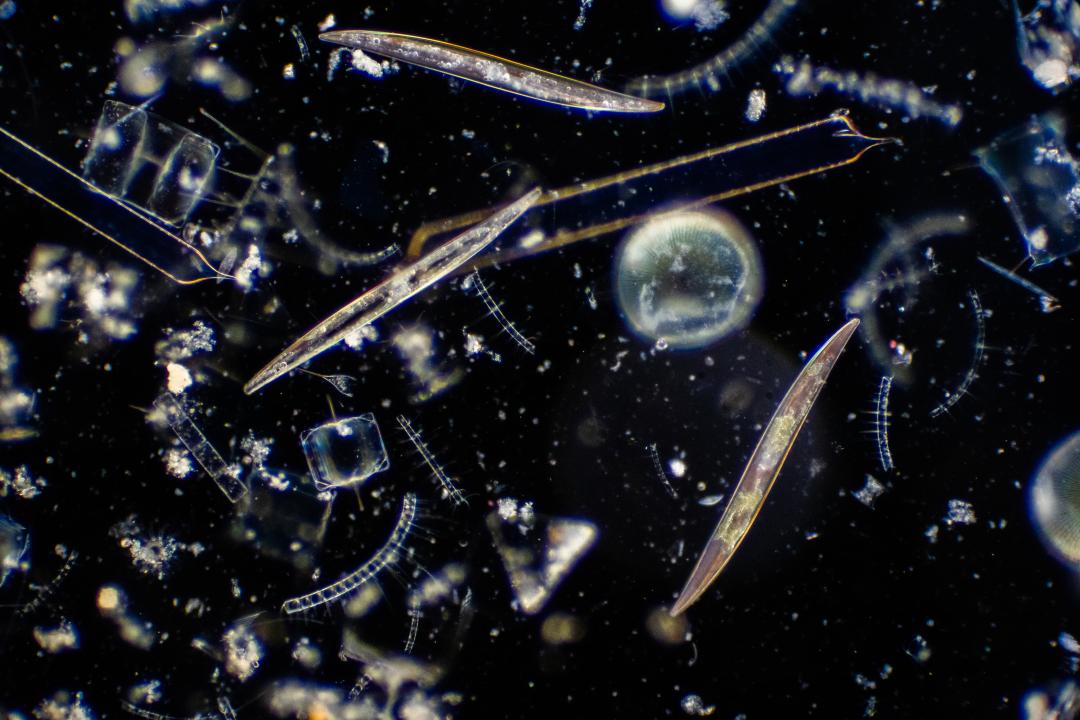
closeup view of phytoplankton

Like marine plants, phytoplankton have chlorophyll to capture sunlight use photosynthesis to turn it into chemical energy. The foundation of the oceanic food web, they store an immense amount of carbon - critical to preventing a future climate emergency.

The ocean as a carbon sink: Unexplored potential, and unforeseen risks

North Atlantic phytoplankton sampling

The ocean has long been regarded as one of the earth’s most important natural carbon sinks, storing around 80% of all carbon on the planet. Phytoplankton, aquatic microorganisms which serve as the foundation of the food web, consume carbon at a level equivalent to terrestrial forests. When they are eaten or decompose, the carbon dissolves into the ocean. Phytoplankton are responsible for almost all carbon uptake in the ocean, but just how this process will be affected by climate change remains uncertain. OSU microbiologists have made significant contributions to this field, questioning preconceived notions about which the world cannot afford complacency.

When considering the ocean as a carbon sink, the spring phytoplankton bloom in the North Atlantic is a clear winner. According to study author Steve Giovannoni, it is probably the largest biological carbon sequestration mechanism on the planet each year. In this yearly event, huge numbers of phytoplankton accumulate over thousands of square miles.

In the first-ever winter study of phytoplankton in the North Atlantic, microbiologist Steve Giovannoni and post-doc Luis Bolaños made a disturbing find. Diatoms, thought to dominate phytoplankton blooms in the North Atlantic, often were not a big part of the samples’ genetic profiles, and when they were a big part, the cells were small – either of the nano-phytoplankton variety or at the smaller end of the micro-phytoplankton scale.

Algorithms that predict carbon export from satellite-sensed chlorophyll tend to assign high export rates to phytoplankton blooms on the belief, based on observations from the eastern North Atlantic, that large diatoms dominate at their climax. The findings of this study, Giovannoni said, suggest that extrapolating those observations to the western North Atlantic may not be a valid practice.

Heterotrophic carbon cycling

In October, associate professor Ryan Mueller led a study that shed new light on the mechanisms of carbon cycling in the ocean, using a novel approach to track which microbes are consuming different types of organic carbon produced by common phytoplankton species.

As the ocean pulls in atmospheric carbon dioxide, phytoplankton use the CO2 and sunlight for photosynthesis: They convert them into sugars and other compounds the cells can use for energy, producing oxygen in the process. This so-called fixed carbon makes up the diet of heterotrophic microbes and higher organisms of the marine food web such as fish and mammals, which ultimately convert the carbon back to atmospheric CO2 through respiration or contribute to the carbon stock at the bottom of the ocean when they die and sink.

The collective respiratory activity of the heterotrophic microbial consumers is the main way that fixed dissolved organic carbon from phytoplankton is returned to the atmosphere as CO2. In his study, Mueller used stable isotope labeling to track carbon as it made its way into the organic matter produced by the phytoplankton and, ultimately, the heterotrophic microbes that consume it. The research is an important step toward forecasting how much carbon will leave the ocean for the atmosphere as greenhouse gas carbon dioxide and how much will end up entombed in marine sediments.

Photo of Glen Canyon Dam

Downstream of Glen Canyon Dam, researchers are implementing experimental flow releases as a way to minimize ecological damage to aquatic insects. Aquatic insect and sensitive taxa are negatively associated with hydropeaking intensity, which limits the composition and potentially the quality of the invertebrate food base.

New management solutions for river ecosystems

Hydropower dams are a renewable alternative to fossil fuels, but they are not without their downsides. Large hydropower dams alter the flow of the river by creating physical barriers that alter the river’s flow regime, as well as dissolved oxygen levels, nutrients and temperature.

Biologist David Lytle teamed up with scientists from the United States Geological Survey in a project to examine how the Colorado river’s seven large dams affect aquatic invertebrate biodiversity. While on a seasonal or annual scale, hydropower dams are known to reduce the average variation in the flow level, surges in power usage throughout the day cause a phenomenon known as hydropeaking.

As the earth continues to warm, rivers have experienced steep declines in water availability; last summer, only 30% of the average amount of water entered the Colorado, with other rivers experiencing similar trends. With water availability already limited, daily water-level fluctuations may prove intolerable for many species. While declining snowpacks and drier summers may be unavoidable, Lytle’s research may help provide strategies to manage water release from dams to minimize the ecological impacts. “Invertebrates are food for fish, birds and bats, and we want to enhance that food base by testing out different flow regimes that mesh with management ideas.”

In part three of this series, learn how OSU researchers are harnessing data to uncover new perspectives on resource management, using simulations to predict possible outcomes and using their unique skills to advance climate research across many disciplines.

group of people talking to each other at a social event

Health Professions Fair connects students with professional schools and careers in healthcare

At the annual Health Professions Fair, students can connect with professional schools and programs with specializations in the healthcare industry. The Fair is a wonderful opportunity to learn about graduate education and careers in health care. Admissions representatives from more than 60 health professions schools in Oregon and across the country will be on campus to answer your questions. The Health Professions Fair will take place on April 19, 2022 from 10 a.m. to 2 p.m. in the Memorial Union Ballroom.

These schools represent health professions programs in medicine, osteopathy, dentistry, pharmacy, chiropractic medicine, nursing, physical therapy, public health, health management and administration, medical physics, biomedical sciences and several others. More than 500 students attend the Health Professions Fair each year.

Students are welcome to stop by anytime during the health fair, which is free and open to all majors. Volunteers will be available to hand out a list of participating schools and a map of their table locations. Students can visit a school’s table and pick up information materials and speak with admission representatives.

Something for everyone

The health fair is open to all undergraduates and alumni.

First and second year students can explore health profession options, build networks and get tips from admission representatives on undergraduate preparation and co-curricular activities.

Juniors, seniors and alumni will have an opportunity:

  • to learn about specific programs from admissions representatives of various universities
  • collect application materials and obtain financial aid information,
  • get tips on writing a personal statement, the application process, and letters of reference.

Preparing for the fair

Students can interact with representatives of graduate health programs from schools such as Oregon Health and Science University, Idaho College of Osteopathic Medicine, University of Utah College of Pharmacy, Western University of Health Sciences in Pomona, California, Keck Graduate Institute of Claremont, California and many more. See a list of participating schools.

Students are encouraged to prioritize their list of schools to make effective use of their time at the fair. They can brainstorm questions they might ask admissions representatives. Here are a few ideas to get started:

  • What is unique about program X at your university?
  • What types of courses would I take in program X?
  • What experiential components does program X offer (internships, rotations, etc.)?
  • What does your admissions committee look for in an applicant?
  • I read about XYZ on your website. Can you tell me more about that?

According to U.S. News and other surveys, healthcare is one of the fastest growing industries. The Bureau of Labor Statistics predicts that employment growth in this sector will be much quicker than the average for all jobs by 2026.

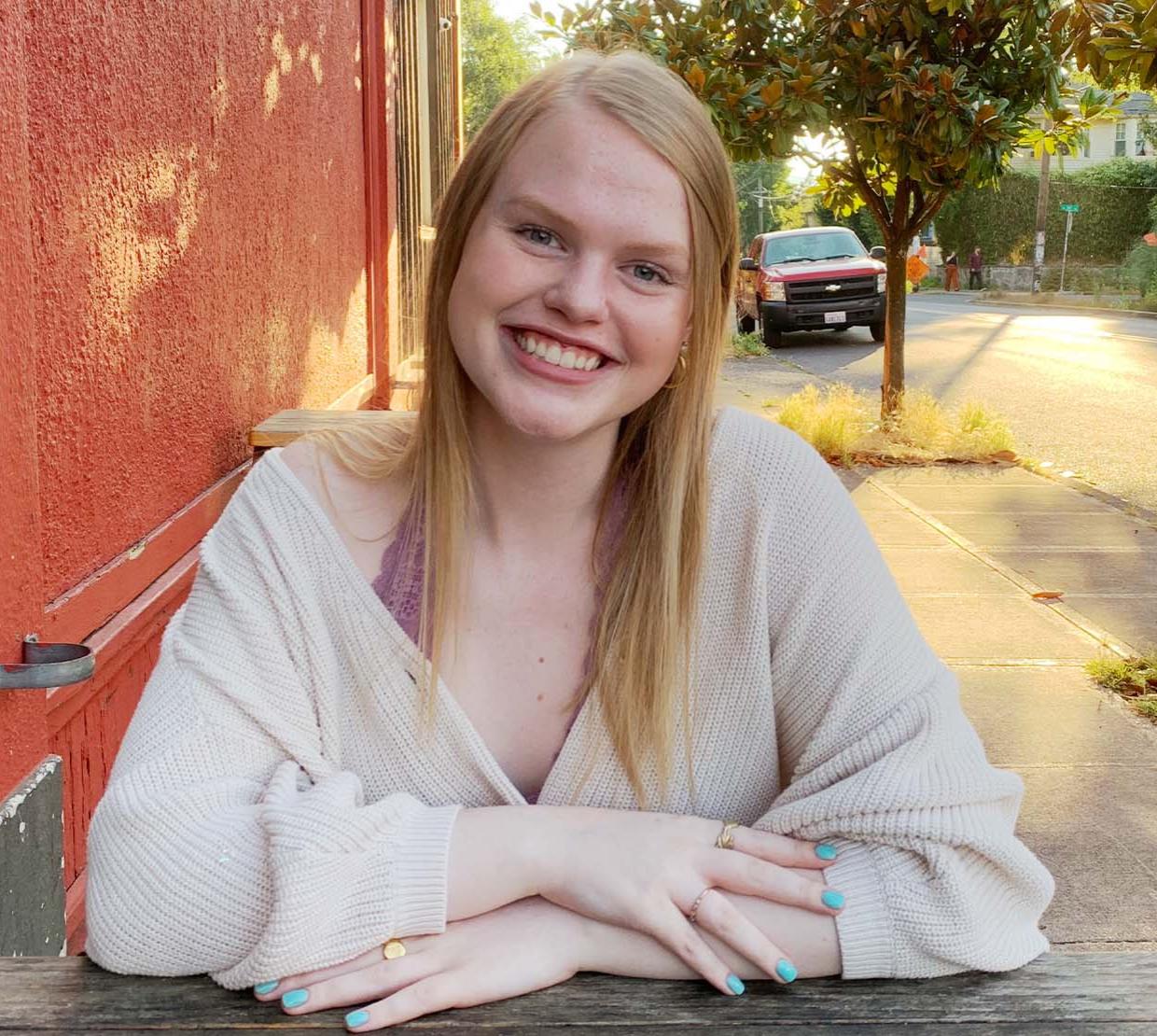
Breanna Repp seated at a table and smiling.

BioHealth Sciences junior pursues a career in health advocacy

By Grace Peterman

Breanna Repp completed cancer epidemiology research with SURE Science and continues with her Honors College thesis.

Third-year BioHealth Sciences Major Breanna Repp got started on the path to healthcare early. Growing up going to anatomy exhibits at the Oregon Museum of Science and Industry (OMSI) and seeing healthy and diseased organs side-by-side made a strong impression on her. “My mom said, ‘That’s what your lungs will look like if you smoke. The body is a vessel,’” Repp said. “That lesson made it very clear what the body is for, and what can happen if you do certain things to your body.”

Repp drew on her early experiences of anatomy to inspire her research with the Summer Undergraduate Research Experience (SURE) Science program the summer after her second year. SURE Science allows students from the College of Science to conduct paid, full-time research over the summer alongside instructors from any college.

Under the mentorship of Yumie Takata, associate professor in the College of Public Health and Human Sciences, Repp explored the connections between alcoholism and lung cancer risk. While connections between smoking and lung cancer are widely known, links between alcoholism and lung cancer risk are much less so. Teasing out these connections to health outcomes motivates Repp.

Turning points on the path to healthcare

Repp grew up in Oregon City, outside of Portland. In high school, she attended engineering fairs and cheer camp at Oregon State, and the campus “just felt like a college,” Repp said. Although she visited several schools, “to me, college was Oregon State.”

Knowing she wanted to be on the path to healthcare, Repp found that the College’s BioHealth Sciences major was a great fit to pursue her interests and form a cohort of peers. With seven different pre-professional options, the curriculum combines a strong foundation in biological science with its application to human health and society. Repp’s pre-med option meets most or all of the requirements for admission to medical schools across the U.S.

“It’s able to pull in all these different topics, giving me a variety of perspectives,” said Repp of her major. “Most people I meet, we all know we went on this track to get a really comprehensive look at healthcare.”

A human anatomy and physiology course at OSU proved to be a turning point for Repp, when the class started working with human cadaver donors. “It’s a really special experience for students to work with the donors,” said the instructor for the course, Devon Quick. “It helps develop empathy for individuals who are in their most vulnerable state.”

The opportunity to learn from people who had donated their bodies to science, feel chest compressions and tug on muscles filled Repp with an immense sense of respect and responsibility, taking her understanding of what it means to be a healthcare provider to a new level. “I knew I would never learn science properly without seeing it on the donors,” she said. “That was a pivotal moment for me.”

Repp says that Quick modeled a whole-person approach to healthcare, combining a deep knowledge of biology and the underpinnings to diseases with attention to social topics. “She seems like she really cares about us and works hard to make sure we’re all doing well,” said Repp. “I really respect a professor when they can look at their students and ask themselves what do these people need other than this class — you know, behind the scenes.”

Uncovering the root of health outcomes

Feeling a responsibility to put her knowledge to good use, Repp got thinking about what contribution she wants to make to the healthcare industry. In the course of her epidemiology research, Repp came across a surprising fact: The U.S. has the highest maternal mortality rate among developed countries. “It’s something you don’t hear about, and it’s very alarming,” said Repp.

Though largely preventable, maternal deaths have been increasing in the U.S. over the past two decades. In comparison to other high-income countries, the U.S. has an undersupply of maternity care providers, especially midwives. The U.S. is also the only developed country that does not guarantee provider home visits after a birth and paid postpartum leave, despite the fact that most maternal deaths occur during this period.

“We’re really far advanced in innovation and new procedures in the U.S., but our outcomes are not lining up,” said Repp. “I’ve always been on the path to wanting to become a doctor. But will I just be contributing to an unjust system? Or can I change some things?”

Repp is considering a master’s in public health in addition to medical school, so she can one day have a voice in changing policy and making a difference on a systems level. “I think if I could choose,” she said, “I would be a doctor in a pretty large hospital, doing public health advocacy, health promotion, and facilitating teams to teach prevention and get resources out to people.”

In the meantime, Repp continues epidemiology research for her Honors College senior thesis, also with Takata. “With SURE, I was basically learning how to do research,” said Repp. “This time around, I’m taking it into my own hands a little bit more.” Like her research with SURE Science, her thesis will illuminate how unexplored components affect health outcomes, possibly focusing on women's health or reproduction.

“A lot of people have heard that breastfeeding reduces breast cancer; that’s conclusive,” she said. “What’s something that’s not conclusive, but we see some connection?” Digging into the factors influencing maternal mortality could reveal what policy changes would be most beneficial in bringing the U.S. up to a higher standard of women’s healthcare.

Self-care as a public health issue

With her background in epidemiology, Repp has developed a broad and systematic view on health — including the mental and emotional health of herself and her community. “I don’t know if I could do my classes without having a good group of people I’m able to study with,” she said. A strong network is vital for sustaining success as a science student. She advises future students to “really utilize your professors. I think College of Science professors are really good at giving you review times and office hours and really want you to learn and understand.”

Outside of her studies, Repp invests in her community as volunteer coordinator of the OSU Pre-Medical Society, which has adopted upkeep of a local park in partnership with the city of Corvallis. She is also an Academic Learning Assistant, mentoring her peers in strong academic habits and university resource engagement.

Throughout her rigorous academic program, Repp says her biggest challenge has been handling anxiety. Using mindfulness, she harnesses the energy that causes her anxiety as fuel for her ambition and high performance. Although compartmentalizing is a challenge, Repp stays grounded by reading fiction and spending time with her five nieces and nephews. “Sometimes I feel like I should be doing more, but then I remember: Mental health is important!”

Subscribe to Students