Microbiology
Microbiology

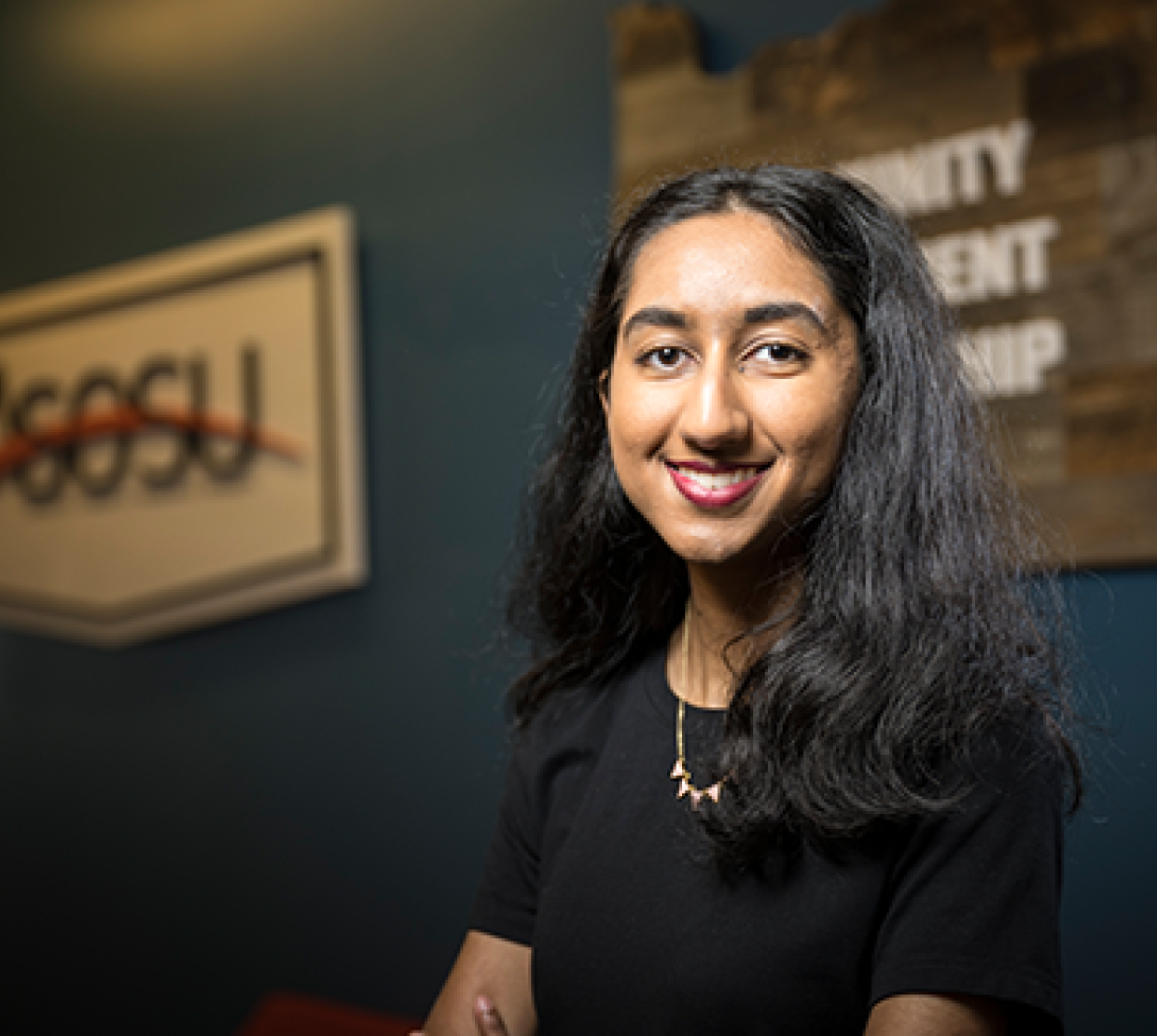
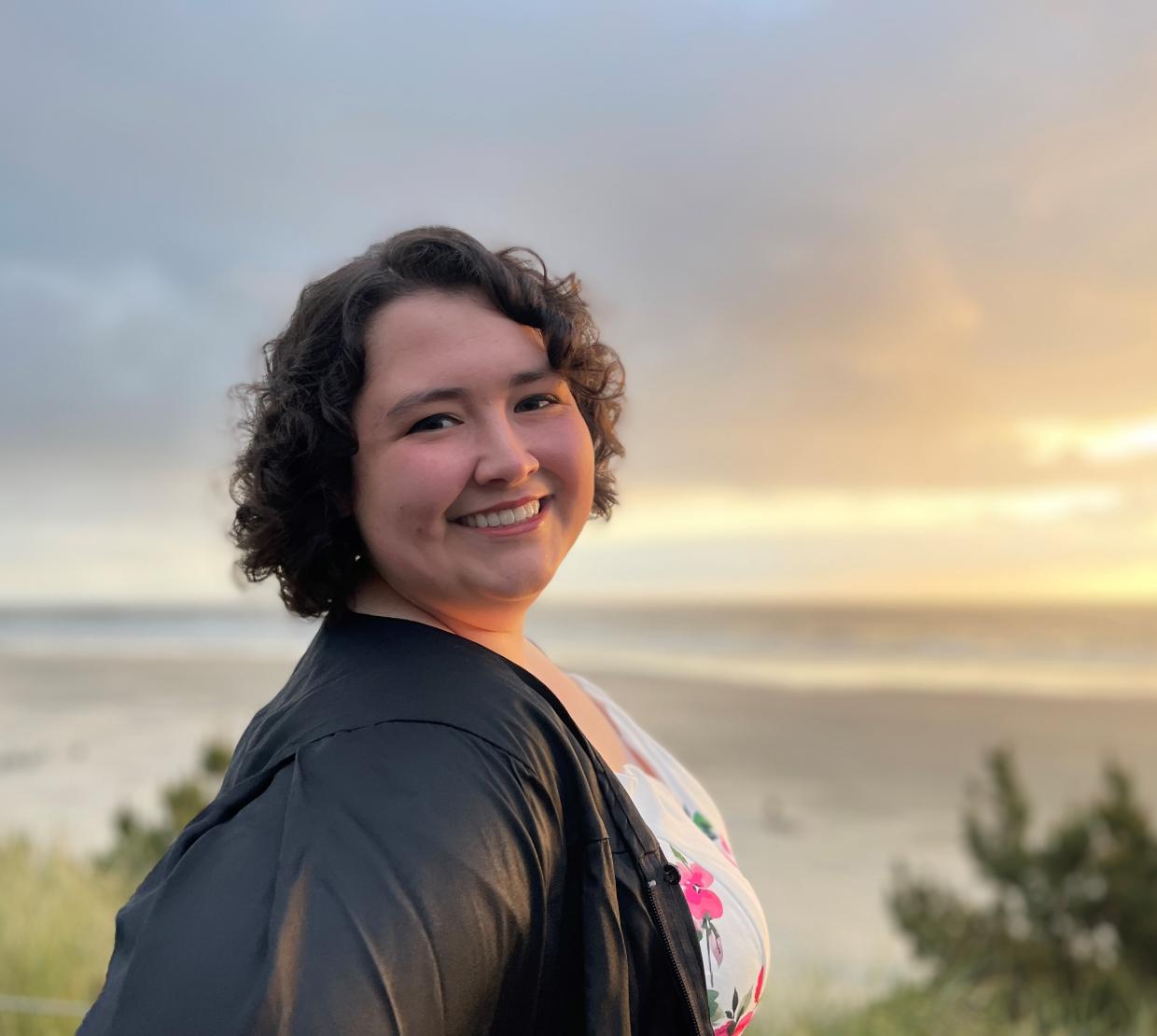
Growing up in Corvallis alongside an autistic sister, Sahana Shah gained an appreciation for her family member’s unique perspectives and learning style. But Sahana couldn’t help having concerns. “What is her future going to look like? Will she go to college?”
When Sahana arrived at Oregon State University with a Donald G. and Grace I. Lavey Presidential Scholarship, she immersed herself in the Honors College, sought to better characterize the structure and function of the COVID N protein in her biochemistry and biophysics lab, and ran for the student House of Representatives. One of her main platforms? Helping establish a disability cultural center to better adapt the campus to the needs of neurodiverse students. She won the election with the most votes of any candidate.
“The Presidential Scholarship has allowed me to fully engage in my passions at OSU through my different involvements, without having to worry about financial stress or other constraints, for which I am eternally grateful."
Since then, Sahana has joined the long-term effort among student groups to bring the idea to life – introducing legislation to her colleagues in the Associated Students of OSU Congress in fall 2021, allocating money for the project in the House of Representatives, marketing their message and holding focus groups with students at the conclusion of the 2021-22 school year. They’ve watched their idea evolve and expand into a vision for a Disability Cultural Center, in addition to an International Student Center, with the ideas for both projects having come to ASOSU from the student body. “We envision the centers having panel events, workshops and other programs that celebrate everyone’s backgrounds. That’s the biggest thing a cultural center could do: educate and spread awareness,” she says.
“If this comes to fruition, it would make me feel better about my sister going to college – I’d know she could have a place where she could feel safe.”
In 2022-23, Sahana and her peers plan to continue working with university administration to designate physical spaces on campus for the two centers and gather student input on the programming efforts within them.
Donald G. and Grace I. Lavey Presidential Scholarship was created in 1998 through an estate gift from two OSU alumni who graduated in 1940 – he in mechanical engineering and she in home economics. Over the last decade alone, the endowed fund has provided over $375,000 in scholarships for students like Sahana. Learn more about how you can unlock greater support for OSU students through the Scholarship Match.
Related Stories
Across the Department


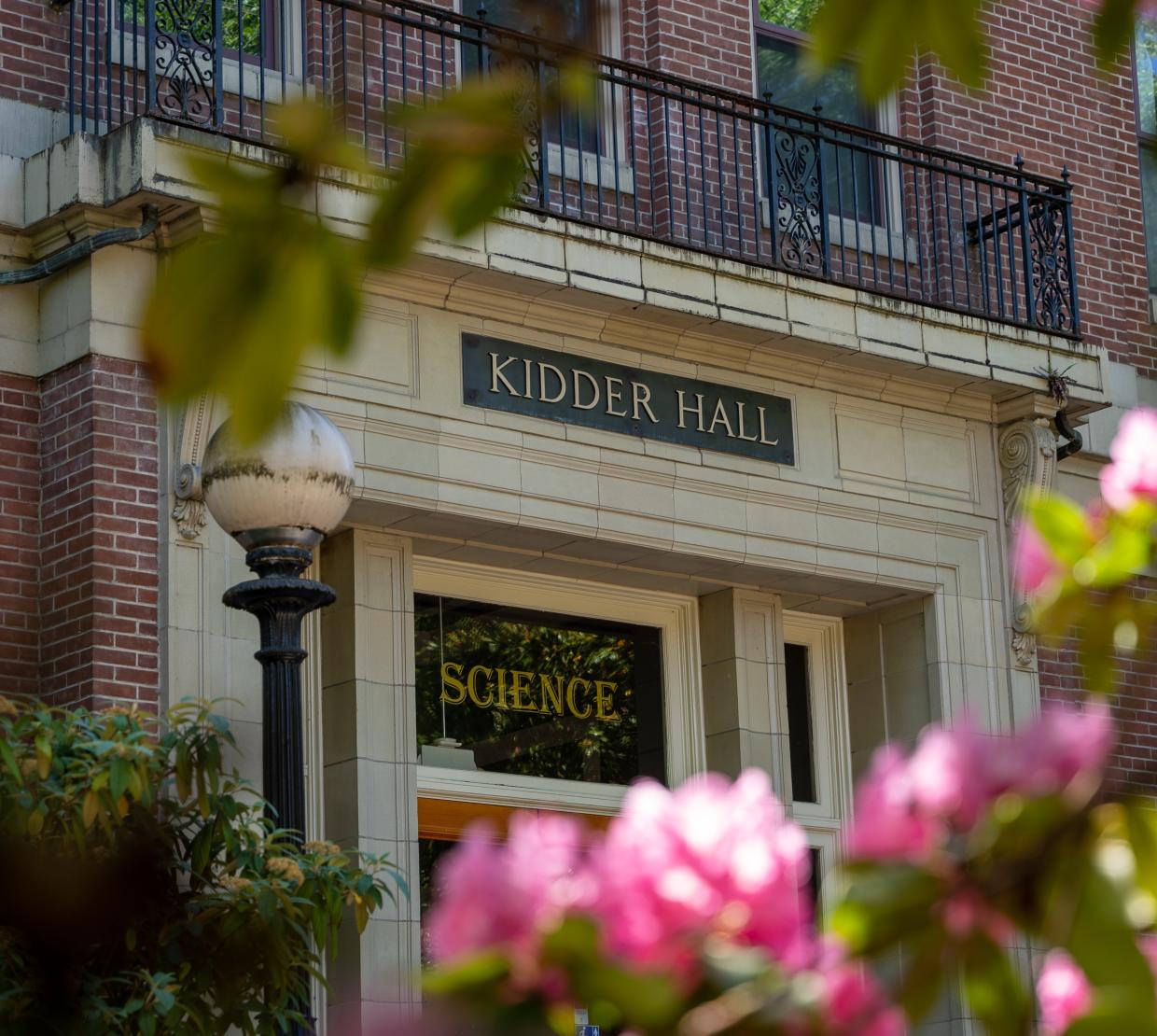
Four College of Science graduate students were selected for the prestigious NSF Graduate Student Research Fellowship Program in the 2022-23 school year. The program recognizes and supports outstanding graduate students in STEM who are pursuing research-based master’s and doctoral degrees in the U.S.
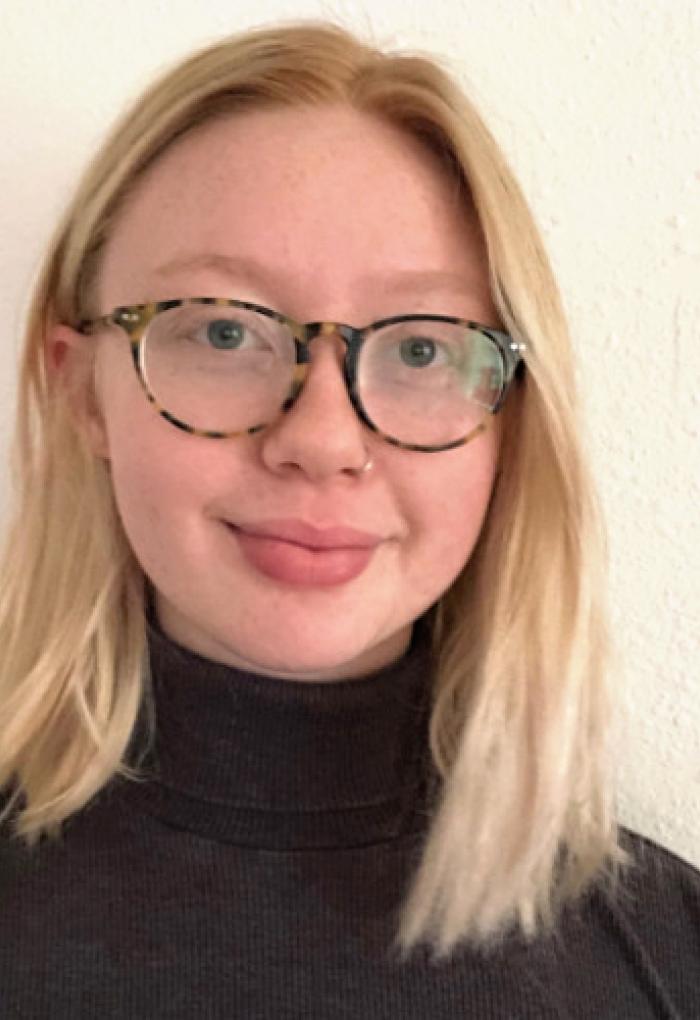
Sunni Patton
Sunni Patton is a microbiology Ph.D. student working with Rebecca Vega Thurber. She is interested in studying how natural phenomena, anthropogenic contaminants, and other environmental stressors influence marine microbial communities. Her work focuses on understanding microbiome resilience and sensitivity in response to environmental stressors in the endangered Caribbean coral, Acropora cervicornis.
Professor Thurber’s lab seeks the answers to crucial questions within virology, microbiology, coral reef ecology, animal physiology, as well as the evolution of symbiotic relationships. Its methods marry cutting-edge technology and interdisciplinary approaches in order to investigate viruses and microbes and how they impact the world around them.
Read about Patton's journey through coral research here.
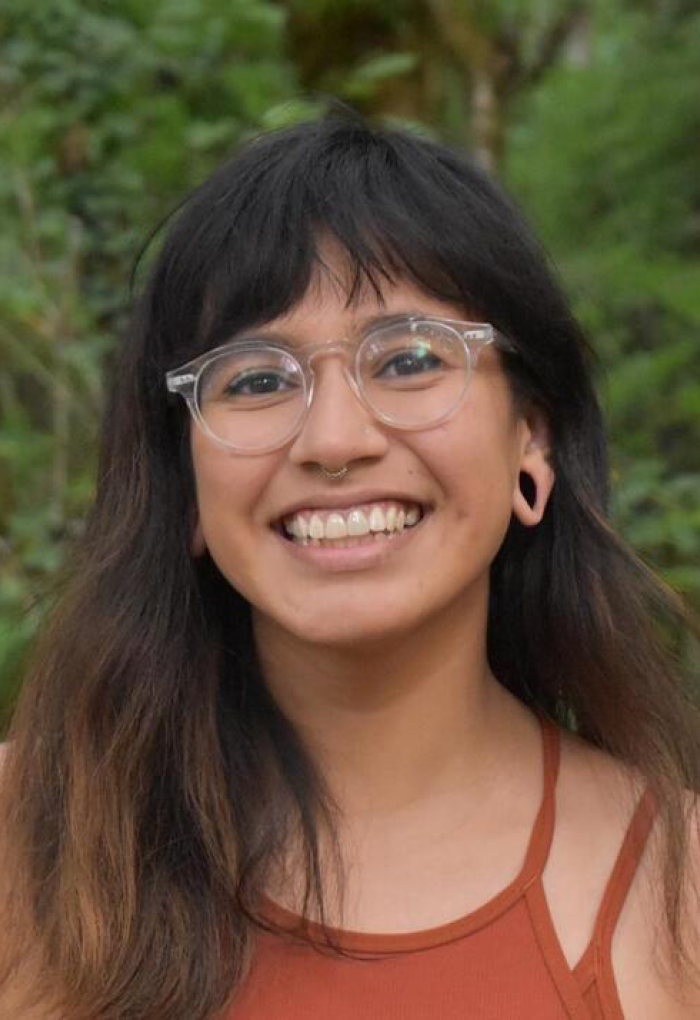
Caroline Hernandez
Caroline Hernandez is a microbiology Ph.D. student working with Maude David. She is studying the interactions between sensory gut cells and neurons.
David’s lab is in pursuit of discovering how gut microbiomes directly influence behavior, particularly in the context of Autism Spectrum Disorder and Anxiety Disorders. Its work ranges from developing novel biocomputing methods to crowd-sourced data collection. David is especially interested in obtaining critical information from large datasets through machine learning algorithms.
Read more about Hernandez's path from being an art major to studying gut microbiomes here.
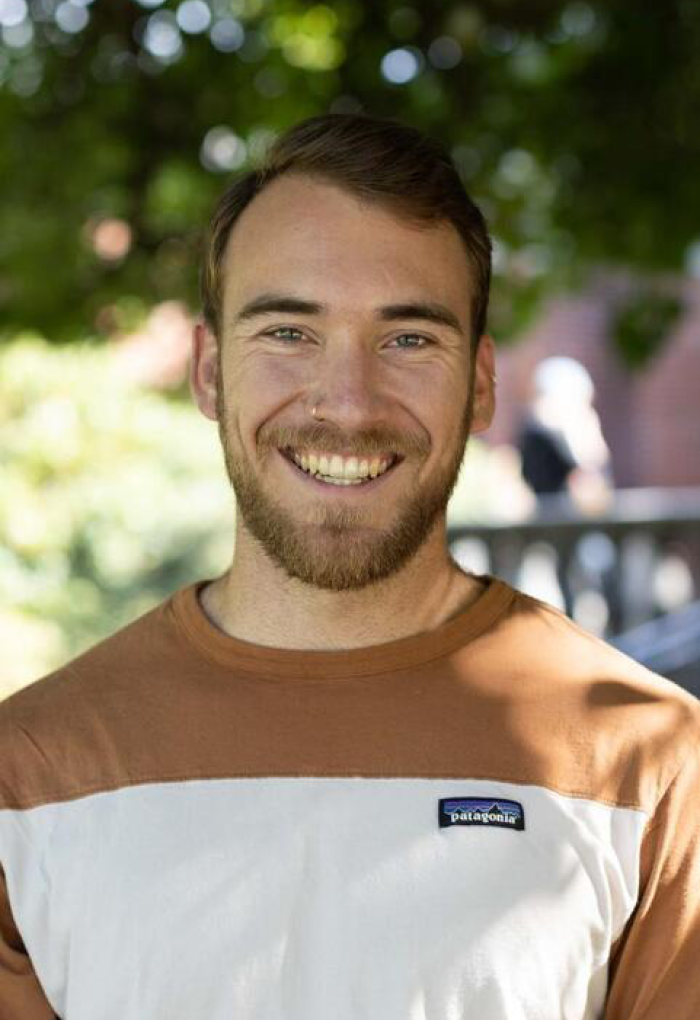
Luke Bobay
Luke Bobay is an integrative biology Ph.D. candidate at the Hatfield Marine Science Center Plankton Ecology Lab. He studies anthropogenic impacts on trophic interactions and population dynamics. He is currently exploring the effects of climate change on northern anchovy populations off the coast of the Pacific Northwest.
The Plankton Ecology Laboratory gathers data applied to ecology, oceanography, the creation and upkeep of marine reserves, and potential environmental changes. It hosts several research projects, including one specializing in the underwater imaging of plankton and another examining trophodynamics in relation to plankton within food webs, providing necessary knowledge on these organisms in a variety of ways.
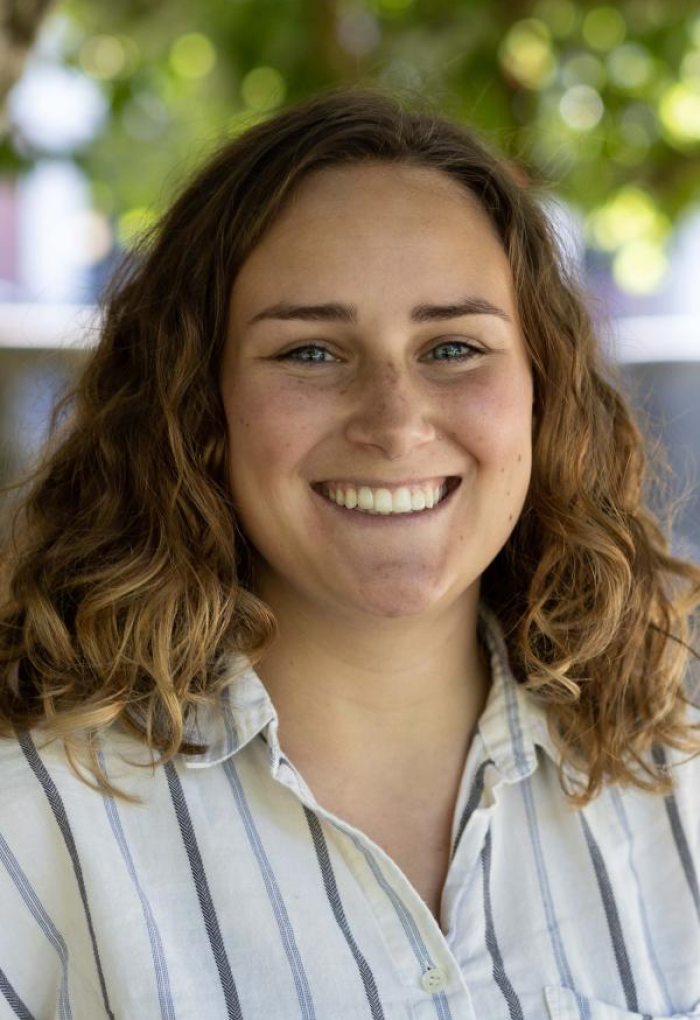
Olivia Burleigh
Olivia Burleigh is an integrative biology Ph.D. candidate working with Virginia Weis. She is studying cnidarian-algal symbiosis. Cnidarians include jellyfish, corals and sea anemones.
The Weis Lab is headed by Distinguished Professor Virginia Weis and examines the symbiotic relationship between coral and algae. Of the relationship, the lab seeks to learn more about how the two organisms recognize one another throughout the relationship, the function of the host’s immune system within the dynamic, and the processes that occur in the cells during the loss of algae, among other topics.
Related Stories
Across the Department
Graduate students
College of Science graduate students earn prestigious awards in 2025-26

Climate and Oceans
Salmon face hidden threat from changing diets, new study finds
Graduate students
College of Science graduate students earn prestigious awards in 2024-25
The future Dr. Kendra Yasui began her medical education during her early years working in her family's orchard near Hood River, Oregon.
"I grew up picking and sorting cherries, and my coworkers and I all spoke in Spanish," said Yasui, who graduated this spring from OSU. "It was very interesting to hear all their different life stories."
Yet she worried about the other workers.
"I've seen a lot of folks who haven't been able to access health-care providers who speak their language or understand their culture, so my hope is to be able to provide health care for those folks in Spanish," Yasui said.
She graduated with two bachelor’s degrees through the OSU Honors College. One is in biohealth sciences with a minor in chemistry, an option in pre-medicine and a certificate in medical humanities. Her other degree is in Spanish.
"I'm most interested in emergency medicine," Yasui said. "That's an area where being able to speak to someone in their first language is particularly useful. I'm also interested in primary care or internal medicine."
Yasui has begun applying for medical school. If she's accepted, she will start next summer. In the meantime, she is moving to Worcester, Massachusetts, to live with her sister.
She said she wants to obtain a medical degree while simultaneously earning a master's degree in public health. One of her academic choices is the University of California at Davis. "I would be excited to get in anywhere," she said.
However, she added she would also love to return to Oregon.
"If I do emergency medicine, I think Oregon Health & Science University would be super-interesting," Yasui said. "They get a lot of interesting cases. If I end up in the primary care or internal medicine side, perhaps I would go closer to Hood River."
Communicating the pandemic
Although she was born in Pendleton, the Hood River Valley has been her home most of her life. Her mother, a former English-as-a-second-language teacher, is the principal of Mid-Valley Elementary School in Hood River. Her father is a paramedic.
Yasui graduated from Hood River Valley High School and came to OSU in 2019.
"It was cheaper than the other options," she said. "I also really liked the campus. It's quite pretty out here. I thought I could be close to home, at least for a little while. I drove through Corvallis one time and thought, 'Yes, I could do that.'"
She was president of the OSU Blood Drive Association in 2022-2023 and the secretary the previous year. She was also a member of the OSU Bioethics Society.
The Blood Drive Association organizes one blood drive on campus per term. Students in the association recruit volunteers and donors and staff the event as well. The first five or six weeks of the term are spent getting set up, reaching out to classes and doing presentations. The drive lasts a full week.
Members of the Bioethics Society meet once a week for most of the term. They pick a topic or a case study and learn about it before discussing it through the lenses of biology, biotechnology, genetics, medicine, philosophy, politics, law and other relevant disciplines.
"It's very informal, but the ethical concerns we discuss are interesting, like allocation of resources or balancing patient autonomy," Yasui said.
Like most university students at this moment in history, Yasui's education was significantly affected by the pandemic.
She was working as a medication technician at Corvallis Caring Place, an assisted living facility, when the pandemic started. She put in excruciating hours for a year and a half, but that was only part of her work during the crisis.
"I've heard everything from vaccines being full of mercury to we're trying to put computer chips in people. I've heard all of that. My role is a lot of correcting misinformation, a lot of saying, 'Here's the science that I have. Here's what I can offer."
She also began working for the Oregon Health Authority through the OSU Center for Health Innovation in 2021. The university and the state agency created what they called the Surge Bench Team to provide direct COVID assistance.
"I've had some extraordinarily unique opportunities to see chaos in motion and also some teamwork on these massive projects," Yasui said of her ongoing efforts with the program.
"For the first six months, I did case investigations," she said. "I would call folks who tested positive for COVID and ask them questions, identifying who their contacts might have been, offering wrap-around resources, that sort of thing."
She also helped people gain access to vaccines if they had mobility issues and other barriers.
Her work took her to Umatilla County to take part in a rapid community assessment project through the Centers for Disease Control. "That was going door-to-door, just seeing if we could get people to answer some survey questions about their opinions about vaccines," she said.
In all, Yasui worked on four projects during her first six months. For the past year and a half, she's been assigned to the COVID Feedback Team. The team answers people's COVID questions via voicemail, email and plain old-fashioned mail.
Yasui said she seldom worried about contracting COVID herself. "I was less worried about myself than I was in my ability to transmit it to others," she said.
"Everyone I was with was very supportive of the work I was doing, but I also didn't go home for the first year and a half," she added. "I was in the dorms, basically on my own for the first several months. I didn't see anyone for a long time."
Yasui has spent much of the past three years combatting misinformation. "I've heard everything from vaccines being full of mercury to we're trying to put computer chips in people," she said. "I've heard all of that. My role is a lot of correcting misinformation, a lot of saying, 'Here's the science that I have. Here's what I can offer."
Although she's not concerned about her own safety, Yasui said she remains concerned about other people's safety even as the pandemic winds down.
"I wear my mask everywhere," she said. "I'm just now at the point where, if I'm at the library at 7:30 in the morning on a Friday or Saturday morning when there's no one there, I may take my mask off. I wear my mask everywhere. There's still enough of COVID circulating.
"I've gotten used to being one of the only people in a classroom who is masked," she added.
For all the horrors of COVID, Yasui said it has been amazing to be actively involved in history. "I feel like I ended up with a much different experience than I would have gotten three and a half, four years ago," she said.
Yasui will stay in Corvallis a bit longer. For the next month or so, she will be defending her Honors College thesis on using community voices to build public trust. Much of it is based on the feedback she's received while working for the Oregon Health Authority, she said.
"If anything, I'm more excited to do more with more education"
That work will also continue through a Health Authority project to reassess people for Medicare, Medicaid and the Oregon Health Plan as the worst of the pandemic dissipates.
For all the work she has put in through the rigors of her undergraduate education – especially in the grip of a health crisis of historic proportions – Yasui said she's eager to keep going.
"If anything, I'm more excited to do more with more education," she said.
Related Stories
Across the Department
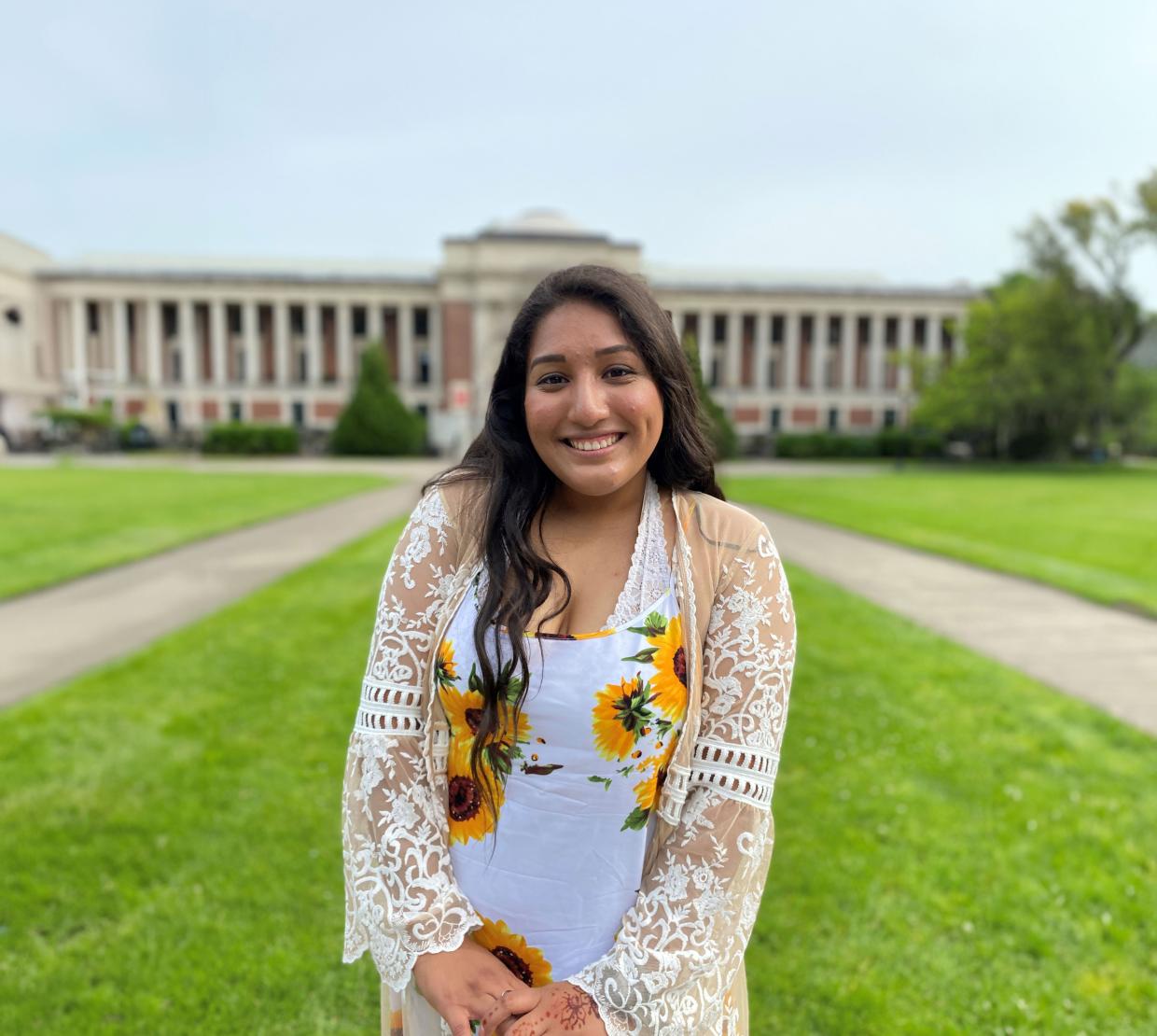
Jessica Lopez, who graduated from Oregon State this spring with a bachelor's degree in biohealth sciences, spent the worst of the pandemic watching hundreds of people die.
For many of them, the last thing they felt was Lopez's hands clasping theirs.
"Hugging them and holding their hands provided peace for some folks while they were passing," Lopez recalled.
A lot of overwhelmed health-care providers burned out and quit during the pandemic. After commuting the 80 miles between OSU and Pacific Health & Rehabilitation in Portland from June 2020 to June 2021, Lopez said she knows how they felt.
"It affected my mental health," she recalled. "I kept seeing all these awful things — people on tubes, people being intubated, people in comas. A lot of these patients weren't able to see their families as they were passing."
At least 300 people died from COVID-19 at the facility during the year she worked there as a certified nursing assistant, said Lopez.
However, the experience didn't weaken her resolve to be a health-care provider. It confirmed it. "It gave me a deeper look into health care, how at times it's going to be a personal sacrifice," she said.
"I lost a lot of friends because a lot of them disagreed with me working in this industry," she added.
"They said they didn't feel safe around me," she said. "That really hurt because I really wanted friends to hear me out about my experiences, but not everyone is going to understand health care -- the hours, the relationships, just the everything."
What kept her going, she said, was how patients' faces lit up when she entered the room. "It warmed my heart," said Lopez. "I decided to keep commuting and try my best to keep going. It sparked more interest in a career in health care."
"At first, I did it for the money because I needed to pay off my tuition," she added. “I owed OSU a lot of money at the time. However, the longer I stayed, the more I wanted to stay for the patients and give them the care they needed."
Her family has never shied away in the face of adversity. "I grew up with a single mom, and through her and my grandma, I grew up with two strong women," she said. "They taught me to pursue my career and education. They encouraged me to go to college and pursue science."
A love for helping others
Lopez, 24, was born in Los Angeles and grew up in Portland. Her family was from El Salvador.
"They had to flee the country and come to the United States," she said. "Their story really touched me. It made me more dedicated to go to school, get a college degree and hopefully a master's degree or doctorate."
She vividly recalls her mother telling her about the day she skipped school.
"Unfortunately, that was the day many students were killed at the university because of the civil war," Lopez said. "My mother wasn't able to continue her education, and that's when they had to flee El Salvador. That story made me realize that not everyone has this opportunity to get an education.
"My family, my culture and their history has definitely formed who I am and why I want to pursue my education and go even higher," she added. "I am hoping to get into some kind of physician's assistance program, medical school or a master's program. I'm not sure quite yet."
Her mother worked in a nursing home in Portland and often took her to work, Lopez said.
"Growing up, I would always go to the nursing home and meet the elderly residents," she recalled. "I would volunteer and try to help out. Through that, I developed my love for medicine and just helping others."
She started volunteering at Kaiser Permanente in high school in the post- anesthesia care unit. "That was so cool," she said. "I loved it. I never got to see any surgeries, but I liked seeing people feeling so much better after their surgeries. I thought, 'Wow! I could make this into a career! This is really cool!'"
After graduating from Rex Putnam High School in Milwaukie, Oregon, in 2017, Lopez applied at OSU. "I initially chose Oregon State because all my friends were going there," she said. "I was very lost after high school. I didn't know where to go, so I just followed the flow."
"I'm very grateful I went to Oregon State and I am going to graduate from here, because my journey here has been so crazy."
When she was registering for her freshman classes, she joined the Educational Opportunities Program. Founded in 1969, the program supports the academic, personal and professional development of students who have traditionally been denied equal access to higher education.
"From there, I created my own path," Lopez said.
"I'm very grateful I went to Oregon State and I am going to graduate from here, because my journey here has been so crazy," she said. "People tell me I've literally tried everything here, and it's true. I wanted to get the full experience."
Stepping out of the comfort zone
During her first two years, she participated in Air Force ROTC. In her third year, she switched to Army ROTC.
"Even though I didn't complete ROTC, I'm very grateful for the experience," Lopez said. "It was very hard. I'm not going to lie. Waking up at 4 or 5 a.m., working out, it was a little hard initially, but after a little bit, I learned time management and how to work with others."
ROTC also helped Lopez find her voice. "I was very timid at the time," she said. "Slowly but surely, they began to give me more leadership positions."
Eventually, she addressed an entire battalion. "That was frightening at first because I hate public speaking," Lopez said. "Even though it was the most random part of my life, it was a really good experience."
Lopez was also able to go to Dyess Air Force Base in Texas for a summer internship. She's still in touch with some of her ROTC comrades, some of whom are now second or first lieutenants. "It was a really nice connection," she said.
She also pursued undergraduate research with the College of Veterinary Medicine through the STEM Leaders Program between 2017 and 2019.
The STEM Leaders Program is a collaboration between the College of Science, College of Forestry and College of Agricultural Sciences to increase the number of under-represented groups able to have hands-on learning experiences their first years at Oregon State.
"That was extremely fun too because I had no idea what I was doing -- doing titrations and these crazy things that at the time I thought were super complicated," she said. "Now, looking back, I think, 'Oh, that's just PCR [polymerase chain reaction]. I know how to do that now."
Lopez said her undergraduate years were certainly eclectic.
"In those sorts of experiences, I literally stepped out of my comfort zone and did random fun things that I normally wouldn't do," she said. "I'm also very grateful because I was able to create all these great connections."
Lopez also worked at ASOSU SafeRide, but that experience ended with the pandemic. After the service was suspended, her mother told her about a COVID unit that needed certified nursing assistants.
"I have a drive to help others. I hope I can relieve some pain."
"It was the hardest year, trying to do school and trying to commute to Portland while literally trying to save as many lives as possible," Lopez said. "It was the wildest thing because a lot of the people there were either new graduates who were nurses or new certified nursing assistants."
The commute itself was surreal, she remembered.
"COVID was very strong," she said. "It really hit the older population. There were about 300 or so folks who passed away. That was very hard to witness while, at the same time, going to where everyone was like, 'OK, everything's fine.'"
Lopez's diploma reflects the diversity of her education. Her specific degree is in biohealth sciences and Spanish with a minor in psychology and a medical humanities certificate.
Her immediate plans after graduation include continuing her work as a certified nursing assistant in the ambulatory surgical unit at Good Samaritan Regional Medical Center in Corvallis. She hopes to get a lab position at the hospital as well.
"I'm going to take the opportunity to shadow as many surgeons as possible, while at the same time, work in a lab," she said. "I still want to get as many patient-care hours as possible."
She may become a physician's assistant, attend medical school, become a medical laboratory scientist or pursue a master's degree in medical lab science.
"I definitely want to explore as many options as possible before settling on one career," she said.
One of Lopez's over-arching goals is helping her family.
"I want to be financially stable and be in a place where I can help out my family because I really appreciate everything they've done and all the sacrifices," she said. "I hope I can give them some kind of financial stability. I want them to be able to rest."
In fact, she wants everyone to feel better.
"I have a drive to help others," she said. "I hope I can relieve some pain."
Related Stories
Across the Department
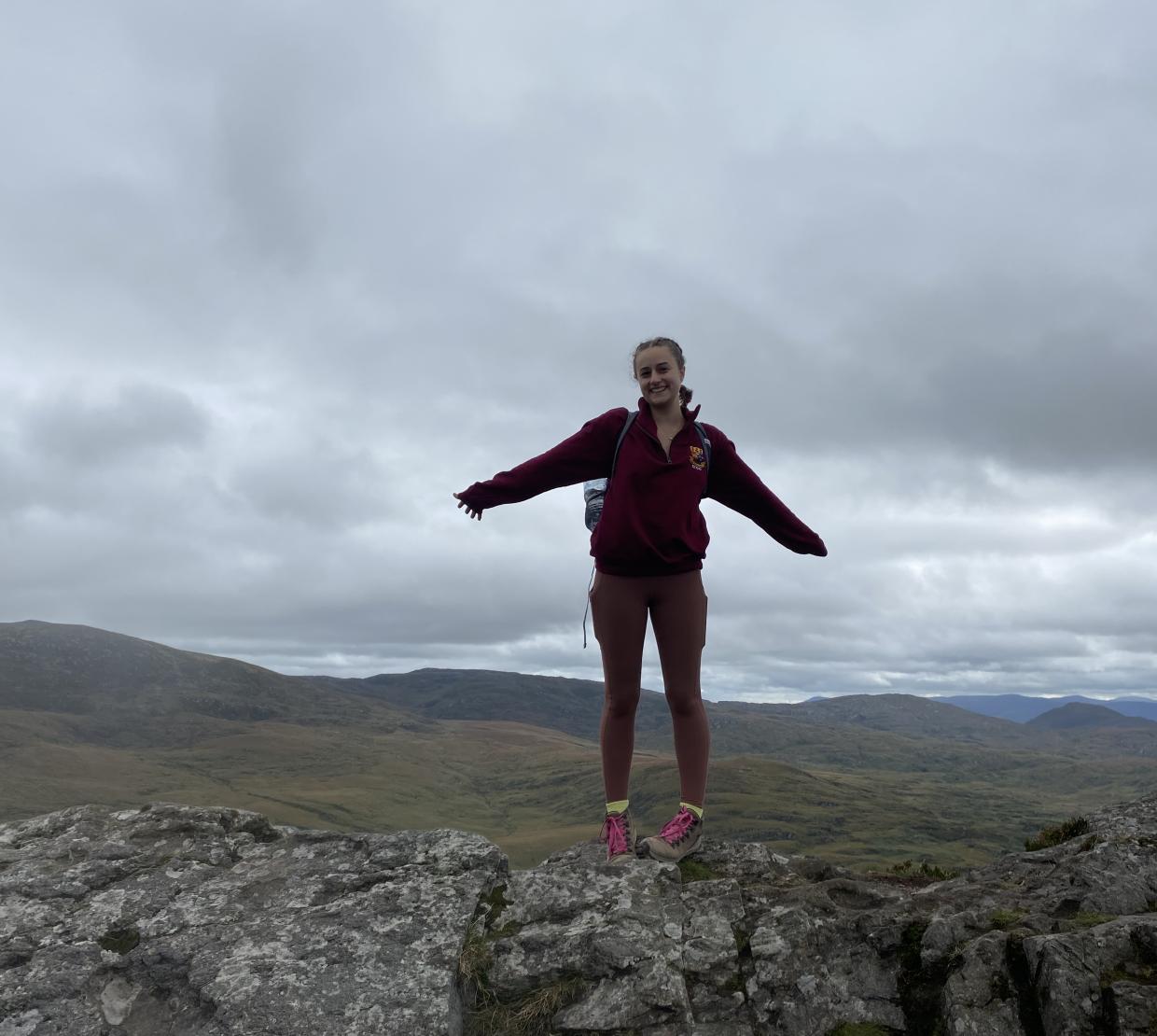
Amelia Noall standing atop Torc Mountain in Killarney National Park, Ireland during her time studying abroad.
Lice: creepy, crawly, but to a young Amelia Noall, fascinating.
Memories of getting lice in elementary school aren’t usually fond ones, but after she was gifted a microscope by her mother, the experience became an early sign of Noall’s eventual major.
“There was an outbreak at my school, and of course I got it. But I started looking at the bugs through my microscope and thinking, ‘Wow, these are so interesting!’” she recalled. Her natural desire to explore paired well with the smaller, unseen parts of the world around her. As she followed her curiosity, picking leaves from the ground and examining their hidden structures through the microscope lens, she unknowingly paved the way toward her time as a microbiology major — and now senior — at Oregon State.
Exploring the little things
Leaving Portland, Oregon to start her first year of college, Noall decided to major in biohealth sciences, set on pursuing forensic anthropology. But she later felt drawn to naturopathic medicine, and after that, realized she didn’t have a particular goal in mind.
“Being here exposed me to a lot more than I had ever really seen,” Noall said. “I wasn’t sure what I wanted to do, but I wanted to keep exploring.”
She began diving head first into science at Oregon State, fitting as many clubs and classes as she could into her schedule, and eventually stumbled upon the microbiology major. Just as the shapes and forms of small organisms had captivated her as a child, microbiology caught her attention for a similar reason.
“I actually chose microbiology because I think that microbes are cute,” Noall said, laughing. This unassuming interest appealed to her enough that she decided to commit. With a final switch of her major to microbiology, she soon found herself appreciating microbes for much more than how they looked.
"Bacteria live on us, in us. We’re about as much microbe as we are human.”
You may not see microbes as often as you would birds hopping between tree branches or squirrels darting across sidewalks, but they exist nonetheless in a subtler way throughout all habitats, too small to be seen by the naked eye. Despite their tiny stature, the importance they carry is immense.
“The amount that microbes could make or break our future is incredible,” said Noall. “Microbes are what we think of as the most simple organisms, but they are so complex and amazing at what they do. Bacteria and phytoplankton and zooplankton could help us a lot with climate change. If your gut microbiome is off, it can cause you to have new food allergies. Microbes are something so small that you can’t see them, yet they can affect not only the environment but us too.”
Before studying microbiology, Noall’s view of microbes was much narrower. “I definitely thought before that bacteria were just something you kill with antibiotics, but they help us a lot more than they hurt us,” she said. “Bacteria live on us, in us. We’re about as much microbe as we are human.”
She decided that the major would never be boring and always give her a new question to ask, and chose to continue studying it through college. “I started for the appearance of the microbes and how cool they seemed, and I think I stuck with it for how interesting they are and how in-depth microbiology goes,” she said.
To speak the language
As time has gone on, Noall has developed more passions outside of microbiology. She has often felt pulled in many directions, which was amplified by the vast spread of opportunities available on a campus as large as Oregon State.
“It’s a big school and there’s so much to do, and I wanted to fulfill all those desires in me to learn all I possibly could,” she said.
One of those desires would weave together nicely with her love of language. Beyond the facts and figures of science, Noall carved out a slice of her time to dedicate wholeheartedly to studying French. The language had long been a cherished hobby of hers, but she never intended to continue learning it in college.
“It wasn’t originally my plan to have a language component, but I took the language test before I came here and I ended up speaking to one of the French professors before school started my first year,” she explained. She learned that she would only need two years of French classes in order to minor in it thanks to her having studied French through all of high school. The decision to commit to the minor nearly made itself, but Noall had more reason than simply adding another point to her resume.
"My experience with it has been so great. Maybe that’s the reason I fell in love with language.”
“It wasn’t about getting the minor for me,” she said. “One big reason behind it was my French classes were really small, maybe 14 to 16 people, and I liked having a smaller community within a bigger community. All of the French professors are also so kind and amazing, and I guess that’s why I chose to stay in it.”
To Noall, the professors she has had in her time learning French have been the main force shaping her relationship with the language. “I think that a teacher can make a class. I feel like a lot of the classes that I’ve fallen in love with were because of the teacher, and maybe that’s why I love French so much — because my experience with it has been so great. Maybe that’s the reason I fell in love with language,” she said.
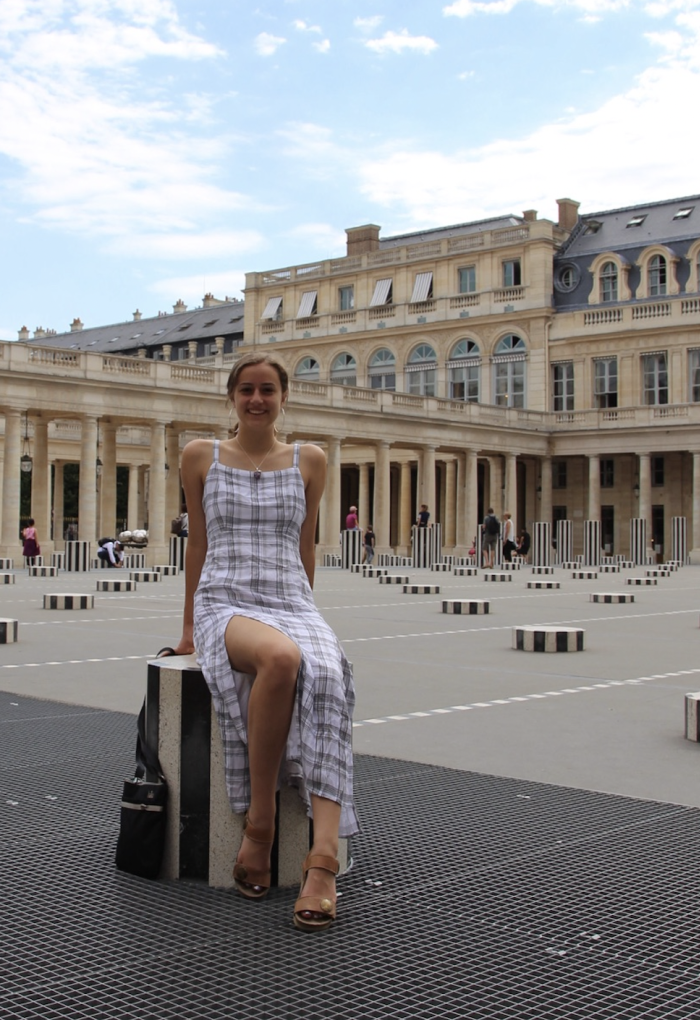
Noall sitting outside of Les Jardins du Palais Royal in Paris during a trip in 2019.
A whole new world
When she started college as a first-year, Noall was driven to squeeze every drop of opportunity she could out of her time at Oregon State. From dedicating herself to her French minor and becoming president of the French Club, to talking with hundreds of coming and going students while working at the Valley Library, she grew connections all over campus. Still eager for more, Noall later chose to spend her senior year studying abroad in Cork, Ireland. But just as it had before, her plan changed.
“It was an entirely new environment with entirely new people.”
“The reason I went to Cork was originally because I knew they offered microbiology classes, and I wanted to go for the full year to get the final microbiology credits that I needed,” she said. “Sadly, I was only able to go for one semester, but because of that I knew I’d be back on campus for two terms and be able to finish those credits here. So I ended up being in Cork for an entirely different purpose.”
Noall decided to take advantage of the circumstances and learn as much about the local area as possible while there. She signed up for an Irish folklore class and an Irish language class, learned traditional dances and even took a course on medieval manuscripts. “It was so nice to be able to explore all of these different areas I had never gotten the chance to before. It was an entirely new environment with entirely new people,” she said.
There was plenty to learn outside of the classroom, too, as Noall quickly discovered. The experience as a whole forced her to grow in ways she didn’t know she could. “It was kind of crazy to think that I could actually have managed that by myself. Especially for someone who’s very indecisive, it pushed me to be a more decisive and thoughtful person,” she said.
Staying in a different country gave her memories that still live vividly in her mind. In the first month she was there, Noall and a new friend of hers took to the water. They paddle boarded next to the town her friend was from, passing by forts with centuries’ worth of history that jutted out into the currents. “That was a beautiful day,” Noall said, describing it as one of her favorite memories from her time in Ireland.
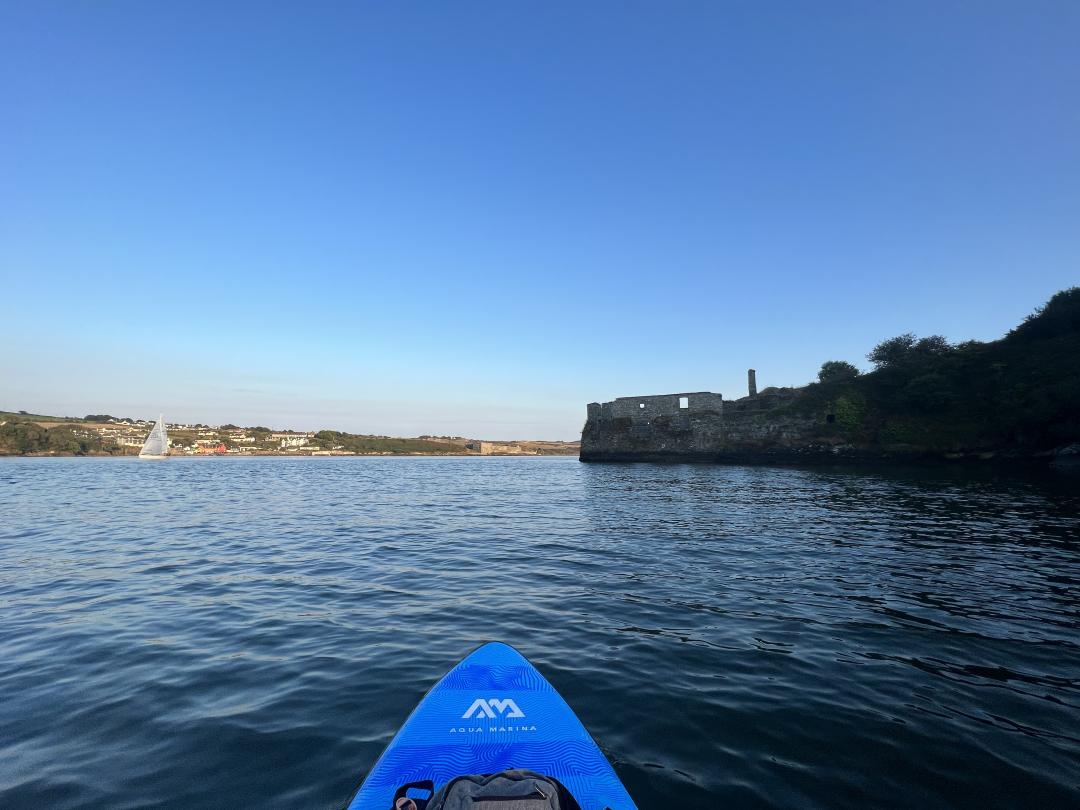
A picture Noall took of James Fort and Charles Fort while paddle boarding in Ireland.
Basking in the uncertainty
Across all of her experiences, whether she was meeting people from different parts of the world or other students at club events, Noall has always prized human connection.
“There are so many unique voices at Oregon State.”
“One of my favorite things is first impressions,” she said. “That moment when you get to meet someone and learn about them for the first time, I really value that. There are so many unique voices at Oregon State. I think if you make the effort to explore while you’re here, you learn a lot.”
As she’s mulled over potential careers for herself, her love of human connection has shone a special light on becoming a teacher. Noall already works as a teaching assistant in a microbiology laboratory and aids students during their experiments. But in each class, the sharing of ideas is a two-way street.
“With my job, it’s not always telling people what to do. It’s learning from them. I think that’s the same with life — it’s just learning from the people around you, and respecting their stories and their paths,” she said.
Noall’s passion for this teaching style stems partly from her time with a certain faculty member at Oregon State. “The number one person to thank for my success was my advisor, Allison Evans,” she said. Evans was her academic advisor for Noall’s first three years of college. “She worked harder than anyone. I think she sat with me for two hours trying to figure out how I can go abroad and get all the credits I need. She honestly is a bit of what made me want to be a teacher because she was so helpful to me that I want to be that figure in someone else’s life.”
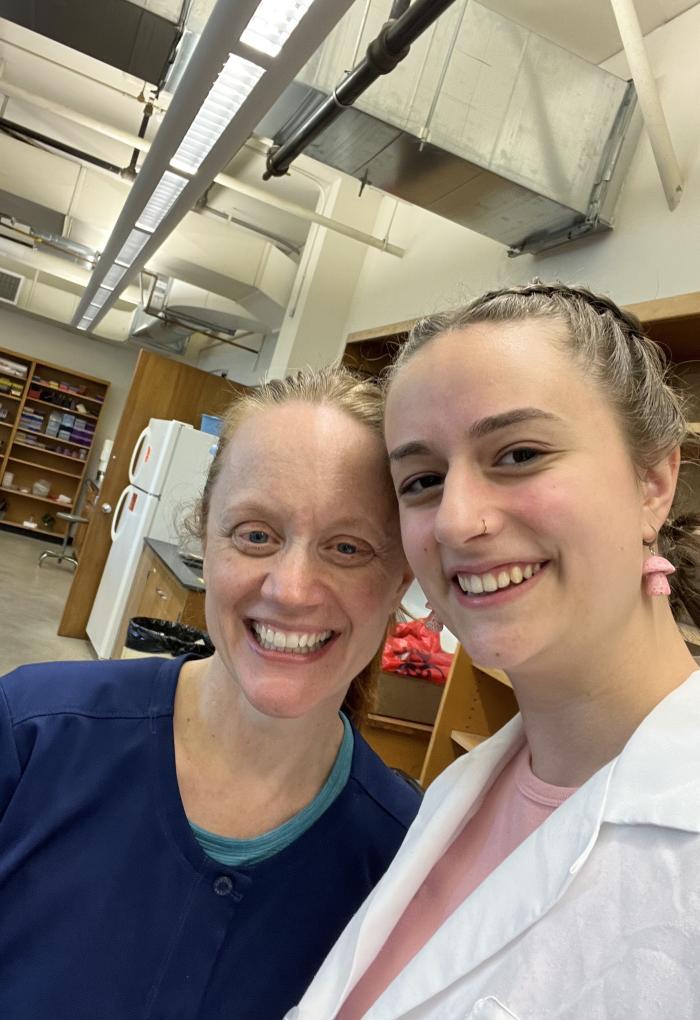
Noall and her former advisor Allison Evans taking a selfie in Noall's microbiology lab.
Noall will already be part of the Teaching Assistant Program in France (TAPIF) the year after she graduates, having been accepted to help instruct English classes while abroad. Although she isn’t sure if she will continue down the teaching route or follow a different passion for her career, she is ready for whatever road lies ahead.
“I think there’s just so many things that fit for me, and that’s hard, but you just have to bask in the uncertainty,” she said. “You have to find the joy in life, and enjoy the path as you’re learning.”
To read more about being a microbiology major, visit the department’s website here.
Related Stories
Across the Department
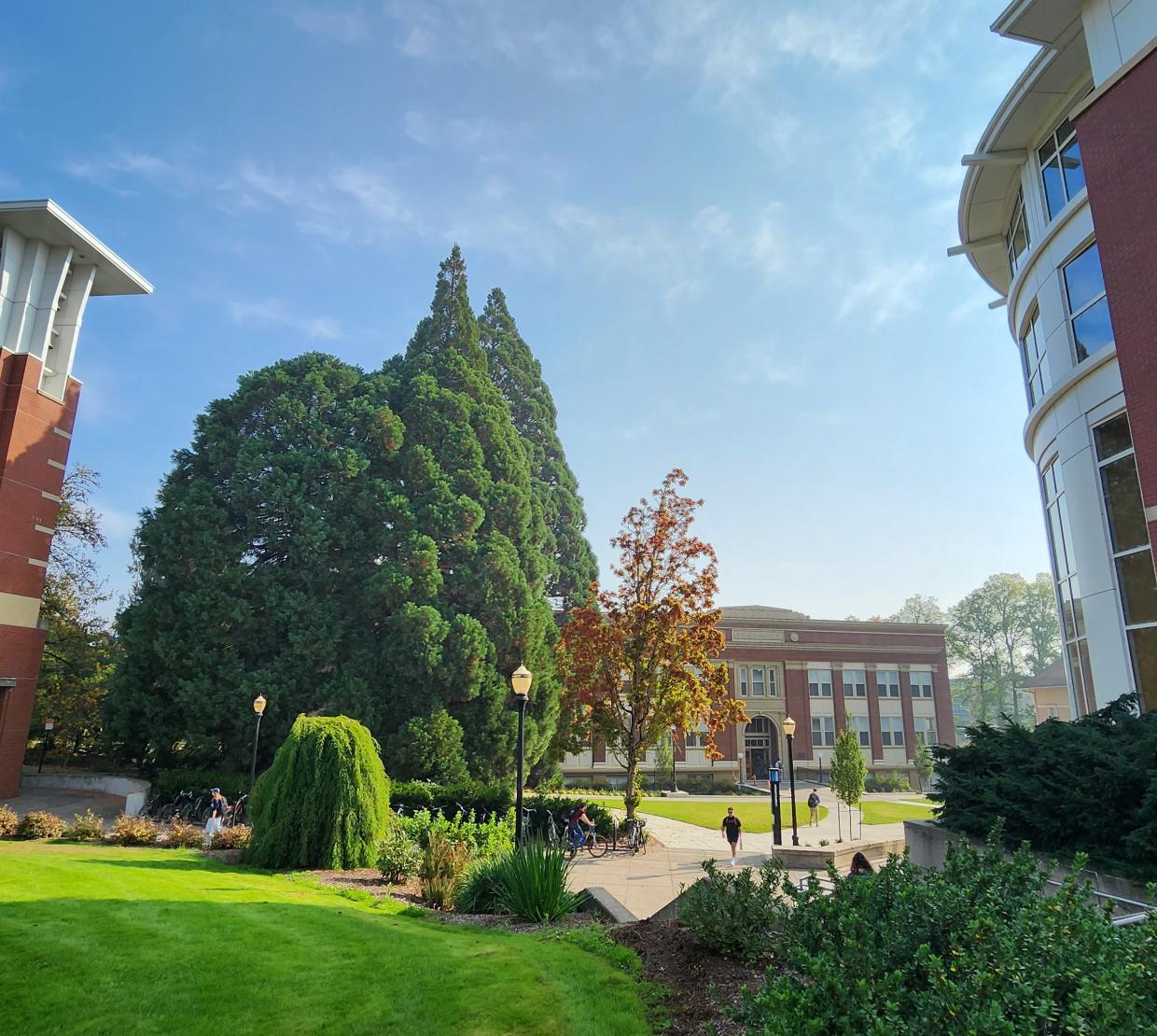
The College of Science congratulates 17 faculty on receiving promotions and/or tenure this year.
Countless hours of consideration and analysis goes into every promotion decision. The College relies heavily on the expertise and perspectives of departmental staff, department heads, department committees, peer teaching committees, College of Science Promotion and Tenure Committee, external reviewers and students to get our deserving faculty through this process.
Thank you to everyone that helped to make this possible for our well-deserving faculty.
Congratulations to the science faculty in the college who have just completed this process with success!
Chemistry Department
Marilyn Mackiewicz will be promoted to Associate Professor of Chemistry and granted indefinite tenure, effective September 16, 2023.
Integrative Biology Department
Carmen Harjoe will be promoted to Senior Instructor I of Integrative Biology, effective July 1, 2023.
Lindsay Biga will be promoted to Senior Instructor II of Integrative Biology, effective July 1, 2023.
Mathematics Department
Amanda Blaisdell will be promoted to Senior Instructor I of Mathematics, effective September 16, 2023.
Clayton Petsche will be promoted to Professor of Mathematics, effective September 16, 2023.
Chris Orum will be promoted to Senior Instructor I of Mathematics, effective September 16, 2023.
David Wing will be promoted to Senior Instructor II of Mathematics, effective September 16, 2023.
Elise Lockwood will be promoted to Professor of Mathematics, effective September 16, 2023.
Johnner Barrett will be promoted to Senior Instructor I of Mathematics, effective September 16, 2023.
Liz Jones will be promoted to Senior Instructor II of Educational Opportunities Program and Mathematics, effective September 16, 2023.
Mary Beisiegel will be promoted to Professor of Mathematics, effective September 16, 2023.
Michael Gilliam will be promoted to Senior Instructor I of Mathematics, effective September 16, 2023.
Sara Clark will be promoted to Senior Instructor II of Mathematics, effective September 16, 2023.
Microbiology Department
Shawn Massoni will be promoted to Senior Instructor I of Microbiology, effective July 1, 2023.
Physics Department
Evan Thatcher will be promoted to Senior Instructor I of Physics, effective September 16, 2023.
Paul Emigh will be promoted to Senior Instructor I of Physics, effective September 16, 2023.
Statistics Department
Katherine McLaughlin will be promoted to Associate Professor of Statistics and granted indefinite tenure, effective September 16, 2023.
Thank you!
Thanks to all of the committee members who served on the College of Science Promotions and Tenure Committee this year.
- Andy Karplus, Chair and Professor of Biochemistry & Biophysics
- Chong Fang, Professor of Chemistry
- Ethan Minot, Professor of Physics
- Holly Swisher, Professor of Mathematics
- Kate Field, Professor of Microbiology
- KC Walsh, Senior Instructor II, Physics
- Lesley Blair, Senior Instructor II, Integrative Biology
- Lisa Madsen, Professor of Statistics
- Michael Freitag, Professor of Biochemistry & Biophysics
- Oksana Ostroverkhova, Professor of Physics
- Sally Hacker, Professor of Integrative Biology
Related Stories
Across the Department

Climate and Oceans
Microbiologist receives $1.2M award to study microbes in a changing ocean

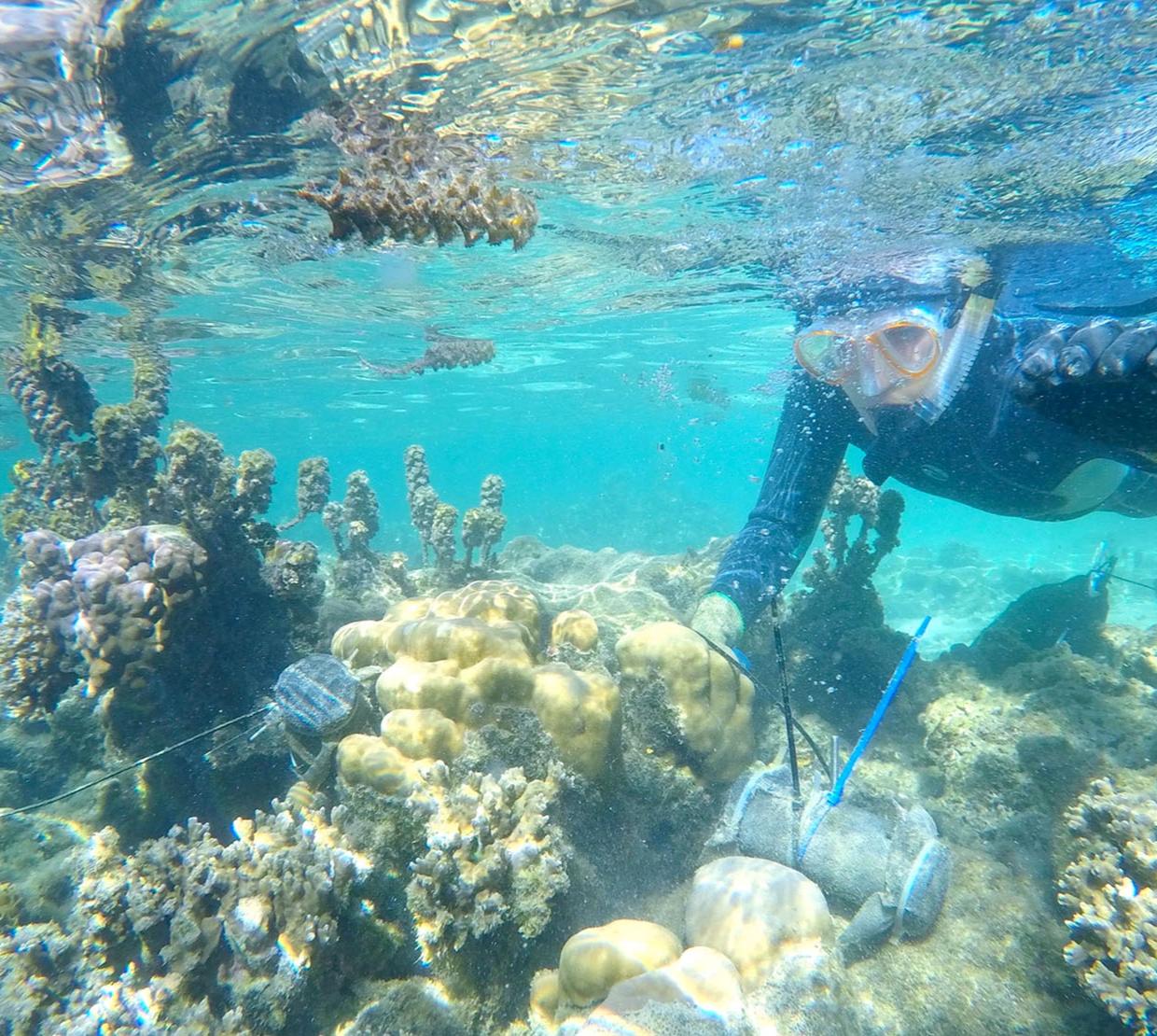
Rebecca Vega Thurber's knowledge of the Moorea reefs comes from years of study. In 2018, former lab member Adriana Messyasz, who is now a post-doc at Rutgers University, can be seen examining the effects of nutrient pollution by tracking how enrichment affects the microbes of coral, fish and algae.
Sometimes knowing where not to deploy conservation efforts is the most valuable information scientists can have. Oregon State Pernot Distinguished Professor of Microbiology Rebecca Vega Thurber and her team recently received a $500K grant to help grassroots conservation groups in French Polynesia identify ideal sites for coral restoration.
“We are saying, ‘Hey, you guys had a great idea and you want to understand how you can do it better. That’s our bread and butter. Let’s work together.’ They want to know where the best place is, we can probably tell them to some degree, and then they can take that information to managers,” Vega Thurber said. “So it feels like a really good balance between science and advocacy.”
Along with ecologists from the University of California Santa Barbara, Oregon State researchers will conduct field and lab work at 200 sites across the island of Moorea. They will gather data on biodiversity rates, nutrient levels and more. The research will be available to Coral Gardeners, a conservation group founded in 2017 by local young adults who witnessed coral bleaching first hand.
Vega Thurber and her lab will be focusing on analyzing environmental DNA, also known as eDNA. eDNA comes from cellular material shed by organisms into their environment and tells researchers what species are present.
“My lab is responsible for looking at the stuff you can’t see. The fishes that maybe only come out at night that you are never going to see or shy species that will never be around when people are there,” she said.
Working with local communities is especially important to Vega Thurber.
“Part of the project is to onboard them in taking and analyzing the samples, onboard them in doing all of the parts of science to avoid ‘parachute science,’” Vega Thurber said. “Not just going in, taking the samples, leaving, taking the knowledge with us, putting it in some journal that nobody can get because it’s behind a paywall and probably too obtuse to read anyways, but actually saying this is your data, this is what we think it means, and then getting their input and traditional ecological knowledge.”
Prior to this project, practitioners lacked good knowledge on where restoration practices could be the most meaningful and where they would be a waste of time and money. Vega Thurber and her collaborators will be providing vital data while including local grassroots organizations.
The half a million dollar grant is supported by Oceankind, a group that aims to improve the health of global ocean ecosystems while supporting the livelihoods of people who rely on them.
Related Stories
Across the Department
Climate and Oceans
Microbiologist receives $1.2M award to study microbes in a changing ocean

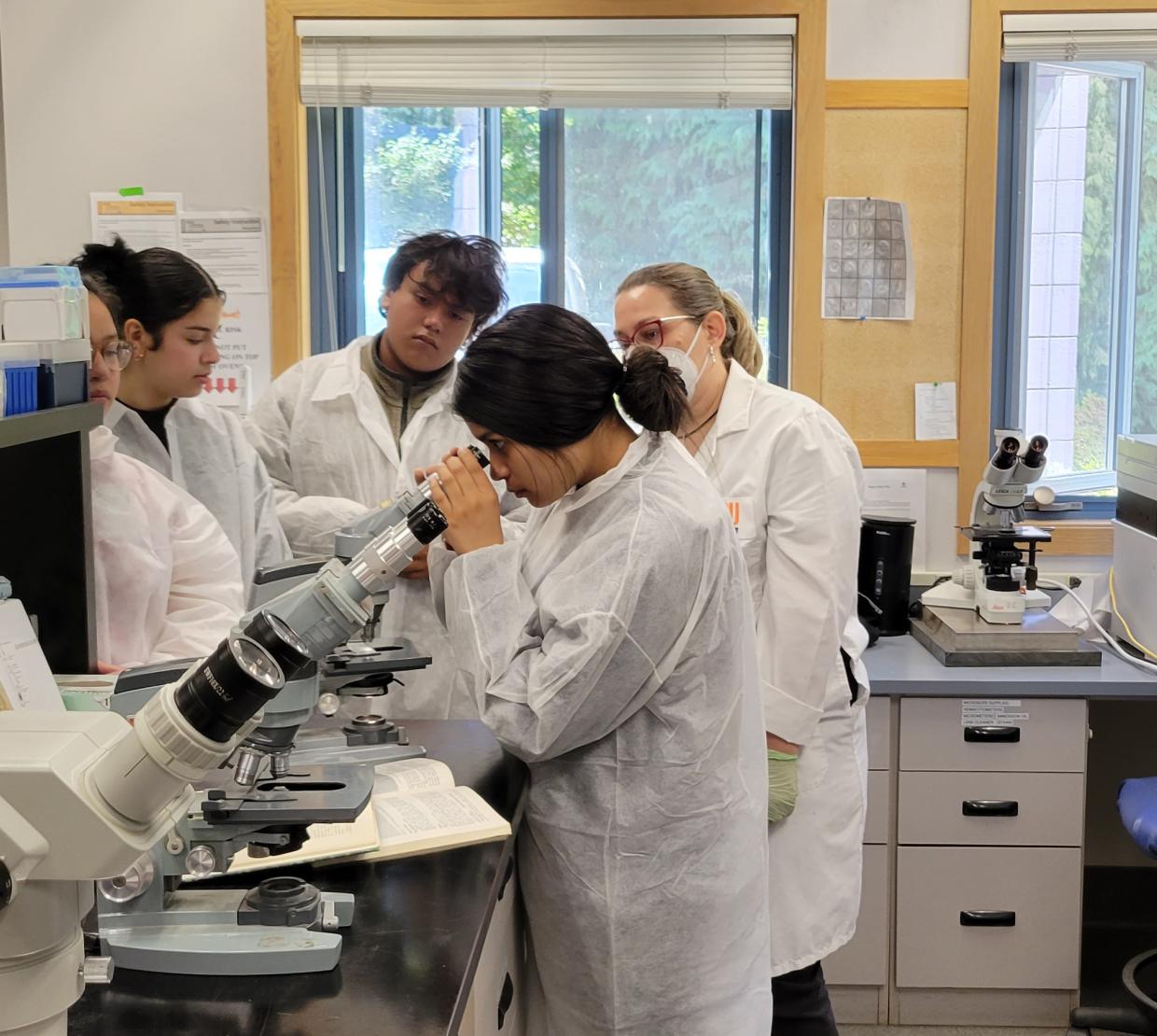
Microbiology graduate student Savanah Leidholt understands the importance of diversity.
As an undergraduate at Montana State University-Bozeman, Leidholt was a McNair Scholar, a program funded through the U.S. Department of Education to increase graduate degree awards for students from first- generation or underrepresented segments of society.
You could say the program had an impact: Leidholt joined Rebecca Vega Thurber’s lab as an incoming Ph.D. student in 2019.
Now, she is helping to create similar opportunities for other young people. Just as microbial diversity is fundamental to the maintenance and conservation of global genetic resources, academic diversity is equally important, Leidholt said.
“As a Hispanic woman who grew up in rural Montana, I can attest firsthand to the lack of STEM opportunities available for these demographics,” she said.
This past summer, Leidholt set out to create a summer “bootcamp” for area high school students to draw more students from BIPOC, LGBTQ+, low-income and other diverse backgrounds to the study of microbiology.
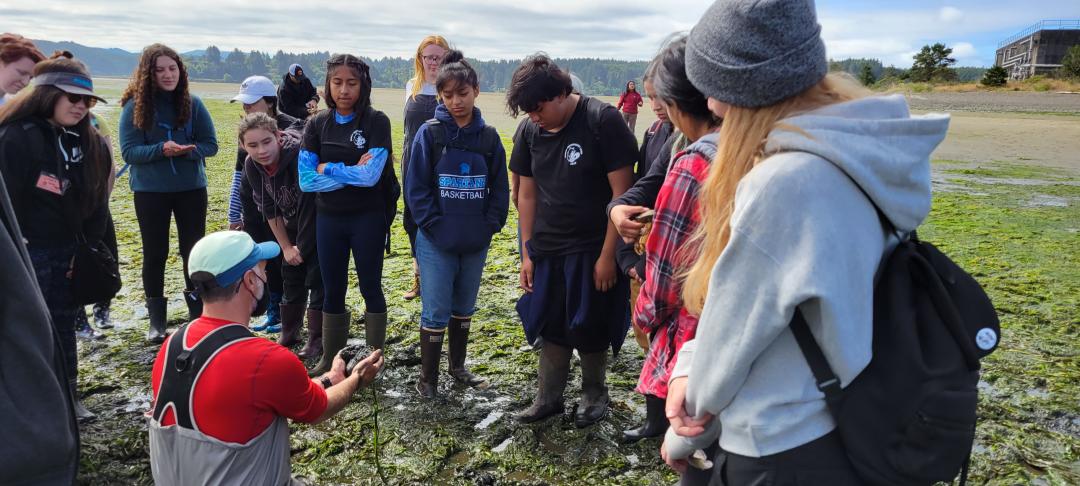
High school students listen to a mentor discuss aquatic microbiology.
For one week, Leidholt led 20 local high school students through the Pernot Microbiology Camp. The immersion camp, funded by Rebecca Vega Thurber, introduced students to microbiology disciplines such as agricultural, food, medicinal and marine science.
The students learned how to use pipettes, the small glass or plastic tubes used in labs. They also collected cheek cell swabs, extracted DNA from potato salads, toured Corvallis’ wastewater facility and applied microbiology to arts and crafts.
The program was named after and funded in part by Vega Thurber’s endowed position in the department. Vega Thurber is the Emile F. Pernot Distinguished Professor in the microbiology department, a three-year professorship named after Oregon State University’s first bacteriologist and one of the founders of the Department of Microbiology at OSU.
“I know from my time as a McNair Scholar in undergraduate school that targeted programs such as the Pernot Microbiology camp can foster self-confidence in the sciences and increased interest in pursuing a career in STEM,” she added.
Participating students were primarily incoming juniors and seniors from Linn-Benton County and represented a variety of backgrounds in terms of race, ethnicity, gender and family income.
“I’m changing my major from general biology to microbiology when I go to orientation,” said a high school senior heading to the University of Oregon in the fall.
“I definitely am keeping my education path open to unplanned opportunities especially in regards to the field of microbiology,” another student said in a survey after the camp.
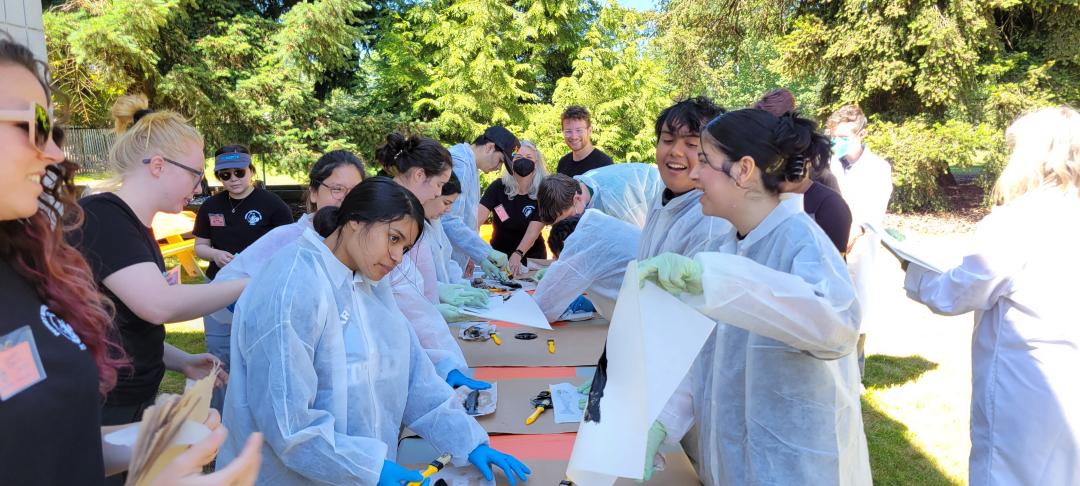
High school students work on fish rubs during the Pernot Microbiology Camp.
Leidholt said many of the students were able to attend because the microbiology department provided transportation.
“Undergraduate student Ellie Boryer and I did extensive research into similar STEM camps,” she said. “We found that the biggest inhibitors for students of color were transportation and financial costs. We chose to eliminate both by providing a ride to and from the camp as well as giving stipends to all targeted students.”
Several members of the microbiology department volunteered to not only transport the students, but also act as mentors to guide students through daily lab exercises, field trips and other activities.
Students are introduced to the diversity of the microbial world, learning how some microbes shape Earth’s habitability while others are used to ferment food and beverages.
They practiced how to probe microbial communities using cultivation- dependent techniques such as plate streaking as well as cultivation- independent techniques such as genome sequencing.
Volunteers at Oregon State University and Corvallis’ wastewater treatment plant showed students how these techniques are used daily in meat- processing facilities, medical labs and aquatic research labs.
Students were familiarized with microbiology and the wide range of potential career paths possible with a microbiology degree.
Whether the students ultimately major in microbiology or not, Leidholt said the camp succeeded in making microbiology more accessible and inclusive.
“This camp aimed to give students an opportunity to learn about the wide field of microbiology through a lived experience,” said Rebecca Vega Thurber. “We eliminated many financial, logistical and conceptual barriers young students (particularly students of color) face by providing transportation and student stipends.”
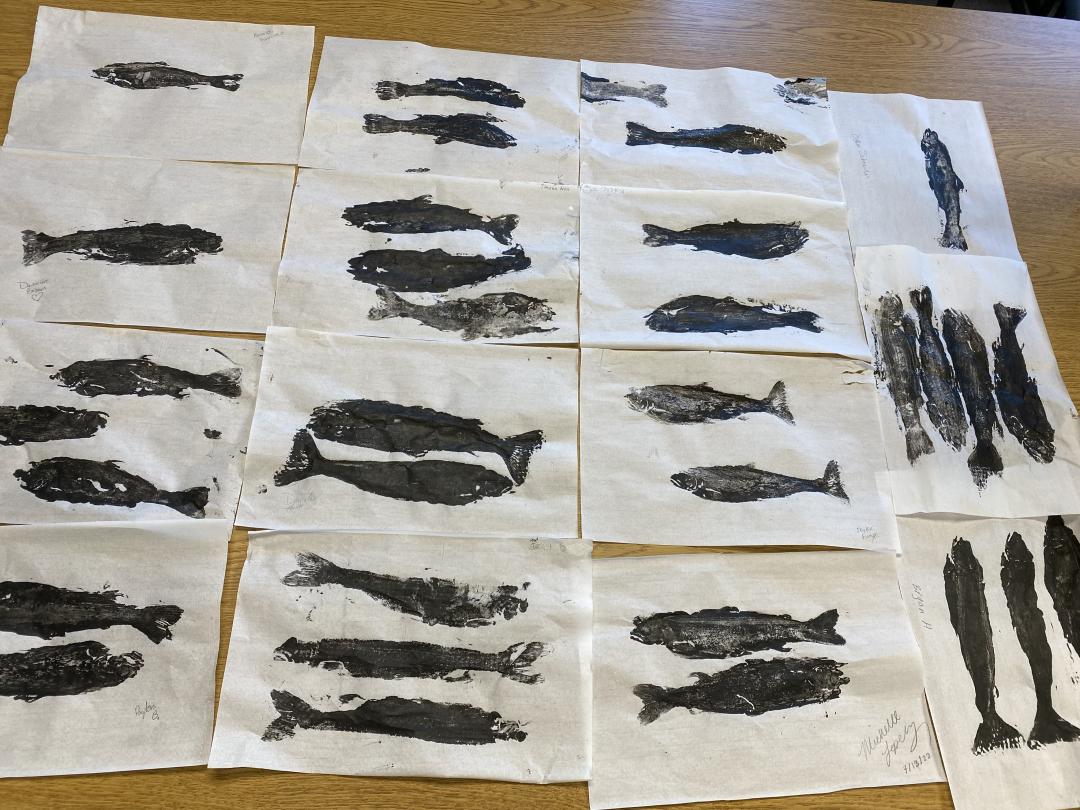
Student's fish prints sit on a table to dry during the Pernot Microbiology Camp.
Vega Thurber credits the success of the STEM bootcamp to the hard work of the volunteers as well as the financial support she receives through the Pernot Fund, the microbiology department and other donors, such as $3K they received from the Marine Studies Award Initiative at OSU.
“These early experiential learning programs can make a huge difference in the lives of early career scientists,” Vega Thurber said. “I’m looking forward to continuing and ideally expanding the program in the future.”
Several students expressed that they found the experience life-changing.
“I would love to get a master’s or even doctorate degree in microbiology, whether that is while I am in med school or completely change my career path to just wanting to work as a full-time microbiologist,” said one such student.
“After this camp, a career as a researcher in microbiology seems more appealing than ever.”
“I am definitely more interested and educated about the options that I can pursue with science, so I think I am more likely to try something with a science degree,” said the student.
Related Stories
Across the Department


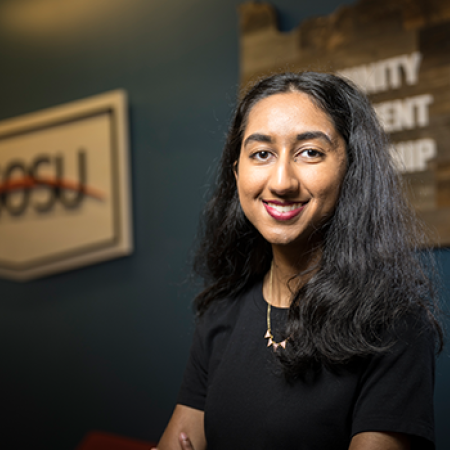
Internationally acclaimed microbiologist Jo Handelsman, who served under U.S. President Barack Obama as the Associate Director for Science at the White House Office of Science and Technology Policy, will give the inaugural Berg Lecture on Thursday, April 27 at 5 p.m. RSVP here.
Handelsman studies how bacteria communicate with each other in soil microbial communities and pioneered the field of metagenomics. Through this research, her lab has discovered new antibiotics and biosynthetic pathways.
In her lecture, “A world without soil: Science and stewardship of our endangered natural resource,” Handelsman will discuss the importance of soil and the impacts of climate change and erosion on the world’s soil loss. She will also discuss practices to improve soil health.
Although humans depend on soil for 95% of global food production, soil health is often overlooked. In 2021, Handelsman released a book on the topic, “A world without soil: The past, present, and precarious future of the earth beneath our feet.”
The founder of Tiny Earth, Handelsman is the director of the Wisconsin Institute for Discovery and a Vilas Research Professor and Howard Hughes Medical Institute Professor in the Department of Plant Pathology at the University of Wisconsin-Madison. She is also a recipient of the Presidential Award for Excellence in Science, Mathematics and Engineering Mentoring.
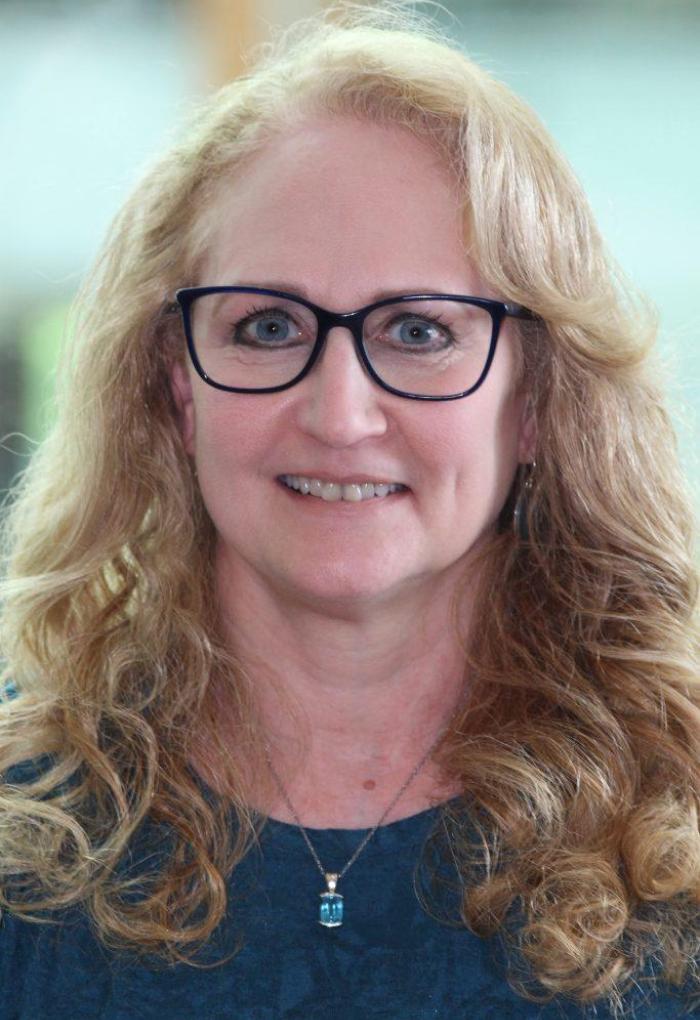
Microbiologist Jo Handelsman
Handelsman is the author of several books, a leader in education and a champion for increasing diversity in STEM. Since receiving her Ph.D. at the University of Wisconsin-Madison in molecular biology, she has authored over 200 scientific research publications, 30 editorials and 29 essays. In 2019, she was inducted into the American Academy of Arts and Sciences.
This lecture series was endowed by College of Science alumni Ron and Ann Berg. The couple met while they were both graduate students in the Department of Microbiology. After graduating, they moved to Ohio where Ron had a 34-year career with Procter & Gamble and Ann had careers as a substitute teacher and trust banker.
"The generous gift from Ron and Ann Berg has enabled the Department of Microbiology to host Dr. Handelsman, an inspirational leader in microbial ecology, having forged inroads into understanding complex microbial communities through their underlying genetics, communication, and environmental impacts,” said Kimberly Halsey, associate professor of microbiology. “Her dedication and impactful contributions to science, education, and inclusivity exemplify the qualities we value and aspire to nurture in our community."


