Graduate students

Graduate students

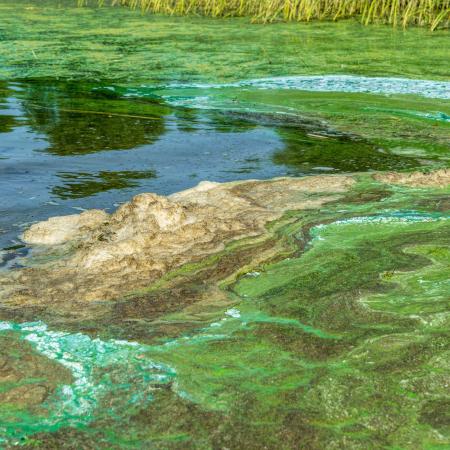
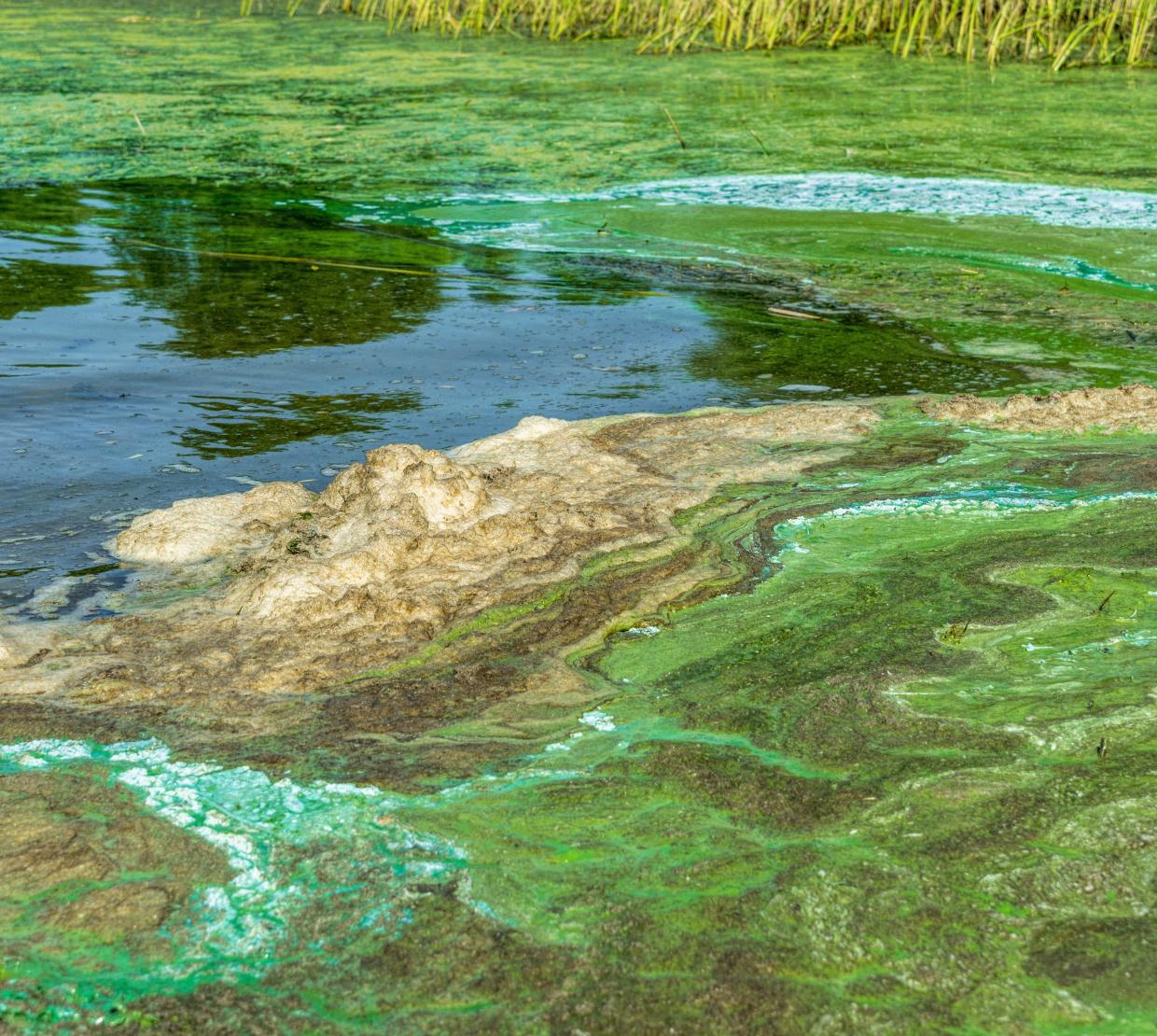
An algal bloom on a river. Green and blue lines on the water.

College of Science researchers uncover new driver of harmful algal bloom persistence

By Hannah Ashton

A research team including members of the College of Science has discovered a previously unknown chemical mechanism that may explain why harmful algal blooms are so persistent in nutrient-polluted lakes and reservoirs.

In a study published in PLOS One, the team found that cyanobacteria in Oregon’s Upper Klamath Lake produce bacimethrin, a toxic mimic of vitamin B1 that disrupts the metabolism of competing microbes. By selectively poisoning bacteria that depend on vitamin B1 from their environment while leaving bloom-forming cyanobacteria unharmed, bacimethrin may allow harmful algal blooms (HABs) to maintain ecological dominance for long periods of time.

The research team combined chemical measurements with DNA- and RNA-based analyses of microbes collected from Upper Klamath Lake and connected rivers and reservoirs before and during major bloom events. They found that bacimethrin concentrations rose with bloom intensity and were closely linked to changes in microbial gene activity.

Bloom-forming cyanobacteria are genetically equipped to synthesize their own vitamin B1, making them resistant to bacimethrin. Many other bacteria are not. When bacimethrin levels rose, these vitamin-dependent microbes showed reduced metabolic activity, effectively clearing ecological space for harmful algae to expand.

The findings could open new avenues for resource managers to use to control HABs beyond traditional nutrient management strategies.

The study was led by Department of Microbiology researchers Christopher Suffridge and Kelly Shannon and included other College of Science contributors Frederick Colwell, Byron Crump, Elizabeth Brennan, Gillian St. John and Robin Gould.

The research was supported by the U.S. Fish and Wildlife Service, the California Department of Fish and Wildlife and the National Science Foundation.


Read more stories about: graduate students, microbiology, research


A close-up of a chinook salmon at a hatchery in washington.

Salmon face hidden threat from changing diets, new study finds

By Hannah Ashton

Researchers in the College of Science, including faculty member Chris Suffridge and graduate student Kelly Shannon, have contributed to a multi-institution research paper revealing a hidden threat to West Coast salmon.

The research, led by NOAA Fisheries and shared on their website, brought together 37 co-authors across federal and state agencies — including the Oregon Department of Fish and Wildlife — universities and fisheries programs, reflecting an impressive level of collaboration to address an emerging ecological crisis. The team included oceanographers, fish nutritionists, hatchery staff and field biologists from around the U.S.

The findings show that when salmon feed heavily on northern anchovy, now increasingly dominant in the California current ecosystem, they risk developing severe thiamine (vitamin B1) deficiencies that can lead to high mortality rates in their offspring.

“This study represents the power of transdisciplinary and interagency collaborations to investigate complex emerging ecological problems,” Suffridge said.

Among those involved was Aimee Reed, who directs the Oregon Department of Fish and Wildlife Fish Health Services, a diagnostic laboratory servicing Oregon’s 34 public fish hatcheries as well as private aquaculture operations. The laboratory is part of the Department of Microbiology and located on the 5th floor of Nash Hall.

Published in the Proceedings of the National Academy of Sciences, the study connects recent shifts in the ocean food web to widespread thiamine deficiency in salmon populations. The researchers concluded that the deficiency likely killed as many as half of newly hatched fry of endangered winter-run Chinook Salmon in the Sacramento River in 2020 and 2021.

These thiamine-deficiency effects compound existing stress on salmon, including habitat loss and reduced water flow, pushing several runs towards commercial closures that have persisted for three years. The study underlines the urgency of integrated strategies addressing foraging fish dynamics, thiamine monitoring and hatchery supplementation to bolster salmon recovery.

“By bringing together scientists from universities, government and state agencies, this study has moved scientists closer to illuminating the root causes of thiamin deficiency in engaged populations of California salmon,” Shannon said.

Chinook salmon jumps through a grate.

A Chinook Salmon jumps at a hatchery in Issaquah, Washington. Fish health experts found that injecting adult female salmon with thiamine as they returned to hatcheries helped produce healthy offspring.

A man stands on a boat in a safety suit.

Microbiology graduate student awarded prestigious U.S. DOE educational award

By Hannah Ashton

Kelly Shannon, a Ph.D. student in the College of Science’s Department of Microbiology, was awarded a transformative educational award from the U.S. Department of Energy.

Shannon is one of 79 doctoral students from 56 universities and 29 states selected this year for the Office of Science Graduate Student Research (SCGSR) program. The program provides funding and access to DOE national laboratories, enabling them to conduct mission-critical research alongside leading scientists and develop into the next generation of science leaders.

Advised by microbiologist Rick Colwell and mentored by Chris Suffridge, Shannon will complete his dissertation research at Lawrence Livermore National Laboratory with microbial ecologist Xavier Mayali.

“This award is such an honor to receive. It means the absolute world to conduct research in this type of world-renowned facility, and with such amazing mentorship,” Shannon said. “I’m ecstatic to begin my project at Lawrence Livermore National Lab, and I hope that my research will make a difference in my field and in our ability to understand harmful algal blooms, which are so damaging to freshwater ecosystems and food webs.”

Two men in safety suits on a boat.

Kelly Shannon (left) and Chris Suffridge (right) filter water samples from Upper Klamath Lake, Oregon, as part of a project funded by the U.S. Fish and Wildlife Service.

His research focuses on harmful algal blooms (HABs) caused by cyanobacteria, or blue-green algae, and how they acquire and share nitrogen, a key nutrient needed by all life. These freshwater HABs can produce toxins that threaten wildlife, drinking water and recreational areas worldwide.

Shannon is studying how cyanobacteria pull nitrogen from the atmosphere and make it available to other algae. Some cyanobacteria can “fix” atmospheric nitrogen, converting it into a form that can be used by living organisms. This process not only fuels their own growth but may also support other algal species in the bloom. Because HABs often consist of several interacting species, understanding how nitrogen moves between them may reveal new insights into how these blooms form and persist in nature.

He is also exploring the role of vitamin B1 and a natural toxin in this nutrient exchange. Vitamin B1, or thiamin, is essential for all microorganisms, including algae. He will test how the availability of thiamin, and a naturally occurring compound that interferes with thiamin use, affects nitrogen transfer between species. This could shed light on hidden chemical interactions that influence the development and toxicity of HABs.

Shannon earned both his bachelor's degree (2020) and master’s (2022) in microbiology from Oregon State. He is now pursuing his Ph.D. as a member of the Colwell Lab in the College of Earth, Ocean and Atmospheric Sciences.

In addition to the DOE award, Shannon was selected as Oregon’s young ambassador for the American Society for Microbiology in 2024.

Two men in water pants collect samples in a lake.

Kelly Shannon (left) and Chris Suffridge (right) collect water samples from Upper Klamath Lake, Oregon.

A paper sculpture of a fish parasite hangs from a ceiling.

Blending art and science: Microbiologist illuminates the hidden world of fish parasites

By Tom Henderson

Photos credit: Jason St. Clair, Faith Schell

Nilanjana Das sees beauty in little things — even fish parasites.

The wee beasties get little love. Fish certainly wish their tenants would take up residence elsewhere and find a new line of work. Parasites weaken the immune systems of fish and make them more vulnerable to potentially fatal disease outbreaks. This is particularly troublesome to already precarious Pacific salmon populations. Still, Das said, those microscopic bad boys are kind of cute.

A graduate student in Oregon State University’s Department of Microbiology, Das is using art to give the invisible world of fish parasites new visibility — and new meaning. Through large, glowing sculptures made of tracing paper and reed, she brings public attention to the microscopic organisms threatening aquatic ecosystems. Her work lives at the intersection of science, art and advocacy, and offers a fresh lens on ecology, education and equity in research.

Pernicious parasites are thus transformed into shimmering clouds of light hanging from the ceilings of art galleries.

"I tried to figure out how I could illustrate this world of microscopic pathogens that are in rivers and lakes all the time to an ordinary viewer who would never interact with them unless they had a microscope," said Das, who works in microbiologist Sascha Halletts' lab.

She was one of 13 students who received a 2023-2024 fellowship through the Patricia Valian Reser Center for the Creative Arts (PRAx) to spend a year exploring the intersection of art and science. "The fellowship gave me the confidence to start on a project," Das said. "I was able to dream big and brainstorm a large-scale gallery installation. That sounds almost surreal to say out loud."

PRAx officials provided $1,000 for her to purchase supplies and compensate her for her time. They also arranged for gallery space. "You don't have to worry about making this art and not having a place to display it," Das said. "That's really unique. There aren't many opportunities for students without an art background and without an extensive art portfolio to display their work for the public."

Das' parasite models hung during the summer last year in the Joan Truckenbrod Gallery in Corvallis and finished the year at the Hatfield Marine Science Center in Newport.

Paper artwork of fish parasite displayed on the ceiling.

Paper parasite models made by Das hang during the summer of 2024 in the Joan Truckenbrod Gallery in Corvallis

Das has always been fascinated by tiny details. She spent her childhood exploring the beaches of the Jersey Shore. Her family lived an hour away but took frequent trips to the seaside. They often strolled along the boardwalks and made a day of it. Her siblings were more interested in swimming.

"Oddly enough, I had a little bit of fear of the unknown when the water was cloudy," Das said. "I find I prefer the water to be clear so I know what's around me. Instead of swimming, I spent most of my time looking at the shell piles during low tide to see what I could find.

"You can find quite a bit, she said — provided you look closely enough. I was introduced to marine biology through beachcombing," said Das. "I remember just collecting shells, finding different shells fascinating and exciting. There's a dopamine rush that comes with finding something beautiful on the beach."

She eventually started looking under the microscope.

"There's this huge diversity of organisms that you can explore. They look like intricate, ornate aliens. They're beautiful. I love that about Oregon."

"I've always been someone who likes to collect things or go beachcombing or look at the diversity of life," she said. "Seeing this whole other realm under the microscope and also knowing these microbes are everywhere in aquatic environments and pose this risk to fish populations made it really fascinating to study."

Her first-grade teacher helped her explore further, answering all her early questions. From that point on, she said, she knew she wanted to be a marine biologist.

"It was an inherent interest that I followed," said Das. "I could never imagine myself doing anything else all through elementary, middle and high school and college. I was hyper-fixated on becoming a marine biologist, and it ultimately worked out."

After receiving her bachelor's degree in marine sciences from Stockton University, she worked as an assistant aquatic disease marine biologist for the New Jersey Division of Fish and Wildlife. She solved the mysteries behind dying fish populations in hatcheries, backyard ponds and fishing holes. "That was the first time I interacted with fish pathogens," she said. "We did investigative work to narrow down the possibilities of what they could have died from."

There were plenty of suspects with a wide variety of bacteria, viruses, parasites and fungi.

"Looking at some of these organisms under the microscope was fascinating for me because they are just so diverse in their morphology but also the impacts they can have," Das said. "Knowing that there are so many unknowns in terms of different pathogens, I figured out that's what I wanted to do in graduate school.”

Paper artwork of fish parasite displayed on the ceiling.

Das creates her parasite models with tracing paper and reed, the same material used for weaving baskets

Coming to Oregon State, she began working in the PHIn (Parasite-Host Interactions) Lab. Jerri Bartholomew was the principal investigator of the PHIn Lab at the time, a prolific glass artist in addition to being a distinguished microbiologist.

"I was inspired by her ability to translate her work on fish parasites to art for the general public," Das said. "She helped start the PRAx fellowship, funded by many different departments on campus."

Blending art and science was not new for Das. "I've always really enjoyed sculpting on a very small scale — like figurines of animals that I like," she said. She creates her parasite models with tracing paper and reed, the same material used for weaving baskets. "That was extremely helpful in trying to figure out how to make them light weight enough to suspend from the ceiling," she said.

"With the tracing paper being so translucent, it's exactly how these microorganisms appear under the microscope," she added. "They're too small to have any color most of the time. However, they often have extremely unique reflective structures inside."

Using tracing paper and trying to illustrate some of the organelles and internal structures of the parasites was a fun challenge, Das said. "I also wanted to show people how cool and intricate they look under the microscope," she added.

"I start by playing around with the reed," said Das. "These forms often have a lot of curvature, and the reed can be a little bit brittle at times. It's a matter of running your hands along the length of this reed and making little bends and curving it over time. It can take hours to get a straight piece of reed to curve into the simplest circle."

She used hot glue to join pieces of reed together. That had its pros and cons, she said. "It doesn't always hold the wood together very well. However, it also means that if I didn't like the way I joined a piece, I could take it apart easily."

After she created this structure, and decided it reflected the shape of the microbe, she solidified the joints with an epoxy adhesive.

Tracing paper is extremely fragile and creases easily. However, she coated both sides with a layer of polyurethane varnish to enhance the translucency and make it more resistant to tearing or creasing.

She then cut each piece to the exact shape to fit the reed framework. Each piece averages more than 50 sheets of paper. She worked on nine of them simultaneously.

"If I sat down in one place to do one piece, it would probably take me something like 30 hours," Das said. "It was a process that took more than six months."

Artists poses with her hanging art

Nilanjana Das poses with her art.

She completed all the work in her livingroom. "I took over the space, and there were these piles of giant reed structures in one corner that often got in the way of my roommates, who were extremely flexible," she said.

The pieces now sit in an office in Nash Hall, waiting for their next exhibit.

She basically created the process for building the models as she went along, Das said. "That's been exciting. I don't feel I'm following any rules or historical traditions of art, just finding whatever materials I think will work well. It's fun to experiment and discover new methods."

Oregon offers a wealth of artistic inspiration, she said, especially in its tide pools. "It's another world where you'll never know what you'll find. There's this huge diversity of organisms that you can explore. They look like intricate, ornate aliens. They're beautiful. I love that about Oregon."

Das, now in the third year of her doctoral program, works primarily with salmon and trout hatcheries on the McKenzie River and other Oregon waterways. As part of the Hallett Lab, she diagnoses the range of pathogens hatcheries are facing instead of one specific parasite. The lab focuses on one particular group of microscopic obligate parasites, myxozoans. Over 2000 of these metazonas are found in fish world-wide and although most do not harm their hosts, there are several that cause serious diseases in the Pacific Northwest.

When she completes her doctorate, Das said she could work as a research biologist at a state or federal agency or continue in academia. "I'm not entirely sure, but I'm interested in continuing to research fish ecology and doing diagnostics, which is what lets me interact with all these different microbes," she said.

Das hopes to see continued investment in science that represents all communities and identities — and support for researchers tackling the world’s most pressing challenges through inclusive, equitable approaches.

“Programs that support equity have made it possible for people like me to pursue science that matters — both to our communities and to the environment,” she said. “They open the door for innovative ideas and for scientists from all backgrounds to make a difference.”

Das said she’ll continue doing her part — blending art and science in ways that reflect her values. Her work may be displayed soon in some galleries in Bend.

In addition, she and a group of artists in Washington state and a deep-sea coral and sponge biologist in Sweden are hoping for a group exhibit on deep-sea organisms.

She also participates in the OSU club Seminarium. During the COVID pandemic, students started Seminarium for students, faculty, staff and community members to discuss and celebrate art and science.

Although the times are scary, Das said, they're also wonderful. "It's exciting to know there's interest in seeing more of the microbial world."

Orange background with graphics of mini research posters.

Celebrating graduate research at the College of Science

By Hannah Ashton

Graduate Research Showcase

Graduate students at the College of Science are conducting crucial research that addresses critical challenges and benefits both local communities and the broader world.

To celebrate their accomplishments, the College will be hosting the inaugural Graduate Science Research Showcase from 11:30 a.m. to 2:30 p.m. on Friday, May 16, 2025 in the Memorial Union Horizon Room.

Click here to RSVP!


This event offers a glimpse into the future of science featuring graduate research presentations, a poster session and a keynote address from renowned alumnus Jonathan Gallion, vice president of Artificial Intelligence and Machine Learning for OmniScience.

Gallion, recipient of the College's 2024 Early Career Award, earned dual Honors bachelor's degrees in biochemistry and biophysics, and microbiology in 2012. His career began with an internship at SIGA Technologies, where he programmed robots to screen chemical compounds for antiviral medicines. At OmniScience, Gallion and his team utilize large language models to enhance clinical trial outcomes and improve human health. Their work accelerates decision-making and transforms data analysis in biotech, medtech, pharmaceutical and preclinical innovation. Rather than replace human expertise, their AI tools are designed to compliment it.

Schedule of Events

12 p.m.

Lunch

12:20 p.m.

Welcome from Executive Associate Dean Vrushali Bokil and Dean's Remarks from College of Science Dean Eleanor Feingold.


12:30 p.m.

Keynote speech from alumnus Jonathan Gallion, V.P. of Artificial Intelligence and Machine Learning for OmniScience.

Keynote Talk Title - Beyond Automation: Agentic AI and the New Frontier of Life Science Innovation

Abstract: Artificial intelligence in the life sciences is moving beyond automation into a new frontier defined by agentic systems—AI tools capable of reasoning, planning, and autonomous action. As these AI agents continue to evolve from tools to collaborators, life scientists will need to rethink how we generate hypotheses, design experiments, interpret data, and generate insights. This keynote will examine how agentic AI is already transforming decision-making and accelerating innovation within clinical trial development and offer a perspective on how domain experts can adapt and lead at the intersection of scientific expertise and intelligent automation through AI.


1 - 2:30 p.m.

Five minute research presentations and dessert, followed by a poster session, showcasing the diverse research conducted across the seven departments in the College of Science. The session will highlight how Science graduate students are participating and contributing to this valuable research.

Presenters include:

Oluwasen Adu (Integrative Biology)
Advisor: Michael Blouin
Talk title: Genome Wide Association Study of Biomphalaria glabrata snail and its Schistosome Parasite

Vera Alenicheva (Chemistry)
Advisor: Vincent Remcho
Talk title: A Microfluidic Paper-Based Assay for the Quantification of CBD and THC

Lucas Allan (Chemistry)
Advisor: Tim Zuehlsdorff
Talk title: FC2DES: Modeling 2D Electronic Spectroscopy for Harmonic Hamiltonians

Hallee Boyd (Chemistry)
Advisor: May Nyman
Talk title: Characterization of Trivalent Lanthanide Keggin Phosphomolybdate Sandwich Clusters

Daniel Malone Buoy (Statistics)
Advisor: Claudio Fuentes / Sarah Emerson
Talk title: Representative Sampling Methods for K-Fold Cross Validation

Olivia Burleigh (Integrative Biology)
Advisor: Virginia Weis
Talk title: Transcription Factor-targeted ChIP-Seq for Smad3-mediated TGF-β Signaling in Heat-stressed Aiptasia

Jun Cai (Integrative Biology)
Advisor: Virginia Weis
Talk title: Effect of Sphingolipid Metabolic Pathway Inhibition and Knockdown on Cnidarian-Algal Symbiosis

Giovanni Crestani (Integrative Biology, Ph.D.)
Advisor: Molly Burke
Talk title: Genomics of experimentally-evolved postponed reproduction in Drosophila melanogaster

Ushasi Datta (Chemistry)
Advisor: Marilyn Mackiewicz
Talk title: Unveiling the Hidden Properties: How Nanomaterial Surface Chemistry and Biomimetic Systems Shape Reflectance and Contrast

Konstantin Drallios (Chemistry)
Advisor: Thomas Osborn Popp
Talk title: 3D Printable Radiofrequency Coils

Rudranil Dutta (Chemistry)
Advisor: Claudia Maier
Talk title: Identification and Quantitation of Bioactive Alkaloids in Withania Somnifera

Arpa Ebrahimi (Chemistry)
Advisor: Claudia Maier
Talk title: Characterizing the Lipidomic and Proteomic Profile of the 5xFAD Alzheimer’s Disease Mouse Model: A Comparative Study Using MALDI Imaging Mass Spectrometry

Jessica Etter (Chemistry)
Advisor: Claudia Maier
Talk title: LC-QTOF and LC-TIMS-qQTOF MS Analysis of Fecal Inoculum Biotransformation Products and LC-MRM-MS Analysis of Human Withanolide Pharmacokinetics of an Ashwagandha Supplement

Caroline Hernandez (Microbiology)
Advisor: Maude David
Talk title: Whole-Cell Crosslinking Reveals Direct Lactobacillaceae and Rhizobiaceae Interactions with Host Duodenal Neuropods

Esteban Hernandez (Chemistry)
Advisor: Jennifer Field
Talk title: Experimental pKa Values of Substituted and Unsubstituted Perfluoroalkyl Sulfonamides via 19F NMR

Lucas Kolanz (Physics)
Advisor: Davide Lazzati
Talk title: Cosmic dust bunnies

Weiqi ‘Grace’ Li (Statistics)
Advisor: Yuan Jiang
Talk title: Reframing spatial transcriptomics prediction: From regression to classification

Sarah Louie (Biochemistry & Biophysics)
Advisor: Richard Cooley / Ryan Mehl
Talk title: Optimizing genetic code expansion technology to access post-translationally modified proteins

Praveeni Mathangadeera (Mathematics)
Advisor: Małgorzata Peszyńska
Talk title: Computational Modeling of the Nonlinear Heat Equation in Frozen Soil and Snow

Anshika Nagar (Chemistry)
Advisor: Marilyn Mackiewicz
Talk title: Shielded Nanoparticles: Advancing X-Ray Fluorescence Microscopy with Oxidant-Resistant Nickel and Cobalt

Luke Nearhood (Physics)
Advisor: Patti Hamerski
Talk title: Computing the Tension

Joline Nguyen (Biochemistry & Biophysics)
Advisor: Sarah Clark
Talk title: Isolation of Scarce Membrane Protein Complexes from C. elegans

Victory Chiamaka Obieke (Mathematics)
Advisor: Vrushali Bokil
Talk title: Compatible Energy Preserving Discretizations for Nonlinear Optical Wave Propagation: The Maxwell-Duffing Approach

Emily Palmer (Statistics)
Advisor: Yuan Jiang
Talk title: A Group Penalization Framework for Detecting Time-Lagged Microbiota-Host Associations

Madison Phelps (Mathematics)
Advisor: Małgorzata Peszyńska
Talk title: Nonlinear Solvers in Permafrost applications

Kevin Rice (Microbiology)
Advisor: Maude David / Kenton Hokanson
Talk title: Electrical Characterization of Primary Enteroendocrine Cells: Developing Tools to Screen Novel Microbial Neuroactive Compounds

Casey Rummelhart (Chemistry)
Advisor: Addison Desnoyer
Talk title: Frustrated Lewis Pairs Ligand for the Transformation of Carbon Dioxide to Chemical Feedstocks

Pavel Sengupta (Chemistry)
Advisor: Dipankar Koley
Talk title: Quantifying Dissolved Oxygen in Biofilms with Non-invasive Flexible Amperometric Oxygen Sensors

Michael Sieler (Microbiology)
Advisor: Thomas Sharpton
Talk title: Modeling the zebrafish gut microbiome’s resistance and sensitivity to climate change and parasite infection

Gavin Tovar (Statistics)
Advisor: Robert Trangucci / Sarah Emerson
Talk title: Sequential Approach to K-Fold Cross-validation---Computational Reduction Technique

Hao Yue (Chemistry)
Advisor: Marilyn Mackiewicz
Talk title: Targeted X-ray Imaging Agents for Visualizing Triple-Negative Breast Cancer

Sima Ziyaee (Chemistry)
Advisor: Claudia Maier
Talk title: Exploring Cellular Heterogeneity through Single-cell Proteomics


Join us to celebrate the future of science — and the graduate students who are making it happen.

Vaishnavi Padaki stands in Strand Gallery. Two of her art pieces hang on either side of her on the wall. The one on the left is on a white background, the one on the right is on a black background. She wears glasses and has long dark hair. She smiles slightly.

10 Questions With... Vaishnavi Padaki, microbiology Ph.D. candidate

By Theresa Hogue

10 Questions With… Vaishnavi Padaki, fifth-year Ph.D. candidate in microbiology, who will be defending her thesis in April. Padaki has created mixed-media artwork for part of her thesis which is on display March 31-April 16 in the Strand Gallery in Strand Ag Hall on the Corvallis campus.

What drew you to Oregon State University initially?

I earned a master’s degree in biochemistry and aimed to explore microbial physiology. Algal labs in the U.S. were my primary focus. Upon researching Kimberly Halsey’s lab in the Department of Microbiology at OSU, I became interested in her research in algal-bacterial interactions and microbial ecology and desired to join her team.

In the lab at Oregon State, Vaishnavi Padaki stands in the foreground wearing a lab coat. She has long dark hair and wears glasses. She is holding a flask with liquid in it. In the background, you see her mentor, Dr. Kimberly Halsey wearing a floral top and red cardigan sweater. She stands with one hand on her hip, looking at the flask in Vaishnavi's hands. She smiles widely as though she's laughing. The bench in front of them is littered with various lab equipment.

Vaishnavi and her mentor, microbiology professor Kimberly Halsey work in the lab together.

What is the most exciting or interesting thing you’ve learned as you’ve studied marine microbiology?

As I investigate deeper into marine microbiology, I find myself with even more questions than before. I am fascinated by the metabolic processes occurring in the environment. What excites me most is not just understanding how algae grow and produce these organic compounds, but also learning about the dynamics and fates of these compounds. My research focuses on a subset of these organic compounds called volatile organic compounds (VOCs). VOCs are released by algae, which have three important fates in the ocean: biological, chemical oxidation and sea-air emission. VOC sea-air emission plays a significant role in cloud formation and climate regulation. One of the most intriguing insights I gained from my program is understanding the dynamics of this VOC microbial cycling.

Vaishnavi Padaki works in the lab. In the foreground are many flasks, bottles and pieces of lab equipment. Beyond, she stands working with a pipette. She wears a lab coat, has long dark hair and glasses.

What makes you passionate about higher education?

My passion lies in grasping the basics of science, which fuels my creativity. I maintain that participating in scientific endeavors is vital for awareness of our environment and understanding sustainability. Thus, pursuing higher education has strengthened my beliefs. It has not only enhanced my critical thinking skills but also deepened my understanding of others.

How does your love of art enhance your skills as a researcher?

My passion for art stems from the ability to create works with a theme. I have been practicing zentangle art for over 15 years, where you draw structured or repeating patterns to produce detailed artwork; it serves as a meditative outlet. Since 2022, I have also been studying glass art under the guidance of Jerri Bartholomew. Art allows me to visualize scientific data creatively. For example, I often depict my scientific findings as puzzle pieces, connecting them to various scientific concepts. I applied this concept to develop an exhibition that transformed my PhD research findings into illustrations and glass sculptures.

Vaishnavi Padaki stands in Strand Gallery where her art, inspired by her work in microbiology, is on display. She wears a black blazer over a black and white striped top. She has long dark hair and wears glasses. She looks over at her art piece to her right, perched on top of a white museum pedestal with a slight smile.

Vaishnavi looks at one of her pieces during her show in the Strand Gallery on campus at Oregon State in Corvallis, OR.

A glass art piece in Vaishnavi's show stands on top of a white museum pedestal. It is in shades of blue and black.

On display in Strand Gallery, April of 2025.

One of Vaishnavi's art pieces inspired by her microbiology research hangs in Strand Gallery. It is a series of smaller circles with multiple colors.
A blue background with the year 2025

Celebrating inclusive excellence, administration, service and performance: 2025 College of Science Awards

By Hannah Ashton

The College of Science gathered on Feb. 26 to recognize and celebrate our high achieving faculty and staff at the 2025 Combined Awards Ceremony. The evening celebrated the very best in the College, from teaching, advising and research to inclusive excellence, administration and service.

The following faculty and staff received awards in Inclusive Excellence, Administration, Service and Performance.

Congratulations to all the awardees!

Headshot of Hannah Stuwe, a woman with short curly hair and black shirt.

Hannah Stuwe, graduate student in the Department of Biochemistry and Biophysics, received the Inclusive Excellence Award.

College of Science Inclusive Excellence Award

Hannah Stuwe, graduate student in the Department of Biochemistry and Biophysics, received the Inclusive Excellence Award.

Department Head Elisar Barbar, who nominated Stuwe, said she has engaged in a wide-ranging set of service, outreach and training that is truly impressive. First, Stuwe conducted a GFP protein purification activity for middle and high school students from the Chemawa Indian School, Jewell High School (Seaside), and visited groups of black and Latinx students from the Portland area.

She planned, wrote and edited a handbook of science experiments geared towards middle school aged students, their parents, and teachers to fill the void of not having a BB summer camp. This handbook now serves as a free and open access resource for community members.

Stuwe is the founder of the non-profit organization Corvallis Music Collective. They have engaged in community service and activism by providing live music for events and rallies. Recent events include the Basic Needs Center Fall Welcome Party, the Disabled Students Union Disability Justice Rally and Jackson Street Youth Services National Runaway Prevention Month “Skate Park After Dark” Show.

Amy Timshel

Amy Timshel, assistant to the department head in the Department of Microbiology, received the Gladys Valley Award for Exemplary Administrative Support.

Gladys Valley Award for Exemplary Administrative Support

Amy Timshel, assistant to the department head in the Department of Microbiology, received the Gladys Valley Award for Exemplary Administrative Support.

Her colleagues describe her as proactive, always seeking ways to improve processes and deeply committed to making the department a better place for everyone. She is highly regarded by students, faculty and staff for her professionalism, broad knowledge and ability to get things done. In fact, Department Head Anne Dunn noted that when she polled faculty on department strengths during strategic planning exercises, Timshel's critical role in the department was consistently highlighted.

"Her ability to provide a wealth of information on a variety of administrative issues is unparalleled, and she approaches each interaction with a warm smile and an eagerness to assist," said a Ph.D. candidate nominator.

She has a deep understanding of university policies and constantly looks for ways to improve them. She listens, advocates for students and colleagues, and takes initiative to make the department more inclusive and equitable. For example, her work on the Core Values Committee led to the addition of gender-neutral restrooms in Nash Hall and improvements to scholarship and travel fund policies.

Beyond her administrative role, Timshel actively fosters a sense of community within the department. She organizes fundraisers and charity events and regularly attends student events to show her support.

A woman in a red top poses in front of plants.

Elaine Cozzi, assistant head and associate professor in the Department of Mathematics, received the Distinguished Service Award for her impactful service to her department, the College and the broader mathematics community.

Distinguished Service Award

Elaine Cozzi, assistant head and associate professor in the Department of Mathematics, received the Distinguished Service Award for her impactful service to her department, the College and the broader mathematics community.

Cozzi served as interim associate dean of academic and student affairs for the College in Spring of 2024, managing various projects, including the university’s revision of its undergraduate advising system, assessing teaching resources and addressing countless student issues. She was overwhelmingly generous with her time in responding to the many challenges and the needs of her colleagues.

Before and after serving as associate dean, Cozzi served as assistant department head for mathematics, responsible for scheduling upper-level courses and ensuring adequate staffing for the Department’s teaching mission. This affects the hiring of instructors, graduate students and undergraduate graders.

Jon Kujawa, Department of Mathematics head and Cozzi’s nominator, noted, “It is hard to overestimate the impact of Elaine’s planning on the smooth operation of the teaching side of the department. And she readily pivots when unexpected events disrupt the plans.” Additionally, Elaine led the assessment of the Mathematics undergraduate program for several years, playing a crucial role in student success, he shared.

Cozzi also contributes significantly to the mathematics profession as Associate Editor for the American Mathematical Monthly – the most widely read mathematics journal in the world. She is also an active member of SIAM, a professional society for applied mathematics, where she helps organize meetings and contributes to administrative efforts and regularly serves as a grant evaluator for the NSF and the Simons Foundation, helping to shape the future of mathematical research.

Virginia Lesser in front of shrubbery

Virginia Lesser, Department of Statistics Head, received the Champion of Science award.

Champion of Science Award

Virginia Lesser, Department of Statistics Head, received the Champion of Science award for her significant contributions to the field of statistics and to Oregon State University throughout her distinguished career. After earning her Ph.D. in Biostatistics from the University of North Carolina at Chapel Hill, she joined OSU’s Department of Statistics in 1992.

A year later, she became Director of the Survey Research Center, a role she held until her retirement in December 2024. Lesser's expertise in probability sampling, survey design and data collection methods ensured that the center upheld the highest standards. Under her leadership, the center became a premier institution, offering expertise in survey methodology, sampling and data analysis – supporting projects that inform policy, environmental monitoring, economic studies and public opinion research. Its work has helped agencies such as the Oregon Department of Transportation, the Oregon State Marine Board and the Oregon Department of Fish and Wildlife make data-driven decisions, not to mention numerous initiatives within the University.

Lesser's groundbreaking research in survey methodology, environmental statistics, applied statistics and ecological monitoring has advanced the field and influenced practice. She has authored over 55 journal articles and conference proceedings, earning national and international recognition – including being named a Fellow of the American Statistical Association and an elected member of the International Statistical Institute.

Lesser's leadership also transformed the statistics department and elevated Oregon State University’s role in the field as department head from 2011 to 2018.

Lesser has also been a dedicated mentor and advocate for students and colleagues. Over the course of her career, she guided more than 220 graduate students and fostered a welcoming, supportive community within the department. Her colleagues regard her as an exceptional mentor and an inspiring leader, someone who consistently goes above and beyond – whether leading major academic initiatives or simply making sure the department potluck had a home-cooked turkey.

A graphic of a star is in front of lab test tubes.

College of Science graduate students earn prestigious awards in 2023-24

By Hannah Ashton

As a land grant institution committed to teaching, research, and outreach and engagement, Oregon State University promotes economic, social, cultural, and environmental progress for the people of Oregon, the nation, and the world. Oregon State University is deeply committed to the principle that every student we admit — in person or online — should achieve their goal to graduate, and awards of Scholarships and Fellowships contribute to this goal in an impactful way. The College of Science invests in the success of our graduate scholars by providing financial support to students that we recruit and students that are currently enrolled among other ways of supporting their development, progress and growth.

Graduate students in the College of Science earned notable recognition during the 2023-24 academic year, receiving a range of awards which highlight their achievements and contributions to Oregon State. Below, we highlight some of these noteworthy Graduate School Awards. From state specific honors like the ARCS Foundation Scholarship to institutional support through the Provost’s Distinguished Fellowship, these awards recognize graduate students who embody the values of Team Science.

ARCS Foundation Awards

ARCS (Achievement Rewards for College Scientists) Foundation, Oregon Chapter seeks to advance science and technology in the United States by providing financial awards to academically outstanding students who are U.S. students studying to complete Ph.D. degrees in science, engineering, mathematics, technology and medical research at Oregon Health & Science University, Oregon State University and the University of Oregon.

In 2023-2024, two College of Science graduate students were awarded ARCS scholarships. Karlie Wiese, doctoral student in Chemistry, received the ARCS Oregon 10th Anniversary OSU Scholar Award. Lucas Kolanz, doctoral student in Physics, received the Beth Ray ARCS Foundation Scholar Award. This award is funded through ARCS, the OSU Graduate School and by contributions from past OSU President Ed Ray in memory of his wife Beth.

Delson Bridge to the Future Fund

Pritha Biswas, doctoral student in Physics, is the recipient of the Delson Bridge to the Future Fund, designed to assist graduate students who are facing critical financial emergencies that could impede degree completion.

Dissertation Completion Award

Two doctoral students were awarded the Dissertation Completion Award. This award supports outstanding doctoral students who are in their final stages of their dissertations by offering an award to cover the cost of three graduate credits of tuition and mandatory fees for one academic term. The recipients are Adaline De Chenne from Mathematics and Njesa Totty from Statistics.

Graduate Dean’s Catalyst Fellowship

Two doctoral students, Theodore Bambakidis (Microbiology) and Jesse Howe (Biochemistry and Biophysics) were awarded the Graduate Dean’s Catalyst Fellowship. This award is a pilot program launched for the 2023-24 academic year to support graduate students nearing completion of their doctoral degrees.

Herbert F. Frolander Graduate Teaching Assistant Award

Steven Tran (Chemistry) received the Herbert F. Frolander Graduate Teaching Assistant Award, which recognizes outstanding and professional involvement with both faculty and students by a graduate teaching assistant at Oregon State University. This award is presented to one graduate student from across the entire university during University Day in the fall. Hear from faculty and staff who nominated Tran here.

Laurels Block Grant Program

The purpose of Laurels funding is to provide financial support to academic units so they may diversify and strengthen their graduate programs. This is achieved by providing tuition support to assist with the recruitment of new graduate students to OSU. Two College of Science students received funding in 2023-24, masters student Bailey Sharon (Mathematics) and doctoral student Courtney Clement (Microbiology).

Oregon Lottery Graduate Scholarship

Three doctoral students received funding from the Oregon Lottery Graduate Scholarship. Funds for this scholarship are provided through the Oregon State Lottery and are awarded on the basis of academic merit and financial need. The 2023-24 recipients are Matthew Nguyen (Chemistry), Steven Tran (Chemistry) and Kaitlin McHugh (Integrative Biology).

P.F. and Nellie Buck Yerex Graduate Scholarship

Nilanjana Das, masters student in Microbiology, is the recipient of the P.F. and Nellie Buck Yerex Graduate Scholarship. This scholarship is awarded to graduate students who are pursuing study in a scientific or technological field. It is awarded on the basis of academic achievement and promise for the future.

Prestigious Diversity Fellowship

Two doctoral students received the Prestigious Diversity Fellowship, intended to support the recruitment and retention of graduate students from historically underrepresented backgrounds who demonstrate scholarly promise at Oregon State. The recipients are Hallee Boyd (Chemistry) and Nyazia Sajdah-Bey (Integrative Biology).

Professional Development Award

The purpose of the Professional Development Award is to help cover costs for qualifying training, resources and activities that contribute to professional skills development. In 2023-24, the Graduate School funded the following students:

Alice Welch (Integrative Biology)

Olivia Burleigh (Integrative Biology)

Emily Taylor (Integrative Biology)

Pritha Biswas (Physics)

Kevin Dimmitt (Physics)

Provost’s Distinguished Graduate Fellowships and Scholarships

The purpose of the Provost’s Distinguished Fellowship and Scholarship program is to support programs in the recruitment of Oregon State’s most meritorious graduate students.Ian Clifford (Integrative biology) and Ben Daniels (Microbiology) received the distinguished Provost Fellowship award.

In 2023-24, the College of Science awarded Provost Scholarships to the following students:

Joline Nguyen (Biochemistry and Biophysics)

Emily Hiatt (Chemistry)

Sanpreet Hira (Chemistry)

Jack McLaughlin (Chemistry)

Gage Rios (Chemistry)

Rodrigo De Almeida Alves (Integrative Biology)

Brysyn Goodson (Integrative Biology)

Olivia Noonan (Integrative Biology)

Stefanie Fazekas (Mathematics)

Heather Fogarty (Mathematics)

Mansi Sanjay Mahajan (Mathematics)

Courtney Clement (Microbiology)

Lynn Kaneko (Microbiology)

Katelyn Spadavecchia (Physics)

Kalista Wayt (Physics)

Ian Moran (Statistics)

Scholarly Presentation Award

The Graduate School offers the Scholarly Presentation Award to provide graduate students with financial support to assist with certain costs associated with presenting their scholarly work at academic conferences and meetings. In 2023-24, the following College of Science students received this award:

Mona Khorani (Chemistry)

Nan-Chieh Chiu (Chemistry)

Anshika Nagar (Chemistry)

Ankit Yadav (Chemistry)

Jesse Laney (Integrative Biology)

Angelika Kurthen (Integrative Biology)

Jun Cai (Integrative Biology)

Erick White (Integrative Biology)

Jalyn Devereaux (Integrative Biology)

Jared Freedman (Integrative Biology)

Jesse Fritz (Integrative Biology)

Dorothy Zahor (Integrative Biology)

Jessica Karr (Integrative Biology)

Giovanni Crestani (Integrative Biology)

Kaitlin McHugh (Integrative Biology)

Kenneth Glynn (Integrative Biology)

Jazlee Joon Crowley (Integrative Biology)

Brenna Prevelige (Integrative Biology)

Jeremy Lilly (Mathematics)

Måns Mattsson (Physics)

Thurgood Marshall Graduate Fellowship

The Thurgood Marshall Graduate Fellowship is intended to support the retention of meritorious graduate students whose accomplishments and activities demonstrate leadership, service and commitment to fostering a just and equitable community. Val Sawiccy (Integrative Biology), currently an instructor at the University of Oregon, is this year’s recipient.

Wei Family Private Foundation Scholarship

The Wei Family Private Foundation, a non-profit organization, was established to honor the memory of Dr. (Mrs.) Chung Kwai Lui Wei and Mr. Hsin Hsu Wei. Its purpose is to award scholarship grants to students of Chinese heritage with high academic credentials who are pursuing a degree in Science or Mathematics at Oregon State University or an Electrical Engineering graduate degree. In 2023-2024, the College of Science awarded three Wei Family scholarships to Ian Clifford (Integrative Biology), Ben Daniels (Microbiology) and Ifeoma Nwabufo (Mathematics).

Mark and Vicki Hehnen Veterans Science Scholarship

The Mark and Vicki Hehnen Veterans Science Scholarship supports science students who are veterans and provides financial support other than tuition. This award was established by Mark Hehnen (’78 Ph.D.). In 2023-2024, the College of Science awarded two scholarships to Ebony Stretch (Microbiology) and Angela Mellisa Thompson (Zoology).

Jesse A Hanson General Science Scholarship

The Jesse A Hanson General Science Scholarship is awarded to students who show high scholarship, potential for success, unimpeachable character and service to the university. Jesse Hanson was an OSU professor of poultry science from 1911-66. The following four students received this scholarship during the 2023-2024 academic year: Joshua Byrnes (Statistics), Jessica Etter (Chemistry), Elena Gasiorowski (Integrative Biology), and Mikaela Lee (Microbiology).

Fred W. Durbin and Helen E. Bette Pierce Durbin Endowment

Created by Fred and Helen “Bette” Durbin, this endowment supports graduate fellowships as determined by the Dean. Fred received a bachelor’s in general science from OSU and Bette graduated with a bachelor’s in home economics (now the College of Health). The College of Science awarded two Fred and Helen Durbin Scholarships to Ameh Benson Agi (Chemistry) and Jonathan Dutra (Biochemistry/Biophysics).

Science Graduate Fellowship

The Science Graduate Fellowship is to be used to support students enrolled in the College of Science with a preference for students in chemistry, biochemistry and the life sciences. The College of Science awarded one Science Graduate Fellowship during the 2023-2024 academic year to Emily Parker (Integrative Biology).

*When possible, links to students' directory profiles are included.

Kelly Shannon dons a white lab coat in an OSU laboratory, equipment lining the wall on his right and a window framing trees outside on his left.

Ph.D. microbiology student honored as ASM Young Ambassador

By Elana Roldan

College of Science Ph.D. student Kelly Shannon has been selected as Oregon’s young ambassador for the American Society for Microbiology. With only one candidate chosen for each state, he has joined the ranks of distinctly remarkable up-and-coming microbiologists.

The American Society for Microbiology stands as the oldest and largest single life science membership organization with more than 36,000 members worldwide. Its founding in 1899 began decades of work uplifting local scientific communities across the globe. With one hand in public policy advocacy and another in improved inclusion, ASM takes a microscopic field to macroscopic heights for millions.

As ASM young ambassadors, early-career microbiologists become leaders in their communities and facilitate stronger regional microbiology spheres. Through networking, professional development and collaborative efforts, they collectively work to improve science on a broad scale by effecting change in many smaller areas.

“This is a really exciting role where graduate students from each state in the U.S. — and many countries internationally — get to connect other microbiology students and early-career scientists in our respective states or countries with each other and with ASM resources,” Shannon explained.

As the young ambassador of Oregon, he hopes to ease the stress of students deciding what avenue of microbiology research they want to pursue. He plans to host a microbiology career development seminar series open to both undergraduate and graduate students. Oregon State students are welcome to attend in person and those from other institutions will also be able to join on Zoom.

The series will explore microbiology research career options, how to tackle a transition into industry research and how to competitively market yourself and your skills. Thanks to ASM’s wide spread of resources that tie into the content, students will continue to have support when the series is finished.

Shannon’s time at Oregon State, he says, has prepared him for this position more than anything else.

“All of my peers in microbiology, students and faculty, are such intelligent, hard-working people and they have really taught me everything I know about leadership, organization and public speaking to set me up for this role,” he said. “There are too many valuable experiences at OSU to count, but my advisor, lab mates, microbiology professors, department administrators and advisors and fellow microbiology graduate students have helped me the most out of anything.”

Students in lab coats pose for a group photo.

Leidholdt Microbiology Summer Camp seeks support to sustain STEM opportunities

By Hannah Ashton

When an autistic high-school student meets an autistic science mentor, a whole new world of possibilities opens. When a shy high-school student is encouraged to embrace curiosity and ask questions, their path to college gets easier to navigate. And when an underrepresented high-school student is given a scholarship to attend a microbiology STEM camp, it can change their world.

The Leidholdt Microbiology Summer Camp (previously the Pernot Camp), held by the Department of Microbiology on the OSU Corvallis campus, is a transformative, once-in-a-lifetime summer experience for historically underrepresented or underserved high school students aspiring toward STEM careers.

Growing up as a low-income Hispanic person in rural Montana, camp creator and past director Savanah Leidholt (‘22-23) witnessed the lack of STEM opportunities for youth in these demographics and decided to take action after becoming a graduate student at Oregon State. She created a week-long immersive science camp, where a younger version of herself would have thrived.

LGBTQ+, women, BIPOC, low-income and other students from diverse backgrounds are welcomed into a safe space to explore microbiology. Students learn about three subfields of the discipline, including Food System Science, Human Health and Disease, and Aquatic Microbiology. Participants conduct microbiology-focused lab experiments, go on field trips and hear from diverse speakers about career avenues and opportunities in STEM.

“Even their ability to ask questions grows. I know it's difficult to ask questions but by the end of the camp, these students are conversing with us and just ready to ask questions and learn."

In the first year of the camp, held in 2022, students learned how to use pipettes, the small glass or plastic tubes used in labs. They also collected cheek cell swabs, extracted DNA from potato salad, toured Corvallis’ wastewater facility and applied microbiology to arts and crafts.

“This camp gives students a safe space to be curious, grow their confidence, work with their peers and find out what they like and don’t like,” said microbiology graduate student Sunni Patton, the camp director in 2024. “It provides experiential learning opportunities for students who would otherwise not be able to participate.”

Most students don’t experience a microbiology lab until college. The Pernot camp allows them to see more career avenues. “It’s a way to open new interests and hobbies. A way to expand, open doors and make friends,” wrote one student who said they would recommend the camp to their friends.

"I liked that one of the mentors is autistic; it makes me feel welcomed as someone with autism,” wrote another student.

High school students at the Leidholdt Microbiology camp are all in a row looking in to microscopes. They wear blue disposable lab covers over their clothes an blue gloves.

High-school students get hands-on experience in a laboratory during the 2023 Pernot Microbiology Camp.

The skills participants learn extend beyond the sciences. “Even their ability to ask questions grows. I know it's difficult to ask questions but by the end of the camp, these students are conversing with us and just ready to ask questions and learn,” said Patton.

The camp was created to remove barriers for students to experience a new side of science. Not the traditional stereotypical image of a scientist, but diverse individuals who collaborate, work in the field and are passionate about their research.

Scholarships distinguish the camp. Out of 20 students, 15 students have received scholarships in 2022 and 2023.

The camp is organized through STEM Academy, an OSU program that engages K-12 youth in programs designed to increase college attendance and participation in STEM fields. “Their baseline for a week of camp is $300. That’s not a reasonable expense some students or their parents can justify during summer months,” Leidholt said.

Because one of their main sources of funding is running out this year, camp leadership is working hard to fundraise to continue offering scholarships that cover the cost of attendance and transportation.

“This camp costs $20,000 to put on because of all of the scholarships that we built in to make it more accessible. Right now, we have a quarter of that,” Leidholt said. “Without support on Dam Proud Day, we’re going to have to find ways to cut costs, and that would most likely be coming out of the amount of scholarships we give out. And that, in itself, is not what we stand for.”

Students in lab coats pose for a picture.

Students post for a picture during a lab activity during the 2023 Pernot Microbiology Camp.

Each year the camp directors pour their hearts and souls into creating something magical each summer. “The first year, from January until July, this was a part-time job for me. I’m a full-time graduate student, but I was taking on at least 15 to 20 extra hours a week planning every component of the camp,” Leidholt said.

She watched her efforts blossom into something she never imagined.

“I just feel so excited and hopeful of where this camp is going because I see the effort that our department, the College of Science and individual graduate students like Sunni are taking. They ensure this is a lasting camp, not a one-and-done,” she said.

One student memory sticks out in her brain from last year’s camp, and it highlights just how powerful the experience can be.

“I planned a game of Jeopardy and I had made the questions fairly easy in case students retained less from the beginning of the week,” Leidholt said. “They were all so mad at me and giving me so much shade because they said ‘The questions are too easy.’ It was a nice moment for me because we had a good rapport for them to tell me. I also felt pride because they remembered above and beyond what we expected them to.”

The Leidholdt Microbiology Summer Camp is an investment in the future of STEM, a testament to the power of diversity of science, and a place for students with stories yet to unfold.

For more information about the camp, check out their website and this IMPACT article.

High-school students stand around tanks at Hatfield Marine Center.

Leidholdt Microbiology Camp participants learn about aquatic microbiology during a field trip to Newport.

Subscribe to Graduate students