Events

Events

Michael Schultheis painting of ocean shore made of mathematical imagery

Math on the canvas: Acclaimed artist explores mathematics as art

By Srila Nayak

Michael Schultheis's Venn pirouettes: Changing the way the world sees math

Renowned painter and sculptor Michael Schultheis presents “Venn pirouettes: Changing the way the world sees math,” as part of the ART:SCI Lecture Series. This public talk will take place on October 24, 2018, in OSU’s LaSells Stewart Center in the Construction & Engineering Hall at 7 p.m. followed by a reception.

The lecture series is hosted by the College of Science and the Departments of Mathematics, Microbiology and Physics; the College of Liberal Arts’ School of Arts and Communication; and the OSU Research Office.

Schultheis was trained in economics and mathematics and worked at Microsoft as a software developer for a number of years before becoming an artist. Through an art style termed “analytical expressionism,” Schultheis employs the timeless language of mathematics on the canvas, constructing geometric models and overlapping mathematical notations to capture human experiences.

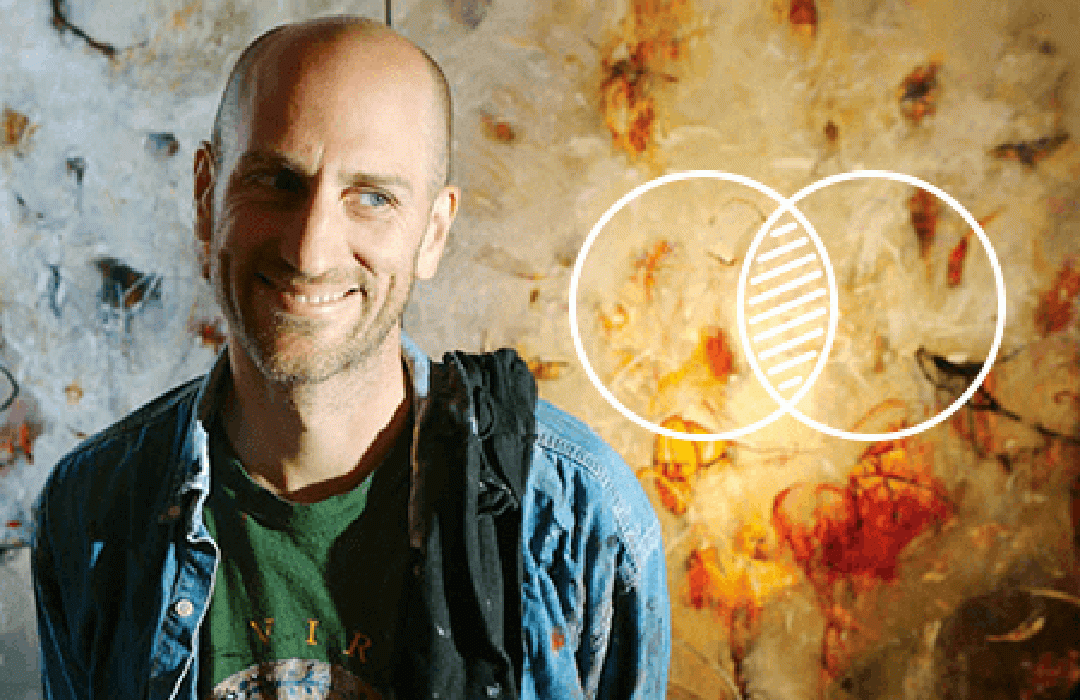
Michael Schultheis standing in front of his paintings with intersecting circle icon

Michael Schultheis: A renowned painter and sculptor trained in mathematics and economics.

The chalkboard in Schultheis’s mathematics classes in college and the whiteboards on which he brainstormed ideas and wrote equations at Microsoft had always struck him as aesthetically pleasing and beautiful in their own right. Their surfaces marked by layers of written, rewritten and half-erased equations continue to influence the composition and size of Schultheis’s paintings.

Art critic Patricia Watkinson has hailed Schultheis as a painter uniquely influenced by the ancient Greek mathematician Archimedes. The economist mathematician turned artist goes beyond the “simple high school geometry used by practitioners of Geometric Abstraction” to employ “a broader range of non-Euclidean methodologies as well as calculus, econometrics and trigonometry” in his paintings. Yet one doesn’t have to be a mathematician to appreciate the beauty of Schultheis’s conceptual paintings.

His latest series of paintings “Venn Pirouettes” is on display in a solo exhibition at the Winston Wachter Fine Art gallery in Seattle, Washington, until October 17. The paintings reflect the abstract world of numbers by mingling expressionistic, luminous brushstrokes with actual equations resulting in a unique depiction where human life and relationships are translated via mathematics as “velocity, eccentricity and radius.”

In a video, Schultheis explains the theoretical basis of his art in Venn Pirouettes.

“I am mapping out interior consciousness and interior portraiture, not the exterior of someone but how they move through life with another person in a relationship and how that relationship changes over time. By including the element of time in the equations, I am introducing variation and dynamic visual storytelling within the geometry of paintings.”

Venn pirouettes depict two time variables to map how a person’s consciousness changes (tau) and when that occurs in their lives (phi). The interplay gives rise to shifting geometric forms. “Visually, this is similar to the geometry mapped out by a ballet dancer who creates a gestural form with their arms, and then spins up into a pirouette,” observes Schultheis.

Schultheis has presented work in over 60 solo exhibitions across the country. His art appears in collections by the National Academy of Sciences in Washington D.C. and U.S. Embassies in Greece and Switzerland. He has lectured at various universities and his paintings have been featured in several national media including The Wall Street Journal and NPR.

2016-2017 was the year of SPARK at Oregon State University, a yearlong calendar of more than 60 events that celebrated the rich convergence and partnership between arts and science on campus and in our society. The ART:SCI Lecture Series continues Oregon State’s enthusiastic support and encouragement for multidisciplinary innovation that transcend the boundaries of arts and science.

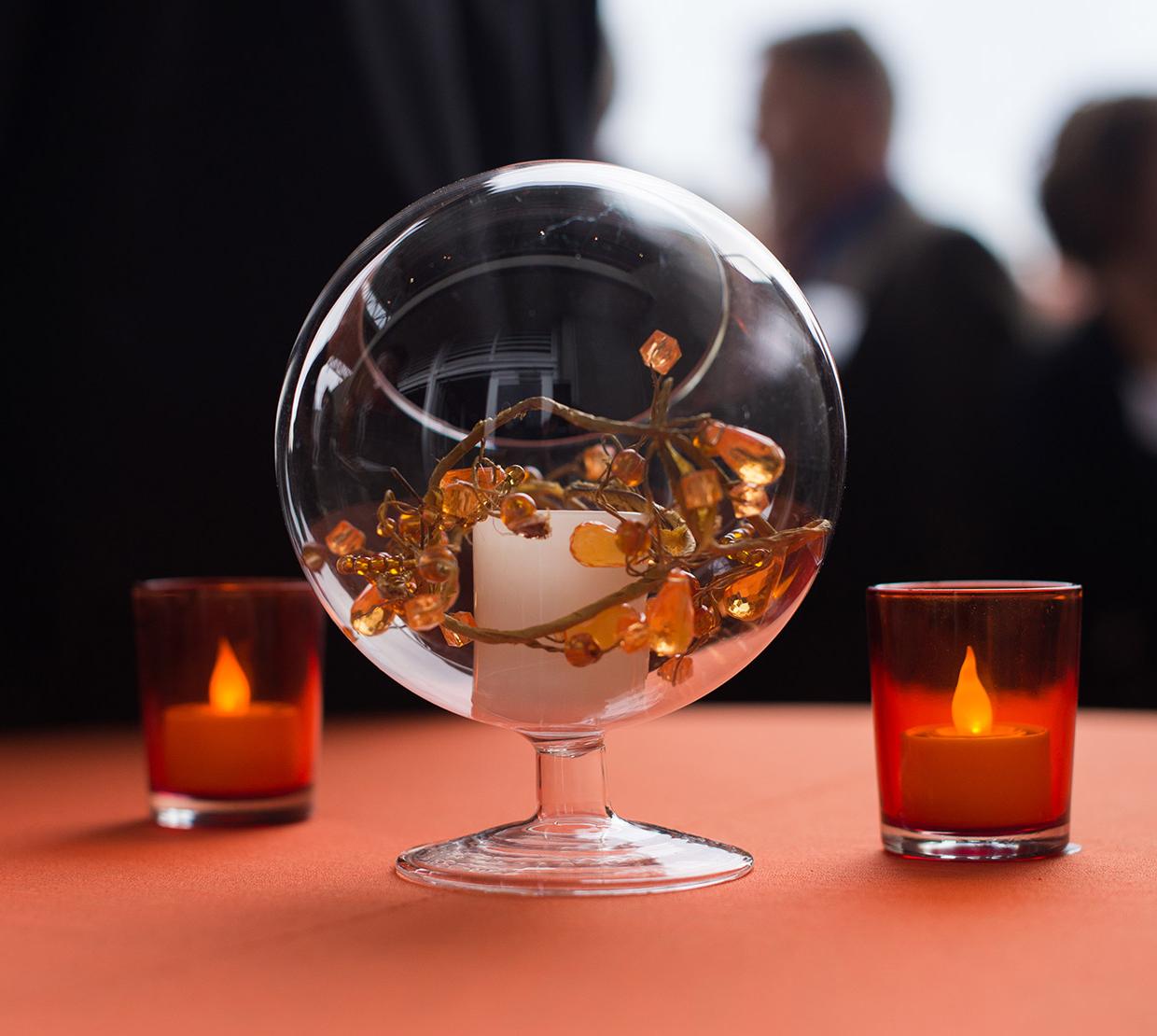
University day table centerpiece

Science faculty recognized for excellence at 2018 University Day

By Debbie Farris

2018 University Day

The College of Science is proud to announce that science faculty were among this year’s recipients of OSU’s most prestigious annual awards for scholarship, teamwork, mentoring and service. A total of eight faculty were recognized for their distinguished accomplishments at OSU's 2018 University Day on Tuesday, September 11, including chemist Xiulei (David) Ji who nabbed two awards.

“I am extremely proud to see the outstanding accomplishments of our faculty recognized at the university level,” said Roy Haggerty, dean of the College of Science. “I commend them for their scholarship, teaching and mentoring and the collaborative spirit to connect their efforts to a broader community.”

Congratulations to these faculty for their perseverance, dedication and exemplary achievements.

A distinguished career

With dual appointments in the Colleges of Science and Veterinary Medicine, Professor of Microbiology Michael Kent received the OSU Alumni Association Distinguished Professor Award for his superior academic performance, professional renown and service to the University and to the public. Award criteria include exceptional scholarly achievements and publications, strong teaching in terms of reputation and quality, active participation in University affairs and visibility and recognition in Oregon, the nation and the world.

Kent’s research is focused on two major research areas: diseases of zebrafish in research facilities and the impacts of pathogens on wild salmonid fishes. Specifically, he studies chronic infectious diseases. Kent’s work has been supported continuously by the National Institutes of Health’s Office of Research Infrastructure Programs (ORIP) since he arrived at OSU in 1999. He is also a co-PI at the Zebrafish International Resource Center, where he assists with health studies and their diagnostic service.

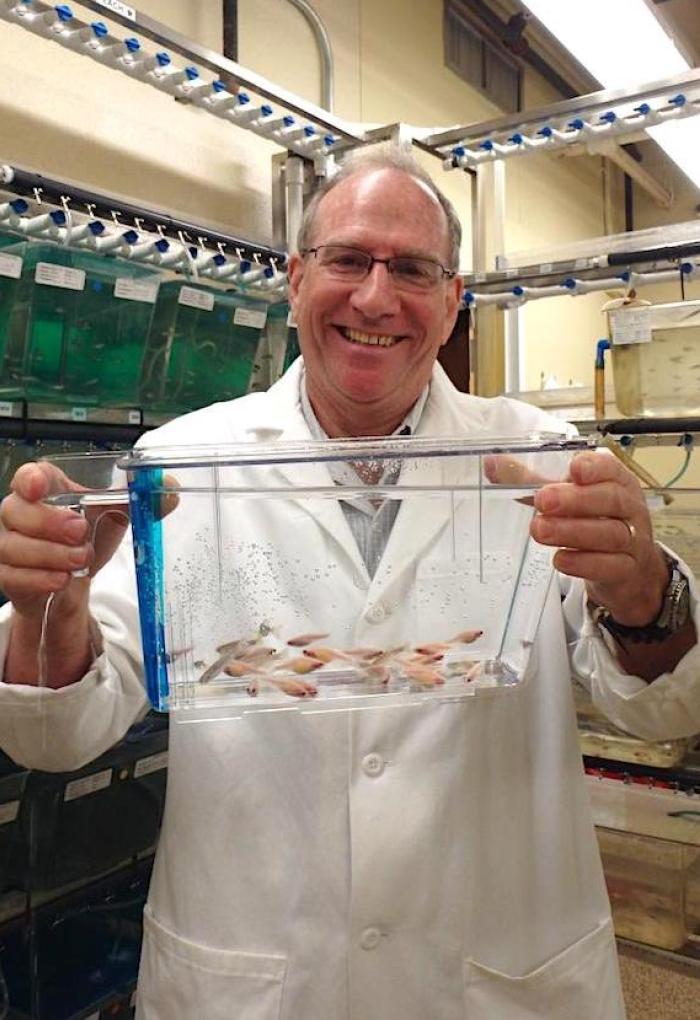
Michael Kent holding up tank of fish in lab

Michael Kent, Professor of Microbiology

Kent established a Specific Pathogen Free (SPF) zebrafish research colony at OSU in the Sinnhuber Aquatic Resource Center in collaboration with Robyn Tanguay, a Distinguished Professor of Molecular Toxicology at OSU. Their work is supported by the NIEHS Environmental Health Sciences Center and NIH’s ORIP, the latter of which enables them to provide biomedical research training to veterinarians using aquatic models.

In collaboration with colleagues at OSU and across the country, the Kent Lab is developing zebrafish as models for infectious diseases in humans. They were able to demonstrate that zebrafish can become infected with Toxoplasma gondii, a pathogenic parasite that infects about one-third of the world population and the second most significant cause of lethal food-borne infections in the United States. This was the first time this infection was reported in a fish.

Achieving excellence in mentoring and scholarship

Associate Professor of Chemistry Xiulei (David) Ji received the Excellence in Postdoctoral Mentoring Award, which recognizes and encourages outstanding mentoring of postdoctoral appointees by OSU faculty. The award is given to faculty who best exemplify the role of a mentor and who has provided exceptional mentoring to one or more postdoctoral scholars during the past year. The interaction between the faculty mentor and postdoctoral scholar plays a crucial role in the professional development of a postdoc.

Ji also received OSU’s Promising Scholar Award, which recognizes the scholarship of junior faculty. The award criteria include outstanding scholarly and creative activities that represent significant intellectual work validated and communicated through peer review.

Ji leads a highly motivated team of graduate students and researchers from all over the world in his chemistry lab, which is focused on pushing the boundaries of ion storage chemistry in solids. In 2017, he and graduate student Xingfeng Wang developed the world’s first battery to use only hydronium ions as the charge carrier, which shows promise for sustainable, high-power energy storage. This summer he received a $475K award from the University of California, San Diego for his project “Aqueous Iron-Sulfur Batteries.”

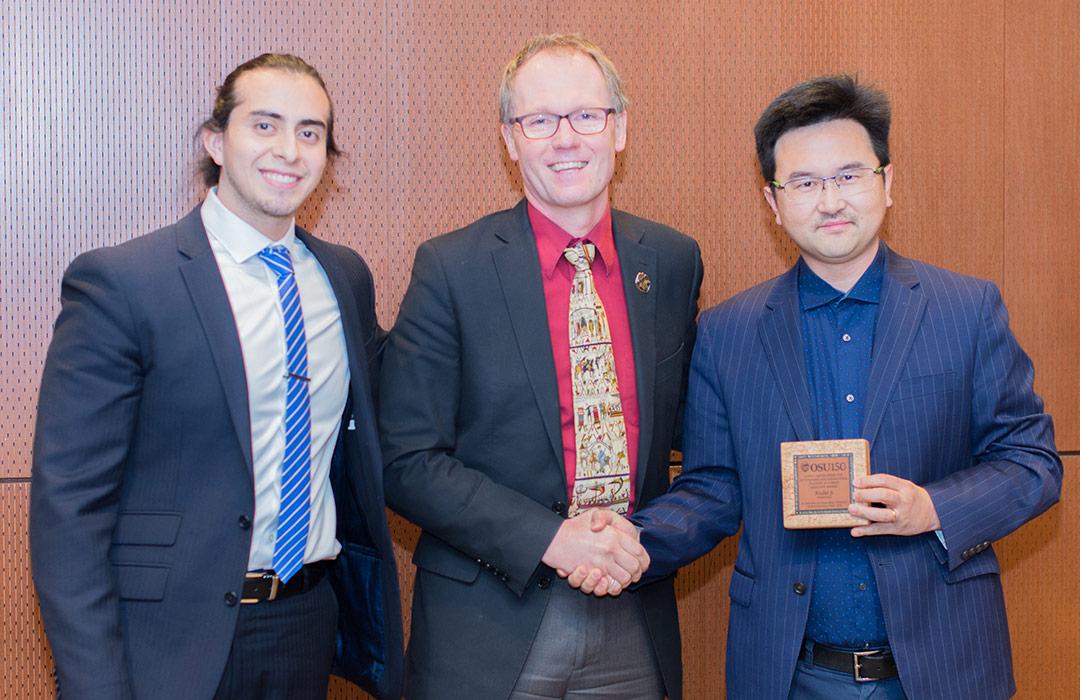
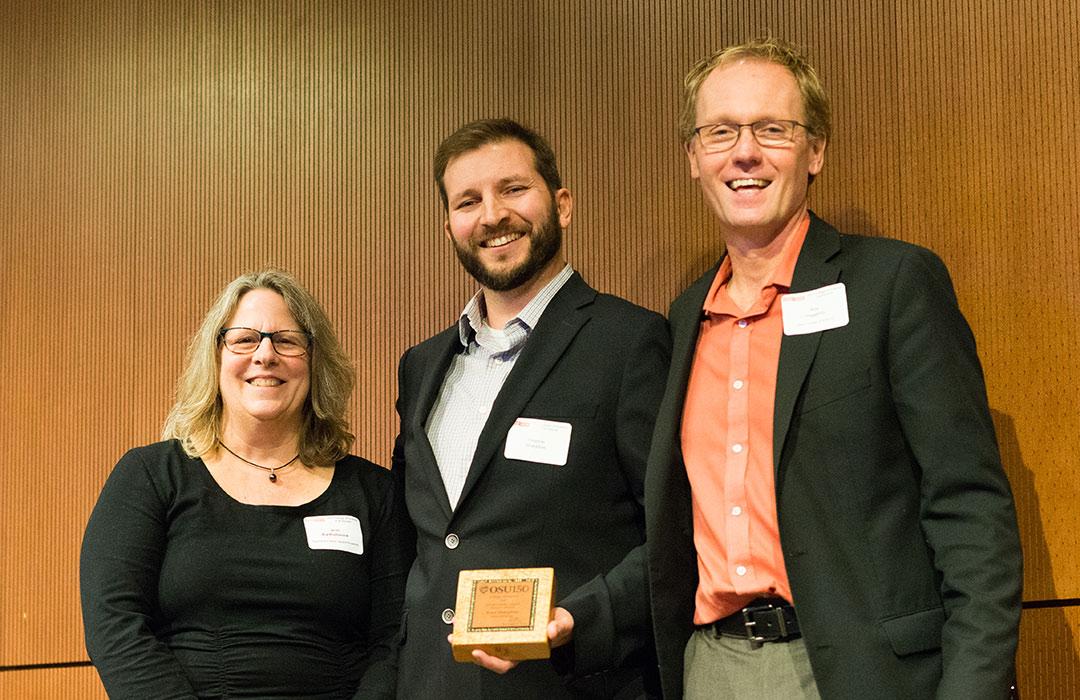
Xiulei Ji receiving award from Ismail Rodriguez and Roy Haggerty

Chemistry graduate student Ismail Rodriguez Perez (left), Dean of Science Roy Haggerty (center) and chemist Xiulei (David) Ji (right)

Last winter, Ji received the College of Science Loyd Carter award for his inspirational and superb mentorship and teaching of graduate students. He was nominated by chemistry graduate student Ismail Rodriguez Perez, who presented him with the award.

“Dr. Ji is an outstanding professor,” said Rodriguez Perez. “In my eyes, what makes him inspirational and outstanding is his true passion for the subject at hand, which makes me want to learn more. Dr. Ji also does a fantastic job relating his teachings to real-world applications, which is quite inspiring.”

In 2016, Ji received a prestigious National Science Foundation CAREER Award for five-year grant of $530K for his project, “Carbon Anodes in Potassium-Ion Batteries.” The award is NSF’s top honor for junior faculty with outstanding and innovative research and effective application of that research.

In this video, he reflects on his own path in science.

Advancing student success

Team Math received the 2018 Student Learning and Success Teamwork Award! The award recognizes departments or interdisciplinary teams at OSU that have demonstrated exceptional teamwork in creating and sustaining an exemplary teaching and learning environment to advance the university’s strategic goal of student success and excellence.

Team Math as they have become known across campus has been working for more than a year to improve student performance and learning in introductory pre-calculus courses at OSU, which have been identified as having the strongest impact on the success and retention of STEM students.

Math faculty standing together outside Kidder Hall

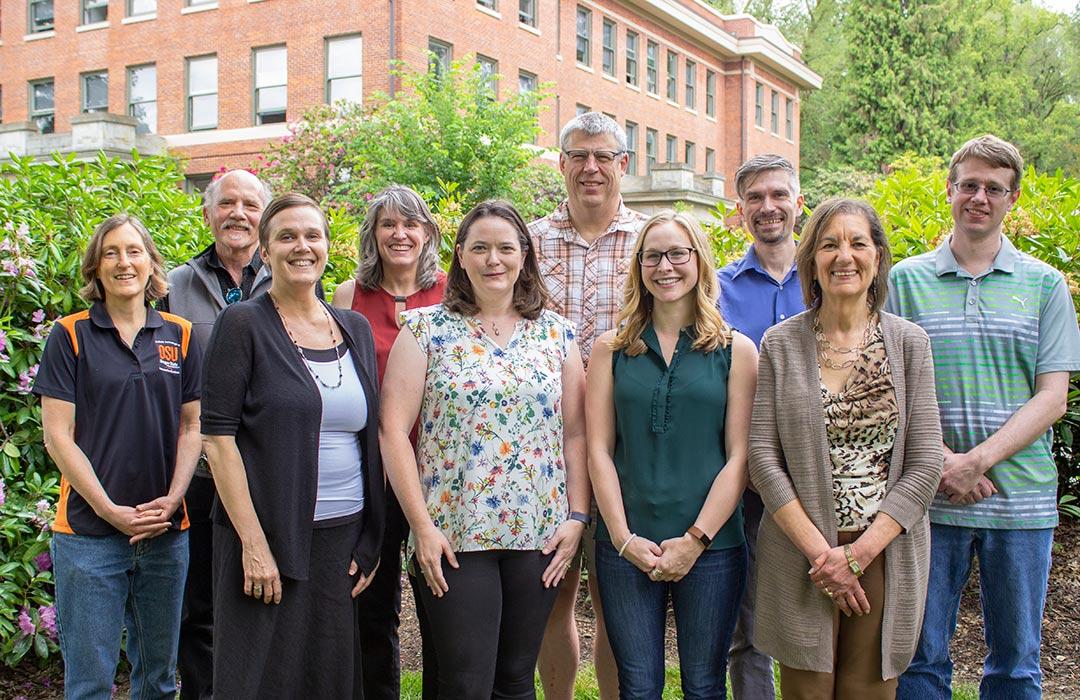
Team math, aka the department of mathematics faculty

Team Math includes mathematics faculty Sara Clark, Scott Peterson, Lyn Riverstone, Dan Rockwell, Katy Williams and David Wing as well as campus colleagues Susan Fein, an instructional designer in Ecampus, Lynn Greenough in Academic Technology, Liz Jones, a mathematics instructor in OSU’s Educational Opportunities Program and Cub Kahn, coordinator of the Hybrid Course Initiative.

Since spring 2017, the group has redesigned college algebra and algebraic reasoning by integrating active learning technologies and other innovative student engagement strategies. They achieved very encouraging results: they created a successful teaching and learning environment in precalculus courses that is welcoming to students, empowers faculty to challenge students in their understanding and enhances student participation—a significant achievement in the introductory mathematics classroom at OSU.

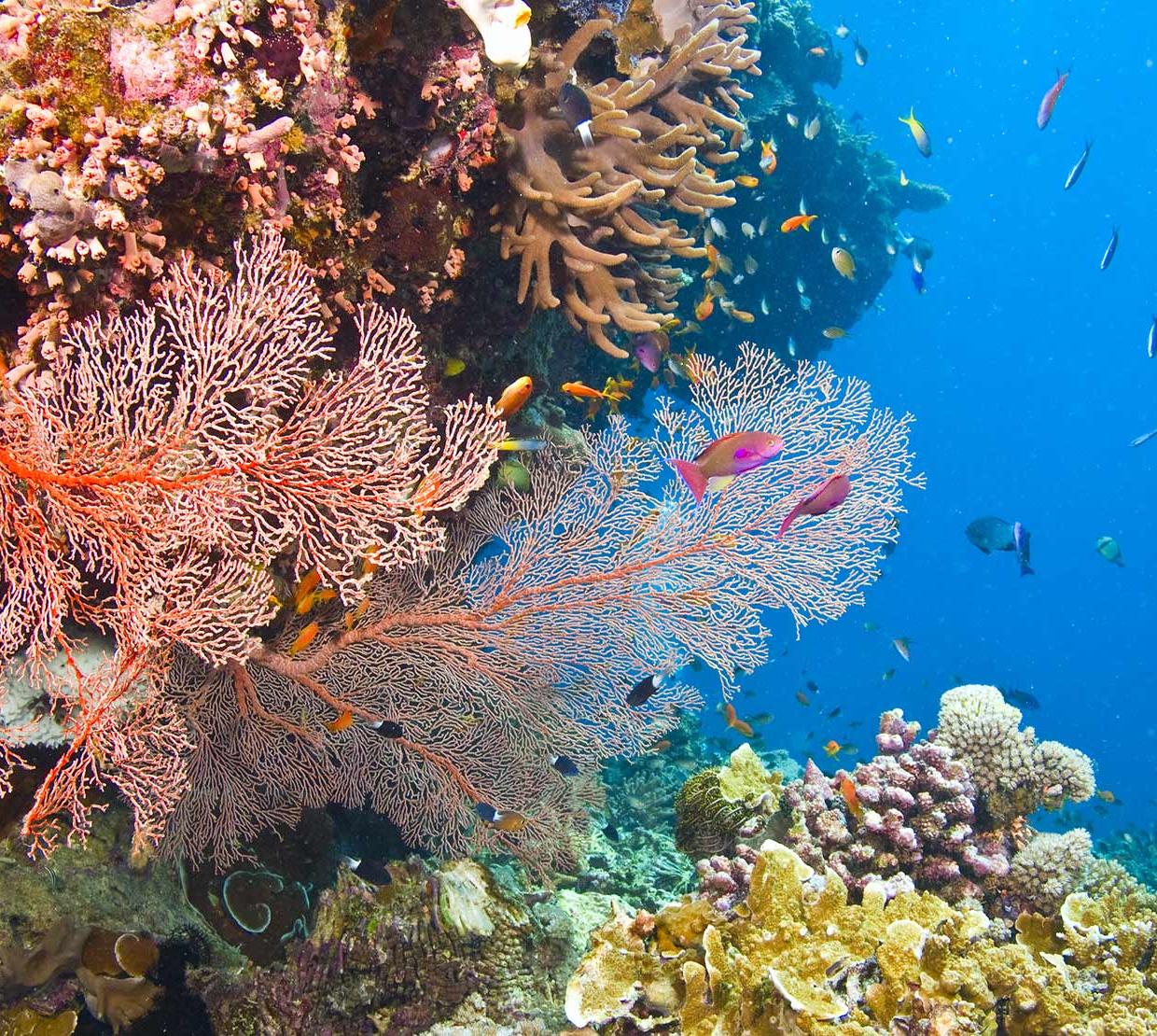
fish and coral in their underwater ecosystem

International symbiosis conference to feature public talk by science writer Ed Yong

9th International Symbiosis Society (ISS) Congress at OSU

The 9th International Symbiosis Society (ISS) Congress will take place at Oregon State University. Anticipated to bring together 400 symbiosis scientists from 20 nations, the Congress will also feature a keynote talk by acclaimed science journalist Ed Yong, who is currently staff writer for The Atlantic and author of the bestselling book on the microbiome in the human body, I Contain Multitudes (2016).

The conference will be held July 15-20, 2018 at the CH2M Hill Alumni Center. Yong's keynote address, entitled "I contain multitudes: Telling stories about microbes and the people who study them," will take place on Monday, July 16, 8-9 p.m at the Austin Auditorium in the LaSells Stewart Center.

Yong's public lecture is free and open to all to promote awareness and appreciation of the intrinsic value of symbioses, their importance in all ecosystems and to human health and well-being.

Held every three years, the ISS Congress is the primary international meeting focusing on symbioses, including complex interactions between hosts and their microbiomes. The participating scientists will present the latest research on symbioses, their ubiquity in nature and their impact on all environments on the planet. The Congress will include theme-based cross-disciplinary sessions aimed at sharing new discoveries and cutting edge approaches across the traditional taxon-based areas of symbiosis.

OSU associate microbiology professor Rebecca Vega Thurber is a plenary speaker at the Congress. She is one of eight plenary speakers hailing from Vanderbilt University, the University of Minnesota, the University of Alberta, Canada and other institutions.

Integrative Biology Professor Virginia Weis is the program committee chair of the 2018 ISS Congress. Thomas Sharpton, assistant professor microbiology and statistics, is also a key member of the program committee. The Congress is generously sponsored and supported by the College of Science, the College of Agricultural Sciences, OSU Research Office and The Gordon and Betty Moore Foundation.

Dr. Charles Hays lecturing in front of big screen

Preparing the minds of the next generation of microbiologists through scholarships

By Debbie Farris

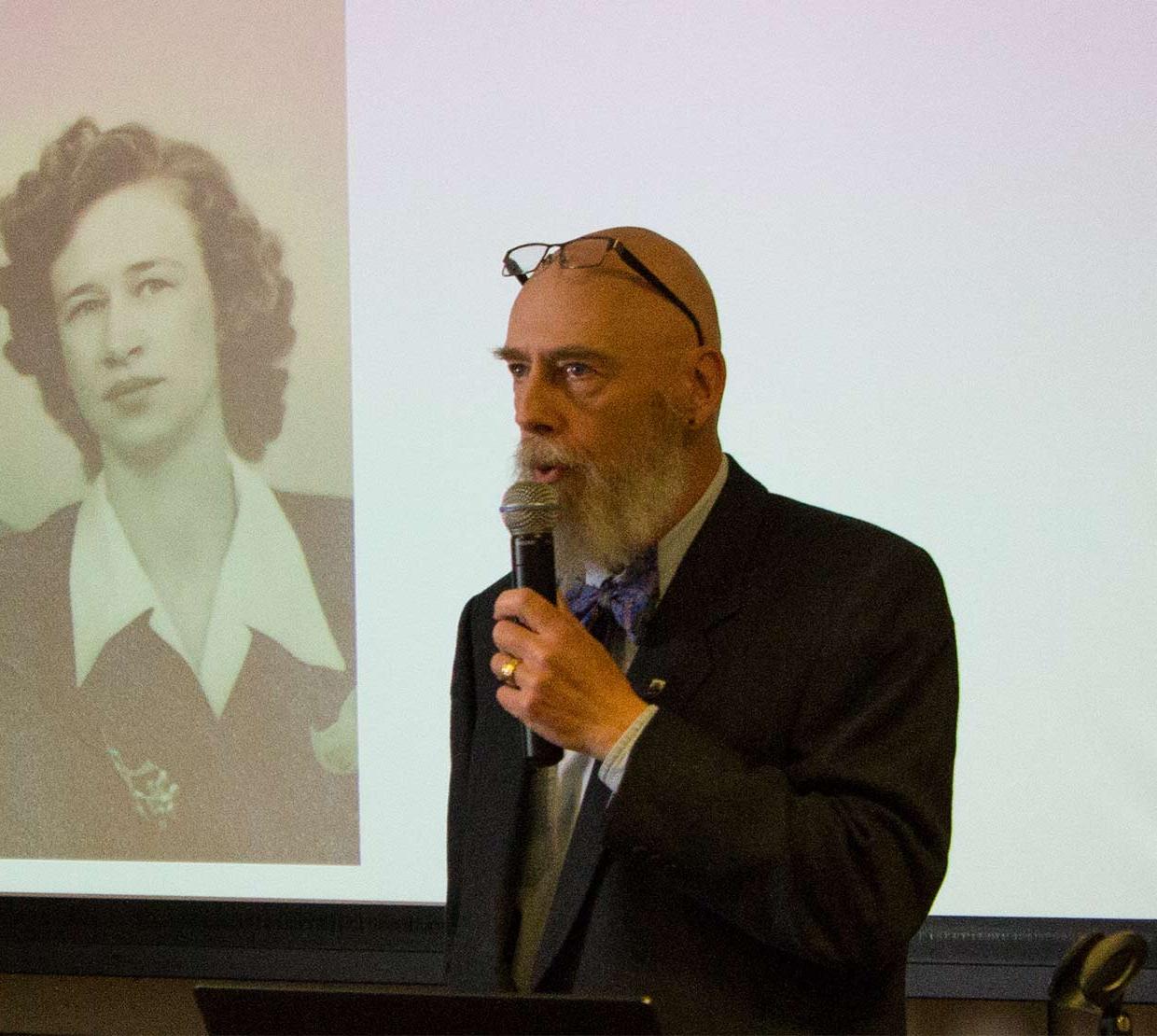
Dr. Charles Hays, Canadian science journalist

“Prepare your minds,” Dr. Charles Hays, a Canadian science journalist, advised students at the Department of Microbiology’s annual scholarship luncheon on May 7, 2018. He is the son of the late Helen Alford Hays, a long-time microbiology instructor and advisor from 1955-1981, who established the Helen Alford Hays Women in Microbiology Scholarship with her husband Dale, who worked in OSU’s College of Veterinary Medicine.

Helen would have been 100 in 2018 and the luncheon was a tribute to her spirit and her generosity.

“Science was my mother’s life,” said Charles Hays. ”My mom raised me on stories of scientists. She planted that seed of science. She saw science as representing truth.” Adding “all my mother’s heroes were scientists.”

Born in Bismarck, North Dakota, and raised on a farm, Helen Hays put herself through college working as a maid cleaning houses during her first two years at the University of Illinois in the late 1930s. Her third year she asked her grandfather for a loan because the classes were getting harder and she needed more time to study.

Helen came to OSU in the early 1950s to pursue a master's degree in bacteriology in what is now the Department of Microbiology. She worked as a lab teaching assistant in the department during her graduate studies.

Helen was the only woman in her graduate chemistry course. She was driven to succeed by her professor who appreciated that women wanted to improve their minds, but that “no woman would earn an A in this course... women can’t do science.” At the end of the term, Helen had the highest grade in the class.

So she created a scholarship in microbiology for women, believing that “everyone should have the opportunity to be the best they can be,” according to her son Charles.

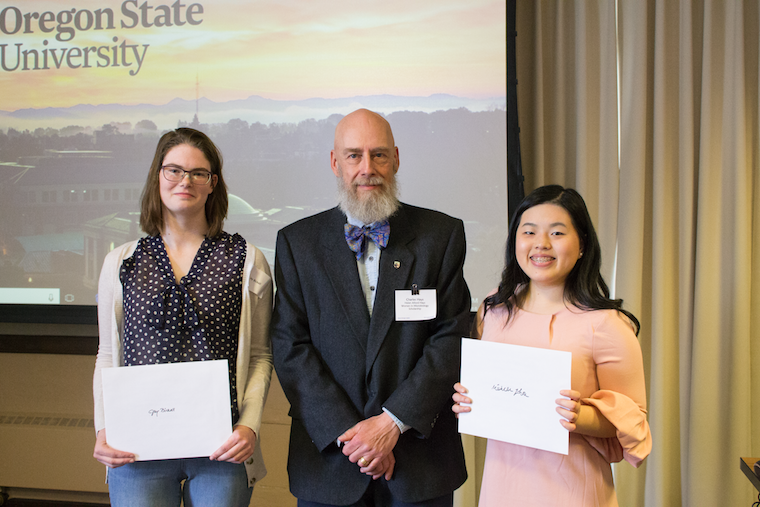
Established in 1991, the Helen Alford Hays Women in Microbiology Scholarship supports undergraduate women majoring in microbiology who have a minimum GPA of 3.0. This year’s recipients of scholarship were sophomores Michelle Zhou and Jay Bickell, graduates of Corvallis High School.

Charles Hays handing scholarships to Jay Bickell and Michelle Zhou in front screen and curtains

Jay Bickell (left), Charles Hays (center) and Michelle Zhou (right)

Bickell currently works in the Vet Med Lab on campus and plays violin in the Corvallis-OSU Symphony.

“It’s a stress reliever,” explains Bickell. “Science and so many things at OSU are competitive. It is nice to have music.”

Microbiology Department Head Jerri Bartholomew strongly encourages that interconnection of the arts and sciences. She moves easily between both disciplines. She is a nationally recognized for her work in aquatic animal health and an accomplished glass artist. She is also director of the John L. Fryer Aquatic Animal Health Laboratory.

"The art and science connection is strongly encouraged in the Microbiology Department,” said Jerri Bartholomew, the head of the department.

Jerri Bartholomew presenting to audience on podium

Jerri Bartholomew, Head of Microbiology Department

The scholarship luncheon honored a total of 10 microbiology scholarship students who received eight different awards established by generous alumni and friends of the department. Lead advisor and instructor Linda Bruslind and professor Walt Ream presented the scholarships to the students.

Dr. Ream shared his perspective as a teacher on the value and impact of scholarships. He shared stories of students making tremendous sacrifices to finance their education, working two and three jobs or full-time while then having to miss class due to those work responsibilities. One student who worked full-time as an EMT was a supervisor and had to miss a week of classes when one of his employees suffered a stroke and needed to recover.

Another of Ream’s students worked full-time as a manager at Home Depot had to miss a week of classes when one of his employees quit and he had to step in or be fired himself.

The irony is not lost on Reams. “Those students are missing the very classes that they are working so hard to pay for. Students are working harder than they should.”

Other special guests included Bill and Ellen Ford, who funded the Eleanor G. Ford Memorial Scholarship, and Ann and Dr. Jon Kimerling who support the Thomas R. and Martha S. Aspitarte Scholarship.

The department welcomed a new scholarship, the BioHealth Sciences Student Scholarship, created by BioHealth Sciences Advisor Ariella Wolf.

Scholarships open doors for students that support and deepen their learning. Helen Alford Hays’ motto was based on a quote from Louis Pasteur: “Chance favors the prepared mind.” Charles Hays remembers finding that quote scrawled in a notebook beside his mother’s bed after she died. Those were the last words she ever wrote.

Student recipientScholarship
Jay BickellHelen Alford Hays Women in Microbiology Scholarship
Michelle ZhouHelen Alford Hays Women in Microbiology Scholarship
Jamison CozartEleanor G. Ford Memorial Scholarship Mark H. Middlekauf Scholarship
Tejas GodboleMark H. Middlekauf Scholarship
Cat HoangMark H. Middlekauf Scholarship
Ian HumphreysMark H. Middlekauf Scholarship
Brendan QuinnMark H. Middlekauf Scholarship Donald and Barbara Gamberg Overholser Scholarship
Bryna RackerbyJoseph E. Simmons Scholarship
Anna WillieJoseph E. Simmons Scholarship
Madeline TylerKathryn Tinnesand Memorial Scholarship Thomas R. and Martha S. Aspitarte Scholarship
Memorial Union on sunny day

Serving science and OSU for more than 25 years

Memorial Union on campus

Congratulations to our faculty and staff who have completed 25 or more years of service to Oregon State University! They will be recognized for their dedication and service at the 25-Year Club Dinner on May 22, 2018. Nearly half of this year's 25 honorees are in the College of Science.

The 25 Year Club was founded in 1967 by OSU President James J. Jensen to honor those who have provided 25 years of employment service to Oregon State University. The first event was a dessert of strawberry shortcake served with coffee and tea held on May 17, 1967, honoring 235 charter members.

The following faculty and staff will be recognized for service ranging from 25 to 40 years.

  • Jennifer Field, Environmental and Molecular Toxicology – 25 years
  • Tevian Dray, Mathematics – 30 years
  • Katherine Field, Microbiology – 30 years
  • Stephen Giovannoni, Microbiology – 30 years
  • Jack Higginbotham, College of Science – 30 years
  • Peter Hoffman, Environmental and Molecular Toxicology – 30 years
  • Corinne Manogue, Physics – 30 years
  • Mina Ossiander, Mathematics – 30 years
  • Enrique Thomann, Mathematics – 30 years
  • Robert Higdon, Mathematics – 35 years
  • Richard Holt, Microbiology – 35 years
  • Nancy Kerkvliet, Environmental and Molecular Toxicology – 40 years
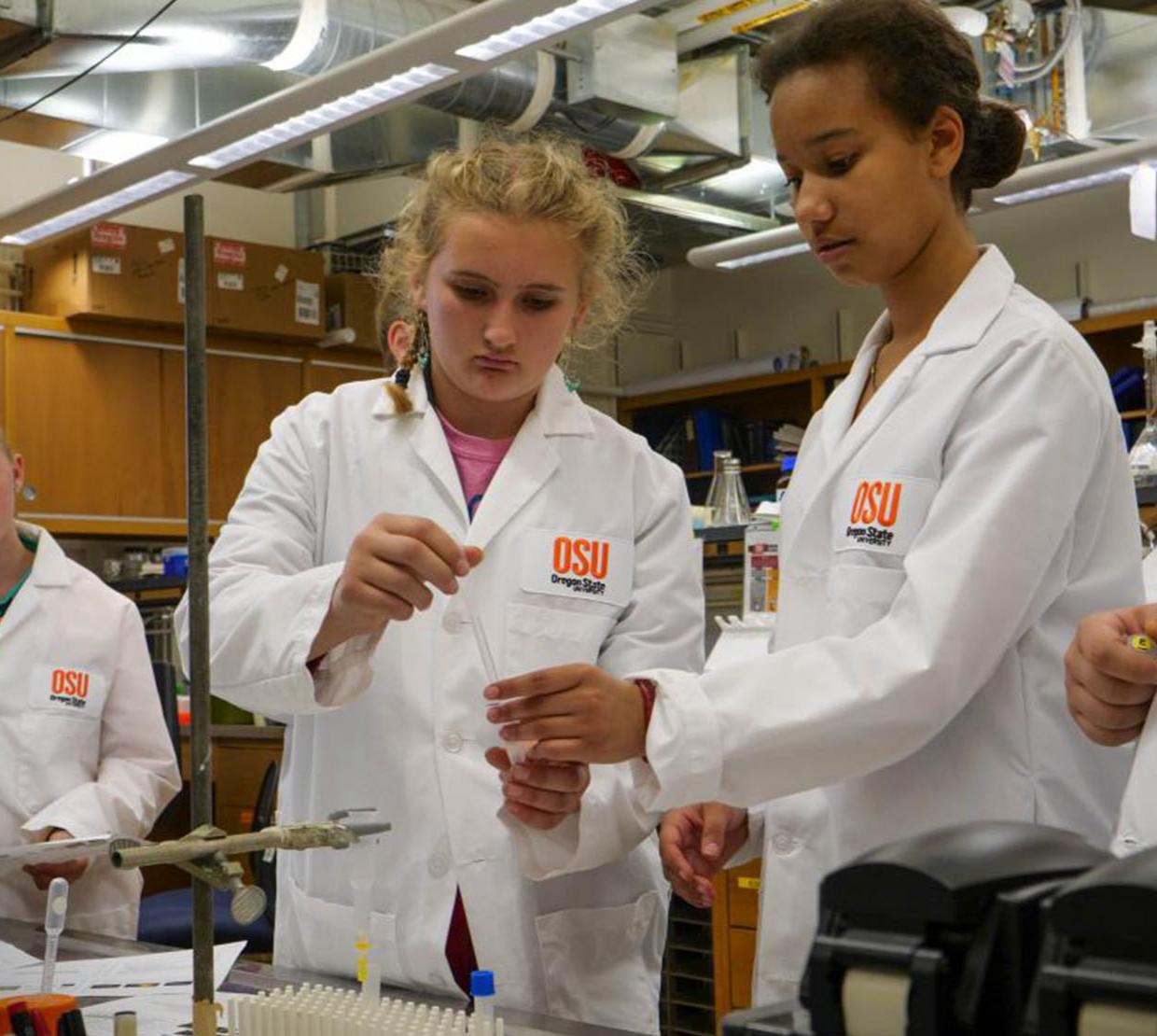
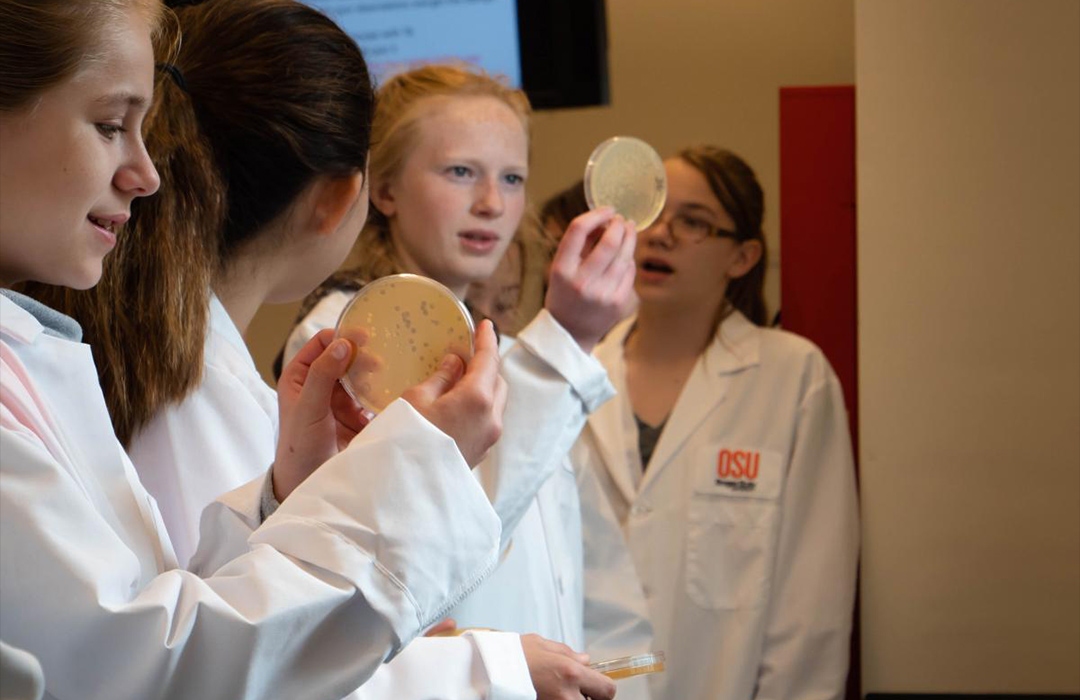
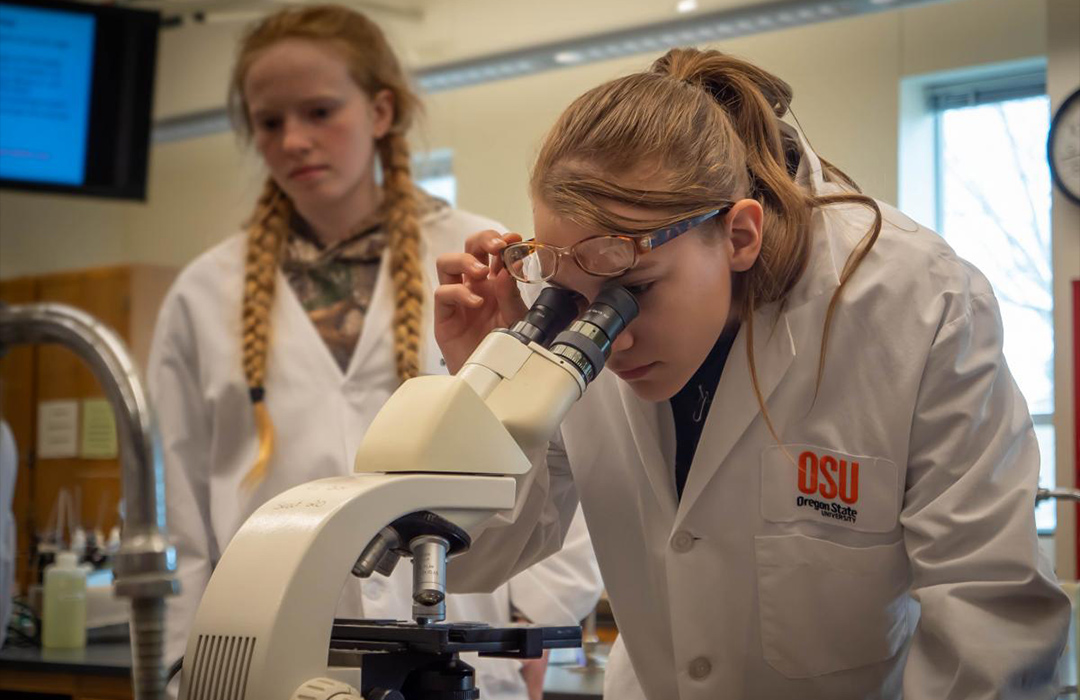
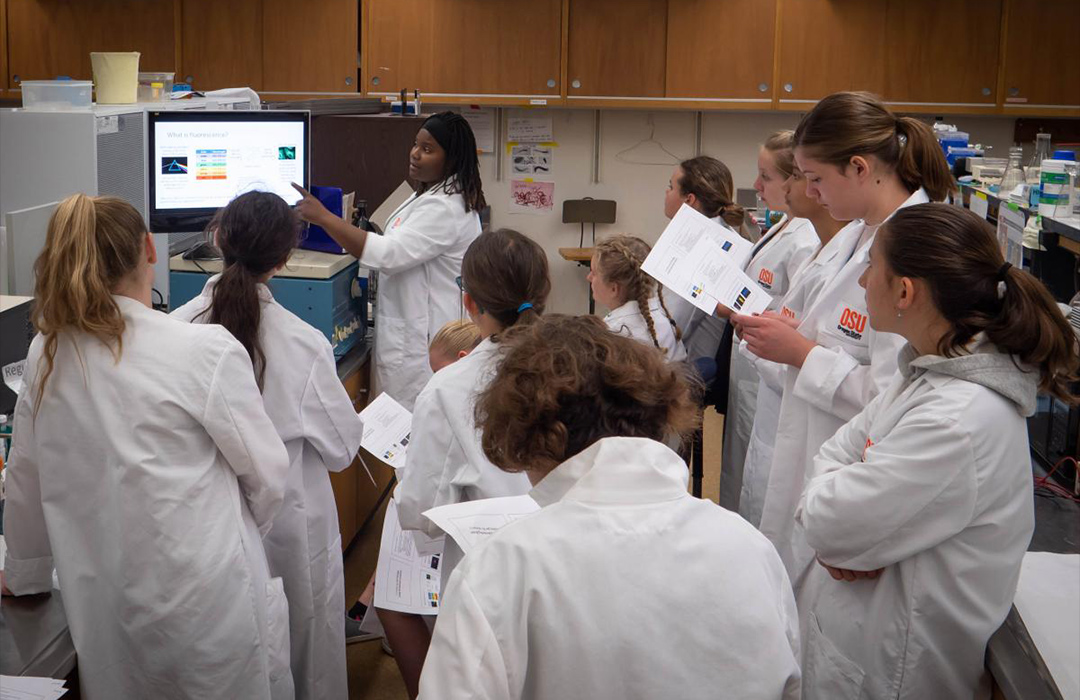
Group of middle school students working in lab.

Hanby Middle School students get hands-on lessons in microbiology

By Christien Laber

Photography: Christien Laber

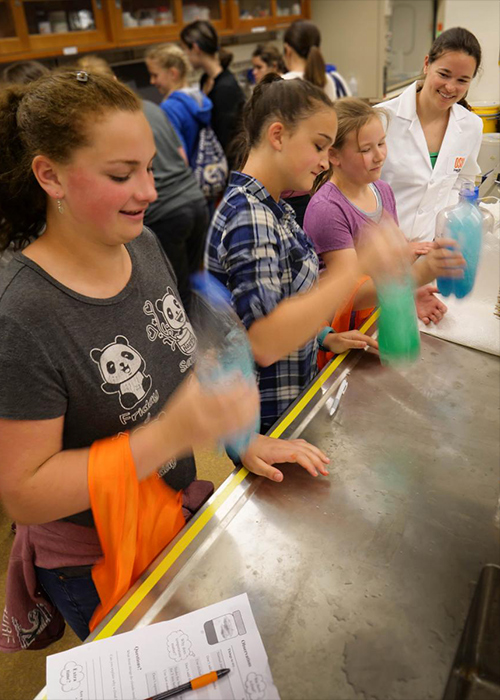
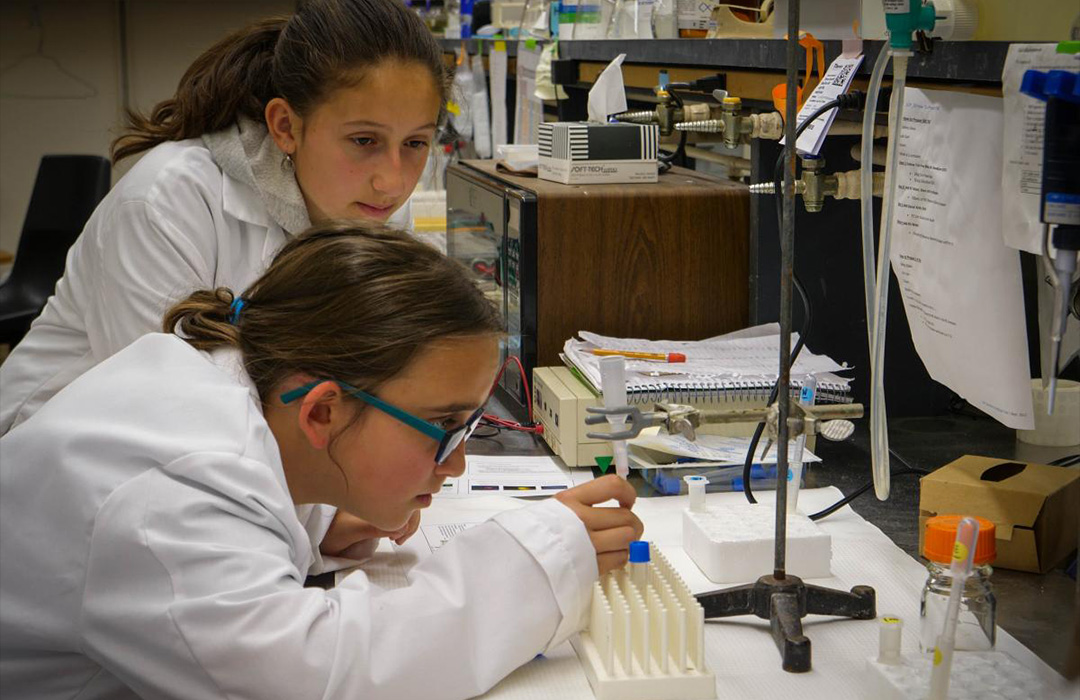
During a recent visit to OSU, the Hanby Girls STEM group interacted with members of the Department of Microbiology to learn about life at the microscopic level. As part of their two-day tour of the campus, the girls experienced hands on laboratory activities as well as short lessons on various principles of microbiology.

The department tour was divided into three activities lead by Cindy Fisher, Dr. Nicole Hams, and Dr. Cleo Davie-Martin, and aided by department graduate students and undergraduates. With Fisher, the girls learned about bacterial morphology through Gram staining, observing and contrasting Gram positive and negative bacteria under the microscope. They also inspected bacteriophage plaque assays and learned about their utility in counting viruses. Hams offered a crash course on fluorescent proteins and their biological functions. The visitors then had the opportunity to isolate their own fluorescent proteins, contrasting GFP and mCherry fluorophore qualities. Finally, Davie-Martin lead the students in an exercise illustrating the necessity of microscopic particles in the air to facilitate water condensation.

The Hanby Girls STEM group is a club hailing from Hanby Middle School in Gold Hill, Oregon with the objective of introducing students to research and careers in Science, Technology, Engineering, and Mathematics and helping bridge the gap for females pursuing STEM professions. Thirty-five Hanby students were in attendance, just less than one-third of the girls at the middle school. This was their second annual visit to OSU.

The outreach event was coordinated by Dr. Kim Halsey.


Read more stories about: events, women in science, microbiology, innovation


group of people talking to each other at a social event

Health Professions Fair connects students with professional schools and careers in healthcare

The Health Professions Fair

At the annual Health Professions Fair, students can connect with professional schools and programs with specializations in the healthcare industry. The Fair is a wonderful opportunity to learn about graduate education and careers in health care. Admissions representatives from more than 50 health professions schools in Oregon and across the country will be on campus to answer your questions. The Health Professions Fair will take place on April 21, 2020 from 10 a.m. to 2 p.m. in the Memorial Union Ballroom.

These schools represent health professions programs in medicine, osteopathy, dentistry, pharmacy, chiropractic medicine, nursing, physical therapy, public health, health management and administration, medical physics, biomedical sciences and several others. Last year, more than 500 students attended the Health Professions Fair.

Students are welcome to stop by anytime during the health fair, which is free and open to all majors. Volunteers will be available to hand out a list of participating schools and a map of their table locations. Students can visit a school’s table and pick up information materials and speak with admission representatives.

Something for everyone

The health fair is open to all undergraduates and alumni.

First and second year students can explore health profession options, build networks and get tips from admission representatives on undergraduate preparation and co-curricular activities.

Juniors, seniors and alumni will have an opportunity:

  • to learn about specific programs from admissions representatives of various universities
  • collect application materials and obtain financial aid information,
  • get tips on writing a personal statement, the application process, and letters of reference.

Preparing for the Fair

Students can interact with representatives of graduate health programs from schools such as Oregon Health and Science University, Idaho College of Osteopathic Medicine, University of Colorado School of Dental Medicine, University of Utah College of Pharmacy, Western University of Health Sciences in Pomona, California, Keck Graduate Institute of Claremont, California and many more. See a list of participating schools.

Students are encouraged to prioritize their list of schools to make effective use of their time at the Fair. They can brainstorm questions they might ask admissions representatives. Here are a few ideas to get started:

  • What is unique about program X at your university?
  • What types of courses would I take in program X?
  • What experiential components does program X offer (internships, rotations, etc.)?
  • What does your admissions committee look for in an applicant?
  • I read about XYZ on your website. Can you tell me more about that?

According to U.S. News and other surveys, healthcare is one of the fastest growing industries. The Bureau of Labor Statistics predicts that employment growth in this sector will be much quicker than the average for all jobs by 2026.

For more information, please visit: http://www.science.oregonstate.edu/health-professions-fair

group of conference attendees in front of Austin Hall

International conference showcases Oregon science and agriculture

By Katharine de Baun

Department of Microbiology co-hosted 38th Annual Crown Gall Conference 2017

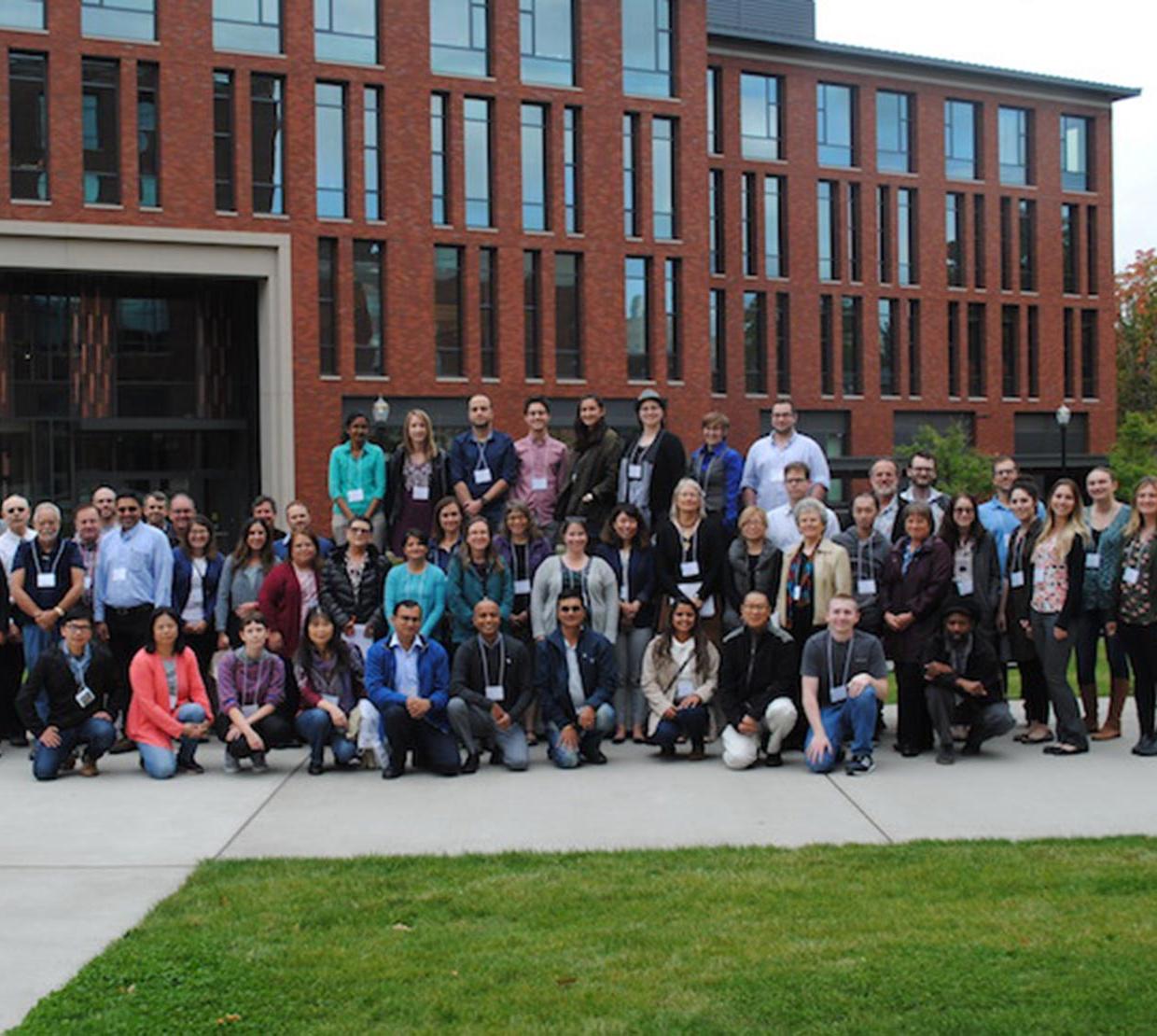
Seventy participants from around the world gathered at Oregon State University for the 38th Annual Crown Gall Conference in October 2017. The two-day event was co-hosted by the departments of Microbiology and Botany and Plant Pathology.

The conference was a natural fit for Oregon. Crown gall and hairy root disease is caused by the ubiquitous soil bacteria Agrobacterium tumefaciens, affecting industries that contribute more than $745 million to Oregon’s economy. The conference attracted experts from across a wide variety of disciplines in academia, government and industry with a strong interest in learning about the latest research and sharing ideas on the diagnosis, control and economic impact of this widespread disease.

Microbiologist Walt Ream recruited the two keynote speakers for the event, Dr. Eugene Nester of the University of Washington, who delivered an eloquent history of crown gall to date, and Rob Horsch from the Bill and Melinda Gates Foundation, who explored Agrobacterium’s surprising role in producing genetically engineered plants and helping to transform modern agriculture. Other speakers traveled from as far away as The Netherlands, Japan and Taiwan, reflecting the bacteria’s wide influence on thousands of plant species all across the world.

The conference was organized by Jeff Chang from the Department of Botany and Plant Pathology along with Melodie Putnam from the OSU Plant Disease Clinic and Joyce Loper from the College of Agriculture.

A secondary goal of the conference was to showcase Oregon’s impressive agriculture. A winery tour, organized and facilitated by Mark Chien, Director of the Oregon Wine Research Institute at OSU, offered ample time to socialize and enjoy some of Oregon’s world-class wines as well as a catered banquet featuring locally grown foods.

For OSU students and other young scientists, the conference offered an ideal venue to discuss their research, foster potential collaborations, build professional networks, and learn how their work fits into the diverse field of Agrobacterium biology. Two presenting researchers met individually with OSU scientists and held seminars outside of the conference on campus, a boon to participants.

After the conference, Ream reflected:

“The 38th Annual Crown Gall Conference was an amazing success. We received many laudatory compliments from attendees. The scientific program was stimulating and brought diverse people together. The depth and quality of the research of our scientists was strong; almost 30% of the presentations were from OSU scientists. Overall, attendees had a very positive experience in Oregon and at Oregon State University.”

Roy Haggerty showing children a snake

Discovery Days foster a love for science

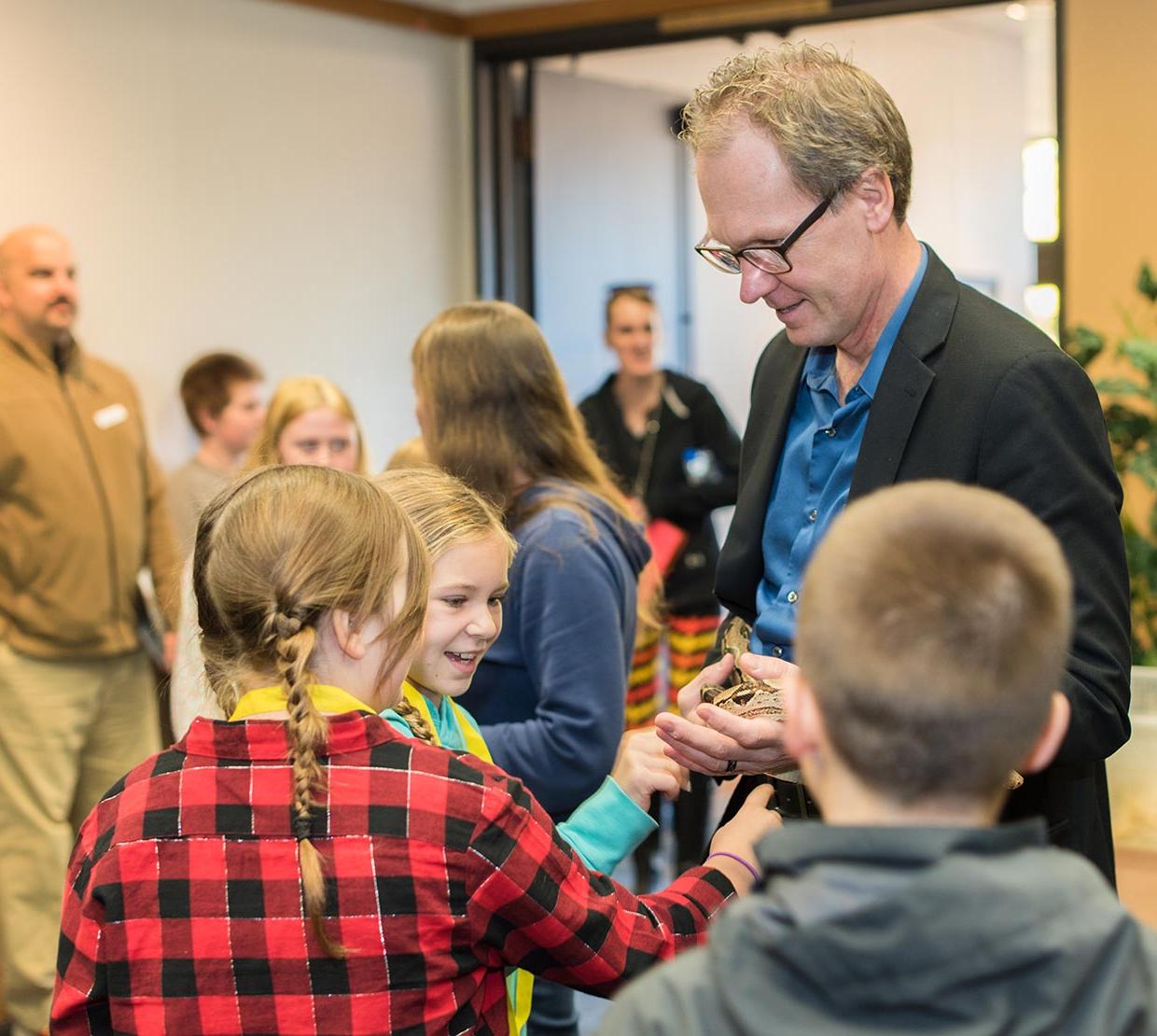
Dean Roy Haggerty at Discovery Days

The eagerly awaited Discovery Days arrived on campus October 31 and November 1. Nearly 800 students from 20 schools flocked to Oregon State University to participate in Discovery Days, an outreach program held twice annually that immerses students in the rich and diverse world of science.

The students were largely from neighboring elementary schools, representing schools in Corvallis, Albany, Sweet Home as well as Toledo. There were also a significant number of homeschooled students in attendance with their families.

The Discovery Days events were held in LaSells Stewart Center on Oregon State's campus.

College of Science Dean Roy Haggerty stopped by to visit with many of the students, encouraging their interest in science.

Students participated in a wide variety of hands-on learning exercises that included extracting strawberry DNA, measuring nuclear waves with a Geiger counter, examining bird and mammal teeth, and learning about snakes, lizards, bearded dragons and the natural history collection on campus with the aid of live specimens and much more. The exhibits were on display in a variety of stations that showcase toxicology, biochemistry and biophysics, botany, zoology, microbiology, physics as well as the engineering sciences.

Sponsored by the Colleges of Science, Agricultural Sciences and Engineering, Discovery Days strives to inspire future generations of doctors, scientists, engineers, mathematicians, physicists and other growing STEM careers. The program relies on volunteers to run stations showcasing science and engineering. The volunteers are mostly Oregon State science and engineering students eager to pass along their love of science to young students.

Participating organizations included the Departments of Botany and Plant Pathology, Chemistry, Fisheries and Wildlife, Microbiology, Nuclear Engineering, Physics and Geosciences as well as Brad’s World Reptiles and Sigma Delta Omega.

More than a decade old, Discovery Days has a rich legacy. It has helped thousands of students from Linn and Benton counties to discover, enjoy and love science through the years. Gabs James, special assistant in the College of Science, is the coordinator of Discovery Days.

Experts concur that STEM education starts long before a child reaches high school. Research shows that elementary-age students love hands-on and interactive STEM activities and are more likely to deem science relevant to their future education plans as they progress through school if they are exposed to STEM early.

Discovery Days is an important program in Oregon that piques the interest of young learners and engages them in science through deep and frequent exposure.

Discovery Days will return in the spring May 1-2, 2018.
Microscope and laurel icon labeled "2017" above light texture

Recognizing faculty and staff excellence

2017 Fall Faculty and Staff Awards

The College of Science celebrated research, teaching and administrative excellence at its 2017 Fall Faculty and Staff Awards with a reception and ceremony on October 5.
Dean Roy Haggerty delivered welcome remarks and shared his perspective on the challenges science faces nationally as well as opportunities for our campus community. He warmly praised the award-winning researchers, instructional faculty and staff for their impressive accomplishments and dedication to service.

The College announced three new awards this year that support research and teaching excellence: Dean's Early Career Impact Award, College Impact Award with a $10,000 stipend and two Faculty Scholars for Teaching Excellence Awards which carry an award of $12,500 for three years. These awards are possible thanks to the generous philanthropic support of our alumni and friends and matching funds invested by the Provost's Office.

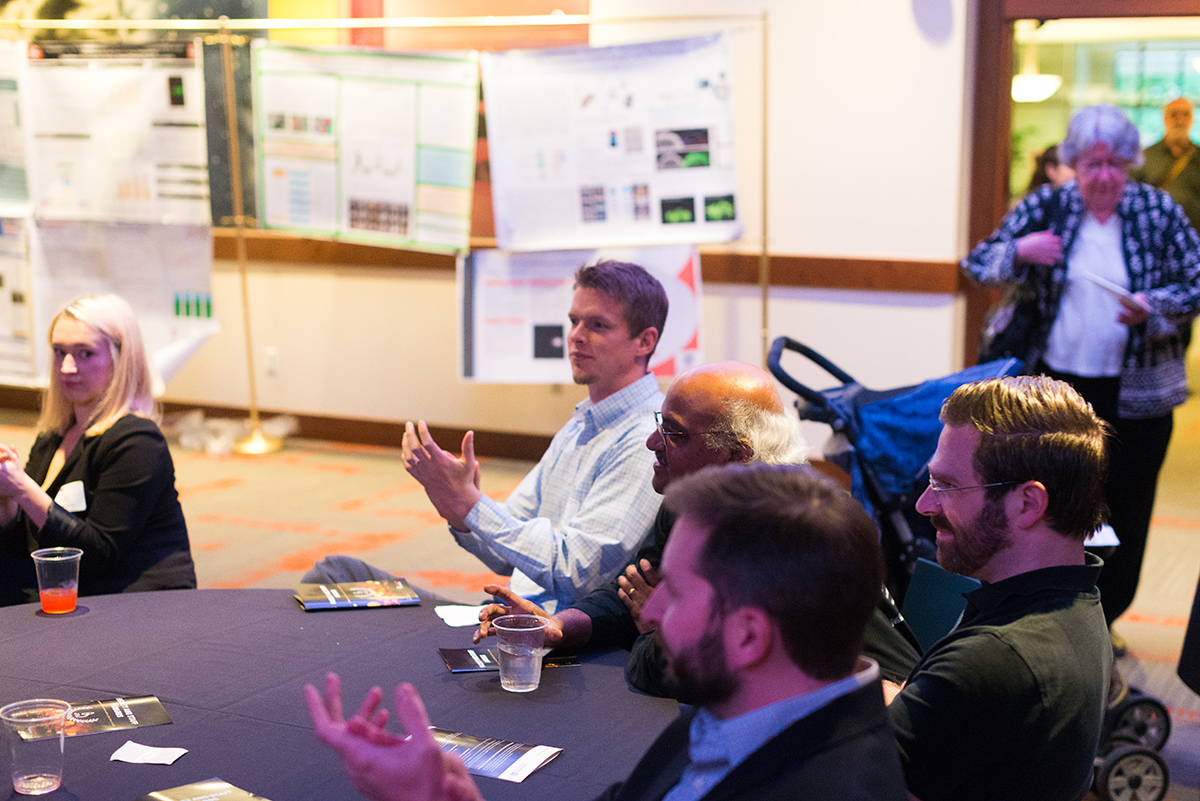
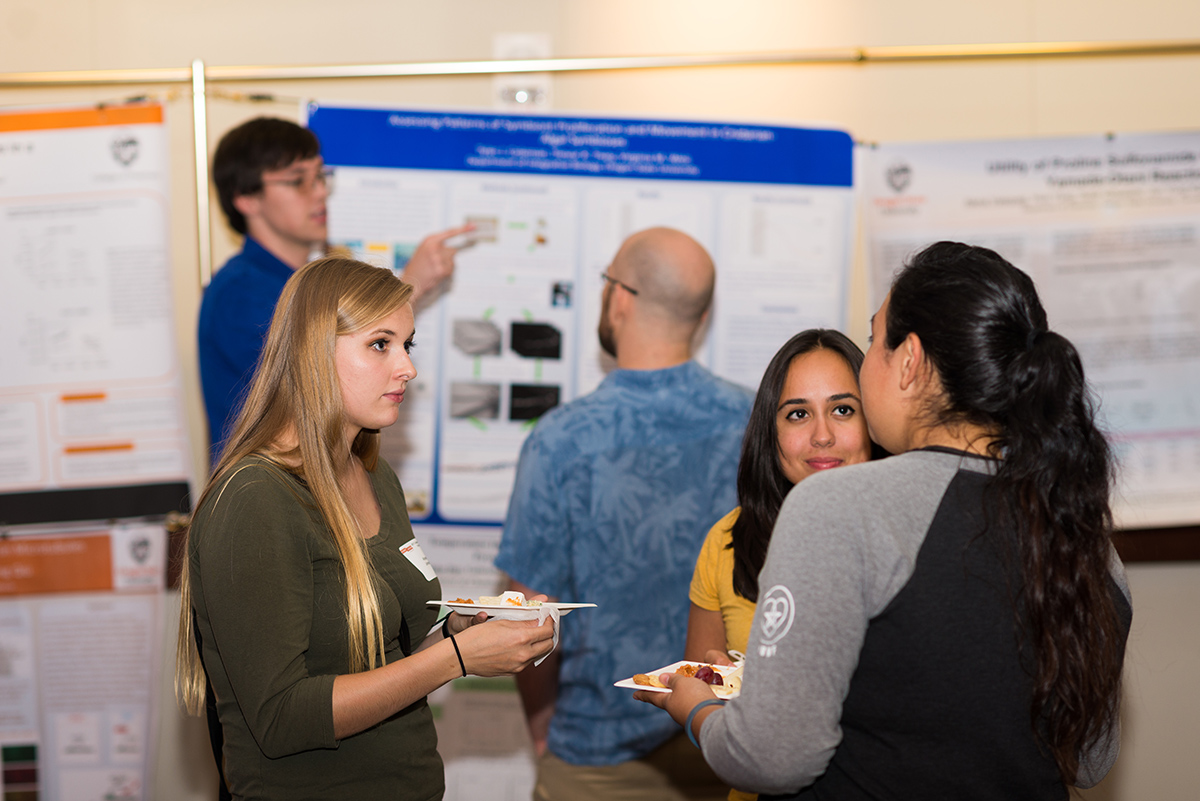
The awards ceremony was followed by a reception and a poster session showcasing the summer research projects of SURE Science students.

Hearty congratulations to these award-winning faculty and staff who were recognized for their outstanding achievements:

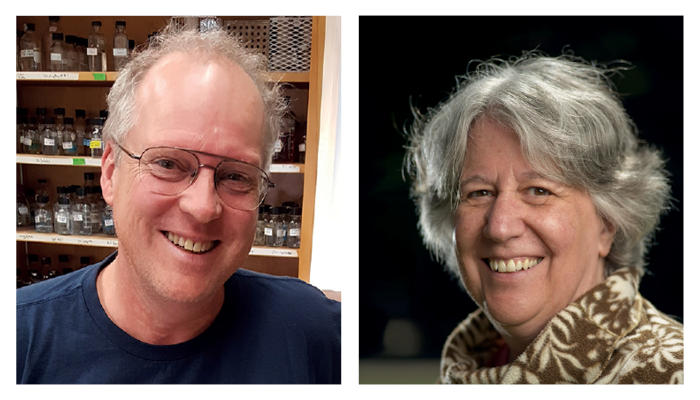
two headshots placed in a white border showing Michael Freitag on the left and Corrinne Manogue on the right.

Michael Freitag, professor of biochemistry and biophysics. Corrinne Manogue, professor of physics.

Michael Freitag, professor of biochemistry and biophysics, received the Milton Harris Award in Basic Research for his outstanding research on how chromatin proteins shape eukaryotic genomes and epigenetic mechanisms of regulating DNA transcription through the use of filamentous fungi model systems.

Freitag has published more than 280 papers in prestigious journals, such as Proceedings of the National Academy of Sciences, Genome Research, Science and Nature; he has published 66 papers and received more than 8,500 citations for his work in the last 10 years.

Colleagues describe Freitag as among "the most respected scientists in the field of fungal biology."

"Since Michael’s arrival at OSU in 2006, he has built a fantastically productive and internationally recognized basic research program," said Andrew Karplus, Head of the Department of Biochemistry and Biophysics.

Freitag is renowned for his 2010 work pioneering the “ChIP-seq” approach in filamentous fungi. ChIP-seq is a high-throughput approach to obtain genome-wide maps showing which parts of a cell’s DNA make direct contacts with proteins. As one nominator noted, this work “made his lab a training ground for researchers from the United States, Europe, Asia and Australia to learn ChIP-seq and its computationally intensive analyses.”

Corinne Manogue, professor of physics, was honored with the F.A. Gilfilan Award for Distinguished Scholarship in Science. The Gilfillan Award honors a faculty member in the College whose scholarship and scientific accomplishments have extended over a substantial period of time.

An outstanding theoretical physicist, Manogue's research focuses on quantum gravity and she played a key role in the early work relating division algebras and supersymmetry. She currently studies the use of octonians—a type of algebra—to study fundamental particles.

Manogue is a teacher and scholar of the highest level as evidenced by her prestigious national and university teaching awards, including the American Association of Physics Teachers' Excellence in Undergraduate Physics Teaching Award. She is also the leader and driving force behind OSU's revolutionary Paradigms in Physics Project, which trains undergraduates how to think like physicists. Manogue is a Fellow of both the American Physical Society and the American Association of Physics Teachers.

She has pioneered physics education research and written articles on how to help students make the difficult transition from lower-division to upper-division physics. Her work has been generously funded by the NSF and has trained multiple students and postdocs who have gone on to become leaders in Physics Education Research.

"Corinne has helped to make discipline-based education research in science a highly respected endeavor that is changing the way we teach science in universities," said Heidi Schellman, Head of the Department of Physics.

Thomas Sharpton receiving his award from Jerri Bartholomew and Roy Haggerty

Assistant Professor of Microbiology Thomas Sharpton (center) with Department and Dean Roy Haggerty (right).

Thomas Sharpton, assistant professor of microbiology and statistics, received the Dean's Early Career Impact Award for exceptional achievement in research and education by a tenure-track faculty. Sharpton has acquired a national reputation for his work in microbial bioinformatics.

Since joining OSU in 2013, Sharpton has published 15 papers, including one in Proceedings of the National Academy of Sciences (PNAS) which has opened new doors in microbiome exploration by bringing statistical acumen to bioinformatics. This approach applies evolutionary methods to detect long-term historical trends in host/microbe co-evolution.

Among his greatest achievements are developing new technologies, such as Sifting Families (SFams), a system for classifying protein diversity, and his recently published method for automating gene family abundance estimation from metagenomics data. Sharpton's study on the disruption of the zebrafish microbiome as a result of exposure to the antimicrobial agent triclosan was featured in TIME and Fortune magazine.

In recognition of Sharpton’s contributions, he was selected as OSU's official representative for the National Microbiome Initiative Rollout at the White House Office of Science and Technology Policy (OSTP) and was the lead author of OSU's response to OSTP's Call for New Commitments on microbiome research.

This spring the College of Science and OSU's Office of Research launched the Oregon State University Microbiome Initiative (OMBI), led by Sharpton. Through OMBI, an ongoing education and research program, Sharpton is emerging as a campus leader in innovative teaching of bioinformatics and bioinformatics curriculum development.

"Since his arrival at OSU, Dr. Sharpton has made tremendous impacts on the institution's educational and research landscape and has produced substantial discoveries in his field," said Jerri Bartholomew, Head of the Department of Microbiology.

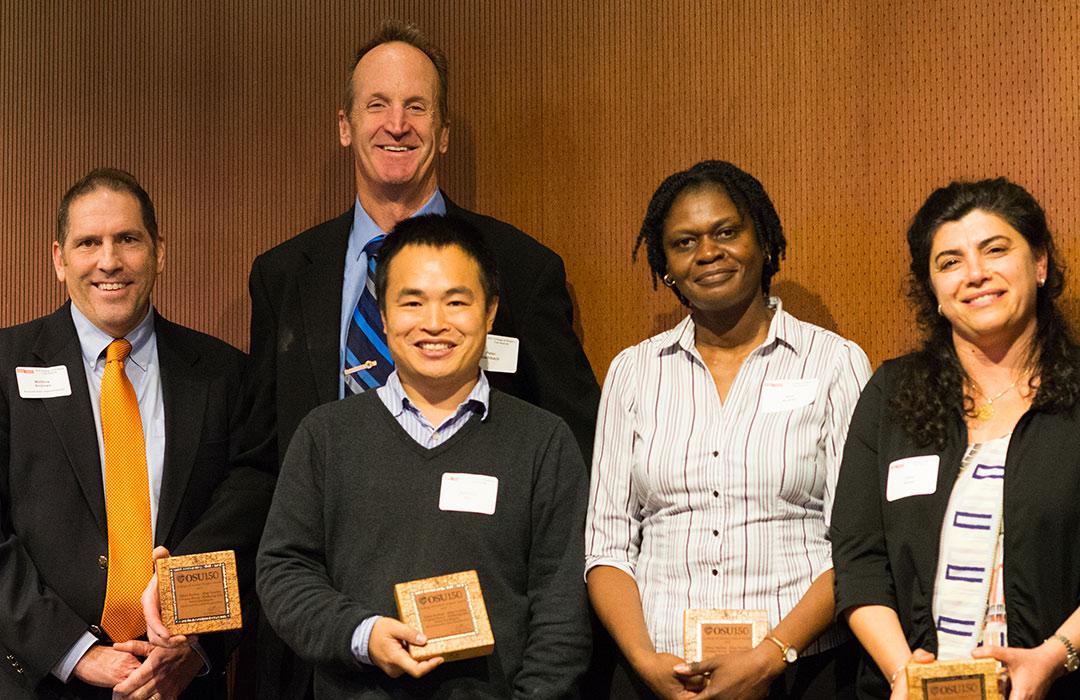
Group photo of award winning faculty

(From left to right) Associate Dean Matt Andrews, physicist Weihong Qiu, biochemists Afua Nyarko and Elisar Barbar and Peter Eschbach (back).

A research team comprising biochemistry and biophysics faculty Elisar Barbar, Afua Nyarko, Viviana Perez, physicist Weihong Qiu and Peter Eschbach (Electron Microscopy Facility) has won the College Impact Award. Through their respective research domains, Barbar and team are rapidly establishing an internationally recognized hub focused on elucidating the multiple essential roles of intrinsically disordered proteins (IDP).

As a testament to their importance and prevalence in biology, IDPs are increasingly appearing in various research projects at OSU ranging from motor proteins and the mitotic spindle (Barbar, Qiu), cancer invasion and tumor progression (Nyarko, Kolluri) and aging (Perez).

The Barbar Lab will join forces with Nyarko, Perez, Qiu and Eschbach to integrate interdisciplinary approaches and cutting-edge, university-wide facilities to continue the study of IDPs in different biological systems. The diversity of expertise will help establish OSU's reputation for excellence as a global leader for driving IDP research in the nation.

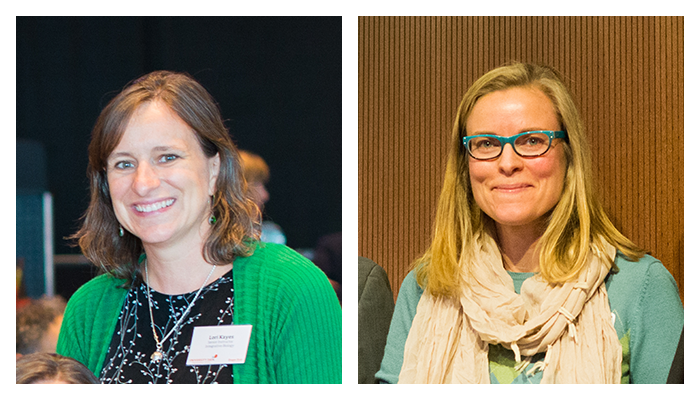
Kayes and Beisiegel receiving awards

Senior Instructor of Integrative biology Lori Kayes (left) and Assistant Professor of Mathematics Mary Beisiegel (right)

Lori J. Kayes, an integrative biology instructor, has won the College of Science Faculty Scholar for Teaching Excellence Award. This new award for a three-year faculty scholar position supports excellence and innovation in teaching and carries an annual stipend of $12,500.

Kayes has distinguished herself as an outstanding instructor, teaching coordinator and biology education researcher. Kayes proposed a redesign of the Principles of Biology (Bi21x) series, a large enrollment introductory biology course for life-science majors, to create a more inclusive, modern and best practices-based course series, while supporting diverse student populations and providing faculty professional development.

For the past six years, Kayes has led faculty development workshops and facilitated the development of teaching materials for introductory biology sequences. Additionally, she has worked extensively with faculty around the state from all institution types to increase the alignment of introductory biology both vertically within a curriculum and horizontally across institution types.

The proposal provides workshops support, faculty support in the form of graduate training assistants to develop curriculum and a comprehensive evaluation plan for the newly revised curricula. This project will impact approximately 1500 students at OSU and the surrounding community colleges per year and involve more than 20 faculty.

Mary Beisiegel, assistant professor of mathematics, received the Ben and Elaine Whiteley Faculty Scholar Award for Teaching Excellence. Beisiegel is a highly gifted teacher of mathematics and is the Mathematics Department's expert on teacher training at all levels.

An accomplished scholar whose research focuses on how people prepare for careers in post-secondary mathematics education, Beisiegel often incorporates her research and evidence-based pedagogical models into teaching.

In 2016, she was awarded a five-year, NSF grant to work on curriculum renewal in lower division mathematics courses. She also received the 2017 Henry L. Alder Award for Distinguished Teaching from the Mathematical Association of America.

Beisiegel will use her award to conduct 12 seminars over the next three years for faculty and graduate teaching assistants focused on how to implement research and evidence-based active learning techniques in the classroom.

"Mary has managed to infect others with her enthusiasm and to promote in others the desire to seriously reflect on their teaching, " said Tom Dick, a professor of mathematics in the Department of Mathematics.

Betterton, Bridenstine, and Robinson receiving awards

Graphic designer Sharon Betterton. ASBC accountant Jamie Bridenstine. Faculty Research Assistant (Integrative Biology) Jonathan Robinson

Sharon Betterton, a graphic designer in the College of Science, received the Gladys Valley Award for Exemplary Administrative Support. Betterton was recognized for her high degree of professionalism, outstanding creative impact and exceptional collaborative skills.

Her extraordinary work as a designer has contributed to a strong College of Science brand that is recognizable, fresh, unique and professional. Her work is well regarded and respected across the university and held up as an example of highly effective marketing.

"She maintains high standards of excellence for her work and is one of the most talented creative professionals I have worked with in my 20-year career," said Debbie Farris, assistant director of marketing and communications in the College.

Jamie Bridenstine, an accountant in finance and administration in the Arts and Science Business Center (ASBC), received the ASBC Exemplary Service Award. This award recognizes exemplary service by a member of ASBC to the colleges within the Division.

Jonathan Robinson from the Department of Integrative Biology won the Outstanding Faculty Research Assistant award. This award recognizes a Faculty Research Assistant who has a record of outstanding job performance and contributions.

Subscribe to Events