Events

Events

A star in a circle sits above a wreath on a blue background with glitter. The year 2023 is visible.

Celebrating inclusive excellence, administration, service and performance: 2023 College of Science Awards

By Hannah Ashton

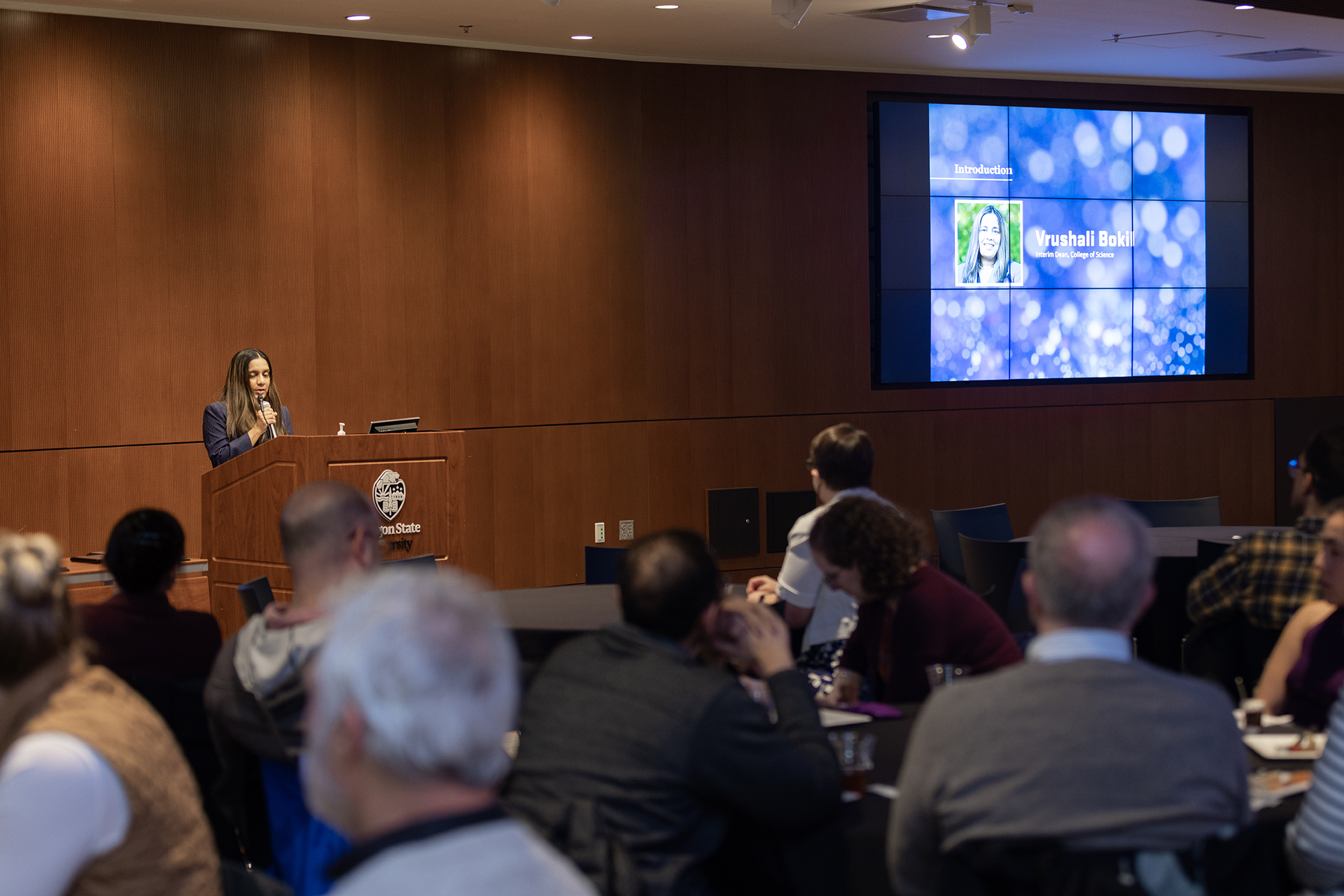
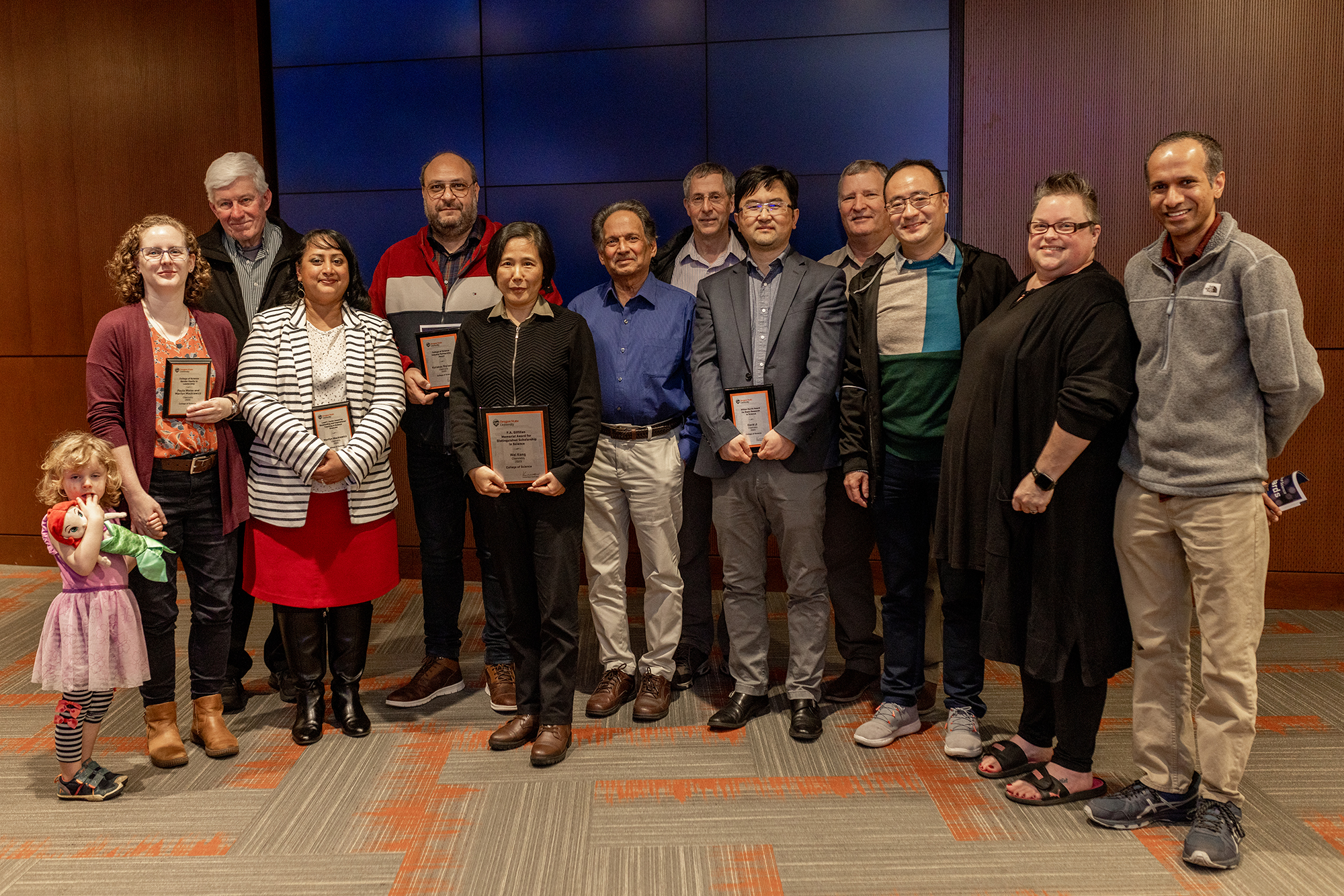
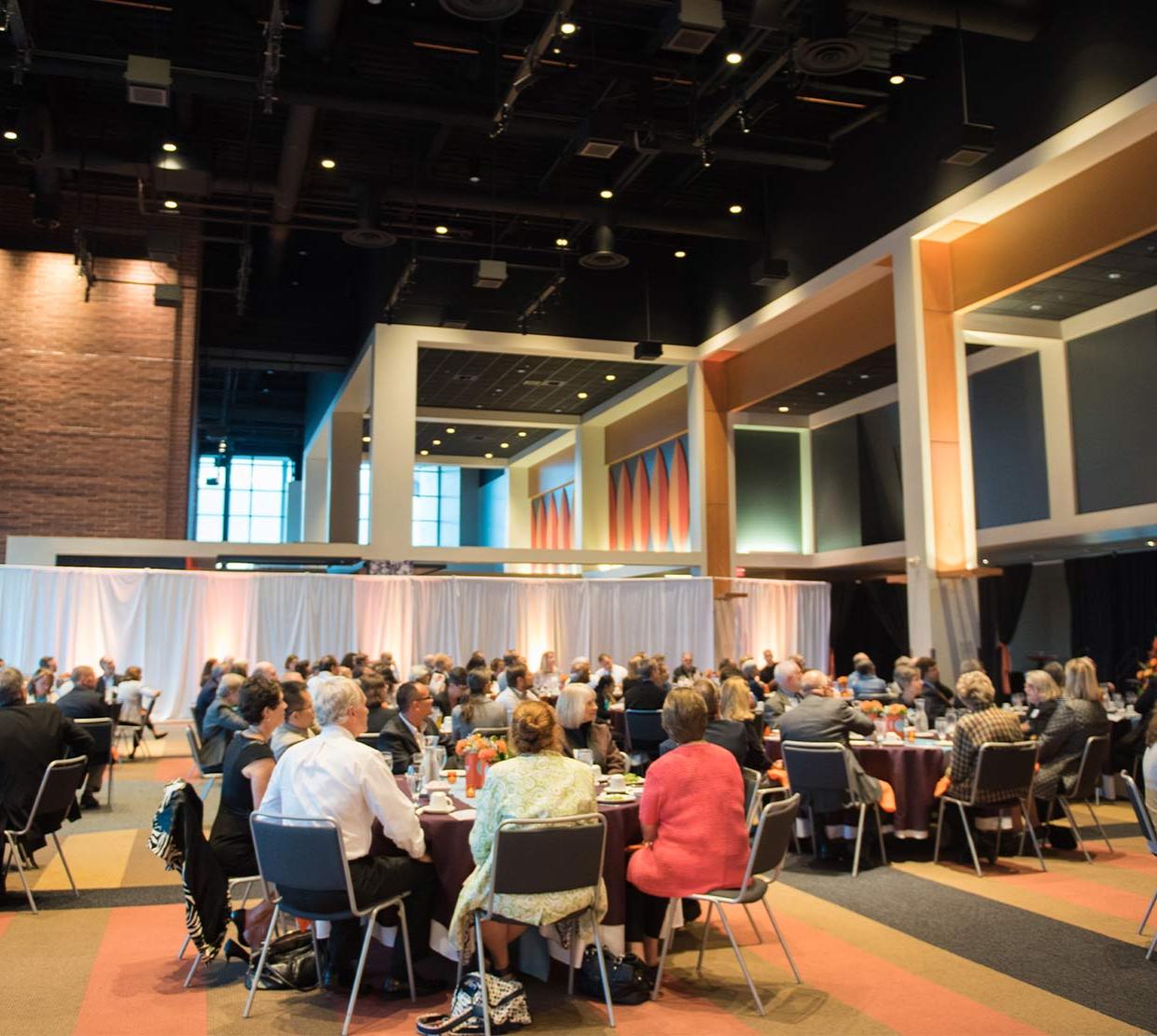
The College of Science gathered on Feb. 22 to recognize and celebrate our high achieving faculty and staff at the 2023 Combined Awards Ceremony. The evening celebrated the very best in the College, from teaching, advising and research to inclusive excellence, administration and service.

The following faculty and staff received awards in the categories of Inclusive Excellence, Administration, Service and Performance.

Congratulations to all the awardees!

College of Science Inclusive Excellence Award

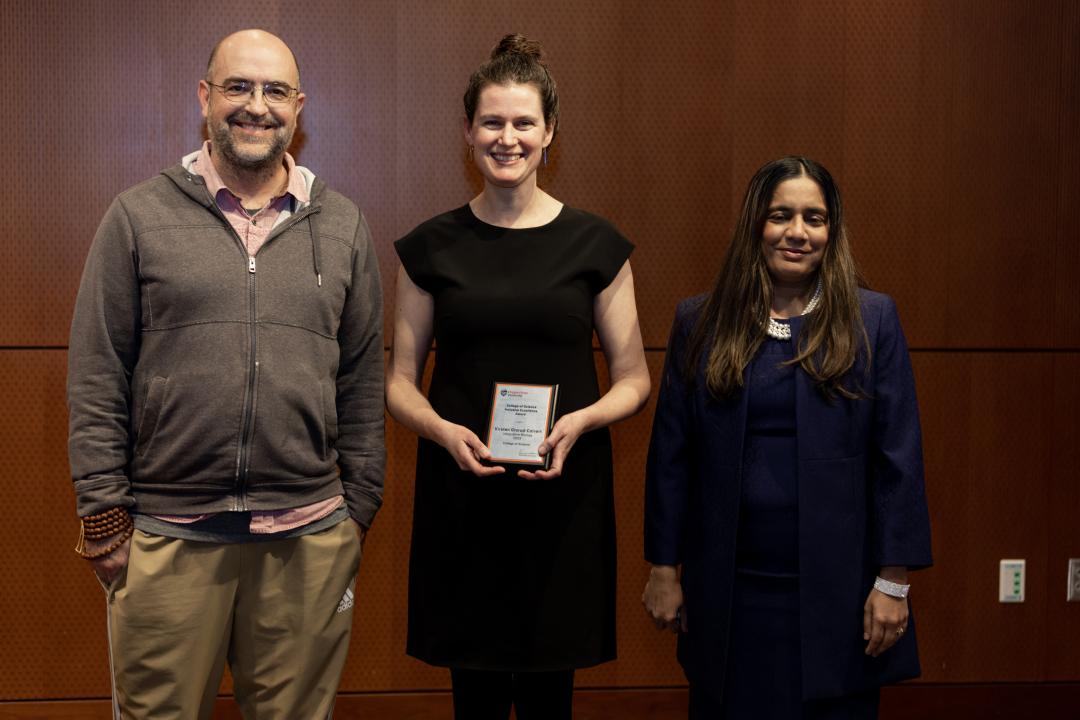
Kirsten Grorud-Colvert stands in a dark dress holding her award.

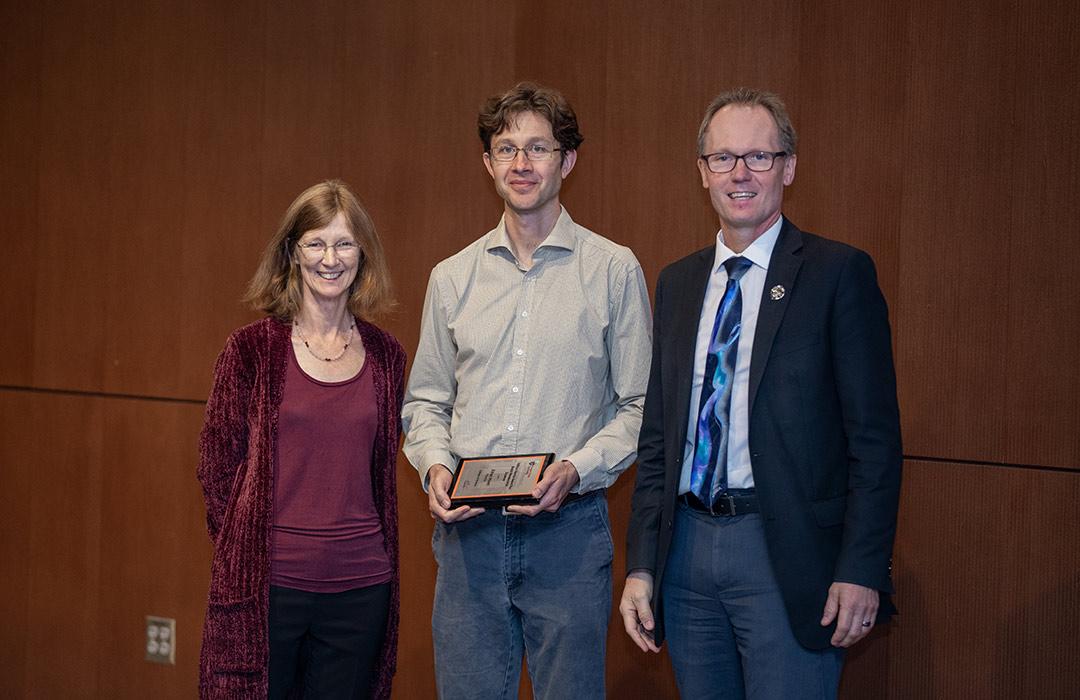
Kirsten Grorud-Colvert accepts her award from Interim Dean Vrushali Bokil and Department of Integrative Biology Head Dee Denver.

Kirsten Grorud-Colvert, associate professor, senior research in the Department of Integrative Biology, received the Inclusive Excellence Award. In her nine years at Oregon State, she has demonstrated valuable leadership in fostering a culture of inclusion in the College of Science.

In 2020-21 Grorud-Colvert led a department-wide effort to develop an Equity, Justice and Inclusion Community Values statement to guide the department’s future goals and actions. As part of that work, she organized a retreat for faculty, staff and graduate students to discuss individual and group values. Attended by 83 members, the retreat served as a jumping-off point for the department statement, allowing more voices to be heard and incorporated.

In the summer of 2022, Grorud-Colvert co-organized a Decolonizing Biology workshop. A series of four sessions, the workshop provided a deep dive into the historical and ongoing colonial forces that have shaped the biological research discipline. Topics ranged from the exploitation of indigenous bones and DNA to disparities and biases experienced by racial and ethnic minorities in healthcare.

Grorud-Colvert also prioritizes inclusive excellence in her role as a research program leader. She focuses on place-based approaches to understanding the local impacts of marine protected areas in different parts of the world while integrating the perspectives of local communities and historically marginalized populations.

College of Science Gender Equity in Leadership

Created in 2022, the College of Science Gender Equity in Leadership award supports and provides funds for the advancement of the careers of female faculty in the College of Science. Thanks to generous donors, the fund will provide three faculty with a $3K award for developing and implementing projects related to the College’s mission while enhancing leadership skills and opportunities for faculty members who previously or currently identify as women in the College of Science.

This year's recipients include: Marilyn Mackiewicz and Paula Weiss; Elisar Barbar; and Katée Keen and Jennifer Olarra.

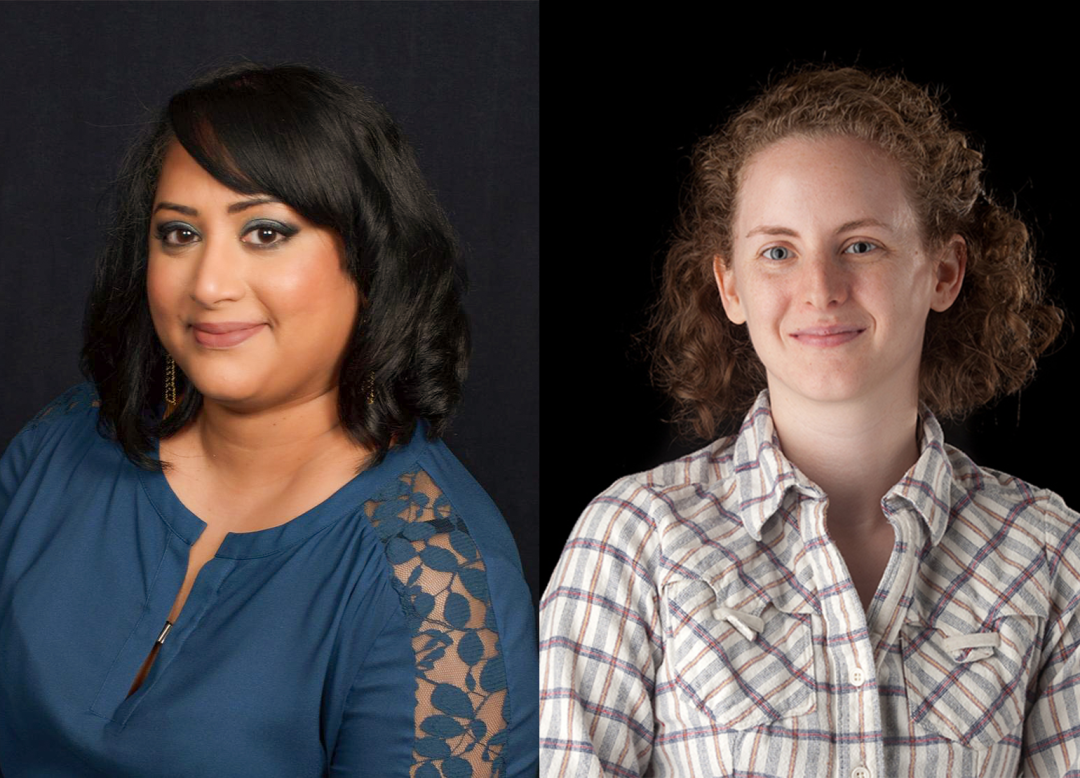
Headshot of Marilyn Mackiewicz wearing a blue shirt and headshot of Paula Weiss in striped shirt.

Marilyn Mackiewicz and Paula Weiss.

Marilyn Mackiewicz and Paula Weiss’s award will support specialized mentorship programs for women instructors, professors and researchers in the Department of Chemistry. Called “The Catalyst,” the goal of the program is to cultivate an environment that shapes the next generation of leaders, scientists, mentors and educators. Participants will formulate their career goals and develop a range of skills such as effective grant writing, finding sources of funding and inclusive leadership skills.

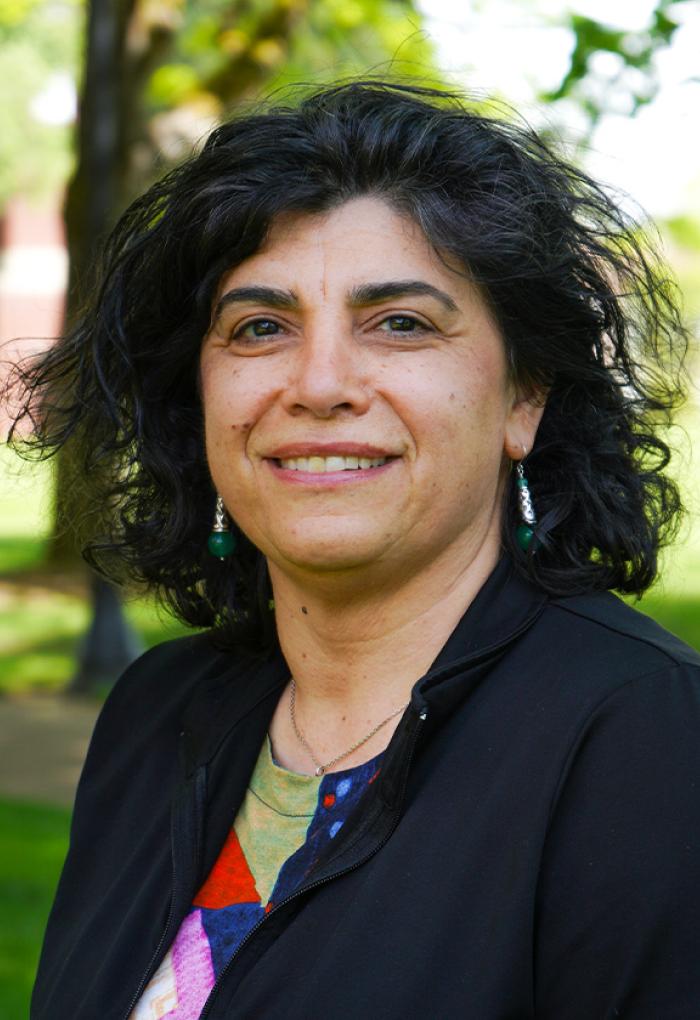
Outdoor photo of Elisar Barbar.

Elisar Barbar

Elisar Barbar’s award will fund the development of workshops that support women faculty in science as their careers advance. She will organize formal mentorship opportunities focused on tools and strategies that empower faculty and invite a renowned speaker to lead a full day workshop on leadership, improving quality and quantity of research output and the performance and well-being of science teams.

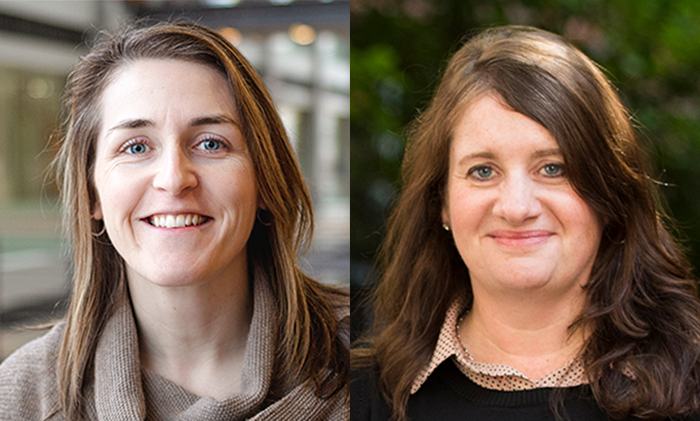
Katée Keen and Jennifer Olarra.

Katée Keen and Jennifer Olarra.

Katée Keen and Jennifer Olarra’s award will fund a coaching event that supports College of Science staff and professional faculty who identify as women. A guest speaker will lead participants in sessions focused on empowerment, work-life balance, leadership at all levels, connecting personal values to College of Science values, and creating a climate of belonging and support.

Gladys Valley Award for Exemplary Administrative Support

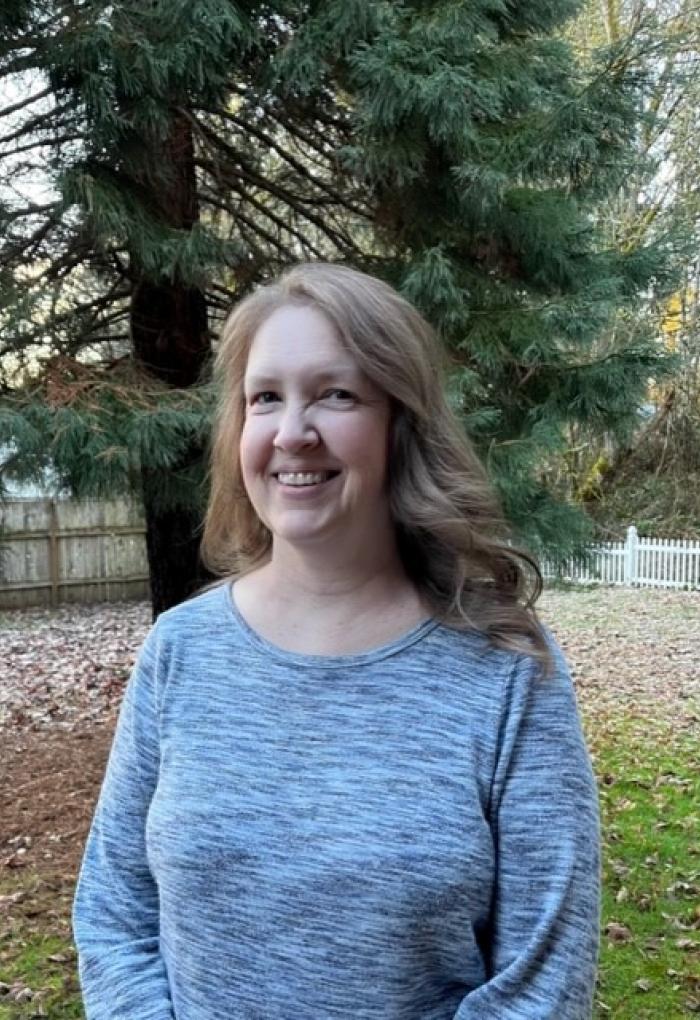
Kelly Carter standing in a blue long sleeve shirt outside in front of a tree.

Kelly Carter, graduate student coordinator and office manager for the Department of Physics

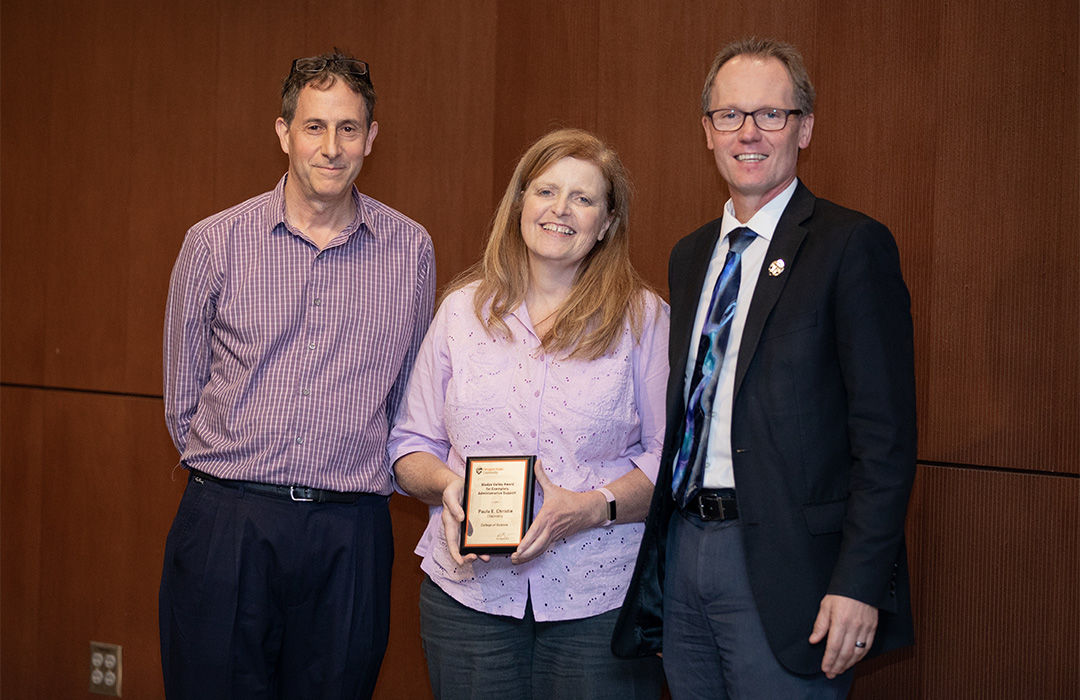
Kelly Carter, graduate student coordinator and office manager for the Department of Physics, received the Gladys Valley Award for her tireless commitment to her department.

Carter has been the office manager in the department since 2014 and during the 2021-22 academic year, she managed the role without a support employee after her assistant, Lori Emmons, passed away. Carter frequently performs well beyond her position description duties.

“Kelly has been a fundamental individual in the department workings, a pleasant person to interact with a constant smile, a tireless collaborator, and an incredible source of help and support at any time,” wrote one nominator.

Her colleagues expressed immense gratitude for her willingness to take on more responsibilities while consistently providing a warm welcome to department visitors.

“Kelly is the glue that holds together the complicated trajectories of roughly 20 faculty, 50 graduate students and hundreds of undergraduates,” wrote another nominator. “She deserves recognition for not only doing this difficult task, but also for doing it incredibly well in the face of a plethora of challenges.”

Distinguished Service Award

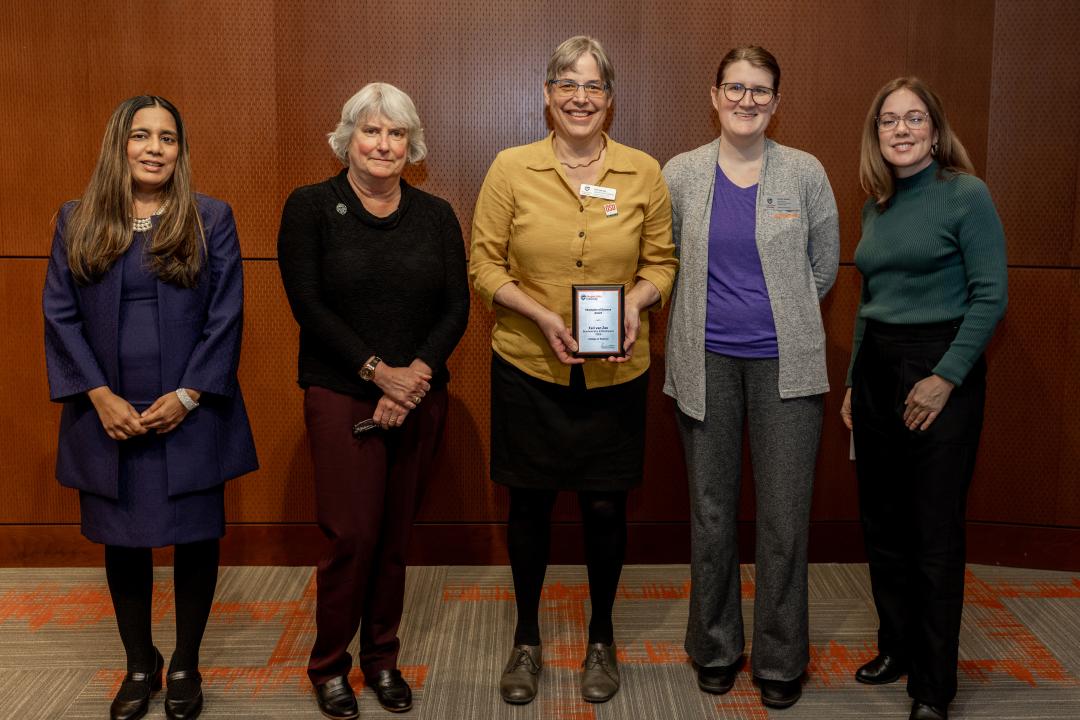
Five women pose for a picture. The woman in the center is wearing a gold shirt and holds a plaque.

From left to right: Vrushali Bokil, Virginia Weis, Kari van Zee, Lauren Dalton and Kate Shay.

Kari van Zee, senior instructor II and lead advisor for the Department of Biochemistry and Biophysics, received the Distinguished Service Award. This award recognizes a faculty, staff member or student whose outstanding contributions helped to support and sustain the quality and effectiveness of our College.

Van Zee has taken on a plethora of roles, both official and behind the scenes. In addition to teaching and advising, she is an undergraduate coordinator, faculty senate member, Biochemistry Club advisor and Genetic Code Expansion Center outreach coordinator. On top of everything she is known for fostering a supportive community environment.

“She is a perfect example to emulate: a good friend, advisor and someone to count on for support; whatever it is, however hard it is, whether you are a student, faculty or even department head, Kari is there to help,” wrote the nominators.

Examples of her dedication include hosting social events to help undergraduate seniors brainstorm for their future, organizing the department Dam Proud Day fundraising event, helping faculty adapt for students with disabilities and coordinating pandemic safety procedures.

Colleagues noted she also dedicates her time to building a positive department culture. Van Zee is the first person to give out her information to new staff members and routinely helps plan community-building events.

“In summary, Kari is the heart of the department in so many ways,” the nominators wrote.

Champion of Science Award

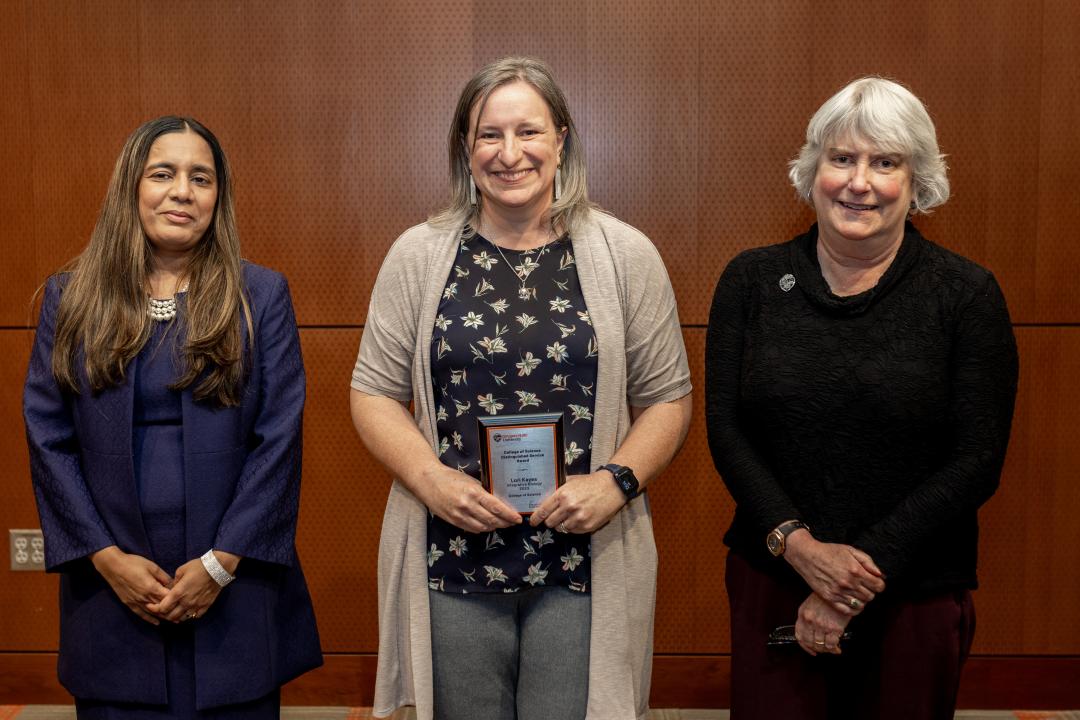
Lori Kayes accepts her award standing next to two other women.

Lori Kayes accepts her award from Interim Dean Vrushali Bokil and Acting Associate Dean for Research and Graduate Studies Virginia Weis.

Lori Kayes, Associate Department Head and Senior Instructor II in the Department of Integrative Biology, received The Champion of Science Award. Chosen by the dean, this award recognizes an individual who demonstrates excellence and extra effort that goes above and beyond what is requested. The award is modeled, including its name, after the President's Beaver Champion Award.

Kayes is a champion of student success, equity and community engagement. Throughout her career, she has strongly advocated for inclusivity in STEM courses and promoted active learning and culturally responsive pedagogies at Oregon State. She has tirelessly advocated for adapting education to meet the needs of today’s learners.

Her contributions were pivotal in Oregon State's recent adoption of the new general education curriculum, which focuses on student success. As co-leader of the Baccalaureate Core Reform Committee, she garnered participation across the university to shape a new curriculum that enhances student potential, including those who are historically underserved.

Her devotion to effective teaching is also demonstrated by the Learning Assistants Program. As a founder with Devon Quick and Dennis Bennett, she helped usher in a new era of evidence-based science teaching in large classrooms at OSU. The Learning Assistants play a vital role in helping students learn by implementing engagement and learning exercises in undergraduate STEM classrooms.

Kayes also has been active in the ongoing efforts to increase inclusive excellence in science as co-PI of the five-year $1 million grant from the Howard Hughes Medical Institute, which aims to improve instruction in undergraduate STEM classrooms.

College of Science Industry Partnership Award

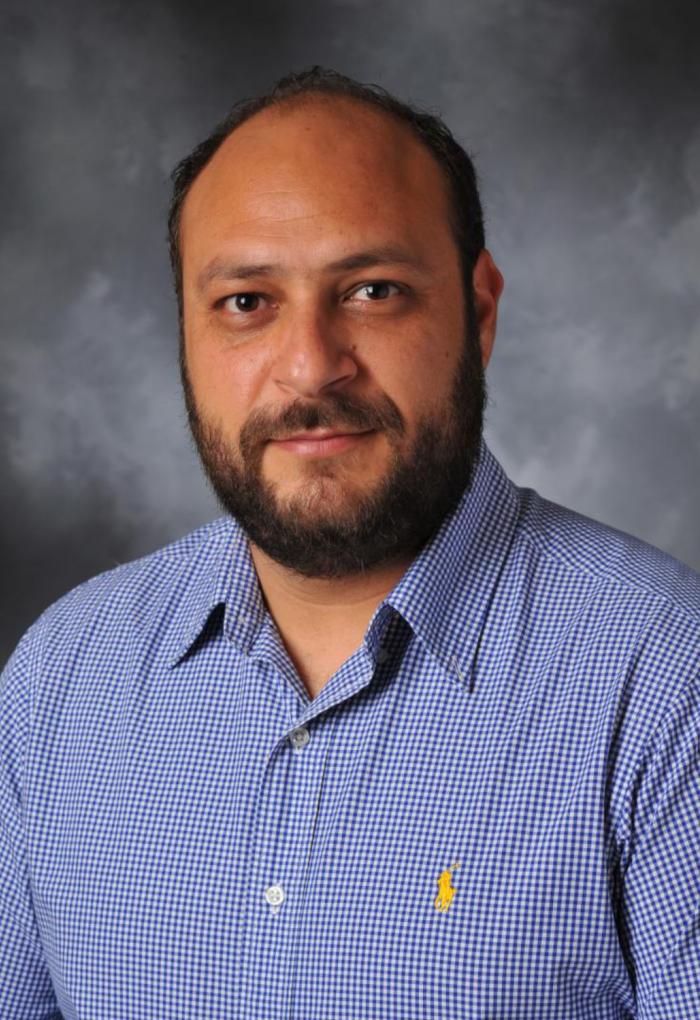
Kyriakos Stylianou, a man with a beard.

Kyriakos Stylianou

Assistant Chemistry Professor Kyriakos Stylianou and his colleagues received the College of Science Industry Partnership Award. This award will support their work producing metal-organic frameworks (MOFs) able to capture CO2 followed by its conversion into a mixture of ethanol and methanol, which can be used as an alternative fuel source. This will help lower CO2 levels in the ocean and atmosphere and reduce humanity’s dependency on long-chain hydrocarbon fuels, which are rapidly contributing to global warming. In this project, Stylianou will collaborate with an international energy company, and together, they will discover novel strategies to effectively reduce CO2 emissions with MOFs.

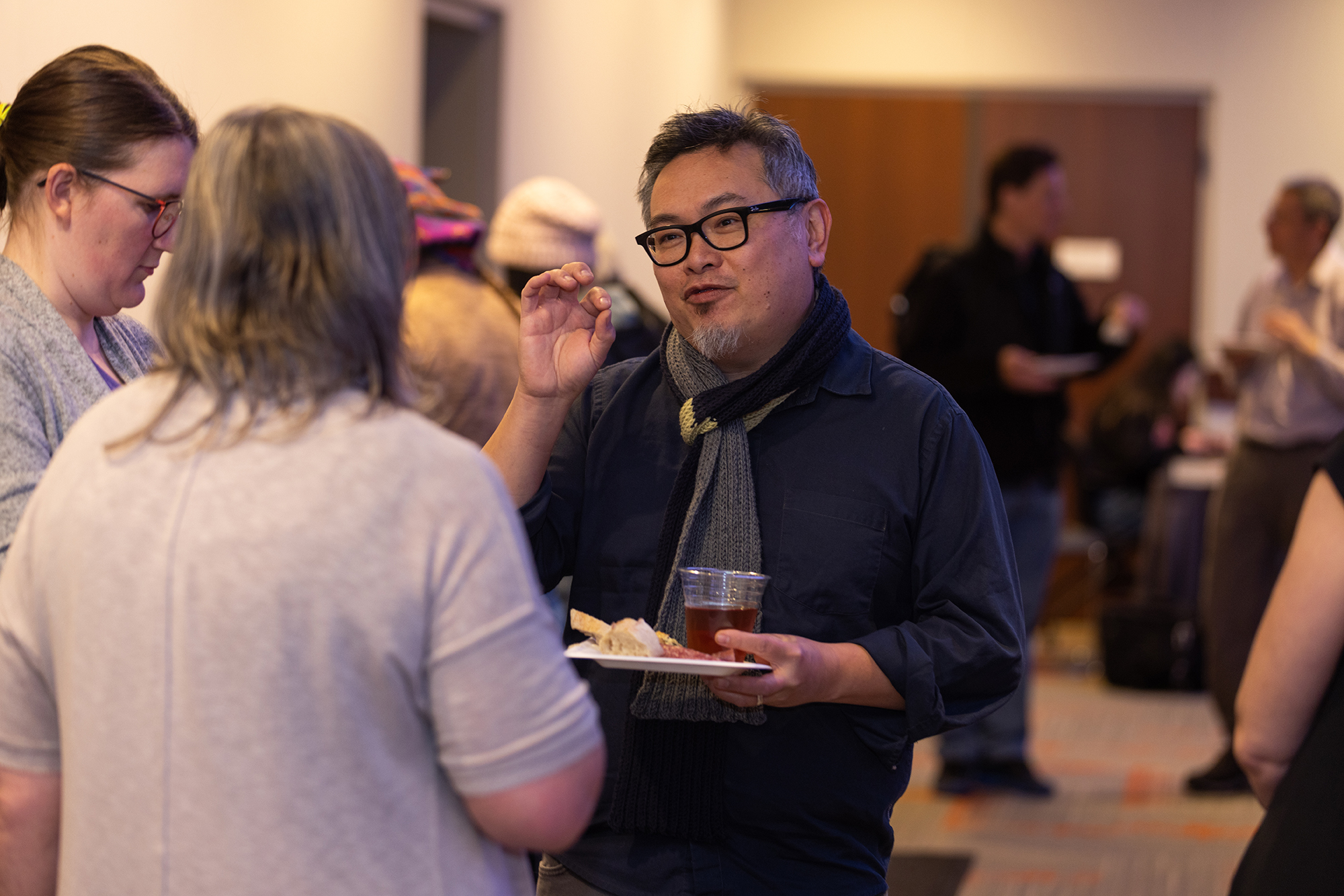
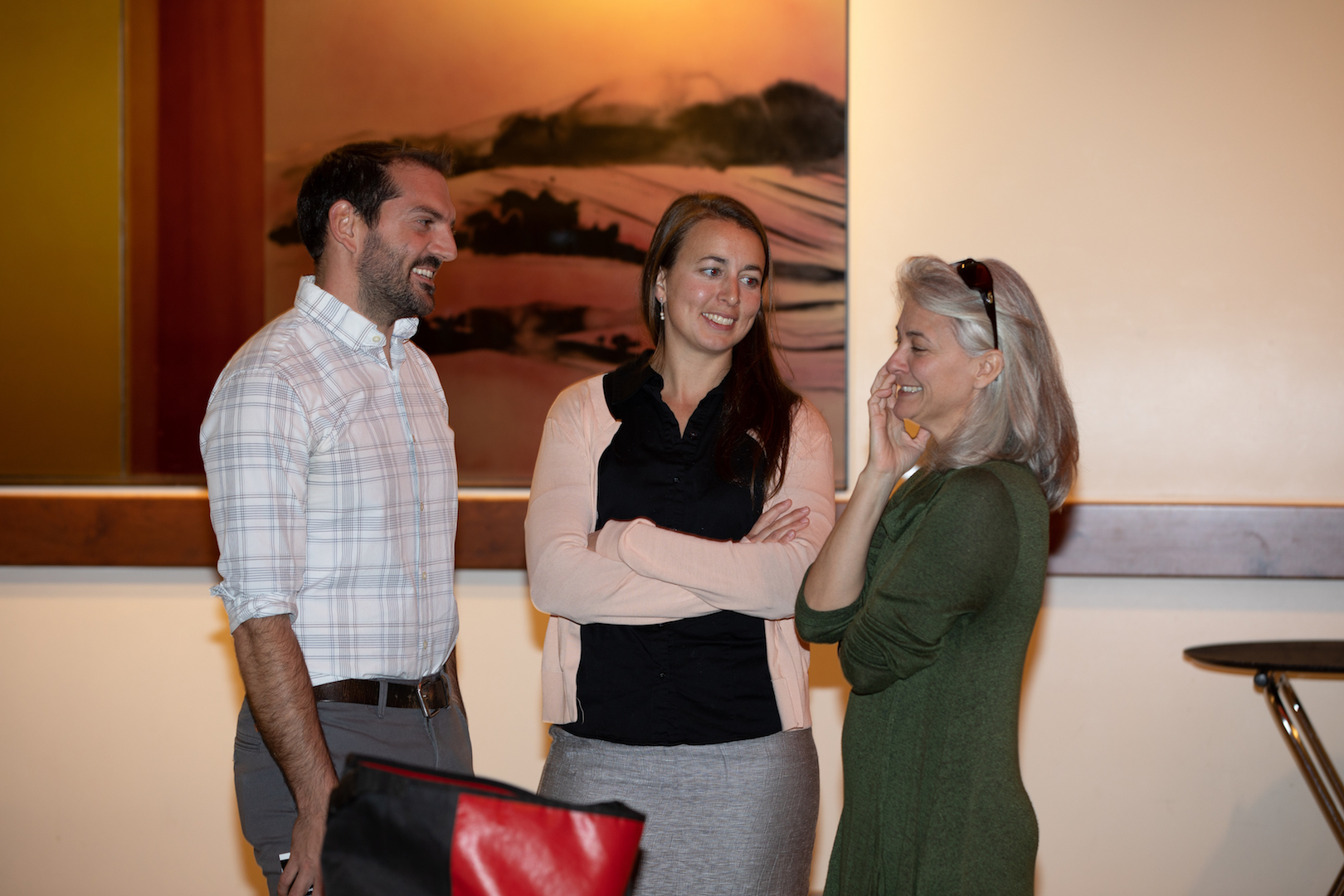
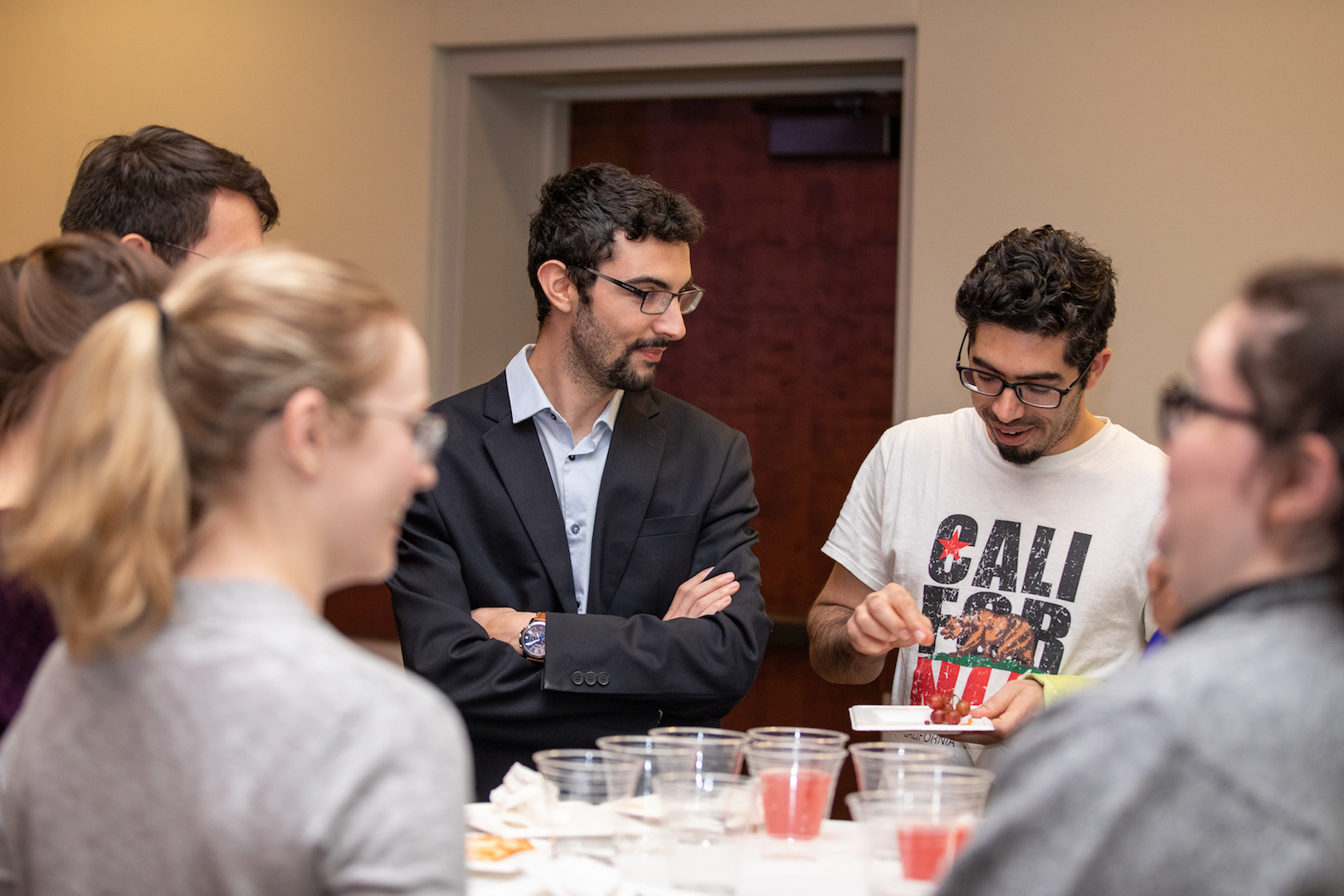
group of people talking to each other at a social event

Health Professions Fair connects students with professional schools and careers in healthcare

At the annual Health Professions Fair, students can connect with professional schools and programs with specializations in the healthcare industry. The Fair is a wonderful opportunity to learn about graduate education and careers in health care. Admissions representatives from more than 60 health professions schools in Oregon and across the country will be on campus to answer your questions. The Health Professions Fair will take place on April 19, 2022 from 10 a.m. to 2 p.m. in the Memorial Union Ballroom.

These schools represent health professions programs in medicine, osteopathy, dentistry, pharmacy, chiropractic medicine, nursing, physical therapy, public health, health management and administration, medical physics, biomedical sciences and several others. More than 500 students attend the Health Professions Fair each year.

Students are welcome to stop by anytime during the health fair, which is free and open to all majors. Volunteers will be available to hand out a list of participating schools and a map of their table locations. Students can visit a school’s table and pick up information materials and speak with admission representatives.

Something for everyone

The health fair is open to all undergraduates and alumni.

First and second year students can explore health profession options, build networks and get tips from admission representatives on undergraduate preparation and co-curricular activities.

Juniors, seniors and alumni will have an opportunity:

  • to learn about specific programs from admissions representatives of various universities
  • collect application materials and obtain financial aid information,
  • get tips on writing a personal statement, the application process, and letters of reference.

Preparing for the fair

Students can interact with representatives of graduate health programs from schools such as Oregon Health and Science University, Idaho College of Osteopathic Medicine, University of Utah College of Pharmacy, Western University of Health Sciences in Pomona, California, Keck Graduate Institute of Claremont, California and many more. See a list of participating schools.

Students are encouraged to prioritize their list of schools to make effective use of their time at the fair. They can brainstorm questions they might ask admissions representatives. Here are a few ideas to get started:

  • What is unique about program X at your university?
  • What types of courses would I take in program X?
  • What experiential components does program X offer (internships, rotations, etc.)?
  • What does your admissions committee look for in an applicant?
  • I read about XYZ on your website. Can you tell me more about that?

According to U.S. News and other surveys, healthcare is one of the fastest growing industries. The Bureau of Labor Statistics predicts that employment growth in this sector will be much quicker than the average for all jobs by 2026.

A laurel leaf icon with a scroll, surrounded by a border of snowflakes.

2021-22 College of Science awards: Celebrating excellence in teaching and advising

By Grace Peterman

On February 22, the College of Science gathered to recognize excellence at the 2021-22 Teaching and Advising Awards. Driven almost exclusively by students’ nominations, these awards are an opportunity for our community to express gratitude and appreciation for each other.

The College celebrates the Teaching and Advising Awards winners below for their deep commitment to engaging with the student experience and application of mentoring and advising expertise to ensure student learning and success within and beyond the classroom. Effective teaching, advising and mentorship are the very heart of the College of Science’s identity as a robust and thriving community of students and scholars.

2022 Teaching, Advising and Mentoring Award Winners

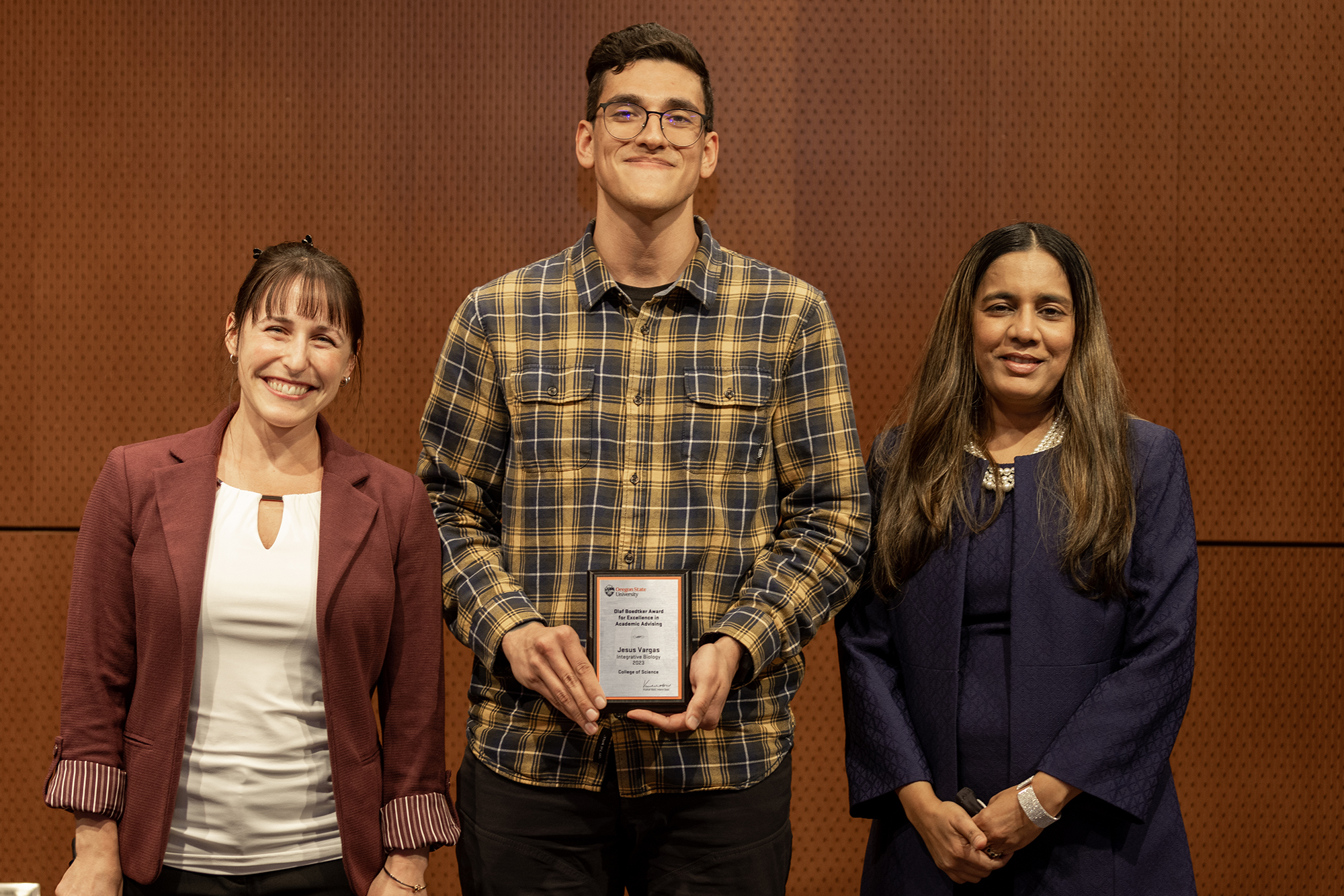
Olaf Boedtker Award for Excellence in Academic Advising

Rachel Palmer, a woman with long hair, smiling.

Integrative Biology Advisor Rachel Palmer

Rachel Palmer, integrative biology advisor, won the Olaf Boedtker Award for Excellence in Undergraduate Advising for her tireless support, efforts and advocacy on behalf of undergraduate students. This award was established in 1988 in honor of Olaf Boedtker, a professor in the Department of Physics who served as Head Advisor in the College from 1973 to 1987. While at Oregon State, he provided exceptional service to students and to the College.

Several students nominated Palmer for this award, praising her dedication and ability to connect and encourage students to achieve their goals.

One student nominator wrote of Palmer: “Right off the bat, Rachel came across as a very happy-go lucky person. She has always been extremely kind and caring at every meeting, treating me as an equal adult and even cracking some jokes that set me at ease. She has always been able to answer every question I had, no matter how specific or vague. I can absolutely tell she wants to help me and set me on the best path possible. Rachel pays mind to each and every student as an individuaPassionate, inspirational, dedicatedl and she really knows her stuff!”

Another student had similar feedback for Palmer: “Rachel has made the beginning of my journey towards my Bachelors of Science in Zoology a wonderful experience even through uncertainty. She really goes above and beyond the call of duty, you would not think an advisor could be such a hero.”

“I admire how easily Rachel has helped me find a class schedule that works so well," wrote another student nominator. "She asks important questions, listens to your expectations and executes. One thing she does well is helps me find classes that work well together as far as content.”

Additional nominees for the Olaf Boedtker Award included:

  • Cody Duncan, advisor for integrative biology
  • Allison Evans, instructor of microbiology
  • Jen Olarra, advisor for biology
  • Kari Van Zee, senior instructor of biochemistry and biophysics

Loyd F. Carter Award for Outstanding and Inspirational Teaching (Undergraduate)

Kyriakos Stylianou, a man with a beard.

Assistant Professor of Chemistry Kyriakos Stylianou

This year’s Loyd Carter Award for Outstanding and Inspirational Undergraduate Teaching in Science goes to Kyriakos Stylianou, assistant professor of chemistry.

Every year since 1946, the Loyd F. Carter Award has been presented to two outstanding College of Science faculty members: one for undergraduate teaching and one for graduate teaching. The purpose of the award is to encourage and recognize effective and inspirational teaching. The final selection is based solely on student nominations and voting.

Stylianou’s students describe him as passionate, inspirational and dedicated. “This man is so incredibly intelligent but also one of the humblest people you will ever meet,” one student said.

“He has to be one of the best professors I have had here at OSU,” said another student nominator. “Walking into CH 233, I was super nervous. I heard it was the hardest of the chemistry series. With everyone feeling the burnout of virtual learning, he made sure to make his class engaging and put everything he had into every class.”

Many students praised the learning atmosphere Stylianou creates in his classes and his attentiveness to student needs. “He cares very much about his students and wants to see them succeed. He devotes a significant amount of time inside and outside of class to give them the opportunities and resources they need to be successful in his class, and beyond. He never tries to beat around the bush, always gives you an honest answer, and just wants to see the best in people. The jokes and wise-cracks in class always help to lighten the mood as well.”

Additional nominees for the Loyd F. Carter undergraduate award included:

  • Daniel Myles, senior instructor of chemistry
  • Devon Quick, senior instructor of integrative biology
  • Marita Barth, instructor of chemistry
  • Malcolm Lowry, assistant professor of microbiology
  • Nathan L. Kirk, senior instructor of integrative biology
  • Paul Cheong, associate professor of chemistry
  • Phil McFadden, associate professor of biochemistry and biophysics
  • Scott Geddes, instructor of chemistry
  • Stacey Vaughn, instructor of mathematics

Loyd F. Carter Award for Outstanding and Inspirational Teaching (Graduate)

James Molyneux, a man with a beard.

Assistant Professor of Statistics James Molyneux

This year’s Loyd F. Carter Award for Outstanding and Inspirational Graduate Teaching in Science goes to James Molyneux, assistant professor of statistics.

Students nominating Molyneux described him as caring, uplifting and welcoming, and praised his ability to adapt during the pandemic. "He consistently encouraged me and my cohort during the transition from COVID to campus, to keep up our spirits in one of the most difficult academic years of our lives," said one student. "Without him, I would not have gathered the courage to continue moving forward. He is brilliant in the classroom as a professor and a loyal mentor and advocate for our success."

Another student said the following of Molyneux: "He excels at making statistics, a subject which is generally taught dryly and without much passion, relevant to grad students' research and our daily life. He uses timely examples and highlights the nuance of stats, in a way that makes it fascinating instead of frustrating. He was always available for extra help or assistance outside of class, and always seemed willing to discuss other topics than just the class material! He is supportive and compassionate with graduate students, and was the best stats teacher I've had so far at OSU! He also made sure the class content was accessible to students in multiple ways by recording both Zoom and in-person classes, and making the lecture notes easily available. His high-energy and engaging teaching style was apparent in both the in-person and online class I took with him, which I have found to be a rare occurrence in a remote setting!"

Thomas Sharpton, associate professor of microbiology, was also nominated for the Loyd F. Carter graduate award.

Frederick H. Horne Award for Sustained Excellence in Teaching Science

Liz Gire, a woman smiling.

Associate Professor of Physics Elizabeth Gire.

This year’s Frederick H. Horne Award for Sustained Excellence in Teaching Science goes to Liz Gire, associate professor of physics.

This award honors Fred Horne, who served as Dean of Science at Oregon State from from 1986 to 1999. Fred passed away in 2021, a renowned researcher, scholar, teacher and leader.

Fred exemplified the values of our college, embracing a deep commitment to diversity, equity and inclusion in science. He was instrumental in establishing two programs that encourage students of color to pursue and continue their education in science, math and engineering: Science and Math Investigative Learning Experience (SMILE) and the American Indian Science and Engineering Society (AISES).

The purpose of this award is to recognize sustained excellence in teaching science by honoring a faculty member in the College of Science who has repeatedly demonstrated exceptional instructional qualities and has had a significant impact on students over a period of not less than five years.

Liz Gire has earned this award through her tireless dedication to support the holistic student experience. A plethora of students and colleagues wrote at length in support of Gire's nomination. One student nominator said, "Her level of dedication to the genuine support and inclusion of the students in her courses is something I’ve never seen in an educator before. She backs that up with her skill and experience in education and communication that makes difficult content still accessible and enjoyable to learn. She takes every opportunity to build others up, whether that be her students, her teaching team, her research partners or the many people in our department who aren’t any of those things, but still know they can come to her because she is the type of person who will help however and whenever she can."

Another student nominator said, "Liz is a wonderful professor because she is a master at reading the atmosphere of a classroom. Sure, part of this is an intuition that comes from experience, but more importantly, she takes time to ask questions. Each student is expected to grab a small white board and marker at the beginning class. Later when Liz looks out and says, 'write down something that you know about angular momentum' she can measure students’ level of confusion and use student responses to guide the classroom discussion. This makes everyone much more willing to participate in class because they know that she honestly cares for their well-being and success."

Congratulations to all the winners and all the nominees!

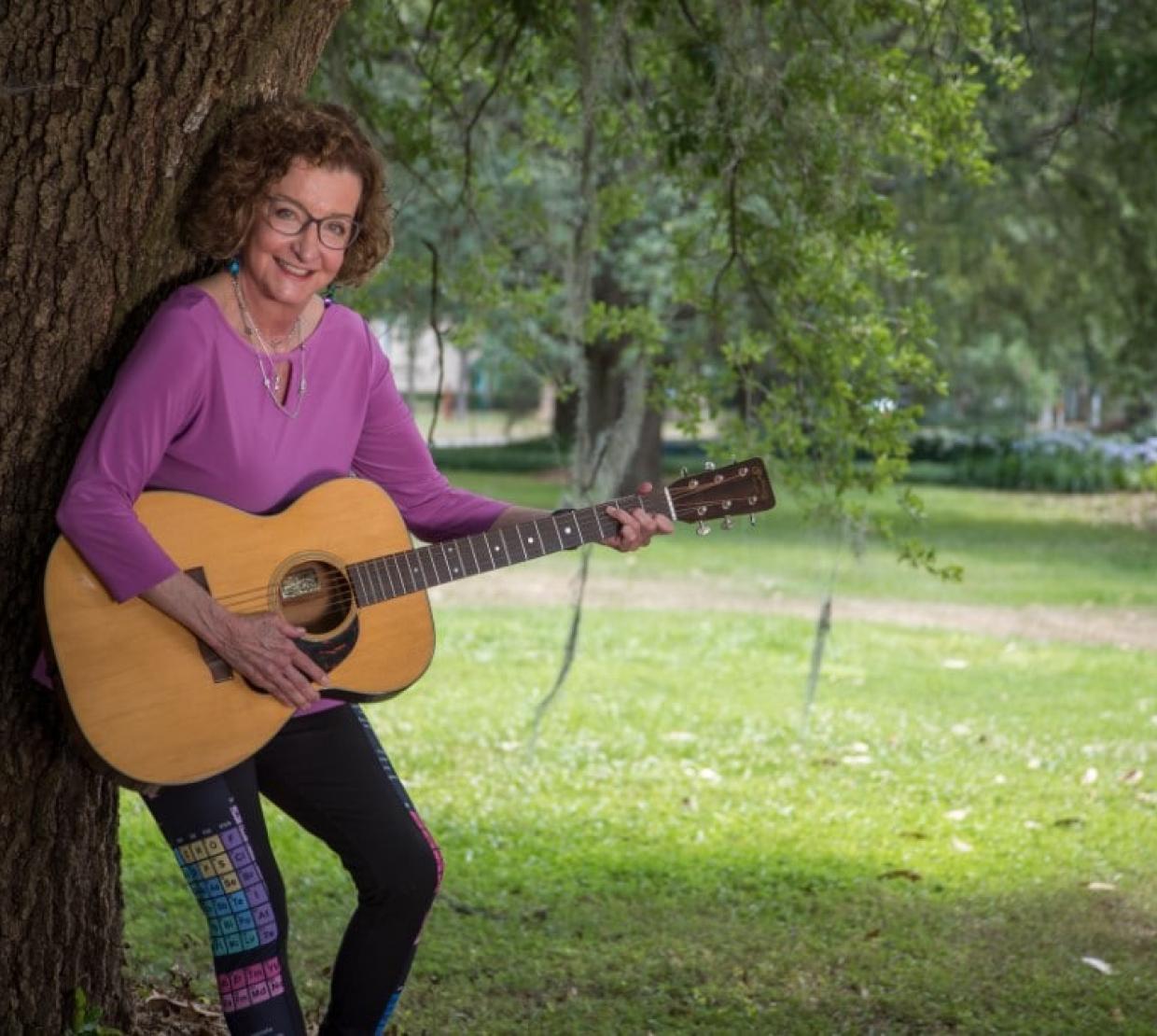
A woman in a purple shirt leaning against a tree and holding a guitar

Change Makers in Science - Celebrating International Women’s Day

By Vrushali Bokil

March 8, 2022, is International Women’s Day. The College of Science is celebrating the day with a Change Makers in Science talk by Laura Greene, Chief Scientist at the National High Magnetic Field Laboratory and physics professor at Florida State University. Her talk entitled, “Journeys from Music in Cleveland to Quantum Materials Worldwide,” will discuss her journey in physics leading to her position at MagLab and the exciting field of quantum mechanics. RSVP for this here.

Following the keynote speech, there will be a panel discussion on negotiation skills aimed at beginning scientists featuring accomplished and notable female faculty members in the College of Science. The panel members will discuss specific tools and approaches that increase one's effectiveness as a negotiator through the lens of gender, with an eye towards research on gender issues. Panelists joining Professor Greene include:

The panel will be moderated by Vrushali Bokil, associate dean of research and graduate studies for the College of Science.

The event will take place in Oregon State University’s Memorial Union Ballroom and online via Zoom. It is open to the wider Oregon State University and Corvallis community. RSVP now.

Laura H. Greene is a physicist and expert in quantum mechanics known for her discoveries and research in unconventional superconducting materials and high magnetic fields. A member of the U.S. National Academy of Sciences, Greene is the former president of the American Physical Society (2017), vice president of the Executive Council of the International Union of Pure and Applied Physics, and a member of the U.S. Department of State-supported COACH team, promoting success and impact of women scientists, particularly in developing countries.

Abstract: As a young folk-rock music girl in the east side of Cleveland, I had no idea I could consider a career in science. I don’t know if I was hard-wired for it at birth or “bitten by the science bug” at an early age, but it was just what I needed to do. I always feel lucky and honored to be a scientist; but there sure have been real challenges! I will discuss some of my journey in physics, always fueled by passion for this “seductive and consuming” field. Then, after a short overview of the MagLab, I hope to get across how exciting the field of quantum materials is – and how much we have to learn!

Agenda

Memorial Union Ballroom and virtually via Zoom
1:30 - 2 p.m. - Keynote speech: Dr. Laura Greene
2 - 2:15 p.m. - Q&A session
2:15 - 3 p.m. - Negotiation skills panel

A nighttime sky with an award sign overlaid on top

2020-21 College of Science awards: Celebrating excellence in teaching and advising

By Cari Longman

On April 22, the College of Science gathered virtually to recognize academic, administrative and teaching excellence at the 2020-21 Combined Awards Ceremony – a merge of our annual Faculty and Staff Awards and Teaching and Advising Awards events.

The first half of the ceremony celebrated excellence in research and administration, and the second half the ceremony focused on outstanding teaching, advising and mentoring,

The College congratulates the Teaching and Advising Awards winners below who exemplify deep commitment, skill and effectiveness in mentoring and advising to ensure student learning and success within and beyond the classroom. Effective teaching, advising and mentorship are the very heart of the College of Science’s identity as a robust and thriving community of students and scholars.

Congratulations to all the nominees and especially to the award winners.

2021 Teaching, Advising and Mentoring Award Winners

Olaf Boedtker Award for Excellence in Academic Advising

Tiffany Bolman

BioHealth Sciences Advisor Tiffany Bolman

Tiffany Bolman, biohealth sciences advisor, won the Olaf Boedtker Award for her tireless support, efforts and advocacy on behalf of undergraduate students. Olaf Boedtker was a former professor in the Department of Physics for 23 years and served as head advisor in the College for 14 years from 1973 to 1987. This award recognizes exceptional and inspirational undergraduate advising.

More than ten students nominated Bolman for this award, praising her dedication and ability to connect and encourage students to achieve their goals.

One student nominator wrote of Bolman: “During one of the hardest years of my life, I met my new advisor, Tiffany. Changing your advisor in the middle of your junior year can be stressful. The first time I met her, my meeting lasted almost two hours because we spent time getting to know each other and talking about life. The way that Tiffany has been here to support me is incredible – as an advisor, a mentor, a friend and a support system. She's helped me in countless ways this past year, not just for school and for my future, but personally. I know I would not be where I am right now without her.”

“Tiffany has guided me in my fast-paced college experience and is always courteous when I talk to her,” wrote another biohealth science student nominator. “She has provided ample opportunities for me to get involved in health care and shadowing, even during Covid-19, in order for me to be a competitive applicant for medical school. I feel as though Tiffany wants the best for all of her students, including myself, and her heartwarming encouragement never lets me down.”

Another student had similar praises for Bolman. “I transferred to Oregon State and [Tiffany Bolman] was the first faculty member I had any interactions with. She seems to truly care about the future of the students she is advising and is overall an amazing person to talk to.”

Additional nominees for the Olaf Boedtker Award included

  • Allison Evans, instructor of microbiology
  • Kari Van Zee, senior instructor for biochemistry and biophysics
  • Maureen Leong-Kee, advisor for integrative biology
  • Vince Remcho, professor of chemistry

Loyd F. Carter Award for Outstanding and Inspirational Teaching (Undergraduate)

Corinne Manogue

Professor of physics Corinne Manogue

Professor of physics Corinne Manogue won this year’s Loyd F. Carter Award for Outstanding and Inspirational Teaching in Science. Manogue teaches the nationally-recognized Paradigm in Physics courses, which are a restructuring of the traditional upper-division curriculum for physics students to a more modern, flexible and inclusive model for learning physics.

Student nominees cited Manogue’s extra efforts to ensure her students understand content, her ability to teach complex topics, and her compassion with her students in an especially tiring year.

“She is an outstanding teacher who really works to understand how her students are approaching the material and provides numerous ways for the students to actively engage with the content,” wrote one student nominator. “She is very aware that each student has a different learning style and that content needs to be restated multiple ways and in multiple forms and that each version will resonate differently with each student.”

Other student nominators had similar praises for Manogue. "She is truly fantastic at explaining complex topics in ways that relate them to us students, and it was often that many would exclaim how well they understood ideas and techniques significantly better after having an explanation from her in class," said one nominator, and another added: "Corinne convinced me that there weren't such things as 'STEM people' and that success in STEM was available to me and other students who like me had been dissuaded by a perception of being inherently 'not smart enough' to become physicists."

Manogue has received recognition at multiple levels – Oregon State University, the state of Oregon and nationally – for her teaching excellence and has previously won a number of awards recognizing her teaching excellence, including the College of Science Frederick H. Horne Award for Sustained Excellence in Teaching in 2000, an American Association of Physics Teachers Award for Excellence in Undergraduate Physics Teaching in 2008, and the 2016 Oregon Academy of Science Outstanding Educator in Science and Mathematics award.

Additional nominees for the Loyd F. Carter undergraduate award included

  • Daniel Myles, senior instructor of chemistry
  • Daniel Rockwell, senior instructor of mathematics
  • Devon Quick, senior instructor of integrative biology
  • Kimberly Halsey, associate professor of microbiology
  • Linsday Biga, senior instructor of integrative biology
  • KC Walsh, senior instructor of physics

Loyd F. Carter Award for Outstanding and Inspirational Teaching (Graduate)

Charlotte Wickham with a black background

Senior Instructor of statistics Charlotte Wickham

Senior Instructor of statistics Charlotte Whickam received the Loyd Carter award for her inspirational and superb mentorship and teaching of graduate students.

“Charlotte is an extremely talented statistician and teacher. You can tell she is extremely passionate about the things she teaches and is invested in her students learning. She is also very approachable, despite teaching an online course,” wrote one graduate student nominator. “The material I have learned in her class has been useful and applicable to all of my work as a statistician,” they added.

“Dr. Wickham really took the time and got involved with my term project topic. She understood my skill level and was really great on providing feedback,” wrote another nominator.

A specialist in R training, Wickham teaches courses in data visualization and the foundations of data analytics. In 2020 Wickham received the Oregon State Ecampus Excellence in Online Teaching and Student Engagement Award. Wickham has developed multiple Ecampus courses built around students and their learning, leveraging open source materials and engaging texts from the Valley Library at Oregon State University.

Frederick H. Horne Award for Sustained Excellence in Teaching Science

Senior Instructor for biochemistry and biophysics Kari Van Zee

Senior Instructor for biochemistry and biophysics Kari Van Zee

Senior Instructor for biochemistry and biophysics Kari Van Zee won the Frederick H. Horne Award for her exceptional qualities as a teacher and mentor. This award is named after Fred Horne, OSU Professor Emeritus of Chemistry and the former College of Science Dean for 13 years, from 1986 to 1999.

Kendra Jackson (’20, biochemistry and biophysics), praised Van Zee in her nomination letter, writing, “Kari made a great impact on my education at OSU and has empowered me to be an independent learner.”

Jackson interacted with Van Zee as a student, mentee, teaching assistant and advisee. She added in her letter that “Kari is compassionate and deeply cares about the well-being of her students.” This quality was especially apparent during the 2020-2021 school year with remote learning. “Kari constantly checked up on struggling students in each section, offered solutions for students who could not access technology or adequate study spaces, and adapted the class based on student feedback.”

Tanushri Kumar, a 2020 biochemistry graduate and Ph.D. student at the University of Washington, also wrote a nomination letter. She praised Van Zee’s personal connection with her students: “Kari is a fantastic teacher, a scholar, and a devoted mentor to all her students. It is truly rare to find a teacher as talented and as compassionate as she is. Without her guidance, I would have never discovered my own passion for research, and without her support I would not have had the courage to apply for graduate school. The impact she has had on my life has been huge, and I am incredibly grateful for having her as a mentor and instructor.”

College of Science Whiteley Faculty Scholar for Teaching Excellence Award

Devon Quick

Senior Instructor of integrative biology Devon Quick

Senior Instructor Devon Quick in the Department of Integrative Biology received this award which recognizes excellent teaching and learning innovation. This award will provide Quick with an annual stipend of $12,500 for three years.

Widely commended for her teaching of biology, human anatomy and physiology courses, Quick has received awards for her exceptional teaching in the past. In 2020, she received the Loyd F. Carter Award, and in 2016 she received university-wide recognition by receiving the OSU Faculty Teaching Excellence Award.

Quick is a co-founder of the Learning Assistants Program, which puts high-achieving undergraduate assistants in large enrollment, often first-and second-year STEM classrooms to facilitate and strengthen undergraduate learning. She also collaborated with fellow biology instructor Lindsay Biga to adapt an open source biology textbook that is freely accessible to OSU students and learners worldwide.

OSU Faculty Scholars for Teaching Excellence Award

KC Walsh

Physics instructor KC Walsh

Physics instructor KC Walsh won the Faculty Scholars for Teaching Excellence Award. This award for a three-year faculty scholar position supports excellence and innovation in teaching and carries an annual stipend of $12,500.

Walsh helped to transform OSU’s introductory physics classes by reversing the traditional learning environment. In flipped classrooms, students receive course content online outside of the classroom, freeing up classroom time for active learning. He then pioneered the flipped classroom in the online environment long before the pandemic forced all instructors and faculty to adjust to all-online teaching. The results of the flipped classroom model have been dramatic: the withdraw rate from introductory physics class dropped from 36 percent to only 12 percent with a marked increase in course satisfaction.

Walsh previously received the OSU Faculty Teaching Excellence Award for his significant and meritorious achievement in teaching and scholarship that enhances effective instruction. And in 2018, the Department of Physics received the American Physics Society (APS) Award for Improving Undergraduate Physics Education, due in part to Walsh’s pioneering flipped classrooms and his early use of online resources to increase student success.

The OSU and Whiteley Faculty Scholars for Teaching Excellence awards are made possible thanks to the generous philanthropic support of our alumni and friends and matching funds invested by the Provost’s Office.

Read more about the winners of the 2020-21 graduate and undergraduate research and administration awards.

University Day 2020

Scientists recognized for research, service and mentoring excellence at 2020 University Day

By Srila Nayak

OSU University Day award ceremony in 2019.

Five faculty and scholars from the College of Science are among this year’s award recipients at University Day, Oregon State University's most prestigious annual awards for research mentoring, outstanding scholarship, teamwork, teaching and service. Additionally, a team of dedicated OSU scientists were honored for their work with TRACE-COVID-19, a large scale public health project in Oregon. The awardees were recognized for their distinguished accomplishments at OSU’s virtual 2020 University Day celebration on Tuesday, September 15.

“I am very proud to see the outstanding achievements of our faculty and scientists recognized at the university level,” said Roy Haggerty, dean of the College of Science. “I applaud their commitment to undergraduate mentoring, research, teaching, collaboration and service within their programs and to a broader community at the university and beyond.”

Congratulations to these faculty for their dedication, talent and exemplary achievements.

Ben Dalziel

Ben Dalziel, a population biologist, is a project co-leader of TRACE-COVID-19

Leading a pioneering public health project

The TRACE-COVID-19 team is being honored with a Beaver Champion Award, the prestigious OSU President’s Award, for work on their community based health project that tests a representative sample of community members around the state to gather timely information essential to slow the spread and minimize the impact of the disease.

The award recognizes an individual or individuals who continually demonstrate outstanding effort and achievement of excellence, extra effort beyond that requested, and performance of the highest quality.

The TRACE-COVID-19 team is jointly headed by Ben Dalziel, an assistant professor of integrative biology and mathematics, and Jeffrey Bethel, a professor in the College of Public Health and Human Sciences. The Beaver Champion Award went to the team of 10 scientists and more than 300 volunteers on the TRACE-COVID-19 project. In addition to Dalziel, principal researchers on the TRACE-COVID-19 team from the College of Science include Jane Lubchenco, Distinguished Professor of Marine Biology, Roy Haggerty, Dean of the College of Science, and Katherine McLaughlin, assistant professor of statistics.

TRACE-COVID-19 findings have helped Benton, Deschutes, Umatilla and Lincoln counties and Oregon public health leaders understand how prevalent the virus is and how fast it is spreading in the community, identify infection zones, evaluate the effectiveness of current measures and guide timely further action to control the spread of the disease.

Learn more about TRACE-COVID-19: trace.oregonstate.edu

Francis Chan

Marine ecologist Francis Chan received the D. Curtis Mumford Faculty Service Award.

Spearheading research on climatic effects on coastal ecosystems

Francis Chan, an associate professor in The Department of Integrative Biology, has received the D. Curtis Mumford Faculty Service Award. The award recognizes individuals for exceptional, ongoing, dedicated and unselfish concern for and service to the faculty and to OSU.

Chan has conducted path-breaking research on the effects of climate on coastal ecosystems throughout his career. His service is critical for a long-term success of the Partnership for Interdisciplinary Studies in Coastal Oceans (PISCO), a long-term and large-scale, interdisciplinary consortium of 13 principal investigators across four universities along the US west coast. Additionally, he has been a principal scientist on several other projects dedicated to coastal regions and the impact of ocean acidification.

These projects could not have succeeded without Chan’s intellectual contributions and scientific skills. His expertise was critical in decisions by NSF, NOAA, and private foundations to provide support for research on ocean health. He serves on important advisory committees including co-chairing the California Ocean Protection Council Ocean Acidification and Hypoxia Science Task Force. He also serves as co- chair of the OSU-wide Marine Studies Initiative Research Development Committee.

Kayla Jara

Kayla Jara, doctoral candidate in biochemistry and biophysics, received the Herbert Frolander Graduate Teaching Assistant Award.

A passion for teaching

Kayla Jara, a Ph.D. candidate in the Department of Biochemistry and Biophysics received the Herbert F. Frolander Graduate Teaching Assistant Award. The award recognizes graduate students who have excelled in their capacity as teaching assistants.

A graduate teaching assistant (GTA) since Fall 2017, Jara was promoted to head TA of the largest class in biochemistry and biophysics (BB) and the most advanced BB lab. Jara receives both outstanding scores and glowing comments from students on her teaching evaluations. Faculty mentors have enthusiastically commended her accessibility, seriousness, and dedication to teaching and student success. Jara combines innovative teaching with exquisite experimental research skills. She also plays a leading role in training new students in her advisor Elisar Barbar’s lab and coordinates the OSU biochemistry/biophysics summer camp for high school and middle school students from around the region.

Mentoring excellence

Sarah Gravem, postdoctoral scholar in the Department of Integrative Biology, has been awarded The Excellence in Undergraduate Research Mentoring by a Graduate Student or Post-Doc Award. The award recognizes scholars with direct and significant involvement with undergraduate student researchers, a demonstrable commitment to the research mentorship of undergraduate students, and a record of effectiveness and impact with respect to undergraduate student research and success.

Sarah Gravem

Sarah Gravem, a postdoctoral scholar in biology, received the Excellence in Undergraduate Mentoring award.

Gravem is a postdoctoral fellow studying the ecological consequences of sea star wasting disease for intertidal communities in the Jane Lubchenco-Bruce Menge research lab. Her appointment to leading the sea star wasting task force was based on her excellent research record and academic credentials, but she has also shown incredible talent in recruiting and advising undergraduate researchers to work on this and other lab projects.

While at OSU she has advised or co-advised 46 undergraduates, 29 of whom were female and 10 were persons of color. So far, two of these students have entered Ph.D. programs, and seven have joined M.S. programs. Particularly noteworthy is her success at recruiting and advising students for the SURE and URSA undergraduate scholarship programs. Co-workers say the source of this success in mentorship is her incredible excitement and drive to succeed in science and pedagogy.

Exceptional scientists

The Postdoctoral Excellence Awards are granted to two postdoctoral scholars, fellows or research associates for their exceptional contributions to their research field, OSU and the greater postdoctoral community.

James Fox, a postdoctoral scholar in the Department of Microbiology, received the award for his significant research contributions, his work with OSU’s postdoctoral association and his creative outreach and service activities. James, who works in Associate Professor Kimberly Halsey’s lab, has proven to be a valuable scientist on a collaborative NASA project with 12 institutions to understand carbon production and its fate in the global ocean. His measurement of rates of photosynthesis in the North Pacific Ocean using a variety of methods have resulted in significant publications and ongoing research endeavors.

James Fox

James Fox, a postdoctoral scholar in the Department of Microbiology, received the Postdoctoral Excellence Award.

James’s computational model of the ocean ecosystem gives a broad picture of ocean photosynthesis and improves our understanding of how carbon is transferred into the deep ocean as well as the ocean biogeochemical cycles.

Manuel Garcia-Jaramillo, a postdoctoral scholar in the Department of Chemistry, received the Postdoctoral Excellence Award for his outstanding research contributions in OSU’s Mass Spectrometry Center and the Molecular Nutrition and Diabetes Research Lab. Manuel has a USDA NIFA two-year postdoctoral research fellowship. During his relatively short time as a postdoctoral scholar, Manuel has filed an invention disclosure as a lead inventor for a clinical omics project on oxylipins, published two first author publications and has established himself as an excellent teacher and mentor.

Manuel Garcia-Jaramillo

Manuel Garcia-Jaramillo, a postdoctoral scholar in the Department of Chemistry, received the Postdoctoral Excellence Award.

Manuel is a member of multiple professional societies allied to his field of interests, and also engages actively in service. He was vice president of the OSU Postdoctoral Association in 2019.

Light bulb and laurel icon labeled "2019" above light texture

Fall awards: Celebrating excellence in research and administration

By Srila Nayak

2019 Fall Faculty and Staff Awards

The College of Science celebrated research and administrative excellence at its 2019 Fall Faculty and Staff Awards ceremony and reception on November 21.

Dean Roy Haggerty delivered welcome remarks. This year, the College recognized exceptional achievement in advancing inclusive excellence, distinguished service, as well as highest quality performance beyond the call of duty. As a result, there were three new award categories: Inclusive Excellence, Distinguished Service, and Champion of Science awards.

Hearty congratulations to these award-winning faculty and staff who were recognized for their outstanding achievements:

Milton Harris Award in Basic Research

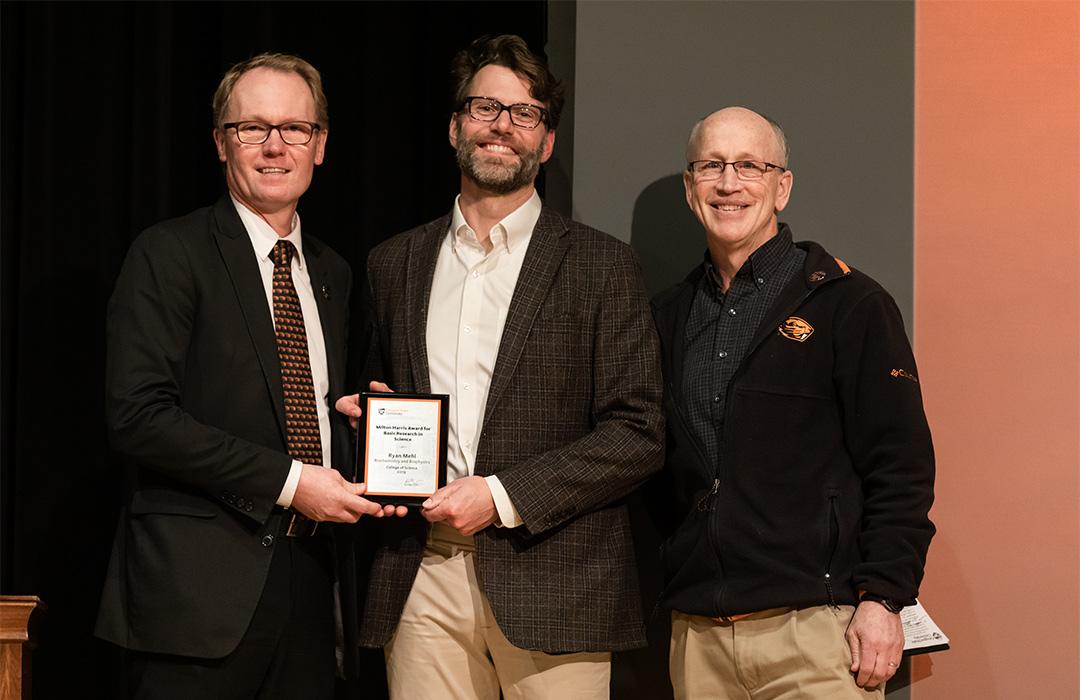
Ryan Mehl receiving award on stage with colleagues

Ryan Mehl with Roy Haggerty (left) and Andrew Karplus

Ryan Mehl, professor of biochemistry and biophysics, received the Milton Harris Award in Basic Research for his impactful, internationally recognized basic research in the area of genetic code expansion (GCE). The latter involves engineered protein synthesis machinery to incorporate novel chemical groups at pre-specified places. Mehl has several patents and 66 research articles to his credit, quite a few of which have been cited more than 4000 times.

Among his many distinguished research discoveries are groundbreaking studies providing the first evidences how the protein nitro-tyrosine contributes to pathology in Lou Gehrig’s disease and in artherosclerosis. Mehl has been awarded several NIH and NSF grants to support his research. At OSU since 2011, Mehl has established and leads the Unnatural Protein Facility, a unique, first of its kind in the world facility that promotes the use of GCE by non-expert researchers.

“This work has also established OSU as an international leader in this arena, and NIH has invited us to submit a proposal to establish an NIH Center focused on GCE technology development,” said Andrew Karplus, head of the Department of Biochemistry and Biophysics.

F.A. Gilfillan Award

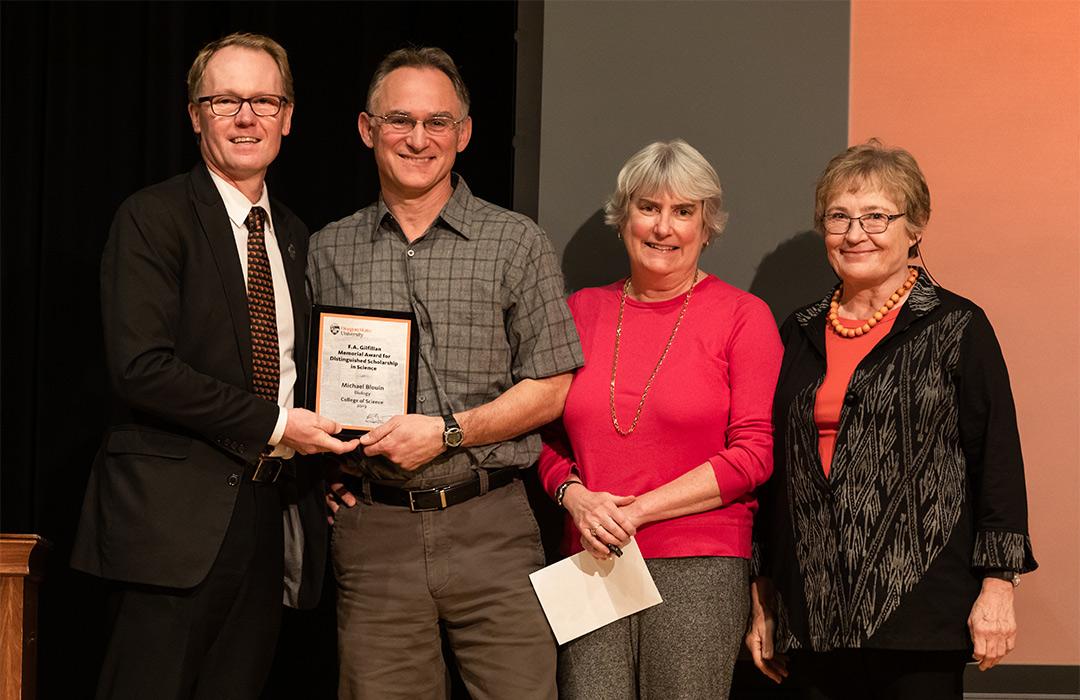
Michael Blouin receiving award from colleagues on stage

Michael Blouin with Roy Haggerty and Virginia Weis

Professor of integrative Biology Michael Blouin was honored with the F.A. Gilfillan Award for Distinguished Scholarship in Science. The Gilfillan award honors a faculty member in the College whose scholarship and scientific accomplishments have extended over a substantial period of time.

Blouin’s contributions to the field of evolutionary and population genetics have been impressive. In his 24 years at OSU, Mike has developed a remarkably broad, distributed and well- funded research program that has spanned evolutionary genetics and parasite molecular ecology and evolution.

“We believe that Mike is performing transformational research in critical areas of biology. His scholarship has raised the profile of the College and the University,” said Virginia Weis, head of the Department of Integrative Biology.

In his early years at OSU, he essentially started the field of endo-parasite molecular ecology. Endoparasites are remarkably difficult to study given that they live within other organisms and are often microscopic in size. Blouin’s group used molecular markers to find these parasites in animal populations, opening up a whole new field of host-parasite populations.

In recent years, Blouin has made distinguished contributions in two new fields: salmonid conservation genetics and schistosome molecular biology. Schistosomiasis is a human infectious disease that is cause by a schistosome flatworm. It affects 200 million people worldwide and is under-studied, in large part because the affected populations live in developing nations that often lack clean water and resources to combat the disease.

In the case of salmonids, he has revealed the fundamental importance of life history traits in the success/limitations of hatchery fish in the Pacific Northwest.

Dean’s Early Career Impact Award

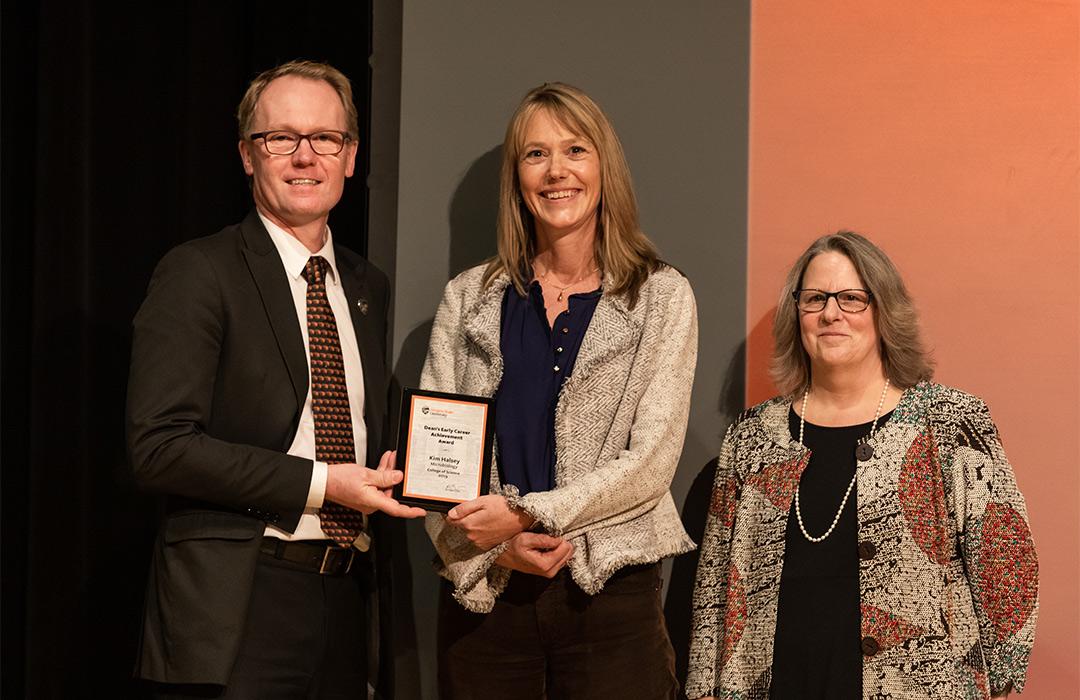
Kim Halsey receiving award from college on stage

Kim Halsey with Roy Haggerty and Jerri Bartholomew

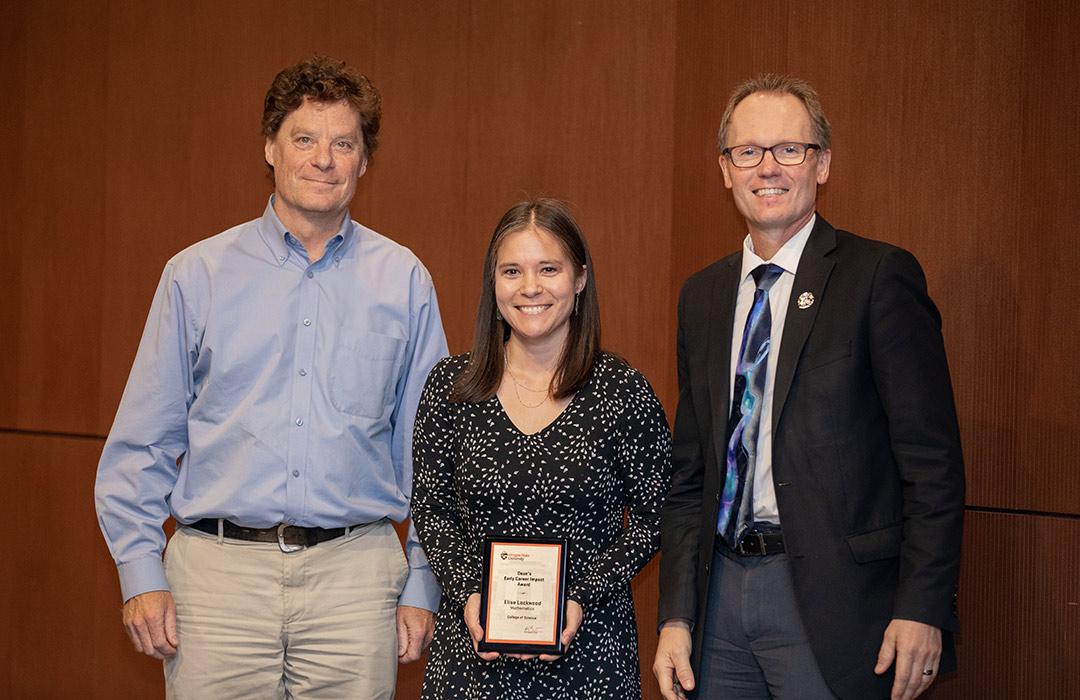
Kim Halsey, associate professor of microbiology, and Rebecca Terry, associate professor of integrative biology, received the Dean’s Early Career Impact Award. At OSU since 2011, Halsey began her career as a microbial physiologist and biochemist studying the enzyme butane monooxygenase, and its role in the bioremediation of the environmental pollutant trichloroethylene. Her precise research on this process, which explored the role of protein structure in determining the substrate range of the enzyme, has been cited over 100 times.

“Her groundbreaking research and scholarship is opening new areas of scientific enquiry and has earned her the respect of the international scientific community,” said Jerri Bartholomew, head of the Department of Microbiology.

In addition to other areas, Halsey also studies the ocean carbon cycle, with a focus on photosynthetic energy producing phytoplankton, particularly diatoms, which alone account for over 25% of global primary production, and are a key to forecasting climate change.

Halsey became internationally respected for defining the fates of photosynthetic energy with unprecedented precision, in multiple phytoplankton taxa, and fitting this data into a theory of cell strategies for distributing photosynthetic energy.

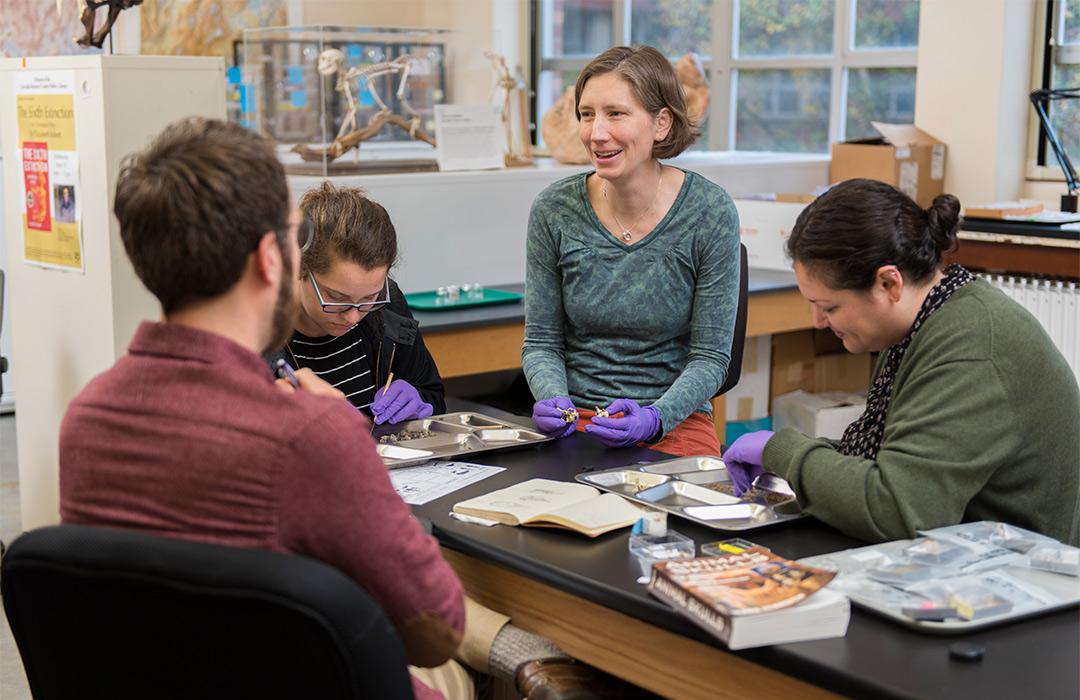
Rebecca Terry talking with students in lab

Rebecca Terry with students

Rebecca Terry’s interdisciplinary research involving paleontology, ecology, and geography significantly broadens the research landscape at the College. The discipline of paleoecology — the ecology of fossil animals and plants — is constantly gaining importance as it reveals important insights into the past that can inform the future of our planet during the Anthropocene.

“Dr. Terry is highly respected by her peers for pushing the boundaries of what information can be deduced from fossilized remains of mammals. Dr. Terry develops innovative approaches and uses them to reveal important insights into the past,” said Virginia Weis, head of the Department of Integrative Biology.

Many of her publications appear in high impact journals, such a Nature and PNAS. On top of that, Terry’s work has received broad media attention; For example, the 2016 Nature paper that she co-authored was highlighted in 16 news outlets including the Washington Post, Science Daily, and Nature News and Views. It also won a 2016 Science Achievement Award from the National Museum of Natural History.

Inclusive Excellence Award

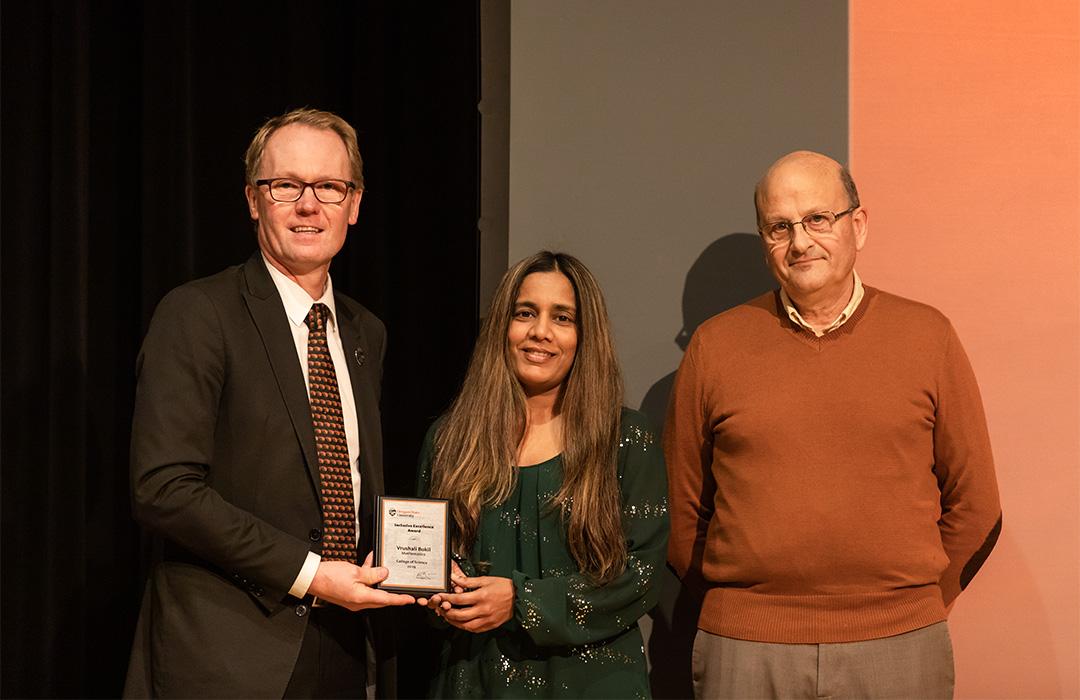
Vrushali Bokil receiving award from colleagues on stage

Vrushali Bokil with Roy Haggerty and Enrique Thomann

Professor of Mathematics Vrushali Bokil and the physics student club Physicists for Inclusion in Science (PhIS) received the College of Science Inclusive Excellence Award. Bokil’s leadership in advancing equity, justice and inclusion (EJI) at OSU has had a substantial impact on the Department of Mathematics and the College.

Bokil participated in the 60-hour immersive Oregon State Advance Seminar, which takes participants deep into the literature on difference, power and discrimination both theoretically and practically with STEM disciplines. She has developed and embedded ADVANCE materials into the professional development seminar for mathematics graduate students as well as for students across the College.

“Professor Bokil brings a deep understanding of the value of diversity for faculty and student success, and has put into play important structural changes that can ensure sustainable impact,” said her colleagues Edward Waymire, Enrique Thomann and Rebecca Warren.

Bokil has also supported a workshop on “Sexual Harassment in the Mathematical Sciences: Moving Towards Action” for the Association of Women in Mathematics and participated in recruiting/assisting students from underrepresented groups in pursuit of a Ph.D. in mathematics.

female students receiving award from science faculty on stage

PhIS members with Roy Haggerty and Henri Jansen

Physicists for Inclusion in Science (“PhIS”, pronounced “fizz”) grew out the Women in Physics group. The group supports members of underrepresented groups as they pursue their careers. The 2019/20 officers are Acacia Patterson (President), Gina Mayonado (Vice President), Abbie Glickman (Treasurer), Mattia Carbonaro (Secretary).

PhIS members walk the walk and have gone far beyond expectations of a standard student group. They have run several Diversity & Inclusion in Physics Instruction workshops for the first-year graduate students in physics, at the National Meeting of the AAPT, and at the annual meeting of the Pacific Northwest Association for College Physics. PhIS was an important co-organizer of the CUWiP conference in Winter 2016. This was a big national event with over 200 participants. The OSU Conference for Undergraduate Women in Physics (CUWiP) was one of nine conferences held across the U.S.

“I am sure that several students stayed and received a degree from OSU mainly because of the activities of this group.”

“PhIS gives the physics department a clearly visible face in the area of diversity, even though our diversity numbers are small,” said Henri Jansen, professor of physics and associate dean for academic and student affairs.

College of Science Distinguished Service Award

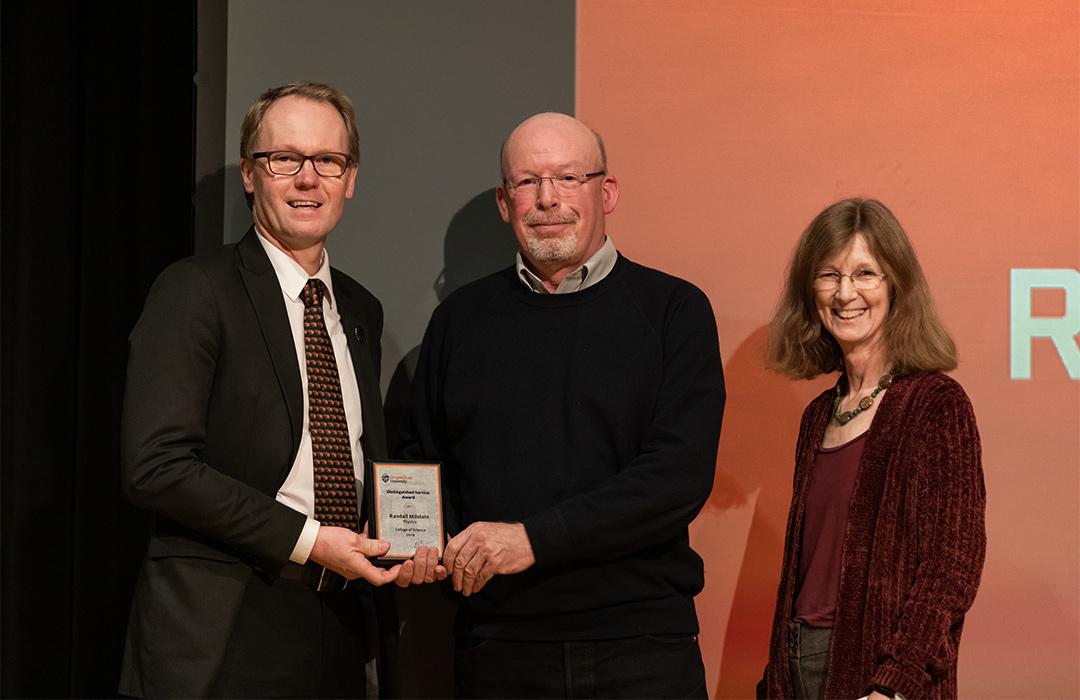
Randall Milstein receiving award from colleagues on stage

Randall Milstein with Roy Haggerty and Janet Tate

Randall Milstein, physics instructor, and Margie Haak, senior instructor of chemistry, received the College of Science Distinguished Service Award. Milstein, who is also the Astronomer-in-Residence for the Oregon NASA Space Grant Consortium, was recognized for his extraordinary efforts during the August 21, 2017 OSU’s total solar eclipse event which was witnessed by thousands of people in Corvallis.

“His effort represented hundreds and hundreds of hours of personally donated time to make this event as special as it was. It was truly above and beyond the call of duty,” said Janet Tate, professor of physics.

His activities ranged from high-level organization (OSU’s Total Solar Eclipse/OSU 150 Space Grant Celebration Planning Committee), to education (dozens of talks to help people understand, reaching nearly 4000 people), education workshops (solar filter parties to teach people to be safe), advertising (numerous radio and television interviews — Al Jazeera America, CBS News, Los Angeles CBS, etc.) and, of course, observation of stars and of the eclipse itself (telescopes, binoculars).

In the months ahead of the eclipse, he traveled the state tirelessly. His knowledge and enthusiasm reached thousands and OSU benefited beyond measure.

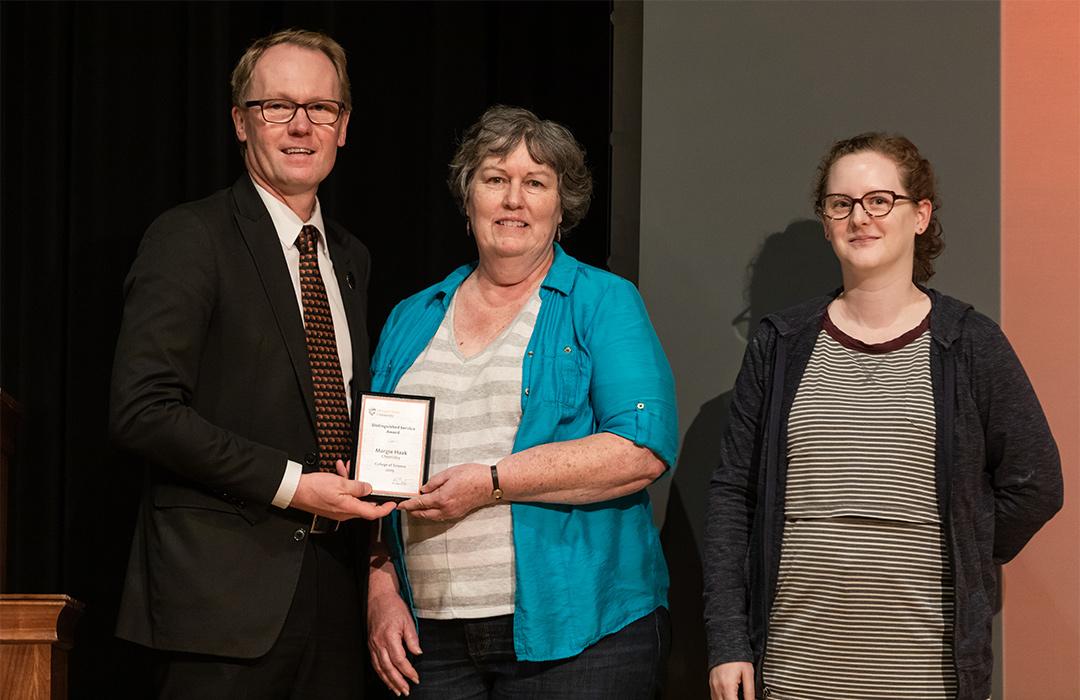
Margie Haak receiving award from faulty on stage

Margie Haak with Roy Haggerty and Paula Weiss

Haak has been a member of OSU Chemistry for 26 years. During this time, she has given countless hours in service to the chemistry department, the College of Science, Oregon State University, and surrounding communities.

Haak serves as the coordinator for the Mole Hole (Chemistry Help Center). She spearheaded the expansion of the Mole Hole from approximately 15 hours per week to over 60 hours per week. Because of her, the Mole Hole now has consistent hours that extend into the evening and weekends, which are prime study times for undergraduates. This space has had a large impact, serving several thousand undergraduate students each term.

“It’s an honor to work with Margie. She has helped thousands of students experience the beauty of science. Her impact has undoubtedly led many of them to go on to study science at OSU,” said Paula Weiss, senior instructor of chemistry.

Haak’s effort in science outreach are unparalleled in the chemistry department. For the last 17 years she has coordinated and presented Family Science & Engineering Nights and Family Math Nights at local elementary schools. She typically has 15 – 20 of these events each year. She has coordinated the Science Olympiad State Tournament at OSU. For 14 years she was the coordinator for Discovery Days, a two-day science outreach event attended by approximately 1800 K-9 students.

Champion of Science Award

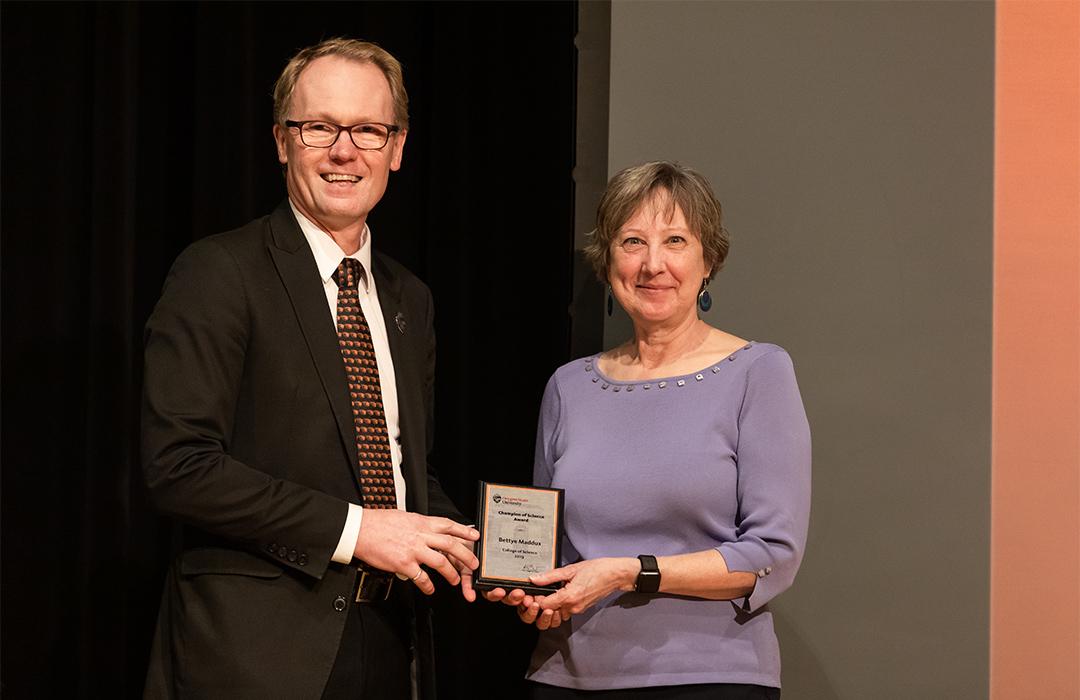
Bettye Maddux receiving award from Roy Haggerty on stage

Bettye Maddux with Roy Haggerty

Bettye Maddux, Director of Research Development in the College of Science, received the Dean’s Champion of Science Award. This is the Dean’s award recognizing an individual or individuals who demonstrate excellence and extra effort that goes beyond what is requested, and the highest quality performance. The award is modeled, including its name, after the President’s Beaver Champion Award.

With more than 20 years of research experience in academic and industry, Bettye created the College’s Office of Research Development from scratch. In its first full year of operation, Bettye increased the value of science proposals submitted by 30% and increased the number of proposals submitted by 6%.

“In more than 25 years of funded research at several institutions, none of us have ever had as much help and expert advice as we have received from Dr. Maddux,” professors Juan Restrepo and Vince Remcho said in a statement.

“She is constantly seeking funding opportunities, she strategizes with us in the writing process, she helps us understand the requirements of every call for proposals, she oversees budget preparation, she interfaces with the Research Office on all matters concerning proposal requirements, and has led inter-institutional funding efforts with complex organizational requirements.”

Science Research and Innovation Seed Program Awards

award recipients holding up awards on stage with colleagues

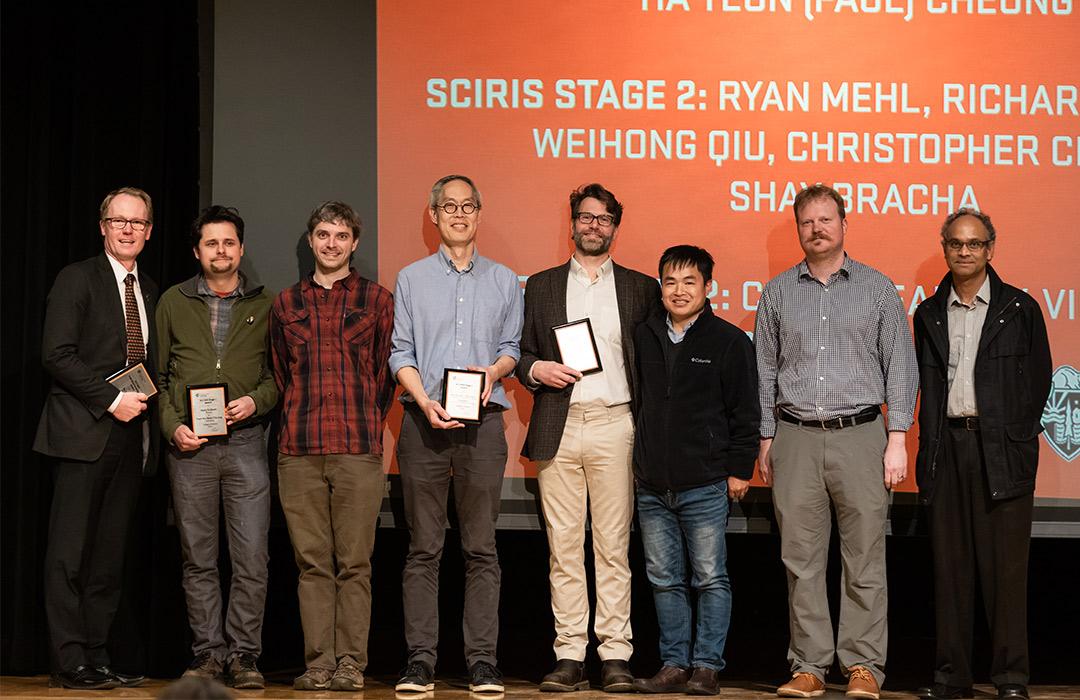
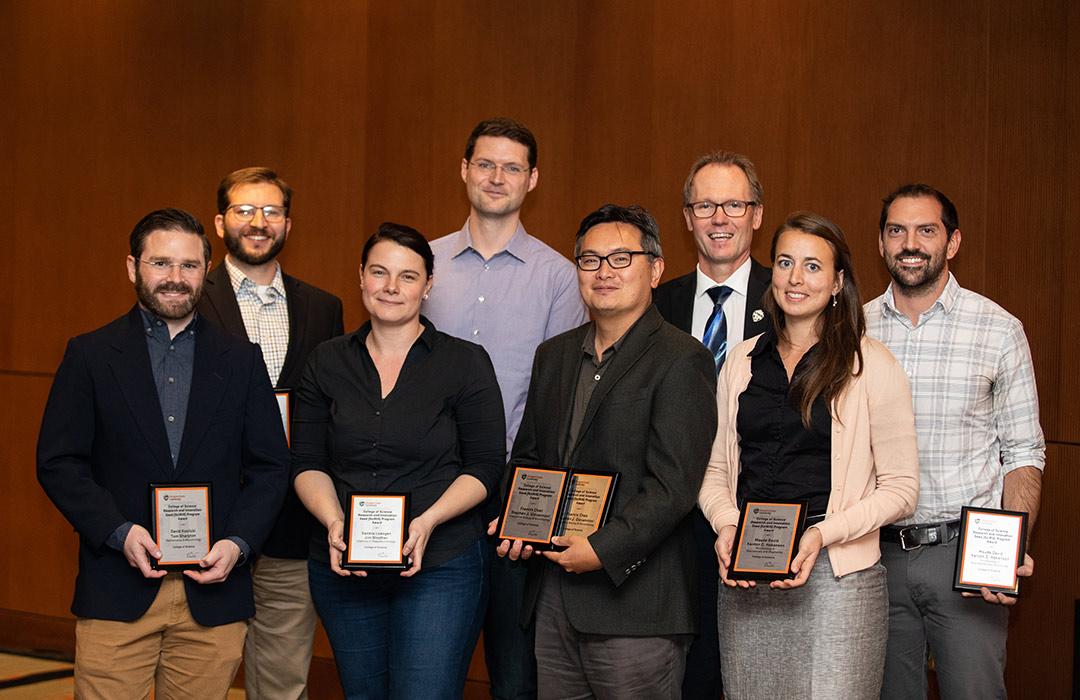
Roy Haggerty with SciRis awardees (left to right) Matthew Graham, Richard Cooley, Victor Hsu, Ryan Mehl, Weihong Qiu, Chris Cebra and Siva Kolluri.

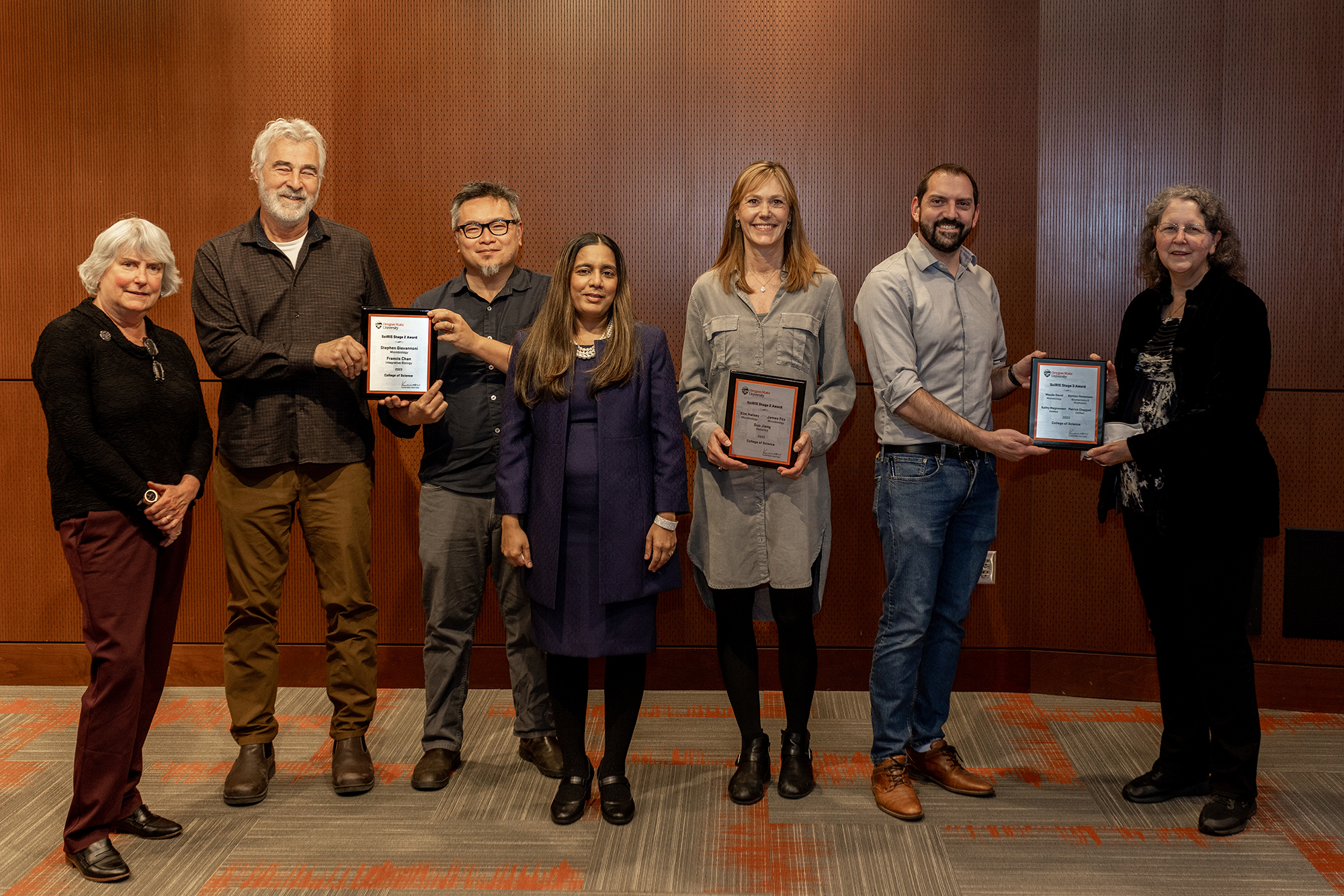
Six research teams won the Science Research and Innovation Seed Program (SciRis) and the Betty Wang Discovery Fund Awards for projects that contribute to physical chemistry, organic chemistry, solar cells and thin film display transistors, human health and the development of diagnostic tools.

The SciRis awards went to the following teams:

Assistant Professor of physics Bo Sun, along with collaborators from the University of California, San Diego and Northeastern University, was awarded $10,000 to elucidate the causes and consequences of cancer cell migrational phenotype plasticity, which contributes critically to the process of cancer metastasis. The research will potentially lay the groundwork to develop new classes of cancer screening assays and metastasis-targeting treatments.

Biochemists Ryan Mehl, Rick Cooley, physicist Weihong Qiu, and Chris Cebra and Shay Brachafrom the Carlson College of Veterinary Medicine received the SciRis Stage 2 award for their project “Chemically Functionalized Nanobodies.” Nanobodies, a subclass of small antibody fragments, where discovered in 1989 and represent an exciting new technology for the development of therapeutic and diagnostic agents.

The $75,000 grant will help the researchers develop a unique technology platform that enables generation of chemically functionalized nanobodies which will function as new therapeutic and diagnostic tools opening up new avenues for medicine and basic research. The resulting chemically functionalized nanobodies will be engineered to bind a specific antigen/protein target and deliver a therapeutic antibody

Chris Beaudry, professor of chemistry, Victor Hsu, associate professor of biochemistry and Siva Kolluri in the College of Agricultural Sciences received the SciRis Stage II award for their project, “Homoharringtonine: Chemical Synthesis amd Evaluation of Designed Analogs.” The group will conduct research on analogs of Homoharringtonine (HHT) with improved pharmaceutical properties. HHT is a plant alkaloid isolated from the plum yew Cephalotaxus harringtonii.

HHT shows great promise as a starting point for the development of new medicines for multiple forms of cancer, however it is highly expensive and difficult to acquire both as a chemical and as a medicine. Among other objectives, the group will work on creating an efficient chemical synthesis of HHT which quadruples the chemical yield, and can be used for investigation in combination therapies and evaluation in modern drug delivery systems.

Physicist Matthew Graham and chemist Paul Cheong received a $10,000 SCiRIs Stage I award for their project “Performance Optimization of Transistors and Solar Photovoltaics by Ultrabroadband Photoconductance Microscopy of Trap-State Density and Lifetimes.” The team will further enhance and develop an ultrabroadband photoconductance microscope that was invented in the Graham lab in 2016. This novel microscope tackles fundamental grand challenges that inhibit the performance of photovoltaic and thin film display transistors.

The Betty Wang Discovery Fund made two awards to maintain state-of-the-art laboratories to advance fundamental discoveries in the basic sciences.

Associate professor of Chemistry Chong Fang was awarded funds for a new fluorometer in the ultrafast laser spectroscopy lab at Linus Pauling Science Center. Chemistry professors Chris Beaudry and Paul Blakemore received a grant to purchase an improved model of a microwave synthesis reactor, an essential technology for organic synthesis.

Awards for administrative excellence

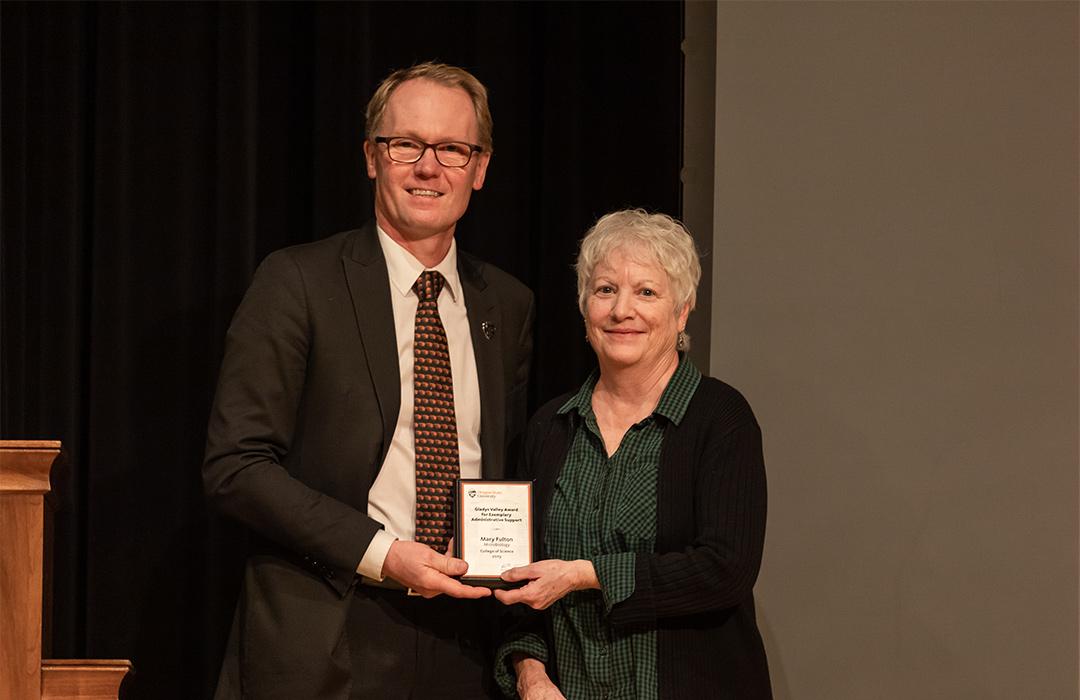
Mary Fulton receiving award from Roy Haggerty on stage

Mary Fulton with Roy Haggerty

Mary Fulton, assistant to the head of the Department of Microbiology, received the Gladys Valley Award for Exemplary Administrative Support. Fulton was appreciated for her hard work, professionalism and exemplary administrative abilities.

“Working with Mary is truly a pleasure. She has the patience, intuition and persistence required to work with all kinds of people, traits that are valued by everyone in the department.”

I think the faculty perfectly captured that she is the soul of the department and highly deserving of this award,” said Jerri Bartholomew, head of the Department of Microbiology. Among other administrative accomplishments, Fulton’s successful event planning and coordination made microbiology one of the most successful departments in raising funds for the Annual Food Drive.

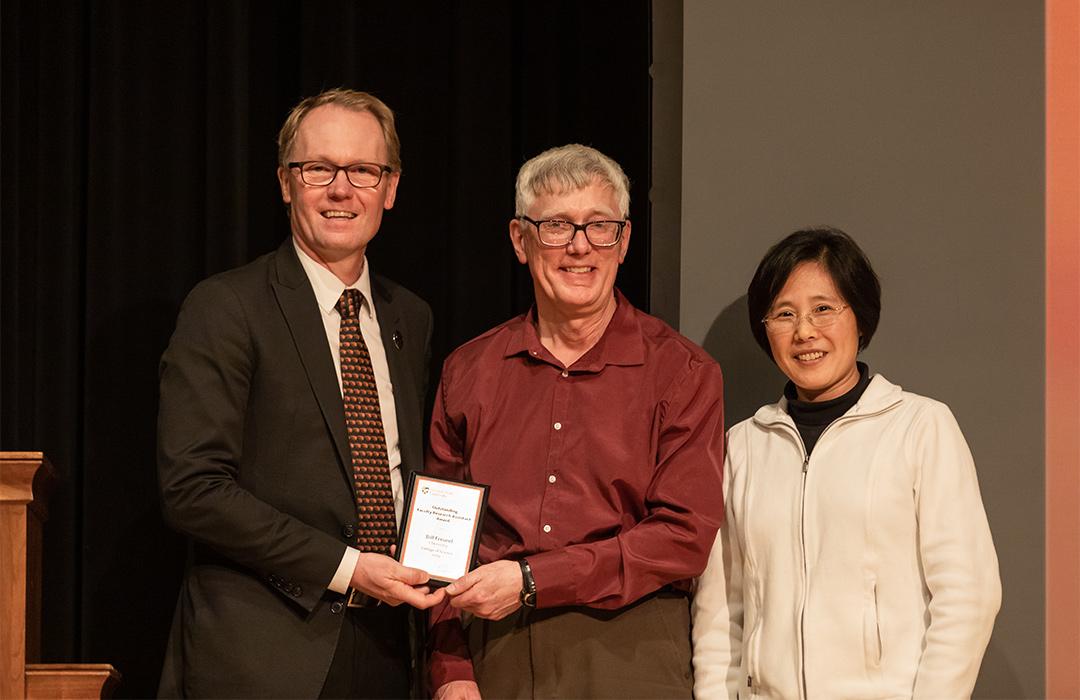
Bill Freund receiving award from colleagues on stage

Roy Haggerty with Bill Freund and Wei Kong

Bill Freund of the Department of Chemistry won the Outstanding Faculty Research Assistant Award. Freund has served as a faculty research assistant in Professor Wei Kong’s group since 2009. This award recognizes a faculty research assistant who has a record of outstanding job performance and contributions.

“He has been instrumental in almost all aspects of my laboratory, from design of new experiments to troubleshooting of equipment, and ultimately to completion of any project, large and small,” said Kong.

“He has also been a great mentor to all of my students and postdoctoral fellows, showing them problem solving skills and transferring to them his life’s experience in being a responsible and wise citizen.”

2019 Fall Faculty and Staff Awards Photos

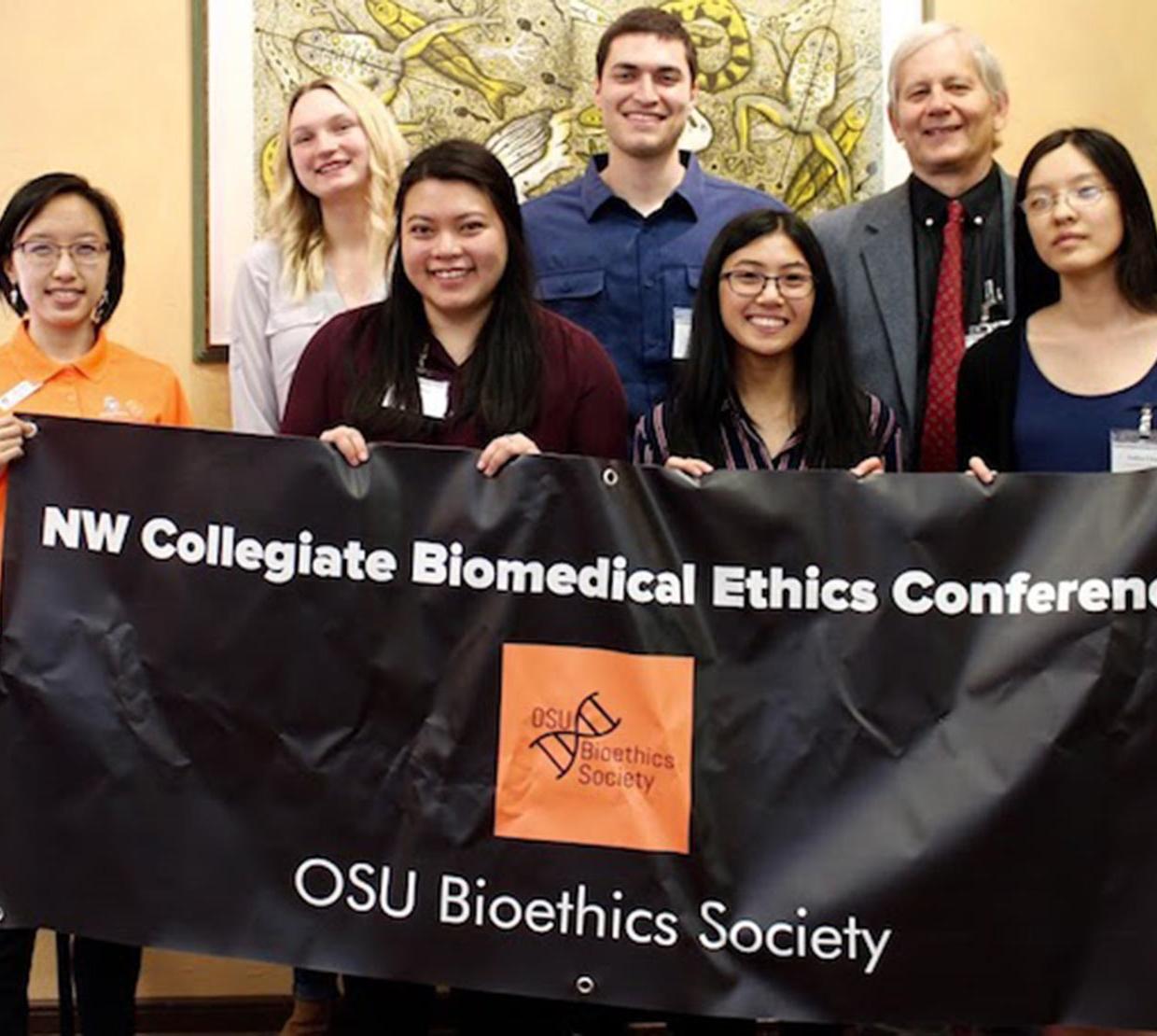
group photo of bio ethics team holding banner

Science students helm inaugural biomedical ethics conference

OSU Bioethics Society

The OSU Bioethics Society hosted its first annual NW Collegiate Biomedical Ethics Conference (NCBC) in April 2019, bringing in ethicists and physicians from around Oregon. The conference provided an opportunity for students to present their scholarly work and discuss pressing issues in the world of modern healthcare.

Students from several majors in the College of Science played a key role in making the conference a successful and intellectually engaging experience. Undergraduate students from programs in biochemistry, molecular biology and biohealth sciences enthusiastically volunteered and participated in the conference. The young scientists who dedicated much of their time and energy to the event include Delaney Smith (’19), a recent biochemistry and biophysics graduate and outgoing vice president of the OSU Bioethics Society; biochemistry and molecular biology graduate Nick Brown (’19), outgoing president of the OSU Bioethics Society; biochemistry and molecular biology student Avalon Kelly; and biohealth sciences majors Francine Mendoza and Sydney Phu. Pharmacy, psychology and public health students also volunteered and participated in the conference.

The conference stimulated thoughtful conversation between students of diverse backgrounds by bringing together alumni, undergraduate, and graduate students from Oregon State University, Western Oregon University, and Oregon Health and Science University.

Dr. Michael Huntington, an oncologist with a 35-year career, kicked off the conference with an enlightening keynote address. He discussed universal healthcare, exploring healthcare disparities and the effects on both individuals and businesses.

Following the keynote presentation, the conference featured three panels: a student panel where Smith, Phu and other participants shared their research followed by an insightful Q&A session, and two professional panels on patient autonomy and resource allocation.

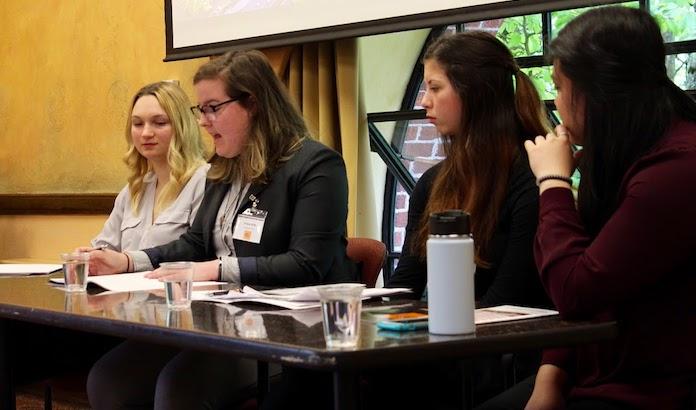
female students sitting on panel during meeting

Student panel at the biomedical ethics conference.

Led by students and their research, the student panel covered topics in pediatric cancer patients, healthcare rationing, the pharmaceutical industry, and stem cell therapies. With a surplus of questions from both students and professionals, participants were actively engaged in examining biomedical topics from different perspectives.

“The insight students shared was profound and the participants definitely learned something new,” reported Smith.

Dr. Steve Neville, an oncologist and guest speaker on the patient autonomy panel, also featuring OSU faculty Courtney Campbell and pulmonologist Dr. Cliff Hall, found his discussion with the students to be “insightful” and “always interesting and provocative.” The panel examined the Dax Cowart case, a chilling story about a burn victim that exemplifies some of the complex issues surrounding patient autonomy.

The resource allocation panel examined a medical triage case for admittance to the intensive care unit between five diverse patients. After the discussion, biochemistry major Nick Brown stated that the panel was “very educational in the sense that we learned a lot about outcomes for ailments commonly persisting in ER patients, but we were also shocked to learn how medical professionals and ethicists would triage these patients based on various metrics.”

The conference was sponsored by OSU’s School of History, Philosophy, and Religion, and the Hundere Endowment.

NCBC was organized by OSU Bioethics Society’s officers, with the support of their club members who volunteered at the event. “It was so exciting to see everything finally come together and see how easily discussion flowed,” said Francine Mendoza, the newly elected president of the OSU Bioethics Society. “Hearing everyone’s thoughts and perspectives was really enlightening and I can’t wait for us to bring the conference back next year!”

Header image: (Back row, l to r) Delaney Smith, Nick Brown and Dr. Courtney Campbell. (Front row, l to r) Kelli Hoang, Sydney Phu, Francine Mendoza, Andrea Chiou.

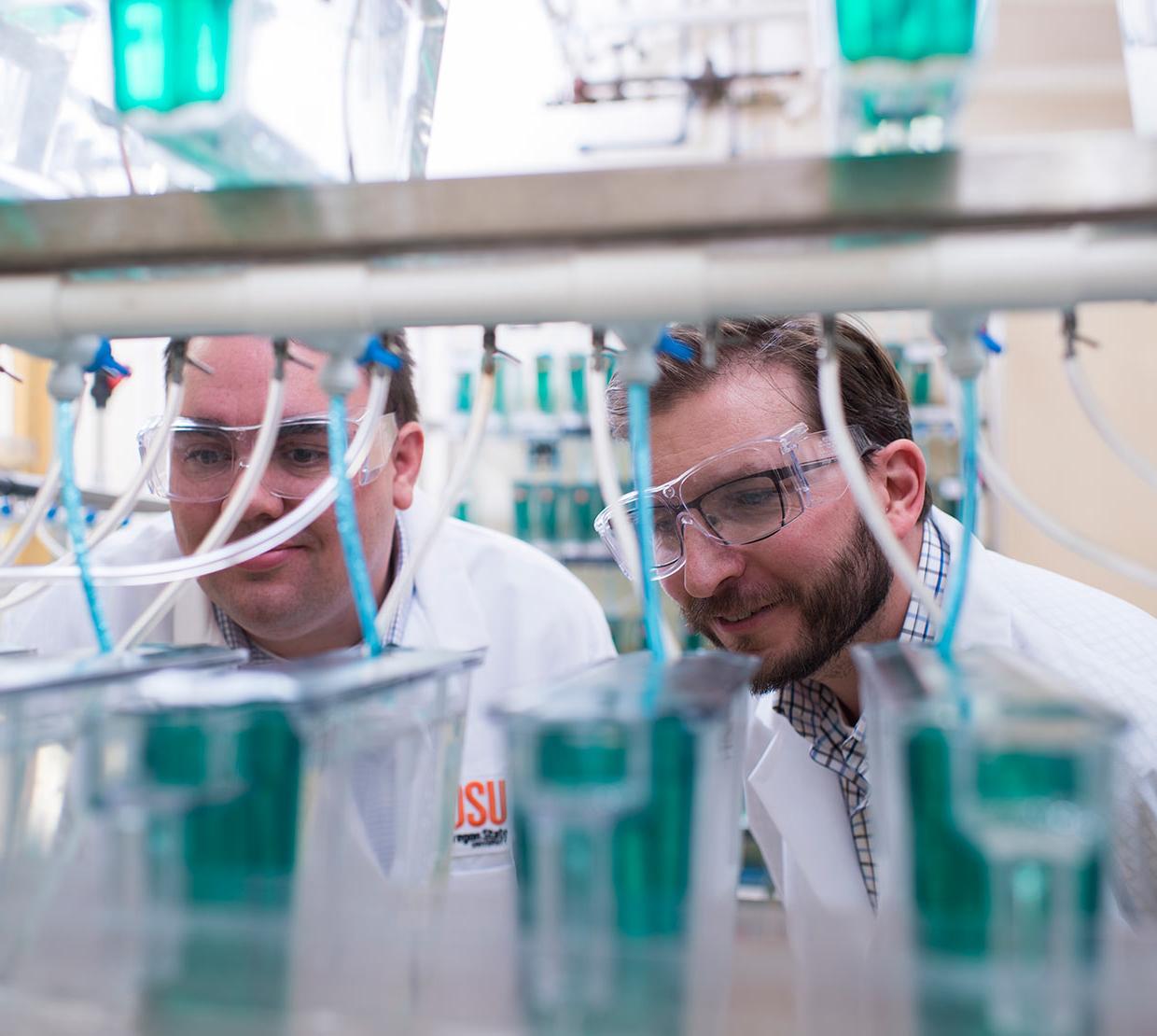
Thomas Sharpton with colleague looking at samples in lab

From scientific ideas to innovative solutions in the marketplace

Innovation Days

The College of Science is launching a transformative program to support and strengthen innovation and entrepreneurship that will enable us to better identify, validate, and develop the commercial impact of basic research. Innovation Days will bring together faculty, faculty research assistants and research associates to discuss and learn about moving basic research ideas and discoveries from the lab to commercial applications and practical solutions.

Co-hosted by the College of Science and the Office of Commercialization and Corporate Development (OCCD), Innovation Days will host its first session on January 7, 2019, 2:30-5 pm followed by a reception from 5-6 p.m. The deadline to register is December 14, 2018. Additional sessions to follow on February 4, April 1 and April 29.

Innovation Days is designed to build awareness and engagement with experts who will help advance and propel the OSU innovation enterprise. Workshop participants will learn about resources to:

  • Leverage basic research and research funding opportunities toward application
  • Increase the impact of basic research through patents and commercialization
  • Validate broader impacts of research projects to enhance proposal success
  • Connect with local innovation ecosystem and identify pathways to translate research to application
  • Create opportunities with industry
  • Integrate invention disclosures, patent applications, and company formation into day-to-day work to advance your career

Facilitators represent and support the many pathways available to successfully transfer technology and commercialize scientific research. The workshop series includes: Berry Treat, director of OCCD, who will provide an overview of his office and how it supports the research to industry pathway; Joe Christison, senior intellectual property and licensing manager at OCCD, who will introduce participants to technology transfer at OSU; Katie Pettinger, commercialization catalyst at OSU Advantage Accelerator, who will discuss startup support available to OSU researchers; chemistry professor Rich Carter, who will share his success story as an inventor; and Chris Stoner, senior industry contracts manager, OCCD, who will discuss the development of appropriate and effective research agreements with companies.

cell icon above light texture

Recognizing research and administrative excellence

2018 Fall Faculty and Staff Awards

The College of Science celebrated research and administrative excellence at its 2018 Fall Faculty and Staff Awards ceremony and reception on October 11.

Dean Roy Haggerty delivered welcome remarks, sharing his priorities for the upcoming year in the areas of research and innovation development, student recruitment and retention, revenue growth for the College and diversity, inclusion and justice.

In keeping with the College of Science’s key objective to spur research and innovation, Dean Haggerty announced three new awards to support fundamental discoveries and collaborative scientific projects with the potential for substantial social impact. The Science Research and Innovation Seed Program (SciRis) provides funding in three stages for high impact collaborative proposals that build teams, pursue fundamental discoveries and create societal impact. The awards range from $10,000 to $125,000 for various stages of the proposal.

SciRis-II Award will provide up to $10,000 for an individual faculty who seeks to establish or augment research relationships with external partners, either inside or outside of Oregon State University, in academia, industry, or other organizations inside and outside of the United States.

The Betty Wang Discovery Fund, recently established by a generous endowment of $750K from the estate of Samuel Wang, will grant one or more awards to maintain state-of-the-art laboratories to advance fundamental discoveries in the basic sciences.

Hearty congratulations to these award-winning faculty and staff who were recognized for their outstanding achievements:

Ethan Minot receiving award from Janet Tate and Roy Haggerty

Physicist Ethan Minot (center) with Janet Tate and Roy Haggerty

Ethan Minot, associate professor of physics, received the Milton Harris Award in Basic Research for his impressive accomplishments as a scientist. At Oregon State, Minot has built a world-class materials physics laboratory for the study of the structure and properties of carbon nanomaterials and devices for nanoelectronics.

His research at Oregon State has pushed the limit of fundamental properties of nanoelectronic devices, which have a broad range of applications to biosensing and solar energy harvesting. Some of his achievements are: identifying the fundamental noise mechanism that limits the performance of graphene biosensors in liquid environments; becoming the first to electrically generate and detect single point defects; reaching a new level of control over point defect chemistry; and other pioneering advances in the development of high-quality nanodevices and biosensors.

“Using the exceptionally strong, flexible, stable and sensitive electronic materials Ethan has demonstrated that the carbon-based nanodevices can be intimately interfaced with biological systems. His research impact extends beyond the science he has produced. Ethan’s group is a highly-prized destination for graduates and undergraduates alike,” said Professor of physics Janet Tate.

Minot’s graduate and undergraduate students have gone on to successful careers in academic and high tech or medical tech sectors. His versatile research activities have led to many high-impact publications. During his tenure at OSU, Minot has published 34 refereed articles in prestigious journals such as Nano Letters and Applied Physics Letters.

May Nyman receiving award from Michael Lerner and Roy Haggerty

Chemist May Nyman with Michael Lerner (left) and Roy Haggerty

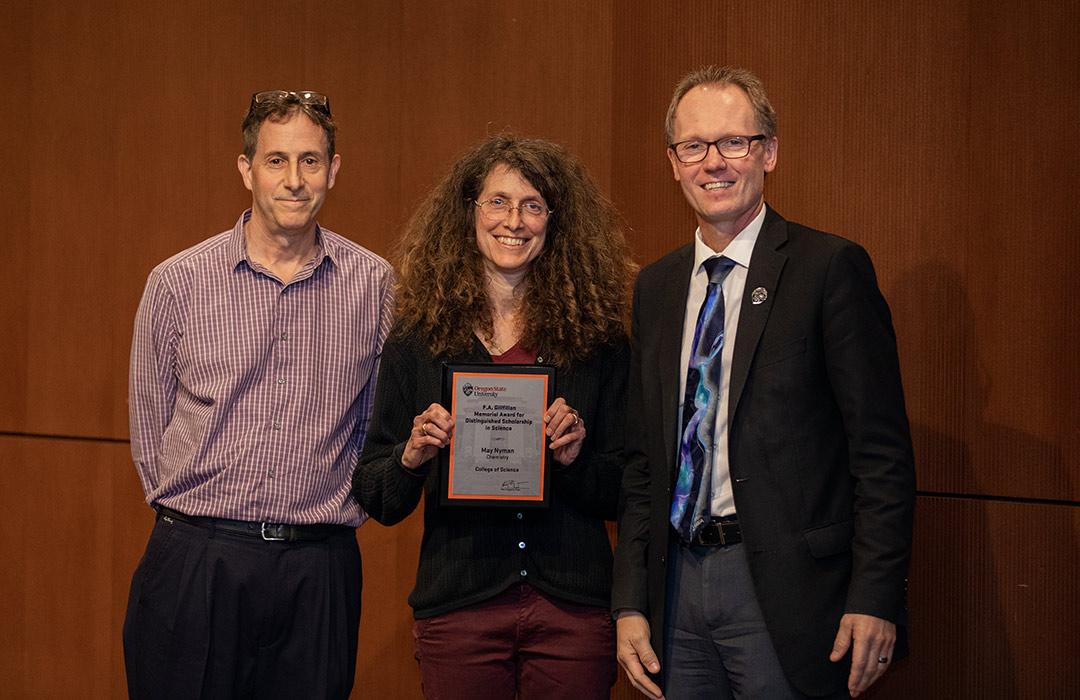
Professor of chemistry May Nyman was honored with F.A. Gilfillan Award for Distinguished Scholarship in Science. The Gilfillan Award honors a faculty member in the College whose scholarship and scientific accomplishments have extended over a substantial period of time.

A leading scientist in the areas of metal-oxo cluster chemistry, X-ray scattering, aqueous ion-pairing and nuclear waste chemistry, Nyman joined Oregon State in 2016 after a distinguished career at Sandia National Laboratories where she developed new sorbents and other waste treatment technologies for nuclear waste management. Her work on Cs-139 removal technologies led to the licensing of a sorbent that is currently used to treat contaminated seawater at the failed Fukushima Daiichi nuclear power plant in Japan.

At Sandia, Nyman developed a powerful and effective sorbent for removal of strontium-90, plutonium and neptunium from cold war era nuclear wastes. The sorbent was commercialized and then produced at the Savannah River site for real world waste treatment. Through her work with applied chemistry technologies, Nyman made tangential discoveries that ultimately led to the development of an entire new class of polyoxometalates (POMs) that she termed the polyoxoniobates (PONbs). These new POMs opened up the field to new discoveries and applications that include the potential development of a new class of nerve agent degraders.

At Oregon State, Nyman has developed expertise solution characterization of clusters using X-ray scattering. She has now become a world leader in applying this technique to clusters. She continues to be an international leader in the field of POMs, PONbs and other metal oxo clusters formed from elements across the periodic table. Her research group’s latest discovery and paper on this topic show how PONb cluster geometries and nucleation are changed simply by the presence of alkali metal cations.

“This latter work is also one example amongst several from the Nyman group that suggests a revolutionary concept – that the standard Pourbaix diagrams collected and widely used by materials and chemistry researchers for several decades may be not be accurate without careful consideration of the electrolytes in solution,” said Michael Lerner, Head of the Department of Chemistry.

The broader impact of improving the model used in such fundamental chemistry is significant – aqueous chemical processes such as geochemical weathering, corrosion and energy production in fuel cells may all be improved. Moreover, through these studies, Nyman’s team learned how to make very high concentration Nb solutions with a neutral pH that can be used to deposit niobate materials for different energy applications. This future work can lead to new functional materials deposited by ‘green’ processes.

Nyman is a leading member of the materials science of actinides program at the Department of Energy’s Energy Frontier Research Center program—her roles include developing uranyl peroxide clusters for fundamental actinide science applied in the nuclear fuel cycle, and training the next generation of actinide scientists.

Elise Lockwood receiving award from Bill Bogley and Roy Haggerty

Mathematician Elise Lockwood with Bill Bogley (left) and Roy Haggerty

Elise Lockwood, associate professor of mathematics, received the Dean’s Early Career Impact Award for exceptional achievement in research and education by an early career faculty member. Lockwood has achieved international distinction as a researcher in mathematics education, specializing in Research in Undergraduate Mathematics Education (RUME). She is described as the “top young scholar” in RUME.

Lockwood’s prominence in the field is evidenced by her winning the 2018 Annie and John Selden Prize of the Mathematical Association of America, which is given to the top early-career mathematics education researcher in RUME. Her research focuses on the practical and theoretical aspects of the teaching and learning of combinatorics, a field of mathematics that connects with probability, computer science, and many diverse areas of science.

“Led by her internationally recognized achievements in research, Dr. Lockwood has assembled an impressive array of professional accomplishments that excels in all dimensions,” said Bill Bogley, Head of the Department of Mathematics.

Lockwood was awarded a five-year National Science Foundation CAREER Award—NSF’s most prestigious award for early-career faculty— for her project on developing undergraduate combinatorics curriculum in computational settings. The project focuses on the use of computational resources to help students develop as combinatorial thinkers.

Koslicki, Loesgen, Chan, David and Hokanson receiving awards together

Front row (L to R): David Koslicki, Sandra Loesgen, Francis Chan and Maude David. Back row (L to R): Thomas Sharpton, James Strother, Roy Haggerty and Kenton Hokanson.

Four research teams won the Science Research and Innovation Seed Program Award (formerly known as the College of Science Impact Award) for projects that contribute to human health, drug development and marine science. The SciRis Award carries an amount of $10,000 for each team. The award-winning SciRis teams comprising:

Assistant Professor of Mathematics David Koslicki and Thomas Sharpton, assistant professor of microbiology and statistics, received the SciRis award for metagenomic analysis of voluminous microbiome data that are germane to diverse processes from global nutrient cycling to human disease. The project will enable Koslicki and Sharpton to create a leading-edge research portfolio of new algorithmic and data science solutions for the analysis and mathematical modeling of microbiome data and enhance research productivity by aiding OSU investigators in the analysis of microbiome data. The project will also recruit and train students in metagenomic science. In the long term, the researchers seek to “establish OSU as a center of excellence in microbiome data science.
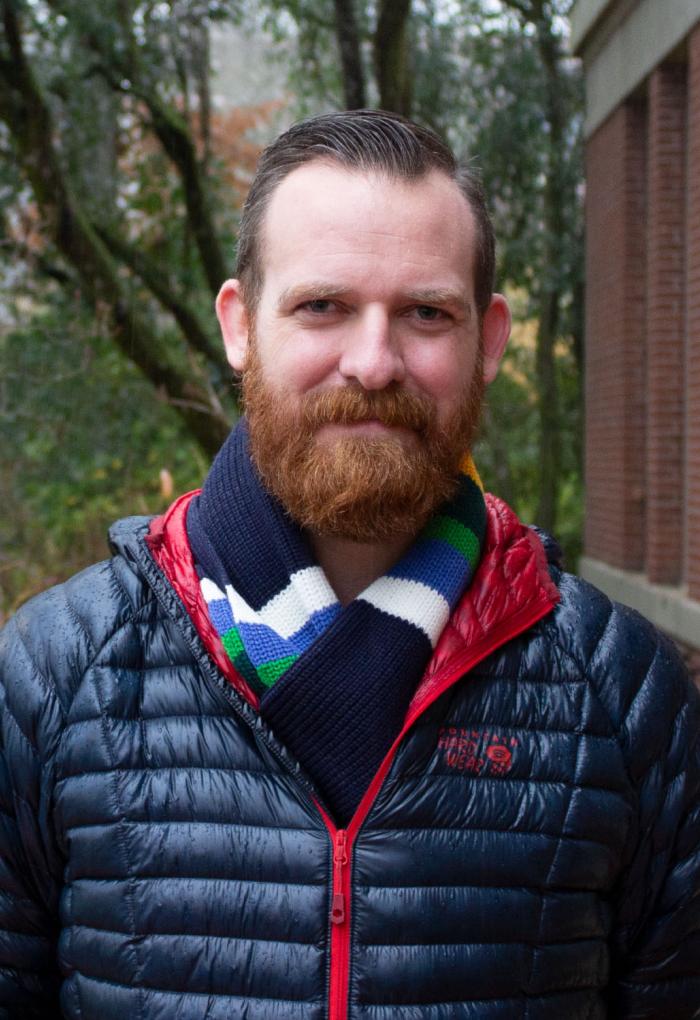
Assistant Professor of Chemistry Sandra Loesgen and Assistant Professor of Integrative Biology James Strother will collaborate on a project to identify novel microbial natural products with antinociceptive, or pain-relieving, activity using a zebrafish-based behavioral assay, and to characterize the mode of action of new compounds using neural activity mapping. This innovative approach addresses major challenges in neuroactive drug discovery and is highly likely to produce potent new bioactive compounds to develop improved drugs for chronic pain.

This research combines the Loesgen Lab’s expertise with natural products and the Strother Lab’s experience in neuroscience to forge a bold new approach for neuroactive drug discovery.

Associate Professor of Integrative Biology Francis Chan and Stephen Giovannoni, Distinguished Professor of Microbiology, will pursue research on zero oxygen (anoxic) events in ocean ecosystems that are of greatest concern for ecosystems and fisheries. While scientists have developed a clear understanding of the climate-dependent factors that determine the formation of hypoxic (low oxygen) zones, the onset of anoxia remains both difficult to predict and surprisingly infrequent despite the prevalence of hypoxia.
Through recent research combining ocean climate science and marine microbial ecology, Chan and Giovannoni have discovered that oxygen availability has played an important but previously unrecognized role in shaping the evolution of metabolic pathways in microbes, and that such pathways may serve as climate-resilient barriers to anoxia.
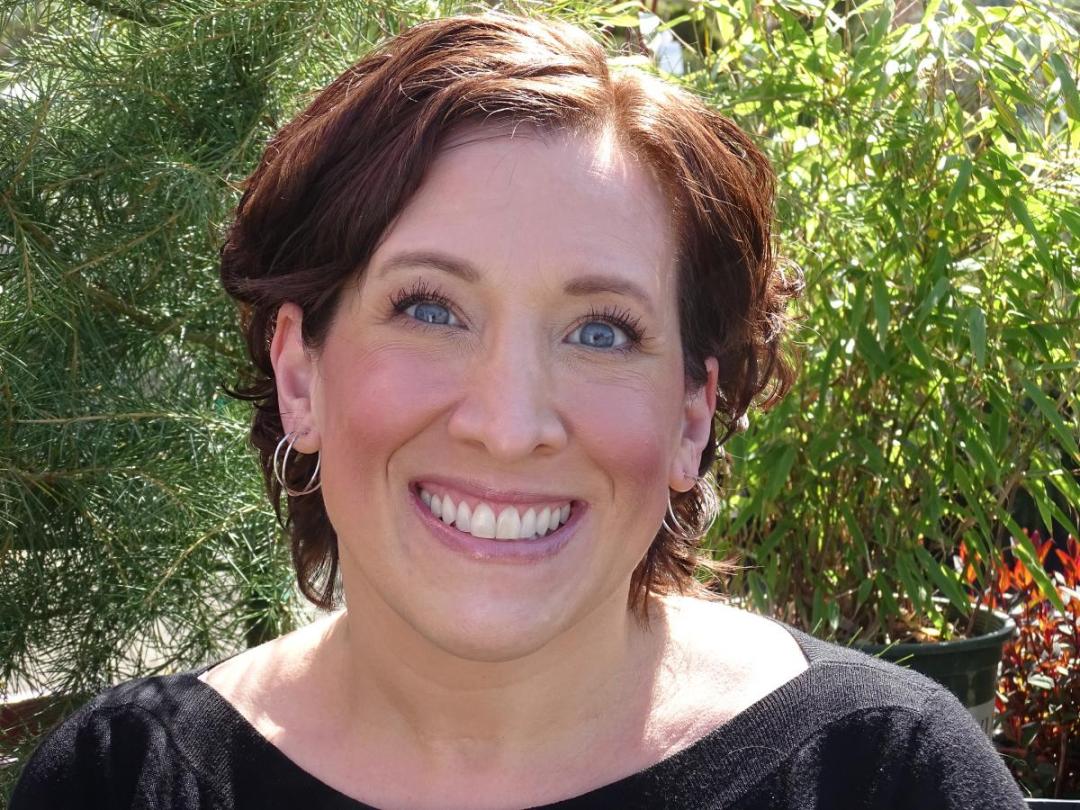
Assistant Professor of Microbiology Maude David and Kenton Hokanson, instructor of microbiology and biochemistry and biophysics, will conduct molecular research to address anxiety disorders that affects 40 million people in the U.S. Although women are twice as likely as men to suffer from anxiety disorders, most research at the molecular level has exclusively studied male humans or animal models.

David and Hokanson aim to bridge this knowledge gap by integrating functional, molecular, and behavioral data to identify the role of specific microbial metabolites produced by a bacterium linked with anxiety in humans. This project will be conducted in female mice, maximizing their work’s impact on the large and underserved population of females affected by anxiety disorders.

Paula Christie, assistant to the head of the Department of Chemistry, received the Gladys Valley Award for Exemplary Administrative Support. Christie was appreciated for her hard work, professionalism and exemplary administrative abilities.

“Paula’s single best characteristic could be described as excellent and dedicated customer service. Her customers in this case are the entire department, from leadership to entering students to our staff,” said Michael Lerner, Head of the Department of Chemistry.

Jie Zhang from the Department of Chemistry received the 2018 Outstanding Faculty Research Assistant Award. Zhang has served as a faculty research assistant (postdoctoral fellow) in Professor Wei Kong ’s group since 2010. This award recognizes a faculty research assistant who has a record of outstanding job performance and contributions.
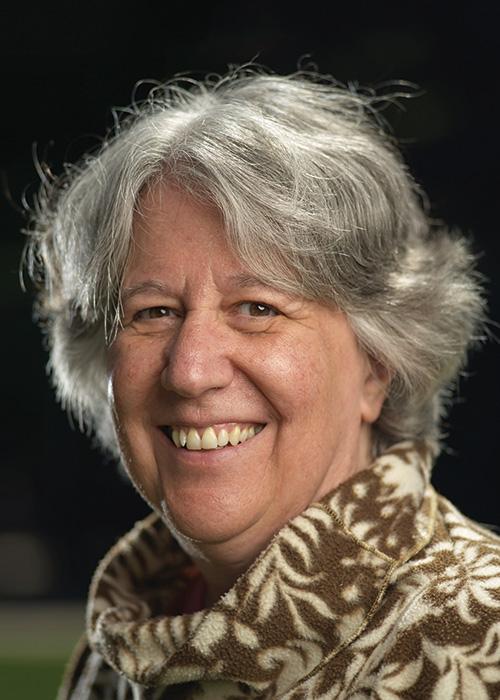
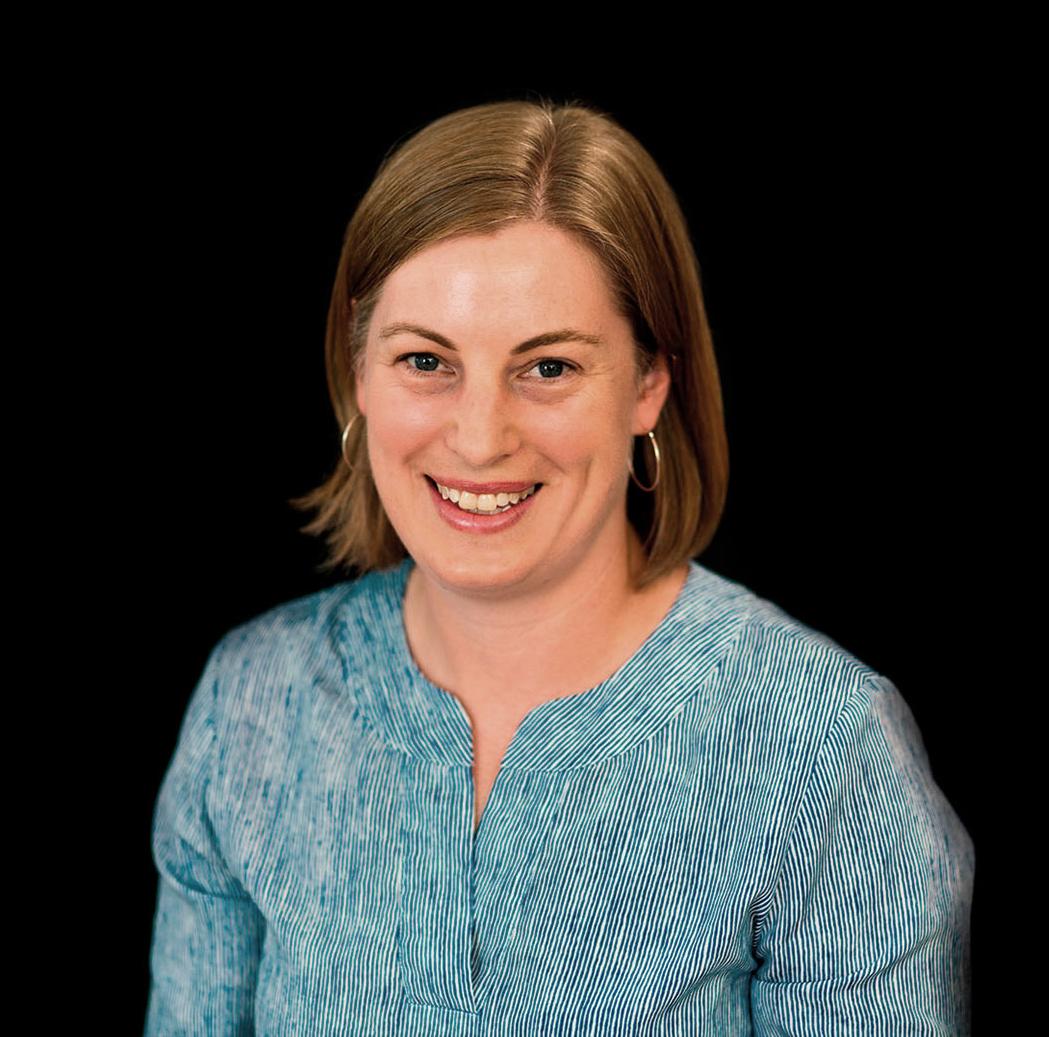
“From conversations with Wei Kong and from my observations, Jie Zhang has been as a key factor in the Kong group’s vitality and longevity. Wei gives Jie full credit for numerous important experimental breakthroughs, and also for the continued success in her research grant applications,” said Michael Lerner, Head of the Department of Chemistry.
In addition to her many achievements in the Kong lab, Zhang has trained several graduate students from start to completion, and the acknowledgements from those students’ theses are effusive. “Everybody needs a Jie Zhang in their lab,” said Kong.

Susan Machacek, an accountant in the Arts and Science Business Center (ASBC) received the ASBC Exemplary Service Award. This award recognizes exemplary service by a member of ASBC to the colleges within the Division.
Subscribe to Events