Chemistry

Chemistry

cell icon above light texture

Recognizing research and administrative excellence

2018 Fall Faculty and Staff Awards

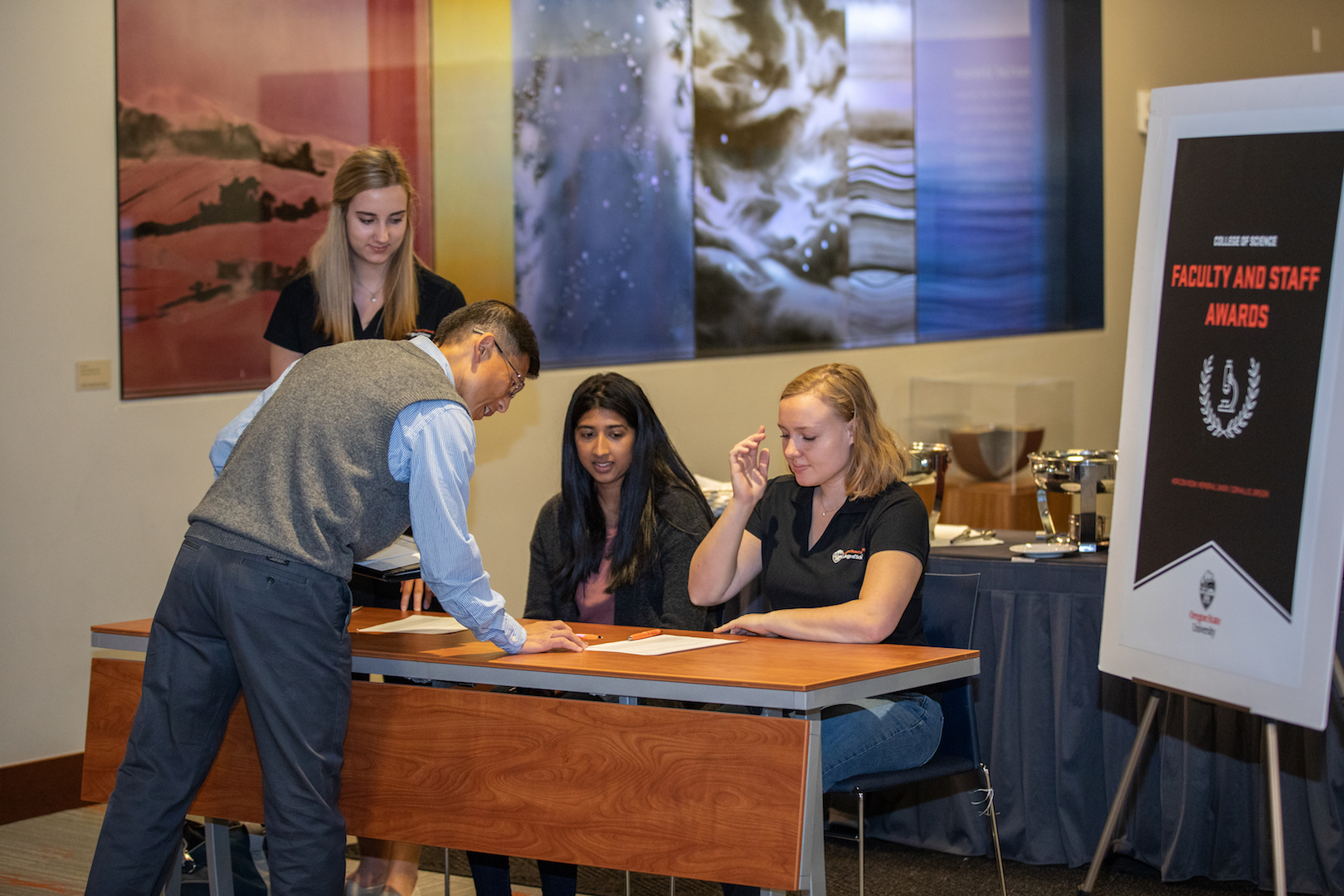
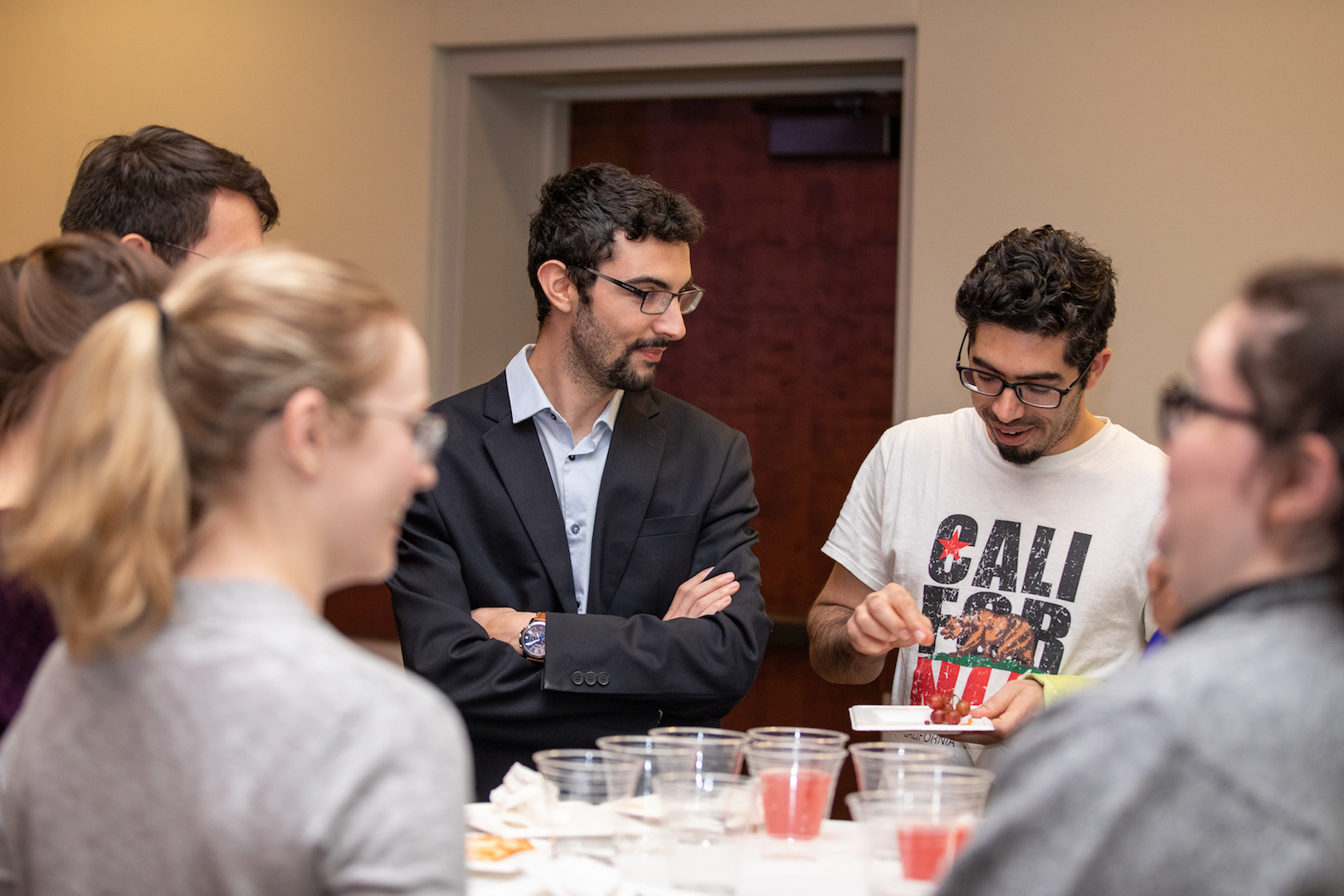
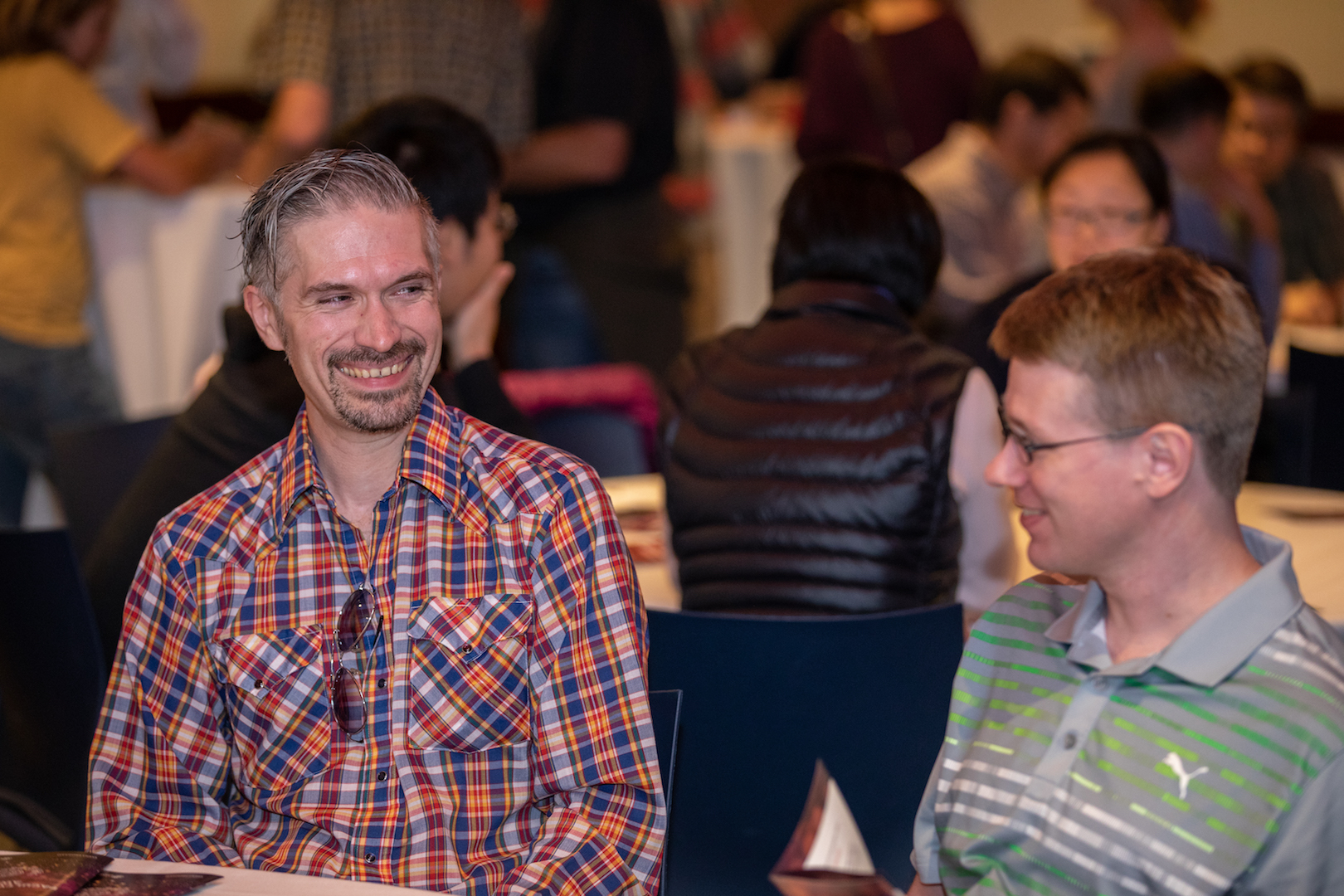
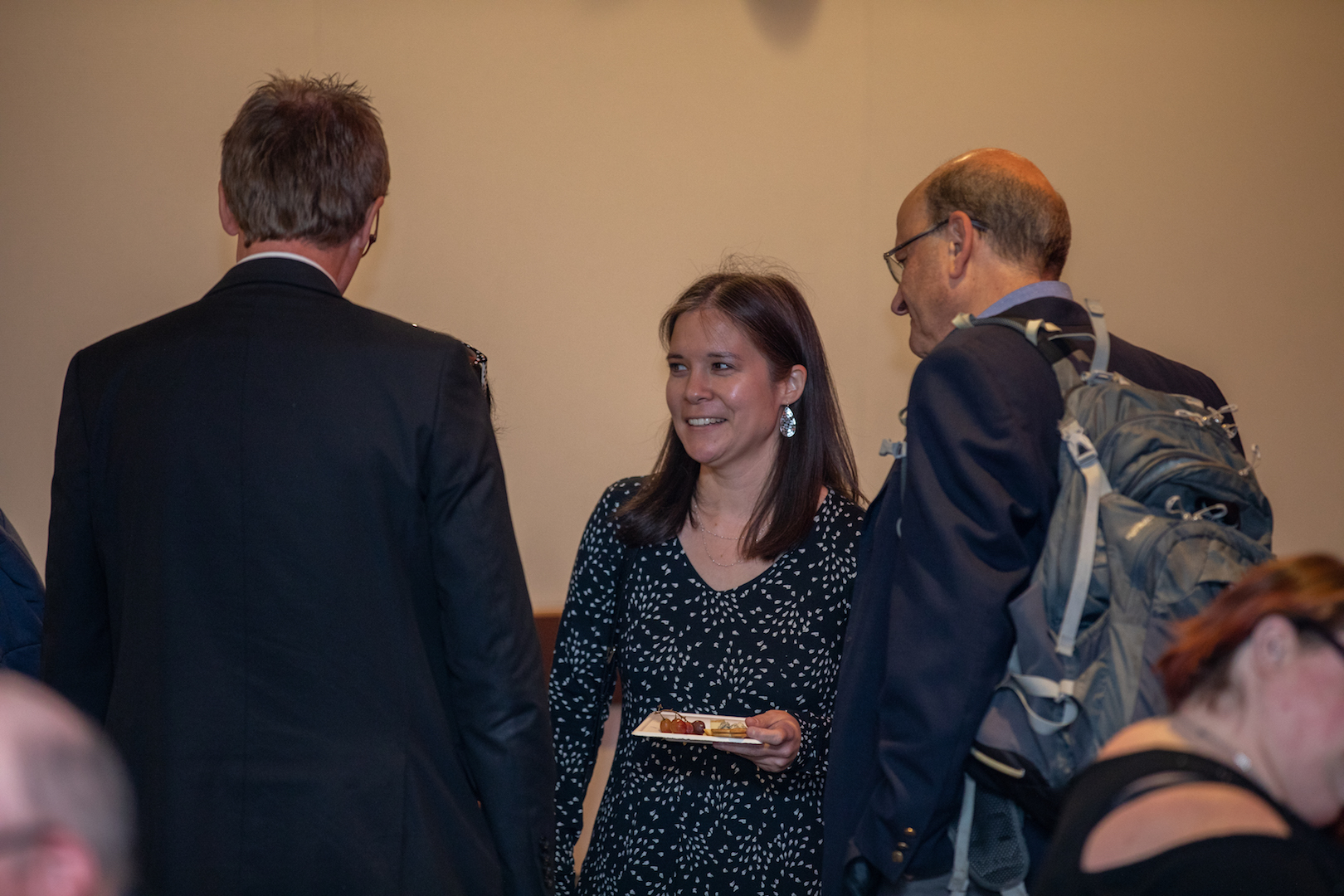
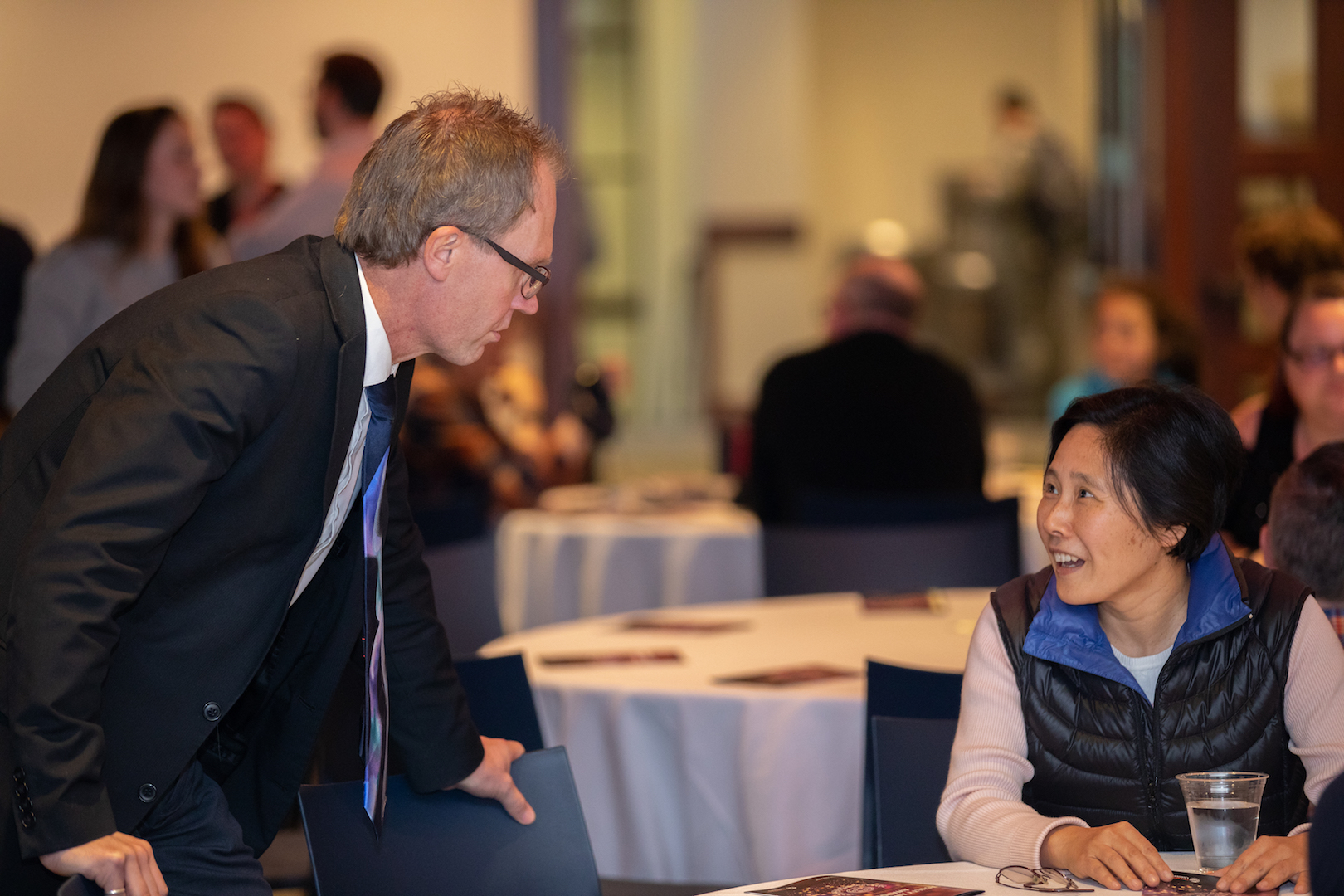
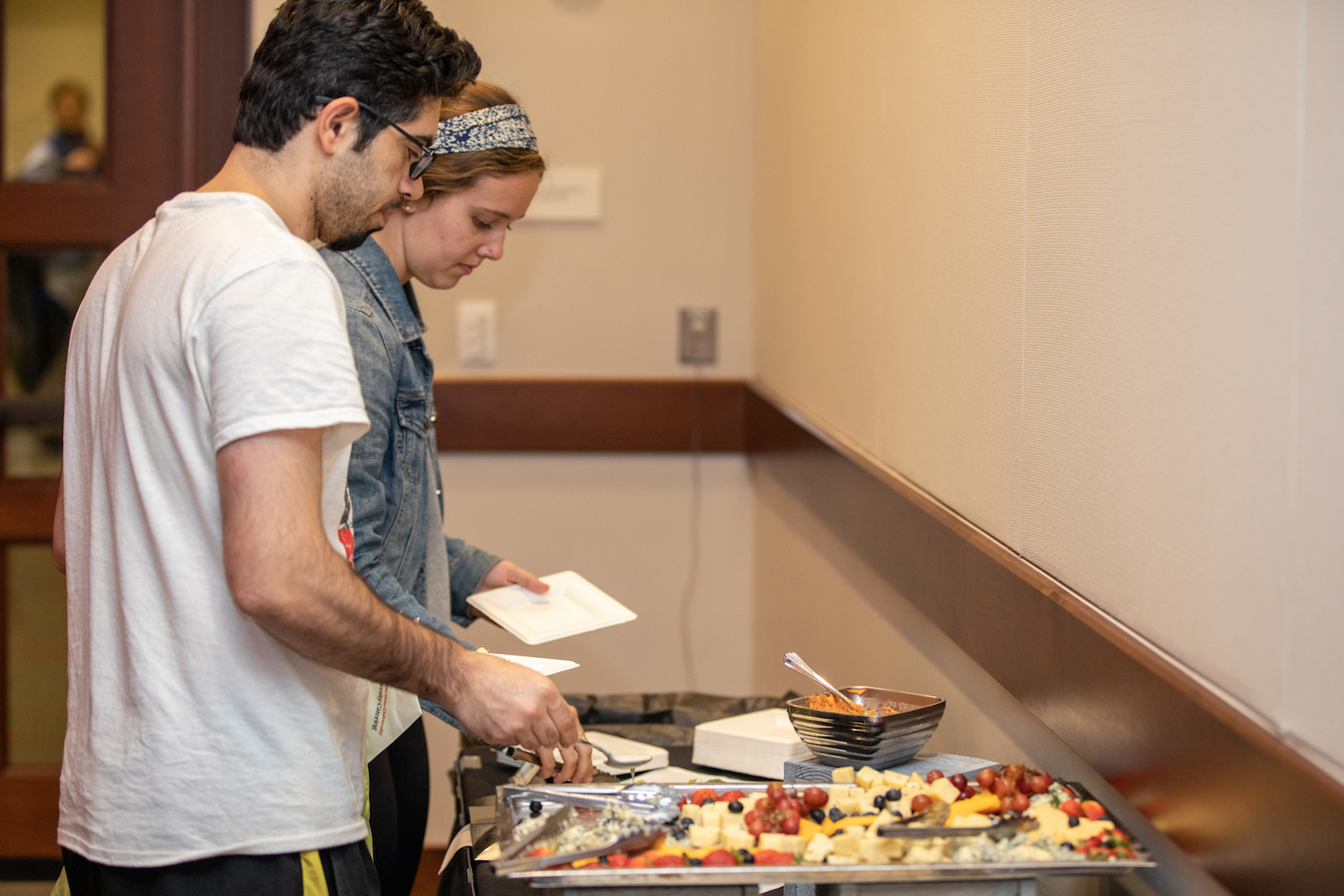
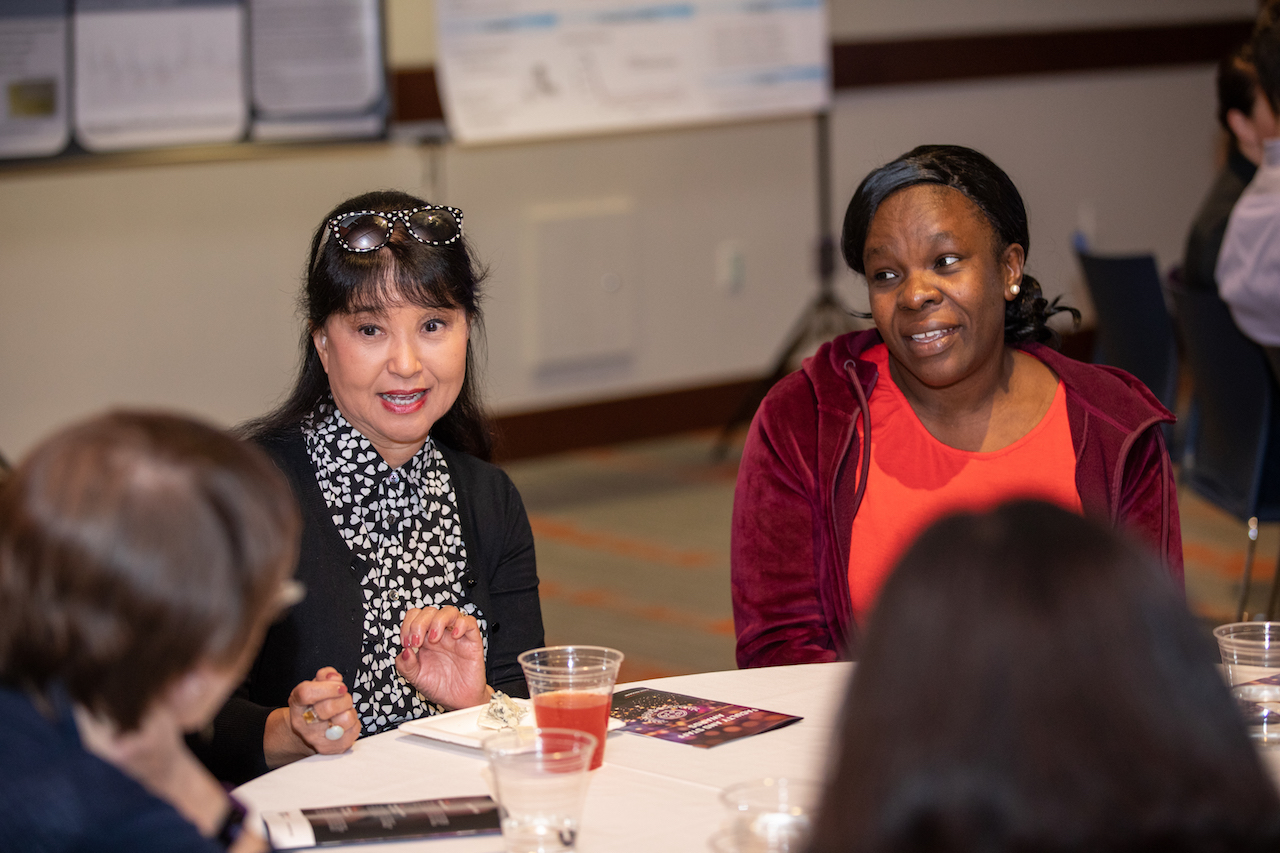
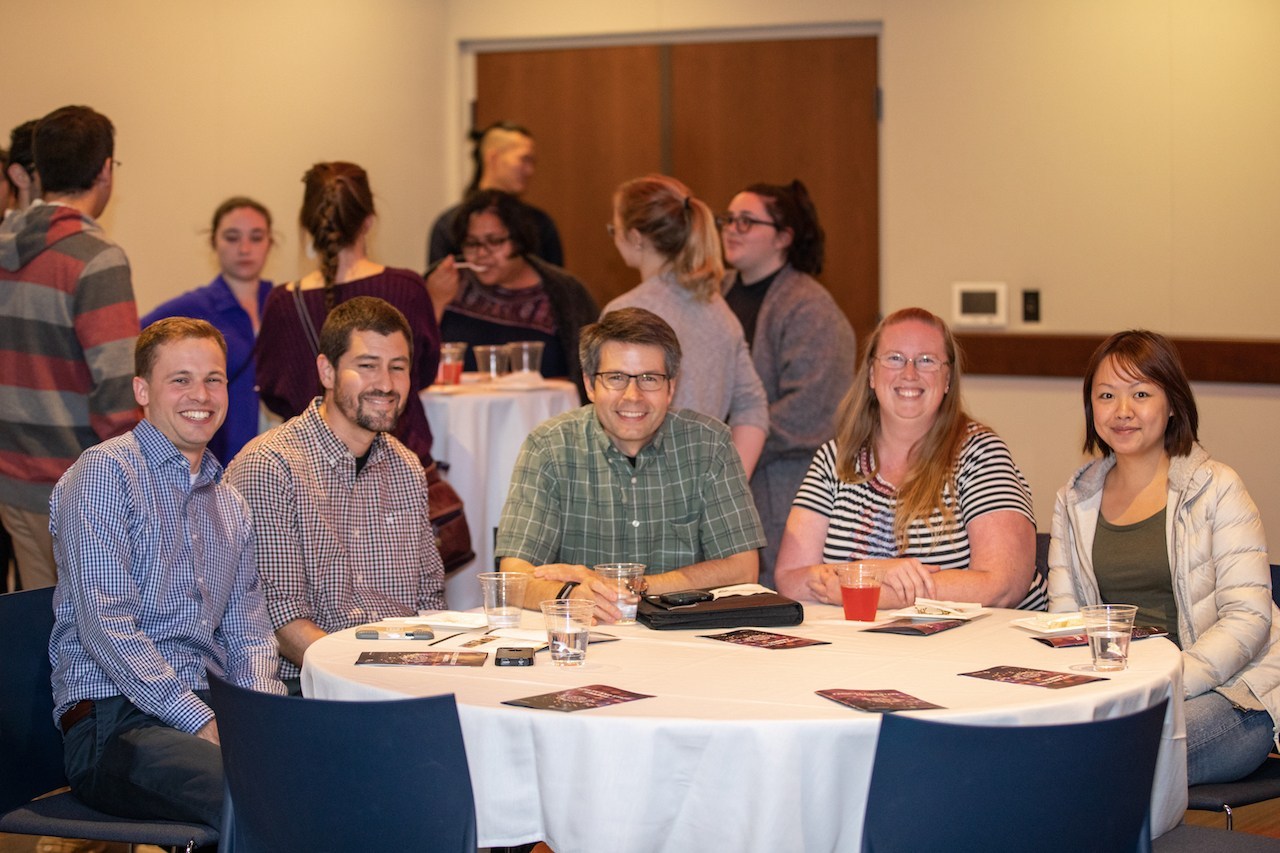
The College of Science celebrated research and administrative excellence at its 2018 Fall Faculty and Staff Awards ceremony and reception on October 11.

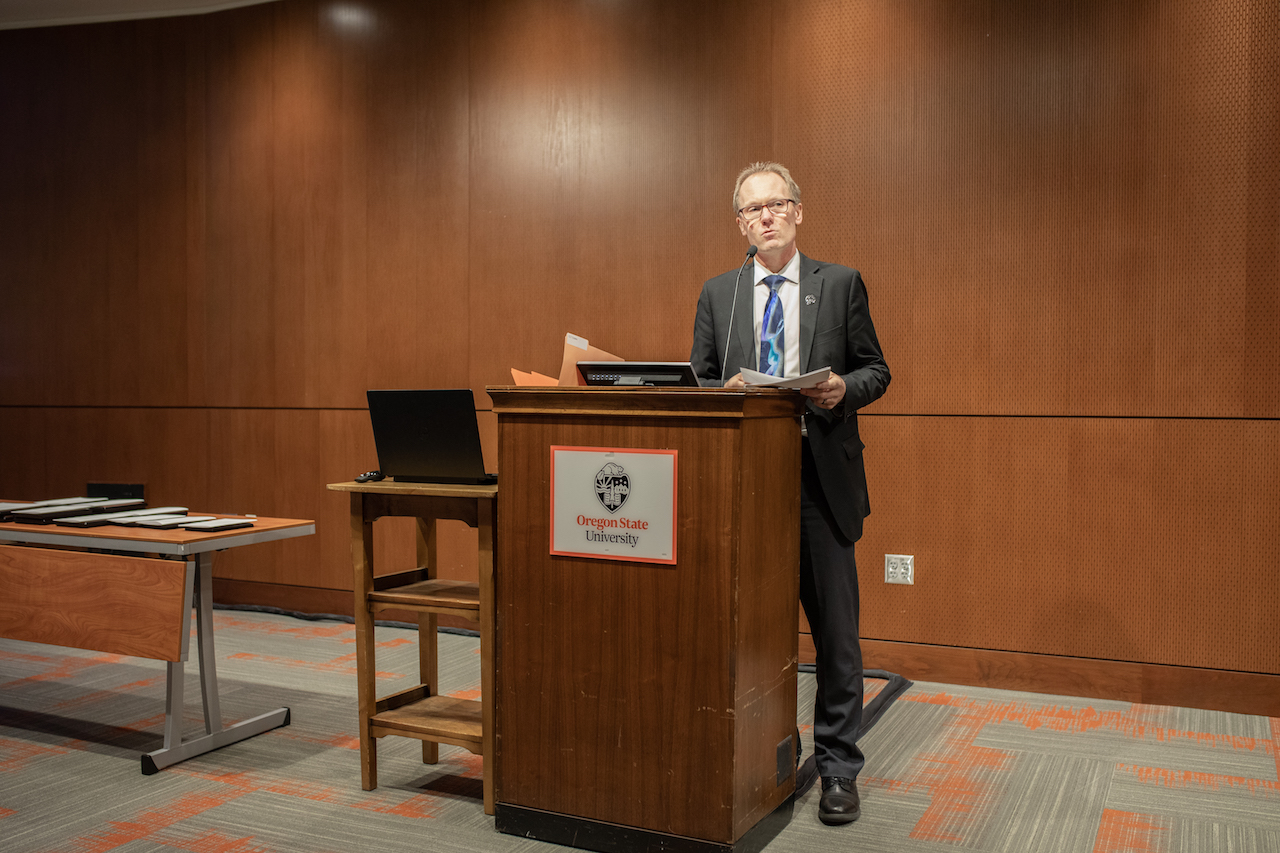
Dean Roy Haggerty delivered welcome remarks, sharing his priorities for the upcoming year in the areas of research and innovation development, student recruitment and retention, revenue growth for the College and diversity, inclusion and justice.

In keeping with the College of Science’s key objective to spur research and innovation, Dean Haggerty announced three new awards to support fundamental discoveries and collaborative scientific projects with the potential for substantial social impact. The Science Research and Innovation Seed Program (SciRis) provides funding in three stages for high impact collaborative proposals that build teams, pursue fundamental discoveries and create societal impact. The awards range from $10,000 to $125,000 for various stages of the proposal.

SciRis-II Award will provide up to $10,000 for an individual faculty who seeks to establish or augment research relationships with external partners, either inside or outside of Oregon State University, in academia, industry, or other organizations inside and outside of the United States.

The Betty Wang Discovery Fund, recently established by a generous endowment of $750K from the estate of Samuel Wang, will grant one or more awards to maintain state-of-the-art laboratories to advance fundamental discoveries in the basic sciences.

Hearty congratulations to these award-winning faculty and staff who were recognized for their outstanding achievements:

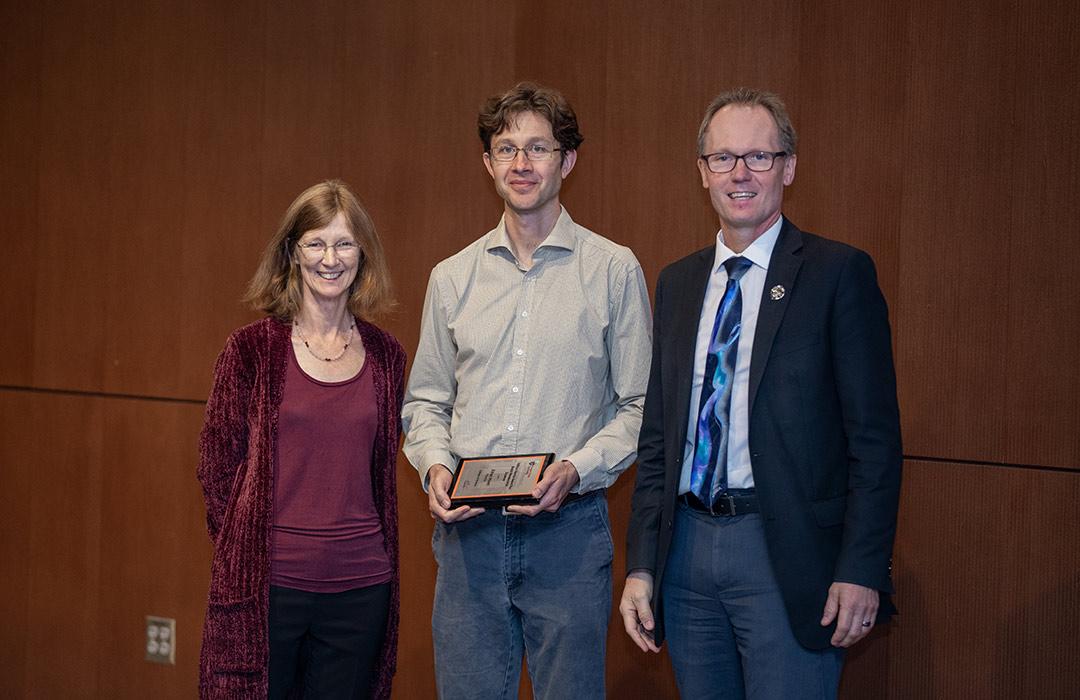
Ethan Minot receiving award from Janet Tate and Roy Haggerty

Physicist Ethan Minot (center) with Janet Tate and Roy Haggerty

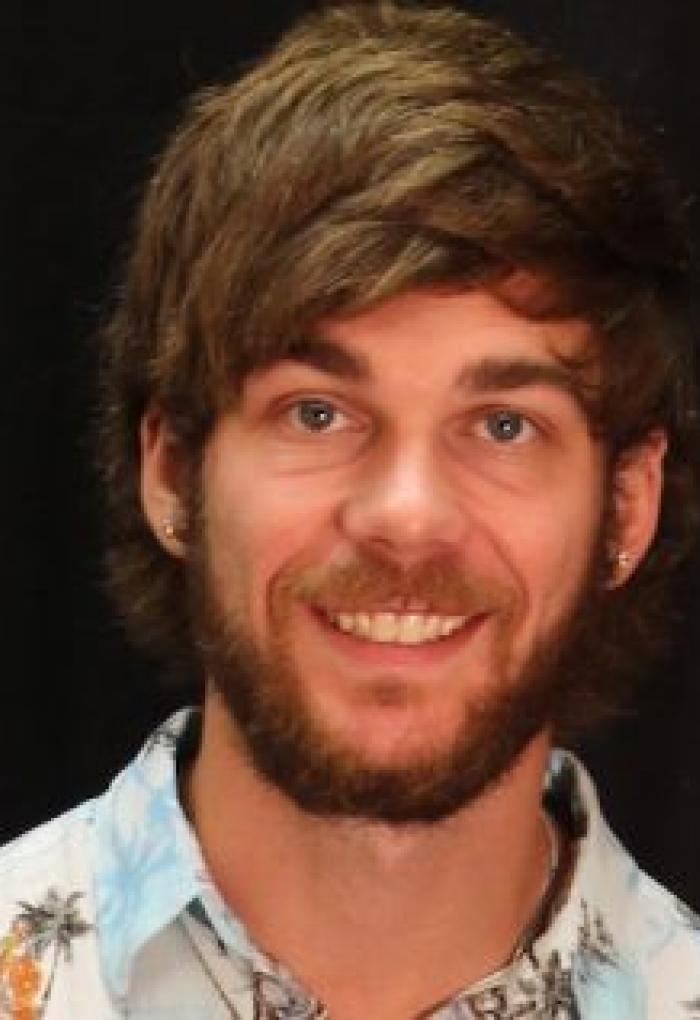
Ethan Minot, associate professor of physics, received the Milton Harris Award in Basic Research for his impressive accomplishments as a scientist. At Oregon State, Minot has built a world-class materials physics laboratory for the study of the structure and properties of carbon nanomaterials and devices for nanoelectronics.

His research at Oregon State has pushed the limit of fundamental properties of nanoelectronic devices, which have a broad range of applications to biosensing and solar energy harvesting. Some of his achievements are: identifying the fundamental noise mechanism that limits the performance of graphene biosensors in liquid environments; becoming the first to electrically generate and detect single point defects; reaching a new level of control over point defect chemistry; and other pioneering advances in the development of high-quality nanodevices and biosensors.

“Using the exceptionally strong, flexible, stable and sensitive electronic materials Ethan has demonstrated that the carbon-based nanodevices can be intimately interfaced with biological systems. His research impact extends beyond the science he has produced. Ethan’s group is a highly-prized destination for graduates and undergraduates alike,” said Professor of physics Janet Tate.

Minot’s graduate and undergraduate students have gone on to successful careers in academic and high tech or medical tech sectors. His versatile research activities have led to many high-impact publications. During his tenure at OSU, Minot has published 34 refereed articles in prestigious journals such as Nano Letters and Applied Physics Letters.

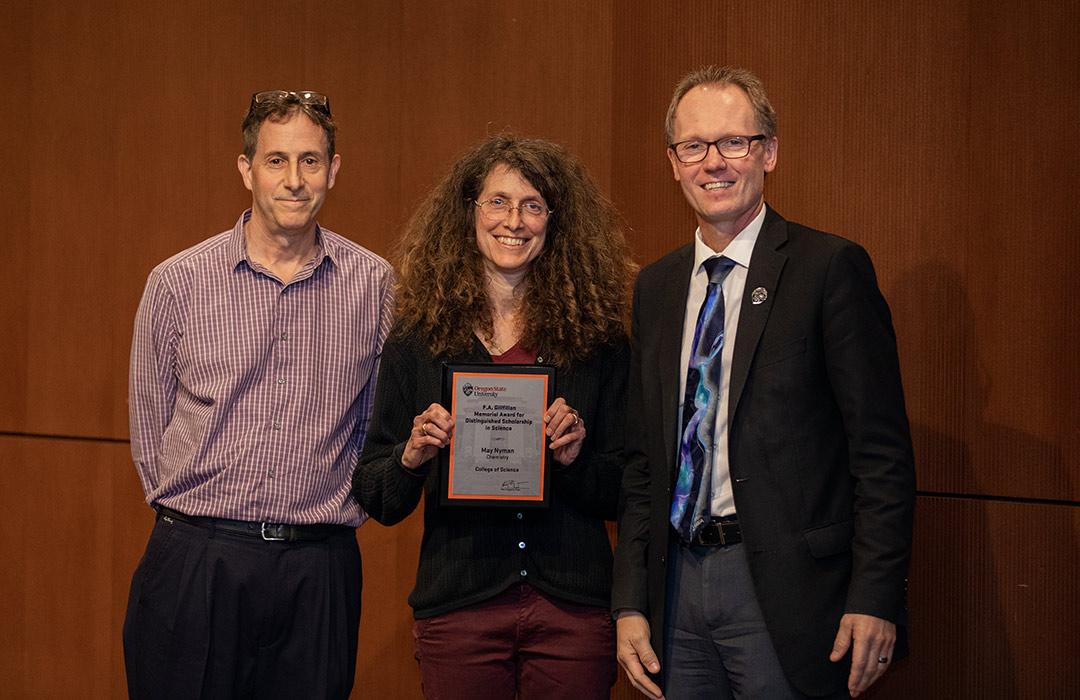
May Nyman receiving award from Michael Lerner and Roy Haggerty

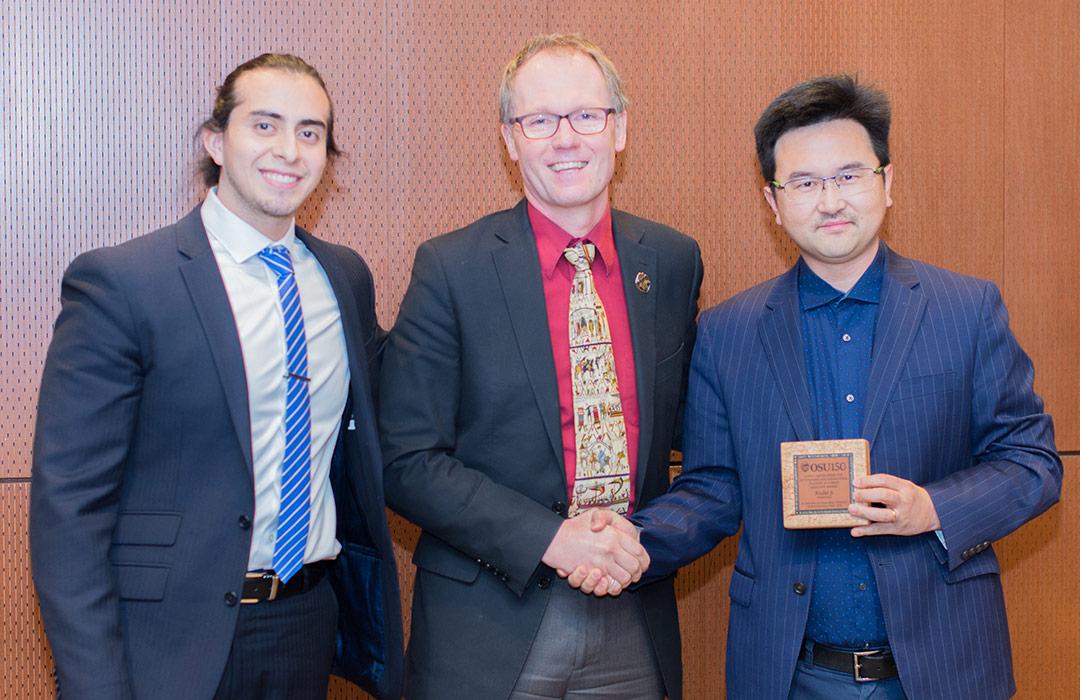
Chemist May Nyman with Michael Lerner (left) and Roy Haggerty

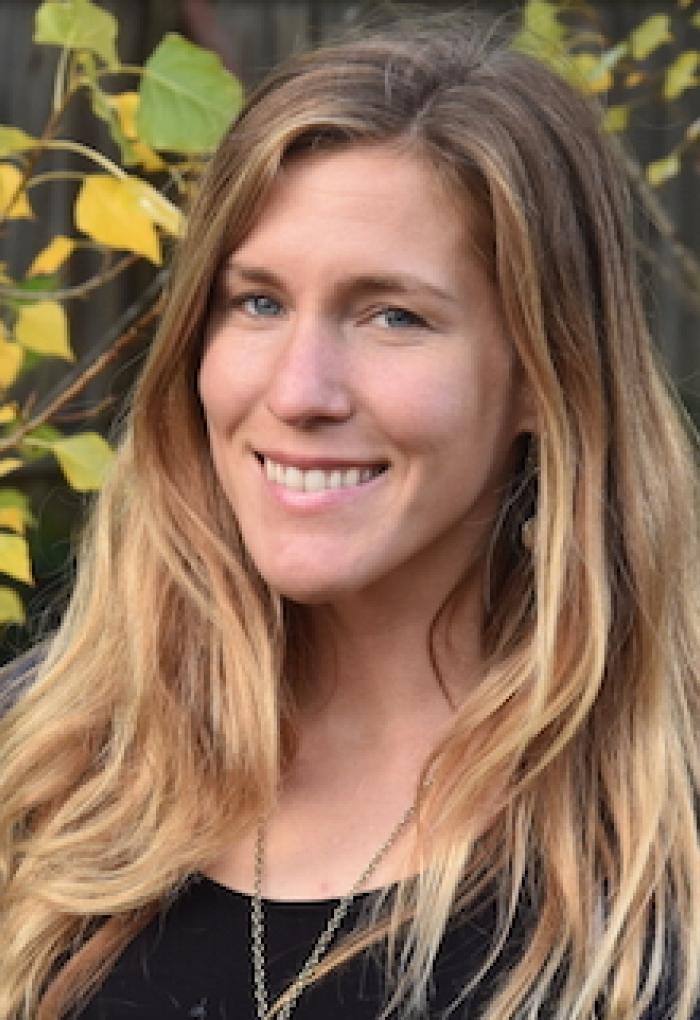
Professor of chemistry May Nyman was honored with F.A. Gilfillan Award for Distinguished Scholarship in Science. The Gilfillan Award honors a faculty member in the College whose scholarship and scientific accomplishments have extended over a substantial period of time.

A leading scientist in the areas of metal-oxo cluster chemistry, X-ray scattering, aqueous ion-pairing and nuclear waste chemistry, Nyman joined Oregon State in 2016 after a distinguished career at Sandia National Laboratories where she developed new sorbents and other waste treatment technologies for nuclear waste management. Her work on Cs-139 removal technologies led to the licensing of a sorbent that is currently used to treat contaminated seawater at the failed Fukushima Daiichi nuclear power plant in Japan.

At Sandia, Nyman developed a powerful and effective sorbent for removal of strontium-90, plutonium and neptunium from cold war era nuclear wastes. The sorbent was commercialized and then produced at the Savannah River site for real world waste treatment. Through her work with applied chemistry technologies, Nyman made tangential discoveries that ultimately led to the development of an entire new class of polyoxometalates (POMs) that she termed the polyoxoniobates (PONbs). These new POMs opened up the field to new discoveries and applications that include the potential development of a new class of nerve agent degraders.

At Oregon State, Nyman has developed expertise solution characterization of clusters using X-ray scattering. She has now become a world leader in applying this technique to clusters. She continues to be an international leader in the field of POMs, PONbs and other metal oxo clusters formed from elements across the periodic table. Her research group’s latest discovery and paper on this topic show how PONb cluster geometries and nucleation are changed simply by the presence of alkali metal cations.

“This latter work is also one example amongst several from the Nyman group that suggests a revolutionary concept – that the standard Pourbaix diagrams collected and widely used by materials and chemistry researchers for several decades may be not be accurate without careful consideration of the electrolytes in solution,” said Michael Lerner, Head of the Department of Chemistry.

The broader impact of improving the model used in such fundamental chemistry is significant – aqueous chemical processes such as geochemical weathering, corrosion and energy production in fuel cells may all be improved. Moreover, through these studies, Nyman’s team learned how to make very high concentration Nb solutions with a neutral pH that can be used to deposit niobate materials for different energy applications. This future work can lead to new functional materials deposited by ‘green’ processes.

Nyman is a leading member of the materials science of actinides program at the Department of Energy’s Energy Frontier Research Center program—her roles include developing uranyl peroxide clusters for fundamental actinide science applied in the nuclear fuel cycle, and training the next generation of actinide scientists.

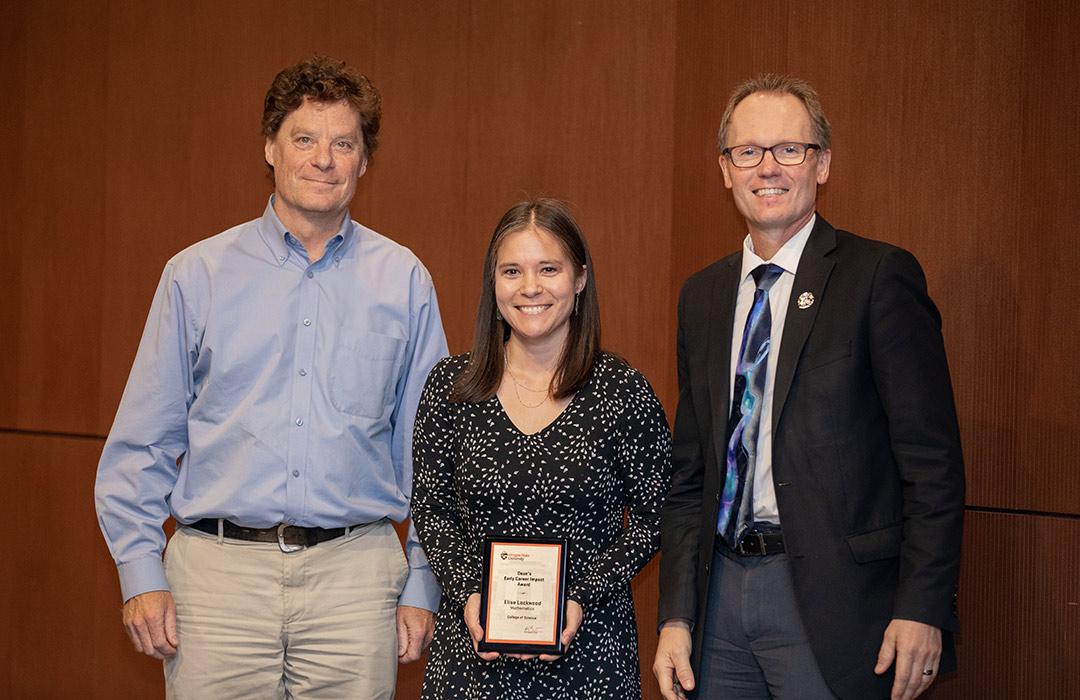
Elise Lockwood receiving award from Bill Bogley and Roy Haggerty

Mathematician Elise Lockwood with Bill Bogley (left) and Roy Haggerty

Elise Lockwood, associate professor of mathematics, received the Dean’s Early Career Impact Award for exceptional achievement in research and education by an early career faculty member. Lockwood has achieved international distinction as a researcher in mathematics education, specializing in Research in Undergraduate Mathematics Education (RUME). She is described as the “top young scholar” in RUME.

Lockwood’s prominence in the field is evidenced by her winning the 2018 Annie and John Selden Prize of the Mathematical Association of America, which is given to the top early-career mathematics education researcher in RUME. Her research focuses on the practical and theoretical aspects of the teaching and learning of combinatorics, a field of mathematics that connects with probability, computer science, and many diverse areas of science.

“Led by her internationally recognized achievements in research, Dr. Lockwood has assembled an impressive array of professional accomplishments that excels in all dimensions,” said Bill Bogley, Head of the Department of Mathematics.

Lockwood was awarded a five-year National Science Foundation CAREER Award—NSF’s most prestigious award for early-career faculty— for her project on developing undergraduate combinatorics curriculum in computational settings. The project focuses on the use of computational resources to help students develop as combinatorial thinkers.

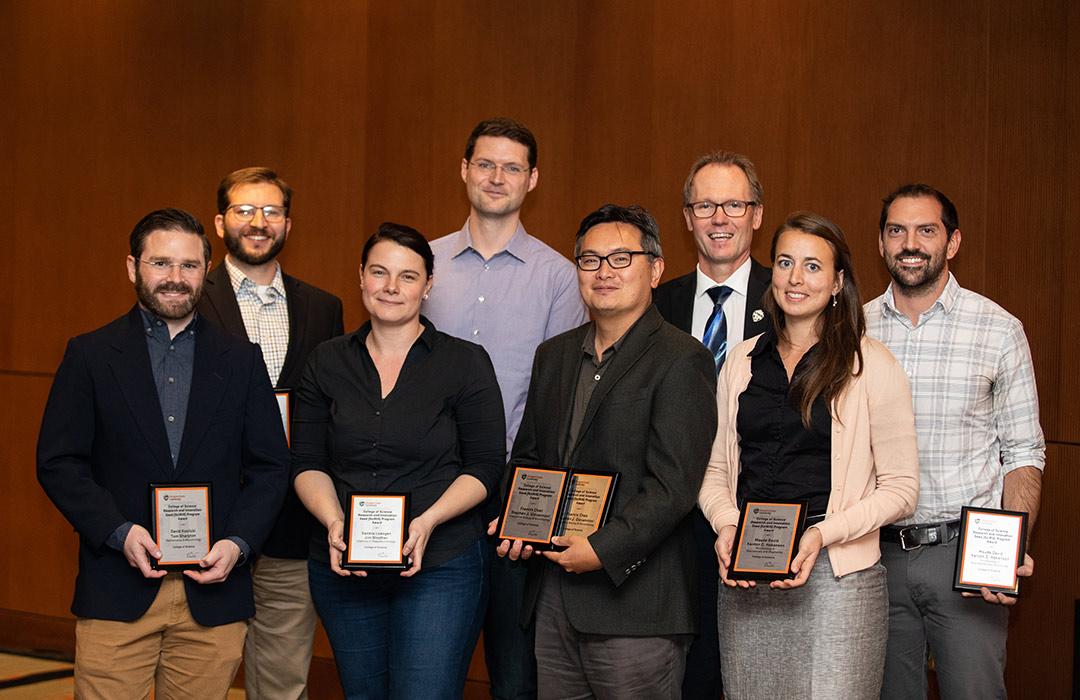
Koslicki, Loesgen, Chan, David and Hokanson receiving awards together

Front row (L to R): David Koslicki, Sandra Loesgen, Francis Chan and Maude David. Back row (L to R): Thomas Sharpton, James Strother, Roy Haggerty and Kenton Hokanson.

Four research teams won the Science Research and Innovation Seed Program Award (formerly known as the College of Science Impact Award) for projects that contribute to human health, drug development and marine science. The SciRis Award carries an amount of $10,000 for each team. The award-winning SciRis teams comprising:

Assistant Professor of Mathematics David Koslicki and Thomas Sharpton, assistant professor of microbiology and statistics, received the SciRis award for metagenomic analysis of voluminous microbiome data that are germane to diverse processes from global nutrient cycling to human disease. The project will enable Koslicki and Sharpton to create a leading-edge research portfolio of new algorithmic and data science solutions for the analysis and mathematical modeling of microbiome data and enhance research productivity by aiding OSU investigators in the analysis of microbiome data. The project will also recruit and train students in metagenomic science. In the long term, the researchers seek to “establish OSU as a center of excellence in microbiome data science.

Assistant Professor of Chemistry Sandra Loesgen and Assistant Professor of Integrative Biology James Strother will collaborate on a project to identify novel microbial natural products with antinociceptive, or pain-relieving, activity using a zebrafish-based behavioral assay, and to characterize the mode of action of new compounds using neural activity mapping. This innovative approach addresses major challenges in neuroactive drug discovery and is highly likely to produce potent new bioactive compounds to develop improved drugs for chronic pain.

This research combines the Loesgen Lab’s expertise with natural products and the Strother Lab’s experience in neuroscience to forge a bold new approach for neuroactive drug discovery.

Associate Professor of Integrative Biology Francis Chan and Stephen Giovannoni, Distinguished Professor of Microbiology, will pursue research on zero oxygen (anoxic) events in ocean ecosystems that are of greatest concern for ecosystems and fisheries. While scientists have developed a clear understanding of the climate-dependent factors that determine the formation of hypoxic (low oxygen) zones, the onset of anoxia remains both difficult to predict and surprisingly infrequent despite the prevalence of hypoxia.

Through recent research combining ocean climate science and marine microbial ecology, Chan and Giovannoni have discovered that oxygen availability has played an important but previously unrecognized role in shaping the evolution of metabolic pathways in microbes, and that such pathways may serve as climate-resilient barriers to anoxia.

Assistant Professor of Microbiology Maude David and Kenton Hokanson, instructor of microbiology and biochemistry and biophysics, will conduct molecular research to address anxiety disorders that affects 40 million people in the U.S. Although women are twice as likely as men to suffer from anxiety disorders, most research at the molecular level has exclusively studied male humans or animal models.

David and Hokanson aim to bridge this knowledge gap by integrating functional, molecular, and behavioral data to identify the role of specific microbial metabolites produced by a bacterium linked with anxiety in humans. This project will be conducted in female mice, maximizing their work’s impact on the large and underserved population of females affected by anxiety disorders.

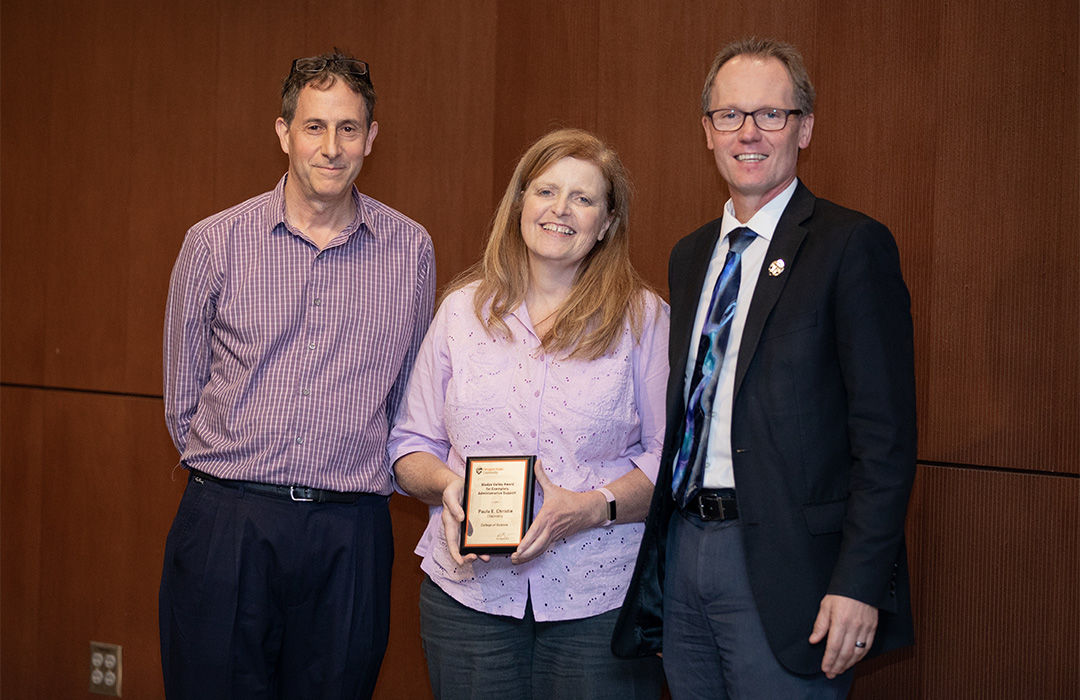
Paula Christie, assistant to the head of the Department of Chemistry, received the Gladys Valley Award for Exemplary Administrative Support. Christie was appreciated for her hard work, professionalism and exemplary administrative abilities.

“Paula’s single best characteristic could be described as excellent and dedicated customer service. Her customers in this case are the entire department, from leadership to entering students to our staff,” said Michael Lerner, Head of the Department of Chemistry.

Jie Zhang from the Department of Chemistry received the 2018 Outstanding Faculty Research Assistant Award. Zhang has served as a faculty research assistant (postdoctoral fellow) in Professor Wei Kong ’s group since 2010. This award recognizes a faculty research assistant who has a record of outstanding job performance and contributions.

“From conversations with Wei Kong and from my observations, Jie Zhang has been as a key factor in the Kong group’s vitality and longevity. Wei gives Jie full credit for numerous important experimental breakthroughs, and also for the continued success in her research grant applications,” said Michael Lerner, Head of the Department of Chemistry.

In addition to her many achievements in the Kong lab, Zhang has trained several graduate students from start to completion, and the acknowledgements from those students’ theses are effusive. “Everybody needs a Jie Zhang in their lab,” said Kong.

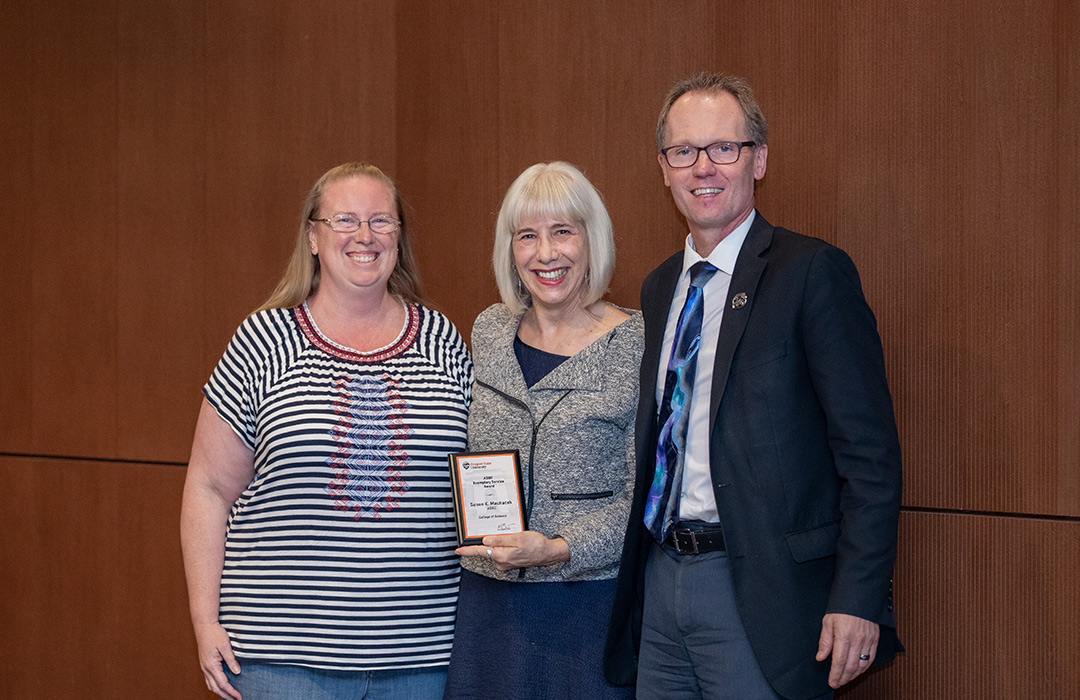
Susan Machacek, an accountant in the Arts and Science Business Center (ASBC) received the ASBC Exemplary Service Award. This award recognizes exemplary service by a member of ASBC to the colleges within the Division.

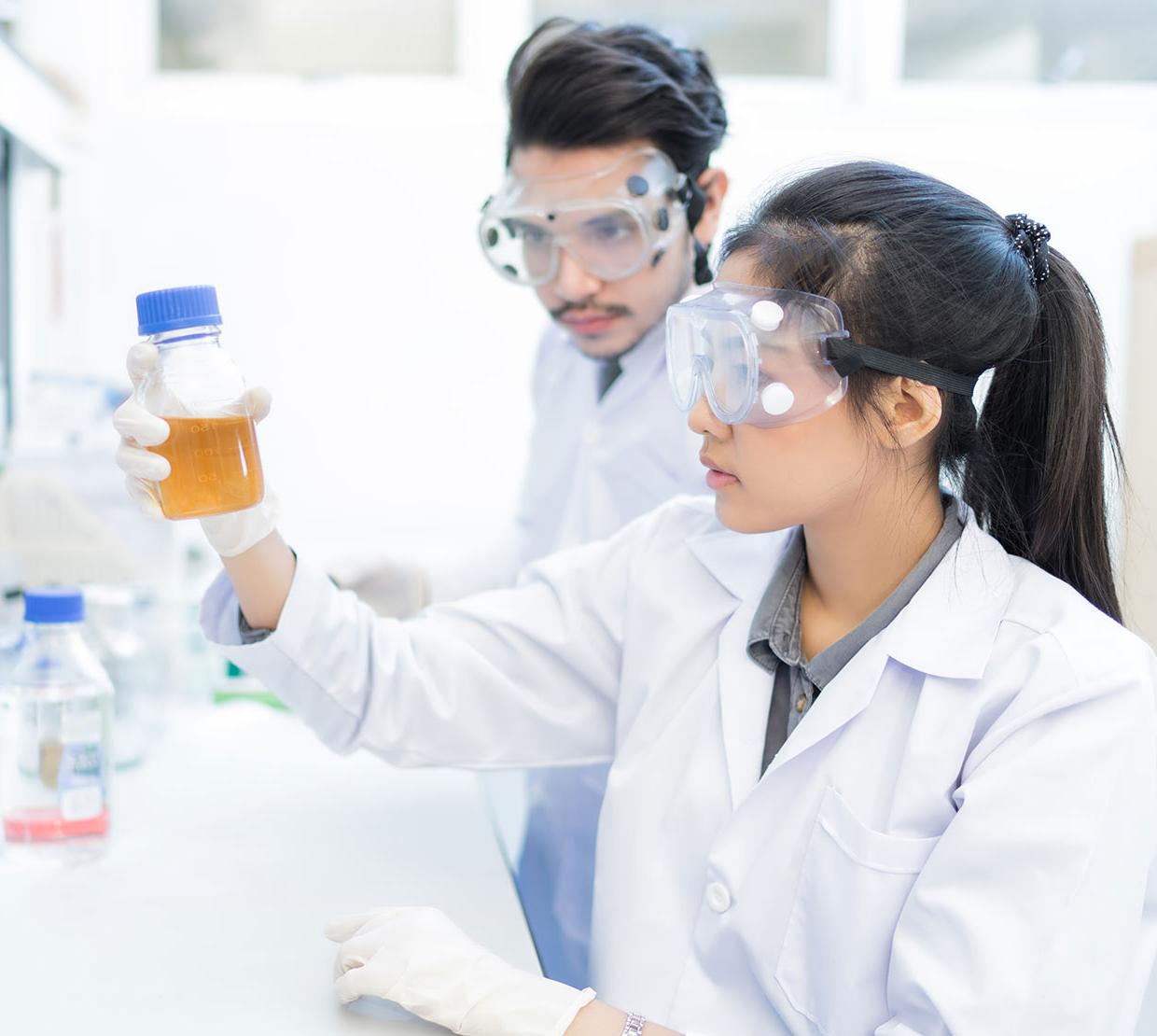
students analyzing beakers in lab

Nearly 40 students win 2018 SURE Science awards

By Mary Hare

Students in the College of Science had another rewarding summer of research, thanks to the financial support from SURE Science scholarships. In 2018, 38 students received $5,500 each for a total of $209K. This is a substantial increase from previous years, thanks to a generous contribution to the 2018 SURE Science program, which is supported by generous science alumni and friends.

SURE Science is a competitive program designed to support undergraduate summer research opportunities for College of Science students, which can be invaluable for student success. Besides the hands-on learning experience, students build connections with world-class scientists and are able to actively participate in groundbreaking research. The award is most appreciated by students who already have jobs working in labs during the school year, and use the scholarship to be able to stay and work in Corvallis when they could not otherwise.

Beginning last year, students were able to participate in an information session geared to help them make the most of the research opportunities available on campus. Additionally, they will participate in three valuable professional development workshops:

  • Team dynamics
  • Scientific writing and presentations
  • Informal scientific communication

What makes these workshops so important is that they provide a critical link between the knowledge learned in the classroom and the work they are conducting on a professional level. This prepares students for graduate school or a professional job upon graduation.

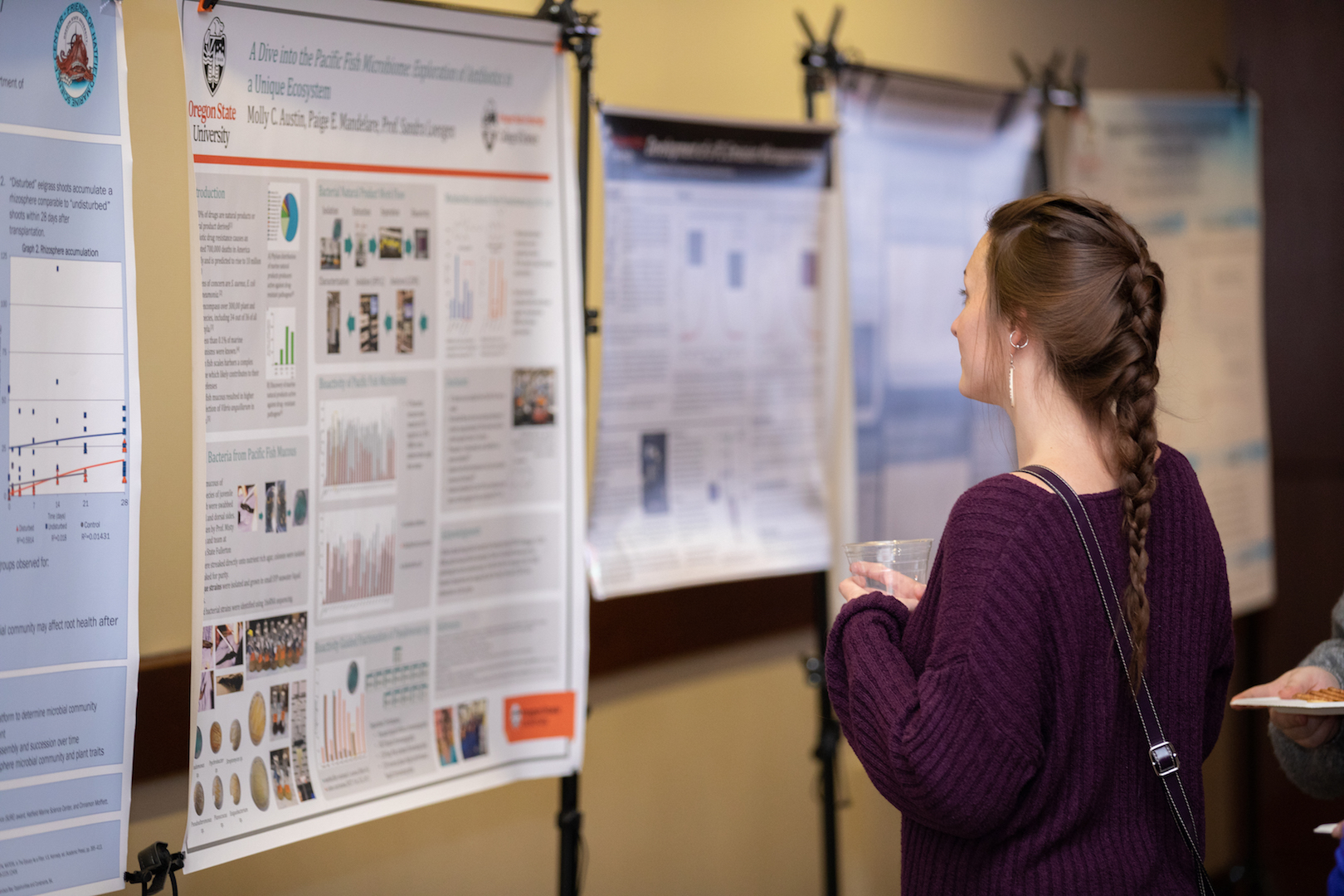
As always, students gain valuable experience by presenting their work in a professional setting. For example, several SURE Science scholars presented their research posters at the College’s Fall Faculty and Staff Awards this month.

While SURE Science is only open to undergraduate majors in the College of Science, several SURE Science scholars have faculty mentors from departments in the Colleges of Public Health and Agricultural Sciences.

Congratulations to these impressive SURE Science Scholars!

2018 SURE Science Scholars

Student MajorFaculty Mentor
1Nicolas ArevaloMathematicsSastry Pantula
2Molly AustinChemistrySandra Loesgen
3Carlos AvendanoBiologyBruce Menge
4Connor BaileyChemistryClaudia Maier
5Andrew BakerBiochemistryMolly Burke
6David BemisChemistryVincent T. Remcho
7Sophia BethelBiologyMichael Freitag
8Jenna BeyerBiochemistryRichard Cooley
9Rebekah ClearyBiochemistryDee Denver
10Zachary ColbertPhysicsMatt W. Graham
11Andrew CollinsPhysicsEthan Minot
12Jamison CozartMicrobiologyMartin Schuster
13Lam DucBioHealth SciencesAlvaro Estevez
14Joseph EdgertonBiologyJeff Chang
15Clark EmbletonPhysicsEthan Minot
16Mary EnglishMicrobiologyRyan Mueller
17Franco FelixBiologyMichael Bouin
18Brooke FreyBiochemistry & Molecular BiologyArup Indra
19Samuel FuBiologyJaga Giebultowicz
20Sonia GrutziusBiochemistry & BiophysicsRyan Mehl
21Kaito HiokiBiochemistry & BiophysicsAndrey Morgun
22Lylan HoBiochemistry & Molecular BiologyWei Kong
23Tera HurstBioHealth SciencesEmily Ho
24Sophia JadzakMicrobiologyStephen Atkinson
25Marija JozicBiologyAndrew Annalora
26Nadia KingBiologyShauna Tominey
27Austin MartinMicrobiologyMaude David
28Blake MigakiBioHealth SciencesGary Merrill
29Cocoro NagasakaChemistryMay Nyman
30Elora OrmandZoologyRebecca Terry
31Mikayla PivecBioHealth SciencesKelly D. Chandler
32Tristan ReynoldsChemistryDouglas A. Keszler
33Rachel SousaMathCory Simon
34Sean TrobaughBiologyVirginia Weis
35Oliver Valdivia CamachoBiochemistry & BiophysicsMaria Clara Franco
36Daniel WhittleBiochemistry & BiophysicsAdrian F. Gombart
37Kaseylin YokePhysicsHeidi Schellman
38Bahiya ZahlBiochemistry & Molecular BiologySteven Strauss

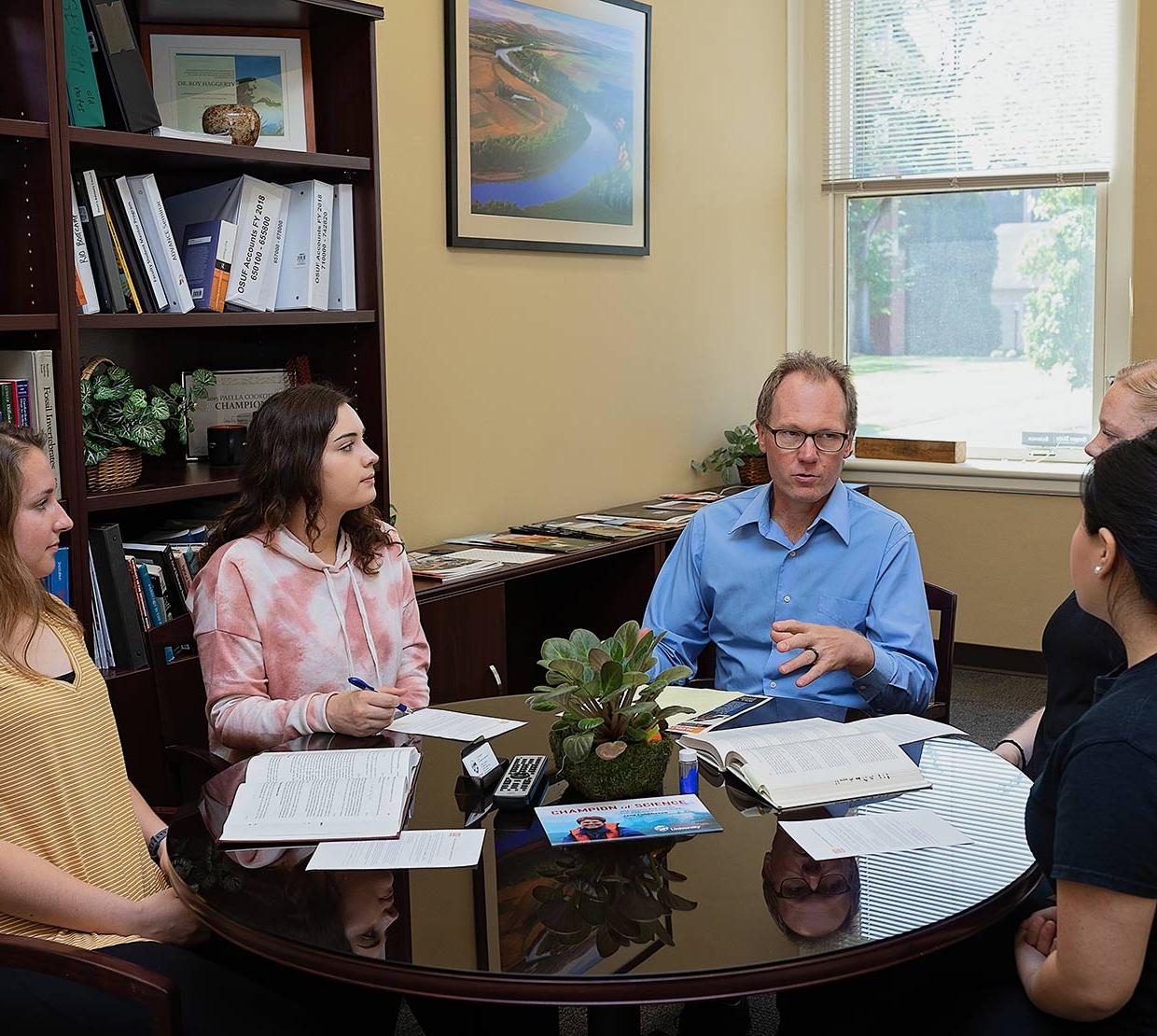
Roy Haggerty talking with female science students in his office

New faculty-student mentor program to raise retention and graduation rates

By Mary Hare

Dean Roy Haggerty and first year science students

This fall, Oregon State University launched an exciting new pilot program to develop stronger relationships between faculty and students, with the overarching goal of improving student retention and graduation rates. The College of Science played a lead role in developing the program.

Currently, the Faculty-Student Mentor program is only being tested on a sample of underrepresented minority students, first generation and Pell-eligible students who are in their first year at OSU (both traditional and transfer students. However, OSU is hopeful that these two preliminary years will see the success required to expand the program to the entire university. There is reason to be optimistic; data from other universities show faculty-student mentor programs can reduce dropout rates by as much as half.

OSU currently has a first-year retention rate of about five percent lower than its goal of 90 percent retention. This rate is even lower for Pell-eligible, first-generation and underrepresented students. While an OSU study showed many undergraduates feel isolated from faculty, nearly 96 percent of students say they have at least one professor who makes them excited to learn. Therefore, the urgent need is to facilitate access and foster substantive faculty-student relationships to enhance student engagement and increase retention and graduation rates.

In order to help the university do a better job in supporting students in their first year at OSU, the pilot program will focus on establishing a relationship between mentors and students rather than advising or conveying discipline-specific knowledge. This approach will help mentors place special focus on issues of student transition and adjustment to college life.

Students selected for OSU’s Faculty-Student Mentor program are put in groups consisting of five students, a peer mentor who is a junior or a senior, and a faculty member. Students will meet with their mentors for one hour every other week during fall, winter and spring terms throughout their first year at OSU.

The new mentoring program is supported by several senior professors and upper-level administrators. The program is led by College of Science Dean Roy Haggerty and Dan Larson, interim vice provost for student affairs. In addition to Dean Haggerty, faculty volunteers for the program include College of Science Associate Deans Henri Jansen, Doug Keszler, Matt Andrews; Math Department Head Bill Bogley; statistics professor Alix Gitelman; Microbiology Department Head Jerri Bartholomew; Provost Ed Feser, Senior Vice Provost for Faculty Affairs Susan Capalbo and other university leaders and faculty.

Strategies to improve student retention are particularly relevant in STEM fields. From universities all across the United States, studies indicate that fewer than half students who start out in these programs succeed in graduating with a degree in the field. This rate is considerably higher for students from underrepresented groups, with only a quarter of those who enrolled receiving a STEM degree.

Studies dating back to the 1990s have hypothesized that the lack of positive mentorship is often a significant factor in this disparity of graduation rates. Many first-generation and underrepresented students struggle to find their feet in a field that no one in their personal life has even encouraged, let alone shown them it’s possible. For some of these students, the greatest benefit of a mentor program is the positive role models it provides, helping students form a stronger self-identity as scholars, and realize their full potential for success in challenging fields at the university.

This research has been backed by numerous National Science Foundation (NSF) programs that support expanding representation in STEM fields through structured mentorship. In 2015, the NSF EFRI Research Experience and Mentoring Program cited a study by the Committee on Science, Engineering, and Public Policy at the National Academies, which describes how “mentorship is of even greater value for underrepresented populations in STEM.”

The Faculty-Student Mentor Program is part of OSU’s Student Success Initiative whose mission is to bolster student success through expanded student support services and changes in learning models. The program was renamed Beaver Connect in early 2020 and expanded to students across the university.

University day table centerpiece

Science faculty recognized for excellence at 2018 University Day

By Debbie Farris

2018 University Day

The College of Science is proud to announce that science faculty were among this year’s recipients of OSU’s most prestigious annual awards for scholarship, teamwork, mentoring and service. A total of eight faculty were recognized for their distinguished accomplishments at OSU's 2018 University Day on Tuesday, September 11, including chemist Xiulei (David) Ji who nabbed two awards.

“I am extremely proud to see the outstanding accomplishments of our faculty recognized at the university level,” said Roy Haggerty, dean of the College of Science. “I commend them for their scholarship, teaching and mentoring and the collaborative spirit to connect their efforts to a broader community.”

Congratulations to these faculty for their perseverance, dedication and exemplary achievements.

A distinguished career

With dual appointments in the Colleges of Science and Veterinary Medicine, Professor of Microbiology Michael Kent received the OSU Alumni Association Distinguished Professor Award for his superior academic performance, professional renown and service to the University and to the public. Award criteria include exceptional scholarly achievements and publications, strong teaching in terms of reputation and quality, active participation in University affairs and visibility and recognition in Oregon, the nation and the world.

Kent’s research is focused on two major research areas: diseases of zebrafish in research facilities and the impacts of pathogens on wild salmonid fishes. Specifically, he studies chronic infectious diseases. Kent’s work has been supported continuously by the National Institutes of Health’s Office of Research Infrastructure Programs (ORIP) since he arrived at OSU in 1999. He is also a co-PI at the Zebrafish International Resource Center, where he assists with health studies and their diagnostic service.

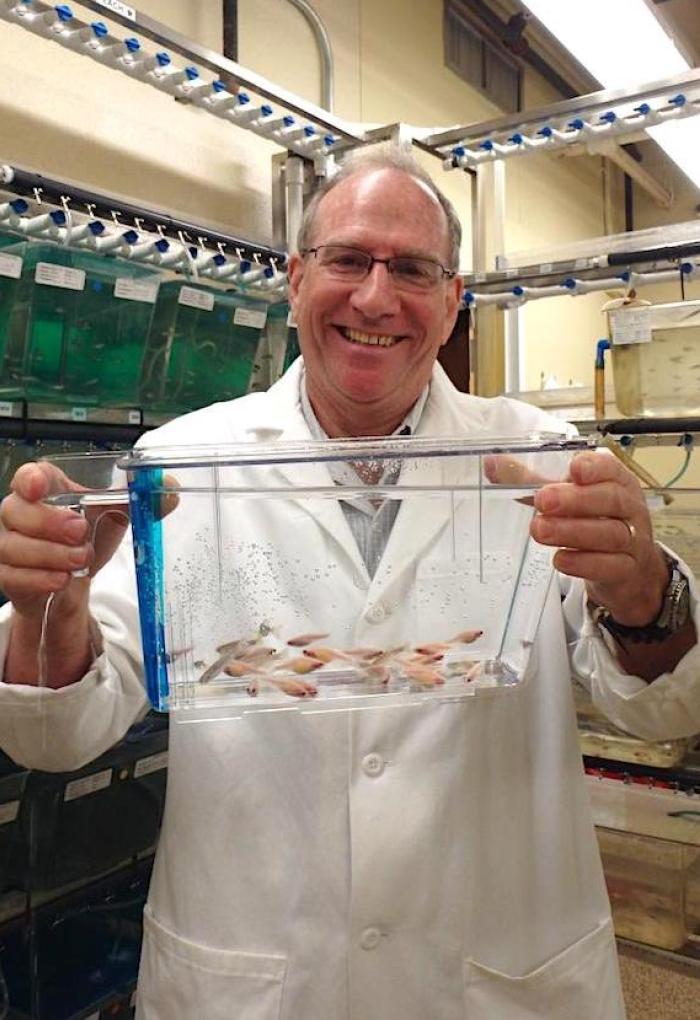
Michael Kent holding up tank of fish in lab

Michael Kent, Professor of Microbiology

Kent established a Specific Pathogen Free (SPF) zebrafish research colony at OSU in the Sinnhuber Aquatic Resource Center in collaboration with Robyn Tanguay, a Distinguished Professor of Molecular Toxicology at OSU. Their work is supported by the NIEHS Environmental Health Sciences Center and NIH’s ORIP, the latter of which enables them to provide biomedical research training to veterinarians using aquatic models.

In collaboration with colleagues at OSU and across the country, the Kent Lab is developing zebrafish as models for infectious diseases in humans. They were able to demonstrate that zebrafish can become infected with Toxoplasma gondii, a pathogenic parasite that infects about one-third of the world population and the second most significant cause of lethal food-borne infections in the United States. This was the first time this infection was reported in a fish.

Achieving excellence in mentoring and scholarship

Associate Professor of Chemistry Xiulei (David) Ji received the Excellence in Postdoctoral Mentoring Award, which recognizes and encourages outstanding mentoring of postdoctoral appointees by OSU faculty. The award is given to faculty who best exemplify the role of a mentor and who has provided exceptional mentoring to one or more postdoctoral scholars during the past year. The interaction between the faculty mentor and postdoctoral scholar plays a crucial role in the professional development of a postdoc.

Ji also received OSU’s Promising Scholar Award, which recognizes the scholarship of junior faculty. The award criteria include outstanding scholarly and creative activities that represent significant intellectual work validated and communicated through peer review.

Ji leads a highly motivated team of graduate students and researchers from all over the world in his chemistry lab, which is focused on pushing the boundaries of ion storage chemistry in solids. In 2017, he and graduate student Xingfeng Wang developed the world’s first battery to use only hydronium ions as the charge carrier, which shows promise for sustainable, high-power energy storage. This summer he received a $475K award from the University of California, San Diego for his project “Aqueous Iron-Sulfur Batteries.”

Xiulei Ji receiving award from Ismail Rodriguez and Roy Haggerty

Chemistry graduate student Ismail Rodriguez Perez (left), Dean of Science Roy Haggerty (center) and chemist Xiulei (David) Ji (right)

Last winter, Ji received the College of Science Loyd Carter award for his inspirational and superb mentorship and teaching of graduate students. He was nominated by chemistry graduate student Ismail Rodriguez Perez, who presented him with the award.

“Dr. Ji is an outstanding professor,” said Rodriguez Perez. “In my eyes, what makes him inspirational and outstanding is his true passion for the subject at hand, which makes me want to learn more. Dr. Ji also does a fantastic job relating his teachings to real-world applications, which is quite inspiring.”

In 2016, Ji received a prestigious National Science Foundation CAREER Award for five-year grant of $530K for his project, “Carbon Anodes in Potassium-Ion Batteries.” The award is NSF’s top honor for junior faculty with outstanding and innovative research and effective application of that research.

In this video, he reflects on his own path in science.

Advancing student success

Team Math received the 2018 Student Learning and Success Teamwork Award! The award recognizes departments or interdisciplinary teams at OSU that have demonstrated exceptional teamwork in creating and sustaining an exemplary teaching and learning environment to advance the university’s strategic goal of student success and excellence.

Team Math as they have become known across campus has been working for more than a year to improve student performance and learning in introductory pre-calculus courses at OSU, which have been identified as having the strongest impact on the success and retention of STEM students.

Math faculty standing together outside Kidder Hall

Team math, aka the department of mathematics faculty

Team Math includes mathematics faculty Sara Clark, Scott Peterson, Lyn Riverstone, Dan Rockwell, Katy Williams and David Wing as well as campus colleagues Susan Fein, an instructional designer in Ecampus, Lynn Greenough in Academic Technology, Liz Jones, a mathematics instructor in OSU’s Educational Opportunities Program and Cub Kahn, coordinator of the Hybrid Course Initiative.

Since spring 2017, the group has redesigned college algebra and algebraic reasoning by integrating active learning technologies and other innovative student engagement strategies. They achieved very encouraging results: they created a successful teaching and learning environment in precalculus courses that is welcoming to students, empowers faculty to challenge students in their understanding and enhances student participation—a significant achievement in the introductory mathematics classroom at OSU.

desert hill with clear sky

150 years of science for land and sun

By Katharine de Baun, Srila Nayak

Painted Hills, Oregon

Note: this article is part of a yearlong series on the distinguished tradition of scientific research pertaining to Oregon State’s 150th anniversary and its four land-grant designations. From our fall 2017 issue: 150 years of science for sea and space(Introduction), On the shoulders of giants, Oregon State Science: The many "firsts" in 150 years. From our spring 2018 issue: The significance of OSU's sea-, space-, sun- and land-grant designations, "Milestones: Oregon State Science at the helm for 150 years."

While the College of Science at Oregon State University was formally established in 1932, science programs and departments have been instrumental in shaping the evolution of research and education at the university since its 1868 land grant designation.

In fact, long before OSU’s College of Agricultural Sciences came into existence, the new agricultural curriculum was first taught in the Department of Chemistry in 1870 paving the way for the scientific study of agriculture for the first time in the Pacific Northwest. Such pioneering science programs since the earliest days of the institution were responsible for OSU’s land grant designation making it one of three land-grant colleges in the country at that time (The other two were the University of Illinois at Urbana-Champaign and the University of California at Berkeley).

The first professors of engineering at OSU in the 1890s were also professors of mathematics. Some of the university’s earliest engineering disciplines would not have flourished if it were not for the fundamental sciences. A four-year mining engineering curriculum was established in the Department of Chemistry in 1900 that led to the consolidation of early engineering programs in metallurgy.

The chemistry department was also the home of the first geology courses. It would not be an exaggeration to say that the natural and physical sciences at OSU have shaped and guided the growth of the world-class research and education that takes place across all STEM (science, technology, engineering and mathematics) fields in the university today.

OSU land grant: From plows to touch screens

Science has played a founding role in carrying out Oregon State’s Land Grant mission from its origins in the Morrill Act of 1862, whose focus was to teach agriculture, military tactics and “mechanical arts” or engineering. Chemistry was hailed, for example, as “the cornerstone of Scientific Agriculture” in the 1869-70 course catalog. And in 1899, today’s microbiology department arguably began with a single course in bacteriology, to help understand and eliminate bacterial diseases of crops. Mathematics and physics courses were a core part of the mechanical arts curriculum and the fledgling department of mechanical engineering, formed in 1889.

In the 20th century, the University’s land-grant mission expanded to adapt to the changing social and economic needs, including a new forestry program in response to Oregon’s growing timber industry and a growing emphasis on engineering after World War II. As the scope of the land-grant mission widened, science continued to be front and center. The chemistry department was home to new four-year programs in pharmacy (1898), mining (1900) and forestry (1906). By 1912, bacteriology was driving innovation across various industries and considered essential training for “any student properly equipped in Dairying, Agriculture, Agronomy, Pharmacy, Domestic Science, etc.”

In the 21st century, Oregon State under President Ray’s leadership aims to be among the top 10 land grant institutions in America, with a focus on three signature areas: the Science of Sustainable Earth Ecosystems, Human Health and Wellness, and Economic Growth and Social Progress. The College of Science is a key contributor with pioneering programs and research in biohealth, the life sciences, marine and environmental sciences and, increasingly, statistics, as students and researchers across a wide variety of fields learn to interpret and gain often revolutionary insights from big data.

An integral part of OSU’s land-grant mission is also to foster public outreach and engagement, and science has long been at the heart of its various agricultural experiment stations and Cooperative Extension Service. Through evidence-based programs designed to make Oregon farms more sustainable, to teach gardeners how to raise bees, reduce pesticides or compost; or encourage children to pursue STEM careers through its engaging, hands-on 4-H programs — science provides both a body of evidence and a mode of inquiry that supports both backyard sleuths and future astrophysicists.

Science also contributes to economic growth with a constant stream of research-inspired innovation, producing 48 new inventions and securing 18 U.S. patents since 2011 alone. Local, state and global industries have profited from sustainable materials that began as lab experiments in Gilbert Hall, from more efficient batteries and greener touch screens, to a new heat-resistant paint using YImMn blue, the new pigment discovered by chemist Mas Subramanian.

Lastly, the College’s current investment in student diversity and success continues a long and proud tradition of opening STEM fields to all, science being a necessary part of the “liberal and practical education” for the “industrial classes” since the passage of the 1862 Morrill Act. As the University’s land-grant mission continues to evolve, science will remain at the heart – and the edge – of discovery and innovation.

Sun: Harnessing natural resources for a healthy planet

For nearly 150 years, the natural sciences at OSU have been at the forefront of research and innovation bridging the biological sciences and the physical sciences (physics and chemistry) for environmental sustainability, renewable energy and a healthy planet.

Chemist David Ji has pioneered the invention of new long-lasting and high-performance energy materials in the form of batteries for the purposes of sustainable energy storage. By employing carbon-based materials and hydrocarbon solids, Ji has designed new battery devices such as the world’s first hydronium-ion battery, potassium-ion battery, dual-ion battery and sodium-ion battery which can easily and cheaply store energy from the wind and sun. Ji’s innovations in the area of energy storage have ushered in a new era of renewable and sustainable batteries.

Materials physicist Janet Tate is a key player in the field of renewable energy technologies that includes development of transparent conductors and photovoltaic materials. Tate is a principal investigator at the prestigious Center for Next Generation of Materials Design—an Energy Frontier Research Center (EFRC) funded by the U.S. Department of Energy.

By integrating the talent and expertise of leading scientists such as Tate, the EFRC aims to “accelerate transformative discovery” and innovate new materials on the atomic and molecular scale to enhance energy security and protect the global environment. At the Center for Next Generation of Materials Design, Tate studies metastable alloys to design inorganic semiconductors for optoelectronic applications (electronic devices that source, detect and control light).

The OSU Sun Grant program is supported by funds from the U.S. Department of Agriculture and the Department of Energy aimed at the creation of biofuels and other environmentally sustainable green technologies to meet growing energy demands and promote opportunities for bio-based economic growth in rural communities.

One of the key sun grant projects on genetic modification of poplar trees to produce plant-based plastics will be extended in new, innovative directions with the added expertise of statistical methods. In collaboration with College of Forestry Professor Steven Strauss, statistician Yuan Jiang is investigating better methods of mapping the genes that control the process of regeneration and transformation needed for genetic engineering by using DNA sequence databases, imaging and computations.

This five-year, $4 million project is funded by the National Science Foundation and is an important advance in developing genetically engineered crop species in ways that help meet our present challenges without unintended environmental effects.

group of people talking to each other at a social event

Health Professions Fair connects students with professional schools and careers in healthcare

The Health Professions Fair

At the annual Health Professions Fair, students can connect with professional schools and programs with specializations in the healthcare industry. The Fair is a wonderful opportunity to learn about graduate education and careers in health care. Admissions representatives from more than 50 health professions schools in Oregon and across the country will be on campus to answer your questions. The Health Professions Fair will take place on April 21, 2020 from 10 a.m. to 2 p.m. in the Memorial Union Ballroom.

These schools represent health professions programs in medicine, osteopathy, dentistry, pharmacy, chiropractic medicine, nursing, physical therapy, public health, health management and administration, medical physics, biomedical sciences and several others. Last year, more than 500 students attended the Health Professions Fair.

Students are welcome to stop by anytime during the health fair, which is free and open to all majors. Volunteers will be available to hand out a list of participating schools and a map of their table locations. Students can visit a school’s table and pick up information materials and speak with admission representatives.

Something for everyone

The health fair is open to all undergraduates and alumni.

First and second year students can explore health profession options, build networks and get tips from admission representatives on undergraduate preparation and co-curricular activities.

Juniors, seniors and alumni will have an opportunity:

  • to learn about specific programs from admissions representatives of various universities
  • collect application materials and obtain financial aid information,
  • get tips on writing a personal statement, the application process, and letters of reference.

Preparing for the Fair

Students can interact with representatives of graduate health programs from schools such as Oregon Health and Science University, Idaho College of Osteopathic Medicine, University of Colorado School of Dental Medicine, University of Utah College of Pharmacy, Western University of Health Sciences in Pomona, California, Keck Graduate Institute of Claremont, California and many more. See a list of participating schools.

Students are encouraged to prioritize their list of schools to make effective use of their time at the Fair. They can brainstorm questions they might ask admissions representatives. Here are a few ideas to get started:

  • What is unique about program X at your university?
  • What types of courses would I take in program X?
  • What experiential components does program X offer (internships, rotations, etc.)?
  • What does your admissions committee look for in an applicant?
  • I read about XYZ on your website. Can you tell me more about that?

According to U.S. News and other surveys, healthcare is one of the fastest growing industries. The Bureau of Labor Statistics predicts that employment growth in this sector will be much quicker than the average for all jobs by 2026.

For more information, please visit: http://www.science.oregonstate.edu/health-professions-fair

Antique photo of Kidder Hall on a rainy afternoon

Oregon State Science: The many “firsts” in 150 years

By Katharine de Baun

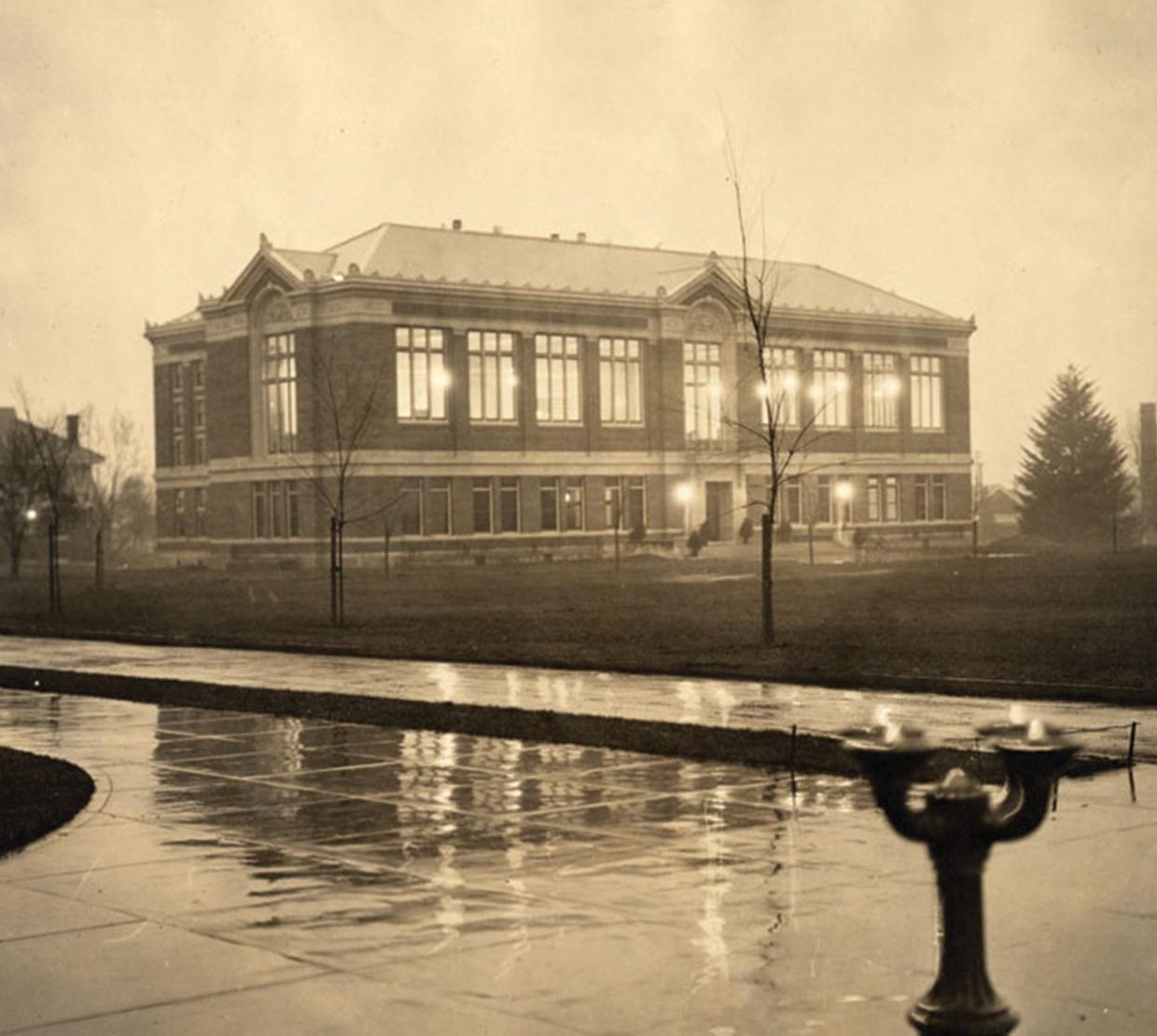
Kidder Hall, the Oregon Agricultural College Library, 1919

Note: this article is part of a series on the distinguished tradition of scientific research pertaining to ocean and space to mark the occasion of Oregon State’s 150th anniversary. Read more: 150 years of science for sea and space (Introduction), On the shoulders of giants, The significance of OSU’s sea-, space-, sun- and land-grant designations.

Mathematics and science have been at the heart of Oregon State University since its designation as a land-grant college in 1868. For example, early records show that a liberal arts curriculum at OSU (then Corvallis College) included three years of mathematics along with a rigorous course of study in Latin and Greek. Mathematician Joseph Emery was one of three faculty in the first decade of the College’s founding. From its earliest days, science at OSU has supported gender equality and wider access to education. In 1890, Corvallis College was one of just three land-grant institutions in the nation to offer scientific courses to women.

Today, mathematics, physics, chemistry, biology and other fundamental sciences form the basis for some of OSU’s most innovative and advanced research and academic programs. The sphere of influence that fundamental science wields at the university is vast. It permeates and shapes 
every discipline from agriculture to oceanography, atmospheric sciences, business, art, history and engineering while creating an intricate blueprint for the future.

The College of Science is proud to have pioneered many “firsts” in its 150-year history:

1868: Science starred in the land-grant college’s first collegiate-level curriculum, with a general “Scientific Course,” “Geology of Oregon,” and courses in chemistry considered “the cornerstone of Scientific Agriculture.”

1870: Corvallis College’s first class of three, one woman and two men, all graduated with bachelor of science degrees, the first granted by a state-assisted college in the western United States. One of them, Robert M. Veatch, gave the College’s first valedictory address titled “Utility of Science.”

1922: First radio transmitter on campus was built by physics professor Jacob Jordan.

1935 Three of the four first Ph.D. recipients at OSU were in science: Herbert L. Jones in physics, Alfred Taylor in zoology and Karl Klemm in chemistry.

1941: First woman to receive a Ph.D. at OSU was Chung Kwai Lui, who emigrated from China to earn a doctorate in physics. She was involved in the top-secret Manhattan Project to develop the first atomic bomb. Her legacy lives on through the Wei Family Foundation Scholarships.

1957: Math professor Arvid Lonseth was instrumental in bringing the first electronic computer to campus, the giant, room-sized Alwac III-e, used for research in mathematics and science. He inspired his student Judith Allen to become the first and only woman in the first computer programming class on campus. She became a pioneer in the 1960s computer industry, driving around Oregon in a bread truck converted into a computer lab, building and selling computers.

1957: Chemistry professor Wendell Slabaugh, a popular teacher who broadcast his chemistry class on TV, could lay claim to being OSU’s first long-distance educator.

1972: Harold J. Evans, professor of plant physiology and biochemistry, was the first OSU faculty member elected to the National Academy of Science (NAS). Two of the three NAS members at OSU today are in the College of Science.

1984: Alumnus Milton Harris (’26) established the first endowed faculty chair at OSU: the Milton Harris Chair of Materials Science.

1987: Microbiology alumnus Knute Buehler (’86) became OSU’s first Rhodes Scholar.

1993: The First MacArthur Fellowship at OSU was awarded to marine biologist Jane Lubchenco for her foundational contributions to marine conservation biology, environmental research and policy.

2009: Chemist Mas Subramanian discovered the first inorganic blue pigment in more than 200 years.

2017: The first-ever 3-D virtual microscope developed and launched by biologist Andrew Bouwma, Ecampus and others won three national awards recognizing innovation in educational technology and bringing the lab experience to online students.

Read more:

Science at OSU has always been a trailblazer, continuing a tradition of outstanding ocean and space research.

The College of Science shines a light on some of the giants who have made ground-breaking contributions to the scientific enterprise.

Find out what it means for OSU to have Land-,Sea-, Space- and Sun-Grant designations.

Roy Haggerty showing children a snake

Discovery Days foster a love for science

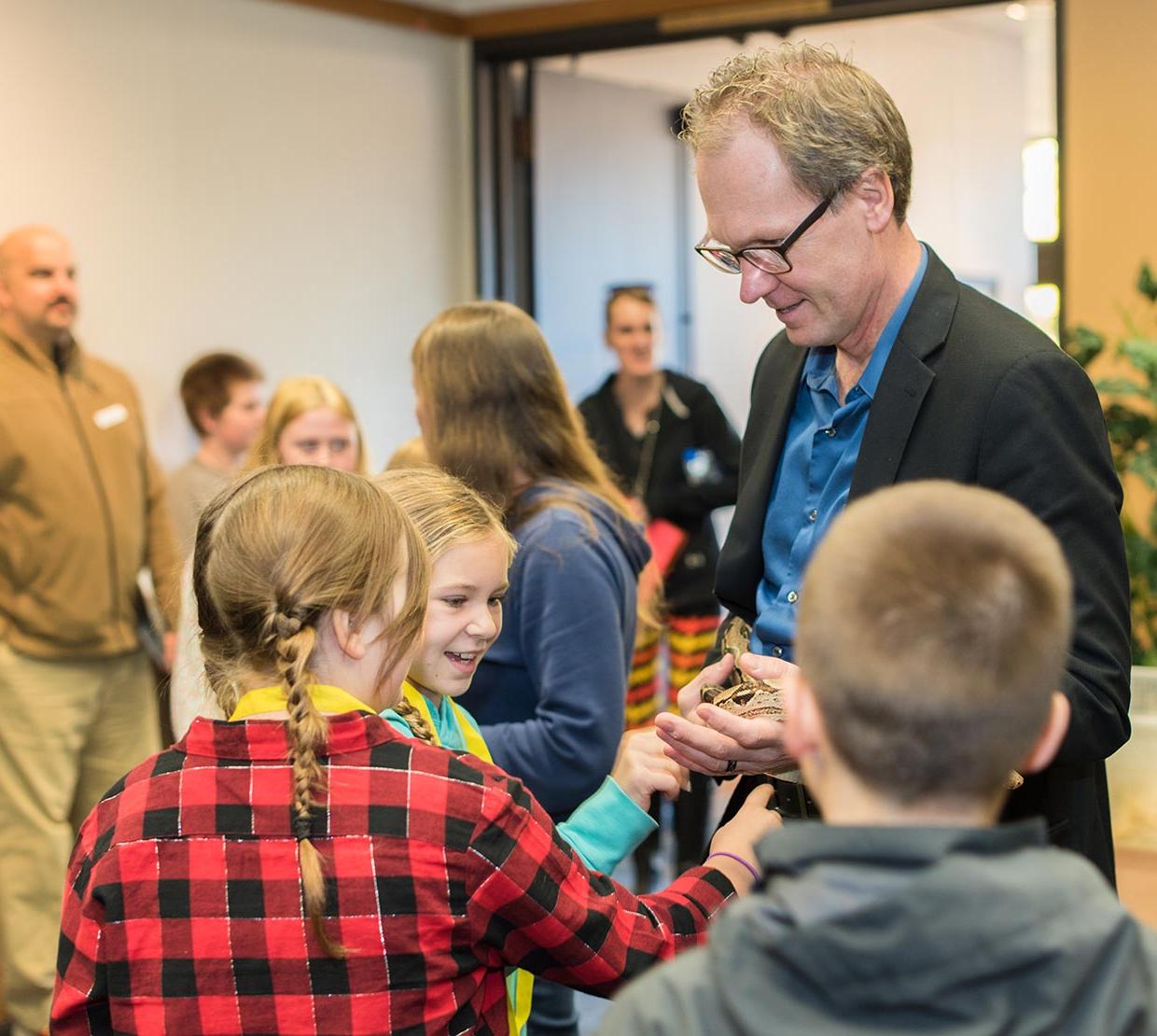
Dean Roy Haggerty at Discovery Days

The eagerly awaited Discovery Days arrived on campus October 31 and November 1. Nearly 800 students from 20 schools flocked to Oregon State University to participate in Discovery Days, an outreach program held twice annually that immerses students in the rich and diverse world of science.
The students were largely from neighboring elementary schools, representing schools in Corvallis, Albany, Sweet Home as well as Toledo. There were also a significant number of homeschooled students in attendance with their families.

The Discovery Days events were held in LaSells Stewart Center on Oregon State's campus.

College of Science Dean Roy Haggerty stopped by to visit with many of the students, encouraging their interest in science.

Students participated in a wide variety of hands-on learning exercises that included extracting strawberry DNA, measuring nuclear waves with a Geiger counter, examining bird and mammal teeth, and learning about snakes, lizards, bearded dragons and the natural history collection on campus with the aid of live specimens and much more. The exhibits were on display in a variety of stations that showcase toxicology, biochemistry and biophysics, botany, zoology, microbiology, physics as well as the engineering sciences.

Sponsored by the Colleges of Science, Agricultural Sciences and Engineering, Discovery Days strives to inspire future generations of doctors, scientists, engineers, mathematicians, physicists and other growing STEM careers. The program relies on volunteers to run stations showcasing science and engineering. The volunteers are mostly Oregon State science and engineering students eager to pass along their love of science to young students.

Participating organizations included the Departments of Botany and Plant Pathology, Chemistry, Fisheries and Wildlife, Microbiology, Nuclear Engineering, Physics and Geosciences as well as Brad’s World Reptiles and Sigma Delta Omega.

More than a decade old, Discovery Days has a rich legacy. It has helped thousands of students from Linn and Benton counties to discover, enjoy and love science through the years. Gabs James, special assistant in the College of Science, is the coordinator of Discovery Days.

Experts concur that STEM education starts long before a child reaches high school. Research shows that elementary-age students love hands-on and interactive STEM activities and are more likely to deem science relevant to their future education plans as they progress through school if they are exposed to STEM early.

Discovery Days is an important program in Oregon that piques the interest of young learners and engages them in science through deep and frequent exposure.

Discovery Days will return in the spring May 1-2, 2018.

star icon above image of clouds at sunset

Ph.D. students awarded ARCS Foundation scholarships

Two doctoral students win 2017 ARCS Foundation Oregon scholars

The College of Science is delighted to have two doctoral students among the 24 young scientists and engineers selected as 2017 ARCS (Achievement Rewards for College Scientists) Foundation Oregon scholars. A microbiology doctoral student from the College of Earth, Ocean and Atmospheric Sciences was also selected for an ARCS award this year.

ARCS Foundation supports exceptional doctoral students in STEM fields at Oregon Health & Science University, OSU and the University of Oregon. The Oregon chapter annually supports 22-25 new scholars through proceeds from endowed funds, donors and chapter fundraising.

Overall, 14 Oregon State graduate students received scholarships from the ARCS Foundation Oregon this year. OSU mathematics alumna Sue McGrath ('70) will lead the organization as co-President this coming year.

Through its partnership with the ARCS Foundation, the College is able to recruit top Ph.D. students in biochemistry and biophysics, chemistry, mathematics, microbiology, statistics and integrative biology. The ARCS award provides doctoral students with $18,000, payable over three years at $6,000 per year.

Kudos to these first-year Ph.D. students, our 2017 ARCS Scholars!

Sean Boulanger, a chemistry graduate of the University of Wisconsin Oshkosh, is currently investigating the protein matrix in the green fluorescent protein chromophore through femtosecond stimulated Raman spectroscopy (FSRS) techniques that offer "real-time structural snapshots of molecules in motion."

Sean Boulanger in front of black backdrop

Boulanger will pursue his studies in physical chemistry with Dr. Chong Fang and others. As part of his doctoral studies, he looks forward to exploring the structure-function relationships of biomolecules and novel materials that are potential targets in biomedicine using FSRS.

Boulanger received the OHSU Department of Radiation Medicine and OSU College of Engineering, School of Nuclear Science & Engineering Scholar Award from the ARCS Foundation Oregon chapter.

A doctoral student in mathematics, Martijn Oostrom holds a bachelor's degree in applied mathematics from Washington State University (WSU) in Pullman, Washington, from where he graduated in three years. Martijn was class valedictorian in high school and received a number of scholarships at WSU.

Martijn Oostrom portrait in office space

He acquired valuable instructional experience while still an undergraduate student, leading a team of teaching assistants during a six-week summer camp for high achieving high school students at the University of Washington. He is currently a teaching assistant for a class on differential calculus at OSU.

Not surprisingly, Martijn is thinking of specializing in mathematics education research. He is also keenly interested in exploring research in modeling and optimization. When he visited OSU during spring break of his final year as an undergraduate, Martijn was pleasantly surprised by how "friendly and approachable" everyone was making it easy for him to pick OSU as his top choice for graduate school.

Oostrom received the ARCS Foundation Oregon Chapter Scholar Award.

Kaitlin McConnell, a doctoral student in the Department of Microbiology through the College for Earth, Ocean and Atmospheric Sciences, will study the roles bacteria and viruses play in tropical reef health, and specifically how nutrients drive microbial community shifts. McConnell graduated with a degree in marine biology from the University of California, Santa Cruz in 2012.

Kaitlin McConnell in front of shrubbery

A certified scientific diver, McConnell worked for 5 years in Chilean Patagonia at a remote field station as a diver, researcher and lab manager before starting graduate studies in microbiology. As an undergraduate student, McConnell developed an interest in microbiology through her experience as a research diver in Antarctica for a foraminifera genome project.

McConnell also received the 2017 National Geographic Waitts Foundation scholarship for her project, "Life after death: decomposition and scavenging in beached whales in Chilean Patagonia." She was awarded the ARCS Foundation Oregon Chapter Scholar prize.

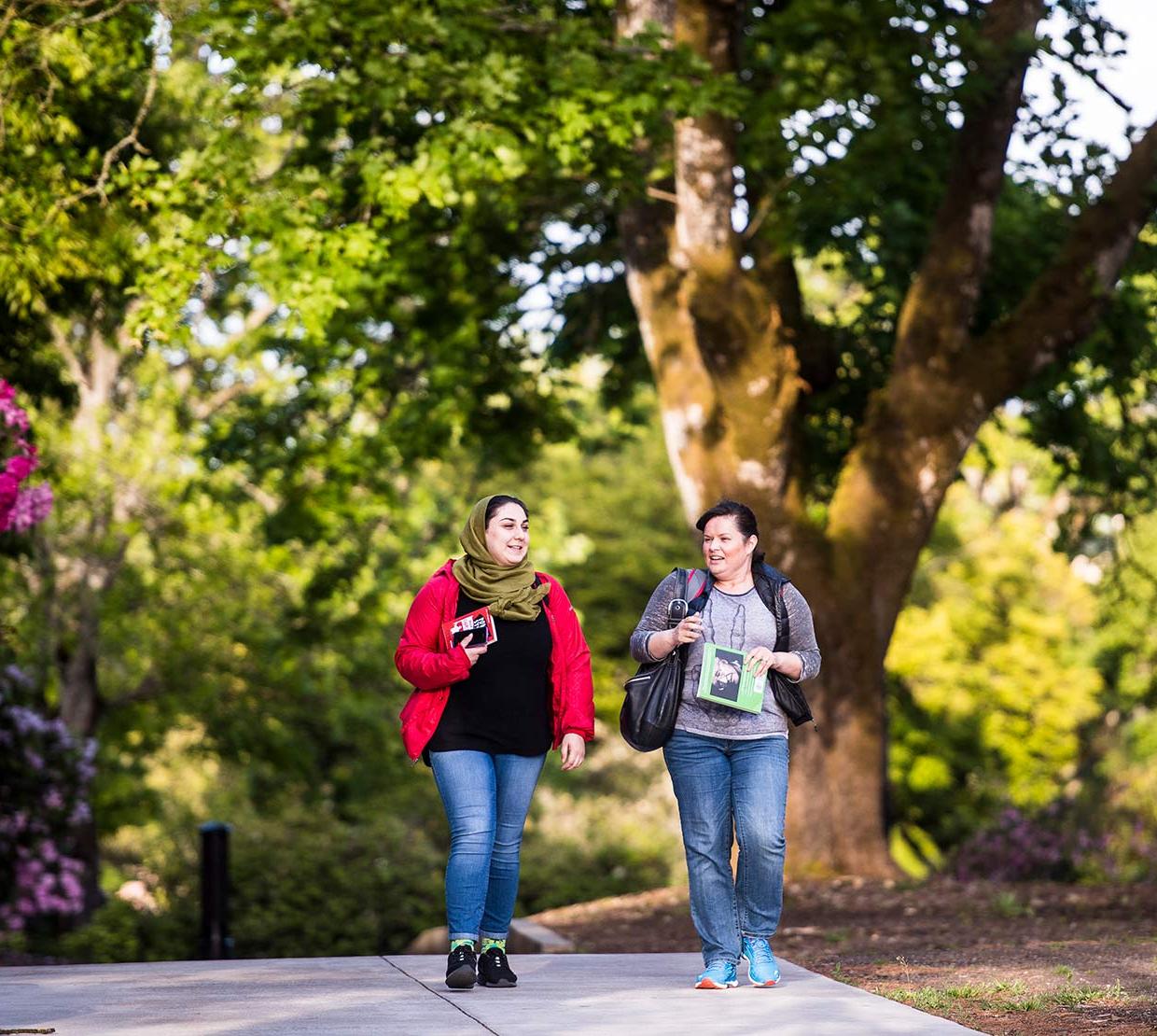
Two female students walking through campus in front of tree

Meet our Class of 2021

By Srila Nayak

Class of 2021

In recent years, the College of Science has enhanced support for underrepresented minority students and first-generation students and increased enrollment of high achieving students (with a GPA of 3.5 and higher). The demographics of the class of 2021 show impressive gains in all these areas.

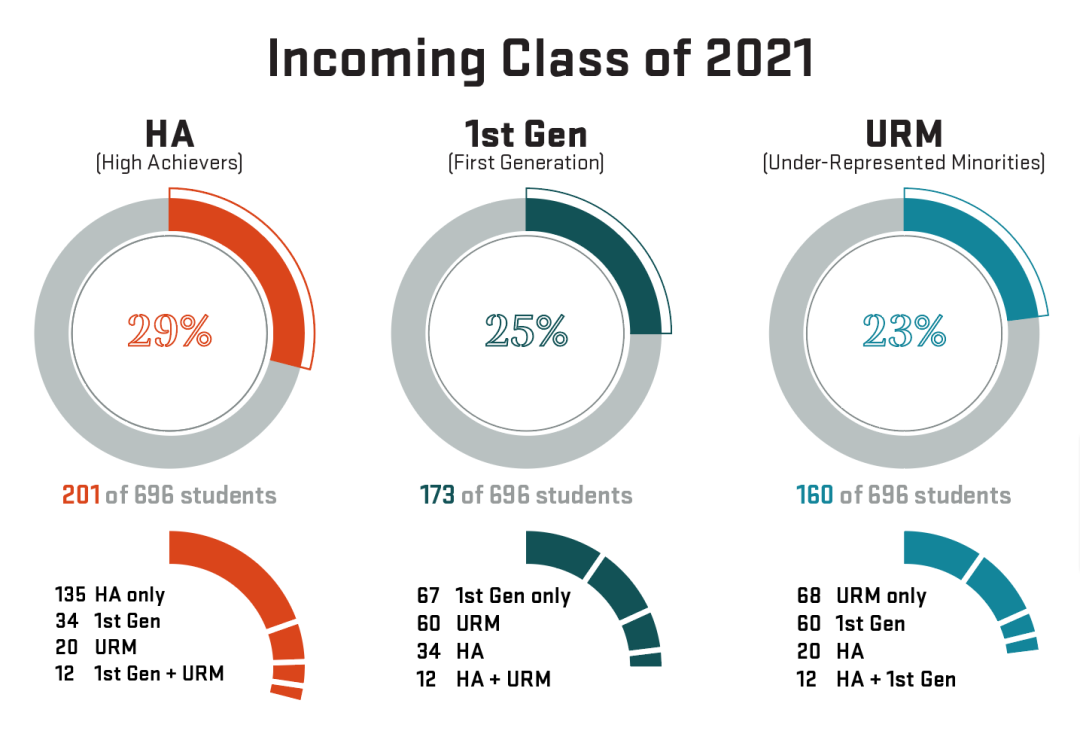
This fall, the College welcomed 696 new students, a huge increase of 31 percent from last year's incoming class. Twenty-five percent, or 173 first-year students, indicated they are first in their family to attend college and 23 percent are underrepresented minorities. The College is thrilled to welcome the highest ever number of high achieving students in its incoming class: 37.6 percent!

More than half of first-year science students, or 570, receive scholarship support. While this financial support has no doubt helped to attract and inspire top science students, the numerous opportunities and support for undergraduate research in labs across and beyond OSU have also attracted many talented students to the College.

Students sometimes start conducting research in their first year of college itself, supported by awards such as the SURE Science scholarship program. The latter offers students financial support for summer research across campus that can foster meaningful, scholarly connections early in their academic careers and help define their professional career path.

The increase in student diversity points to the strength of campus-wide science, technology, engineering and mathematics (STEM) programs such as LSAMP (Louis Stokes Alliance for Minority Participation), OSU STEM Leaders and SACNAS (Society for the Advancement of Chicanos/Hispanics and Native Americans in Science), which help to connect and fuel students interest in science through workshops, peer mentoring and research experiences helping them succeed both on campus and in their future professions.

"I am delighted to welcome the class of 2021 to the College of Science at OSU. I hope they take every opportunity to expand their professional and intellectual horizons in science. Our faculty and advisors are dedicated to student success," said Roy Haggerty, dean of the College of Science.

Overall fall term 2017 enrollment at OSU (which includes the main Corvallis campus, Ecampus and OSU-Cascades in Bend) grew 1.9 percent from last year, while enrollment at OSU's main campus in Corvallis continued to be stable. University-wide the number of high-achieving, minority and first-generation students have also risen in varying numbers. The most impressive enrollment figure is a 6.3 percent increase in minority students over a year ago.

A look at demographics: Women rule

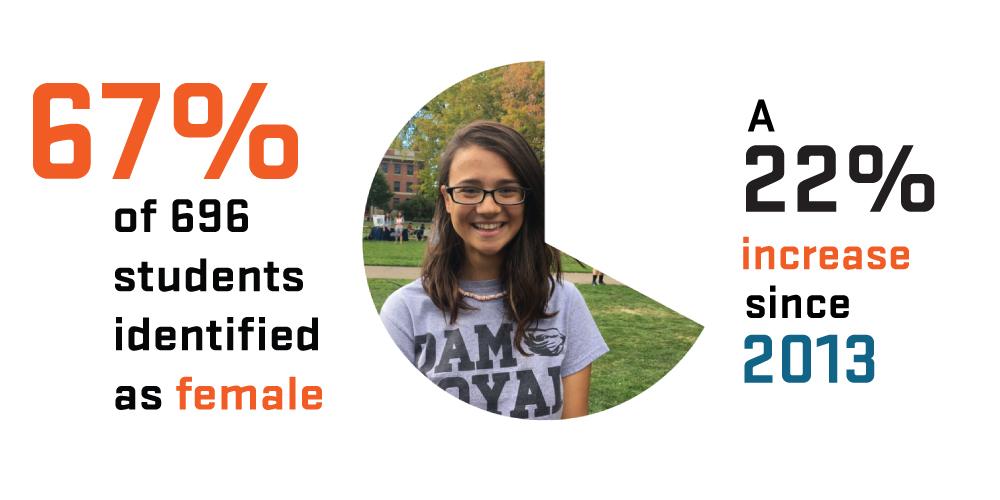
The majority of the 696 students in the class of 2021—67%—identified as female, which constitutes the highest number of first-year women students in science since 2013. At 467, the total number of new women students this year constitutes a 51.6 percent increase over fall 2016.

women graph

While nationwide, women have been enrolling in and graduating from college in greater numbers than men for the last few decades, the data on women pursuing undergraduate degrees in science and mathematics tends to fluctuate across disciplines and fields.

Data from the National Student Clearinghouse Research Center show that in 2014, 42 percent women and 58 percent men earned bachelor's degrees in mathematics. In biological and agricultural sciences, the numbers were 58 percent women and 42 percent men.

At OSU, first-year science students who were surveyed identified as follows: 59 percent white, 13.6 percent students Asian, 2.3 percent Black or African American, 15 percent Hispanic or Latino, one percent American Indian or Alaskan Native, three percent multiethnic and five percent declined to identify their ethnicity.

The survey reflects a 46.8 percent increase in newly enrolled underrepresented minority students in science since fall 2016. Among underrepresented minority students, Hispanic students numbered the highest this year at 104.

The number of first-time students increased by more than 25 percent as compared to fall 2016.

The variation in enrollment data among various minority groups can be viewed in the context of national trends. A 2017 National Science Foundation Report on Women, Minorities and Persons with Disabilities in Science and Engineering states that the share of Hispanics in science and engineering fields has doubled in the past 20 years, with the increase accelerating in the last decade.

The same study reports that while African American student enrollment has steadily increased in psychology, social science and biological sciences, it has declined in "the other science and engineering fields, most notably in mathematics and statistics."

The crossovers: High-achieving, first-gen and underrepresented

Parsing the numbers further shows a strong correlation between a first-year student's ethnicity and her or his parents' educational background: 35 percent of the 173 students who are the first in their family to attend college are also underrepresented minority students. Of the 201 high achieving students, 10 percent or 67 are first-generation students and an almost equal number are minority students (see infographic below). Two percent or just 12 out of 201 high achieving students are both minority and first-generation students.

Class graphic

Science majors by the numbers

Like in previous years, biology and the biohealth sciences majors attracted the greatest number of students—39.6 percent or 276 students and 26 percent or 184 students respectively. Of 696 students, 5.6 percent are biochemistry and biophysics majors,4.7 percent are biochemistry and molecular biology students, 6.5 percent are zoology majors, 7.3 percent are chemistry majors, 4 percent will major in mathematics, 3.3 percent are physics majors, and 2.4 percent are microbiology students.

A new major in the Department of Biochemistry and Biophysics with a strong laboratory and research focus has proven popular. Biochemistry and molecular biology ushered in its first cohort of 33 students.

The Department of Mathematics welcomed 28 first-year students, the highest number of math majors since 2013. The number of physics students too has risen steadily at 23 first-year students, the highest since 2013.

According to the 2015 Annual Survey of Mathematical Sciences published by AMS, total undergraduate enrollments for mathematics, applied math, statistics and biostatistics across public and private universities (medium, small and large) has increased slightly from 2,481,000 to 2,518,000 since 2012. Mathematics doctoral departments such as OSU awarded eight percent more bachelor’s degrees in 2015 as compared to 2014.

Subscribe to Chemistry