Microbiology Major

Microbiology Major

Eleanor Ford stands on a stone pathway with palm trees in Okinawa, Japan in 1981.

Science and legacy: This 1962 alumna did it all

By Hannah Ashton

Eleanor Ford stands on a stone pathway with palm trees in Okinawa, Japan in 1981.

Eleanor Ford (’62, Microbiology) was six feet tall. Not literally, but when she shared her passion for laboratory safety, her personality could fill a room.

Despite being only four feet, eleven inches, and a woman in a male-dominated field in the 1960s, when she talked, people listened.

If you ask her brother, Bill Ford, to describe his sister, the picture he paints is incredible. Eleanor was a first-generation college student from rural Oregon, who became the lab safety director for all 26 state labs in California. She was a Peace Corps member who helped establish a tuberculosis research program in Kuala Lumpur, Malaysia, and she left behind a scholarship that still impacts Oregon State University students today.

“There is not a day that goes by that I’m not very honored and respectful of the work that she did and is doing now,” Bill said.

Because of Eleanor, more than 25 microbiology students have received financial help to continue their education, including Amber Leis, now the division chief of plastic hand surgery and residency program director at UC Irvine Department of Plastic Surgery.

“I was the oldest of four children in a household whose total annual income was well below the poverty line. My educational journey to become a doctor would never have been possible without the scholarship support provided to me,” Leis said. “We may not always see the ways in which our gifts better the world, but every act of kindness has ripple effects that extend further than we could ever imagine.”

The legacy and impact of Eleanor Ford is monumental. Her story covers decades, continents, and even a war. The lives she touched, the barriers she broke, and the enduring influence of her scholarship just scratch the surface of her remarkable life.

Eleanor Ford sits in a blue chair in a blue dress.

Eleanor Ford sits in her home in Fairfax City, Virginia in 1978.

A love of microbiology

Eleanor and Bill Ford grew up in Ontario, Oregon, a small town on the eastern border of Oregon and Idaho. Eleanor was the first in the family to attend college, enrolling at Oregon State College in 1958. Her younger brother Bill, followed in his sister's footsteps and traveled to Corvallis to become a student and “rook,” short for rookie, in the Marine Corps. Eleanor was a senior when he arrived and was deeply entrenched in the Department of Microbiology.

“She had a gift for science and an inquiring and inquisitive mind and loved microbiology,” Bill said. “I was more the liberal arts little brother who studied typing, which she did not. I had the pleasure of assisting her by typing up her microbiology notes and spelling those 12 and 15-letter words that made no sense to me, so she could get a better grade on her papers.”

After graduation, she worked for the Department of Health in Portland, focusing on dairy products, and later moved to the Microbial Diseases Laboratory of the California Department of Public Health in Sacramento, California specializing in tuberculosis research.

When Bill graduated and was commissioned as a second lieutenant in the Marines, Eleanor joined the Peace Corps. One sibling was sent to fight in the Vietnam War and the other was assigned to Kuala Lumpur, Malaysia. It was a stressful time for both, but Eleanor remained passionate about establishing a research facility for tuberculosis on the other side of the world.

Following the Peace Corps, she took a year off and decided to walk around Asia and Europe. She walked up the Malay Peninsula, the southernmost point of mainland Southeast Asia to the base camp of Mt. Everest and traveled to Greece.

Five people sit on a couch in a black and white photo in Kuala Lumpur, Malaysia.

Eleanor Ford sits on a couch (third from left) with her Peace Corps friends in Kuala Lumpur, Malaysia in 1968.

When she returned to the U.S. she picked up where she left off and worked her way up the promotional ranks within the California laboratory system to become the lab safety director. She taught all entering certified public health microbiologists the processes and procedures they would use across the state’s labs.

“She was very well respected within the scientific community because everybody had to go through her safety program before she released them to the bench. She was passionate about scientific safety and disease resistance,” Bill said. “I don’t know enough about it, but I am very glad she was there for the number of years she was there.”

Even without a doctorate, Eleanor became a published researcher and was involved with the American Society of Microbiologists. She died of liver cancer in 1995 but before her death, she established the Public Health Microbiology Trust, a 501(c)(3) nonprofit. She assigned her brother Bill to run the trust in her absence. Bill and Eleanor’s neice Janna are now Co-Trustees.

“She wanted it to last for five or ten years if possible. And of course, being the smart little brother that I was, I asked her if she’d like it to last forever. And she said, ‘Yeah, that would be quite a legacy,’” Bill said.

The original purpose of the trust was to provide educational grants to public health microbiologists within the state of California. Over time the family wanted to switch to something that had a longer lasting benefit. In collaboration with the OSU Foundation and the Department of Microbiology, the Eleanor G. Ford Memorial Scholarship was first awarded in 1999.

Awarded to juniors who are microbiology or biohealth students, preference is given to those in the lowest income groups, and for those who have demonstrated the potential for promising careers in public health microbiology.

“It is an incredible feeling to be able to contribute to someone who would have dropped out of school,” Bill said. He is hopeful that Eleanor's gift inspires them to leave their own legacy and give back when they can do so.

Like she told her brother, it is a remarkable thing to live a life that leaves a legacy. And Eleanor Ford did just that.

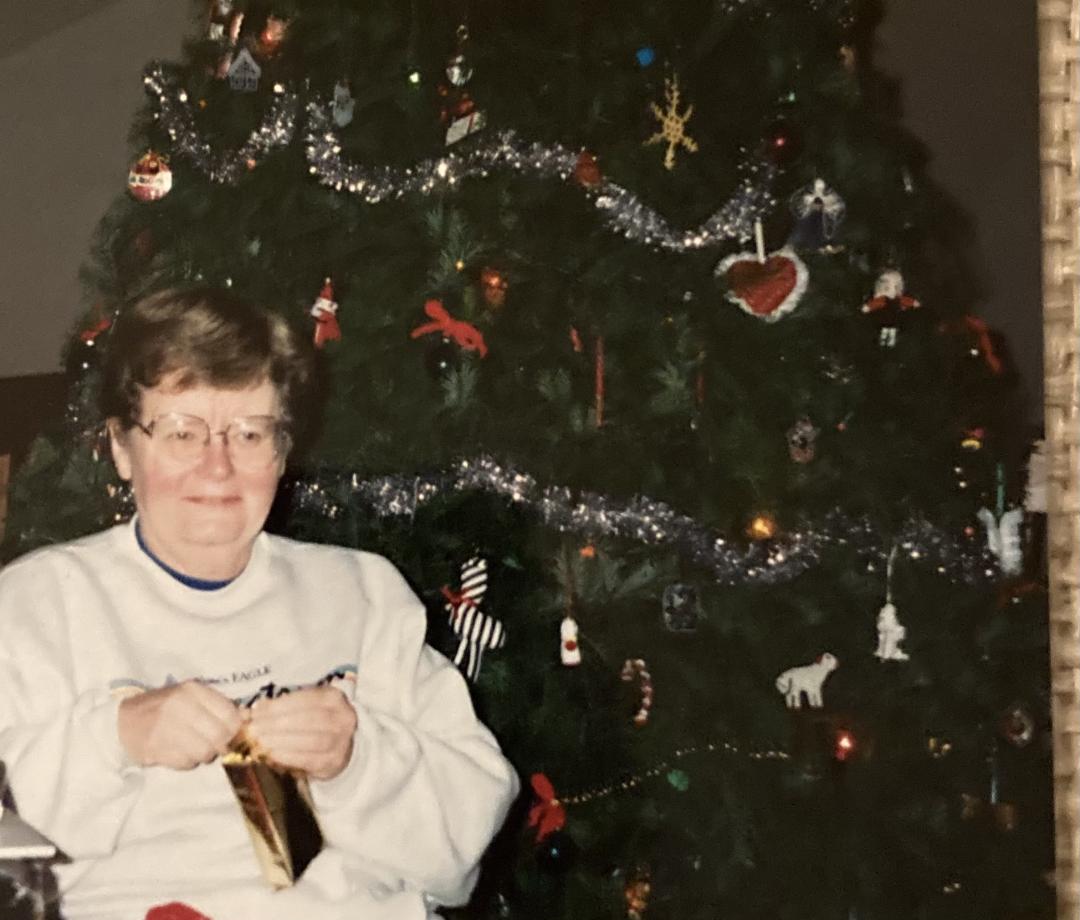
Eleanor Ford sits in front of a Christmas tree inside her home.

Eleanor Ford celebrates Christmas in Corvallis in 1992.

A man in a charcoal suit and striped silver tie smiles in front of a plain gray backdrop.

Microbiology alumnus leads Pfizer research at the pandemic’s frontlines

By Elana Roldan

As the world held its breath, Oregon State alumnus Steve Bjornson (microbiology, '96) waited for results. It had been an unprecedented effort — eighteen hours a day, seven days a week, all cylinders firing for months. With New York City’s highways deserted and cadaver trucks lining hospital lots, the need for a COVID-19 vaccine was more desperate than ever. Bjornson especially felt that pressure as the vice president and chief operating officer of Pfizer’s vaccine research and development organization.

Then, in November 2020, the company’s Phase 3 trial results came in. When the vaccine not only succeeded but provided a level of protection he never imagined, Bjornson was overwhelmed with relief.

“When we got the results that the vaccine actually worked … I just cried,” he said. The moment has become one of the most cherished of his career. “So much effort had gone into it and so much was counting on us. The world was counting on us.”

Since graduating as a microbiology major in 1996, Bjornson has touched the lives of millions around the globe. Viruses are constantly evolving to be stronger and smarter, but thanks to scientists like him, so are we.

The path to the pandemic

Bjornson’s path to his career began in a much smaller, quieter environment: growing up in Alaska. Life above the Arctic Circle was one of adaptability. He and his family moved from village to village, unafraid of packing their things, settling and then doing it all over again.

“You go where the opportunities lead you,” he said, a motto that has guided his career ever since.

It was that mindset that brought him to Corvallis. Although he started his undergraduate studies in his home state, the strength of Oregon State’s science departments drew him to don orange and black in his junior year. His aspirations of going to medical school and becoming a physician led him to major in microbiology so he could focus on human health. While his career plans may have changed after graduation, what he gained as a student was crucial to his later success.

“Oregon State and the microbiology degree ended up being the perfect platform for me to build a career that I've grown to love,” he said.

“You have the ability to develop medicines and vaccines that have an impact on millions and billions of people globally.”

His major was immediately put to use in his first job out of college, working in biopharmaceutical manufacturing in Los Angeles. Biopharmaceuticals, as he explains, are a broad category of medicines derived from cells or organisms. Bjornson gravitated toward the scale of the work and how many people it could help.

“You have the ability to develop medicines and vaccines that have an impact on millions and billions of people globally, while still keeping hands on the science,” he said.

Certain this was the field for him, he went to business school at Cornell University before joining Wyeth, a pharmaceutical company. His new degree meant he could take a leadership-focused role in the organization and make business decisions such as research investments and global collaboration involvement. For the next six years, he grew his career working within the discovery research organization to advance therapeutics in oncology as well as cardiovascular and metabolic diseases.

Wyeth was later acquired by Pfizer, and that was when he first joined the vaccine R&D team. However, Bjornson wasn’t done following opportunities.

He moved to a company called MedImmune, part of AstraZeneca Pharmaceuticals, and ran the organization’s business operations for another five years. He would have stayed had it not been for a fateful call from Pfizer’s head of vaccine R&D, who encouraged him to return to the organization as VP and COO and lead a team of hundreds of scientists.

It was a chance he couldn’t pass up. So, once again, he packed his things and moved forward, unaware of the global crisis creeping up the horizon nor the role he’d soon play.

With the whole world watching

In its height, the pandemic touched nearly every part of Bjornson’s life. He still remembers the eerie stillness it brought to his daily commute to Pfizer’s Pearl River campus. The campus sits outside New York City, a place gripped intensely by COVID-19. For the first time, he was one of a few cars rolling down the city’s highways, a grim reminder of what was at stake.

Making sure the R&D team could advance the vaccine while working in a safe environment was Bjornson’s top priority.

“My job was to keep our hundreds and hundreds of staff motivated to come into work, keep their heads down and stay focused,” he recalled. Under his leadership, they carefully worked beyond their usual schedules to save lives. “It was all hands on deck and it was the highlight of my career to be a participant in Pfizer’s response to the pandemic.”

After months of long, hard work entrenched in global fear, the news they’d strived for finally came. Hope concentrated into a few droplets. A vaccine that worked.

“It was truly remarkable. To see what the organization can do when everybody puts their mind to it was just amazing,” Bjornson said.

“Institutions like Oregon State that have really strong, robust scientific cores are so critical. We need to continue to be able to tell the stories about all the things that science opens the door for.”

Now, four years since the start of the pandemic, he still finds many lessons to take from it. Although vaccines were crucial in the fight against COVID-19, the rise in voices doubting their importance and that of science as a whole has made him increasingly concerned.

“There have been more and more questions around the credibility of science and the role that science plays, and I think that's not in the interest of the world,” he said. “That's why institutions like Oregon State that have really strong, robust scientific cores are so critical. We need to continue to be able to tell the stories about all the things that science opens the door for. And where there's skepticism, we need to be able to have open-minded, fact-based conversations.”

The challenges of Bjornson’s work haven’t deterred him from pushing ahead. Finding optimism comes easier knowing that what you do saves lives, he says. When the world is on his team’s shoulders, it’s reminders like this that help them stand tall.

“My kids ask me, ‘What do you do, Dad?’ And I can explain it to them. The pride I see in their eyes, that's amazing,” he said. “I do it for them. I do it for me. And that's why we go through all this — It is hard work, but definitely fulfilling.”

Joel Peterson walking grey sweater

Joel Peterson, College of Science alumnus and winemaking pioneer, honored at 2024 Black and Orange celebration

By Hannah Ashton

The Oregon State University Alumni Association will honor Joel Peterson, a renowned winemaker and 1969 graduate of the College of Science, as one of the Alumni Fellows during the 2024 Black and Orange Awards Celebration. This annual event, taking place on September 19, 2024, is a chance to honor alumni and friends of the university for their outstanding contributions to their professions, communities and the university.

“I received a very complete education and I am grateful for that because it allowed me to think about things in ways I might not have otherwise thought about them,” Peterson said.

A trailblazer in the winemaking industry, he is best known for founding Ravenswood Winery in 1976 and for his significant contributions to elevating the quality and reputation of Zinfandel wine. His legacy as a winemaker earned him the title of “Godfather of Zin” among his peers, as well as numerous prestigious accolades, including his induction into the Vintners Hall of Fame in 2011 and being named one of North America’s “20 most admired winemakers” by Vineyard and Winery Management magazine.

Peterson’s journey to success is deeply rooted in the scientific principles he learned at Oregon State. Initially following a pre-med path, he shifted to microbiology after gaining hands-on laboratory experience as a student worker. This scientific foundation, combined with his passion for chemistry and a love of wine fostered in his upbringing, set him on a path to revolutionize the winemaking industry.

“Oregon State and the College of Science are home to quality people. I have worked with several of the Dean’s of Science and they are all first-rate, interesting, knowledgeable and capable people,” he said.

After founding Ravenswood Winery with limited resources and a deep conviction in his craft, Peterson grew the company from producing just 327 cases of Zinfandel to a million-case-per-year operation. In 2001, Ravenswood was acquired by Constellation Brands U.S. for $148 million, cementing its status as one of the most iconic names in the wine world. Today, Peterson continues to create exceptional wines through his latest venture, Once & Future Wine, while actively supporting future generations of scientists and winemakers through philanthropy and mentorship.

In addition to his winemaking achievements, Peterson has remained closely connected to the College, serving on the College of Science Board of Advisors since 2014. Alongside his wife, Madeline Deininger, he has generously funded student travel to provide professional development opportunities that were previously unavailable.

“My core belief is that education is very important. It’s key to people's success and for building their own self confidence and the abilities that they care about,” he said. “I help fund opportunities that give students a window into the real world.”

Peterson’s story exemplifies the passion, dedication and impact that Oregon State graduates continue to bring to their fields. For more information on the 2024 Black and Orange Awards Celebration or to learn more about the honorees, click here.

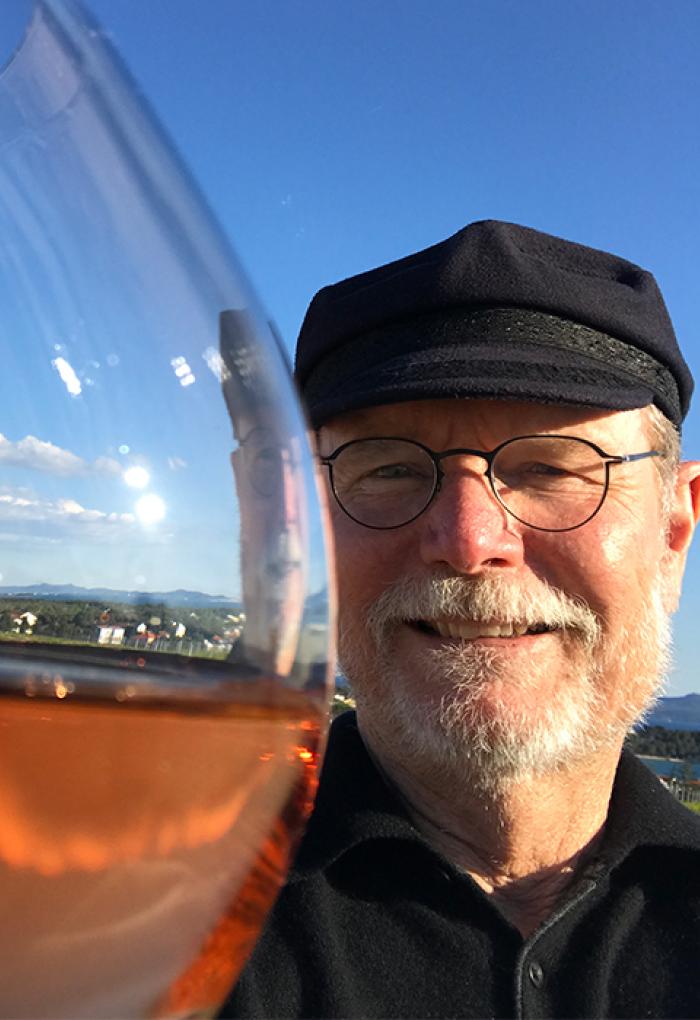
Joel Peterson taking selfie with wine glass

Joel Peterson currently creates exceptional wines through his latest venture, Once & Future Wine.

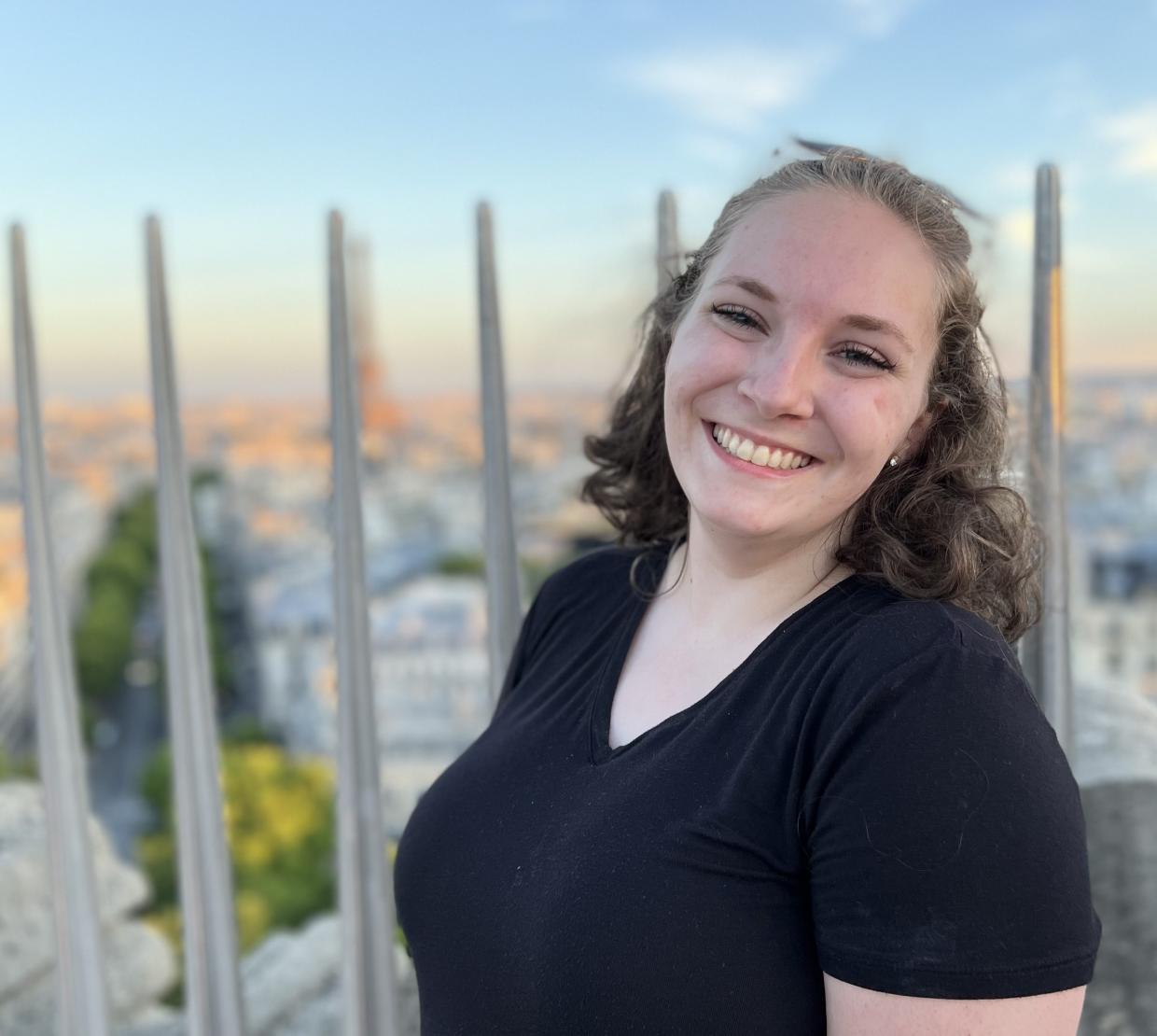
A woman with a dark t-shirt and pulled back hair smiles widely at the camera, the cityscape of Paris blurred in a sunset behind her.

Microbiology pre-med senior pursues passion for patient care

By Elana Roldan

At times, medicine can feel like a paradox. Everything is built around a patient’s well-being, yet, it may gradually become easier for practitioners to focus on physical issues rather than emotional ones.

Microbiology senior Catherine Sterrett remembers a time when medicine for her had boiled down to colorless facts from a book — these symptoms meant this condition which meant this treatment. But after she found herself in a hospital as a patient, not a scientist, her greatest motivation became bringing humanity into medicine.

“You get focused on school and academics and everything from books and paper versus the real human experience of being scared in the hospital, not knowing what's going to happen,” she said. “To me, it highlighted some of the issues that happen when you're the patient in the bed and how I want to go forward to be better.”

After she graduates this June, Sterrett will be heading to Western University of Health Sciences for medical school. The opportunities she’s had and the impact she leaves behind at OSU have built the path forward to her career. Working in this field calls for kindness and trust, Sterrett says, and she plans to bring both in spades.

Two sides of medicine

Before she came to Oregon State, Sterrett took community college courses through her high school for three years. When graduation rolled around and she prepared to head to Corvallis, her plans (much like everyone else’s) were abruptly cut short by the global COVID-19 pandemic. Still, she refused to let this keep her from finding a community.

Sigma Delta Omega is a sorority dedicated to women in STEM and is exclusive to Oregon State University. As an unhoused sorority, it was a perfect match while Sterrett lived in Portland, Oregon during her first year.

“I ended up reaching out and going to recruitment. For me, it was one of the most amazing decisions I could have made,” she said. “I got into the Zoom room and got to talk to people who wanted to talk to me, who were there to make friends. That's the whole point.”

Before she’d even had a year under her belt, Sterrett decided to become the membership development chair for SDO. She organized conversations between other pre-med members and health care alumni, helping students see different routes they could take in medicine and giving them the chance to network with professionals from many fields.

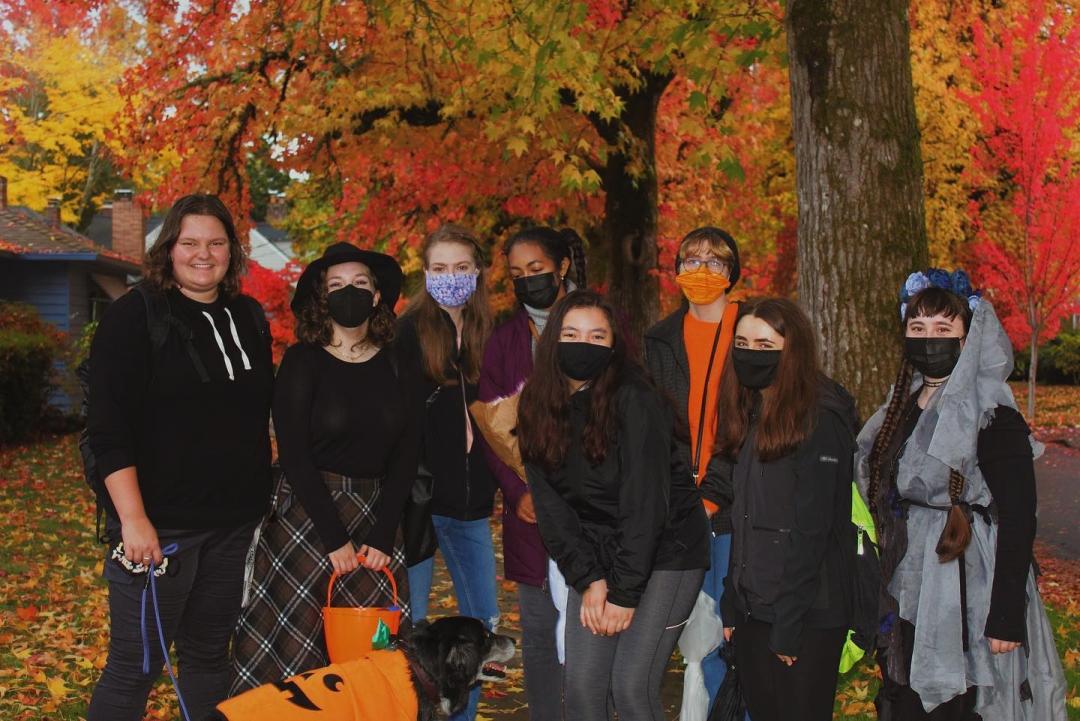
Later, she transitioned into philanthropy co-chair and organized one of the sorority’s most profitable events, a Halloween porch decorating contest, which raised money for the precollege OSU Stem Academy program.

A group of students dressed in dark shirts and jackets, jeans and a few Halloween costumes gather beneath vibrant fall trees. They stand on the sidewalk of a street lined with houses and lawns that are covered in leaves. A black dog with a graying muzzle sits in front of the group wearing a jack-o-lantern costume.

SDO members dress up for the sorority’s first-ever porch decorating competition co-organized by Sterrett.

But halfway through her time at Oregon State, she faced an obstacle she’d never seen coming.

“I unfortunately had to go to the ICU with sepsis and pneumonia and have emergency surgery during winter term of my second year. And boy, does that mess some things up,” she recalled.

Out of the whirlwind of emotions this brought, the most potent were shock and fear. Going from worrying about tests to worrying about the safety of her own body was rattling. While in the hospital, Sterrett saw two very different ways professionals approached patient care.

“I had some medical practitioners who did an extremely good job at interacting with me, explaining things to me and making sure I was in the loop, and then I'd have other people who would basically just do things to me in the hospital. Like, do medical procedures and not even speak a word to me, which is — especially when you can't communicate, because I had oxygen in and I had a very hard time talking for the first week that I was there — is scary and overwhelming,” she said.

Fortunately, her partner, roommate and family were there to help her navigate the difficult circumstances. Several weeks later, she recovered enough to be discharged and eventually resume school. It was an exhausting experience to say the least, but when she did return, her resolve toward quality patient care had grown exponentially stronger. It has even influenced the specialty she wants to pursue.

“I think it can be very easy during pre-med to become very detached,” she said. “I like being able to cultivate that relationship with people and build that trust, which you can do as a family practitioner when you're seeing people over long periods of time.”

Support and success

Now that she’s reached the finish line at Oregon State, Sterrett is especially grateful for the work she’s done with College of Science faculty.

During fall term in 2021, she started working with Ryan Mueller from the microbiology department after meeting him at a research mixer. It was a particularly exciting opportunity because the project they tackled was completely new, meaning they worked together to get it running. She even developed a cost-friendly method of creating anaerobic media for bacteria that would otherwise die in the presence of oxygen, a method also used successfully later in a graduate student’s research.

In her microbiology classes, professors Allison Evans and Linda Bruslind brought a joy to teaching and didn’t hesitate to support students however they could. Evans even wrote her a letter of recommendation for her medical school application.

“Allison Evans and Linda Bruslind are the two best teachers at OSU hands down. They are the best people ever,” she said. “Allison Evans is one of the most friendly people you've ever met. She will talk to you whenever, and she's just so nice. Linda's the same way. They're both so happy and excited to help you.”

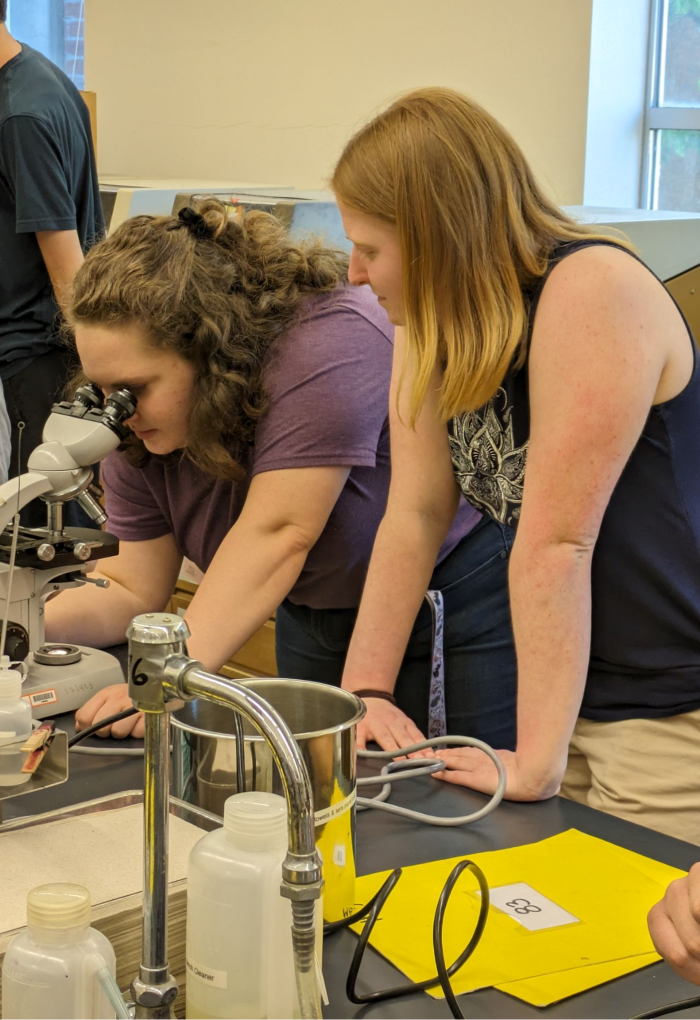
Two people gather at a microscope, one with long, curly hair pulled back looking intently into the lens, one with mid-length hair overlooking the other. The microscope is on a table with various other metal pieces of equipment and plastic bottles.

Sterrett, president of the Microbiology Student Association, uses a microscope at the club's Spring Microscopy Night.

With the support of her science mentors, the skills of a strong leader and a passion for helping those who need it, Sterrett’s leap beyond her bachelor’s is sure to land somewhere she will thrive.

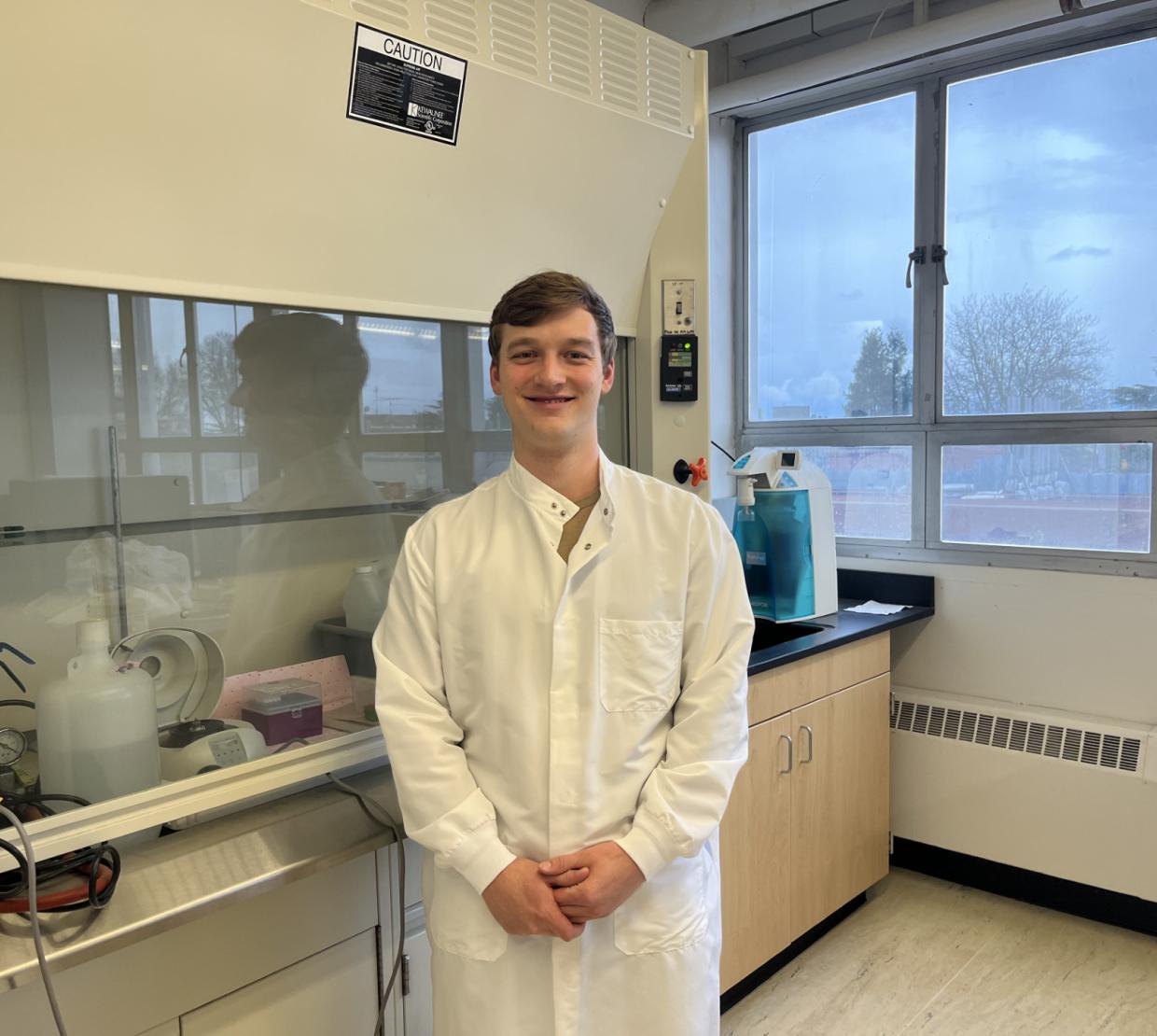
Kelly Shannon dons a white lab coat in an OSU laboratory, equipment lining the wall on his right and a window framing trees outside on his left.

Ph.D. microbiology student honored as ASM Young Ambassador

By Elana Roldan

College of Science Ph.D. student Kelly Shannon has been selected as Oregon’s young ambassador for the American Society for Microbiology. With only one candidate chosen for each state, he has joined the ranks of distinctly remarkable up-and-coming microbiologists.

The American Society for Microbiology stands as the oldest and largest single life science membership organization with more than 36,000 members worldwide. Its founding in 1899 began decades of work uplifting local scientific communities across the globe. With one hand in public policy advocacy and another in improved inclusion, ASM takes a microscopic field to macroscopic heights for millions.

As ASM young ambassadors, early-career microbiologists become leaders in their communities and facilitate stronger regional microbiology spheres. Through networking, professional development and collaborative efforts, they collectively work to improve science on a broad scale by effecting change in many smaller areas.

“This is a really exciting role where graduate students from each state in the U.S. — and many countries internationally — get to connect other microbiology students and early-career scientists in our respective states or countries with each other and with ASM resources,” Shannon explained.

As the young ambassador of Oregon, he hopes to ease the stress of students deciding what avenue of microbiology research they want to pursue. He plans to host a microbiology career development seminar series open to both undergraduate and graduate students. Oregon State students are welcome to attend in person and those from other institutions will also be able to join on Zoom.

The series will explore microbiology research career options, how to tackle a transition into industry research and how to competitively market yourself and your skills. Thanks to ASM’s wide spread of resources that tie into the content, students will continue to have support when the series is finished.

Shannon’s time at Oregon State, he says, has prepared him for this position more than anything else.

“All of my peers in microbiology, students and faculty, are such intelligent, hard-working people and they have really taught me everything I know about leadership, organization and public speaking to set me up for this role,” he said. “There are too many valuable experiences at OSU to count, but my advisor, lab mates, microbiology professors, department administrators and advisors and fellow microbiology graduate students have helped me the most out of anything.”

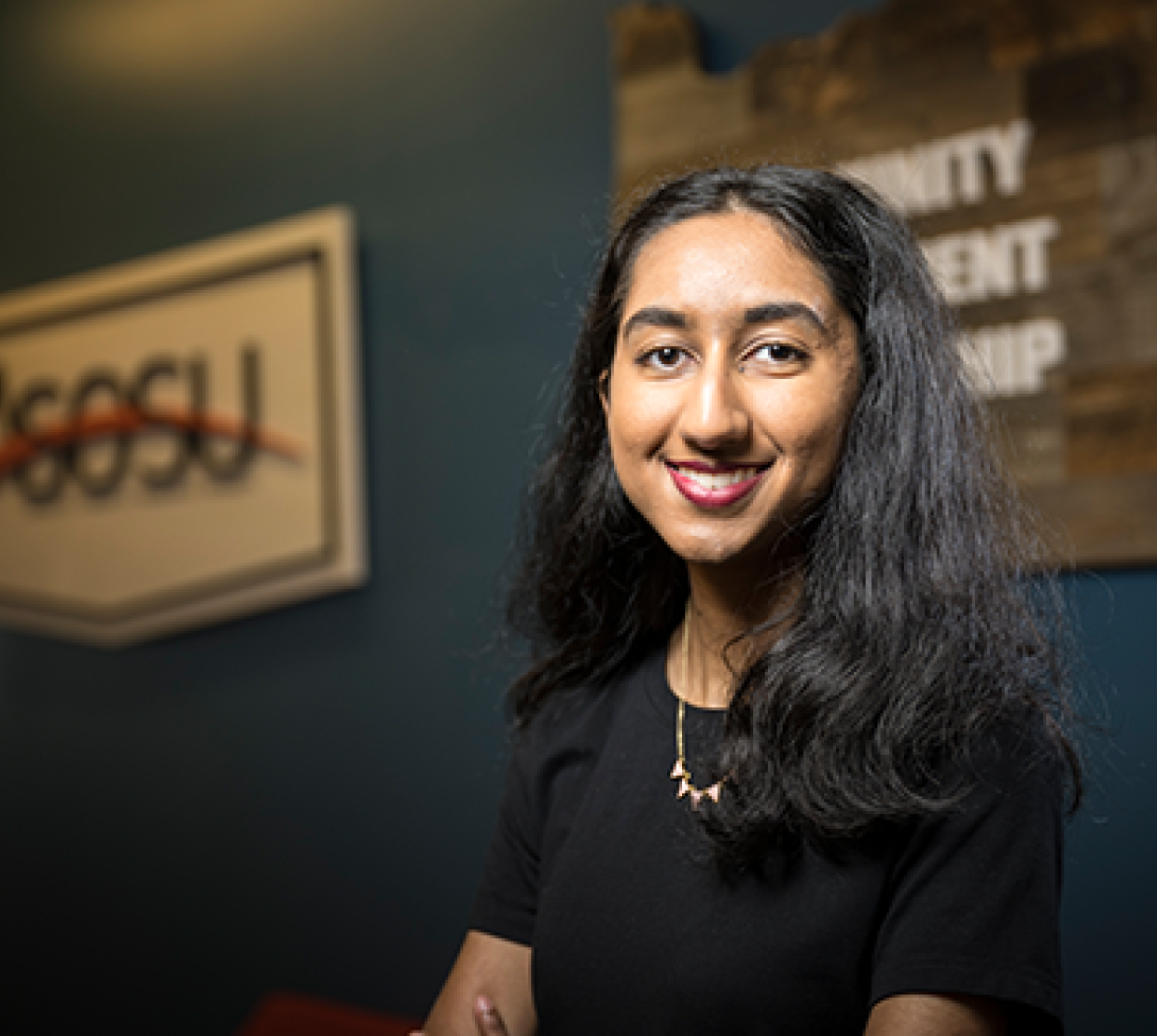
Sahana Shah smiles for the camera in a black shirt.

Sahana Shah, ’24, dreams of a new campus center for students with disabilities

By Siobhan Murray

Growing up in Corvallis alongside an autistic sister, Sahana Shah gained an appreciation for her family member’s unique perspectives and learning style. But Sahana couldn’t help having concerns. “What is her future going to look like? Will she go to college?”

When Sahana arrived at Oregon State University with a Donald G. and Grace I. Lavey Presidential Scholarship, she immersed herself in the Honors College, sought to better characterize the structure and function of the COVID N protein in her biochemistry and biophysics lab, and ran for the student House of Representatives. One of her main platforms? Helping establish a disability cultural center to better adapt the campus to the needs of neurodiverse students. She won the election with the most votes of any candidate.

“The Presidential Scholarship has allowed me to fully engage in my passions at OSU through my different involvements, without having to worry about financial stress or other constraints, for which I am eternally grateful."

Since then, Sahana has joined the long-term effort among student groups to bring the idea to life – introducing legislation to her colleagues in the Associated Students of OSU Congress in fall 2021, allocating money for the project in the House of Representatives, marketing their message and holding focus groups with students at the conclusion of the 2021-22 school year. They’ve watched their idea evolve and expand into a vision for a Disability Cultural Center, in addition to an International Student Center, with the ideas for both projects having come to ASOSU from the student body. “We envision the centers having panel events, workshops and other programs that celebrate everyone’s backgrounds. That’s the biggest thing a cultural center could do: educate and spread awareness,” she says.

“If this comes to fruition, it would make me feel better about my sister going to college – I’d know she could have a place where she could feel safe.”

In 2022-23, Sahana and her peers plan to continue working with university administration to designate physical spaces on campus for the two centers and gather student input on the programming efforts within them.

Donald G. and Grace I. Lavey Presidential Scholarship was created in 1998 through an estate gift from two OSU alumni who graduated in 1940 – he in mechanical engineering and she in home economics. Over the last decade alone, the endowed fund has provided over $375,000 in scholarships for students like Sahana. Learn more about how you can unlock greater support for OSU students through the Scholarship Match.

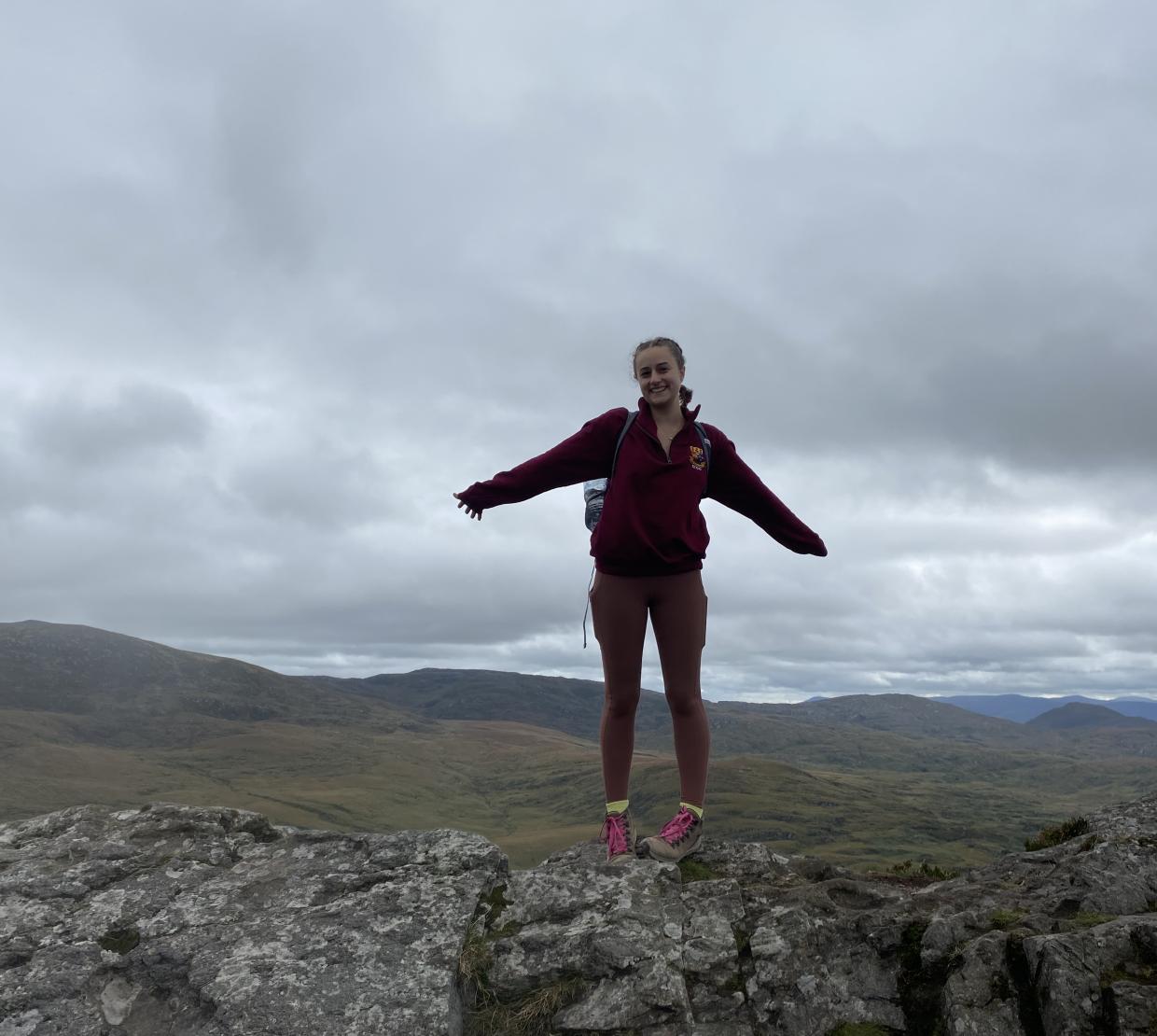
Amelia Noall standing at the top of Torc Mountain in Ireland, overlooking a vast field.

French, microbes and the microbiology senior who speaks both

By Elana Roldan

Amelia Noall standing atop Torc Mountain in Killarney National Park, Ireland during her time studying abroad.

Lice: creepy, crawly, but to a young Amelia Noall, fascinating.

Memories of getting lice in elementary school aren’t usually fond ones, but after she was gifted a microscope by her mother, the experience became an early sign of Noall’s eventual major.

“There was an outbreak at my school, and of course I got it. But I started looking at the bugs through my microscope and thinking, ‘Wow, these are so interesting!’” she recalled. Her natural desire to explore paired well with the smaller, unseen parts of the world around her. As she followed her curiosity, picking leaves from the ground and examining their hidden structures through the microscope lens, she unknowingly paved the way toward her time as a microbiology major — and now senior — at Oregon State.

Exploring the little things

Leaving Portland, Oregon to start her first year of college, Noall decided to major in biohealth sciences, set on pursuing forensic anthropology. But she later felt drawn to naturopathic medicine, and after that, realized she didn’t have a particular goal in mind.

“Being here exposed me to a lot more than I had ever really seen,” Noall said. “I wasn’t sure what I wanted to do, but I wanted to keep exploring.”

She began diving head first into science at Oregon State, fitting as many clubs and classes as she could into her schedule, and eventually stumbled upon the microbiology major. Just as the shapes and forms of small organisms had captivated her as a child, microbiology caught her attention for a similar reason.

“I actually chose microbiology because I think that microbes are cute,” Noall said, laughing. This unassuming interest appealed to her enough that she decided to commit. With a final switch of her major to microbiology, she soon found herself appreciating microbes for much more than how they looked.

"Bacteria live on us, in us. We’re about as much microbe as we are human.”

You may not see microbes as often as you would birds hopping between tree branches or squirrels darting across sidewalks, but they exist nonetheless in a subtler way throughout all habitats, too small to be seen by the naked eye. Despite their tiny stature, the importance they carry is immense.

“The amount that microbes could make or break our future is incredible,” said Noall. “Microbes are what we think of as the most simple organisms, but they are so complex and amazing at what they do. Bacteria and phytoplankton and zooplankton could help us a lot with climate change. If your gut microbiome is off, it can cause you to have new food allergies. Microbes are something so small that you can’t see them, yet they can affect not only the environment but us too.”

Before studying microbiology, Noall’s view of microbes was much narrower. “I definitely thought before that bacteria were just something you kill with antibiotics, but they help us a lot more than they hurt us,” she said. “Bacteria live on us, in us. We’re about as much microbe as we are human.”

She decided that the major would never be boring and always give her a new question to ask, and chose to continue studying it through college. “I started for the appearance of the microbes and how cool they seemed, and I think I stuck with it for how interesting they are and how in-depth microbiology goes,” she said.

To speak the language

As time has gone on, Noall has developed more passions outside of microbiology. She has often felt pulled in many directions, which was amplified by the vast spread of opportunities available on a campus as large as Oregon State.

“It’s a big school and there’s so much to do, and I wanted to fulfill all those desires in me to learn all I possibly could,” she said.

One of those desires would weave together nicely with her love of language. Beyond the facts and figures of science, Noall carved out a slice of her time to dedicate wholeheartedly to studying French. The language had long been a cherished hobby of hers, but she never intended to continue learning it in college.

“It wasn’t originally my plan to have a language component, but I took the language test before I came here and I ended up speaking to one of the French professors before school started my first year,” she explained. She learned that she would only need two years of French classes in order to minor in it thanks to her having studied French through all of high school. The decision to commit to the minor nearly made itself, but Noall had more reason than simply adding another point to her resume.

"My experience with it has been so great. Maybe that’s the reason I fell in love with language.”

“It wasn’t about getting the minor for me,” she said. “One big reason behind it was my French classes were really small, maybe 14 to 16 people, and I liked having a smaller community within a bigger community. All of the French professors are also so kind and amazing, and I guess that’s why I chose to stay in it.”

To Noall, the professors she has had in her time learning French have been the main force shaping her relationship with the language. “I think that a teacher can make a class. I feel like a lot of the classes that I’ve fallen in love with were because of the teacher, and maybe that’s why I love French so much — because my experience with it has been so great. Maybe that’s the reason I fell in love with language,” she said.

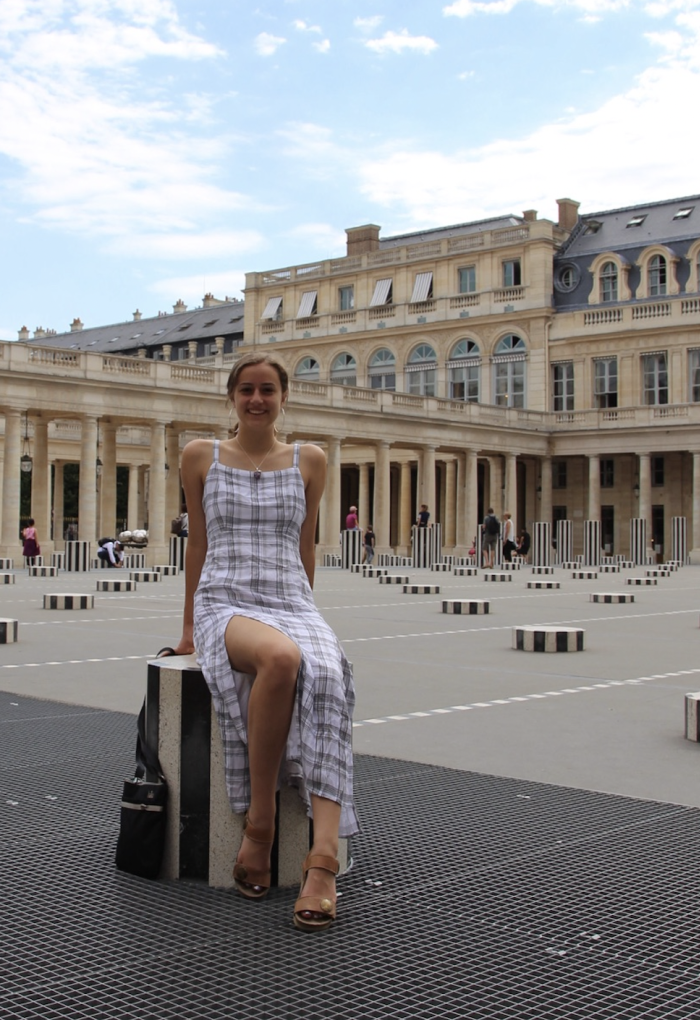
Amelia Noall sitting in front of Les Jardins du Palais Royal in Paris, France.

Noall sitting outside of Les Jardins du Palais Royal in Paris during a trip in 2019.

A whole new world

When she started college as a first-year, Noall was driven to squeeze every drop of opportunity she could out of her time at Oregon State. From dedicating herself to her French minor and becoming president of the French Club, to talking with hundreds of coming and going students while working at the Valley Library, she grew connections all over campus. Still eager for more, Noall later chose to spend her senior year studying abroad in Cork, Ireland. But just as it had before, her plan changed.

“It was an entirely new environment with entirely new people.”

“The reason I went to Cork was originally because I knew they offered microbiology classes, and I wanted to go for the full year to get the final microbiology credits that I needed,” she said. “Sadly, I was only able to go for one semester, but because of that I knew I’d be back on campus for two terms and be able to finish those credits here. So I ended up being in Cork for an entirely different purpose.”

Noall decided to take advantage of the circumstances and learn as much about the local area as possible while there. She signed up for an Irish folklore class and an Irish language class, learned traditional dances and even took a course on medieval manuscripts. “It was so nice to be able to explore all of these different areas I had never gotten the chance to before. It was an entirely new environment with entirely new people,” she said.

There was plenty to learn outside of the classroom, too, as Noall quickly discovered. The experience as a whole forced her to grow in ways she didn’t know she could. “It was kind of crazy to think that I could actually have managed that by myself. Especially for someone who’s very indecisive, it pushed me to be a more decisive and thoughtful person,” she said.

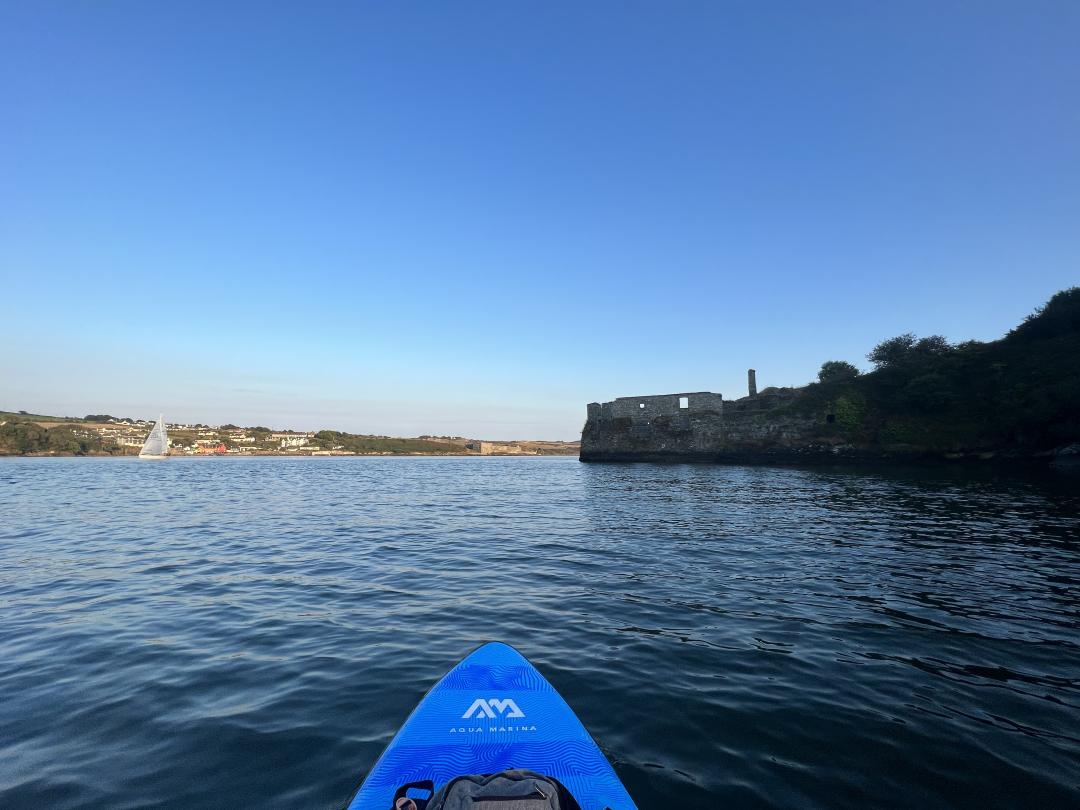
Staying in a different country gave her memories that still live vividly in her mind. In the first month she was there, Noall and a new friend of hers took to the water. They paddle boarded next to the town her friend was from, passing by forts with centuries’ worth of history that jutted out into the currents. “That was a beautiful day,” Noall said, describing it as one of her favorite memories from her time in Ireland.

A picture taken from Noall's paddle board of James Fort and Charles Fort in Ireland.

A picture Noall took of James Fort and Charles Fort while paddle boarding in Ireland.

Basking in the uncertainty

Across all of her experiences, whether she was meeting people from different parts of the world or other students at club events, Noall has always prized human connection.

“There are so many unique voices at Oregon State.”

“One of my favorite things is first impressions,” she said. “That moment when you get to meet someone and learn about them for the first time, I really value that. There are so many unique voices at Oregon State. I think if you make the effort to explore while you’re here, you learn a lot.”

As she’s mulled over potential careers for herself, her love of human connection has shone a special light on becoming a teacher. Noall already works as a teaching assistant in a microbiology laboratory and aids students during their experiments. But in each class, the sharing of ideas is a two-way street.

“With my job, it’s not always telling people what to do. It’s learning from them. I think that’s the same with life — it’s just learning from the people around you, and respecting their stories and their paths,” she said.

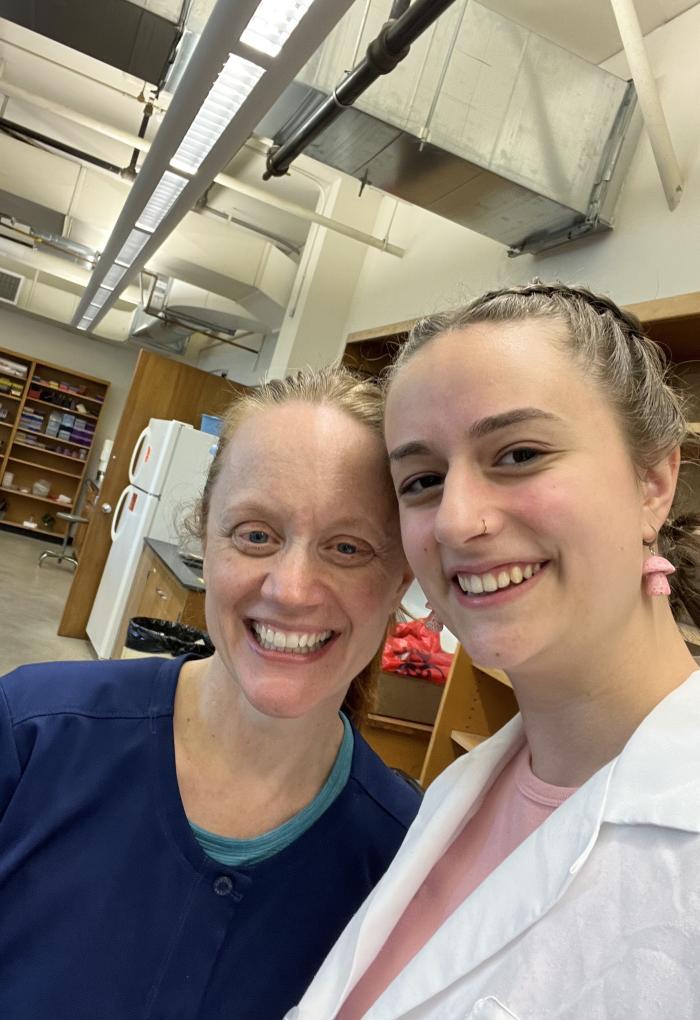
Noall’s passion for this teaching style stems partly from her time with a certain faculty member at Oregon State. “The number one person to thank for my success was my advisor, Allison Evans,” she said. Evans was her academic advisor for Noall’s first three years of college. “She worked harder than anyone. I think she sat with me for two hours trying to figure out how I can go abroad and get all the credits I need. She honestly is a bit of what made me want to be a teacher because she was so helpful to me that I want to be that figure in someone else’s life.”

Noall and her advisor, Allison Evans, taking a selfie in a microbiology lab.

Noall and her former advisor Allison Evans taking a selfie in Noall's microbiology lab.

Noall will already be part of the Teaching Assistant Program in France (TAPIF) the year after she graduates, having been accepted to help instruct English classes while abroad. Although she isn’t sure if she will continue down the teaching route or follow a different passion for her career, she is ready for whatever road lies ahead.

“I think there’s just so many things that fit for me, and that’s hard, but you just have to bask in the uncertainty,” she said. “You have to find the joy in life, and enjoy the path as you’re learning.”

To read more about being a microbiology major, visit the department’s website here.

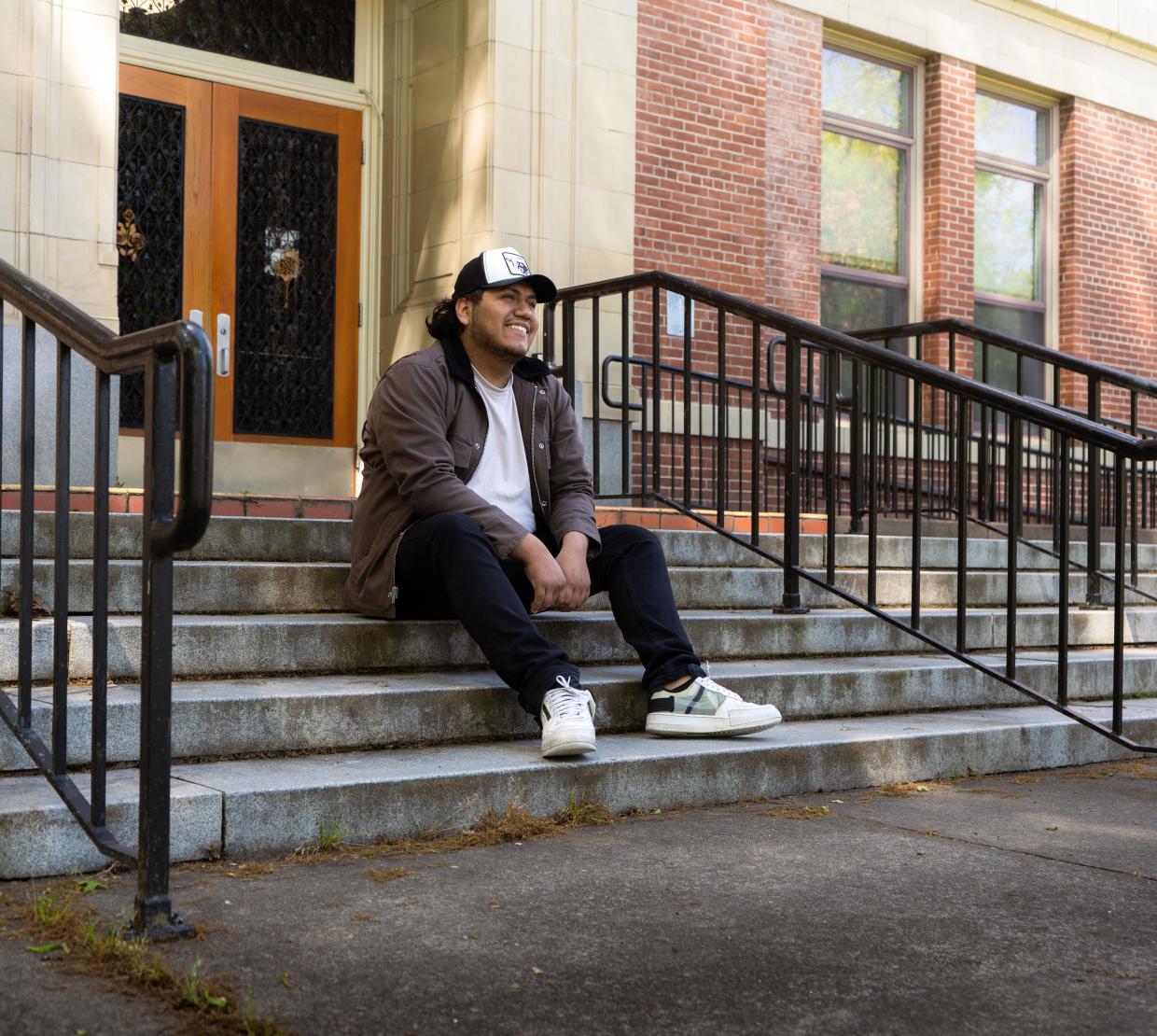
Bruno Salas Garcia sitting on the steps outside of Kidder Hall.

Microbiology graduate gives back to communities that have shaped him

By Grace Peterman

Oregon State is ten times the size of Bruno Salas Garcia's home town, but he's made an impact in both places with his commitment to community advocacy.

Bruno Salas Garcia almost didn’t come to Oregon State. “I finished my application probably a week before moving into the dorm,” the Microbiology graduate said.

Salas was all set to go to the Oregon Institute of Technology dental hygiene program in Klamath Falls, Oregon, but as the school year approached, “I had a nagging feeling that something wasn’t right,” he said. His supportive and understanding parents encouraged him to trust his own judgment.

Aware that a four-year university would give him more career flexibility, Salas decided to make the switch. “I’m glad I took that leap of faith to come to OSU, even though it was late in the application cycle,” he said. “I still feel that it was the right decision.”

Getting involved makes all the difference

Once at Oregon State, Salas looked for a major that would prepare him for dental school but could also apply to other healthcare careers if his goals changed. He chose microbiology, because viruses, bacteria and other microbes sounded interesting, and he knew that many of the prerequisite courses for dental school were built into the major.

Salas had always done well in science classes and took coursework at community college in during high school. However, intro science coursework at OSU initially caught him off guard.

“Day one, the professor was like, ‘Oh you probably all already learned this, I’ll just go through it quickly.’ I was like, ‘no, I haven’t!’” Salas said. Not used to having to ask for extra help, he quickly became overwhelmed by his coursework.

“In high school, even though my teachers were great, I didn’t have a lot of direction,” he said. “I didn’t know how to ask for help. I always just did well, and they told me, ‘you’re doing great, just keep it up!’”

Salas’ first term at OSU was a challenge. Sacrificing sleep to catch up on all the new material, he entered survival mode. Although he had a few friends to rely on, overall he felt disconnected from the OSU community. “I was a little isolated. I was kind of just doing what I had to, to survive, in this mindset of, ‘I have to do everything myself.’”

A feeling of isolation was exacerbated by the fact that Salas was far from home and in a town many times larger than where he grew up. In Irrigon, a small town of 2,000 people that is four hours from Corvallis, Garcia’s graduating high school class had 40 people. Introductory science courses at OSU may have as many 500 students. Although many resources and programs exist to give students individualized attention, like the Learning Assistant program, it can be difficult to ask for help if you’re already feeling stressed and overwhelmed.

By a stroke of luck, someone from Salas’ high school happened to be living on the same floor his first year. This friend was part of the College Assistance Migrant Program (CAMP).

OSU’s federally funded program that supports students from migrant and seasonal farm worker backgrounds during their first year in college. CAMP provides advising, mentoring, health services, financial assistance, social activities and more.

Salas' friend recommended he join CAMP, too. “I thought ‘Yeah ok, I’m not going to do this. I’ll just go and humor them,’” Salas said. “Besides, classes would start in a few days. It's not like I’ll get in,” he thought. He was skeptical that university programs could add value to his busy life. Extracurricular activities seemed like meaningless requirements, and he didn’t want to contribute to anything he didn’t believe in.

Once at CAMP, Salas’ view began to change, particularly through the influence of CAMP Academic Counselor Alexsandra Cortés, who made a strong case for the importance of mentorship and community.

Through CAMP, Salas was assigned a peer mentor who understood his cultural context, his experience as a first-generation college student and the difficulties of transitioning from a rural, small town to a large public university. Getting involved with CAMP increased Salas’ sense of ownership of his college experience. “CAMP helped me feel more at home at Oregon State, and from there, it gave me the confidence to go and try all these other things,” he said.

“I get to help, in the same way I was helped so many years ago. I’m glad to be able to give back to the program that gave me so much early on.”

In the years to come, Salas got connected to the resources he needed for success. He started asking his teacher's assistants, learning assistants and professors for help early and often. Today, Garcia invests in his college community as a mentor for CAMP and a peer advisor at the College’s Science Success Center (SSC).

“I get to help, in the same way I was helped so many years ago,” he said of working with CAMP. “I’m glad to be able to give back to the program that gave me so much early on.”

In the College's Science Success Center, he led tours of campus for prospective students and their families. “I imagined myself being in the crowd,” he said, “If I were visiting, what I would want to hear? I try to get them to see aspects of a university that they want to go to in Oregon State.”

Salas is also the undergraduate representative for the College of Science Equity, Access and Inclusion (EAI) Leadership Council, the team that implements the College’s Diversity Action Plan. Garcia said Goal 3 of the plan is especially meaningful to him: “to create a welcoming college climate to support a sense of belonging and equitable learning and training experiences.” As someone who experienced firsthand the struggle of being disconnected and how it makes asking for help even harder, “I could use my own experiences to help realize that goal, especially with having a sense of belonging and community.”

Human dimensions of science

Mentoring his peers has challenged Salas to get more out of his coursework. Going to office hours paid off in one of his favorite classes, Virology with Hannah Rowe, assistant professor of microbiology.

“I loved the material and the class structure,” he said. “I went to office hours a lot. If I was completely lost on a topic, she wouldn’t just give me the lecture again but would help me conceptualize it better by using my own understanding and working from there.”

Salas has also been a teacher's assistant in the same microbiology classes that he used to struggle with. “I got to see students progress from ‘I don’t know how to use a microscope at all’ to being able to pick out what we’re trying to find on the slide by the end of the term and also troubleshoot their own problems they had with the microscope or material,” he said.

Helping people understand science and helping people through science have always been important for Salas. In high school, he chose this career path because of its ability to make a difference in people’s lives. “Around that time, a lot of my friends had braces,” he said. “I could tell they were a lot more confident when they got them off. People’s teeth have an impact on how you feel about how you look. I thought, as a dentist, I can help people be confident about themselves and be happy with who they are.”

The importance of dentistry was also highlighted by growing up in a small town, where the nearest dentist office was a 45-minute drive away. “I knew I wanted to do something local,” he said. “For me growing up, I thought that was normal. I thought everyone had to drive to get good healthcare.”

Salas’ interest in how healthcare disparities affect rural communities led him to complete a public health minor while at OSU. “I felt that it was important for me to understand what the healthcare system here in the U.S. entails,” he said. “Part of that is better understanding the determinants of health, especially the social, environmental, etc., aspects that have a big influence on one's health as well the structural and socioeconomic barriers to healthcare.”

Eventually, Salas may return to northeastern Oregon to bring accessible dental care to rural towns like Irrigon. For now, he’s headed to a summer research internship at the OHSU School of Dentistry. He plans to apply to dental school next fall and work as a dentist with a local practice.

Ocean waves on a dimly lit day with the sun peering through the clouds.

Gas-passing plankton illuminate another piece of the carbon cycle puzzle

By Steve Lundeberg

The ocean's most abundant bacteria species prevents acetone from being expelled into the atmosphere. (Photo courtesy of Luis Bolaños)

The ocean’s most abundant life form, a type of bacteria discovered by the Department of Microbiology, consumes an organic compound commonly found in solvents like paint remover, a new study shows.

The research led by Associate Professor of Microbiology Kimberly Halsey and then-Ph.D. student Eric Moore revealed that SAR11 bacteria consume acetone, adding evidence to suggest that aspects of the marine carbon cycle, which pulls atmospheric carbon into the sea, are not being considered in the study of the cycle and its ability to buffer climate change.

Acetone and other volatile organic compound (VOCs) are produced by phytoplankton, microscopic marine algae, and are abundant in the surface ocean, from which they can move into the atmosphere and influence climate.

“It’s important to understand SAR11 and other bacteria’s potential to control the emission of climate-active gases because it helps our overall understanding of climate change and stability,” said Halsey.

Finding that SAR11 consume the gas is particularly significant due to the bacteria species’ massive abundance. “A single milliliter of ocean water might contain a half-million SAR11 cells,” said Distinguished Professor of Microbiology Stephen Giovannoni, who discovered the bacteria in 1990. SAR11 comprise 25% of all ocean plankton, and their combined weight exceeds that of all the ocean’s fish.

Find the full story here.

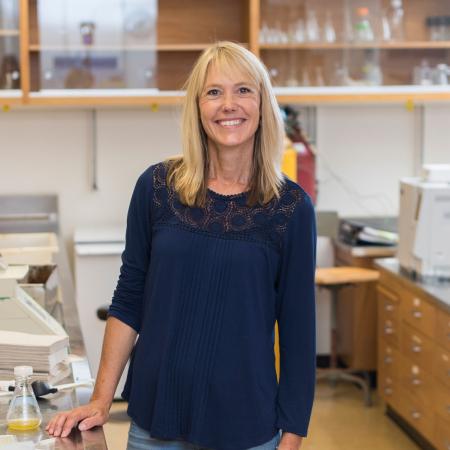
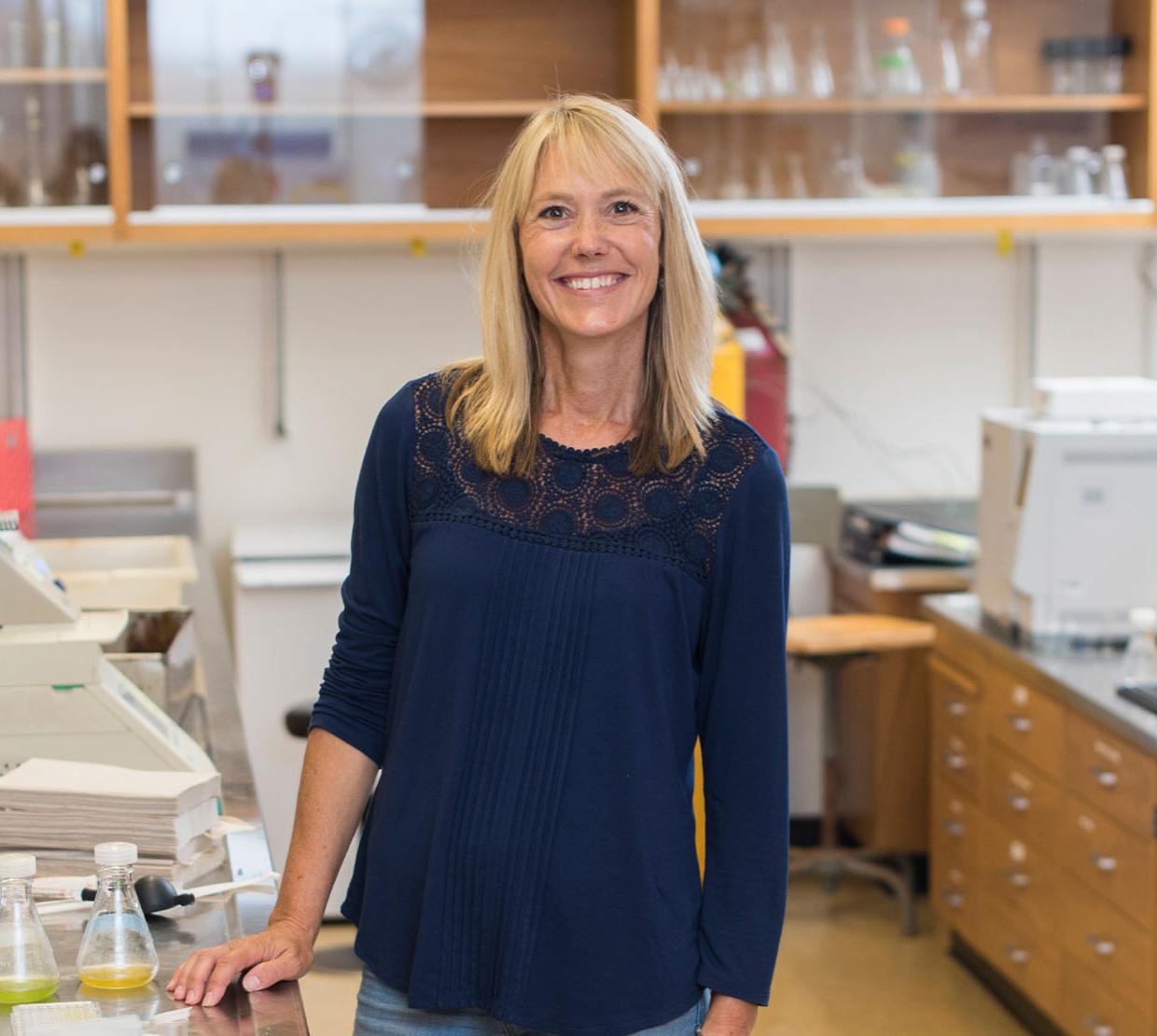
A woman standing in a lab setting smiling

New endowed faculty position recognizes excellence in microbiology

By Grace Peterman

The College of Science is thrilled to announce that Associate Professor of Microbiology Kimberly Halsey has been appointed as the inaugural Excellence in Microbiology Faculty Scholar. With this new endowed position, Halsey will advance excellence in her research and teaching at Oregon State for a term of five years, through November 11, 2026. A generous sequence of donations from an anonymous donor enables the appointment of this inaugural faculty scholar.

Halsey has a strong, highly visible and well-funded research program focused on understanding the processes that control the flow of carbon and energy through the marine carbon cycle. She has co-discovered the keys to diatom sexuality, predicted how phytoplankton will respond to climate change and developed methods to detect toxic algal blooms before they become harmful to humans and ecosystems.

“Dr Halsey’s cutting-edge research of the potential for real-time, automated volatile organic compound detection as early-warning signals of toxic harmful algal blooms in freshwater and marine ecosystems will help agencies and scientists prepare and protect the public," said Roy Haggerty, dean of the College of Science.

“In addition to her research accomplishments, she is a dedicated and passionate teacher who has introduced the unseen world of microbes to some 1,500 total students over the years, using creative teaching methods and an empathic approach to earn high student ratings, even in large foundational classes. She is an excellent choice to receive this position,” he added.

At the height of the pandemic, Halsey actually increased student engagement, implementing “Meet a Microbiologist” interviews to fill 10 minutes before every Zoom class. Faculty, alumni and graduate students joined these sessions, talking about their research and experiences in the field of microbiology. “Students in droves tuned in early” to catch the interviews, she said.

Halsey has also proven her interest and concern for the growth of the College and its Diversity Action Plan through impressive committee work. She has led the graduate admissions committee for the Department of Microbiology for the last six years, implementing a holistic application review process that increased minority representation in the program from 8.5 to 23.5%. Reviewing 70-100 applications each year and writing grants to obtain fellowships and scholarships for minority graduate students, Halsey demonstrated her “commitment to OSU’s growth and success, which is rooted in prioritizing education and training for all students,” she said.

Subscribe to Microbiology Major