Microbiology

Microbiology

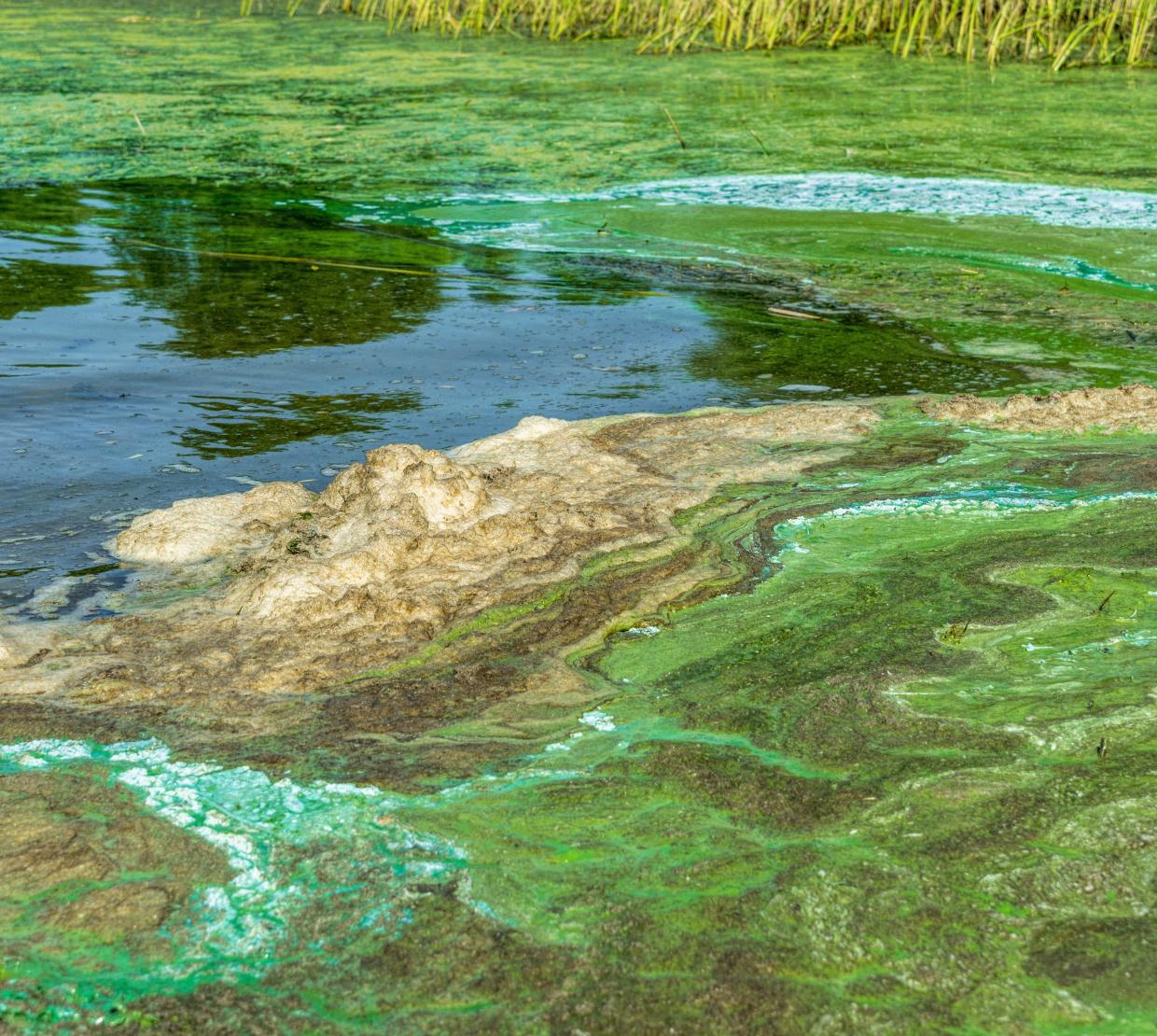
An algal bloom on a river. Green and blue lines on the water.

College of Science researchers uncover new driver of harmful algal bloom persistence

By Hannah Ashton

A research team including members of the College of Science has discovered a previously unknown chemical mechanism that may explain why harmful algal blooms are so persistent in nutrient-polluted lakes and reservoirs.

In a study published in PLOS One, the team found that cyanobacteria in Oregon’s Upper Klamath Lake produce bacimethrin, a toxic mimic of vitamin B1 that disrupts the metabolism of competing microbes. By selectively poisoning bacteria that depend on vitamin B1 from their environment while leaving bloom-forming cyanobacteria unharmed, bacimethrin may allow harmful algal blooms (HABs) to maintain ecological dominance for long periods of time.

The research team combined chemical measurements with DNA- and RNA-based analyses of microbes collected from Upper Klamath Lake and connected rivers and reservoirs before and during major bloom events. They found that bacimethrin concentrations rose with bloom intensity and were closely linked to changes in microbial gene activity.

Bloom-forming cyanobacteria are genetically equipped to synthesize their own vitamin B1, making them resistant to bacimethrin. Many other bacteria are not. When bacimethrin levels rose, these vitamin-dependent microbes showed reduced metabolic activity, effectively clearing ecological space for harmful algae to expand.

The findings could open new avenues for resource managers to use to control HABs beyond traditional nutrient management strategies.

The study was led by Department of Microbiology researchers Christopher Suffridge and Kelly Shannon and included other College of Science contributors Frederick Colwell, Byron Crump, Elizabeth Brennan, Gillian St. John and Robin Gould.

The research was supported by the U.S. Fish and Wildlife Service, the California Department of Fish and Wildlife and the National Science Foundation.

Read more stories about: graduate students, microbiology, research


Logan Blair

Logan Blair

Image of a brick building with a sign that says Nash Hall.

New faces in the College of Science: Nick Pokorzynski and Alice Naftaly join the Department of Microbiology

By Kaitlyn Hornbuckle

The Department of Microbiology is welcoming two new colleagues: Nick Pokorzynski and Alice Nafataly.

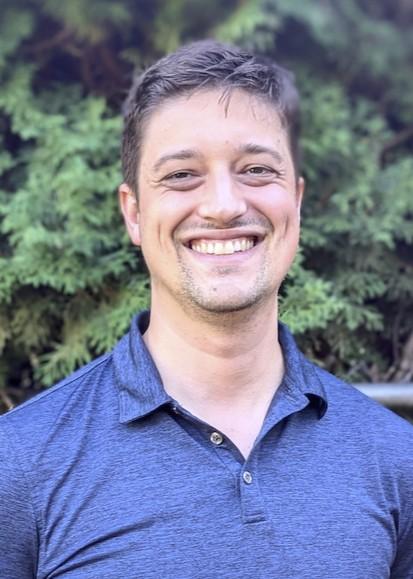
Nick Pokorzynski

In rural Michigan, Nick Pokorzynski first discovered his love for science in a high school chemistry class. From there, he earned his B.Sc. in biochemistry at Michigan State University before working in the wine and biofuel industries. He then pursued his Ph.D at Washington State University, where he explored how intracellular bacterial pathogens survive and cause disease. While working on postdoctoral research at Yale School of Medicine, he helped discover why some pathogens prefer alternative carbon sources over glucose, which is published in one of the world's most-cited scientific journals, PNAS.

Now at Oregon State, he leads the Pokorzynski Lab and invites students to learn about host-pathogen interactions and antibiotic tolerance in typhoid fever-causing bacterium, Salmonella enterica.

"Pokorzynski’s innovative research program—uncovering the molecular mechanisms that enable bacteria to adapt to infection-relevant stress—beautifully complements and expands our strengths in microbial physiology and host health," said Department of Microbiology Head Anne Dunn. "His deep commitment to student training and success, combined with the strength of his research program, makes him an exceptional addition to the department.

Pokorzynski chose to start his laboratory at Oregon State University due to the institution’s commitment to basic scientific research and the high caliber of graduate and undergraduate students on campus.

"Our laboratory will explore how Salmonella, a major foodborne bacterial pathogen, outsmarts its animal and human hosts to survive and cause disease. This may lead to new strategies for treating Salmonella infections," he said. "The scientific community at OSU has been incredibly welcoming, and I am eager to see how our research program will develop in new and exciting ways in collaboration with experts across campus.”

Outside of university, he enjoys philosophy, history, coffee culture, live music and exploring new cuisines.

Nick Pokorzynski standing in front of a flowering tree.

Nick Pokorzynski studies how pathogens survive and cause disease.

Alice Naftaly

While reading a novel, Alice Naftaly turned the page to an unexpected chapter about the evolution of head and clothes lice. That chapter inspired her to pursue a career in genetics and evolution, leading her on a path to teaching microbiology. As a southern Virginia-native and first-generation college graduate, she earned dual B.S. degrees in biology and chemistry at Virginia Commonwealth University. At the University of Georgia, she pursued her Ph.D in genetics and studied the evolution of recombination landscapes and sex chromosome evolution in stickleback fish. For her postdoctoral research, she examined the effects of heat on gametogenesis in C. elegans at the University of Oregon.

Now an instructor at Oregon State, she loves teaching students about how molecular mechanisms connect to evolutionary patterns.

"Dr. Naftaly brings outstanding experience in teaching introductory microbiology, and her enthusiasm — paired with her innovative approaches to engaging non-majors — will be a tremendous asset to our teaching mission. We’re excited for the energy and creativity she will contribute to our educational mission," said Department of Microbiology Head Anne Dunn.

Outside the classroom, she enjoys reading, cross-stitch, sewing, and time with her family and three cats.

"I was drawn to OSU because I wanted to join a university with a strong and lasting foundation in both teaching and research, supported by resources that genuinely help students and faculty succeed. What excites me most is OSU’s dedication to expanding access to higher education and fostering an equitable learning environment," Naftaly said.

Portrait of Alice Naftaly standing against a white wall.

Alice Naftaly will be teaching introductory microbiology and special projects.

2024 cyanobacterial bloom at Detroit Reservoir, photo by Elijah Welch, city of Salem.

New analysis yields clearer picture of toxin-producing blue-green algae blooms

By Steve Lundeberg

2024 cyanobacterial bloom at Detroit Reservoir, photo by Elijah Welch, city of Salem.

A long-term analysis shows that a major Oregon reservoir abruptly swapped one type of toxic algae for another midway through the 12-year study period, absent any obvious cause.

The project provides a novel look at harmful algal blooms, or HABs, which pose multiple health risks to people and animals worldwide.

Harmful algal blooms in lakes and reservoirs are explosions of cyanobacteria, often referred to as blue-green algae. Microscopic organisms ubiquitous in all types of water around the globe, cyanobacteria use sunlight to make their own food and in warm, nutrient-rich environments can quickly multiply, resulting in blooms that spread across the water’s surface.

These blooms can form at any time of the year but most often occur between spring and fall. Some types of cyanobacteria produce liver toxins and neurotoxins, while others make toxins that can cause gastrointestinal illness if swallowed and acute rashes upon contact with skin.

“Not every cyanobacterial bloom is toxic, but it is always wise to follow the rule of avoiding contact when there’s green growth in the water,” said Theo Dreher, professor emeritus of microbiology at Oregon State University. “Potential exposure to cyanotoxins is of public health concern, and blooms particularly pose a threat to dogs entering lakes.”

The body of water in the study, Detroit Reservoir in the Cascade Range foothills, is a popular recreation spot and also the source of drinking water for Oregon’s capital city of Salem and other communities downstream of Detroit Dam on the North Santiam River.

Click here to read the full article.

Paige Clark

Paige Clark

A man poses for a photo with a mountain in the background.

Hands-on cancer research helps College of Science undergraduate gain confidence in the lab

By Hannah Ashton

Every summer, Oregon State’s Summer Undergraduate Research Experience (SURE) in the College of Science empowers students to turn curiosity into discovery, and in many cases, personal experiences into purpose. Backed by funding that allows them to fully immerse in research, students step into labs across campus to pursue projects that shape their future. From cancer biology to nutrition science, their journeys are defined by mentorship, resilience and the chance to see themselves as scientists.

“SURE gave me the chance to fully commit to the lab and prove to myself that I could do difficult things."

For Matthew Hines, it meant finding his confidence as a researcher.

A year ago, Hines couldn’t see himself doing research. A BioHealth Sciences and BioResource Research double major from Tualatin, Oregon, Hines envisioned a career in healthcare but doubted he had the skills or confidence to thrive in a lab.

That changed thanks to the STEM Leaders Program and SURE. The STEM Leaders Program helped Hines connect with Bo Sun, a professor in the Department of Physics, while SURE allowed him to fully devote his summer to research.

“SURE gave me the chance to fully commit to the lab and prove to myself that I could do difficult things,” Hines said.

Four men pose for a photo wearing pacific islander clothing.

Matthew Hines (far right) poses for a photo before Pasifika Fest 2025. The event celebrates the richness and diversity of Pacific Islander cultures.

Sun’s lab is researching multifocal breast cancer metastasis, a form of cancer in which multiple tumors arise in the same breast, and cancer cell invasion. Hines developed numerous wet lab skills, including making his own breast cancer tumors (spheroids), which are clusters of breast cancer cells used to make samples and replicate actual tumors. He then imaged these samples over several days to track the invasion patterns of the cells using confocal microscopy to look for any persistence and/or biased invasion.

Finally, he performed data analysis by processing the images through a machine learning program that highlighted different phenotypes of the cells and created stacked images of the spheroids to visualize them in 3D.

“It is important to understand how invasion happens, how fast, where it goes, because that knowledge can help healthcare professionals better diagnose and treat cancer,” Hines explained. “It feels good knowing the work could have a real impact.”

The experience wasn’t always easy. To analyze his results, Hines had to learn coding from scratch, something that felt overwhelming at first. “If you mess up one character in your code, it doesn’t work. It was frustrating,” he said. “But focusing on the bigger picture kept me motivated. Every figure I produced showed me I was making progress.”

A man in a backwards hat works at a lab.

Hines monitors the development of his spheroids, clusters of breast cancer cells used to replicate actual tumors.

Beyond technical skills, Hines credits SURE with helping him see failure in a new light. In science, failure is common. “It made me more creative in problem solving and gave me confidence I didn’t have before.”

Mentorship was another defining element. Hines built a stronger relationship with Sun and the graduate students in the lab, who guided him through challenges and encouraged him along the way. “The environment and the people you work with are one of the most important parts of any job,” he said. “Without that mentorship, I don’t think I’d be as motivated to keep doing research.”

Now, Hines plans to continue in Sun’s lab as he works towards his BioResource Research thesis. The experience confirmed his passion for healthcare and sparked a deeper interest in research, something he once thought was out of reach.

Since 2015, the Summer Undergraduate Research Experience (SURE) has funded more than 300 College of Science students to spend their summers immersed in discovery. Undergraduate research is a hallmark of science at Oregon State, with about half of students participating annually through programs like SURE, the Launching Undergraduate Research Experiences (LURE) program during the academic year, discovery-based projects embedded in courses and mentorship in faculty labs. Together, these multiple pathways to hands-on learning prepare students to explore their curiosity and build successful futures in science.

To learn more about undergraduate research opportunities in the College of Science click here.

A man in lab coat and gloves uses a pipet.

Shaping scientific careers through undergraduate research at Oregon State

By Hannah Ashton

Every summer, Oregon State’s Summer Undergraduate Research Experience (SURE) in the College of Science empowers students to turn curiosity into discovery, and in many cases, personal experiences into purpose. Backed by funding that allows them to fully immerse in research, students step into labs across campus to pursue projects that shape their future. From cancer biology to nutrition science, their journeys are defined by mentorship, resilience and the chance to see themselves as scientists.

For Jordan Indrawan, it meant channeling his own battle with cancer into studying the proteins linked to the disease. For Ashley Tran, it was finding a sense of belonging in a lab led by women of color. And for Matthew Hines, it was discovering a passion for research he once thought was out of reach.

Turning personal experience into purpose

At 16, Jordan Indrawan faced a life-changing diagnosis. During his junior year of high school, doctors discovered a germ cell tumor pressing against his lung. After months of chemotherapy and surgery, Indrawan survived the ordeal with a new perspective. “That experience was life-changing, of course, and made me realize that I want to contribute in some way to finding a cure,” he said.

That determination followed him to Oregon State University, where he found a home in the Department of Biochemistry and Biophysics. Originally a bioengineering major with an interest in prosthetics, Indrawan realized during organic chemistry that his true passion lay elsewhere. Encouraged by a friend, he switched majors and eventually joined the Accelerated Master’s Platform in biochemistry and biophysics.

“I’ve read research papers all the time, but I never thought I would be in one — at least at this stage."

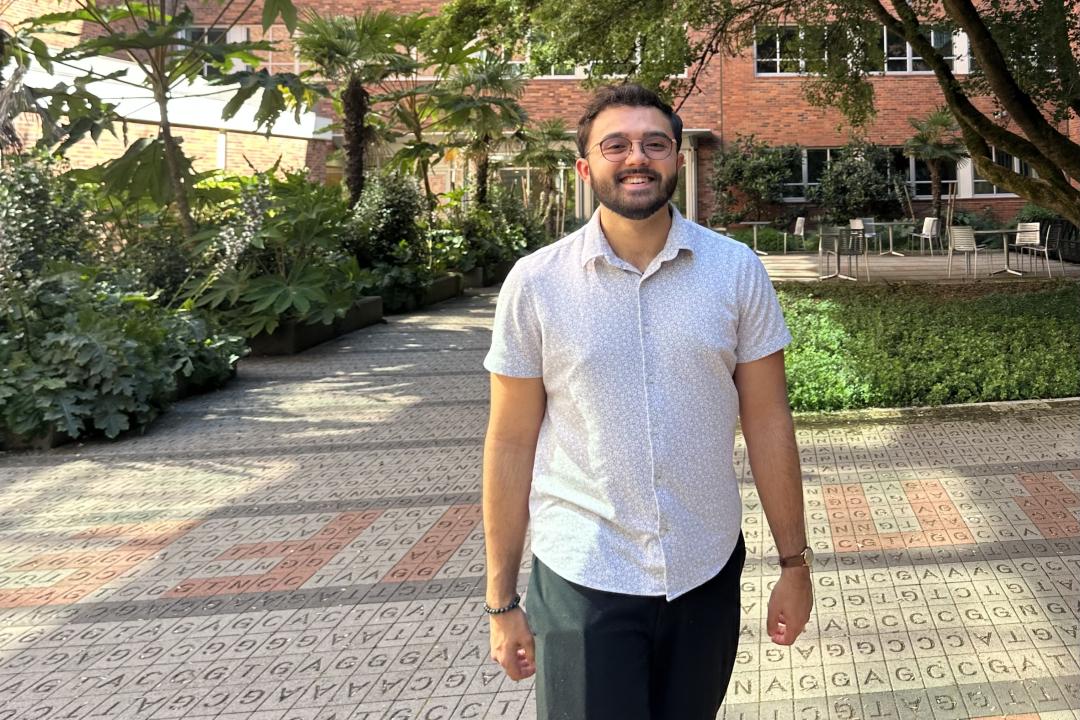
A man in a white shirt walks across campus

The Summer Undergraduate Research Experience (SURE) gave Jordan Indrawn the chance to work in biochemist Colin Johnson's lab.

The Summer Undergraduate Research Experience (SURE) gave him the chance to fully immerse himself in lab work. Indrawan joined the research group of biochemistry and biophysics professor Colin Johnson, whose lab studies a family of proteins called Ferlins, which play a role in cell communication, growth and repair. Misregulation of these proteins is linked to conditions ranging from hearing loss to cancer. “Our goal is to understand how these proteins work in the first place,” Indrawan explained. “By knowing how they function, we can hopefully contribute to further research on diseases like cancers, muscular dystrophy and hearing loss.”

SURE funding made a critical difference in his ability to focus on research. Instead of splitting his time between lab and a job, Indrawan was able to spend the summer mastering experimental techniques — from purifying proteins and DNA to cloning cells and running anisotropy experiments on a fluorometer. Ainsotrophy tracks how molecules move and interact.

“All of the different skills I learned can be applied to any molecular laboratory, so it’s very much universal,” he said.

The summer also brought a milestone Indrawan never expected so early in his career: authorship on a scientific paper. After contributing to experiments on otoferlin binding partners, he saw his name included among the authors. “I’ve read research papers all the time, but I never thought I would be in one, at least at this stage,” he said. “Seeing my name felt unreal and rewarding.”

For Indrawan, SURE confirmed his commitment to cancer research. Whether in graduate school or the biotech industry, he hopes to continue contributing to discoveries that will help patients facing the diseases he once fought himself.

Finding inspiration in mentorship

Walking into the lab of Emily Ho, director of the Linus Pauling Institute, Ashley Tran immediately saw something that reshaped how she imagined her future. She found herself among a research team full of accomplished women, led by Ho, an Asian American principal investigator. For Tran, it was a sense of belonging she had never experienced before.

“It really shows that there’s a place for everyone,” Tran said. “I think it’s truly empowering to work in that environment.”

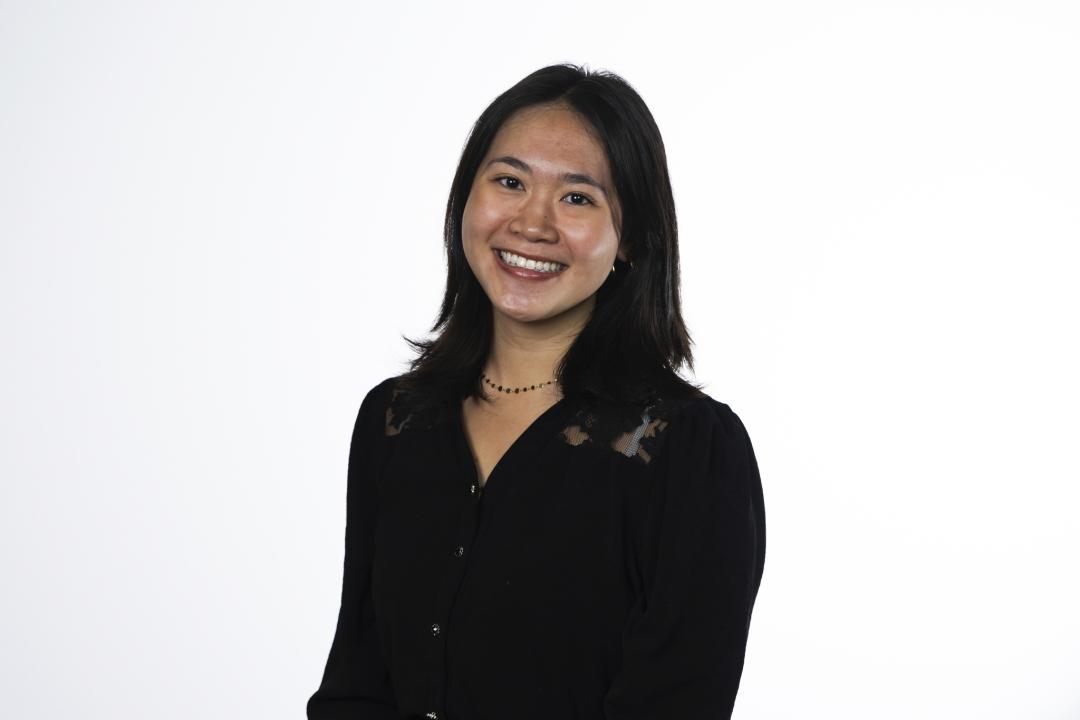
A woman in a black shirt poses for a headshot in front of a white background.

Ashley Tran, a junior biochemistry and molecular biology major, joined a research project investigating how eating walnuts might benefit memory, brain function and gut health in older adults.

A third-year biochemistry and molecular biology major from Tigard, Oregon, Tran was hesitant to try research. “I was a little nervous and definitely intimidated,” she admitted. The STEM Leaders Program, which serves a diverse group of first and second-year students, encouraged Tran to reach out to faculty, which led her to Ho’s health and nutrition lab.

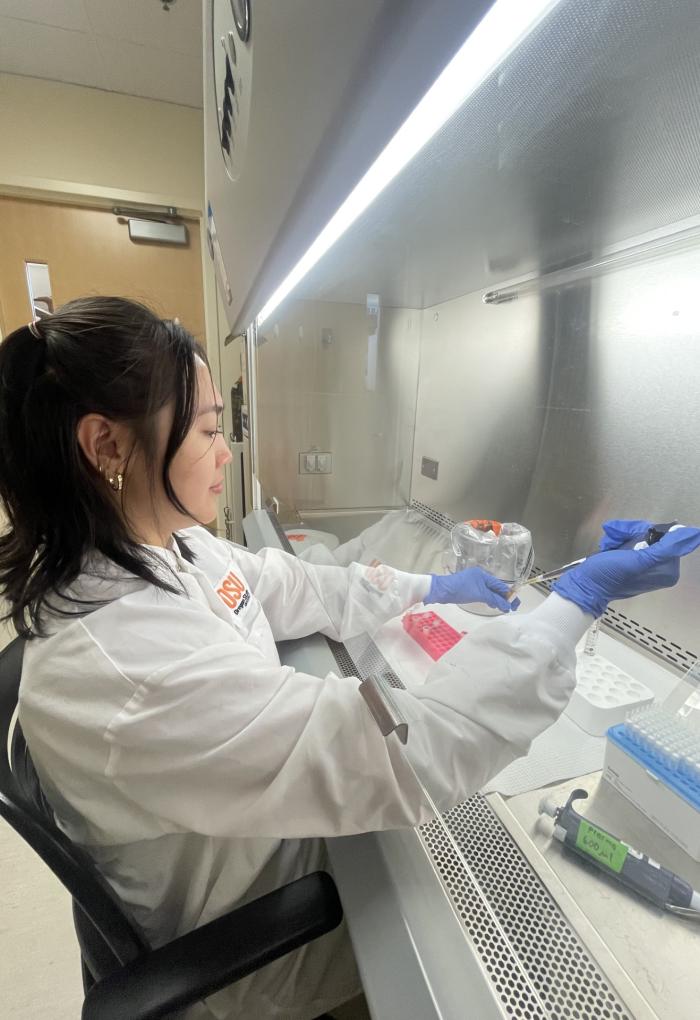
Tran joined a project that was unique for undergraduate lab work, contributing to a clinical trial. Ho and her team are investigating how eating walnuts might benefit memory, brain function and gut health in older adults. Tran prepared walnut and control kits for participants, assembled urine collection supplies and processed samples of blood, stool and urine. “I am proud that I got over the fear of working with human samples,” she said. “At first the idea was shaky, but after a while it gets destigmatized and easier.”

A woman in a lab coat works with a pipet.

Ashley Tran pipets plasma samples after centrifuging the blood from a participant in the walnut study.

The SURE program made it possible for her to commit fully to the project this summer. Commuting between Corvallis and her family in Tigard made unpaid lab work unrealistic. Without SURE, she would have missed more than just hands-on experience; she would have missed the power of mentorship.

Throughout the summer, Tran became close with Laura Beaver, a co-investigator on the study, who helped her find her confidence. “It was intimidating because they’re all incredible people who are very accomplished,” she said. “But once I got over that, it was all fine. You can ask questions because ultimately they want things to run smoothly and for students to succeed.”

That mentorship helped her navigate the challenges that came with the territory and experience personal growth as a scientist. Mistakes in processing samples or timing tasks were a part of the learning process. Tran also noticed how participants interpreted instructions differently, teaching her how variable human data can be.

Two women pose for a selfie holding ice cream.

Tran and her cousin (left) pose for a selfie with ice cream from the on-campus creamery.

Though research isn’t her long-term career path, Tran gained skills and perspectives that will support her future in medicine. She plans to continue shadowing neurologists and applying to medical school while holding on to the lessons she learned from her SURE summer. “Take note of opportunities. Even if you are scared, do it.”

From uncertainty to confidence

A year ago, Matthew Hines couldn’t see himself doing research. A BioHealth Sciences and BioResource Research double major from Tualatin, Oregon, Hines envisioned a career in healthcare but doubted he had the skills or confidence to thrive in a lab.

That changed thanks to the STEM Leaders Program and SURE. The STEM Leaders Program helped Hines connect with Bo Sun, a professor in the Department of Physics, while SURE allowed him to fully devote his summer to research.

“SURE gave me the chance to fully commit to the lab and prove to myself that I could do difficult things,” Hines said.

A man poses for a photo with a mountain in the background.

Matthew Hines poses for a photo while camping in Lost Lake, Oregon.

Sun’s lab is researching multifocal breast cancer metastasis, a form of cancer in which multiple tumors arise in the same breast, and cancer cell invasion. Hines developed numerous wet lab skills, including making his own breast cancer tumors (spheroids), which are clusters of breast cancer cells used to make samples and replicate actual tumors. He then imaged these samples over several days to track the invasion patterns of the cells using confocal microscopy to look for any persistence and/or biased invasion.

Finally, he performed data analysis by processing the images through a machine learning program that highlighted different phenotypes of the cells and created stacked images of the spheroids to visualize them in 3D.

“It is important to understand how invasion happens, how fast, where it goes, because that knowledge can help healthcare professionals better diagnose and treat cancer,” Hines explained. “It feels good knowing the work could have a real impact.”

The experience wasn’t always easy. To analyze his results, Hines had to learn coding from scratch, something that felt overwhelming at first. “If you mess up one character in your code, it doesn’t work. It was frustrating,” he said. “But focusing on the bigger picture kept me motivated. Every figure I produced showed me I was making progress.”

Four men pose for a photo wearing pacific islander clothing.

Matthew Hines (far right) poses for a photo before Pasifika Fest 2025. The event celebrates the richness and diversity of Pacific Islander cultures.

Beyond technical skills, Hines credits SURE with helping him see failure in a new light. In science, failure is common. “It made me more creative in problem solving and gave me confidence I didn’t have before.”

Mentorship was another defining element. Hines built a stronger relationship with Sun and the graduate students in the lab, who guided him through challenges and encouraged him along the way. “The environment and the people you work with are one of the most important parts of any job,” he said. “Without that mentorship, I don’t think I’d be as motivated to keep doing research.”

Now, Hines plans to continue in Sun’s lab as he works towards his BioResource Research thesis. The experience confirmed his passion for healthcare and sparked a deeper interest in research, something he once thought was out of reach.

A man in a backwards hat works at a lab.

Hines monitored the development of his spheroids, clusters of breast cancer cells used to replicate actual tumors.

Since 2015, the Summer Undergraduate Research Experience (SURE) has funded more than 300 College of Science students to spend their summers immersed in discovery. Undergraduate research is a hallmark of science at Oregon State, with about half of students participating annually through programs like SURE, the Launching Undergraduate Research Experiences (LURE) program during the academic year, discovery-based projects embedded in courses and mentorship in faculty labs. Together, these multiple pathways to hands-on learning prepare students to explore their curiosity and build successful futures in science.

To learn more about undergraduate research opportunities in the College of Science click here.

Bailey Morgan

Bailey Morgan

Tara Conrad

Tara Conrad

Ila Rondeau

Ila Rondeau

Subscribe to Microbiology