Diversity in Science

Diversity in Science

Ella Bailey wearing gloves and a mask, working with a teeth model, in a dental simulation lab at the OHSU Summit Program.

Ella Bailey, Class of ’25: BioHealth sciences major trains to be a dentist

By Kaitlyn Hornbuckle

After growing up in Fairbanks, Alaska, Ella Bailey answered a calling that made others smile: training to be a dentist. Thanks to the Western Undergraduate Exchange (WUE) scholarship, she developed a sweet tooth for Oregon State University.

With intensive training, job shadow opportunities and lifelong connections, her dreams were becoming a reality. But after her mother received a breast cancer diagnosis, Bailey wanted to drop out.

“Seeing your mom sick is really hard. I was supposed to come back to Oregon for training and work, but I didn’t end up coming. I was going to drop out and take time off, but my mom said I can’t, I have to go to school,” she said.

With her mother’s encouragement, she didn’t let anything stop her from learning how to be a dentist. She kept going. She built a support network and gained volunteer field experience during her time at Oregon State. And it was worth it.

Bailey is ready to graduate this spring with a bachelor’s degree in biohealth sciences. Over the next 10 years, she plans to complete dental school, own her own dental office and set up free volunteer dental clinics in Alaska.

“Crazy things happen to you in life and you just have to push through because you have no control over it. But after all of that, my mom is okay,” she said. “Now, my mom advocates for women’s health and goes to a conference in Washington D.C every year.”

Connecting with people and practices

Bailey loves challenging the status quo and looks up to her family as her strongest role models. Her grandmother Lisa was one of the first female forest firefighters in Alaska before becoming a middle school English teacher. Bailey’s mother served as a firefighter too.

Bailey was the first to break the generational firefighting chain, making her mark as a woman in science. As a child, she always felt comfortable at the dentist. After seeing how oral health was often overlooked and not accessible to everyone, she wanted to make a difference.

To be successful, Bailey needed a strong support system — and she found that at Oregon State. One of the first people she met became her roommate for three years and invited her to fun Thanksgiving dinners. Her roommate knew exactly what she wanted to do for a career and made it happen as a middle school English teacher, inspiring Bailey to not be afraid to reach for her goals, even if they’re difficult.

Ella Bailey smiles and celebrates with a group of women in colorful dresses.

Bailey (colorful dress, center left) helped plan and run Black Women’s Brunch in Corvallis to build a community.

While taking each stepping stone towards her science degree, Oregon State quickly became Bailey’s second home. Amid the rush of the academic year, one of her professors stood out. Her favorite course is Advanced Human Anatomy and Physiology taught by Integrative Biology Professor Devon Quick.

“I think she's one of the best professors that I've ever had,” she said. “She's very reasonable, open to questions, accommodating and approachable as a professor. She makes you want to attend class, be there, and learn.”

Outside of school, one of Bailey’s favorite outcomes in dentistry is making someone’s day a better one. Once a week, she shadows Dr. Martin Lindner and Dr. Charles Eric Jones at the Timberhill Dental office in Corvallis. One day, an older patient checked in to her appointment and the dentist asked if a student could observe.

“When I came in, she loved me,” Bailey said. “The patient said, “Oh my gosh, I love seeing women in science!” And she was so sweet. She told me that when she was my age, women were not allowed in science.”

If she’s not looking at teeth, Bailey is working in the Lonnie B. Harris Black Cultural Center and participating in an academic club for women called the Society of Scholarly Systems, where they host a variety of volunteer service projects. By collecting supplies and handing them out to the homeless population in Eugene, she found a way to make a difference outside of work and school.

“Everyone's path looks different. Do not judge your path compared to people around you."

Wanting to continue building her professional skills in Alaska, Bailey loves to visit her family and work at the same time. As an assistant at an orthodontist office, she started as a sterilization tech, making sure all of the spaces were clean.

Before long, she began assisting with orthodontic appointments, such as removing braces, holding suction tubes, taking impressions for retainers, and taking photos and x-rays of patient's’ teeth.

“The reason I even got the opportunity to work in orthodontics and became really interested in the dental field is because of the family who owns the office,” she said. Dr. Wentz and his wife Natalie Wentz became important mentors for Bailey. “Because I worked at that office, I was introduced to a number of orthodontists who have all been amazing to work with and learn from.”

Making people smile

Every time she returns to Oregon, Bailey wants to try something new. Inside an RV converted into a mobile dental clinic, she is one of several volunteers that offer free dental services. Anyone can sign up for a slot, and Spanish-to-English translators are available if needed. “It’s very eye-opening because they are really appreciative of us doing extractions or just kind of putting a Band-Aid on where we can,” she said.

Managing oral health can be expensive. Not everyone has a toothbrush or knows how to take care of their teeth, making hygiene difficult for some. People with diabetes are more prone to cavities, and poor oral hygiene can increase blood pressure.

“The first time I volunteered, I was assisting by holding the suction tube and handing instruments,” Bailey said. “This one patient had something that really bothered her and the dentist fixed and extracted her tooth. She turned to me and held my hand, and said, “Thank you so much.””

Ella Bailey wears orange Beaver gear with a group of friends inside the stadium (left) and outside the stadium (right).

Bailey celebrates beaver spirit with her friends at an Oregon State football game.

Throughout her adventures at Oregon State, professional mentors and heartwarming friends always offered a helping hand when she needed it most. When trying to find the right path for her, she found the support, both inside and outside the classroom.

“Everyone's path looks different. Do not judge your path compared to people around you. It’s easy to do that in college, especially in your twenties. Take pride in where you're at and what you're doing,” she said. “You deserve to be here.”

A blue background with the year 2025

Celebrating inclusive excellence, administration, service and performance: 2025 College of Science Awards

By Hannah Ashton

The College of Science gathered on Feb. 26 to recognize and celebrate our high achieving faculty and staff at the 2025 Combined Awards Ceremony. The evening celebrated the very best in the College, from teaching, advising and research to inclusive excellence, administration and service.

The following faculty and staff received awards in Inclusive Excellence, Administration, Service and Performance.

Congratulations to all the awardees!

Headshot of Hannah Stuwe, a woman with short curly hair and black shirt.

Hannah Stuwe, graduate student in the Department of Biochemistry and Biophysics, received the Inclusive Excellence Award.

College of Science Inclusive Excellence Award

Hannah Stuwe, graduate student in the Department of Biochemistry and Biophysics, received the Inclusive Excellence Award.

Department Head Elisar Barbar, who nominated Stuwe, said she has engaged in a wide-ranging set of service, outreach and training that is truly impressive. First, Stuwe conducted a GFP protein purification activity for middle and high school students from the Chemawa Indian School, Jewell High School (Seaside), and visited groups of black and Latinx students from the Portland area.

She planned, wrote and edited a handbook of science experiments geared towards middle school aged students, their parents, and teachers to fill the void of not having a BB summer camp. This handbook now serves as a free and open access resource for community members.

Stuwe is the founder of the non-profit organization Corvallis Music Collective. They have engaged in community service and activism by providing live music for events and rallies. Recent events include the Basic Needs Center Fall Welcome Party, the Disabled Students Union Disability Justice Rally and Jackson Street Youth Services National Runaway Prevention Month “Skate Park After Dark” Show.

Amy Timshel

Amy Timshel, assistant to the department head in the Department of Microbiology, received the Gladys Valley Award for Exemplary Administrative Support.

Gladys Valley Award for Exemplary Administrative Support

Amy Timshel, assistant to the department head in the Department of Microbiology, received the Gladys Valley Award for Exemplary Administrative Support.

Her colleagues describe her as proactive, always seeking ways to improve processes and deeply committed to making the department a better place for everyone. She is highly regarded by students, faculty and staff for her professionalism, broad knowledge and ability to get things done. In fact, Department Head Anne Dunn noted that when she polled faculty on department strengths during strategic planning exercises, Timshel's critical role in the department was consistently highlighted.

"Her ability to provide a wealth of information on a variety of administrative issues is unparalleled, and she approaches each interaction with a warm smile and an eagerness to assist," said a Ph.D. candidate nominator.

She has a deep understanding of university policies and constantly looks for ways to improve them. She listens, advocates for students and colleagues, and takes initiative to make the department more inclusive and equitable. For example, her work on the Core Values Committee led to the addition of gender-neutral restrooms in Nash Hall and improvements to scholarship and travel fund policies.

Beyond her administrative role, Timshel actively fosters a sense of community within the department. She organizes fundraisers and charity events and regularly attends student events to show her support.

A woman in a red top poses in front of plants.

Elaine Cozzi, assistant head and associate professor in the Department of Mathematics, received the Distinguished Service Award for her impactful service to her department, the College and the broader mathematics community.

Distinguished Service Award

Elaine Cozzi, assistant head and associate professor in the Department of Mathematics, received the Distinguished Service Award for her impactful service to her department, the College and the broader mathematics community.

Cozzi served as interim associate dean of academic and student affairs for the College in Spring of 2024, managing various projects, including the university’s revision of its undergraduate advising system, assessing teaching resources and addressing countless student issues. She was overwhelmingly generous with her time in responding to the many challenges and the needs of her colleagues.

Before and after serving as associate dean, Cozzi served as assistant department head for mathematics, responsible for scheduling upper-level courses and ensuring adequate staffing for the Department’s teaching mission. This affects the hiring of instructors, graduate students and undergraduate graders.

Jon Kujawa, Department of Mathematics head and Cozzi’s nominator, noted, “It is hard to overestimate the impact of Elaine’s planning on the smooth operation of the teaching side of the department. And she readily pivots when unexpected events disrupt the plans.” Additionally, Elaine led the assessment of the Mathematics undergraduate program for several years, playing a crucial role in student success, he shared.

Cozzi also contributes significantly to the mathematics profession as Associate Editor for the American Mathematical Monthly – the most widely read mathematics journal in the world. She is also an active member of SIAM, a professional society for applied mathematics, where she helps organize meetings and contributes to administrative efforts and regularly serves as a grant evaluator for the NSF and the Simons Foundation, helping to shape the future of mathematical research.

Virginia Lesser in front of shrubbery

Virginia Lesser, Department of Statistics Head, received the Champion of Science award.

Champion of Science Award

Virginia Lesser, Department of Statistics Head, received the Champion of Science award for her significant contributions to the field of statistics and to Oregon State University throughout her distinguished career. After earning her Ph.D. in Biostatistics from the University of North Carolina at Chapel Hill, she joined OSU’s Department of Statistics in 1992.

A year later, she became Director of the Survey Research Center, a role she held until her retirement in December 2024. Lesser's expertise in probability sampling, survey design and data collection methods ensured that the center upheld the highest standards. Under her leadership, the center became a premier institution, offering expertise in survey methodology, sampling and data analysis – supporting projects that inform policy, environmental monitoring, economic studies and public opinion research. Its work has helped agencies such as the Oregon Department of Transportation, the Oregon State Marine Board and the Oregon Department of Fish and Wildlife make data-driven decisions, not to mention numerous initiatives within the University.

Lesser's groundbreaking research in survey methodology, environmental statistics, applied statistics and ecological monitoring has advanced the field and influenced practice. She has authored over 55 journal articles and conference proceedings, earning national and international recognition – including being named a Fellow of the American Statistical Association and an elected member of the International Statistical Institute.

Lesser's leadership also transformed the statistics department and elevated Oregon State University’s role in the field as department head from 2011 to 2018.

Lesser has also been a dedicated mentor and advocate for students and colleagues. Over the course of her career, she guided more than 220 graduate students and fostered a welcoming, supportive community within the department. Her colleagues regard her as an exceptional mentor and an inspiring leader, someone who consistently goes above and beyond – whether leading major academic initiatives or simply making sure the department potluck had a home-cooked turkey.

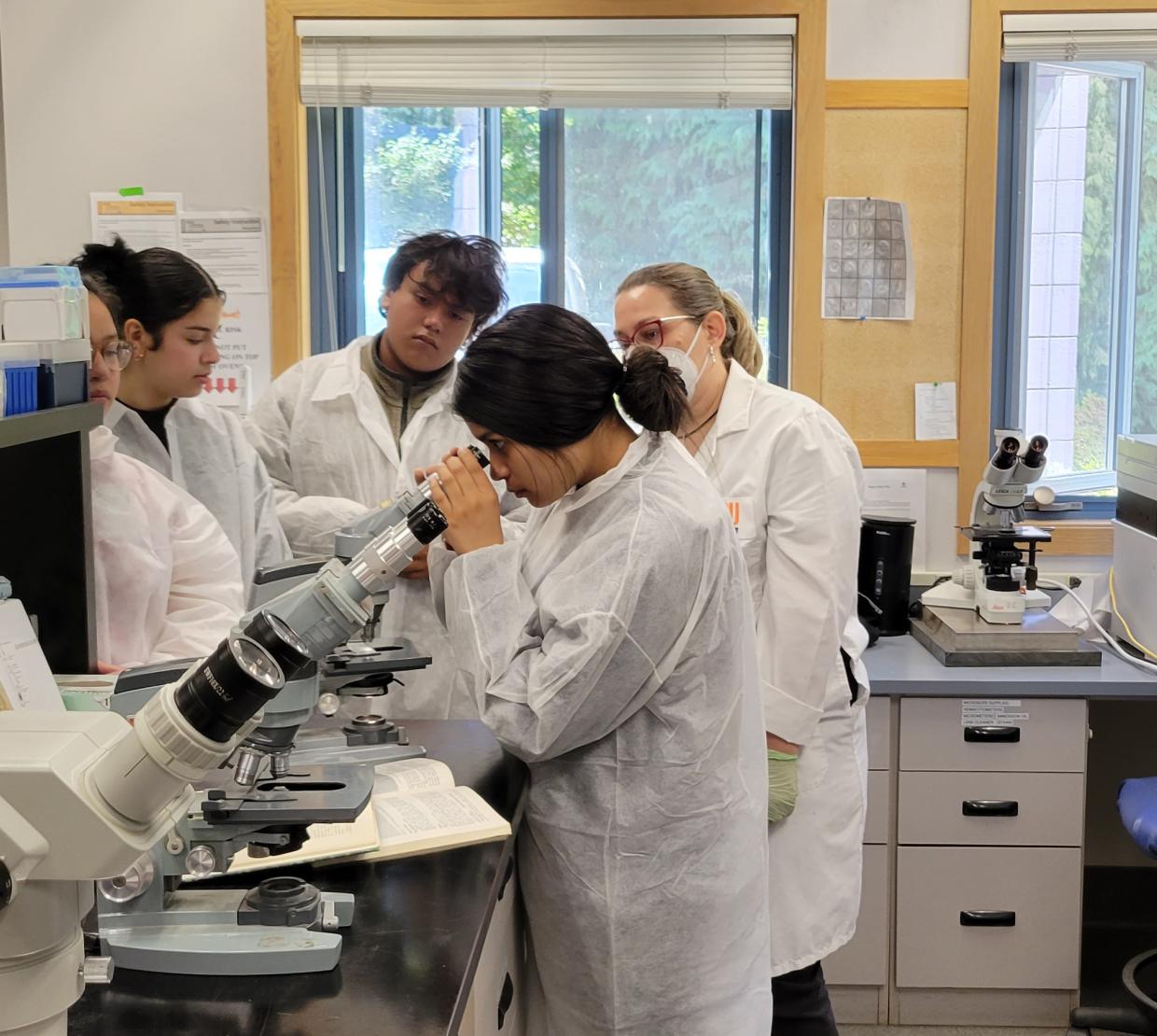
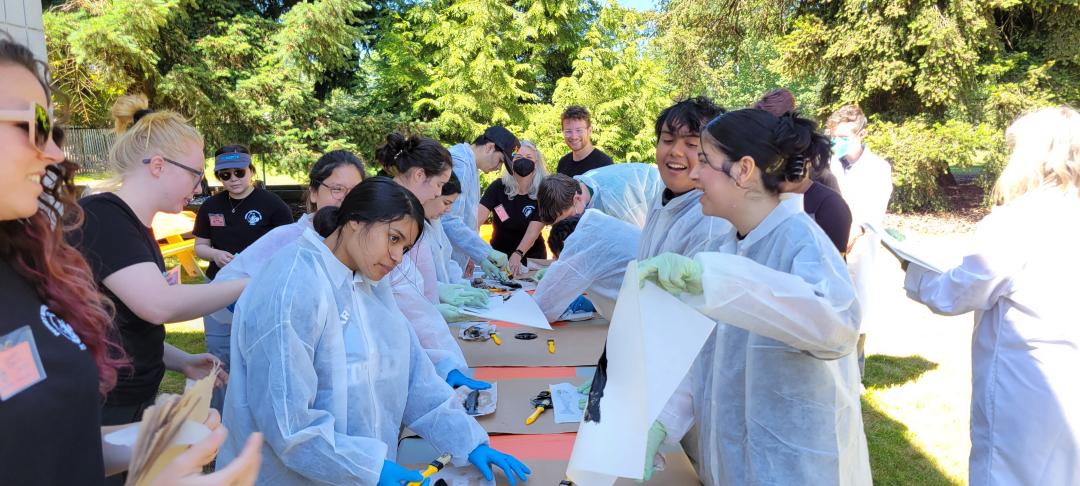
Students in lab coats pose for a group photo.

Leidholdt Microbiology Summer Camp seeks support to sustain STEM opportunities

By Hannah Ashton

When an autistic high-school student meets an autistic science mentor, a whole new world of possibilities opens. When a shy high-school student is encouraged to embrace curiosity and ask questions, their path to college gets easier to navigate. And when an underrepresented high-school student is given a scholarship to attend a microbiology STEM camp, it can change their world.

The Leidholdt Microbiology Summer Camp (previously the Pernot Camp), held by the Department of Microbiology on the OSU Corvallis campus, is a transformative, once-in-a-lifetime summer experience for historically underrepresented or underserved high school students aspiring toward STEM careers.

Growing up as a low-income Hispanic person in rural Montana, camp creator and past director Savanah Leidholt (‘22-23) witnessed the lack of STEM opportunities for youth in these demographics and decided to take action after becoming a graduate student at Oregon State. She created a week-long immersive science camp, where a younger version of herself would have thrived.

LGBTQ+, women, BIPOC, low-income and other students from diverse backgrounds are welcomed into a safe space to explore microbiology. Students learn about three subfields of the discipline, including Food System Science, Human Health and Disease, and Aquatic Microbiology. Participants conduct microbiology-focused lab experiments, go on field trips and hear from diverse speakers about career avenues and opportunities in STEM.

“Even their ability to ask questions grows. I know it's difficult to ask questions but by the end of the camp, these students are conversing with us and just ready to ask questions and learn."

In the first year of the camp, held in 2022, students learned how to use pipettes, the small glass or plastic tubes used in labs. They also collected cheek cell swabs, extracted DNA from potato salad, toured Corvallis’ wastewater facility and applied microbiology to arts and crafts.

“This camp gives students a safe space to be curious, grow their confidence, work with their peers and find out what they like and don’t like,” said microbiology graduate student Sunni Patton, the camp director in 2024. “It provides experiential learning opportunities for students who would otherwise not be able to participate.”

Most students don’t experience a microbiology lab until college. The Pernot camp allows them to see more career avenues. “It’s a way to open new interests and hobbies. A way to expand, open doors and make friends,” wrote one student who said they would recommend the camp to their friends.

"I liked that one of the mentors is autistic; it makes me feel welcomed as someone with autism,” wrote another student.

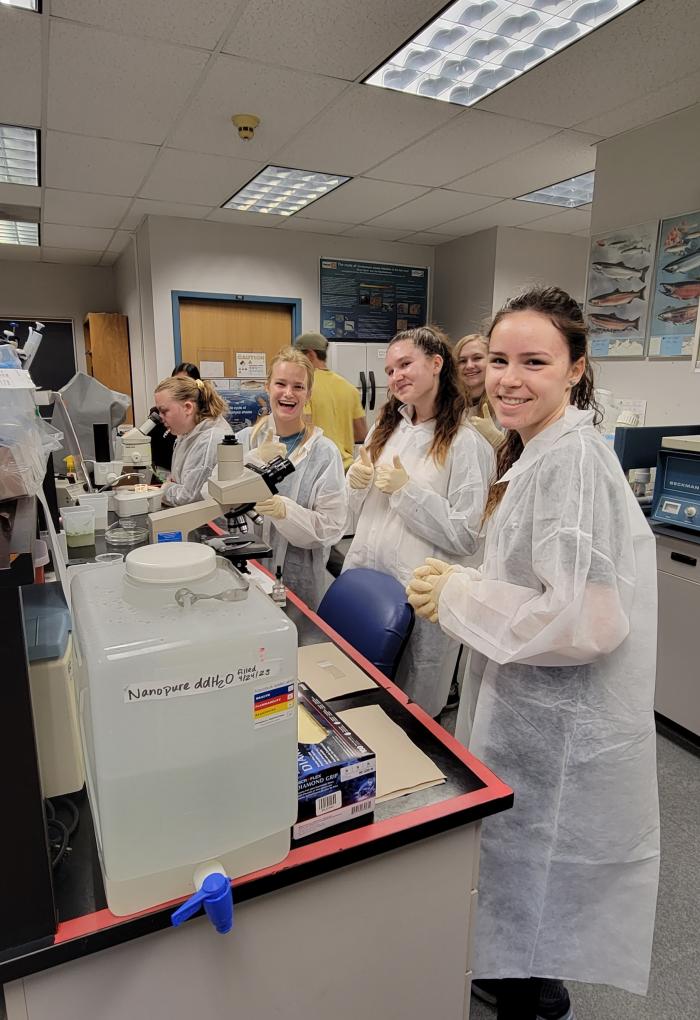
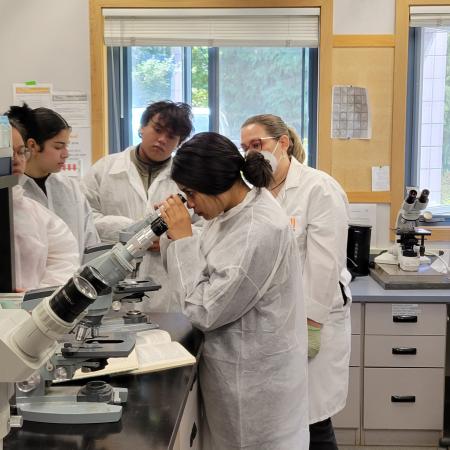
High school students at the Leidholdt Microbiology camp are all in a row looking in to microscopes. They wear blue disposable lab covers over their clothes an blue gloves.

High-school students get hands-on experience in a laboratory during the 2023 Pernot Microbiology Camp.

The skills participants learn extend beyond the sciences. “Even their ability to ask questions grows. I know it's difficult to ask questions but by the end of the camp, these students are conversing with us and just ready to ask questions and learn,” said Patton.

The camp was created to remove barriers for students to experience a new side of science. Not the traditional stereotypical image of a scientist, but diverse individuals who collaborate, work in the field and are passionate about their research.

Scholarships distinguish the camp. Out of 20 students, 15 students have received scholarships in 2022 and 2023.

The camp is organized through STEM Academy, an OSU program that engages K-12 youth in programs designed to increase college attendance and participation in STEM fields. “Their baseline for a week of camp is $300. That’s not a reasonable expense some students or their parents can justify during summer months,” Leidholt said.

Because one of their main sources of funding is running out this year, camp leadership is working hard to fundraise to continue offering scholarships that cover the cost of attendance and transportation.

“This camp costs $20,000 to put on because of all of the scholarships that we built in to make it more accessible. Right now, we have a quarter of that,” Leidholt said. “Without support on Dam Proud Day, we’re going to have to find ways to cut costs, and that would most likely be coming out of the amount of scholarships we give out. And that, in itself, is not what we stand for.”

Students in lab coats pose for a picture.

Students post for a picture during a lab activity during the 2023 Pernot Microbiology Camp.

Each year the camp directors pour their hearts and souls into creating something magical each summer. “The first year, from January until July, this was a part-time job for me. I’m a full-time graduate student, but I was taking on at least 15 to 20 extra hours a week planning every component of the camp,” Leidholt said.

She watched her efforts blossom into something she never imagined.

“I just feel so excited and hopeful of where this camp is going because I see the effort that our department, the College of Science and individual graduate students like Sunni are taking. They ensure this is a lasting camp, not a one-and-done,” she said.

One student memory sticks out in her brain from last year’s camp, and it highlights just how powerful the experience can be.

“I planned a game of Jeopardy and I had made the questions fairly easy in case students retained less from the beginning of the week,” Leidholt said. “They were all so mad at me and giving me so much shade because they said ‘The questions are too easy.’ It was a nice moment for me because we had a good rapport for them to tell me. I also felt pride because they remembered above and beyond what we expected them to.”

The Leidholdt Microbiology Summer Camp is an investment in the future of STEM, a testament to the power of diversity of science, and a place for students with stories yet to unfold.

For more information about the camp, check out their website and this IMPACT article.

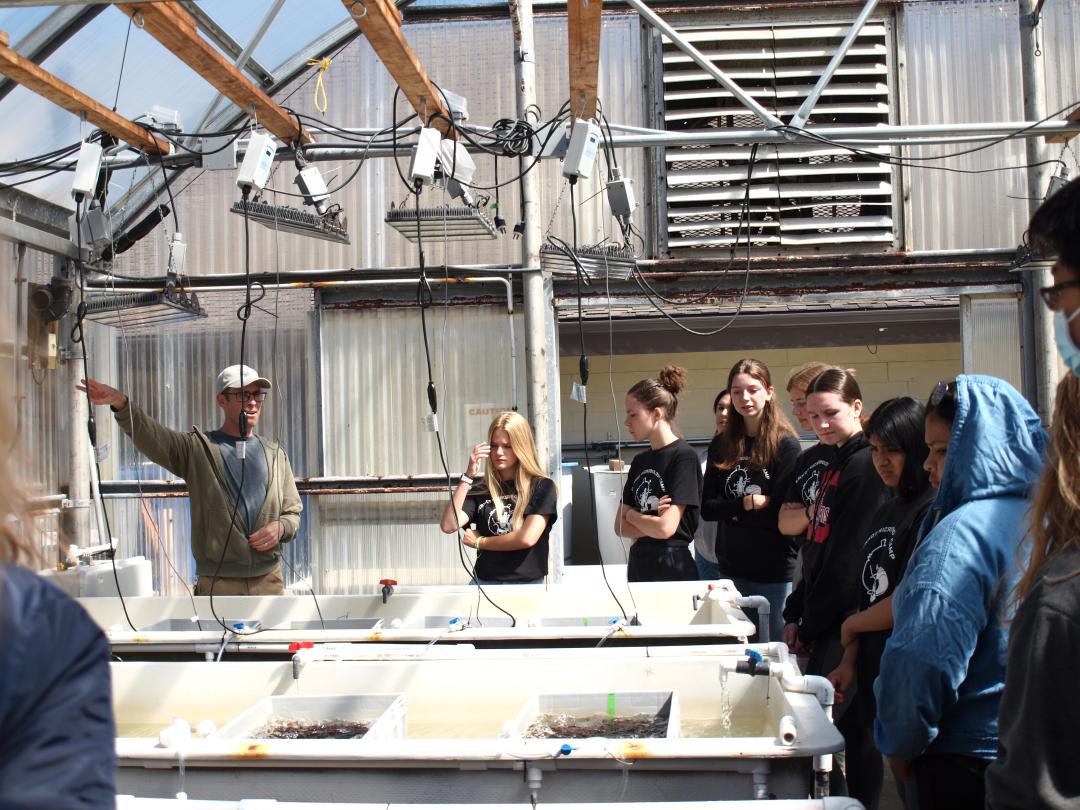
High-school students stand around tanks at Hatfield Marine Center.

Leidholdt Microbiology Camp participants learn about aquatic microbiology during a field trip to Newport.

Sahana Shah smiles for the camera in a black shirt.

Sahana Shah, ’24, dreams of a new campus center for students with disabilities

By Siobhan Murray

Growing up in Corvallis alongside an autistic sister, Sahana Shah gained an appreciation for her family member’s unique perspectives and learning style. But Sahana couldn’t help having concerns. “What is her future going to look like? Will she go to college?”

When Sahana arrived at Oregon State University with a Donald G. and Grace I. Lavey Presidential Scholarship, she immersed herself in the Honors College, sought to better characterize the structure and function of the COVID N protein in her biochemistry and biophysics lab, and ran for the student House of Representatives. One of her main platforms? Helping establish a disability cultural center to better adapt the campus to the needs of neurodiverse students. She won the election with the most votes of any candidate.

“The Presidential Scholarship has allowed me to fully engage in my passions at OSU through my different involvements, without having to worry about financial stress or other constraints, for which I am eternally grateful."

Since then, Sahana has joined the long-term effort among student groups to bring the idea to life – introducing legislation to her colleagues in the Associated Students of OSU Congress in fall 2021, allocating money for the project in the House of Representatives, marketing their message and holding focus groups with students at the conclusion of the 2021-22 school year. They’ve watched their idea evolve and expand into a vision for a Disability Cultural Center, in addition to an International Student Center, with the ideas for both projects having come to ASOSU from the student body. “We envision the centers having panel events, workshops and other programs that celebrate everyone’s backgrounds. That’s the biggest thing a cultural center could do: educate and spread awareness,” she says.

“If this comes to fruition, it would make me feel better about my sister going to college – I’d know she could have a place where she could feel safe.”

In 2022-23, Sahana and her peers plan to continue working with university administration to designate physical spaces on campus for the two centers and gather student input on the programming efforts within them.

Donald G. and Grace I. Lavey Presidential Scholarship was created in 1998 through an estate gift from two OSU alumni who graduated in 1940 – he in mechanical engineering and she in home economics. Over the last decade alone, the endowed fund has provided over $375,000 in scholarships for students like Sahana. Learn more about how you can unlock greater support for OSU students through the Scholarship Match.

High school students stand around a microscope in a lab wearing lab coats.

Breaking down barriers to a future in science

By Tom Henderson

Microbiology graduate student Savanah Leidholt understands the importance of diversity.

As an undergraduate at Montana State University-Bozeman, Leidholt was a McNair Scholar, a program funded through the U.S. Department of Education to increase graduate degree awards for students from first- generation or underrepresented segments of society.

You could say the program had an impact: Leidholt joined Rebecca Vega Thurber’s lab as an incoming Ph.D. student in 2019.

Now, she is helping to create similar opportunities for other young people. Just as microbial diversity is fundamental to the maintenance and conservation of global genetic resources, academic diversity is equally important, Leidholt said.

“As a Hispanic woman who grew up in rural Montana, I can attest firsthand to the lack of STEM opportunities available for these demographics,” she said.

This past summer, Leidholt set out to create a summer “bootcamp” for area high school students to draw more students from BIPOC, LGBTQ+, low-income and other diverse backgrounds to the study of microbiology.

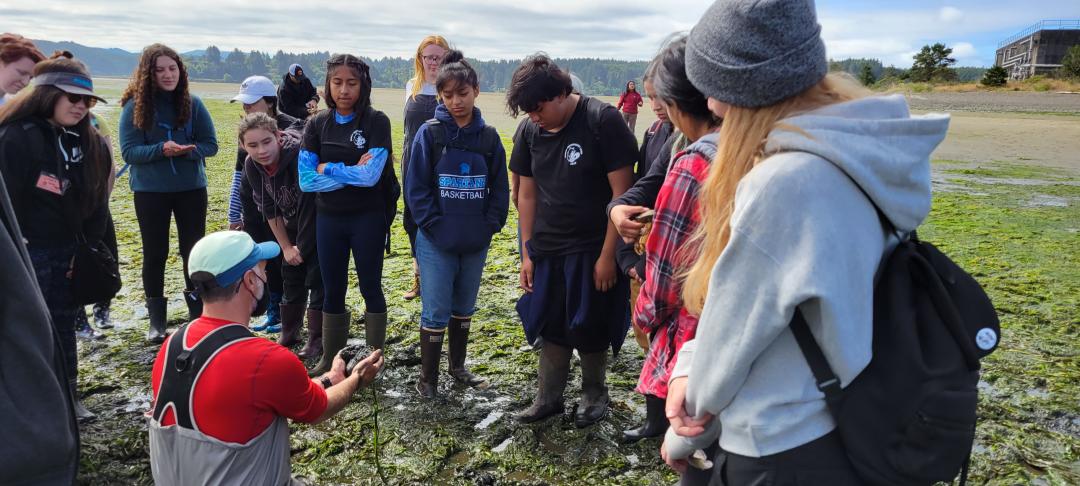
High school students stand on a beach looking at a man in a red shirt holding an organism.

High school students listen to a mentor discuss aquatic microbiology.

For one week, Leidholt led 20 local high school students through the Pernot Microbiology Camp. The immersion camp, funded by Rebecca Vega Thurber, introduced students to microbiology disciplines such as agricultural, food, medicinal and marine science.

The students learned how to use pipettes, the small glass or plastic tubes used in labs. They also collected cheek cell swabs, extracted DNA from potato salads, toured Corvallis’ wastewater facility and applied microbiology to arts and crafts.

The program was named after and funded in part by Vega Thurber’s endowed position in the department. Vega Thurber is the Emile F. Pernot Distinguished Professor in the microbiology department, a three-year professorship named after Oregon State University’s first bacteriologist and one of the founders of the Department of Microbiology at OSU.

“I know from my time as a McNair Scholar in undergraduate school that targeted programs such as the Pernot Microbiology camp can foster self-confidence in the sciences and increased interest in pursuing a career in STEM,” she added.

Participating students were primarily incoming juniors and seniors from Linn-Benton County and represented a variety of backgrounds in terms of race, ethnicity, gender and family income.

“I’m changing my major from general biology to microbiology when I go to orientation,” said a high school senior heading to the University of Oregon in the fall.

“I definitely am keeping my education path open to unplanned opportunities especially in regards to the field of microbiology,” another student said in a survey after the camp.

Students taking part in the Pernot Microbiology Camp.

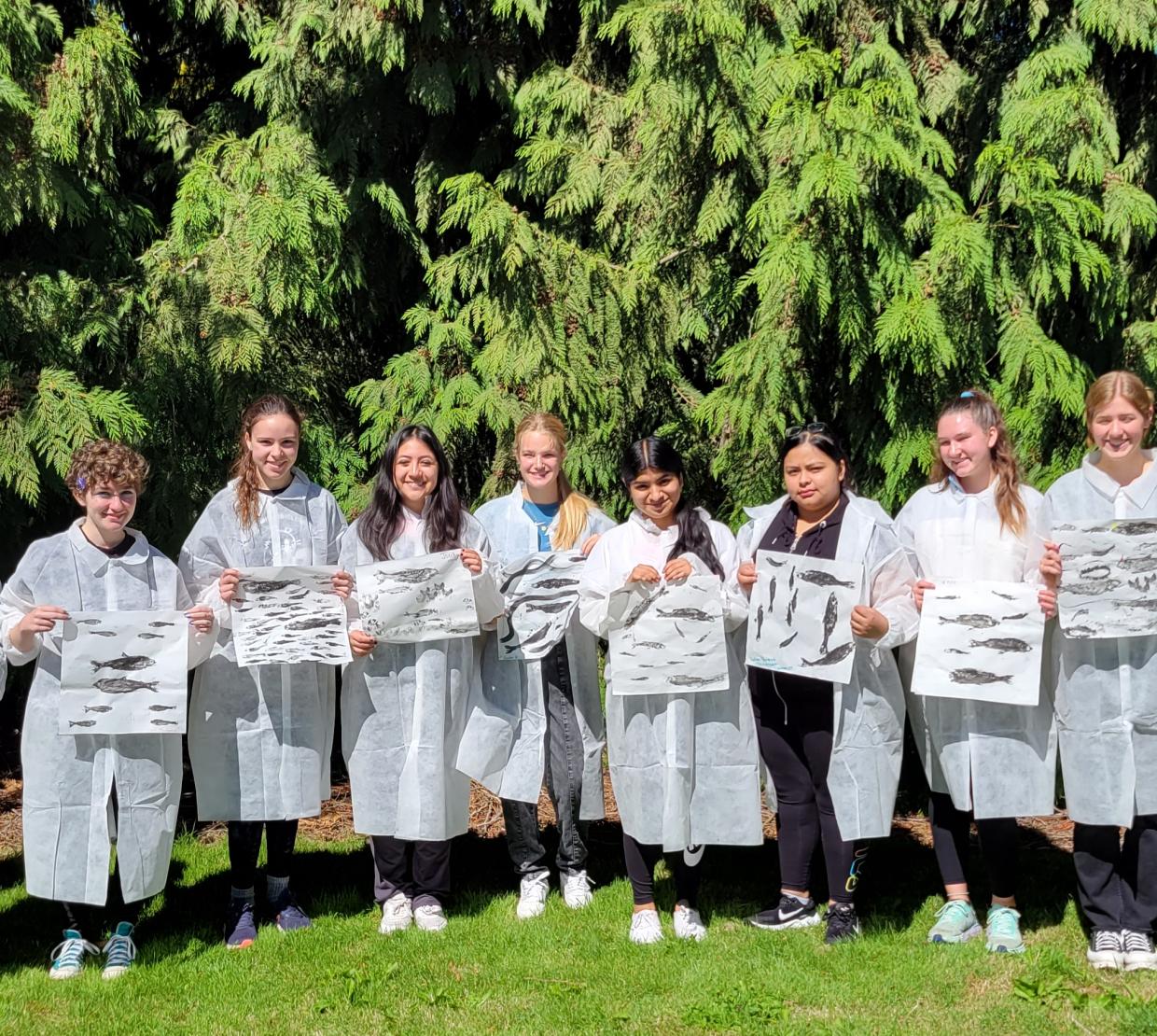
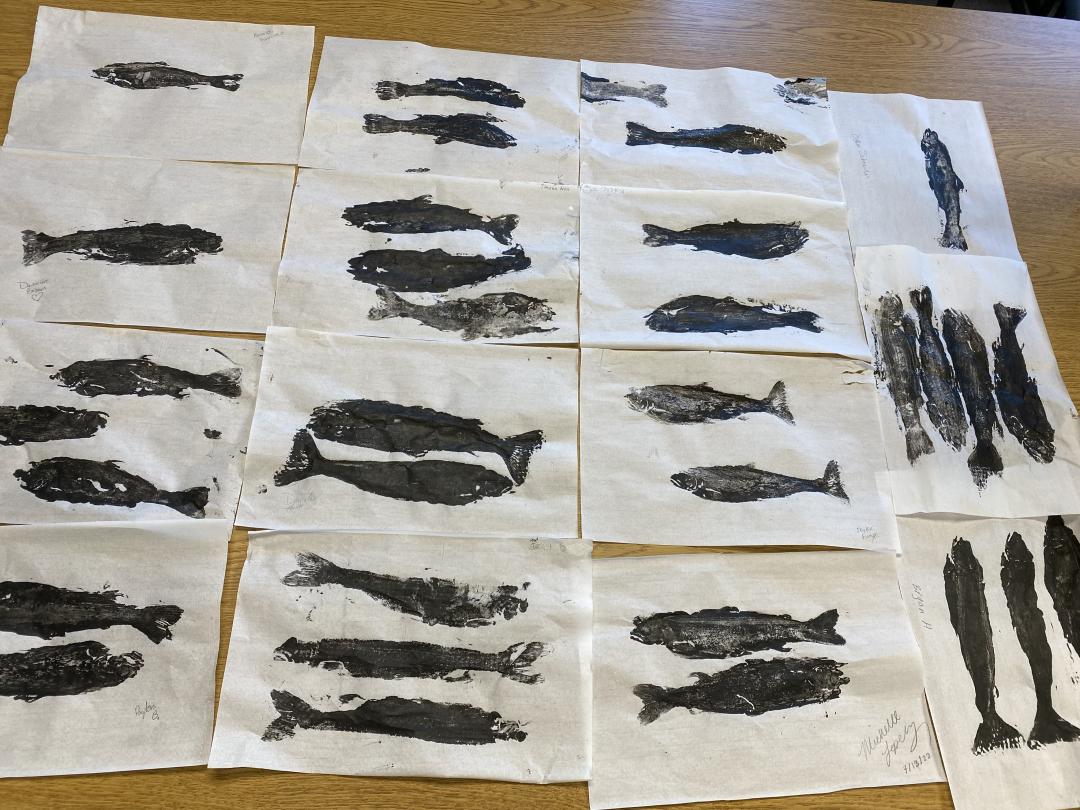
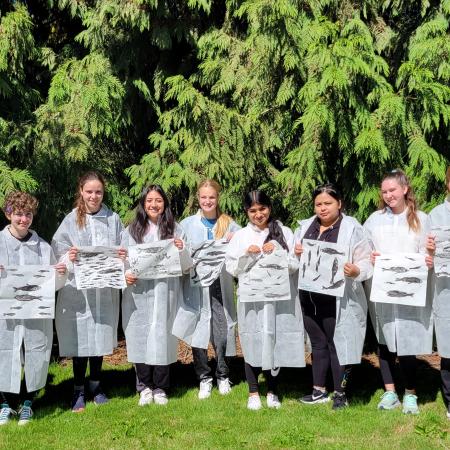
High school students work on fish rubs during the Pernot Microbiology Camp.

Leidholt said many of the students were able to attend because the microbiology department provided transportation.

“Undergraduate student Ellie Boryer and I did extensive research into similar STEM camps,” she said. “We found that the biggest inhibitors for students of color were transportation and financial costs. We chose to eliminate both by providing a ride to and from the camp as well as giving stipends to all targeted students.”

Several members of the microbiology department volunteered to not only transport the students, but also act as mentors to guide students through daily lab exercises, field trips and other activities.

Students are introduced to the diversity of the microbial world, learning how some microbes shape Earth’s habitability while others are used to ferment food and beverages.

They practiced how to probe microbial communities using cultivation- dependent techniques such as plate streaking as well as cultivation- independent techniques such as genome sequencing.

Volunteers at Oregon State University and Corvallis’ wastewater treatment plant showed students how these techniques are used daily in meat- processing facilities, medical labs and aquatic research labs.

Students were familiarized with microbiology and the wide range of potential career paths possible with a microbiology degree.

Whether the students ultimately major in microbiology or not, Leidholt said the camp succeeded in making microbiology more accessible and inclusive.

“This camp aimed to give students an opportunity to learn about the wide field of microbiology through a lived experience,” said Rebecca Vega Thurber. “We eliminated many financial, logistical and conceptual barriers young students (particularly students of color) face by providing transportation and student stipends.”

On a table sits black outlines of fish prints on white paper.

Student's fish prints sit on a table to dry during the Pernot Microbiology Camp.

Vega Thurber credits the success of the STEM bootcamp to the hard work of the volunteers as well as the financial support she receives through the Pernot Fund, the microbiology department and other donors, such as $3K they received from the Marine Studies Award Initiative at OSU.

“These early experiential learning programs can make a huge difference in the lives of early career scientists,” Vega Thurber said. “I’m looking forward to continuing and ideally expanding the program in the future.”

Several students expressed that they found the experience life-changing.

“I would love to get a master’s or even doctorate degree in microbiology, whether that is while I am in med school or completely change my career path to just wanting to work as a full-time microbiologist,” said one such student.

“After this camp, a career as a researcher in microbiology seems more appealing than ever.”

“I am definitely more interested and educated about the options that I can pursue with science, so I think I am more likely to try something with a science degree,” said the student.

Saki Nakai sitting outside in a forest.

Mathematics graduate to research cross-cultural psychology for Fulbright

By Grace Peterman

France, Japan and Luxembourg: international experiences give Saki Nakai a rich, interdisciplinary perspective.

Saki Nakai is not your average pre-med student. The graduating senior double majored in mathematics and psychology at OSU and has spent the last two terms studying abroad in France to complete a French minor. She is also one of two College of Science students and alumni to receive the 2022 Fulbright Student Award. This award will support Nakai for one year of independent study in cultural psychology at the University of Luxembourg.

Nakai was drawn to OSU for its Honors College and the opportunity to weave her diverse research interests into a thesis project. She started as a psychology major, but she became really interested in how math could be used to answer questions relevant to medicine and psychology.

Using math to support mental health

Completing the math major on top of her pre-med courses was a challenge, but Nakai is glad she did. “Sticking with the math major gave me a more enriching college experience,” she said. “The nature of the subject requires you to take time to do the homework, so people just naturally come together and collaborate in the Math and Statistics Learning Center (MSLC).”

Embracing teamwork and collaboration paid off for Nakai during the pandemic, when she took one of her hardest courses, MTH 343 Introduction to Modern Algebra, over Zoom.

“The entire class time is spent doing math problems, and the instructor Filix Maisch would hop around between Zoom rooms to help us,” she said. “I did struggle with it a lot, but the challenge really brings students together. I made some of my best math friends in that class.”

“Sticking with the math major gave me a more enriching college experience.”

Growing in confidence as a mathematician, Nakai took on research that combined her two majors, math and psychology, through the Summer Undergraduate Research Experience (SURE) Science program. Exclusive to the College of Science, SURE Science allows students of any year to get paid to do 11 weeks of full-time research over the summer with faculty from any college. Nakai completed a project using ordinary differential equations and dynamical systems theory to model bipolar disorder, under the mentorship of Vrushali Bokil, professor of mathematics and College of Science associate dean of graduate studies and research.

“SURE was a completely new perspective on medicine,” said Nakai. “The project was important to me because it was the first time I saw how I can use mathematics to actually answer questions in psychology and medicine, and that’s my ultimate career goal.”

Nakai also used applied math in her research project for the NSF-funded Research Experiences for Undergraduates program, a fully funded research experience which she completed at the University of Nebraska-Lincoln summer of 2019. Nakai’s project investigated reciprocal and non-reciprocal support in an Inuit community in Labrador, Canada using social network analysis. “My poster won first place in sociology at the REU program, and I got to go to the Emerging Researchers National Conference in STEM in Washington, D.C. to present it,” she said.

Cultural identities at home and abroad

Both of these projects were meaningful to Nakai because her motivation for pursing medicine is to help vulnerable populations and expand acceptance of diversity. Nakai was born in the U.S. to Japanese parents, so cross-cultural competence deeply informs her perspective. “That aspect of my personal experience has been a big part of the research I’ve done,” she said.

After high school, Nakai took a gap year to work in an international primary care clinic in Japan. “Since it was an international clinic, we had both Japanese- and English-speaking patients. The doctor spoke English, but some of the nurses didn’t,” she said. Nakai worked as both receptionist and translator wherever she was needed in the clinic.

Being immersed in both Japanese and U.S. cultures, Nakai researched some of their differences in her psychology coursework. She did a statistical analysis comparing the manifestation of shyness in Japan and the U.S. “Rates of shyness are higher in Japan, but a lot of it comes from cultural differences,” she said. Japanese culture is more collectivist, while the U.S. is more individualistic. How self-expressive or reserved people are is influenced by these cultural mindsets. Thus, we cannot apply the same scale to measure shyness in Japan that we would in the U.S.

“Doing that kind of research is empowering because it gives a voice to people who might not otherwise be heard,” Nakai said.

An internationally-informed physician

For the last six months, Nakai has been studying abroad at the University of Poitiers in west-central France. Living with a host family and studying exclusively French for six months has brought a new dimension to Nakai’s multicultural awareness.

Inspired by the experience, she will use her Fulbright award to complete a research project on cross-cultural psychology in Luxembourg, a small country that borders France, Germany, and Belgium. The project will explore identity construal and acculturation in American and Japanese expatriates living in Luxembourg’s unique multicultural and multilingual setting.

Nakai will use hybrid images and visual primes to analyze how people respond to cultural mixing. “I might show American participants a picture of a hamburger, a picture of a typical Luxembourgish lunch, and also a hybrid image, for example, a lunchbox with both. I can then ask them what they feel about these images, and with the hybrid image, do they think it’s the best of both worlds, or do they react to it with disgust?”

“Doing that kind of research is empowering because it gives a voice to people who might not otherwise be heard.”

Nakai has embraced living in the best of both worlds during her time in France. She and her host family have traded off cooking Japanese and French foods for each other. “I made sushi for them, and they were pretty fascinated by the whole process,” Nakai said. In return, they introduced her to delicious raclette and boeuf bourguignon.

Ultimately, Nakai wants to be a physician, and she anticipates that all of her multicultural experiences will enable her to be a dynamic, effective communicator with many different types of patients. She sees herself eventually serving Japanese-American communities in the U.S. “Multicultural Luxembourg will serve as a blueprint for the multicultural U.S. I want to make a society that would really value diversity,” she said.

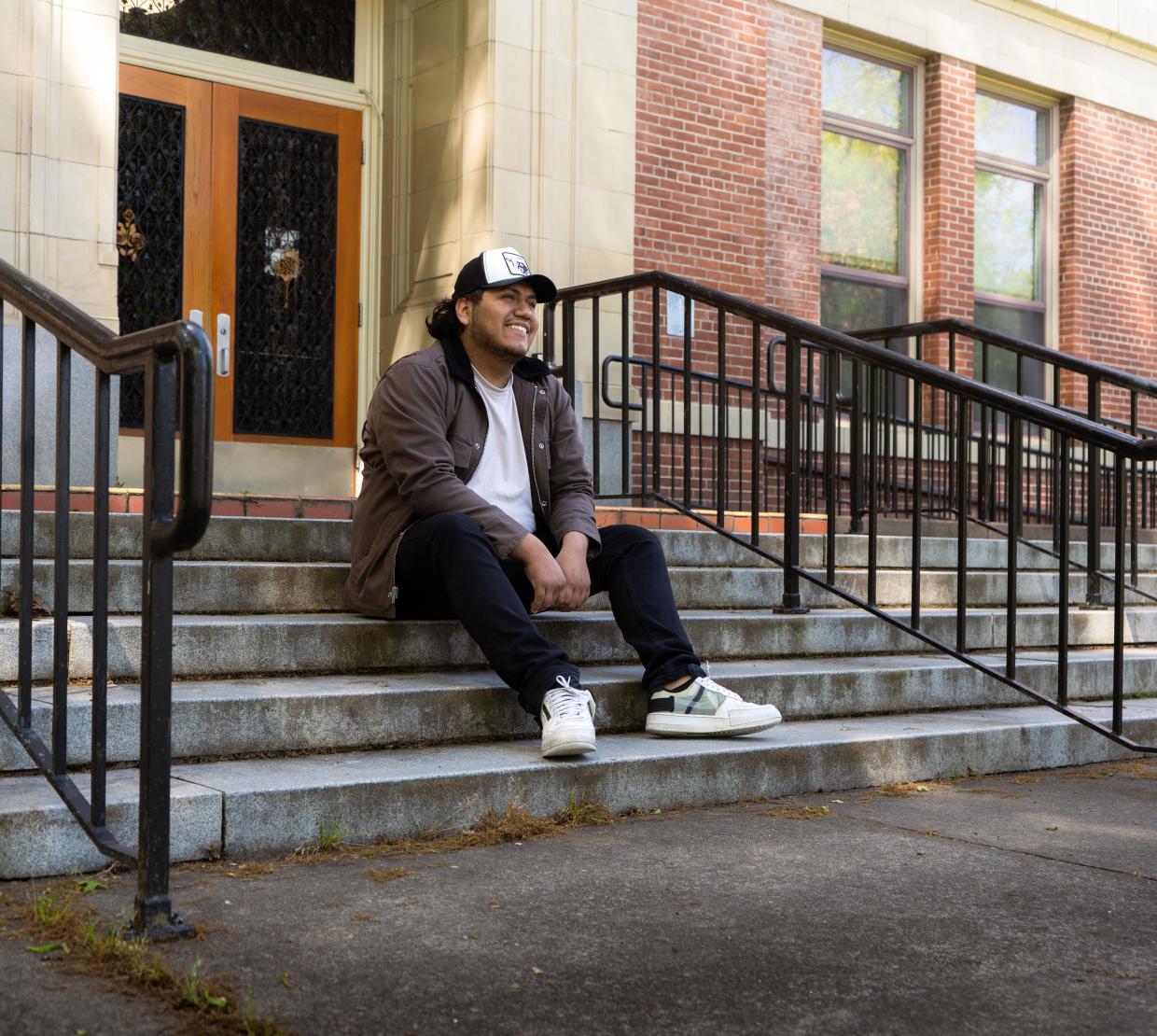
Bruno Salas Garcia sitting on the steps outside of Kidder Hall.

Microbiology graduate gives back to communities that have shaped him

By Grace Peterman

Oregon State is ten times the size of Bruno Salas Garcia's home town, but he's made an impact in both places with his commitment to community advocacy.

Bruno Salas Garcia almost didn’t come to Oregon State. “I finished my application probably a week before moving into the dorm,” the Microbiology graduate said.

Salas was all set to go to the Oregon Institute of Technology dental hygiene program in Klamath Falls, Oregon, but as the school year approached, “I had a nagging feeling that something wasn’t right,” he said. His supportive and understanding parents encouraged him to trust his own judgment.

Aware that a four-year university would give him more career flexibility, Salas decided to make the switch. “I’m glad I took that leap of faith to come to OSU, even though it was late in the application cycle,” he said. “I still feel that it was the right decision.”

Getting involved makes all the difference

Once at Oregon State, Salas looked for a major that would prepare him for dental school but could also apply to other healthcare careers if his goals changed. He chose microbiology, because viruses, bacteria and other microbes sounded interesting, and he knew that many of the prerequisite courses for dental school were built into the major.

Salas had always done well in science classes and took coursework at community college in during high school. However, intro science coursework at OSU initially caught him off guard.

“Day one, the professor was like, ‘Oh you probably all already learned this, I’ll just go through it quickly.’ I was like, ‘no, I haven’t!’” Salas said. Not used to having to ask for extra help, he quickly became overwhelmed by his coursework.

“In high school, even though my teachers were great, I didn’t have a lot of direction,” he said. “I didn’t know how to ask for help. I always just did well, and they told me, ‘you’re doing great, just keep it up!’”

Salas’ first term at OSU was a challenge. Sacrificing sleep to catch up on all the new material, he entered survival mode. Although he had a few friends to rely on, overall he felt disconnected from the OSU community. “I was a little isolated. I was kind of just doing what I had to, to survive, in this mindset of, ‘I have to do everything myself.’”

A feeling of isolation was exacerbated by the fact that Salas was far from home and in a town many times larger than where he grew up. In Irrigon, a small town of 2,000 people that is four hours from Corvallis, Garcia’s graduating high school class had 40 people. Introductory science courses at OSU may have as many 500 students. Although many resources and programs exist to give students individualized attention, like the Learning Assistant program, it can be difficult to ask for help if you’re already feeling stressed and overwhelmed.

By a stroke of luck, someone from Salas’ high school happened to be living on the same floor his first year. This friend was part of the College Assistance Migrant Program (CAMP).

OSU’s federally funded program that supports students from migrant and seasonal farm worker backgrounds during their first year in college. CAMP provides advising, mentoring, health services, financial assistance, social activities and more.

Salas' friend recommended he join CAMP, too. “I thought ‘Yeah ok, I’m not going to do this. I’ll just go and humor them,’” Salas said. “Besides, classes would start in a few days. It's not like I’ll get in,” he thought. He was skeptical that university programs could add value to his busy life. Extracurricular activities seemed like meaningless requirements, and he didn’t want to contribute to anything he didn’t believe in.

Once at CAMP, Salas’ view began to change, particularly through the influence of CAMP Academic Counselor Alexsandra Cortés, who made a strong case for the importance of mentorship and community.

Through CAMP, Salas was assigned a peer mentor who understood his cultural context, his experience as a first-generation college student and the difficulties of transitioning from a rural, small town to a large public university. Getting involved with CAMP increased Salas’ sense of ownership of his college experience. “CAMP helped me feel more at home at Oregon State, and from there, it gave me the confidence to go and try all these other things,” he said.

“I get to help, in the same way I was helped so many years ago. I’m glad to be able to give back to the program that gave me so much early on.”

In the years to come, Salas got connected to the resources he needed for success. He started asking his teacher's assistants, learning assistants and professors for help early and often. Today, Garcia invests in his college community as a mentor for CAMP and a peer advisor at the College’s Science Success Center (SSC).

“I get to help, in the same way I was helped so many years ago,” he said of working with CAMP. “I’m glad to be able to give back to the program that gave me so much early on.”

In the College's Science Success Center, he led tours of campus for prospective students and their families. “I imagined myself being in the crowd,” he said, “If I were visiting, what I would want to hear? I try to get them to see aspects of a university that they want to go to in Oregon State.”

Salas is also the undergraduate representative for the College of Science Equity, Access and Inclusion (EAI) Leadership Council, the team that implements the College’s Diversity Action Plan. Garcia said Goal 3 of the plan is especially meaningful to him: “to create a welcoming college climate to support a sense of belonging and equitable learning and training experiences.” As someone who experienced firsthand the struggle of being disconnected and how it makes asking for help even harder, “I could use my own experiences to help realize that goal, especially with having a sense of belonging and community.”

Human dimensions of science

Mentoring his peers has challenged Salas to get more out of his coursework. Going to office hours paid off in one of his favorite classes, Virology with Hannah Rowe, assistant professor of microbiology.

“I loved the material and the class structure,” he said. “I went to office hours a lot. If I was completely lost on a topic, she wouldn’t just give me the lecture again but would help me conceptualize it better by using my own understanding and working from there.”

Salas has also been a teacher's assistant in the same microbiology classes that he used to struggle with. “I got to see students progress from ‘I don’t know how to use a microscope at all’ to being able to pick out what we’re trying to find on the slide by the end of the term and also troubleshoot their own problems they had with the microscope or material,” he said.

Helping people understand science and helping people through science have always been important for Salas. In high school, he chose this career path because of its ability to make a difference in people’s lives. “Around that time, a lot of my friends had braces,” he said. “I could tell they were a lot more confident when they got them off. People’s teeth have an impact on how you feel about how you look. I thought, as a dentist, I can help people be confident about themselves and be happy with who they are.”

The importance of dentistry was also highlighted by growing up in a small town, where the nearest dentist office was a 45-minute drive away. “I knew I wanted to do something local,” he said. “For me growing up, I thought that was normal. I thought everyone had to drive to get good healthcare.”

Salas’ interest in how healthcare disparities affect rural communities led him to complete a public health minor while at OSU. “I felt that it was important for me to understand what the healthcare system here in the U.S. entails,” he said. “Part of that is better understanding the determinants of health, especially the social, environmental, etc., aspects that have a big influence on one's health as well the structural and socioeconomic barriers to healthcare.”

Eventually, Salas may return to northeastern Oregon to bring accessible dental care to rural towns like Irrigon. For now, he’s headed to a summer research internship at the OHSU School of Dentistry. He plans to apply to dental school next fall and work as a dentist with a local practice.

Portrait of Gabriela Cortes Cortes in front of green shrubs

First-gen biohealth grad achieves 'next step' toward career as a dentist

By Martha Wagner

This spring, Cortes graduates from OSU with a major in BioHealth Sciences, a minor in chemistry and an option in pre-dentistry.

Gabriela Cortes Cortes is proud not to have let any obstacle, including a pandemic or the challenges of a first-generation student, hold her back from earning a four-year degree in the College of Science.
She remembers feeling shy and lonely when she first arrived in Oregon from Mexico in seventh grade, knowing very little English and feeling lost in the classroom. A bilingual teacher came alongside her, helping her feel more welcome and connecting her with resources.

“By the end of the year, I was able to comprehend almost everything that was said by the teachers, and I knew what to expect from my classes and what to do – even though I still wasn’t confident enough to speak in English,” she said. “In my freshman year of high school, students were given Chromebook laptops, which enabled me to use Google Translate to help learn English.”

This spring, Cortes graduates from OSU with a major in BioHealth Sciences, a minor in chemistry and an option in pre-dentistry. Along the way, she’s placed on the OSU honor roll three times and was awarded two grants and three scholarships for her two years at OSU and her previous two years at Chemeketa Community College.
“My parents are always reminding me that I am capable of achieving my goals – even though sometimes subjects are really hard since English is my second language.”

Cortes is especially grateful to her Oregon State advisors and her Ford Family peer mentor for their encouragement and support. Reed Davis, an academic counselor for first-generation TRIO program students, referred her to many helpful resources on campus such as academic counseling, tutoring and mentoring programs, assistance with financial aid and scholarship application, and student success workshops.
Tiffany Bolman, her BioHealth Science advisor, coached her about the process of applying to dental school, offering to be an ongoing resource after graduation. And she encouraged Cortes to focus on her strengths and accomplishments, rather than on her disappointment at not moving forward faster.

“Tiffany really supported me, saying, ‘You came this far, and you should be proud of yourself.’ She told me that she also was a first-generation student and said, ‘I understand you, and know it's hard. I was myself in the same position.’ She identified with me, and I identify with her because she knows all the obstacles I've been through, like needing to learn English and being a first-generation student from a low-income family,” Cortes said.

Because of Covid, Cortes spent only two terms on campus in Corvallis before returning home to live with her family in Mount Angel. While she is sad that her on-campus experience was short-lived, she relished the time she lived with other students in university housing. “I am so glad I had that experience. I will never forget that,” she said.

After graduation, Cortes plans to take two gap years during which time she plans to enroll in a dental assisting program and apply to dental schools, including Oregon Health Sciences University.

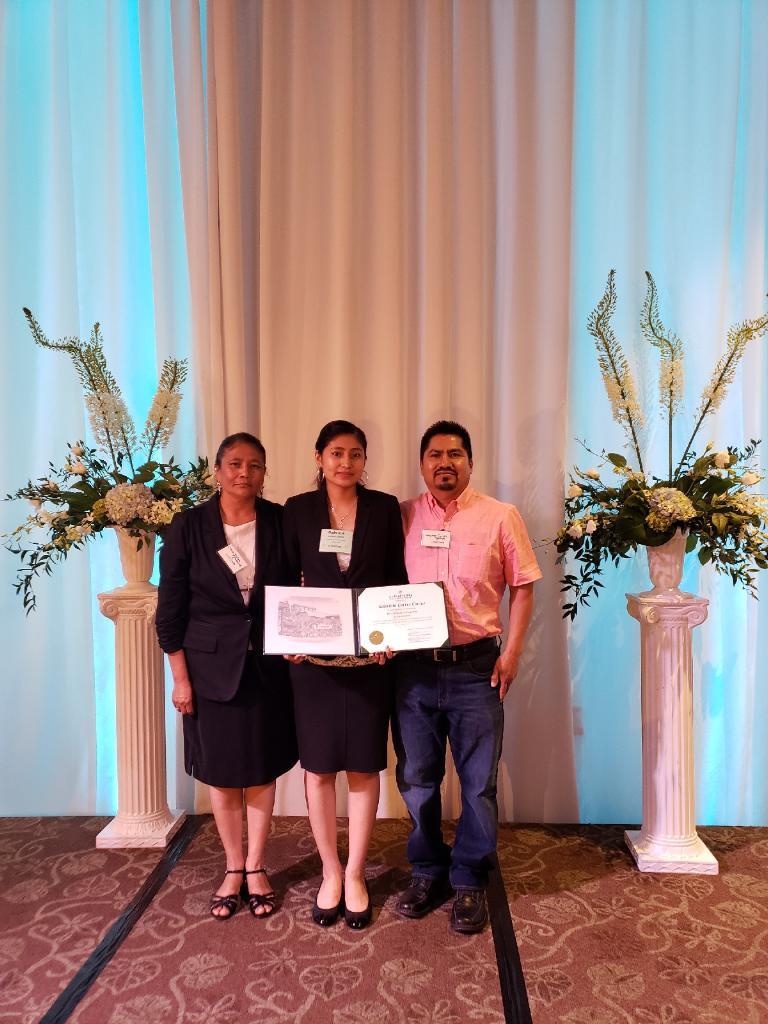
OSU graduate Gabriela Cortes poses with her parents

Gabriela Cortes Cortes (center) proudly displays her Ford Family Foundation scholarship certificate with her parents, Clara Cortes Velasquez (left) and Longinos Cortes Santos (right).

Overcoming obstacles: It takes a village

Cortes is one of a growing number of first-generation students graduating from Oregon State. Neither of her parents had an opportunity to attend school as children for more than a few years.

Her father became a legal U.S. resident and worked seasonally in agriculture in Oregon before he was able to bring his whole family to Oregon, thanks to an uncle who provided housing for them. Even though her parents still lack the English skills of their four children, Cortes says they have always been supportive of their children’s educational ambitions.

“My parents are always reminding me that I am capable of achieving my goals – even though sometimes subjects are really hard since English is my second language,” she said.

In high school, Cortes asked one of her teachers to help her with college applications. She applied to several universities as well as Chemeketa Community College, then chose the community college when it offered her two years of free tuition.

"I will enjoy making people’s teeth more beautiful and seeing them more confident in themselves if they were not confident. That will make me really happy.”

What led Cortes from Chemeketa to OSU and dentistry? The career choice goes back to Cortes’s childhood in Mexico. “My mom always had issues with her teeth. She was having pain and taking over the over-the-counter pain remedies for it. We couldn’t always afford dental care. After I go to dental school, I want to help people who can’t afford dental insurance. I want to offer services to those people one way or another.”

It was Cortes’ high school teacher who helped her with college applications and who also advised her to apply to Oregon State if she wanted to get a top-notch foundation in science to prepare for dental school. The same teacher helped her apply for a federal Pell Grant.

Cortes started college with a four-year scholarship from the Mount Angel Community Foundation. By the time she was accepted to enroll at Oregon State, she had garnered a Ford Family Foundation scholarship, an Oregon Opportunity grant and two successive scholarships from Kaiser Permanente.

Although Covid prevented Cortes from participating in lab research, she feels positive about her academic experience at Oregon State and was able to participate in both the BioHealth Science and pre-dental clubs.

“The clubs were really helpful. I went to a lot of sessions where we had a guest speaker. It was really informative to have someone telling us about the journey towards dental school and giving us tips on how to be more successful,” she said.

Jakelyn Santa Cruz-Enriquez, Cortes’s Ford Family peer mentor, was, says Cortes, “the very first person who offered me her friendship and support when I first started school at OSU. I honestly think that she made my transition to OSU much easier. And even though she has already graduated, she is still directing me to resources that might be helpful. In fact, all three people have always encouraged me to never give up and to always pursue my dreams.”

Oregon State was one of Cortes top options for a four-year university because of its strong pre-dental program and proximity to her family. “My high school teacher told me that OSU was a welcoming school. Most importantly, it had all of the class I needed to go into dental school. So when I went to my community college, and my advisors asked me which school I wanted to transfer to, my very first option was OSU,” she said.

Cortes’ advice to other first-generation students is to be confident in their capabilities and to focus on taking just one step at a time. “And always look for help. When I first start started college, I needed to look for resources because I didn't know where to go, which class to take or anything like that. So looking for an advisor who can tell us like what to do and what resources are available is really helpful – because those resources are there if we need them,” she said.

Brightening lives and smiles

As a dentist, Cortes says she will enjoy making a difference by helping to improve others' dental health and their health overall. “I will enjoy making people’s teeth more beautiful and seeing them more confident in themselves if they were not confident. That will make me really happy,” she said.

She also looks forward to improving the life of her parents who work so hard, “sometimes Monday through Sunday,” but still struggle to provide for their family.

“I want to make my parents really proud and to help give them a better life,” Cortes said. “It's my goal, my motto, to always work hard and be successful. Sometimes it's hard, and I just want to give up. But then I think, no, I have come this far, and I won't give up.”

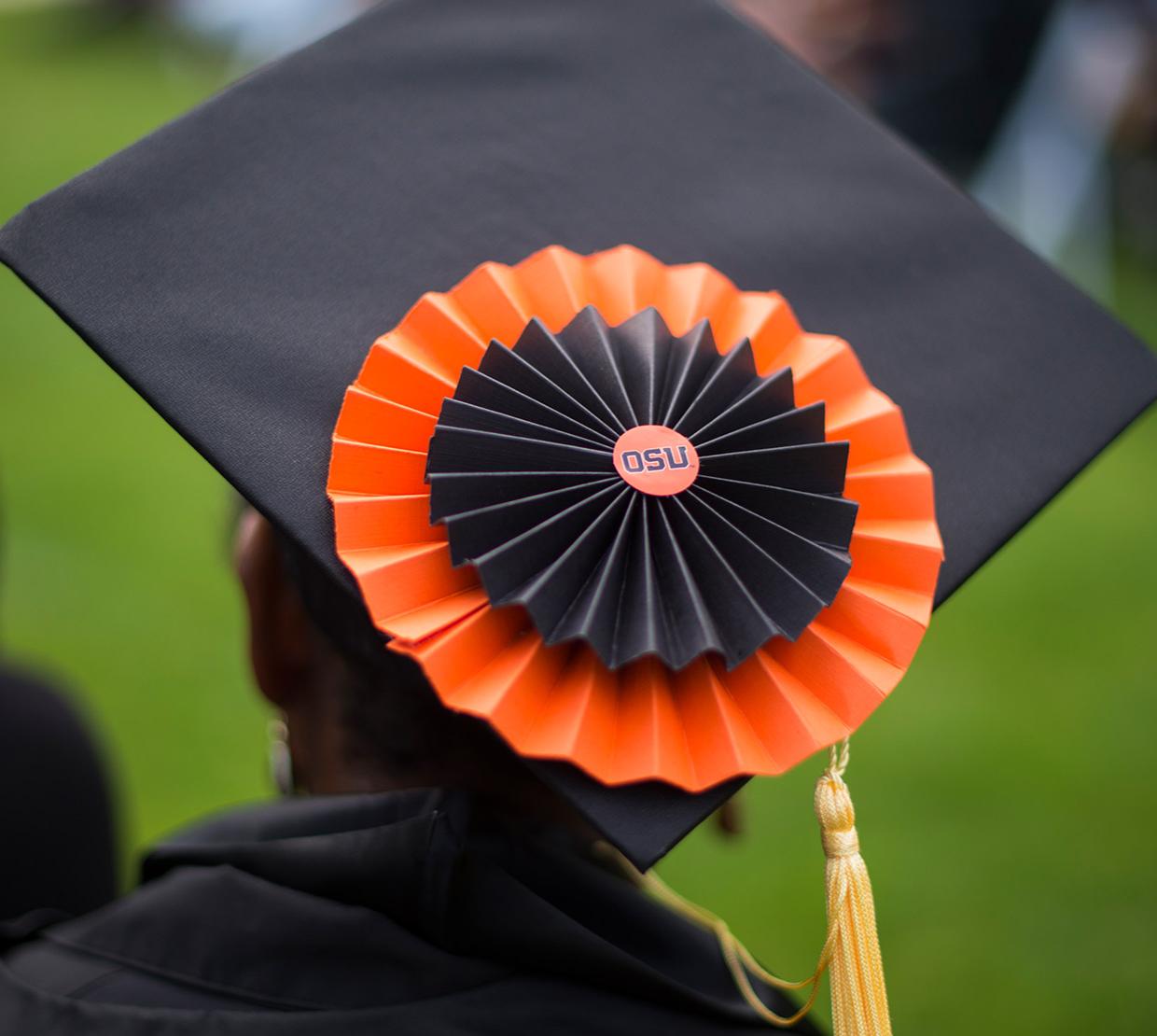
OSU Graduation cap

The Class of 2021 succeeds against all odds

By Srila Nayak

Congratulations to the Oregon State College of Science Class of 2021! This class faced enormous challenges due to the pandemic. On the spur of the moment, the class of 2021 transitioned to remote learning, virtual interaction with professors, mentors, peers, friends and experiential learning in online formats. They have also faced increased financial burdens and other stressors. Our students have persevered, showing admirable determination, resilience and fortitude that will serve them well in their lives and careers.

Succeeding against odds while making history, College of Science graduates have found ways during this pandemic to participate and make an impact on state-wide public health endeavors through the TRACE-CVOID-19 project. They have gained enduring skills and done outstanding work in adapted science labs and with science communication in the virtual domain. Our seniors have been instrumental in helping Oregon State succeed at remote teaching in their roles as peer learning assistants and tutors.

Science graduates have led the way by dint of their academic achievements, selfless service and committed leadership. Supported by awards, scholarships and dedicated advisors, our seniors have collaborated with faculty mentors to create new knowledge and achieve major scientific breakthroughs.

Check out our Commencement page to celebrate our graduates. Read their compelling stories below containing reflections on undergraduate experiences at Oregon State and their dreams for the future.

This year’s graduates include Fulbright and Ford Foundation Fellows, Gilman International Scholars, NOAA Scholars, published scientific authors, future doctors, scientists, entrepreneurs, community leaders, teachers and informed, engaged world citizens. We are exceptionally proud of our students and all they have achieved during their career as undergraduates in the College of Science at Oregon State.

By the numbers

The College graduated 670 undergraduate students with baccalaureate degrees in 2020-21, including 68 Honors graduates. More than 80% (538) of our graduates were in the life sciences, with Biology having the most graduates at 199. BioHealth Sciences came in second with 152 graduates; biochemistry and molecular biology had 71 graduates; Zoology 63; Mathematics 56; Microbiology 43; Chemistry 42; Physics 34, and; Biochemistry and Biophysics graduated 10 students.

Of the total baccalaureate graduates, 11% are underrepresented minorities and 26% are first-generation students. In addition, 10 of the 2021 baccalaureate graduates are military veterans.

The College will also award 52 doctoral degrees, 66 master’s degrees and seven certificates in online Data Analytics.

Of the 52 doctoral degrees, Chemistry had 16 Ph.D. students, followed by Integrative Biology at 11; Mathematics 9; Physics 6; Microbiology 5; Statistics 4, and; Biochemistry and Biophysics graduated one doctoral student.

The Department of Statistics awarded 15 master's degrees in statistics and 19 M.S. degrees in data analytics. Chemistry and Mathematics awarded 10 master's degrees each. Physics had 6 master's degree recipients; Microbiology three; Biochemistry and Biophysics two, and; Integrative Biology awarded one master's degree this year.

Celebrating the Class of 2021

We invite you to read the profiles of our seniors. These outstanding graduates represent an inclusive and diverse learning community in the College of Science. Here they share their inspiring and unique journeys as science majors.

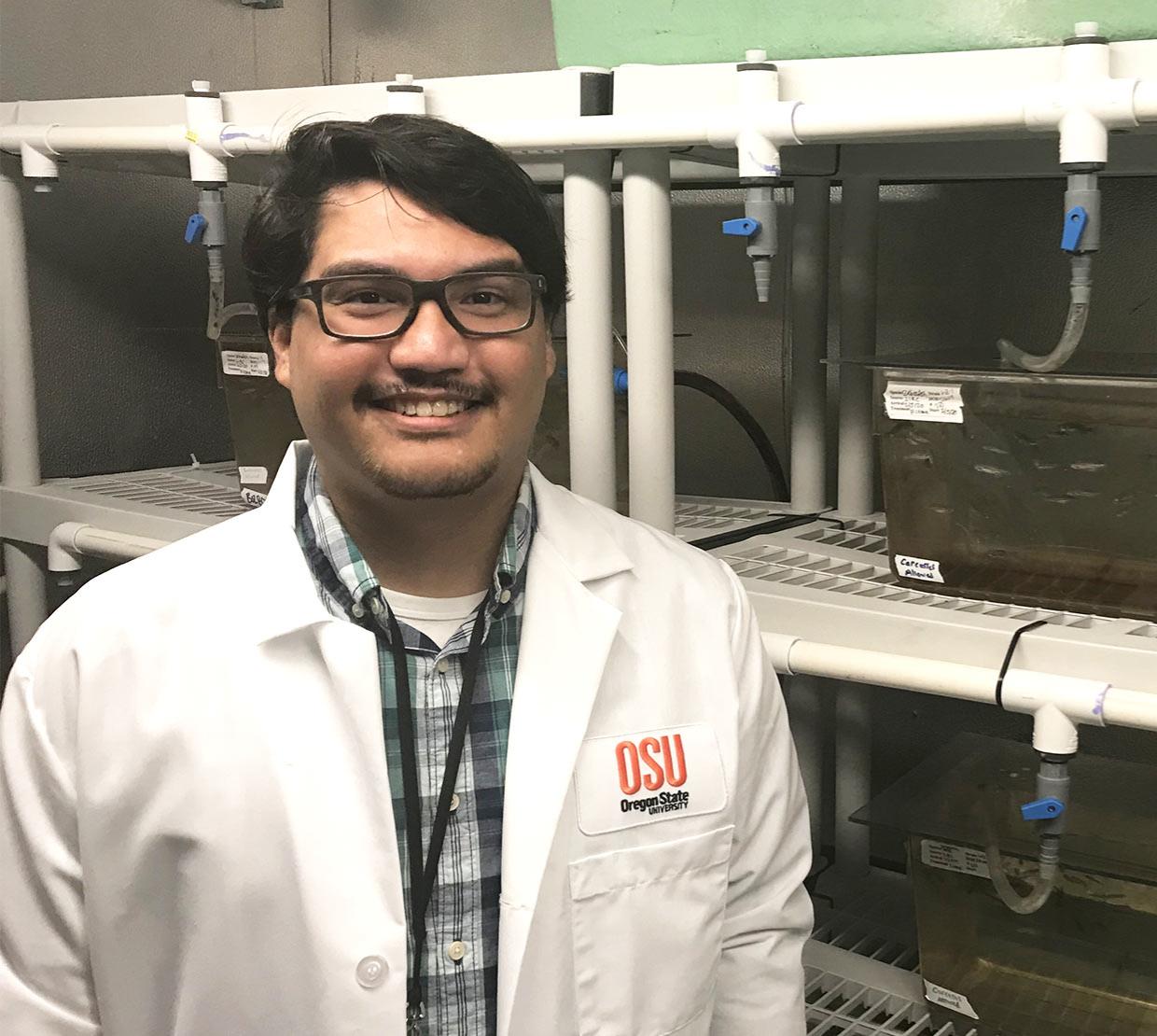
Corbin Schuster standing in a lab in front of shelves.

Diversity grant allows Ph.D. investigator to integrate his research career and culture

By NIH curated news

Microbiology Ph.D. student Corbin Schuster works with Professor Michael Kent in the Kent Lab to uncover the effects of the three most common infections in zebrafish and develop methods to prevent or control those diseases.

Microbiology Ph.D. student Corbin Schuster’s interest in biomedical research – particularly the study of microorganisms and infectious diseases – kindled during his 10-week internship at the National Institute of Diabetes and Digestive and Kidney Diseases in Bethesda while he was still an undergraduate at Heritage University in Washington state.

Today Schuster works with Professor of Microbiology Michael Kent in the Kent Lab to uncover the effects of the three most common infections in zebrafish and develop methods to prevent or control those diseases. He is supported by the National Institutes of Health (NIH) Office of Research Infrastructure Programs through the program Research Supplements to Promote Diversity in Health-Related Research connected with Kent’s National Institutes of Health (NIH) grant, “Control and Impacts of Diseases in Zebrafish Research Facilities.” The highly productive Kent Lab is focused on two major research areas that shed light on chronic infectious diseases: diseases of zebrafish in research facilities and the impacts of pathogens on wild salmonid fishes.

"Dr. Kent keeps me motivated and gets me out of my comfort zone, whether it’s taking on leadership roles, talking about my project and results – even when they’re not what I expected, or influencing me to get involved in diversity activities on campus ..."

As a member of the Yakama Nation, Schuster is interested in the study of human diseases that have a higher incidence among Native peoples, such as toxoplasmosis (a parasitic infection), as well as diseases of salmon, which are central to the food, culture and religion of the Yakama people.

“[The grant provided] a unique experience in that I don’t feel that I have to separate my culture from my career. I’m really interested in working with the tribal community, and the program and the NIH both support that aspect of my research desires,” said Schuster, who is in the third year of his Ph.D. program.

His interest in the zebrafish model was sparked when he learned about the aquatic model’s use in studies of spinal cord regeneration. “I really saw the discoveries that we could possibly have with zebrafish. When I started looking at the genetics [of the model], it was even more mind-blowing,” he explained.

Schuster currently is developing a sensitive and specific nonlethal water test to detect a common parasite in zebrafish, Pseudoloma neurophilia. He also is using histology and molecular biology methods (polymerase chain reaction) to characterize disease transmission dynamics in fish. His research is important to the rigor and reproducibility of studies using zebrafish models because P. neurophilia occurs in about 50 percent of zebrafish research laboratories. Kent’s laboratory previously showed that subclinical infections of P. neurophilia in laboratory zebrafish may have implications for research outcomes as a confounding factor, especially in neurobehavioral research.

He also has the opportunity to work with the Oregon Veterinary Diagnostic Laboratory (OVDL) at OSU, which collaborates with Zebrafish International Resource Center where Kent is a co-investigator, to provide diagnostic services to the zebrafish research community. Dr. Justin Sanders, head of molecular diagnostics at OVDL, leads molecular diagnostics and also mentors Schuster, providing guidance regarding molecular aspects of Schuster’s research.

Schuster’s grant allows him to mentor undergraduate students in the laboratory, a role that Kent encourages. He also is involved in outreach to students in his hometown area, including those in tribal communities, to encourage their involvement in science careers.

“Dr. Kent keeps me motivated and gets me out of my comfort zone, whether it’s taking on leadership roles, talking about my project and results – even when they’re not what I expected, or influencing me to get involved in diversity activities on campus, including sharing concerns about decision-making as they relate to diversity,” Schuster said.

Schuster is preparing to submit his first peer-reviewed manuscript on his research with his mentors this year.

Subscribe to Diversity in Science