Biochemistry & Biophysics

Biochemistry & Biophysics

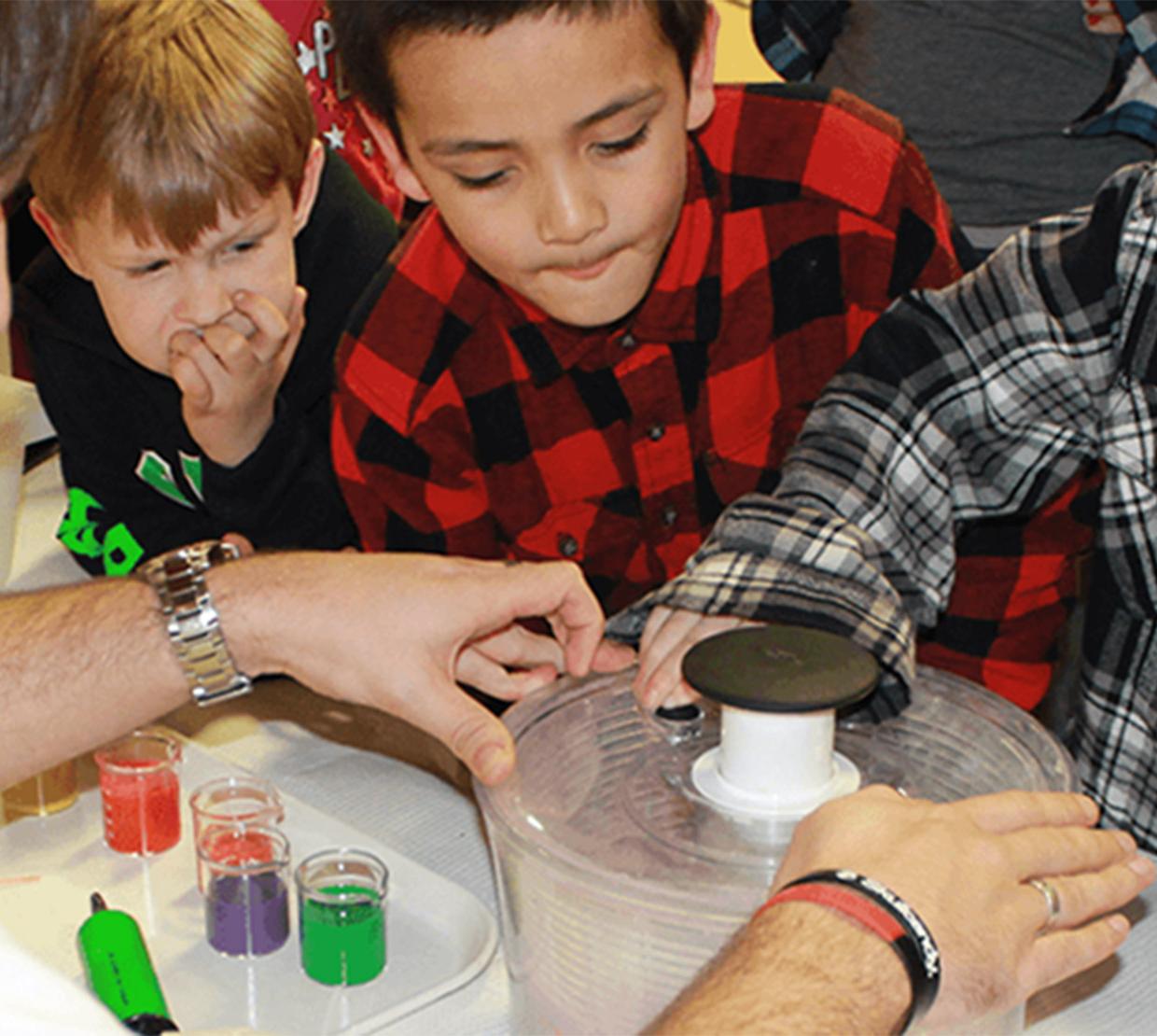
children looking at science themed booth

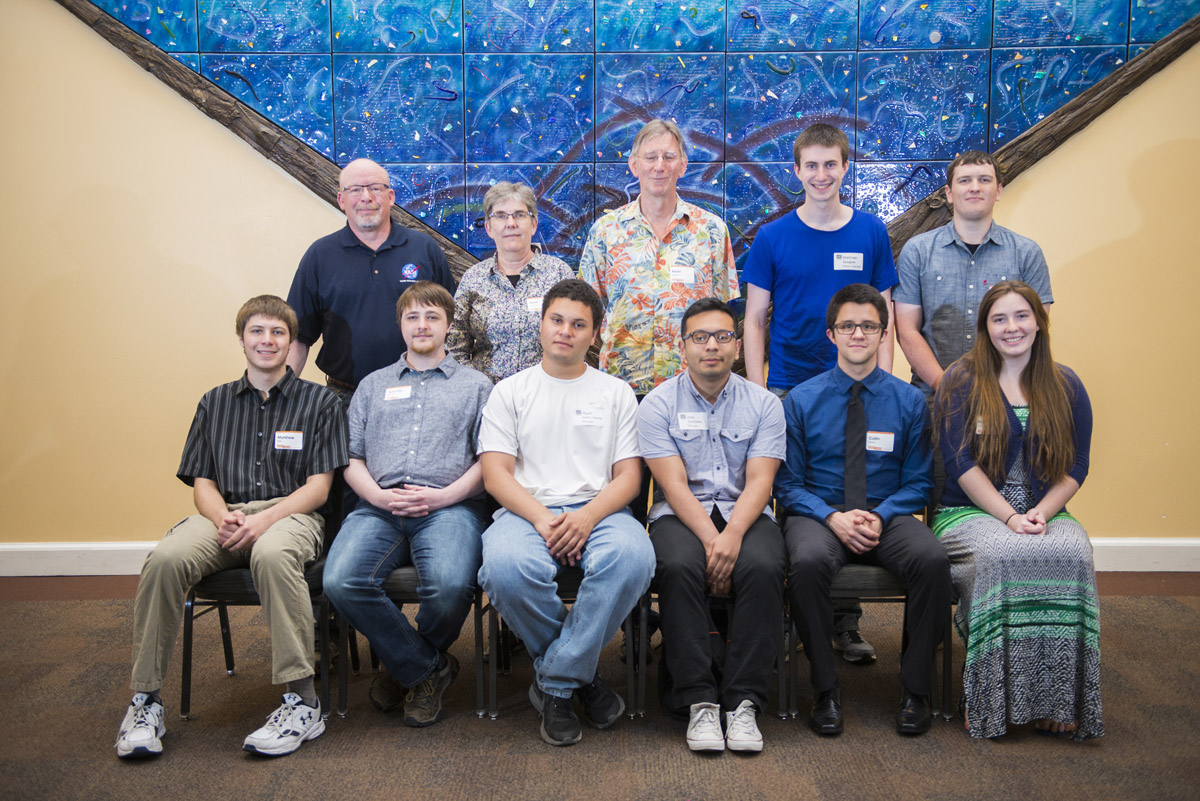
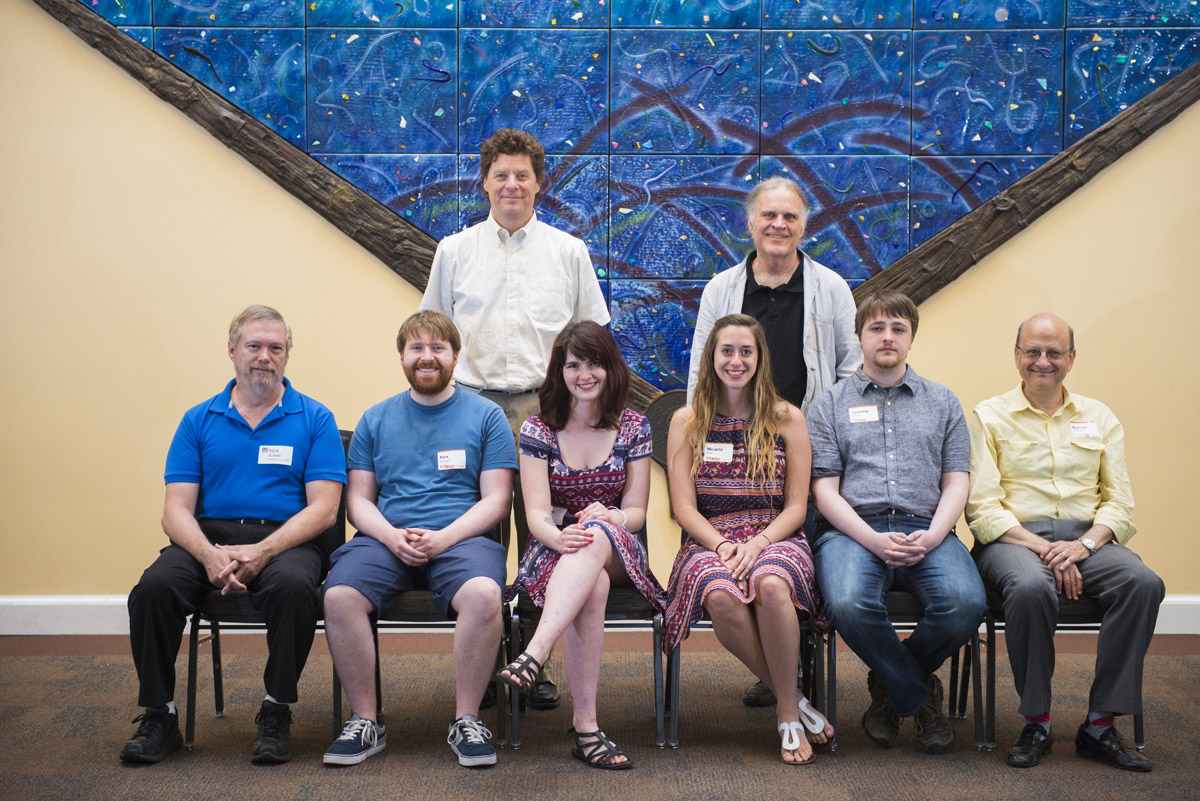
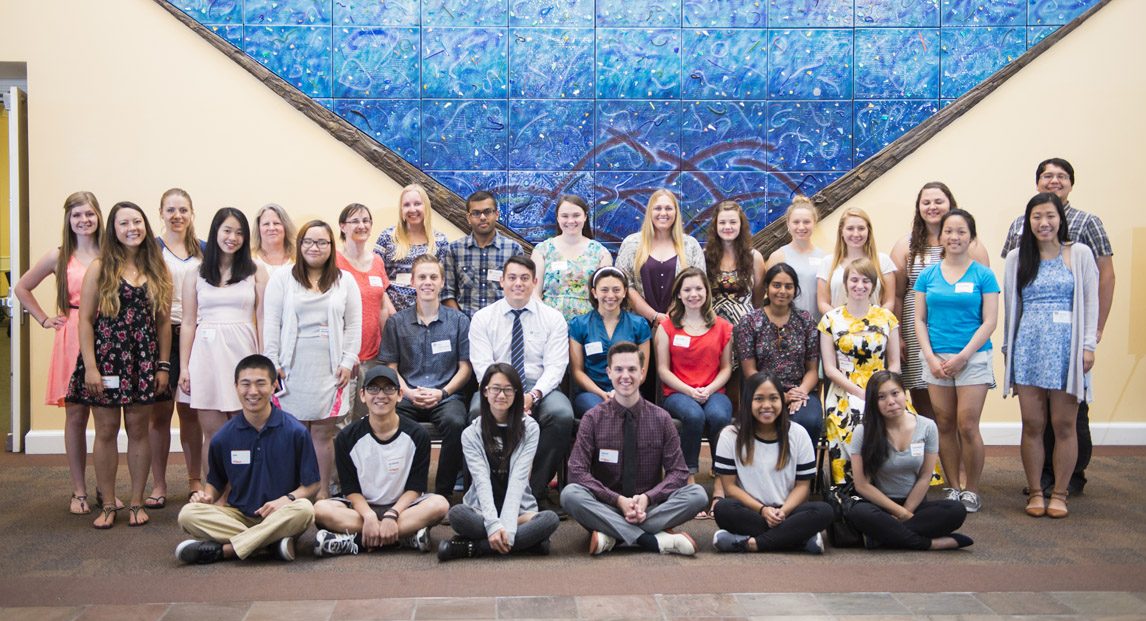
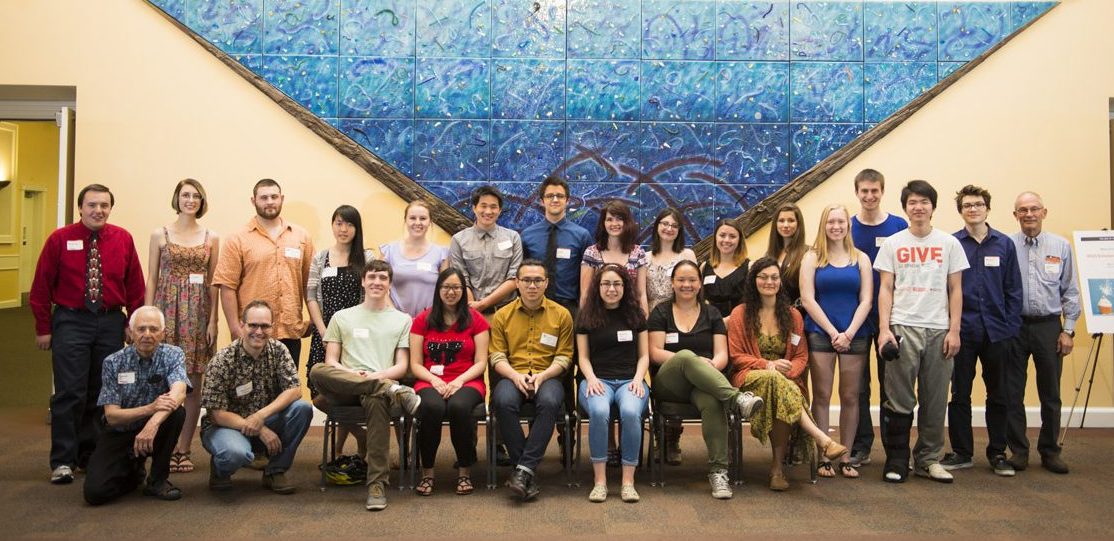
From the lab to the world: OMSI Science Communication Fellowships

The OMSI Science Communication Fellowship Program

Applications are open for Oregon's top academic and professional fellowship program: The Oregon Museum of Science and Industry's OMSI Science Communication Fellowship. For spring 2018, the fellowship is open to researchers or science professionals including faculty, graduate students, technicians, or other individuals in STEM and health related professions.

The deadline for applications is Wednesday, November 1.

Held primarily in Corvallis, OR on the OSU campus, OMSI Fellows participate in a series of professional development workshops that cover science communication best practices and provide opportunities for participants to practice new skills and techniques. In collaboration with OMSI, each Fellow will develop a unique hands-on educational activity designed to communicate their research to public audiences and will join OMSI in engaging museum visitors with these activities at Meet a Scientist events.

A series of four professional development workshops will focus on building skills to effectively communicate scientific research with broader audiences. Workshops are 3-4 hours each, spaced over the course of three to four months.

Tuition for the program is $1850 per participant. The Science Dean's Office will cover half the tuition for all accepted College of Science applicants.

The OMSI Science Communication Fellowship Program is an excellent way to fulfill broader impact and outreach goals for grant-funded research at OSU. Many of the participants in the Fellowship program secure their tuition through broader impacts or education and outreach components of current research grants.

An online application and further information about the Fellowship program can be found on OMSI's website.

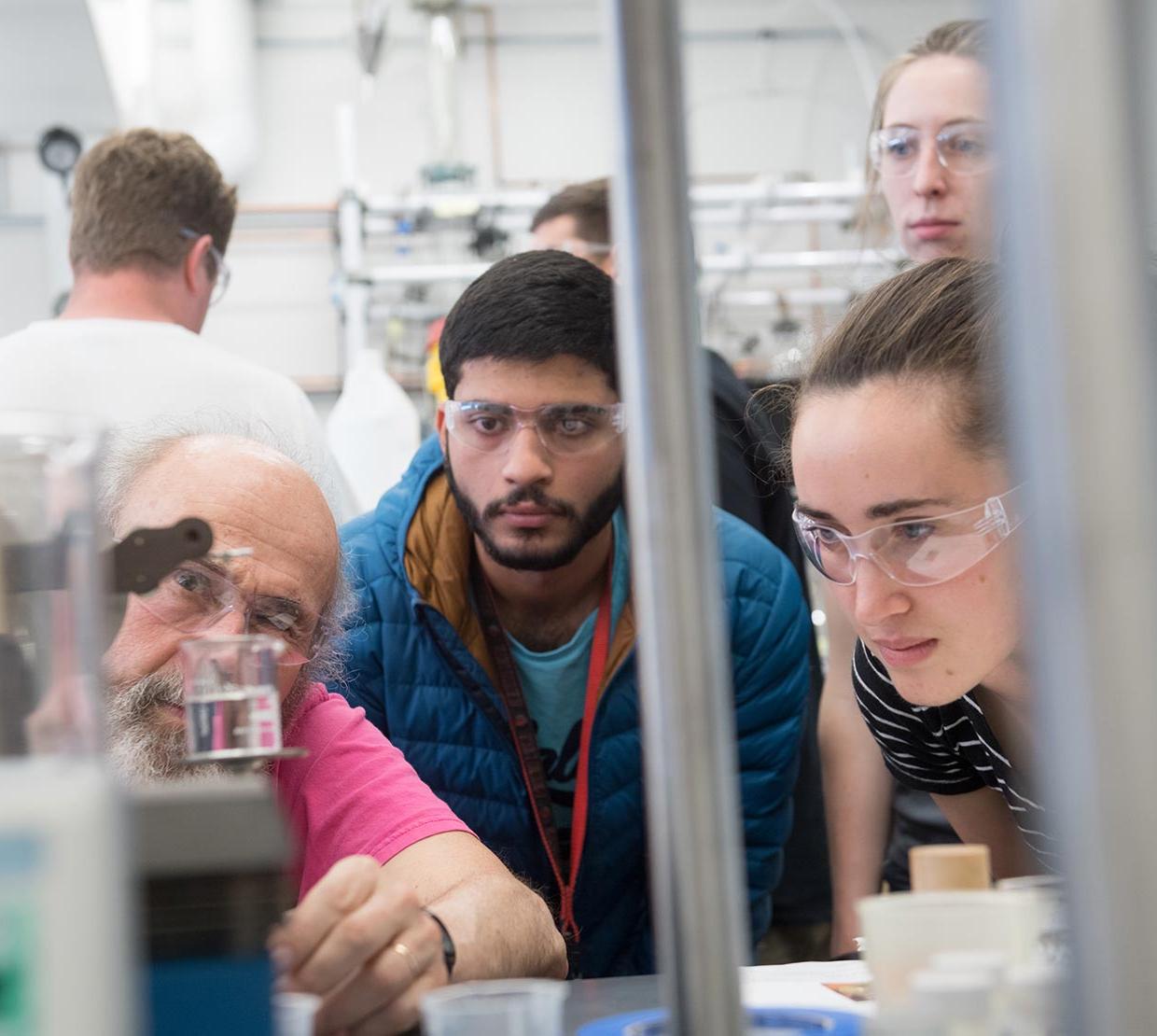
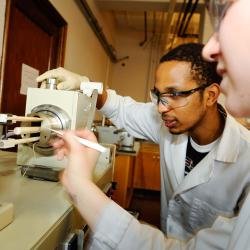
Science students with professor looking at experiment in lab

Science students awarded second highest number of scholarships at OSU

By Steve Lundeberg

Science students in the field

The university has awarded more than $39.5 million in scholarships to students for the 2017-18 academic year, a key component of OSU President Ed Ray’s Student Success Initiative.

Roughly $24.5 million of the total is spread among 7,271 scholarships to returning students. The rest is for awards to 2,532 new/incoming students, including 34 who received a $10,000-per-year Presidential Scholarship, OSU’s most prestigious undergraduate scholarship.

Approximately 35 percent of this year’s first-year students are receiving scholarship support.

Scholarships for science students at an all-time high

College of Science students received the second highest amount of scholarship funds in the university.

More than $7.5 million in scholarship money is going to College of Science students, the college’s highest total ever, said Roy Haggerty, dean of the college. That is triple the amount awarded two years ago. Reasons for the jump include increases in university scholarships and in the number of high-achieving students enrolling in the College.

Nearly $5 million is allocated to 1,344 scholarships for returning students. The rest is for awards to 570 incoming/new students, including nine who received a Presidential Scholarship.

This year more than half of the college’s first-year students received scholarship support.

“Scholarships enable the college to attract, retain and inspire top science students, most of whom go on to high-achieving careers in industry, graduate school, medical school and other professional programs after graduation,” Haggerty said.

“Oregon State’s financial-need-based scholarships also help academically talented low-income and first-generation students from Oregon and elsewhere stay and excel in college.”

First-generation students typically have a greater financial need so scholarships are a crucial part of their educational equation, said Haggerty, who was first in his family to attend college.

“In our College, the number of first-generation students has risen from 20 percent to 29 percent in the last five years,” he said. “Many scholarship students in the College of Science attest to the value of scholarships in easing the financial burden on their families and enabling them to focus on academics, research, volunteer activities and post-college career goals.”

College of Engineering netted the highest amount in scholarship support. Thirty-five percent of engineering students are receiving scholarship support. They are receiving $12.7 million, with $7.9 million divided among 1,948 scholarships to returning students. Nineteen of the 804 their incoming scholarship students are Presidential Scholars.

In third place is the College of Business. It was awarded more than $3.7 million in scholarships, including roughly $2.3 million spread among 761 scholarships to returning students. The remainder is awarded to 276 incoming students, including one Presidential Scholar. About 29 percent of this year’s first-year business students are receiving scholarship support.

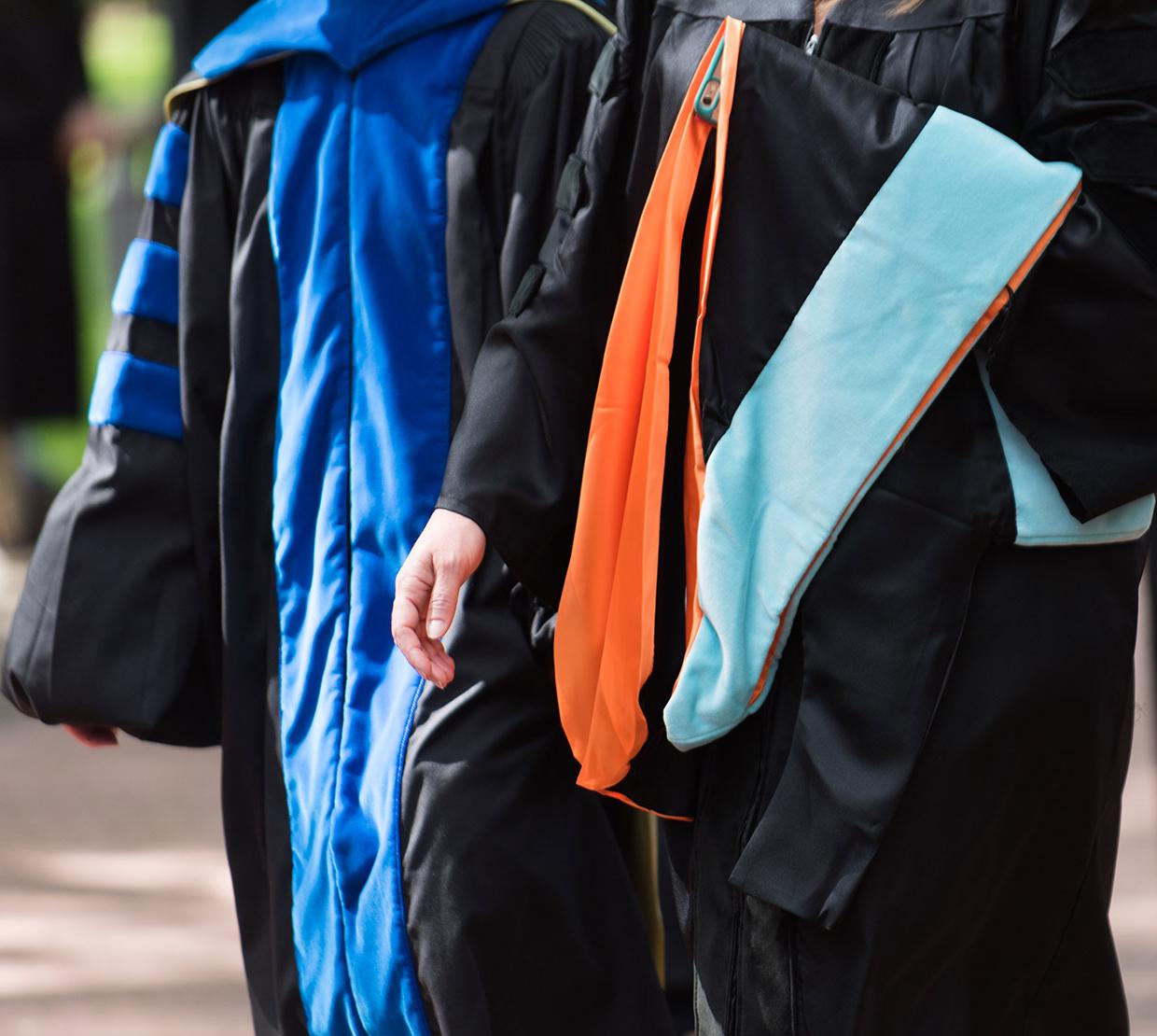
Two professors walking in doctoral gowns on campus

The Class of 2017

By Srila Nayak

2017 graduation

This year’s graduation numbers show that the College of Science has performed exceedingly well on all fronts. The College is graduating a record 629 students with baccalaureate degrees in 2016-17, including 55 honors baccalaureates. This represents a five percent increase from last year.

Biology majors lead the way with 159 graduates, followed by BioHealth Sciences majors with 119. Next are Microbiology majors with 79 graduates, Zoology has 59, Chemistry 51, Mathematics 49, Physics 24, Biochemistry and Biophysics 17 and General Science 17.

In addition, we are graduating 64 master’s and 66 doctoral students. The latter figure constitutes the highest number of Ph.Ds in recent years. In fact, the College is graduating 65% more doctoral students and 33% more masters students than last year.

Overall, Oregon State University graduated 6,807 students in 2017 and 5,590 baccalaureate degrees were awarded to students. The class of 2017 in the College represents 10 majors in the life sciences, physical, mathematical and statistical sciences.

Our graduates accomplish more than they thought imaginable with the help of outstanding professors, who are also scientists at the top of their fields, and a team of dedicated advisors. Supported by awards and scholarships, science students collaborate with faculty to create new knowledge and achieve major scientific breakthroughs.

Many of our graduates have had the opportunity to deepen their scientific knowledge by participating in research in labs across and beyond OSU, ranging from sciences to pharmacy, public health, agricultural sciences, forestry, engineering, robotics and veterinary medicine. For many, research has meant embracing and plumbing the mysteries of the outdoors from diving into marine habitats to field work in diverse terrains and in several parts of the world.

They are leaving OSU as accomplished young scientists in their own right, having begun research in their freshman year; they have presented their work at scientific conferences, co-authored papers in scientific publications with faculty mentors and even won top national awards for their research accomplishments. In fact, OSU ranks among the top 45 research universities in the nation for the number of opportunities it provides undergraduates to participate in research.

Our graduates have also expanded their professional and intellectual horizons by taking part in other transformative experiences such as internships, study abroad programs, leadership experiences and experiential learning in and out of classrooms. These experiences can transform great students into extraordinary leaders in science.

Our 2017 graduates are Fulbright scholars, Thurgood Marshall Scholars, Goldwater nominees, Ford Fellows, future doctors, scientists, entrepreneurs, veterinarians, community leaders, teachers and informed, engaged world citizens. Together they exemplify the College’s commitment to excellence in science education and an inclusive and diverse learning community. We couldn’t be prouder of them!

Each OSU graduate has a compelling story. Here are the stories of a few of our exceptional graduates, in which they reflect on their time at OSU and share their dreams for the future.

Shan Lansing, Chemistry, M.S. 2017

Four years and two degrees later

Swechya Banskota, Biology, 2017

Leadership, healthcare research, artistic diversity: the story of a biology major

Karianna Crowder, Zoology, 2017

From cuddling gibbons to grinding horse teeth

Jason Sandwisch, Chemistry, 2017

A journey to master physical chemistry

Michael Lopez, Mathematics, 2017

Not your typical mathematician: Marine, cop, dad, first generation college graduate

star icon above image of Memorial Union

Celebrating Undergraduate Excellence in Science

Celebrating our undergraduates

There was ample evidence of brilliance, innovation and creativity at the Celebrating Undergraduate Excellence (CUE) poster session held on May 19 in the Memorial Union Horizon Room. An amazing variety of undergraduate research and creative work taking place at Oregon State University was on display in the form of posters, art work and You Tube videos.

CUE showcased the projects of OSU undergraduates in all disciplines and fields of study. Over 100 students participated in the event. A total of 34 science majors presented their research on a wide range of topics.

A few of the deeply researched and informative science projects at CUE were: Corvid response to forest thinning in the Willamette National Forest; classroom experience for toddlers with developmental delays; accretion disk dependence on black hole size in binary black hole mergers; understanding metastatic growth through the traction force of human breast cells; and, charge mobility of organic semiconductors by using optical trapping.

Please see a complete list of undergraduate projects here.

CUE encourages presentation of ambitious, collaborative research projects, in which a student works alongside a faculty mentor and other researchers to create new knowledge. True Gibson, an Honors College junior studying biochemistry and biophysics, presented his research contributions to a National Science Foundation-funded project led by Associate Professor of Biochemistry and Biophysics Ryan Mehl.

Gibson's poster, "Increasing the Rate of an Ideal Bioorthogonal Ligation," explored his work in developing a stable set of chemical ingredients that will produce the desired reaction with biological processes in humans.

Quite a few of the accomplished science undergraduates who presented their research at CUE are URISC (Undergraduate Research Innovation, Scholarship & Creativity) and URSA Engage (Undergraduate Research, Scholarship and the Arts) scholars, who were able to pursue their research with faculty mentors with the help of the awards.

Celebrating Undergraduate Excellence is sponsored by the Division of Undergraduate Studies and organized by University Events.

student working on math homework holding calculator

2017 SURE Science Scholars

2017 SURE Science Scholarships

The College of Science congratulates its 2017 SURE Science scholars who have received $5,500 each, for a total of $170,500! The SURE Science program offers students summer research opportunities across campus that can foster meaningful, scholarly connections early in their academic careers and help define their professional career path.

SURE Science is a program supported through the Undergraduate Research Frontiers Fund with generous philanthropic contributions from friends and alumni of the College. This year, thanks to the generous support of alumni and friends, the College was able to fund 31 undergraduate students, with an overall funding rate of 54%. The students, about 65 percent of whom are minority and first-generation college students, will receive $5,500 to conduct full-time summer research.

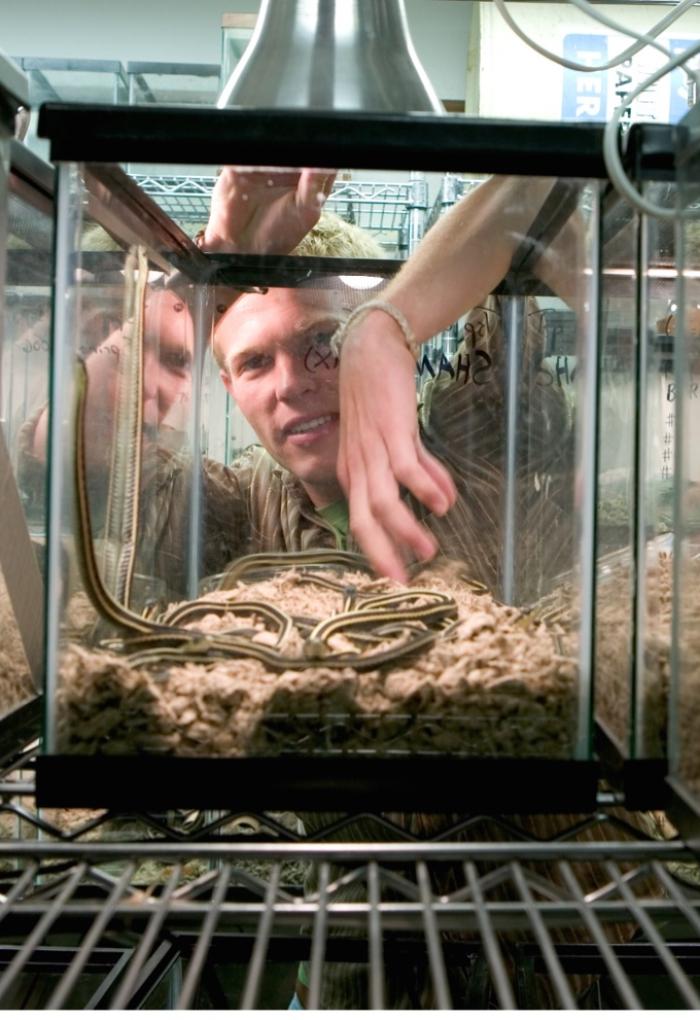
Mason Web handling snake in tank

Mason Rouches, Biochemistry & Biophysics student researching snakes

The College was able to support a broader range of majors this year with students from biochemistry and biophysics, biology, mathematics, microbiology and physics.

SURE Science supports students seeking a research experience to complement their academic experience. They spend their summer actively engaged in research while working alongside faculty for an engaging, hands-on learning experience. They conduct research that may solve societal problems and even contribute to the creation of new scientific knowledge.

New this year, students will participate in an information session to learn how to identify interesting research opportunities on campus and how to connect with faculty on a professional level. SURE Scholars will also attend three professional development workshops on:

  • Team dynamics
  • Scientific writing and presentations
  • Informal scientific communication

Students benefit tremendously by applying what they learned in the classroom to actual problems. By actively engaging in research, students gain valuable experience to help them prepare for graduate or professional school as well as to enhance their qualifications and build their resumes. They also gain valuable career skills through teamwork, collaboration, and public speaking, which they practice when they present their work in a professional setting at the College of Science Fall Awards.

This summer, SURE Science scholars will work alongside faculty in areas such as:

  • Analytical chemistry research to measure persistent organic pollutants in whale scat
  • Biochemistry protein quality control mechanisms and its role in aging
  • Computational astrophysics project modeling hydrodynamic protostellar star-disk systems using linear and non-linear methods
  • Synthesis of key compounds to explore the scope of a new organocatalyst in pharmaceutical drug preparation

Students are being hosted in labs across campus, including the Departments of Biochemistry and Biophysics, Botany and Plant Pathology, Chemistry, Food Science, Integrated Biology, Kinesiology, Microbiology, Pharmacy, Physics and in the College of Veterinary Medicine.

2017 SURE Science Scholars

StudentMajorFaculty mentor
Nicholas BrownBiochemistry & BiophysicsAndrey Morgan
Richelle CastroBiochemistry & BiophysicsVirginia Stockwell
Mark GeislerBiochemistry & BiophysicsMichael Freitag
Blake HakkilaBiochemistry & BiophysicsColin Johnson
Youngmin ParkBiochemistry & BiophysicsWeihong Qui
Miles RouchesBiochemistry & BiophysicsAdrian Gombart
Delaney SmithBiochemistry & BiophysicsJeff Chang
Mason RouchesBiochemistry & BiophysicsDavid Hendrix
Sam HesterBiochemistry & BiophysicsRyan Mehl
Ido AlmogBiohealth SciencesViviana Perez
Lindsay HirschBiohealth SciencesMark Leid
Jessica HodgenBiohealth SciencesJaga Giebultowicz
Alamjit NagraBioHealth SciencesTheresa Fitz
Christopher LeeBioHealth SciencesOlena Taratula
Sonora MeilingZoologyRebecca Vega Thurber
Kris BaurBiologyFelipe Barreto
Tyler ColemanBiologyVirginia Weis
Anden MoreheadBiologyRobert Mason
Bergen SatherBiologySean Newsom
Theresa DinhBiologyBo Sun
Amy AlbrechtChemistryStaci Simonich
Kathryn ChenChemistrySandra Loesgen
Blake DayChemistryMas Subramanian
Susmita MatlapudiChemistrySean Burrows
Alina VesquezChemistry/MathRich Carter
Jasmin YangChemistryMichael Penner
Whitney WeberMicrobiologyClaudia Hase
Michelle ZhouMicrobiologyDiedre Johns
Cassandra HatcherPhysicsMichael Penner
Garrett JepsonPhysicsGuenter Schneider
Dublin NicholsPhysicsEthan Minot
Emily Thomas Attila VargaPhysics Physics/BiologySean Burrows Kathryn Hadley
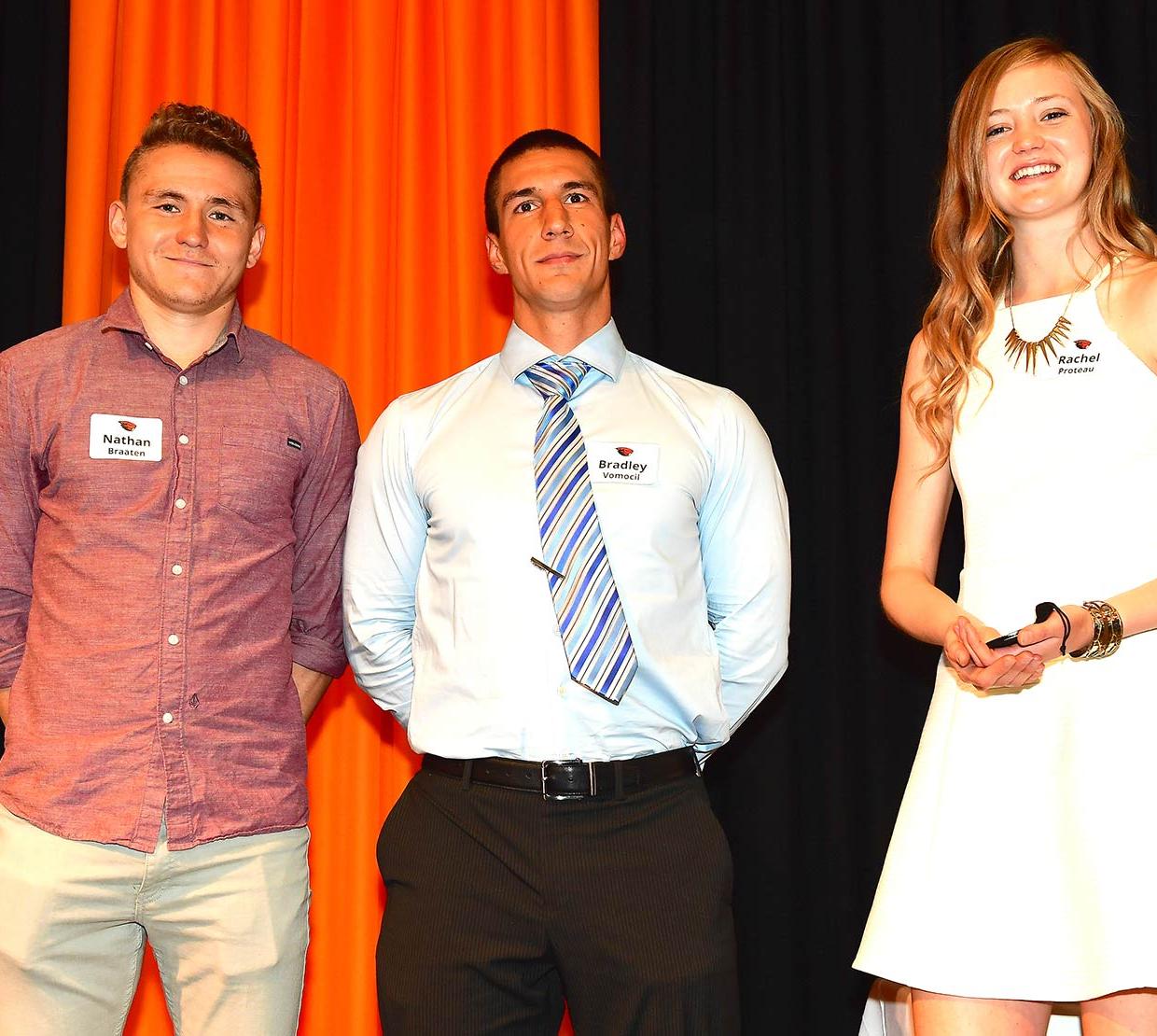
student athletes accepting awards on stage

Science student-athletes honored for academic achievement

OSU Student athletes including our own science student Brad Vomocil, sophomore in mathematics

The College of Science is proud of 16 science majors who are not only a member of an OSU athletics team, but were recently recognized for their stellar achievement at the annual Oregon State Athletics Academic Achievement Dinner on April 24. Maintaining at least a 3.0 GPA is no small feat given that student athletes juggle practice and competition with studying and classes.

Brad Vomocil, a sophomore mathematics major, navy officer and Corvallis native, was singled out for his outstanding 4.0 GPA. Currently, a member of the men's rowing team, Brad served six years in the U.S. Navy before starting college and plans to continue serving as an officer upon graduation. He is also a third generation Beaver: His grandfather, James Vomocil, is an emeritus professor in crop and soil science. (Pictured in the middle above).

Congratulations to all of science student-athletes who have put in countless hours training and traveling to games while still successfully tackling a rigorous course of study in science. Go Beavs!

  • Anna Peterson – Women’s Rowing, Junior, BioHeath Sciences Pre-PA
  • Zach Fried – Men’s Rowing, Sophomore, Chemistry Pre-Med
  • Brad Vomocil – Men’s Rowing, Senior, Mathematics
  • Timmy Mueller – Men’s Soccer, Junior, BioHealth Sciences Pre-Med
  • Lihani du Plessis – Women’s Rowing, Senior, BioHealth Science Pre-Med
  • Joely Hannan – Women’s Rowing, Senior, Biochemistry and Biophysics
  • Diana Oppenheimer – Women’s Rowing, Junior, Biology
  • Mariana Colussi-Pelaez – Gymnastics, Sophomore, Biology Pre-Med
  • Alysha Everett – Softball, Junior, BioHealth Sciences Pre-Pharm
  • Annabella Geist – Women’s Soccer, Senior, Biology Pre-Med
  • Chelsea Chan – Women’s Swimming, Senior, Biology Pre-Med
  • Taylor Frank – Women’s Swimming, Senior, BioHealth Sciences Pre-PA
  • Lauren Hunter – Women’s Swimming, Junior, BioHealth Sciences, Pre-PA
  • Emma Osowski – Women’s Swimming, Junior, Biology, Pre-Med
  • Kindel Bailey – Women’s Track and Field, Sophomore, Microbiology, Pre-Med
  • Madison Gravley – Volleyball, Junior, Biology Pre-Med
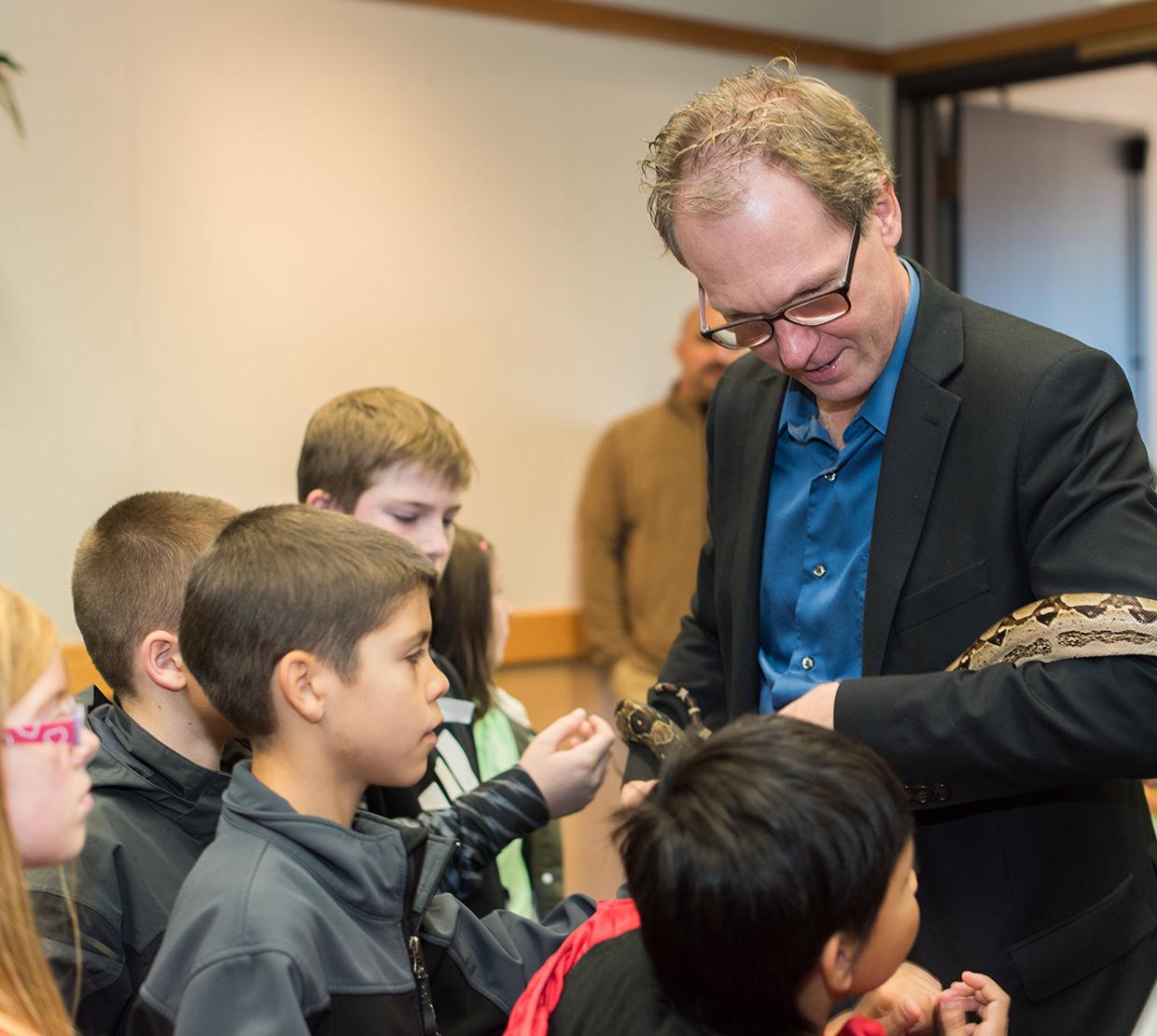
Roy Haggerty showing kids snake at Discovery Days

Discovery Days are here again!

Last year's Discovery Days event

One of Oregon State University’s most popular and beloved traditions is back on campus. On May 2 and 3, 2017, more than 1,500 elementary school students will flock to take part in Discovery Days, an outreach program held twice annually that immerses students in the rich and diverse worlds of science.

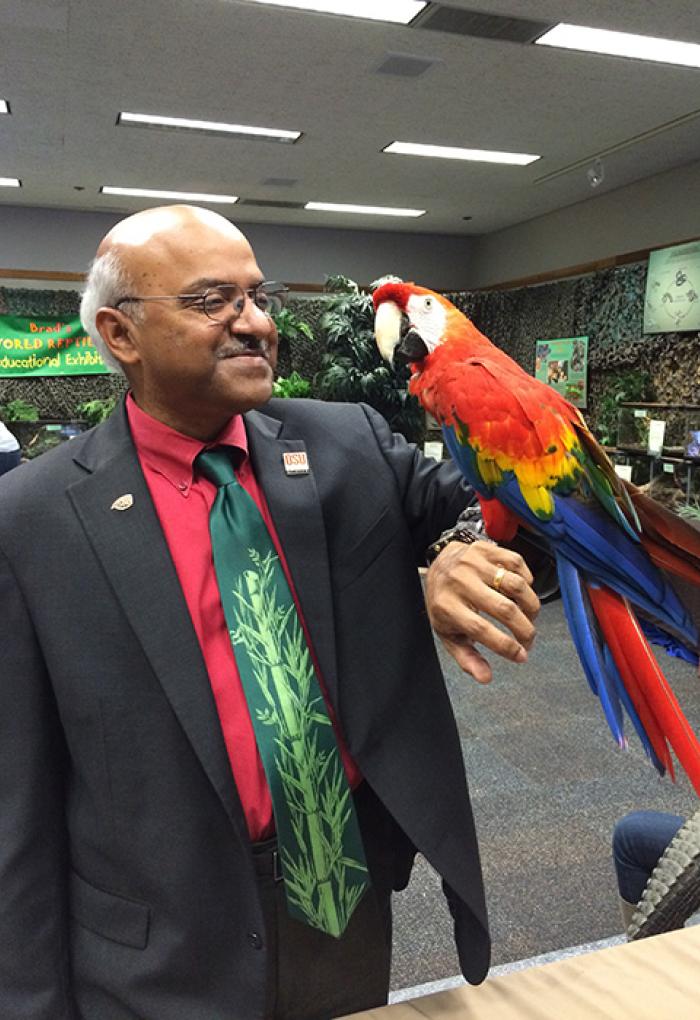
Sastry Pantula holding a scarlet macaw

College of Science Dean Sastry Pantula with a scarlet macaw

The events are held in LaSells Stewart Center on Oregon State's campus.

Students can participate in a wide variety of hands-on learning exercises that include tye dying using chromatography, exploring dry ice experiments, learning about juvenile alligators with the aid of a live specimen, experiencing static electricity and much more in dozens of stations that showcase chemistry, zoology, physics, marine science as well as the engineering sciences.

Sponsored by the Colleges of Science and Engineering, Discovery Days strives to inspire future generations of doctors, scientists, engineers, mathematicians, physicists and other growing STEM careers. The program relies on volunteers to run stations showcasing science and engineering. The volunteers are mostly Oregon State science and engineering students eager to pass along their love of science to young students.

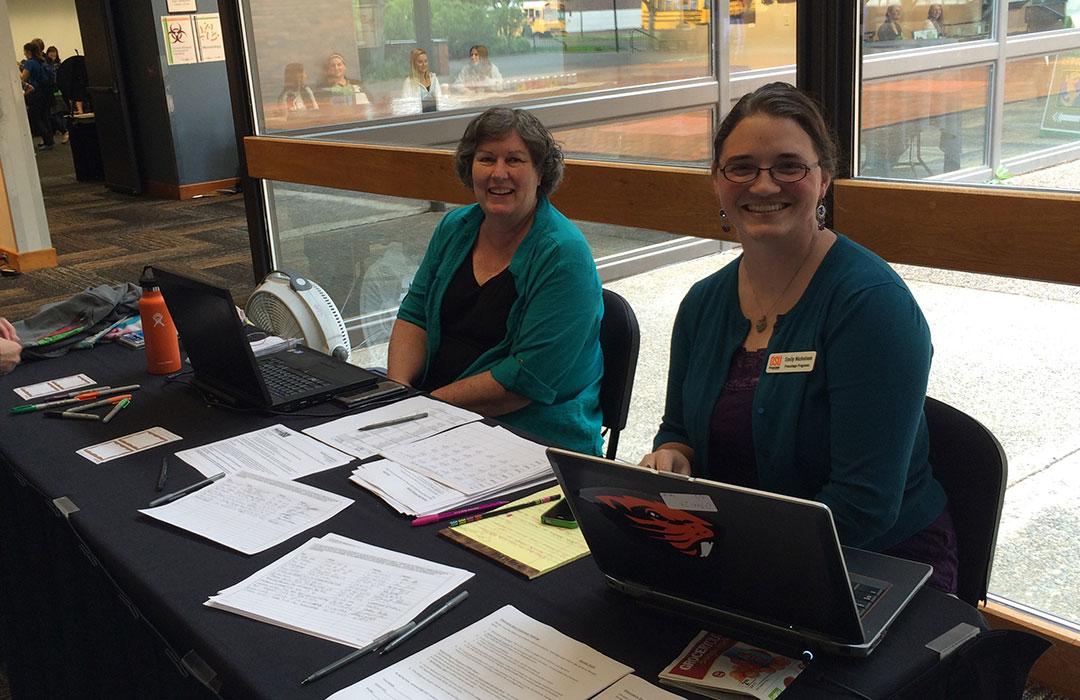
Margie Haal with colleague and sign-in table in La Sells

Senior instructor of chemistry, Margie Haak, with Emily Nicholson of Pre-College Programs

Participating organizations include the Departments of Botany and Plant Pathology, Chemistry, Chemical Engineering, Fisheries and Wildlife, Microbiology, Nuclear Engineering, Physics and Geosciences as well as Brad’s World Reptiles and Hatfield Marine Science Center.

More than a decade old, Discovery Days has a rich legacy. It has helped thousands of students from Linn and Benton counties to discover, enjoy and love science through the years. Senior instructor of chemistry, Margie Haak, has been the coordinator of Discovery Days for the last 14 years.

Experts concur that STEM education starts long before a child reaches high school. Research shows that elementary-age students love hands-on and interactive STEM activities and are more likely to deem science relevant to their future education plans as they progress through school if they are exposed to STEM early.

Discovery Days is an important program in Oregon that piques the interest of young learners and engages them in science through deep and frequent exposure.

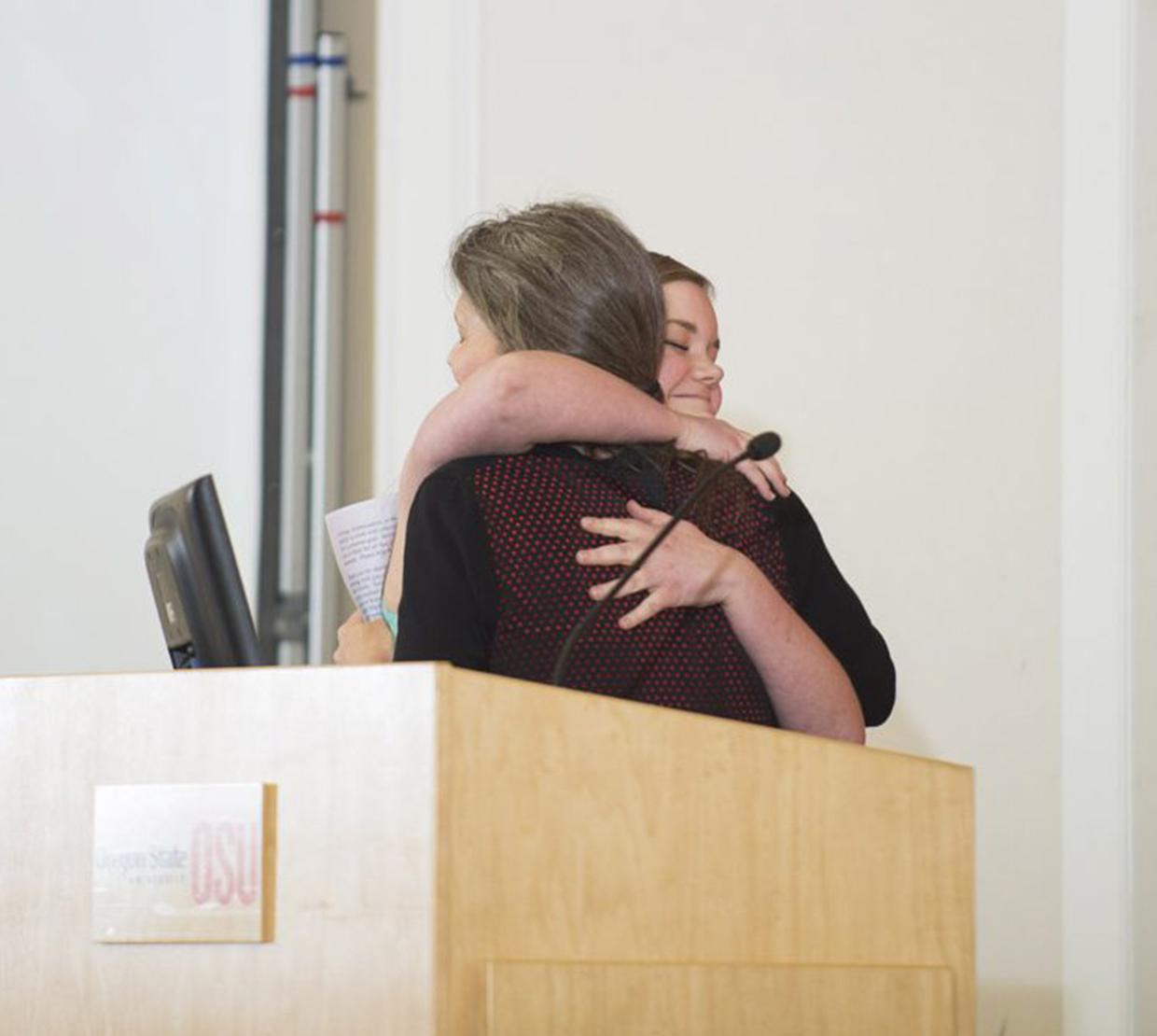
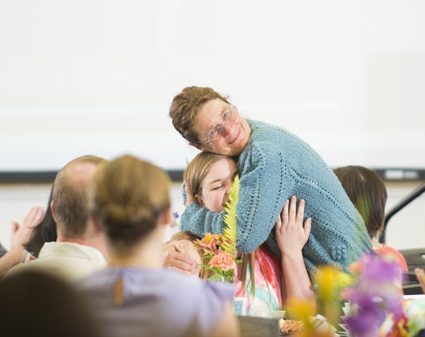
Two women hugging each other behind podium

Celebrating scholarship at our annual dessert

Celebrating at the Scholarship Dessert

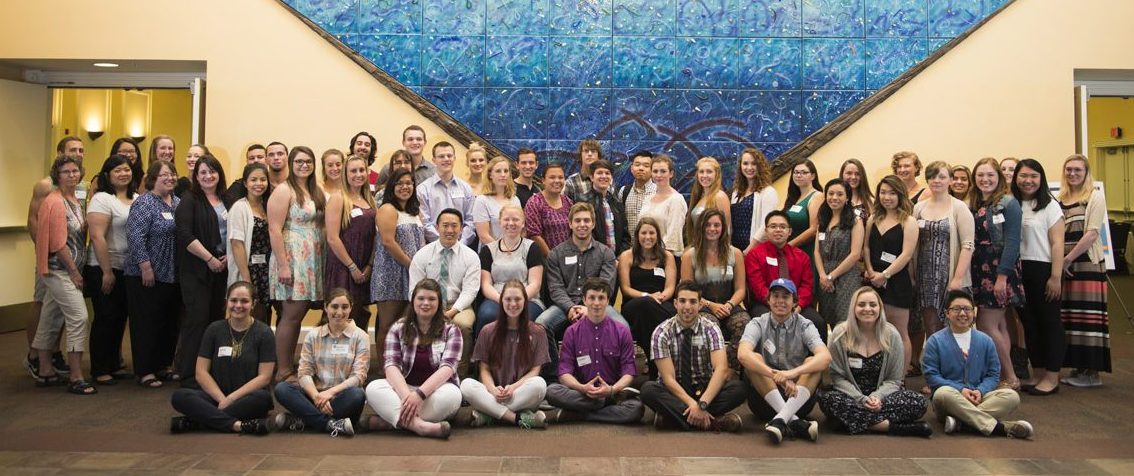
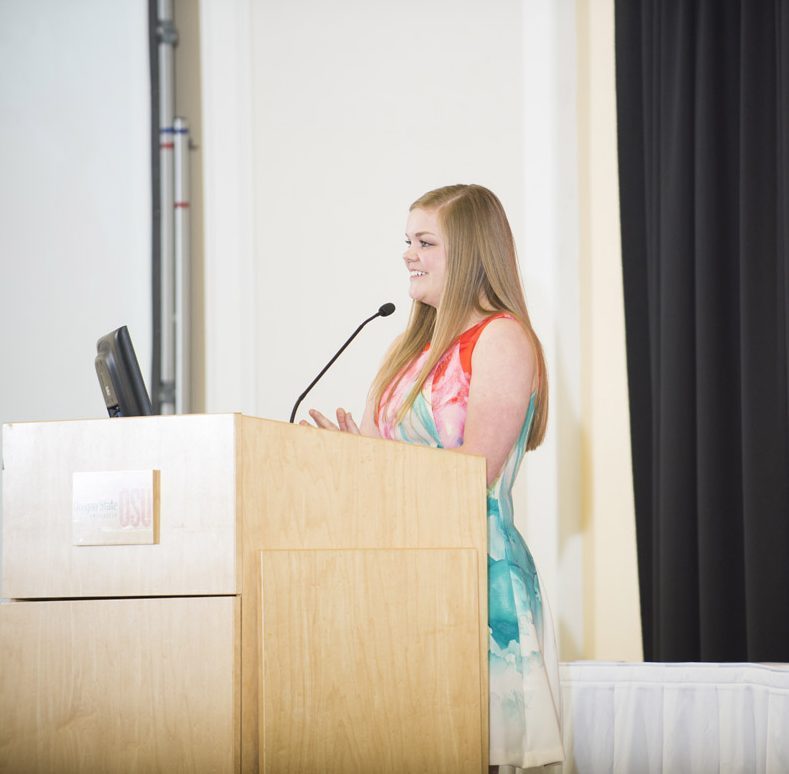
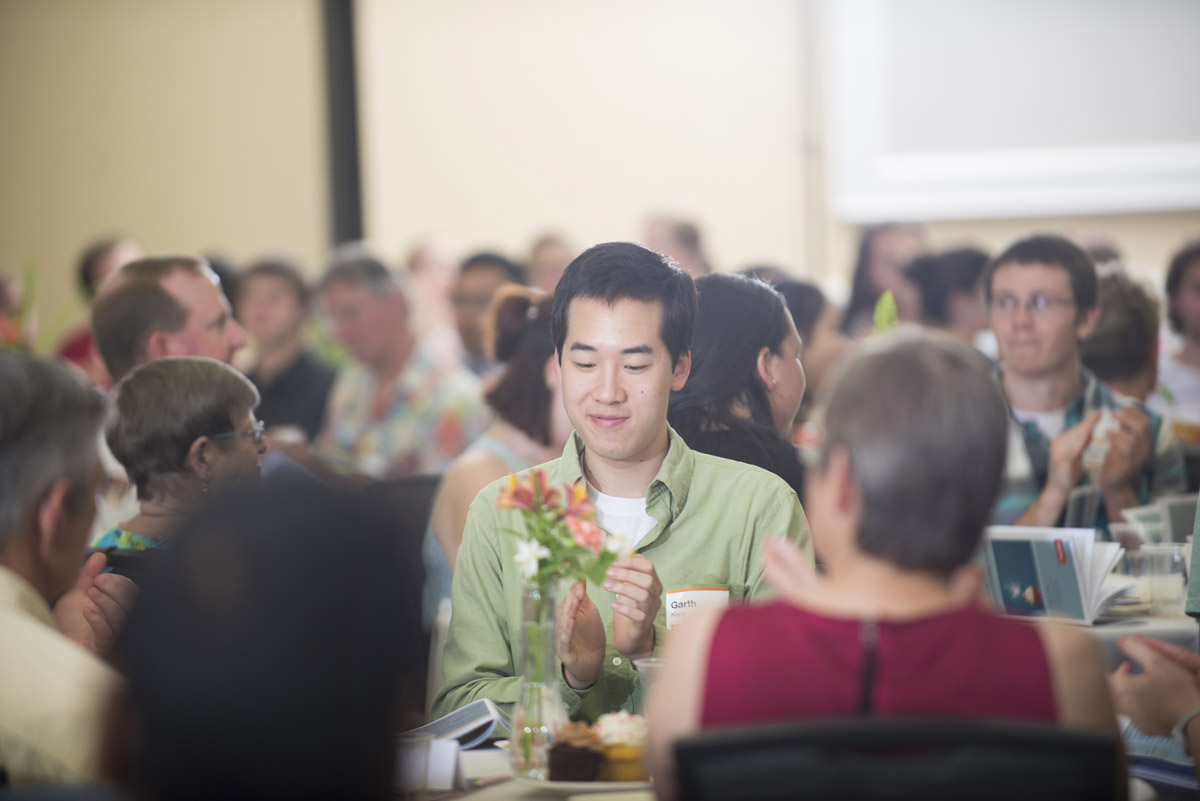
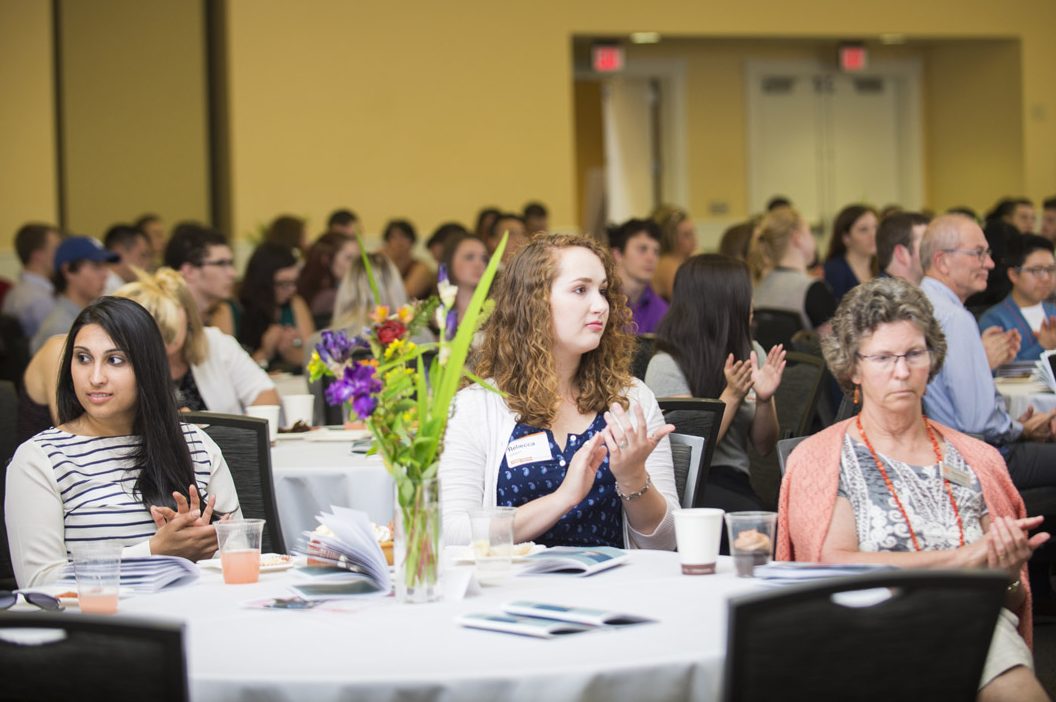
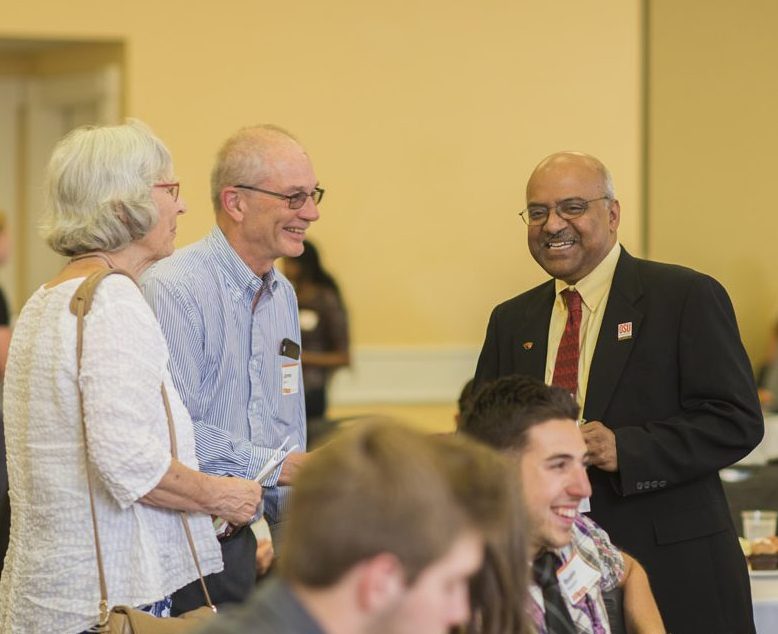
The College of Science celebrated our outstanding scholarship students at our annual spring Scholarship Dessert in June. For the 2016-17 academic year, the College awarded scholarships for merit, need and undergraduate research experiences. The Scholarship Dessert—a festive occasion—connects students, their families, advisors, faculty and many alumni/friends whose generous support funds these awards.

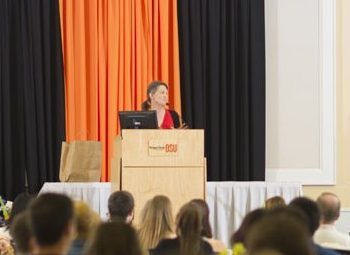
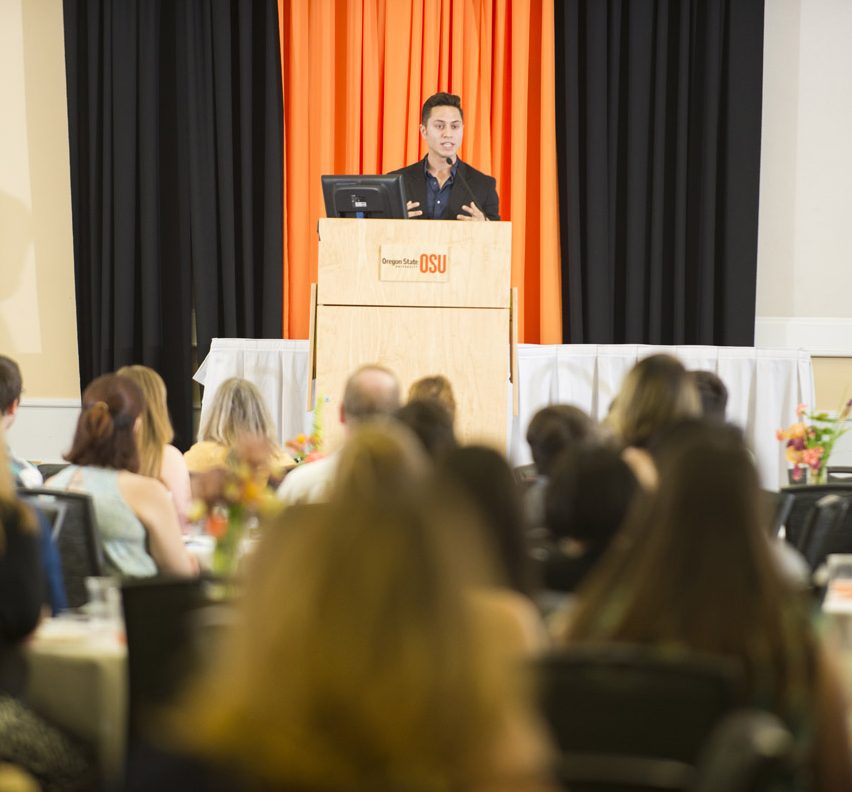
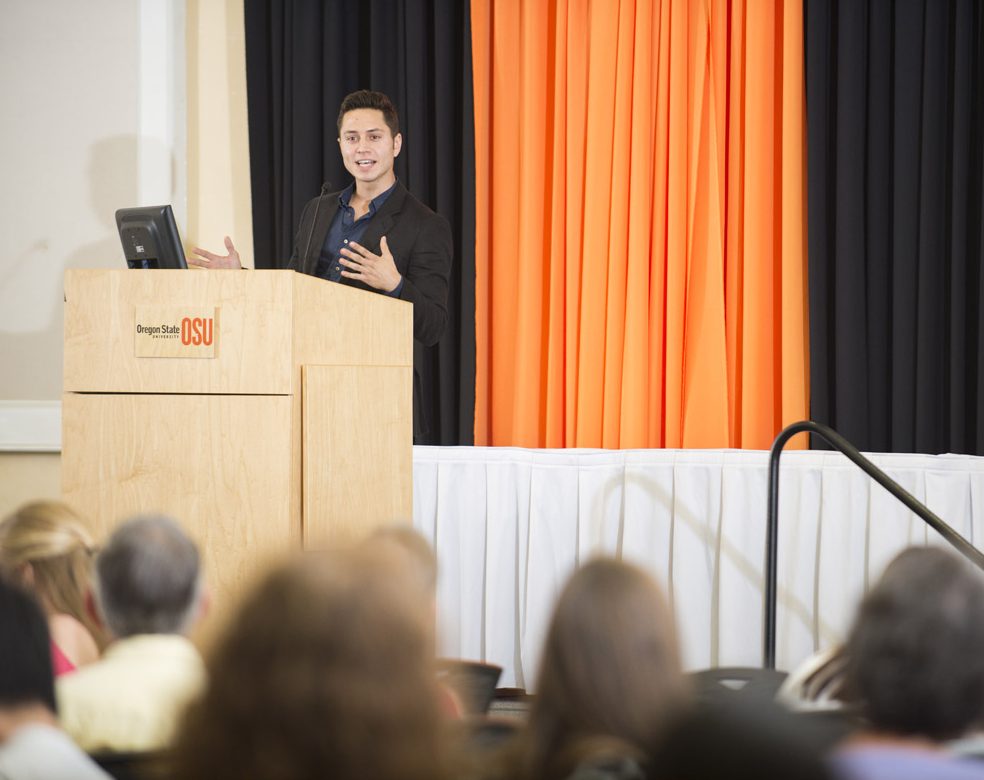
This year two scholarship recipients spoke, Shan Lansing, a senior chemistry major, and Jackson Dougan ('13), a recent integrative biology alumnus. They shared their unique perspectives and experiences about their science education, transformative experiences and the power of scholarships.

For a complete list of our scholarships, visit: science.oregonstate.edu/scholarships.

Scenes from our 2016 Scholarship Dessert

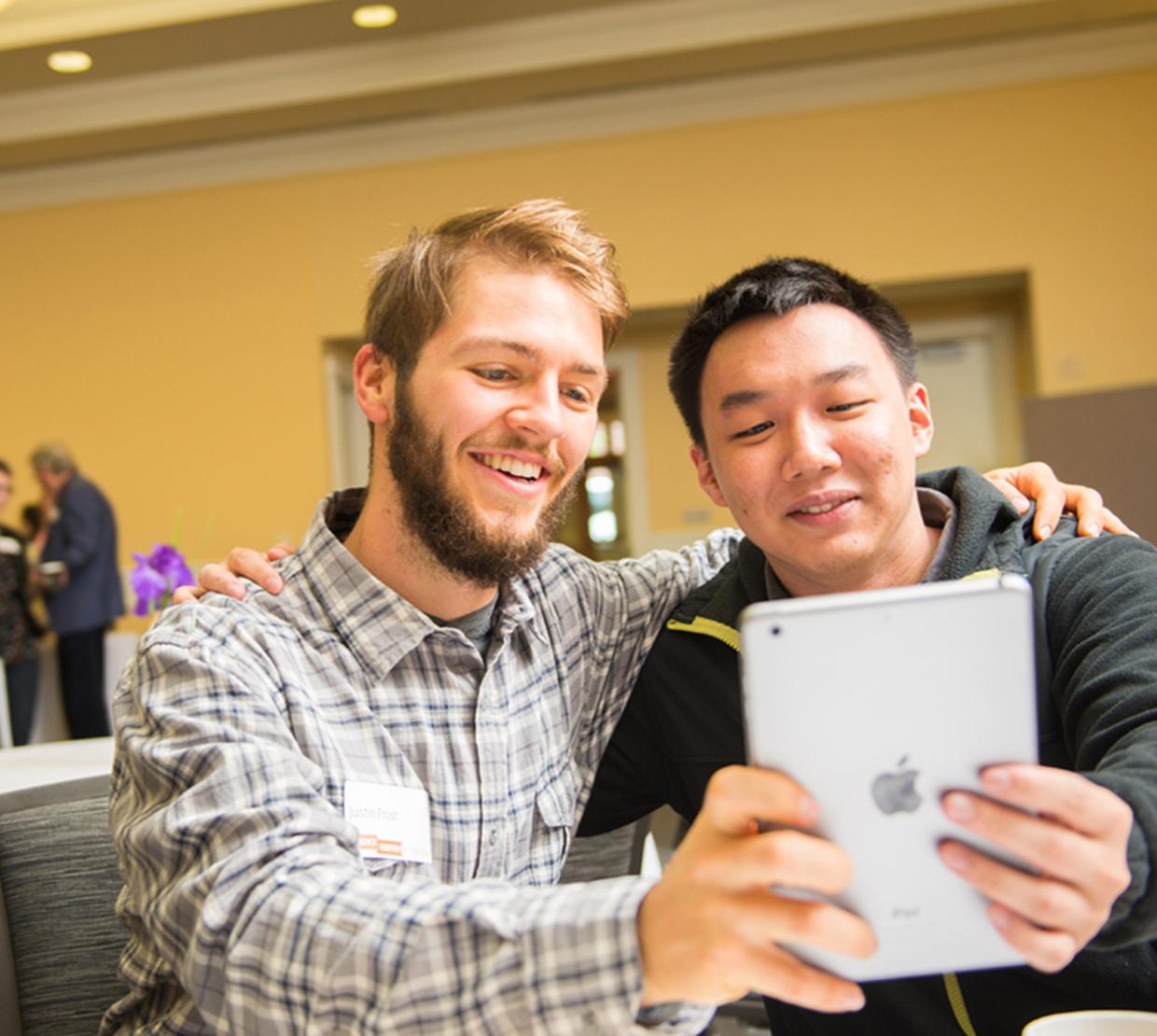
Justin Frost and colleague taking selfie on iPad

Graduates take stock of experiences in science

Microbiology graduate Justin Frost with friend Tony Duong

The College of Science is graduating a record 596 students with baccalaureate degrees in 2015-16, including 73 honors baccalaureates. This represents a 34% increase from last year. In addition, we are graduating 47 master’s and 50 doctoral students--the highest number of Ph.Ds in recent years. We are proud of all of our graduates!

The class of 2016 represents nine majors in the life, physical, mathematical and statistical sciences. They exemplify the College’s commitment to excellence in science education, inclusion and to geographic, economic, ethnic and intellectual diversity.

Graduates receive all the vital ingredients of an outstanding education: outstanding classroom teaching, research opportunities, internships and transformative experiences, such as study abroad, leadership and experiential learning. These experiences can transform great students into extraordinary leaders in science.

Our graduates venture out into the world as researchers, community leaders, teachers, physicians, veterinarians, pioneering scientists and informed, engaged citizens. They are a part of our OneScience community committed to having healthy people, living on healthy planet, in a healthy economy.

“We are extremely proud of our students and look forward to their future accomplishments, leadership and contributions to science,” said Sastry G. Pantula, dean of the College of Science.

“Our College’s mission is to advance science. And we do that through our graduates—the next generation of global leaders in science.”

Science students gain invaluable experience, critical thinking and soft skills as a result of the integral role research played in their education. In recent years, OSU has attracted attention for the number of opportunities it provides undergraduates to participate in research and has been ranked among the top 50 research universities in the nation.

Katherine Banowetz standing in front of shrubbery
Physics major has eyes set on healthcare

Katherine Banowetz stands out as the only woman in her senior year physics class.

Jason Sandwisch working with Chemistry equipment with other student in lab
Marching through the sciences, landing in physical chemistry

A first generation college student earns his bachelor's degree in chemistry and heads to the University of California, Berkeley for a Ph.D. in physical chemistry on a full scholarship and research stipend.

Jonathan Van Why standing outside of Kidder Hall
Mathematics + Robotics = Google job

Honors College and mathematics major Johnathan Van Why lands job at Google months before graduation.

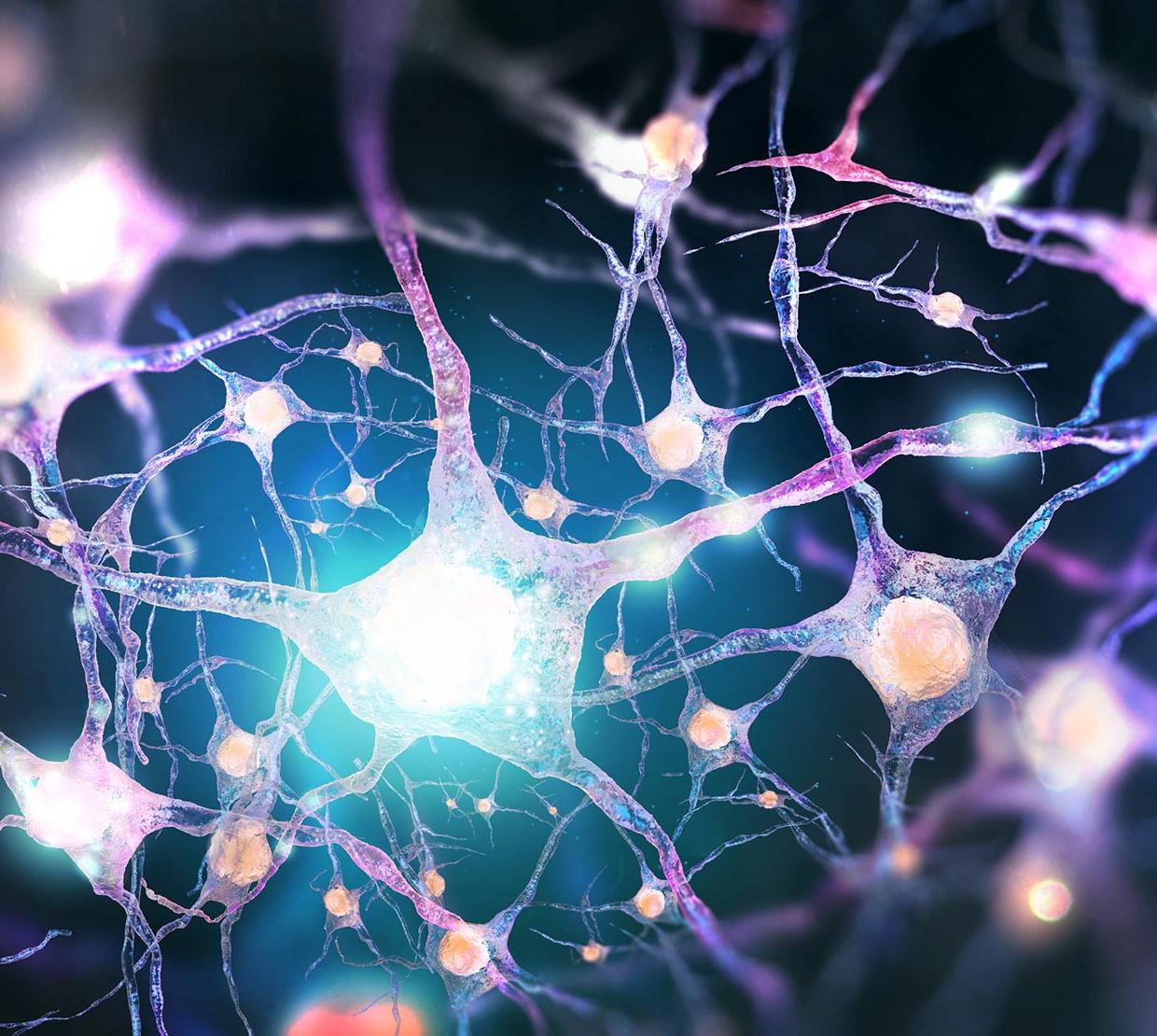
3D animation of nervous system and neurons

The Web of Biohealth Science

A deeper look into BioHealth

Biohealth science is a new name for one of the oldest disciplines, which encompasses human biology, microbiology, biochemistry and molecular biology. But the field is evolving into one that permeates all science, including the more familiar biomedical science. From molecules and models to studies of human health, biohealth scientists accelerate discovery and advance understanding of human health.

For more than a century, the College of Science has been involved in fundamental and applied research and education in the biohealth sciences. Through our seven departments and many interdisciplinary centers and institutes, the College has deepened understanding and discovery through curiosity-driven research to address problems impacting human health while training the next generation of biohealth scientists.

Over the next century, our ability to address the fundamental questions of human health will depend on our ability to navigate health, energy, data, ecosystems and other areas to leverage the contributions of all scientists using a transdisciplinary approach.

The College has expanded its world-class leadership in fundamental, quantitative and translational research relevant to fighting disease and promoting health. Through biohealth science research and training, the College is advancing OSU’s goals of a healthy people, living on a healthy planet, in a healthy economy.

Biohealth science studies the mechanisms of disease, making it well suited for collaborative, interdisciplinary approaches to research. Faculty and students regularly work across fields from statistics, bioinformatics, physics, chemistry and mathematics to public health, pharmacy, biotechnology and engineering.

“So much basic research can feed into biohealth science and have a tremendous impact on human health,” explains P. Andrew Karplus, head of the Department of Biochemistry and Biophysics “And this can be true for any research in the College of Science.”

Mechanistic approach to disease

In January, Joseph Beckman, Distinguished Professor of Biochemistry and Biophysics, published a study revealing a new therapy involving a compound called copper-ATSM that essentially stops the progression of amyotrophic lateral sclerosis (ALS) for nearly two years in mice. Otherwise, the mice would die of ALS within five months.

Copper-ATSM is a known compound that delivers copper to specific cells with damaged mitochondria, and then travels to the spinal cord where it’s needed to treat ALS. The unusually low reduction potential of this compound prevents copper release in most tissues, but allows selective release of copper into cells with damaged mitochondria. The body quickly flushes any copper-ATSM it does not need.

The findings—some of the most compelling ever produced in the quest for a therapy to treat the debilitating and fatal disease ALS—was 20 years in the making. Beckman did not set out to find a treatment to the disease. He credits his success to his holistic mechanistic approach based on fundamental research.

This method is based on the premise that living organisms are complicated beings, composed of parts bearing no relation to each other. Yet how they function is influenced by the sum of the parts as a unique system. It is the organization, unity, and integration of the parts that produce one or more effects in the organism. With ALS, Beckman studied inflammation as a mechanism of the disease. Using this approach, he was able to find drug compounds that would likely not have found by screening random drug samples.

Using this approach, he was able to find drug compounds that would likely not have found by screening random drug samples.

Clarity in crystals

Cited as one of the best structural biologists in the world, Karplus approaches human health concerns through proteins.

“About 98% of all drugs target a protein, so if we are to advance human health initiatives, then we need to better understand protein structures.”

Given the importance of proteins, NIH established the Protein Structure Initiative in 2000, which is an ongoing effort to accelerate discovery in structural genomics and to enhance our understanding of biological functions. Initially, the program sought to make it possible for a detailed three-dimensional structure of any protein to be generated easily based on their corresponding DNA sequences.

Once documented, these structural descriptions would help researchers learn about the functions of proteins and design experiments to solve biomedical problems, help them identify promising new structure-based medicines faster and develop better treatment of genetic and infectious diseases. The process of solving many protein structures would also help develop improved technologies and methodologies for protein production and to determine and predict structures.

This is where Karplus’ work fits in. With the support of two National Institutes of Health (NIH) grants, he has the monumental task of examining all protein structures ever deciphered and identifying the principles that govern their structure. Karplus' work can inform the work of other scientists. They can apply these principles in order to more accurately model protein structure and then better understand and manipulate the roles they play in human health and disease.

“One way to explain what the new principles we learn can do is, ‘they help make fuzzy pictures of proteins sharper’,” said Karplus.

Oxidative stress

Biochemist Tory Hagen and his team broke new ground in understanding why older adults are increasingly at risk for age-related diseases, including cancer, neurodegenerative disorders and environmental insults. They discovered that a key transcription factor governing more than 200 antioxidant and stress-resistance genes becomes impaired with age, limiting normal cellular response and increasing susceptibility to disease.

The researchers also found that the loss of this transcription factor stems from a cadre of microRNA’s that arise with age and limit synthesis of the protein. This discovery provides a novel target which can improve resiliency to a host of stresses and may improve healthspan.

Biochemist Elisar Barbar’s team explores the elucidation of molecular structure/assembly and the regulation of protein interaction networks associated with Huntington’s disease (mental retardation) and systems with important biomedical implications.

Cutting across disciplines

Microbiologist Bruce Geller studies pathogenic antibiotic-resistant bacterial infections. His team created antisense antibiotics that bind to and silence the gene responsible for a severe form of antibiotic resistance that makes some bacteria resistant to nearly all antibiotics.

Zoology professor Jaga Giebultowicz studies body clocks, circadian rhythms and circadian clocks that regulate molecular and physiological rhythms.

Jim Strother’s team examines how physiology, biomechanics, and neurobiology shape the interaction of animals with their environment. Their current research is focused on understanding respiratory exchange using zebrafish as a model system.
Subscribe to Biochemistry & Biophysics