Diversity in Science

Diversity in Science

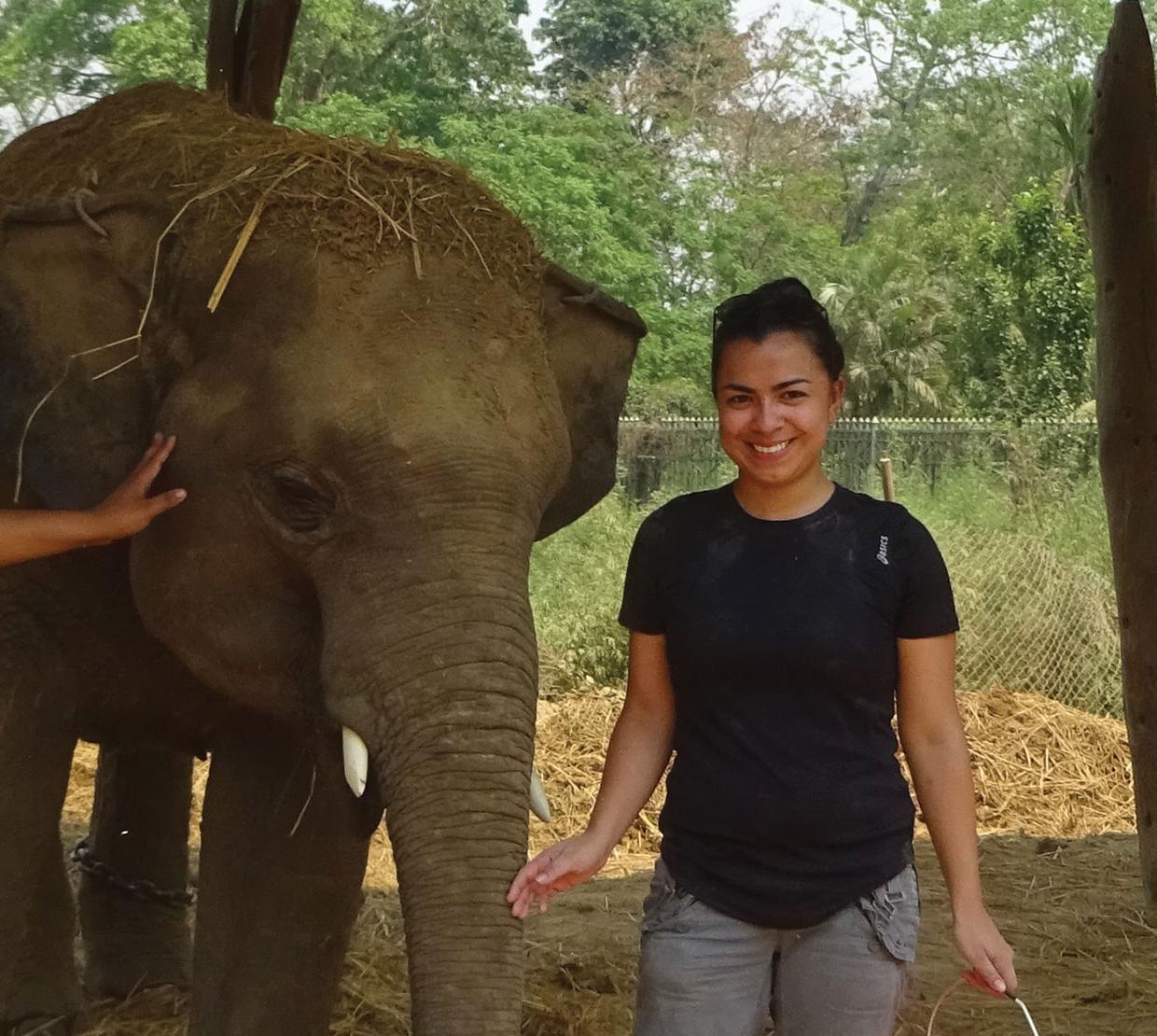
Stephanie Rosales feeding an elephant

NSF Graduate Fellow Goes to Nepal

By Srila Nayak

Stephanie Rosales, microbiology doctoral student

Microbiology doctoral student Stephanie Rosales is spending two months in Nepal (March-April 2016) on an NSF Graduate Research Internship Program (GRIP). This program is exclusively for recipients of the prestigious and competitive NSF Graduate Research Fellowship Program award, which Rosales received four years ago. GRIP provides professional development to NSF Fellows through mission related research experiences with federal agencies.

Rosales received training at the Smithsonian Institute in protocols for testing and diagnosing the herpesvirus in elephants. She will visit Chitwan National Park to examine trunk wash samples from elephants to identify possible cases of the herpes virus and then conduct laboratory research in Kathmandu.

"I am a wildlife enthusiast and I really enjoy trying to understand diseases in large animals, especially the ones caused by viruses," said Rosales.

According to USDA, elephant herpesvirus is a growing threat to the health of captive Asian elephants and if left untreated the infection will result in death within one week of the onset of symptoms. Read Rosales' blog on her experiences in Nepal.

Arriving from Guatemala at the age of three, Rosales has overcome many personal and economic struggles on her path to higher education. When she was 20, Rosales was about to be deported when a kindly judge in Florida halted her deportation so that she would be able to continue her studies. Fortunately for Rosales and her family, her parents too were granted amnesty because they have a son who was born in the United States and was a minor at the time.

"I didn't have my papers until I was in my early twenties. I never qualified for financial aid or loans. So I had to work and pay for college. My parents were just making enough to support themselves," said Rosales, who was initially enrolled in a community college in Miami-Dade.

Rosales was subsequently able to gain legal status, which opened up a new world of educational opportunities for her. She received financial aid and was able to secure educational loans that helped her to transfer to Florida International University (FIU) where she majored in marine biology.

A first-generation college graduate, Rosales has come into her own as a scientist. She recently published a paper, along with her advisor, Rebecca Vega Thurber, proving that the puzzling and widely covered 2009 deaths of seven harbor seals in California was related to the presence of high levels of the bacterial pathogen Burkholderia that was found in the brains of the seals. Rosales employed metatranscriptomics (a method that enables researchers to explore microbial interactions by studying their ribosomal and messenger RNA) to establish her findings.

For the final stage of her research, Rosales hopes to determine how exactly Burkholderia caused the deaths of the seals. She is studying the genes of the animals to determine if the bacteria transformed them causing a fatal metabolic disorder.

Rosales observes that her evolution as a scientist would not have been the same without her advisor's support and mentorship. Rosales' close association with her advisor, microbiology assistant professor Vega Thurber dates back to her undergraduate days at FIU. After arriving at FIU, Rosales became the first undergraduate researcher in Vega Thurber's lab, who was a young biology professor there.

When Vega Thurber moved to Oregon State, she was joined by Rosales, who had completed her undergraduate degree and planned to extend her research in marine biology. "I became her lab tech, her lab manager and eventually her doctoral student," laughs Rosales.

Reflecting on her career in science and her accomplishments, Rosales said she is grateful to her parents and her advisor who have always supported her career. "My journey has been the result of a lot of hard work and having good people around me."
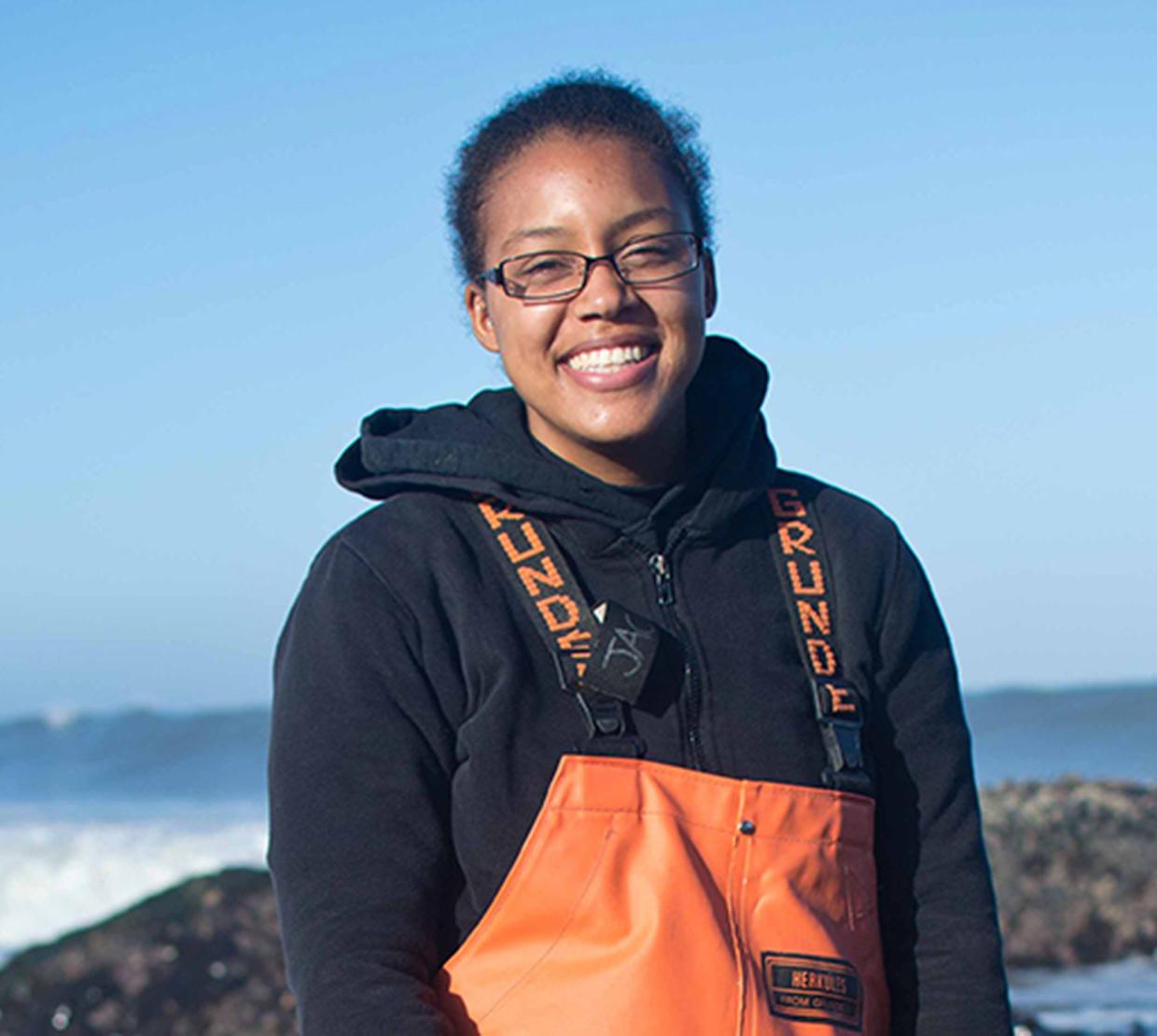
Courtney Jackson standing in rocks next to ocean shore

Retrospective: Science graduates reflect on their education

By Srila Nayak

Courtney Jackson, senior in biology (Photo by Kelsey Kennedy for Terra)

The College of Science is graduating 572 undergraduate students of science this spring: three graduates with an Honors Bachelor of Arts, 48 with an Honors Bachelor of Science, seven with a Bachelors of Art and 514 graduates with a Bachelor of Science. We are extremely proud of our students and look forward to their contributions and leadership to the field of science.

We caught up with several of our graduates as they approach graduation and asked them to reflect on their experiences in the College of Science and at Oregon State. Graduating seniors Michael Perlin, Tyler Mendes, Parisah Moghaddampour, Landon Oka, Justin Conner and Courtney Jackson share their stories.

Both Michael Perlin and Tyler Mendes are physics and mathematics seniors who arrived at OSU planning to major in different subjects. The College of Science is committed to student success and proactively advises students to find majors that excite them.

“We have the best interest of all our students in mind as we guide them to find their place in science and to select the best major for them,” says College of Science Dean Sastry G. Pantula.

“By providing a variety of transformative experiences for our students, we help them learn and enjoy Science. I am extremely proud of our students and all that they have accomplished.” –Dean Sastry Pantula

Perlin, a native of Corvallis, began his undergraduate career as a nuclear engineering major and soon switched to physics. Alongside a rigorous undergraduate education in the highly regarded Paradigms in Physics program, Perlin participated in rewarding research experiences with his physics professors and had two prestigious internships at NASA’s Goddard Space Flight Center. He recently won a DAAD (The German Academic Exchange Service) Graduate Scholarship to carry out quantum dynamics research for a year at the University of Ulm in Germany after his graduation from OSU.

“My first class was Physics 212 and in my second year I started the paradigms program. It is a pretty intense program and I loved it. It was soon after I started there that I realized I wanted to do science and research instead of building nuclear reactors,” said Perlin, who intends to pursue doctoral studies in physics after his fellowship in Germany.

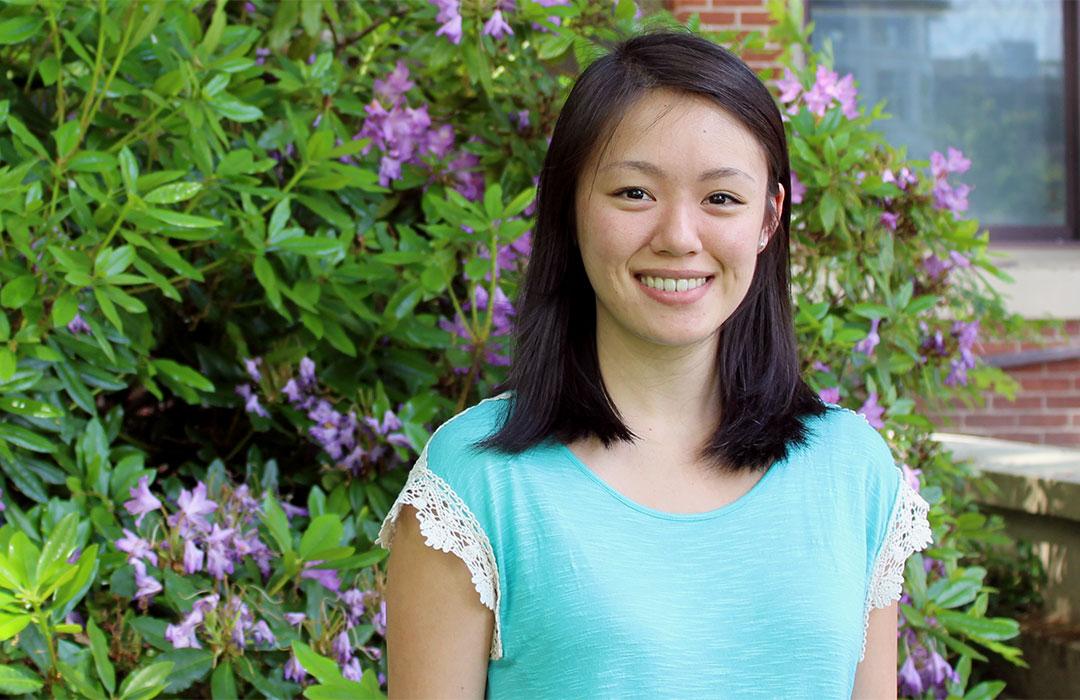
Tyler Mendes standing outside Kidder

Mathematics senior Tyler Mendes

Part-Portuguese and part-Japanese, Tyler Mendes is used to defying stereotypes. She is a fifth-generation Hawaiian and one of just two women in her upper-division mathematics classes “It is very confusing to people. Because just reading or hearing my name one thinks I am a male Hispanic and then you see a female Asian,” laughed Mendes.

Originally enrolled as a nutrition major, Mendes who had enjoyed and excelled in mathematics in high school took an elective math class as a freshman and decided she would rather be studying mathematics. Mendes, who is also president of the Actuarial Science Club in the Mathematics Department, was recently offered a job as an actuary in Hawaii’s largest domestic life insurance company.

“I just really enjoy being in math and working with my peers. I really liked my professors here. They are so brilliant they can appear intimidating. But thanks to them I have had some impactful educational experiences. Pretty much all upper-level math courses have been most important for my preparation for actuarial work,” said Mendes.

Perlin and Mendes are among the 572 science majors who will be graduating on June 13. These seniors collectively represent nine majors in the College of Science ranging from life and physical sciences to mathematical and statistical sciences. They exemplify the College’s commitment to excellence in science education, inclusivity, geographic, economic, ethnic and intellectual diversity. Science students receive all the vital ingredients of a great college education: outstanding classroom teaching, invaluable research experiences, life-changing internships and a range of volunteer activities that contribute to the greater public good in Corvallis and Oregon.

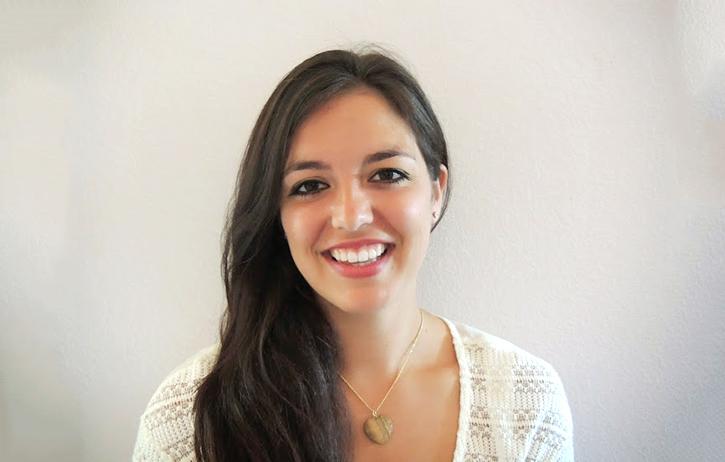
Parisah Moghaddampour standing in front of white backdrop

Integrative Biology senior Parisah Moghaddampour

Many of our science graduates venture out into the world as researchers, community leaders, role models, future physicians, veterinarians, pioneering scientists and active, engaged citizens. The College is committed to building leaders in Science. Parisah Moghaddampour, from the Department of Integrative Biology, is one such student. She was attracted to Oregon State by the reputation of its highly successful pre-med program. Once at OSU, Moghaddampour immersed herself in academics and community service.

Daughter of an Iranian father and a Colombian mother, Moghaddampour has taught Spanish in elementary school, tutored math and science subjects at a Corvallis high school and was the vice-president of a club for rural minorities in health care at OSU. Moghaddampour’s dedication paid off when she was recently offered admission to medical school at Loma Linda University in Southern California.

“Medical school is very competitive and you have to have activities that show you are a humane person who cares about others and if you are doing community service and not enjoying it that is a red flag.”

“At OSU, not only was I in one of the best pre-med programs, I also got to discover many opportunities to give back to people. There are so many different niches available here and it is all so accessible,” said Moghaddampour.

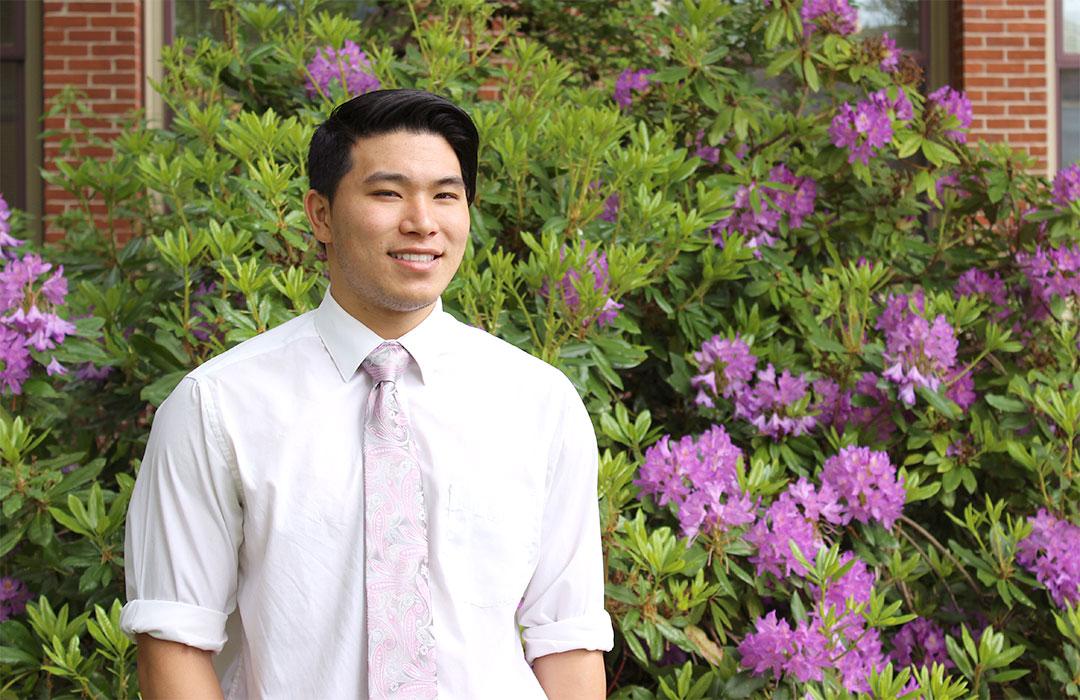
Landon Oka standing outside Kidder Hall

BioHealth Sciences senior Landon Oka

BioHealth Sciences senior, Landon Oka wanted to be a dentist since he was in high school in Honolulu, Hawaii. Back then, Oka interned for a dentist who urged him to apply to OSU. “Actually he had graduated from University of Oregon but he told me to lean toward OSU as I was sure to get a stellar science education there,” points out Oka.

Oka will soon be joining the Indiana University School of Dentistry in Indianapolis. He credits his community of friends and the faculty in BioHealth Sciences for his success and has some timeless advice for future science students.

“Aim as high as you can because even if you don’t reach that goal you will turn out successful. If you work hard and are diligent at things you will find success somewhere.” –Landon Oka

In the sciences at OSU, students are an integral part of university research. In recent years, the university has steadily attracted attention for the number of opportunities for undergraduates to participate directly in research and has been ranked in the top 50 research universities. Justin Conner and Courtney Jackson say the highlight of their undergraduate studies were their research experiences gained in laboratories, from study abroad programs and through internships.

Zoology senior Conner, originally from Florida, was drawn to Oregon State’s nationally recognized zoology and ecology programs. This summer he begins doctoral studies in comparative physiology at the University of North Texas, Denton.

“My experience at OSU has been amazing and interesting.” –Justin Conner

“My program in zoology really pushed me to get out-of-the classroom experiences whether it is study abroad, doing research or getting internships. I have done two of them—study abroad and research. OSU has helped shape me as a professional. I have always loved animals, but beyond that I didn’t know what to do. By doing research and being involved in my classes, OSU really showed me that research is where I want to go,” said Conner.

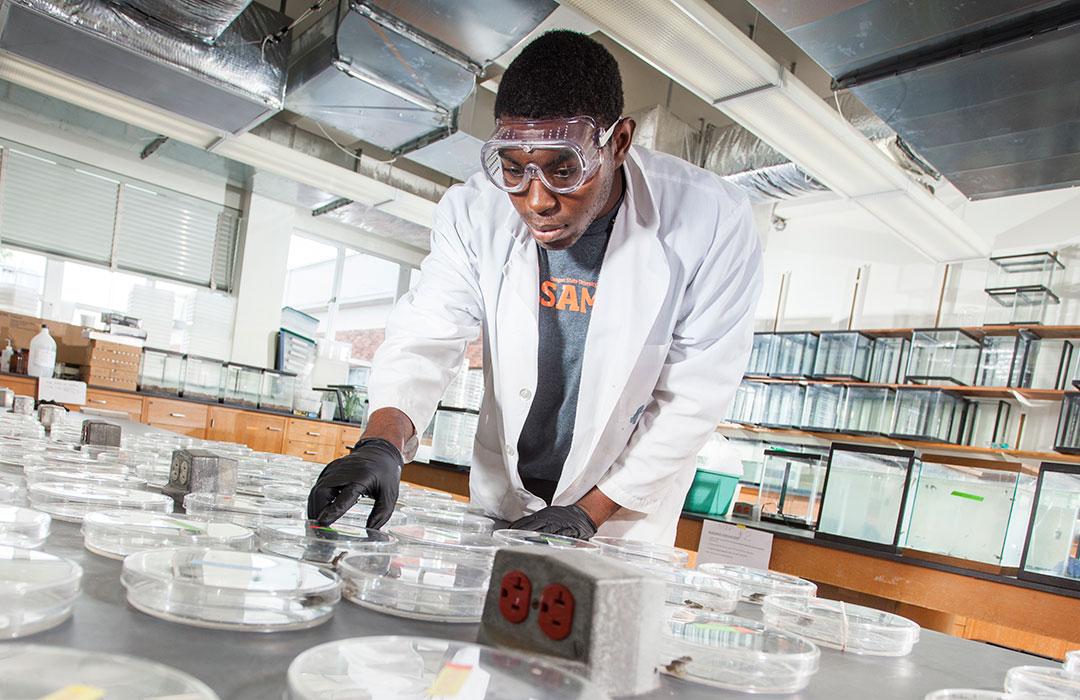
Justin Conner grabbing petri dishes in lab

Zoology senior Justin Conner

Conner has spent summers doing research on endangered frog species in Professor Andrew Blaustein’s lab, presented award-winning undergraduate research at conferences in Arizona and Seattle and spent five months in Australia analyzing data on the pulmonary system in skunks. Conner’s mentor in Australia introduced him to Dane Crossley at the University of North Texas where Conner will pursue his research on cardiovascular physiology in vertebrates.

Besides animals, Conner is also passionate about increasing and encouraging African American students to stay in science. He launched the Oregon State Club, CAMS—Council for the Advancement of Minorities in Science—that connects minority students to mentors, research opportunities and professional development.

Biology senior Courtney Jackson (pictured above) deepened her passion for marine biology by doing visual and acoustic surveys of humpbacked whale communication in Alaska. She also interned at the Hatfield Marine Science Center in Newport and worked for PISCO (Partnership for Interdisciplinary Studies of Coastal Oceans) as a member of Marine Biology Professor Bruce Menge’s lab on surveys of small marine creatures in intertidal zones.

Jackson, who loves doing fieldwork, will continue working for PISCO on research projects after graduation before applying to graduate school programs in marine biology. She has valuable advice for science majors.

“Participate in internships! I know everybody says that, but it definitely helped me.” –Courtney Jackson

“Internships are important because you are able to interact with professors more naturally and you may do something that you could potentially end up doing for the rest of your life. For me, getting to know people and interacting with people is a really good way to get your feet wet and figure out what you like and don’t like,” said Jackson.

Jackson reflected on her identity as a black female student in the sciences and how that may shape her career in the future.

“The more I have discovered my identity, the more challenging it’s become. Even though I have had the good fortune and opportunity to be taught by a lot of women professors, I have never been taught science by a person of color in college. I want to be that person, even if I teach a little class, as long as someone can see I am a person of color and I can teach this subject,” said Jackson.

A passionate champion of diversity, Dean Pantula agrees that it is important to have a diverse faculty.

“The College is committed to enhancing diversity among its students, faculty and staff.” –Dean Sastry Pantula

“Recently, we recruited a senior Hispanic faculty member in mathematics and an African female faculty member in biochemistry and biophysics. Justin and Courtney are shining examples of future leaders in science who will not only strive for excellence, but also enhance diversity at OSU and across the nation."

Subscribe to Diversity in Science