Biochemistry & Biophysics
Biochemistry & Biophysics
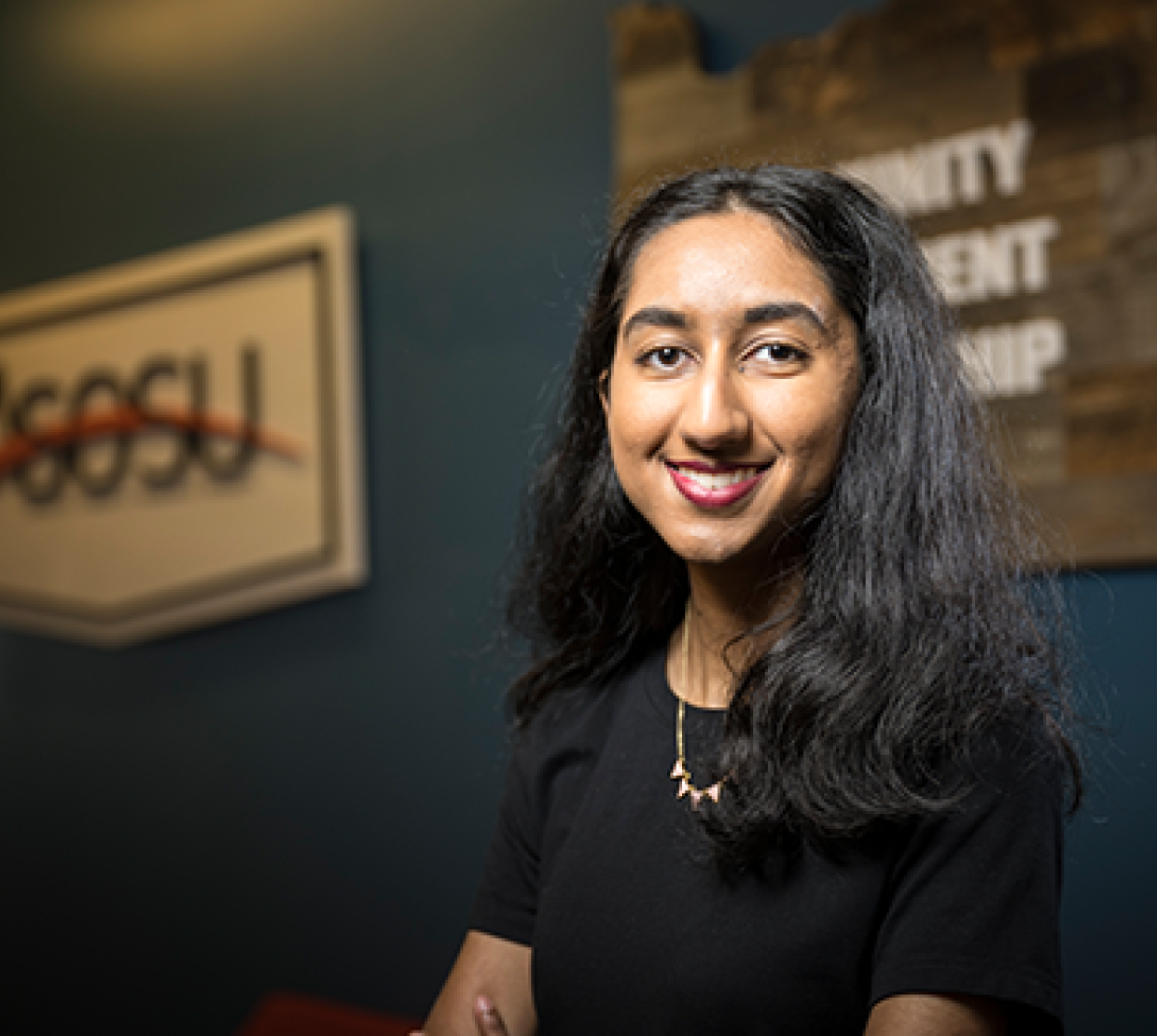
Growing up in Corvallis alongside an autistic sister, Sahana Shah gained an appreciation for her family member’s unique perspectives and learning style. But Sahana couldn’t help having concerns. “What is her future going to look like? Will she go to college?”
When Sahana arrived at Oregon State University with a Donald G. and Grace I. Lavey Presidential Scholarship, she immersed herself in the Honors College, sought to better characterize the structure and function of the COVID N protein in her biochemistry and biophysics lab, and ran for the student House of Representatives. One of her main platforms? Helping establish a disability cultural center to better adapt the campus to the needs of neurodiverse students. She won the election with the most votes of any candidate.
“The Presidential Scholarship has allowed me to fully engage in my passions at OSU through my different involvements, without having to worry about financial stress or other constraints, for which I am eternally grateful."
Since then, Sahana has joined the long-term effort among student groups to bring the idea to life – introducing legislation to her colleagues in the Associated Students of OSU Congress in fall 2021, allocating money for the project in the House of Representatives, marketing their message and holding focus groups with students at the conclusion of the 2021-22 school year. They’ve watched their idea evolve and expand into a vision for a Disability Cultural Center, in addition to an International Student Center, with the ideas for both projects having come to ASOSU from the student body. “We envision the centers having panel events, workshops and other programs that celebrate everyone’s backgrounds. That’s the biggest thing a cultural center could do: educate and spread awareness,” she says.
“If this comes to fruition, it would make me feel better about my sister going to college – I’d know she could have a place where she could feel safe.”
In 2022-23, Sahana and her peers plan to continue working with university administration to designate physical spaces on campus for the two centers and gather student input on the programming efforts within them.
Donald G. and Grace I. Lavey Presidential Scholarship was created in 1998 through an estate gift from two OSU alumni who graduated in 1940 – he in mechanical engineering and she in home economics. Over the last decade alone, the endowed fund has provided over $375,000 in scholarships for students like Sahana. Learn more about how you can unlock greater support for OSU students through the Scholarship Match.
Related Stories
Across the Department


Ebunoluwa Morakinyo being a flag bearer for Africa Night 2023. She is holding the Nigerian flag.
Ebunoluwa Morakinyo is a scientist. She is also a home chef, writer, director and actress. Despite initial discomfort with theater, she embraced roles as personal challenges.
Oregon State University's African Student Association hosts Africa Night annually, celebrating the diversity of Africa through dance, music and cuisine.
In 2022 the theme was, “What I am is greater than what I was.”
Morakinyo scripted, gathered actors and performed in a play, telling the story of a fictional Nigerian art gallery owner facing self-doubt and familial pressure. Collaborating with Brandon Ndungu, a civil engineering student, she brought the story to life.
Participating in ASA events is important to Morakinyo because she is passionate about showing the Oregon State community what it means to be African.
“There’s more than the sadness or negative news,” she said. “There’s also stories of creativity and innovation and beautiful culture. There’s a reason why we love being African and I wanted to share that with others.”
Being a Beaver has stretched her to develop her passions inside and outside of the lab. A senior honors biochemistry and molecular biology student at Oregon State, her time on campus has included celebrating her culture while looking forward to a career dedicated to helping others.
Morakinyo will be taking a gap year before pursuing a career as a physician-scientist. In the upcoming year she will be working with Dr. Carsten Bonnemann in his National Institutes of Health lab under the National Institute of Neurological Disorders and Stroke. The Bonnemann lab investigates childhood neuromuscular and neurogenic disorders, developing cutting-edge gene therapies for these diseases.
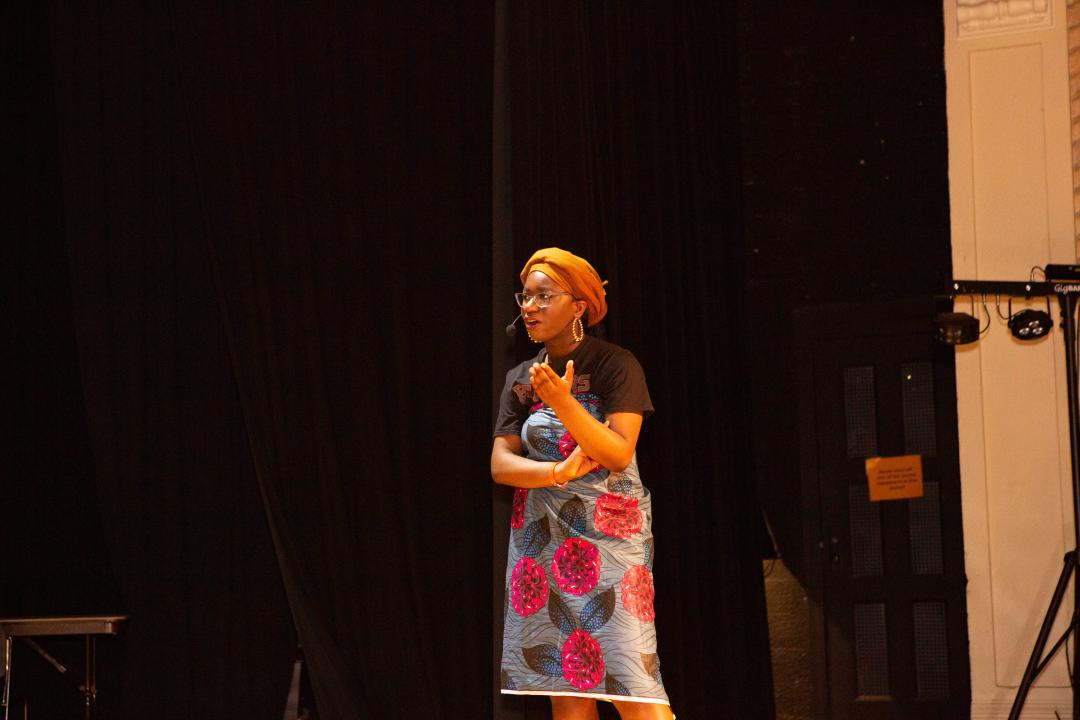
Ebunoluwa Morakinyo acting in "Victories of Today," the play she wrote for African Night 2022. She is playing the mom of the main character.
‘Finding community’
Morakinyo was born in Nigeria and immigrated to the U.S. when she was four years old after her father was accepted to Portland State University to get his Ph.D. in chemistry.
Education has always been a priority in her family. Her father is not the only family member with an advanced degree; her mom has a master’s in computer science.
Morakinyo's strength is in the biological realm. “My mind is geared towards like, ‘What is really the story behind that?’ ‘What are the processes going on?’”
She picked Oregon State because it was in-state and promotes research, something she was excited about. “I liked how it has a culture of undergraduate research, which is what I wanted to do.”
In January 2021, she reached out to the Indra Lab in the College of Pharmacy. The lab focuses on skin biology, skin inflammation, skin cancers and wound healing. Knowing she liked biochemistry but didn’t want to necessarily focus on elucidating protein structure, she had searched for other biochemistry opportunities on campus.
“The lab looks to investigate how wound healing could be enhanced to be faster because that is important in many medical applications. It can have dire consequences if not treated well,” she said. “That interested me because it was the application of biochemistry to a more tangible or immediate thing while seeing the impact on larger systems.”
Joining the lab was as simple as reaching out and attending a virtual lab meeting.
Although she had two prior lab internship experiences during high school that helped her feel comfortable, the people made the biggest difference. Graduate student Nilika Bhattacharya took her under her wing and guided Morakinyo step by step.
She studied the relative population of immune cells during skin wound healing in mutant mice that demonstrated accelerated wound healing. The goal was to determine whether the deletion of BCL11A, a development transcription factor found in skin cells, affects the recruitment of important immune cells during skin wound healing.
Preparing for medical school–with aspirations to be a physician-scientist–Morakinyo wanted to take part in as many Oregon State opportunities as she could.
On top of ASA and the Indra Lab, she was also a physics Learning Assistant and peer mentor with the Beaver Connect Program. Learning Assistants are current students who successfully completed a course and wish to help fellow students taking the same course in the future. The Beaver Connect program connects new-to-OSU students with peers and faculty members to ease the transition to college.
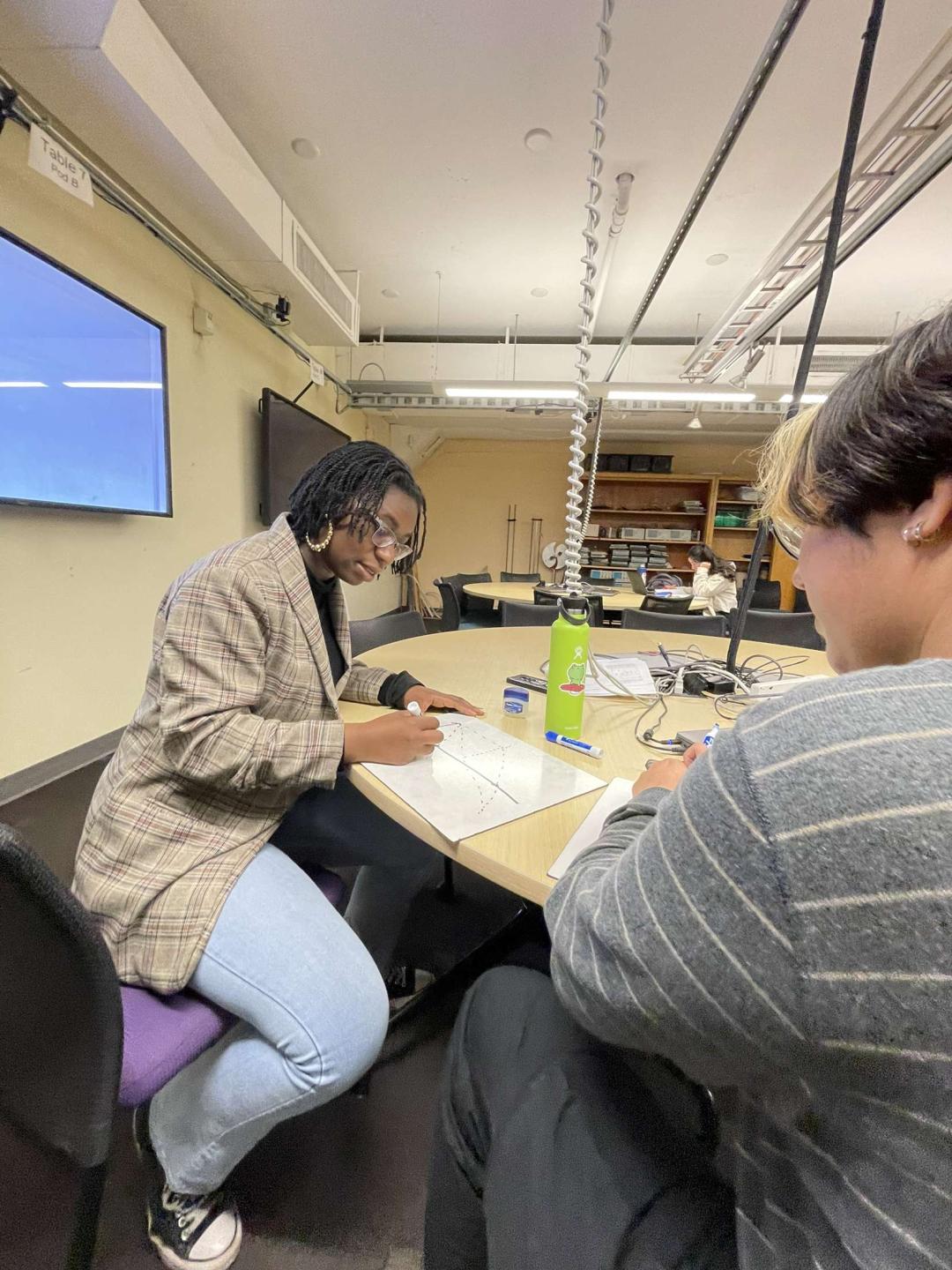
Ebunoluwa Morakinyo LA-ing with a student.
Morakinyo met with four new OSU students and one faculty member five times per term. The group discussed applying for scholarships, finding research opportunities, exploring career paths and more.
She likes to be busy, especially following the pandemic. “I wanted to do everything because I enjoy it. I enjoy research and I like teaching and reflecting on my experiences and passing it forward.”
Joining the African Student Association felt natural after participating in her high school’s Black Student Union. She was excited to connect with other students who have a similar immigrant experience.
“Oftentimes in America, there’s not a good distinction between what it means to be Black American and what it means to be African, because we do come with different valuable experiences,” she said. “I am a more recent immigrant, versus someone who has more family history here as a Black American.”
During her first year at Oregon State, she was also interested in learning how to speak her native language, Yoruba. She and her sisters can understand it, but speaking it is more difficult. Through speaking, Morakinyo has built a stronger connection to her heritage, helping her form her personal identity.
She found community with people who understood her, and she enjoyed being at the Lonnie B. Harris Black Cultural Center.
Part of the mission of the center is to enrich the quality of campus life for African and African-American Students. Morakinyo spent time using the center’s resources including a lounge, study space, library and computers.
Being involved across campus was one of her best decisions. Although it was sometimes difficult to balance, the mental health benefits mattered.
“Find a community with your passion, because it goes a long way and helps you to feel not as alone and through that, you can meet people who pour life into you and you get to pour life into them.”
Related Stories
Across the Department
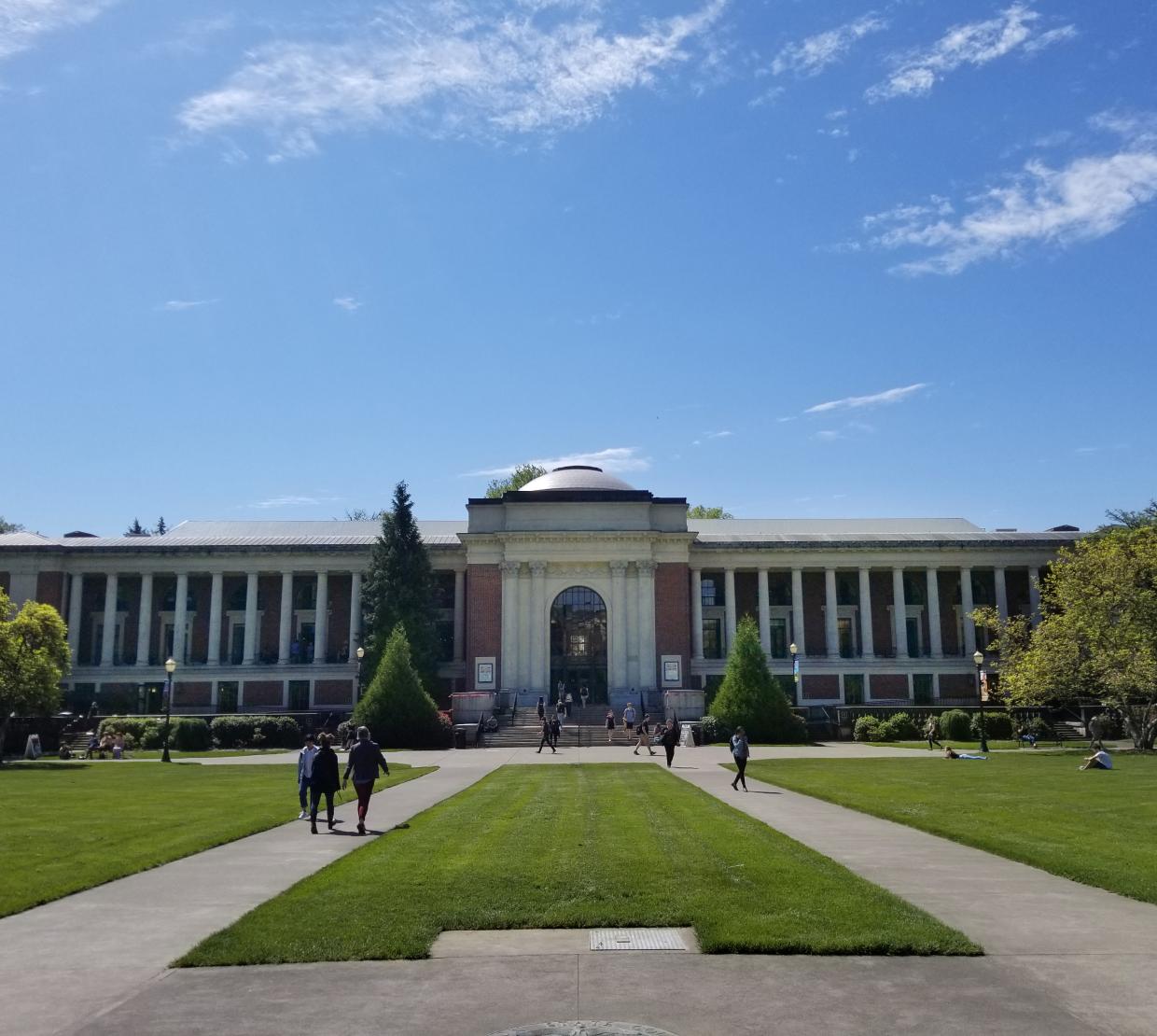
At the Health Professions Fair, students can connect with professional schools and programs with specializations in the healthcare industry. The Fair is a wonderful opportunity to learn about graduate education and careers in health care. Admissions representatives from more than 60 health professions schools in Oregon and across the country will be on campus to answer your questions. The Health Professions Fair will take place on April 25, 2023, from 10 a.m. to 2 p.m. in the Memorial Union Ballroom.
These schools represent health professions programs in medicine, osteopathy, dentistry, pharmacy, chiropractic medicine, nursing, physical therapy, public health, health management and administration, biomedical sciences and several others. More than 500 students attend the Health Professions Fair each year.
Students are welcome to stop by anytime during the health fair, which is free and open to all majors. Volunteers will be available to hand out a list of participating schools and a map of their table locations. Students can visit a school’s table and pick up information materials and speak with admission representatives.
Something for everyone
The health fair is open to all undergraduates and alumni.
First and second year students can explore health profession options, build networks and get tips from admission representatives on undergraduate preparation and co-curricular activities.
Juniors, seniors and alumni will have an opportunity:
- to learn about specific programs from admissions representatives of various universities
- collect application materials and obtain financial aid information,
- get tips on writing a personal statement, the application process, and letters of reference.
Preparing for the Fair
Students can interact with representatives of graduate health programs from schools such as Oregon Health and Science University, Idaho College of Osteopathic Medicine, University of Utah College of Pharmacy, Western University of Health Sciences in Pomona, California, Keck Graduate Institute of Claremont, California and many more. See a list of participating schools.
Students are encouraged to prioritize their list of schools to make effective use of their time at the fair. They can brainstorm questions they might ask admissions representatives. Here are a few ideas to get started:
- What is unique about program X at your university?
- What types of courses would I take in program X?
- What experiential components does program X offer (internships, rotations, etc.)?
- What does your admissions committee look for in an applicant?
- I read about XYZ on your website. Can you tell me more about that?
According to U.S. News and other surveys, healthcare is one of the fastest-growing industries. The Bureau of Labor Statistics predicts that employment growth in this sector will be much quicker than the average for all jobs by 2026.
For more information, please visit: http://www.science.oregonstate.edu/health-professions-fair
Related Stories
Across the Department



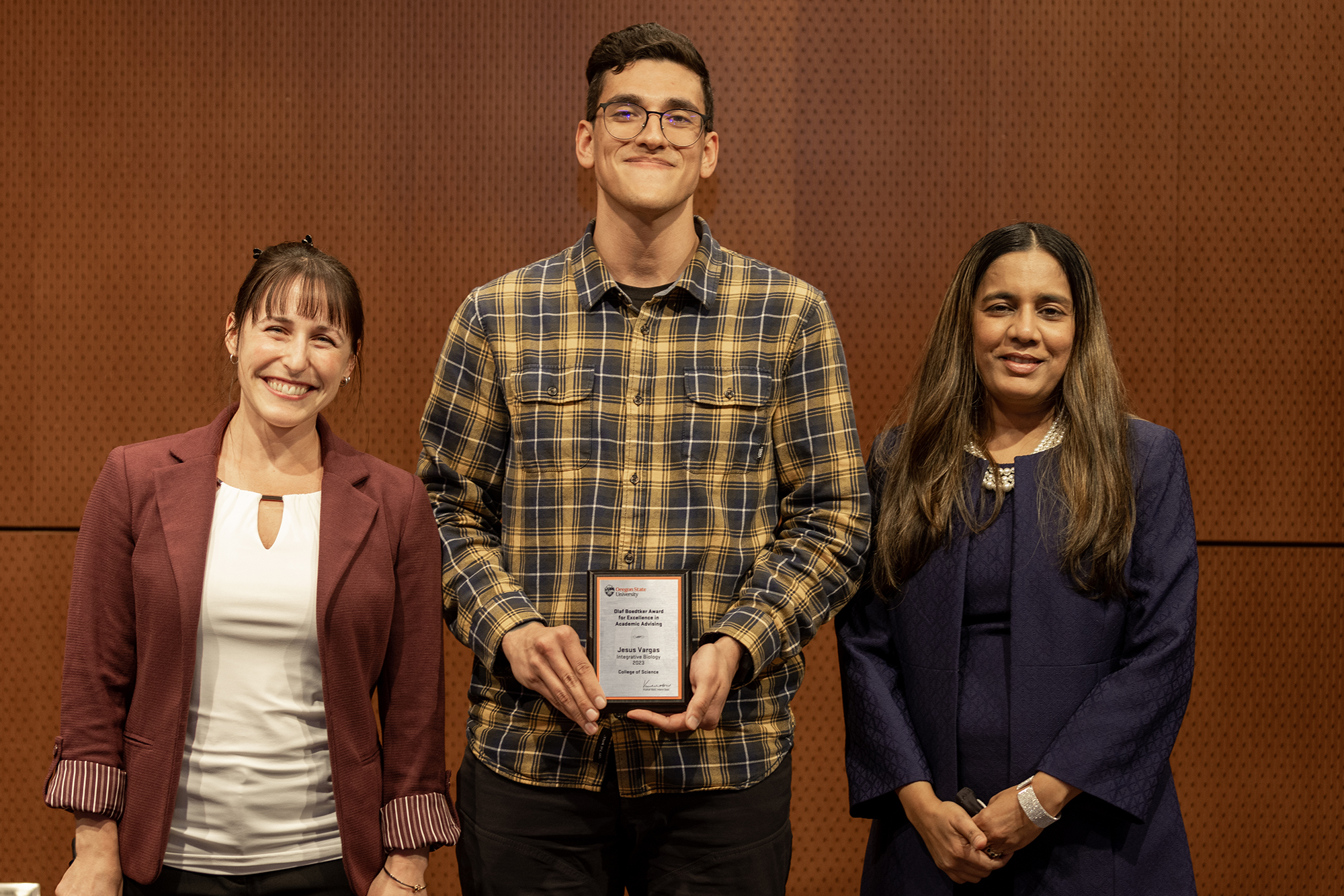
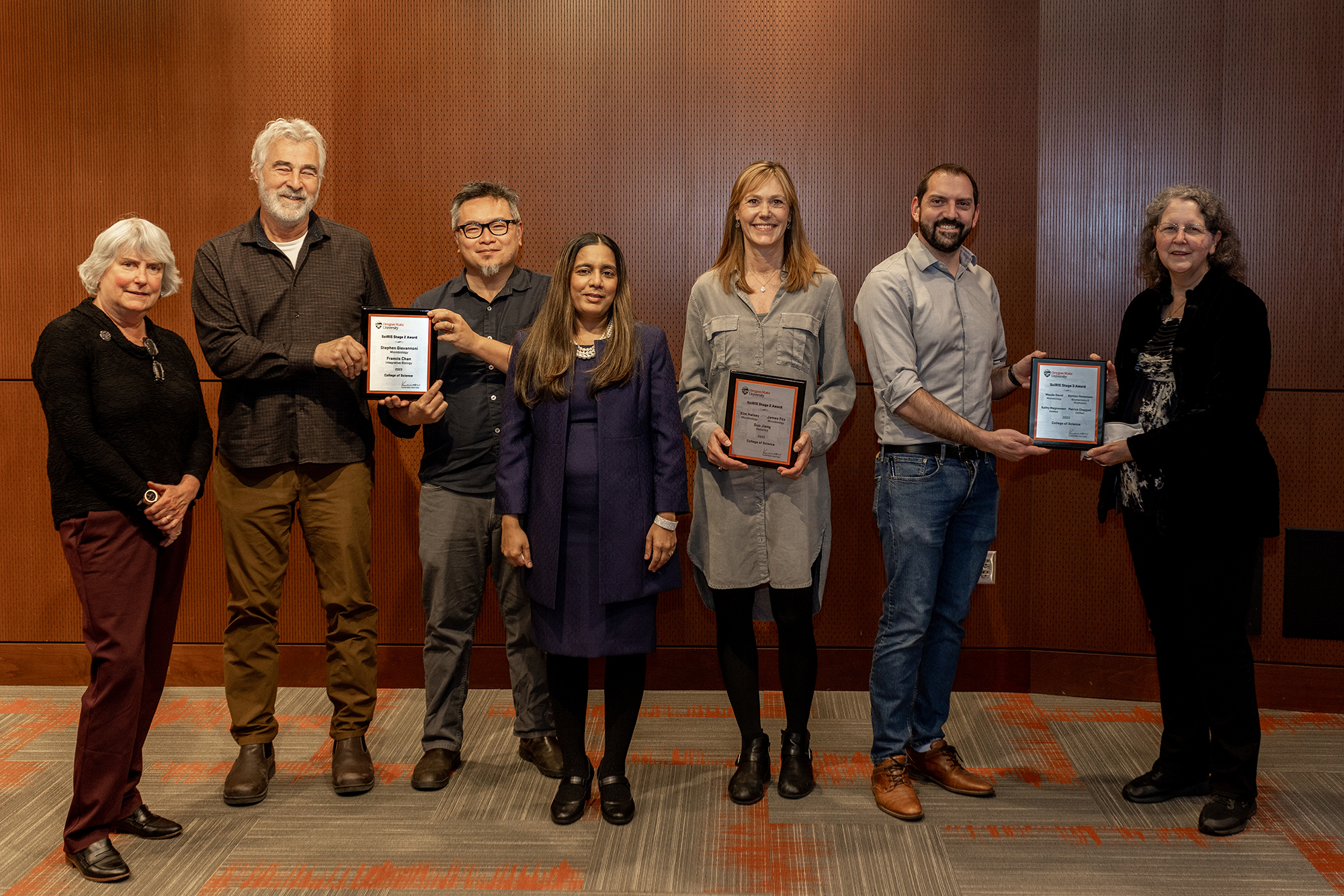
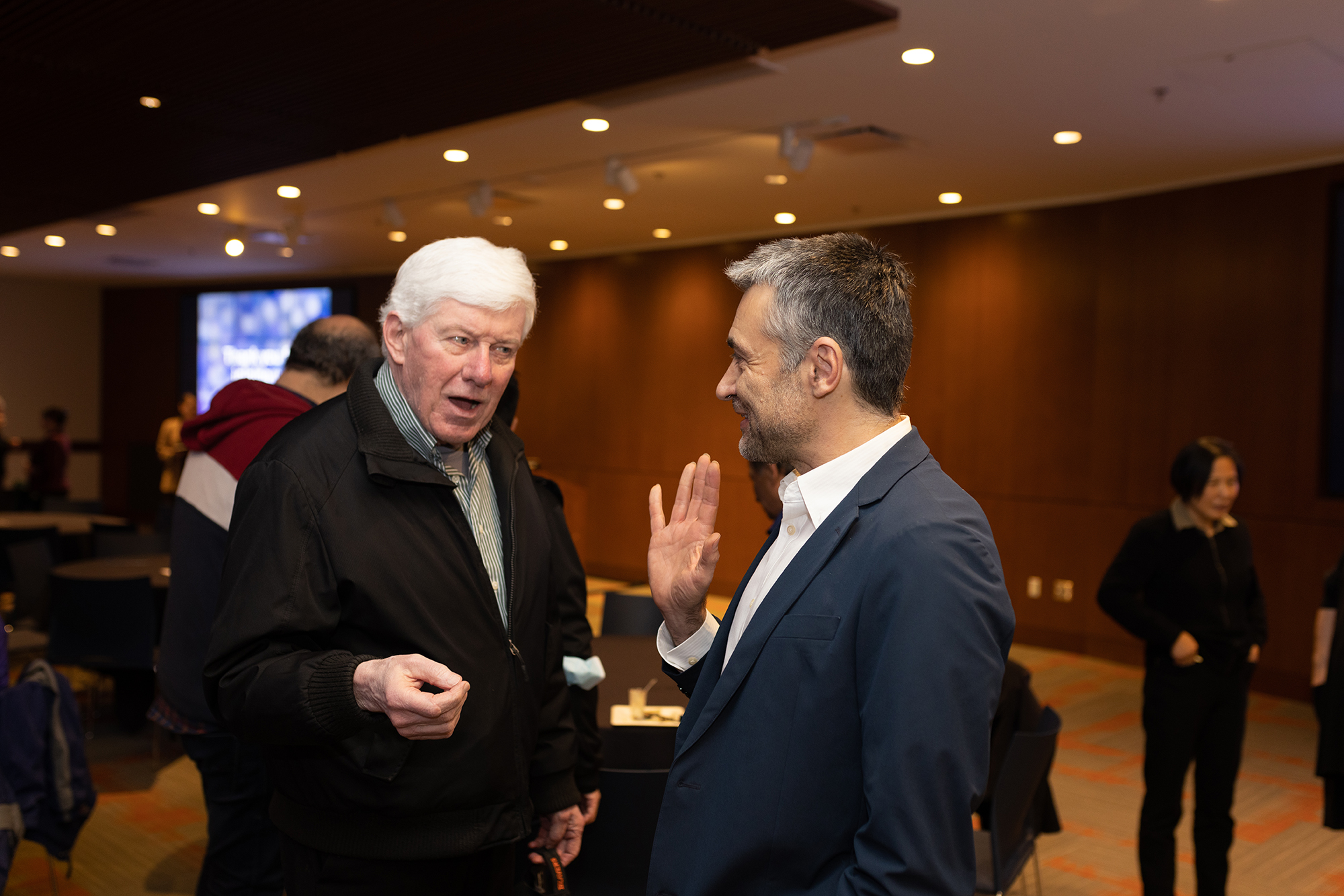
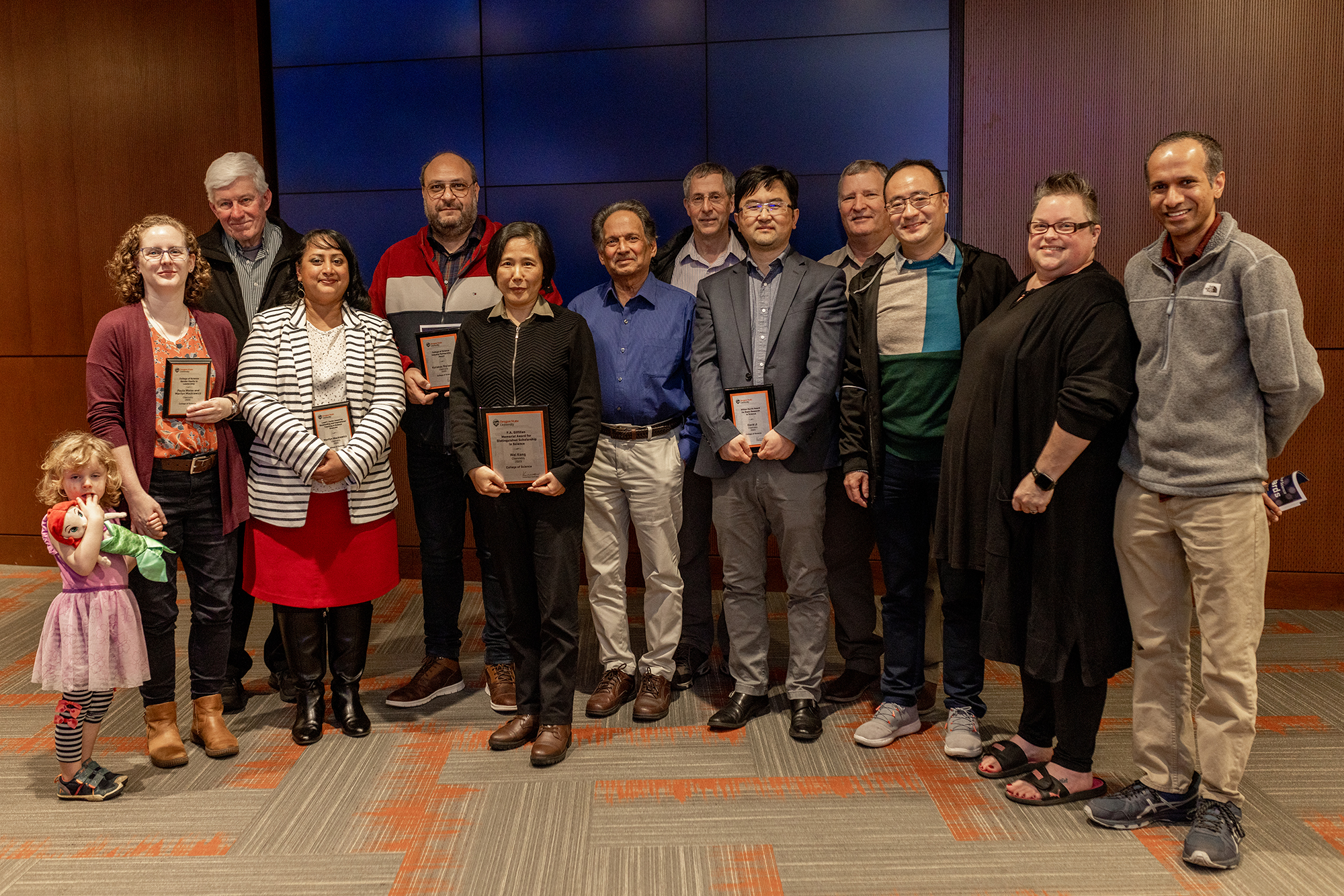
Celebrating inclusive excellence, administration, service and performance: 2023 College of Science Awards
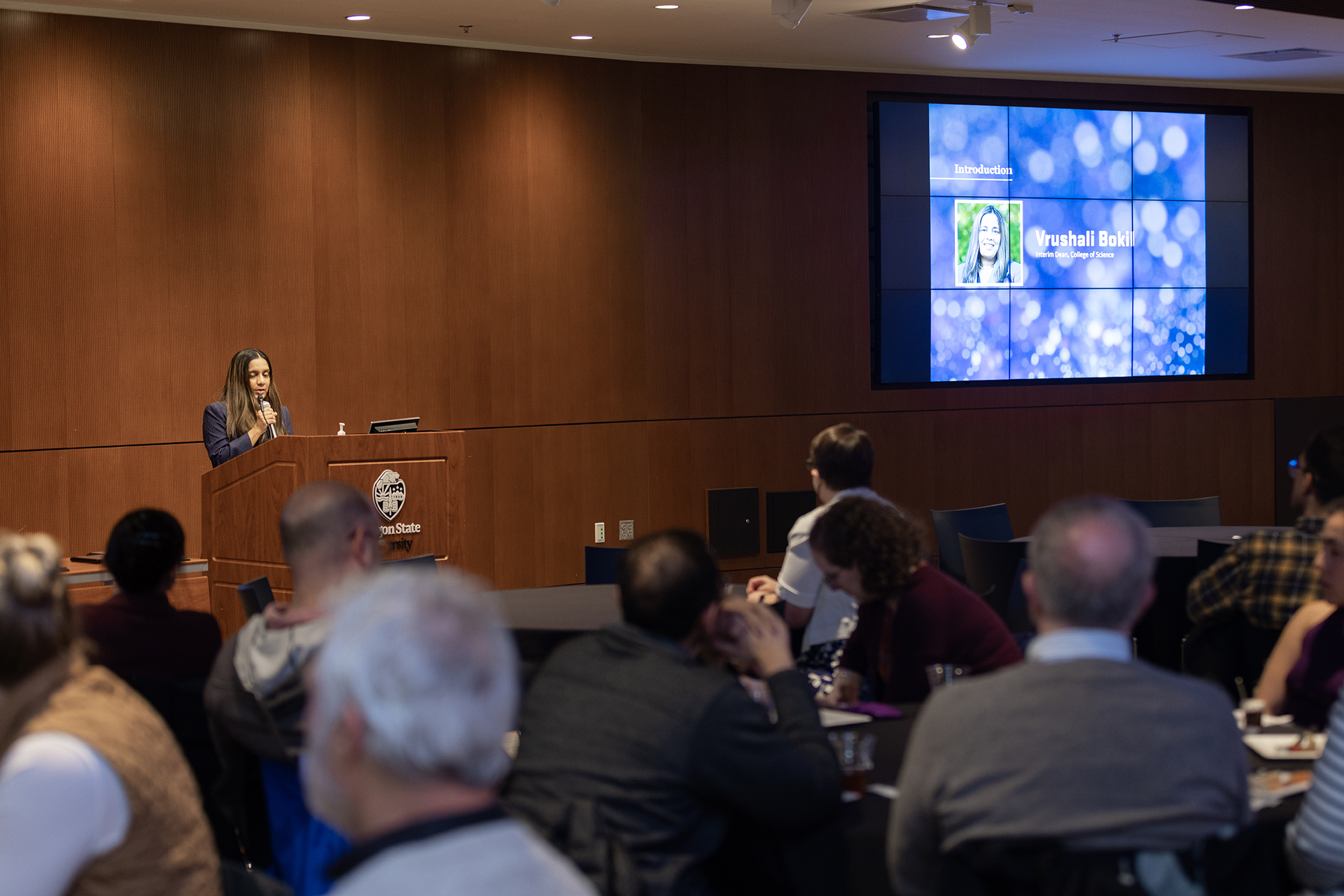
The College of Science gathered on Feb. 22 to recognize and celebrate our high achieving faculty and staff at the 2023 Combined Awards Ceremony. The evening celebrated the very best in the College, from teaching, advising and research to inclusive excellence, administration and service.
The following faculty and staff received awards in the categories of Inclusive Excellence, Administration, Service and Performance.
Congratulations to all the awardees!
College of Science Inclusive Excellence Award
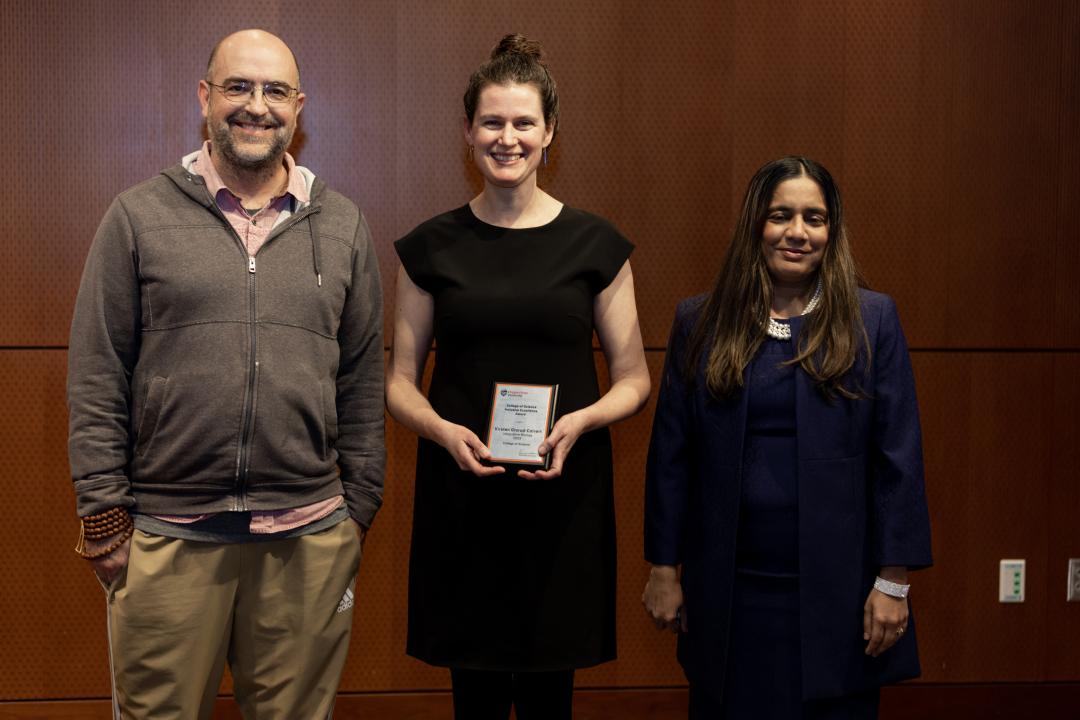
Kirsten Grorud-Colvert accepts her award from Interim Dean Vrushali Bokil and Department of Integrative Biology Head Dee Denver.
Kirsten Grorud-Colvert, associate professor, senior research in the Department of Integrative Biology, received the Inclusive Excellence Award. In her nine years at Oregon State, she has demonstrated valuable leadership in fostering a culture of inclusion in the College of Science.
In 2020-21 Grorud-Colvert led a department-wide effort to develop an Equity, Justice and Inclusion Community Values statement to guide the department’s future goals and actions. As part of that work, she organized a retreat for faculty, staff and graduate students to discuss individual and group values. Attended by 83 members, the retreat served as a jumping-off point for the department statement, allowing more voices to be heard and incorporated.
In the summer of 2022, Grorud-Colvert co-organized a Decolonizing Biology workshop. A series of four sessions, the workshop provided a deep dive into the historical and ongoing colonial forces that have shaped the biological research discipline. Topics ranged from the exploitation of indigenous bones and DNA to disparities and biases experienced by racial and ethnic minorities in healthcare.
Grorud-Colvert also prioritizes inclusive excellence in her role as a research program leader. She focuses on place-based approaches to understanding the local impacts of marine protected areas in different parts of the world while integrating the perspectives of local communities and historically marginalized populations.
College of Science Gender Equity in Leadership
Created in 2022, the College of Science Gender Equity in Leadership award supports and provides funds for the advancement of the careers of female faculty in the College of Science. Thanks to generous donors, the fund will provide three faculty with a $3K award for developing and implementing projects related to the College’s mission while enhancing leadership skills and opportunities for faculty members who previously or currently identify as women in the College of Science.
This year's recipients include: Marilyn Mackiewicz and Paula Weiss; Elisar Barbar; and Katée Keen and Jennifer Olarra.
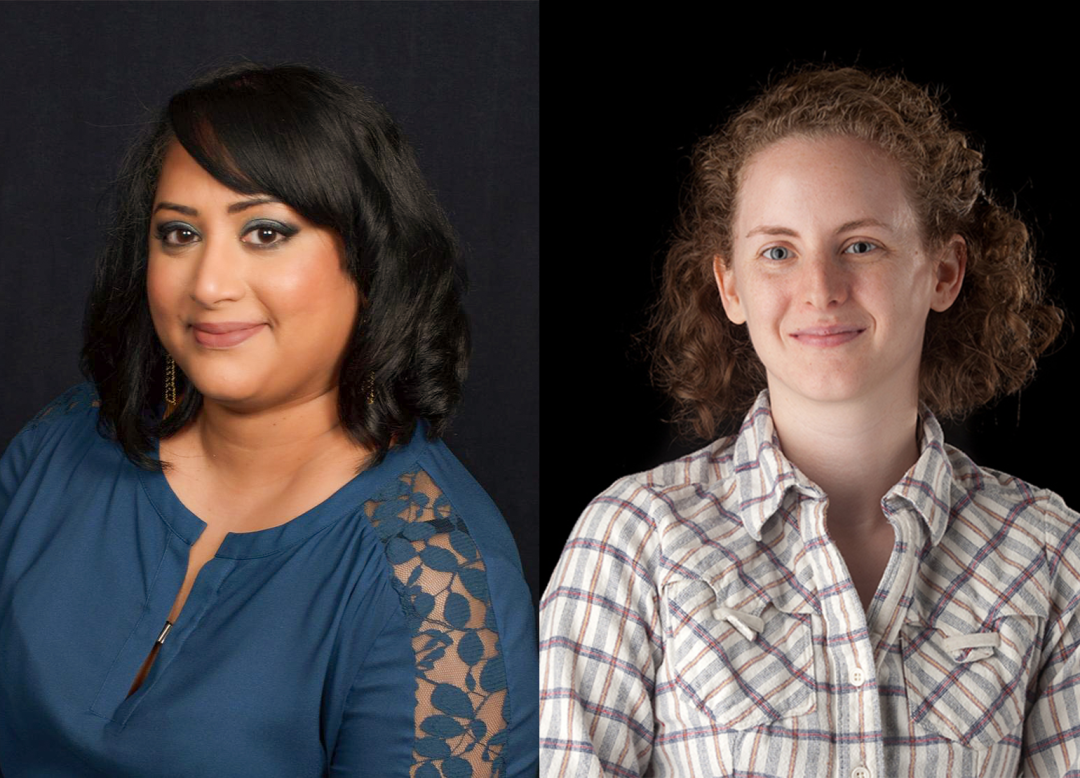
Marilyn Mackiewicz and Paula Weiss.
Marilyn Mackiewicz and Paula Weiss’s award will support specialized mentorship programs for women instructors, professors and researchers in the Department of Chemistry. Called “The Catalyst,” the goal of the program is to cultivate an environment that shapes the next generation of leaders, scientists, mentors and educators. Participants will formulate their career goals and develop a range of skills such as effective grant writing, finding sources of funding and inclusive leadership skills.
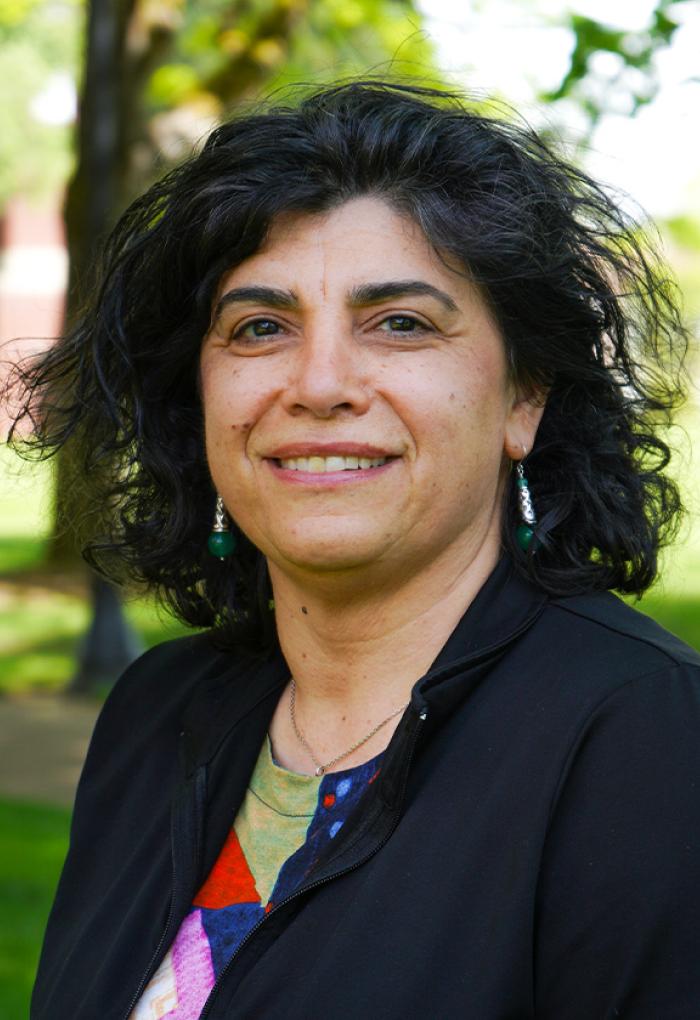
Elisar Barbar
Elisar Barbar’s award will fund the development of workshops that support women faculty in science as their careers advance. She will organize formal mentorship opportunities focused on tools and strategies that empower faculty and invite a renowned speaker to lead a full day workshop on leadership, improving quality and quantity of research output and the performance and well-being of science teams.
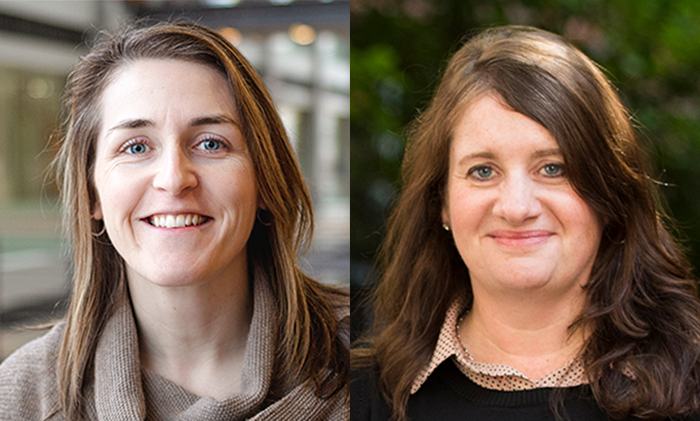
Katée Keen and Jennifer Olarra.
Katée Keen and Jennifer Olarra’s award will fund a coaching event that supports College of Science staff and professional faculty who identify as women. A guest speaker will lead participants in sessions focused on empowerment, work-life balance, leadership at all levels, connecting personal values to College of Science values, and creating a climate of belonging and support.
Gladys Valley Award for Exemplary Administrative Support
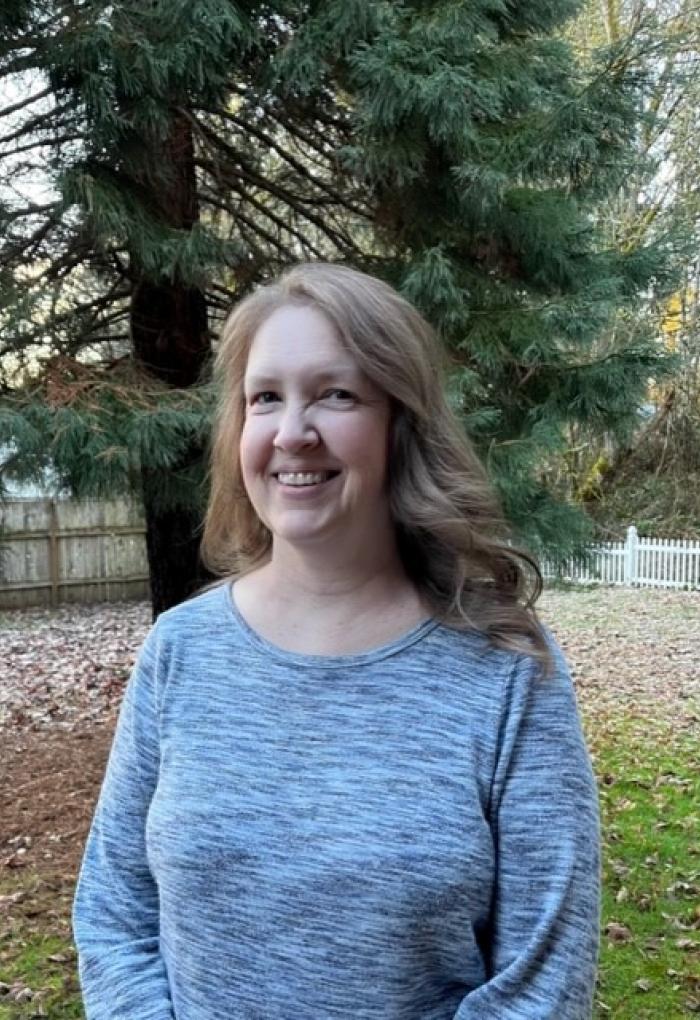
Kelly Carter, graduate student coordinator and office manager for the Department of Physics
Kelly Carter, graduate student coordinator and office manager for the Department of Physics, received the Gladys Valley Award for her tireless commitment to her department.
Carter has been the office manager in the department since 2014 and during the 2021-22 academic year, she managed the role without a support employee after her assistant, Lori Emmons, passed away. Carter frequently performs well beyond her position description duties.
“Kelly has been a fundamental individual in the department workings, a pleasant person to interact with a constant smile, a tireless collaborator, and an incredible source of help and support at any time,” wrote one nominator.
Her colleagues expressed immense gratitude for her willingness to take on more responsibilities while consistently providing a warm welcome to department visitors.
“Kelly is the glue that holds together the complicated trajectories of roughly 20 faculty, 50 graduate students and hundreds of undergraduates,” wrote another nominator. “She deserves recognition for not only doing this difficult task, but also for doing it incredibly well in the face of a plethora of challenges.”
Distinguished Service Award
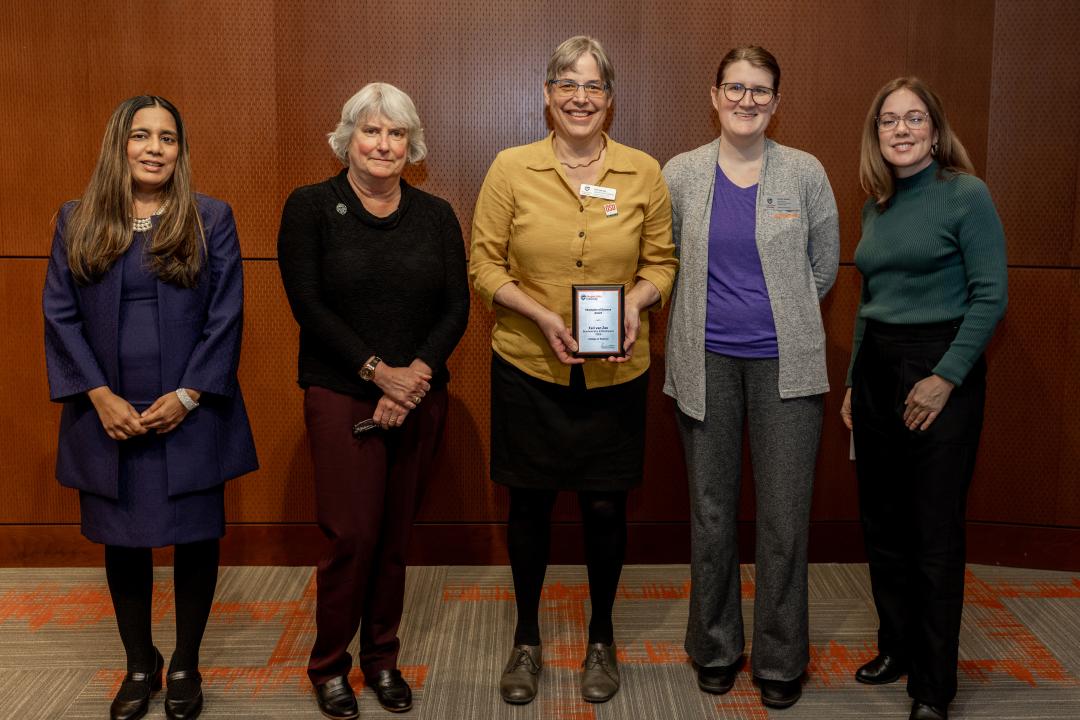
From left to right: Vrushali Bokil, Virginia Weis, Kari van Zee, Lauren Dalton and Kate Shay.
Kari van Zee, senior instructor II and lead advisor for the Department of Biochemistry and Biophysics, received the Distinguished Service Award. This award recognizes a faculty, staff member or student whose outstanding contributions helped to support and sustain the quality and effectiveness of our College.
Van Zee has taken on a plethora of roles, both official and behind the scenes. In addition to teaching and advising, she is an undergraduate coordinator, faculty senate member, Biochemistry Club advisor and Genetic Code Expansion Center outreach coordinator. On top of everything she is known for fostering a supportive community environment.
“She is a perfect example to emulate: a good friend, advisor and someone to count on for support; whatever it is, however hard it is, whether you are a student, faculty or even department head, Kari is there to help,” wrote the nominators.
Examples of her dedication include hosting social events to help undergraduate seniors brainstorm for their future, organizing the department Dam Proud Day fundraising event, helping faculty adapt for students with disabilities and coordinating pandemic safety procedures.
Colleagues noted she also dedicates her time to building a positive department culture. Van Zee is the first person to give out her information to new staff members and routinely helps plan community-building events.
“In summary, Kari is the heart of the department in so many ways,” the nominators wrote.
Champion of Science Award
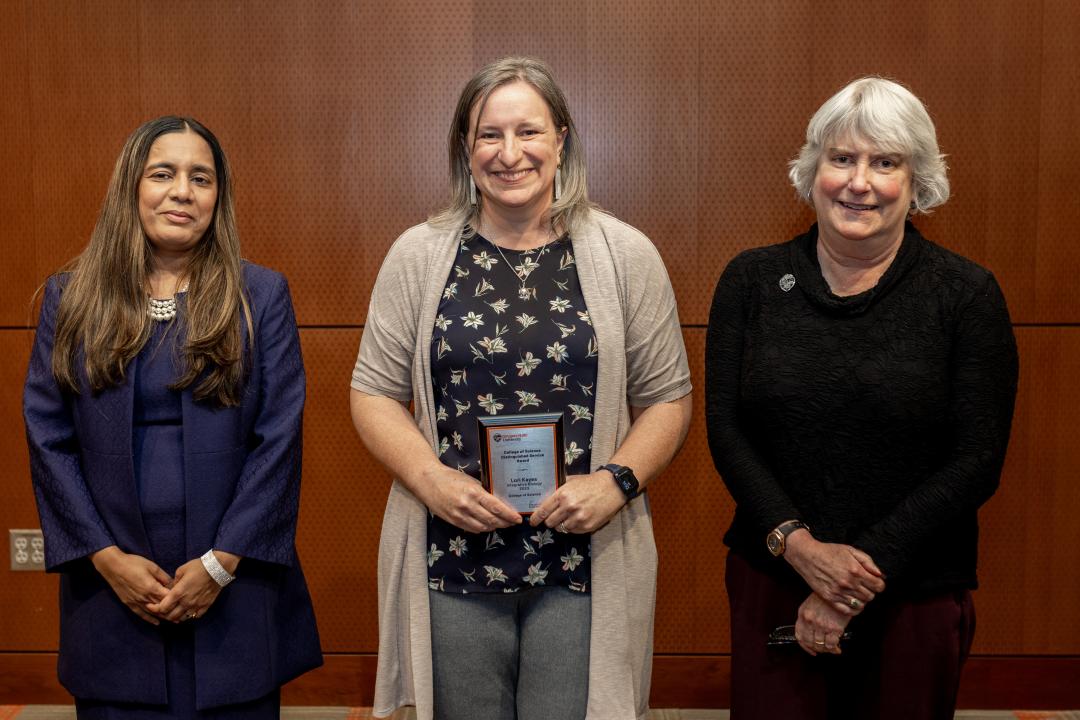
Lori Kayes accepts her award from Interim Dean Vrushali Bokil and Acting Associate Dean for Research and Graduate Studies Virginia Weis.
Lori Kayes, Associate Department Head and Senior Instructor II in the Department of Integrative Biology, received The Champion of Science Award. Chosen by the dean, this award recognizes an individual who demonstrates excellence and extra effort that goes above and beyond what is requested. The award is modeled, including its name, after the President's Beaver Champion Award.
Kayes is a champion of student success, equity and community engagement. Throughout her career, she has strongly advocated for inclusivity in STEM courses and promoted active learning and culturally responsive pedagogies at Oregon State. She has tirelessly advocated for adapting education to meet the needs of today’s learners.
Her contributions were pivotal in Oregon State's recent adoption of the new general education curriculum, which focuses on student success. As co-leader of the Baccalaureate Core Reform Committee, she garnered participation across the university to shape a new curriculum that enhances student potential, including those who are historically underserved.
Her devotion to effective teaching is also demonstrated by the Learning Assistants Program. As a founder with Devon Quick and Dennis Bennett, she helped usher in a new era of evidence-based science teaching in large classrooms at OSU. The Learning Assistants play a vital role in helping students learn by implementing engagement and learning exercises in undergraduate STEM classrooms.
Kayes also has been active in the ongoing efforts to increase inclusive excellence in science as co-PI of the five-year $1 million grant from the Howard Hughes Medical Institute, which aims to improve instruction in undergraduate STEM classrooms.
College of Science Industry Partnership Award
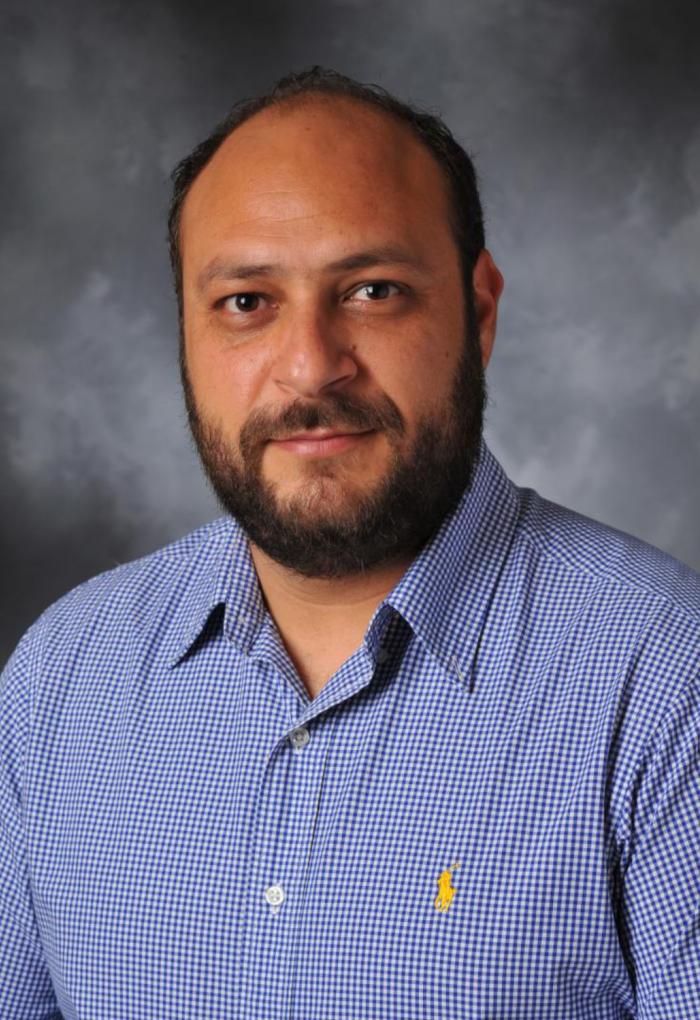
Kyriakos Stylianou
Assistant Chemistry Professor Kyriakos Stylianou and his colleagues received the College of Science Industry Partnership Award. This award will support their work producing metal-organic frameworks (MOFs) able to capture CO2 followed by its conversion into a mixture of ethanol and methanol, which can be used as an alternative fuel source. This will help lower CO2 levels in the ocean and atmosphere and reduce humanity’s dependency on long-chain hydrocarbon fuels, which are rapidly contributing to global warming. In this project, Stylianou will collaborate with an international energy company, and together, they will discover novel strategies to effectively reduce CO2 emissions with MOFs.





Related Stories
Across the Department
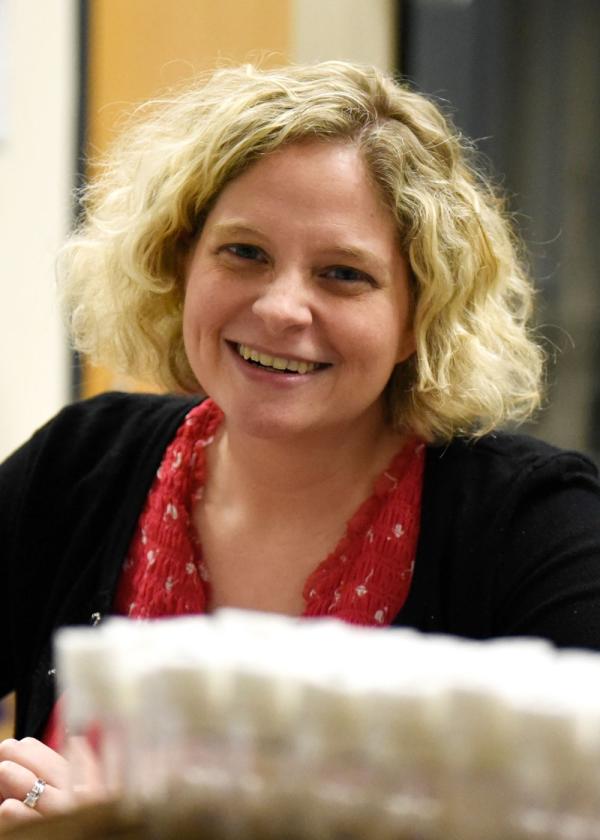

At the annual Health Professions Fair, students can connect with professional schools and programs with specializations in the healthcare industry. The Fair is a wonderful opportunity to learn about graduate education and careers in health care. Admissions representatives from more than 60 health professions schools in Oregon and across the country will be on campus to answer your questions. The Health Professions Fair will take place on April 19, 2022 from 10 a.m. to 2 p.m. in the Memorial Union Ballroom.
These schools represent health professions programs in medicine, osteopathy, dentistry, pharmacy, chiropractic medicine, nursing, physical therapy, public health, health management and administration, medical physics, biomedical sciences and several others. More than 500 students attend the Health Professions Fair each year.
Students are welcome to stop by anytime during the health fair, which is free and open to all majors. Volunteers will be available to hand out a list of participating schools and a map of their table locations. Students can visit a school’s table and pick up information materials and speak with admission representatives.
Something for everyone
The health fair is open to all undergraduates and alumni.
First and second year students can explore health profession options, build networks and get tips from admission representatives on undergraduate preparation and co-curricular activities.
Juniors, seniors and alumni will have an opportunity:
- to learn about specific programs from admissions representatives of various universities
- collect application materials and obtain financial aid information,
- get tips on writing a personal statement, the application process, and letters of reference.
Preparing for the fair
Students can interact with representatives of graduate health programs from schools such as Oregon Health and Science University, Idaho College of Osteopathic Medicine, University of Utah College of Pharmacy, Western University of Health Sciences in Pomona, California, Keck Graduate Institute of Claremont, California and many more. See a list of participating schools.
Students are encouraged to prioritize their list of schools to make effective use of their time at the fair. They can brainstorm questions they might ask admissions representatives. Here are a few ideas to get started:
- What is unique about program X at your university?
- What types of courses would I take in program X?
- What experiential components does program X offer (internships, rotations, etc.)?
- What does your admissions committee look for in an applicant?
- I read about XYZ on your website. Can you tell me more about that?
According to U.S. News and other surveys, healthcare is one of the fastest growing industries. The Bureau of Labor Statistics predicts that employment growth in this sector will be much quicker than the average for all jobs by 2026.
Related Stories
Across the Department
On February 22, the College of Science gathered to recognize excellence at the 2021-22 Teaching and Advising Awards. Driven almost exclusively by students’ nominations, these awards are an opportunity for our community to express gratitude and appreciation for each other.
The College celebrates the Teaching and Advising Awards winners below for their deep commitment to engaging with the student experience and application of mentoring and advising expertise to ensure student learning and success within and beyond the classroom. Effective teaching, advising and mentorship are the very heart of the College of Science’s identity as a robust and thriving community of students and scholars.
2022 Teaching, Advising and Mentoring Award Winners
Olaf Boedtker Award for Excellence in Academic Advising
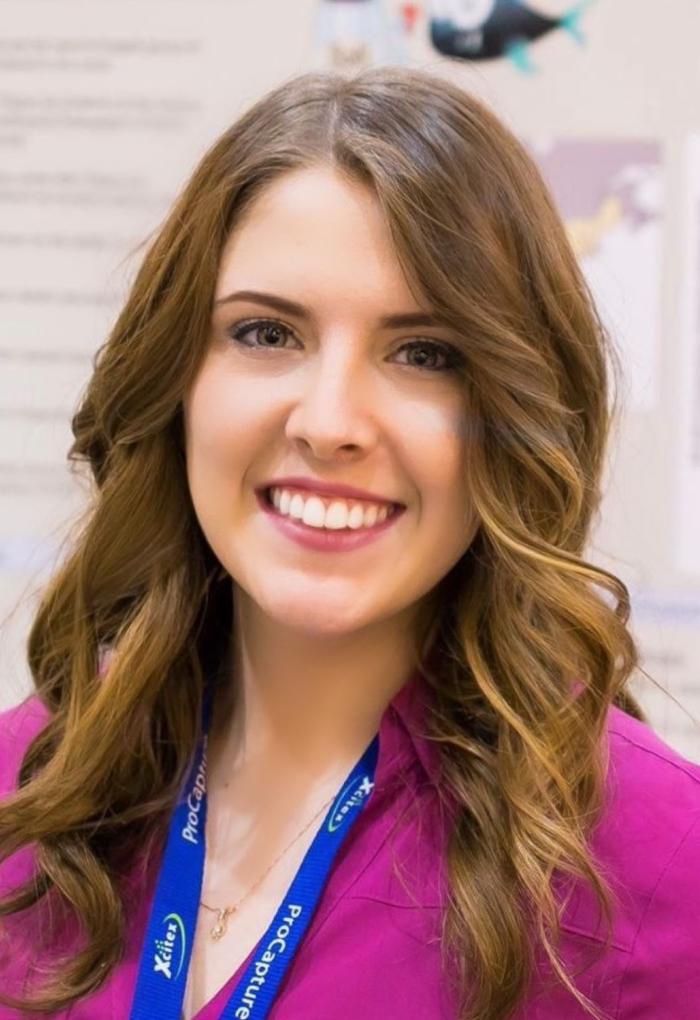
Integrative Biology Advisor Rachel Palmer
Rachel Palmer, integrative biology advisor, won the Olaf Boedtker Award for Excellence in Undergraduate Advising for her tireless support, efforts and advocacy on behalf of undergraduate students. This award was established in 1988 in honor of Olaf Boedtker, a professor in the Department of Physics who served as Head Advisor in the College from 1973 to 1987. While at Oregon State, he provided exceptional service to students and to the College.
Several students nominated Palmer for this award, praising her dedication and ability to connect and encourage students to achieve their goals.
One student nominator wrote of Palmer: “Right off the bat, Rachel came across as a very happy-go lucky person. She has always been extremely kind and caring at every meeting, treating me as an equal adult and even cracking some jokes that set me at ease. She has always been able to answer every question I had, no matter how specific or vague. I can absolutely tell she wants to help me and set me on the best path possible. Rachel pays mind to each and every student as an individuaPassionate, inspirational, dedicatedl and she really knows her stuff!”
Another student had similar feedback for Palmer: “Rachel has made the beginning of my journey towards my Bachelors of Science in Zoology a wonderful experience even through uncertainty. She really goes above and beyond the call of duty, you would not think an advisor could be such a hero.”
“I admire how easily Rachel has helped me find a class schedule that works so well," wrote another student nominator. "She asks important questions, listens to your expectations and executes. One thing she does well is helps me find classes that work well together as far as content.”
Additional nominees for the Olaf Boedtker Award included:
- Cody Duncan, advisor for integrative biology
- Allison Evans, instructor of microbiology
- Jen Olarra, advisor for biology
- Kari Van Zee, senior instructor of biochemistry and biophysics
Loyd F. Carter Award for Outstanding and Inspirational Teaching (Undergraduate)
Assistant Professor of Chemistry Kyriakos Stylianou
This year’s Loyd Carter Award for Outstanding and Inspirational Undergraduate Teaching in Science goes to Kyriakos Stylianou, assistant professor of chemistry.
Every year since 1946, the Loyd F. Carter Award has been presented to two outstanding College of Science faculty members: one for undergraduate teaching and one for graduate teaching. The purpose of the award is to encourage and recognize effective and inspirational teaching. The final selection is based solely on student nominations and voting.
Stylianou’s students describe him as passionate, inspirational and dedicated. “This man is so incredibly intelligent but also one of the humblest people you will ever meet,” one student said.
“He has to be one of the best professors I have had here at OSU,” said another student nominator. “Walking into CH 233, I was super nervous. I heard it was the hardest of the chemistry series. With everyone feeling the burnout of virtual learning, he made sure to make his class engaging and put everything he had into every class.”
Many students praised the learning atmosphere Stylianou creates in his classes and his attentiveness to student needs. “He cares very much about his students and wants to see them succeed. He devotes a significant amount of time inside and outside of class to give them the opportunities and resources they need to be successful in his class, and beyond. He never tries to beat around the bush, always gives you an honest answer, and just wants to see the best in people. The jokes and wise-cracks in class always help to lighten the mood as well.”
Additional nominees for the Loyd F. Carter undergraduate award included:
- Daniel Myles, senior instructor of chemistry
- Devon Quick, senior instructor of integrative biology
- Marita Barth, instructor of chemistry
- Malcolm Lowry, assistant professor of microbiology
- Nathan L. Kirk, senior instructor of integrative biology
- Paul Cheong, associate professor of chemistry
- Phil McFadden, associate professor of biochemistry and biophysics
- Scott Geddes, instructor of chemistry
- Stacey Vaughn, instructor of mathematics
Loyd F. Carter Award for Outstanding and Inspirational Teaching (Graduate)
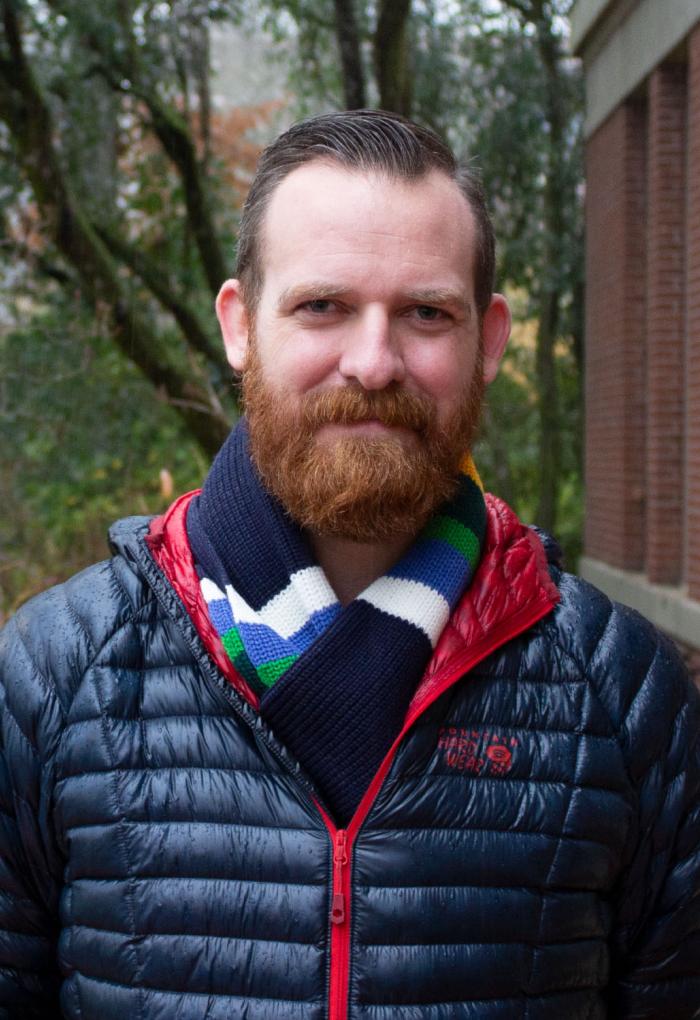
Assistant Professor of Statistics James Molyneux
This year’s Loyd F. Carter Award for Outstanding and Inspirational Graduate Teaching in Science goes to James Molyneux, assistant professor of statistics.
Students nominating Molyneux described him as caring, uplifting and welcoming, and praised his ability to adapt during the pandemic. "He consistently encouraged me and my cohort during the transition from COVID to campus, to keep up our spirits in one of the most difficult academic years of our lives," said one student. "Without him, I would not have gathered the courage to continue moving forward. He is brilliant in the classroom as a professor and a loyal mentor and advocate for our success."
Another student said the following of Molyneux: "He excels at making statistics, a subject which is generally taught dryly and without much passion, relevant to grad students' research and our daily life. He uses timely examples and highlights the nuance of stats, in a way that makes it fascinating instead of frustrating. He was always available for extra help or assistance outside of class, and always seemed willing to discuss other topics than just the class material! He is supportive and compassionate with graduate students, and was the best stats teacher I've had so far at OSU! He also made sure the class content was accessible to students in multiple ways by recording both Zoom and in-person classes, and making the lecture notes easily available. His high-energy and engaging teaching style was apparent in both the in-person and online class I took with him, which I have found to be a rare occurrence in a remote setting!"
Thomas Sharpton, associate professor of microbiology, was also nominated for the Loyd F. Carter graduate award.
Frederick H. Horne Award for Sustained Excellence in Teaching Science
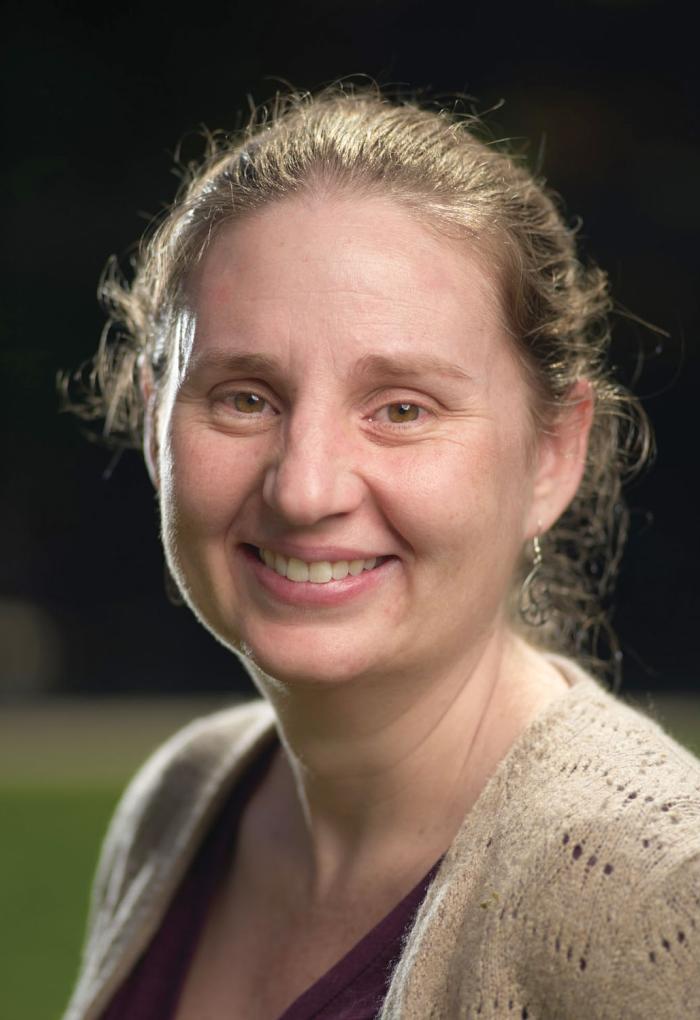
Associate Professor of Physics Elizabeth Gire.
This year’s Frederick H. Horne Award for Sustained Excellence in Teaching Science goes to Liz Gire, associate professor of physics.
This award honors Fred Horne, who served as Dean of Science at Oregon State from from 1986 to 1999. Fred passed away in 2021, a renowned researcher, scholar, teacher and leader.
Fred exemplified the values of our college, embracing a deep commitment to diversity, equity and inclusion in science. He was instrumental in establishing two programs that encourage students of color to pursue and continue their education in science, math and engineering: Science and Math Investigative Learning Experience (SMILE) and the American Indian Science and Engineering Society (AISES).
The purpose of this award is to recognize sustained excellence in teaching science by honoring a faculty member in the College of Science who has repeatedly demonstrated exceptional instructional qualities and has had a significant impact on students over a period of not less than five years.
Liz Gire has earned this award through her tireless dedication to support the holistic student experience. A plethora of students and colleagues wrote at length in support of Gire's nomination. One student nominator said, "Her level of dedication to the genuine support and inclusion of the students in her courses is something I’ve never seen in an educator before. She backs that up with her skill and experience in education and communication that makes difficult content still accessible and enjoyable to learn. She takes every opportunity to build others up, whether that be her students, her teaching team, her research partners or the many people in our department who aren’t any of those things, but still know they can come to her because she is the type of person who will help however and whenever she can."
Another student nominator said, "Liz is a wonderful professor because she is a master at reading the atmosphere of a classroom. Sure, part of this is an intuition that comes from experience, but more importantly, she takes time to ask questions. Each student is expected to grab a small white board and marker at the beginning class. Later when Liz looks out and says, 'write down something that you know about angular momentum' she can measure students’ level of confusion and use student responses to guide the classroom discussion. This makes everyone much more willing to participate in class because they know that she honestly cares for their well-being and success."
Congratulations to all the winners and all the nominees!
Related Stories
Across the Department
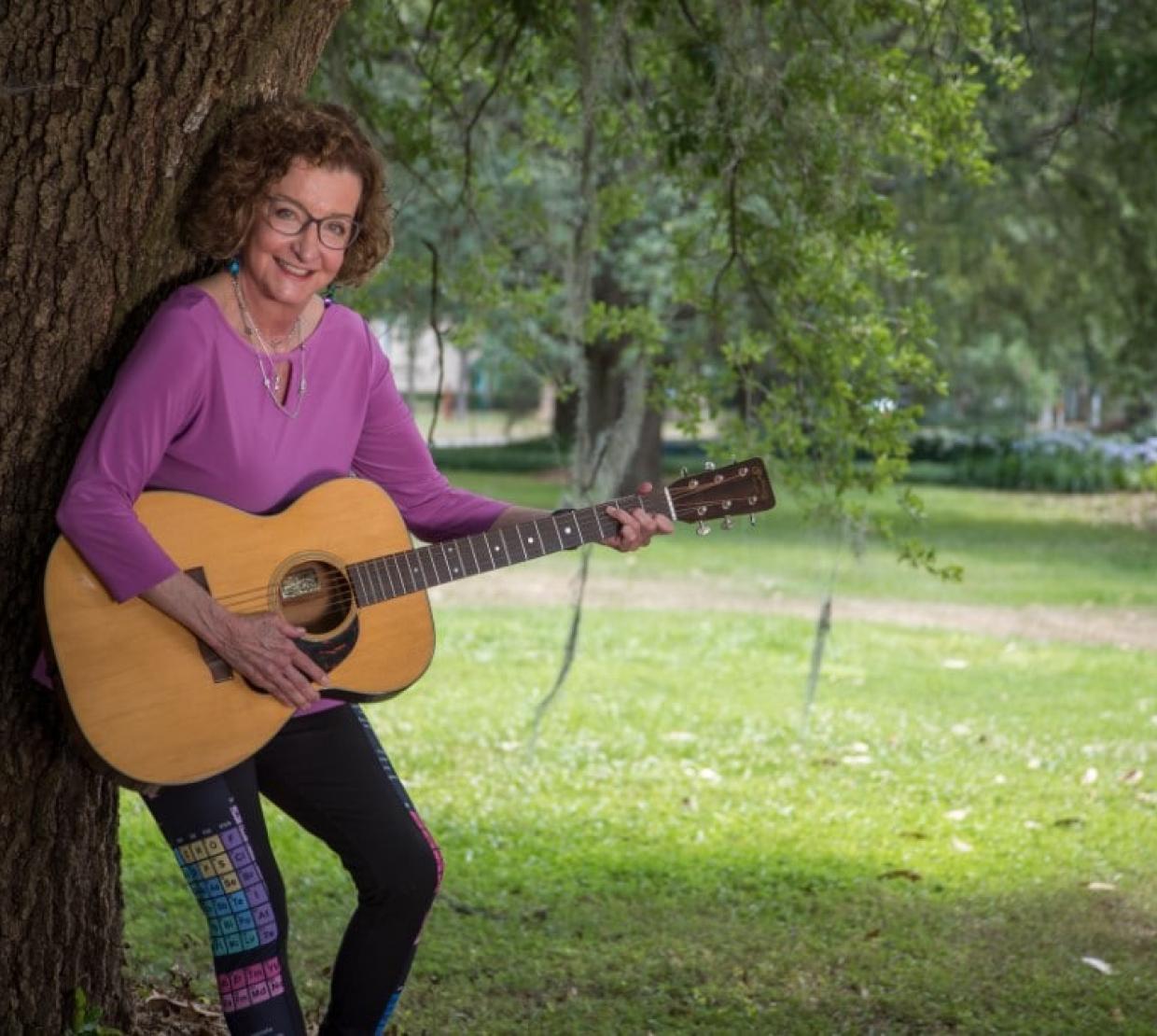
March 8, 2022, is International Women’s Day. The College of Science is celebrating the day with a Change Makers in Science talk by Laura Greene, Chief Scientist at the National High Magnetic Field Laboratory and physics professor at Florida State University. Her talk entitled, “Journeys from Music in Cleveland to Quantum Materials Worldwide,” will discuss her journey in physics leading to her position at MagLab and the exciting field of quantum mechanics. RSVP for this here.
Following the keynote speech, there will be a panel discussion on negotiation skills aimed at beginning scientists featuring accomplished and notable female faculty members in the College of Science. The panel members will discuss specific tools and approaches that increase one's effectiveness as a negotiator through the lens of gender, with an eye towards research on gender issues. Panelists joining Professor Greene include:
- Sally Hacker, professor of Integrative Biology
- Marilyn Mackiewicz, assistant professor of Chemistry
- Afua Nyarko, assistant professor of Biochemistry & Biophysics
- Rebecca Vega Thurber, Emile F. Pernot Distinguished Professorship in Microbiology
The panel will be moderated by Vrushali Bokil, associate dean of research and graduate studies for the College of Science.
The event will take place in Oregon State University’s Memorial Union Ballroom and online via Zoom. It is open to the wider Oregon State University and Corvallis community. RSVP now.
Laura H. Greene is a physicist and expert in quantum mechanics known for her discoveries and research in unconventional superconducting materials and high magnetic fields. A member of the U.S. National Academy of Sciences, Greene is the former president of the American Physical Society (2017), vice president of the Executive Council of the International Union of Pure and Applied Physics, and a member of the U.S. Department of State-supported COACH team, promoting success and impact of women scientists, particularly in developing countries.
Abstract: As a young folk-rock music girl in the east side of Cleveland, I had no idea I could consider a career in science. I don’t know if I was hard-wired for it at birth or “bitten by the science bug” at an early age, but it was just what I needed to do. I always feel lucky and honored to be a scientist; but there sure have been real challenges! I will discuss some of my journey in physics, always fueled by passion for this “seductive and consuming” field. Then, after a short overview of the MagLab, I hope to get across how exciting the field of quantum materials is – and how much we have to learn!
Agenda
Memorial Union Ballroom and virtually via Zoom
1:30 - 2 p.m. - Keynote speech: Dr. Laura Greene
2 - 2:15 p.m. - Q&A session
2:15 - 3 p.m. - Negotiation skills panel
Related Stories
Across the Department


Microbiologist Maude David's startup, Microbiome Engineering, analyzes environmental and human ecosystems and develops innovative technology for sensing the microbiome world.
The College of Science is at the heart of a flourishing new ecosystem of entrepreneurship and high-impact scientific and technological innovations. Among other breakthroughs, these include: high-performance thin-film technology to revolutionize electronics and energy; genetic studies of the human microbiome for better treatment of autism spectrum disorder; and the engineering of new proteins for therapeutic applications.
These path-breaking innovations from the College of Science at Oregon State University hold answers to critical problems in the environment, energy and healthcare.
Research innovations from the College have garnered global recognition and record-breaking competitive federal and industry research funds. In 2020-2021, the College’s research awards rose to $24.4M, a 55% increase over the average of the previous three years and one of the highest award levels ever. The previous year’s total was $15.82 million.
Seed funding from the College has helped support highly ambitious and expansive projects, making it possible for our scientists to delve into fundamental research discoveries that can be ramped up to revolutionary applications. Between 2019 and 2021, the College’s Science Research and Innovation Seed Program (SciRIS) provided $763K in seed funding to scientists leading research projects in both basic and applied science and mathematics with the potential to produce practical solutions for industry, people and the planet.
“OSU science leadership has literally reached across the globe. Our scientists achieved award-winning success even in the midst of pandemic challenges,” said Roy Haggerty, Dean of the College of Science. “They produced knowledge, generated innovations and inspired national policy to promote economic, social, health, cultural and environmental progress for the people of Oregon and beyond.”
Advancing clean energy alternatives
A $1.1 million award from the Department of Energy’s (DOE) Small Business Innovation Research will help University Distinguished Chemistry Professor Douglas Keszler ’s company nexTC Corporation pioneer innovations for a clean energy future. The funds will enable nexTC to develop new technologies to improve solar module performance and lower materials cost.
The awards are administered by DOE’s Small Business Innovation Research (SBIR) and Small Business Technology Transfer programs, which were established to encourage diverse communities to participate in technological innovation, as well as create a bridge between DOE-supported science breakthroughs and viable products and services for the commercial market.
Keszler, a renowned materials chemist and a leading figure in the field of new generation semiconductor and solar energy devices, is known for spearheading several companies at Oregon State and in Corvallis that are regarded as nationally important centers of chemical innovation. Keszler is the founder of nexTC and serves as its science advisor.
The corporation, led by CEO Cory Perkins, a former postdoctoral scientist in Keszler’s lab, has carved a niche for itself by innovating in the area of high-performance, low-cost state-of-the-art thin film manufacturing processes that enhance energy conversion and energy efficiency. NexTC is noted for inventing several thin-film technologies for environmentally friendly electronics and energy efficient products such as smart windows.
Associate Professor of Physics Matt Graham and colleagues received the College of Science Industry Partnership Award to support their project converting waste heat to electricity. This new award from the College’s seed funding provides critical resources for projects that take a new direction, utilize a new technology or are in the “proof-of-concept” phase.
This project will engineer a prototype device that converts waste heat to clean energy, in partnership with Peter Orem of ThermaWatts LLC, Renton, WA. The goal is to achieve a cost-performance level that allows the device to be viable for part of the potential power supply market, enhancing the accessibility of sustainable energy. ;
Taking microbiome research to new heights
Our scientists are spurring societal, environmental and economic impact with the support of Oregon State’s innovation and entrepreneurial centers such as the Oregon State University Advantage Accelerator. Among the several powerful startup concepts that have recently emerged from Oregon State is Microbiome Engineering (previously called Enoveo USA), which is redefining the study of environmental and human health through the lens of the microbiome resulting in the development of innovative technologies that address several challenging problems in environmental and human ecosystems.
The startup was founded by Maude David, an OSU assistant professor of microbiology, whose research focuses on the gut-brain axis and the impact of gut microbes on behavior, specifically in autism spectrum disorder (ASD) and anxiety.
With substantial momentum gained from a 2019 SBIR phase II $1.94 million grant, David and her team are exploring potential therapeutics for ASD by identifying differentiating factors within the microbiome of neurotypical children and those with ASD.
Endeavoring to carry David’s research-based innovation to the market, Microbiome Engineering is developing a gut brain chip that serves as a screening tool to rapidly assess the impact of gut microbiota metabolites on issues such as autism, depression and cognition.
Expanding the genetic code to engineer new therapeutics
A transformative project aims to bridge the gap between innovative biomedical research and the biotech industry. Professor of Biochemistry and Biophysics Ryan Mehl received two grants totaling $1.6M from a biopharmaceutical company partner for projects on the engineering of antibodies as therapeutics using genetic code expansion.
Mehl and collaborators received initial support from SciRIS Stage 2 seed funding that helped them develop the base technology for the engineering of nanobodies as diagnostic agents. Mehl and postdoctoral scientists in his lab will work directly with the partner's team on their projects to rapidly accelerate the project and achieve vital scientific milestones.
Mehl is also director of GCE4All, the world’s first Genetic Code Expansion (GCE) center, funded by the NIH at Oregon State at $5.6M. This newly-established center will accommodate burgeoning industry interest in GCE technology and catalyze advances to fabricate new nanomaterials and synthesize proteins with promising therapeutic functionalities.
“This is a new adventure for our lab working with Big Pharma. Another eye-opening change for us will be the pace of this project and important connections for future students. We expect this project will lead to valuable career options for our undergrads, grads and postdocs,” said Mehl.
Mehl’s collaboration with industry was supported by OSU Advantage programs, which has an impressive track record of driving cutting-edge research innovations toward commercialization and widespread societal utility and impact.
Related Stories
Across the Department

Climate and Oceans
Microbiologist receives $1.2M award to study microbes in a changing ocean
Faculty and Staff
Celebrating excellence in research: 2026 College of Science Awards

The College of Science is pleased to announce that five incoming graduate students were awarded 2021-2022 ARCS (Achievement Rewards for College Scientists) Foundation, Oregon Chapter scholarships. ARCS Foundation Oregon seeks to advance science and technology in the United States by funding graduate students. The scholarship provides $18,000 in financial support, payable over three years, to academically outstanding students who are U.S. citizens studying to complete Ph.D. degrees in science, engineering, mathematics, technology and medical research at Oregon Health & Science University, Oregon State University and the University of Oregon.
Through its efforts, ARCS Oregon has supported 301 young scientists with over five million dollars in scholarship funding and encouraged them to follow their scientific passions, earn their doctorates and further scientific knowledge. Funding is made possible through endowed funds, donors and chapter fundraising.
This year, ARCS Oregon is supporting a record number of 79 scholars: 25 at OHSU, 44 at OSU and 10 at UO. The scholars are chosen from selection committees at each institution.
This year’s new Oregon State College of Science ARCS scholars include:
Rand Burnette, Physics
Rand Burnette graduated from Kenyon College in 2021 with a B.S. in physics. Burnette is studying large scale physics such as cosmology, dark matter, dark energy and general relativity.

Rand Burnette
Erwin Cornelius, Mathematics
Cornelius received the Bergen/Kern Scholar Award from ARCS, given by Marilyn Bergen and Mary Kristen Tooze Kern. His research interests focus on machine learning methods, in particular random forests and neural networks and their applications to biological data.
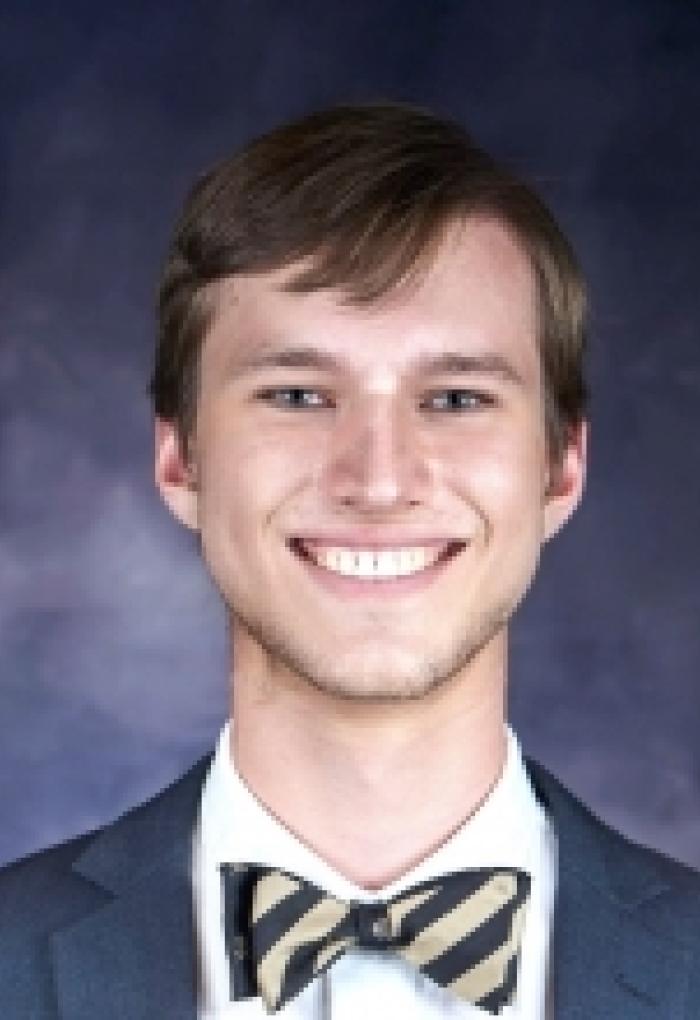
Erwin Cornelius
Lucas Kolanz, Physics
Kolanz received the Beth Ray ARCS Foundation Oregon Scholar award given by Edward J. Ray, former Oregon State University president, in memory of his wife Beth, a former ARCS member. Lucas’s research interests include computational physics, “atomic, molecular and optical” physics, biophysics, condensed matter theory and astrophysics.
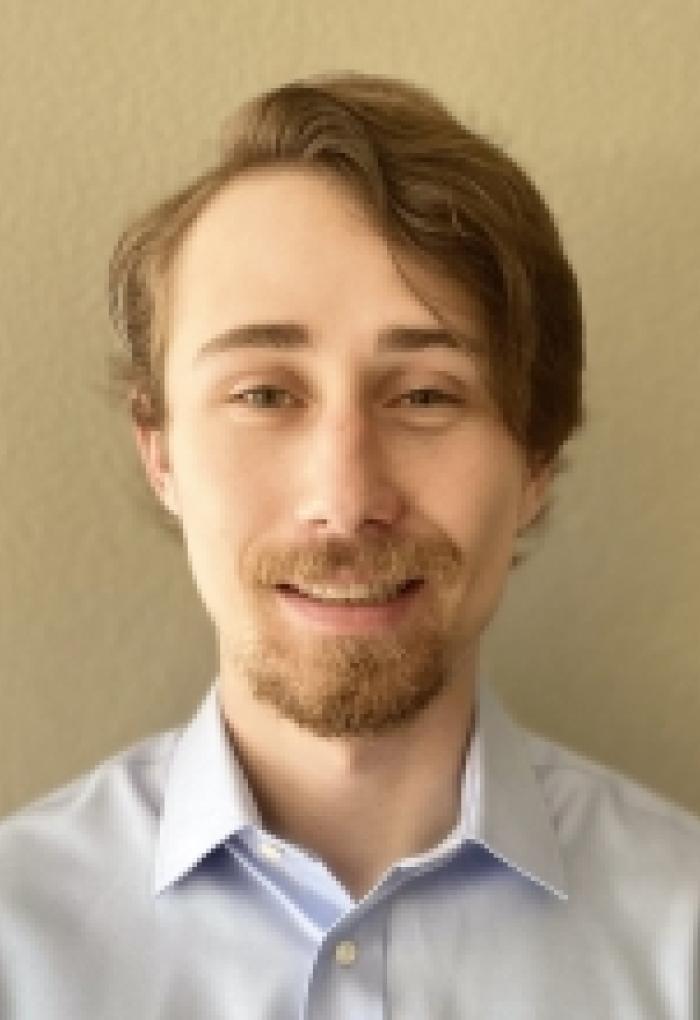
Lucas Kolanz
Sunni Patton, Microbiology
Sunni received the Jill V. Josselyn Endowed Scholar Award from ARCS Foundation Oregon. She received her B.S. in biology from Georgia State University in 2019. She will be working in the Vega Thurber Lab, pursuing research in coral microbiomes to better understand the effects of environmental and anthropogenic stressors.
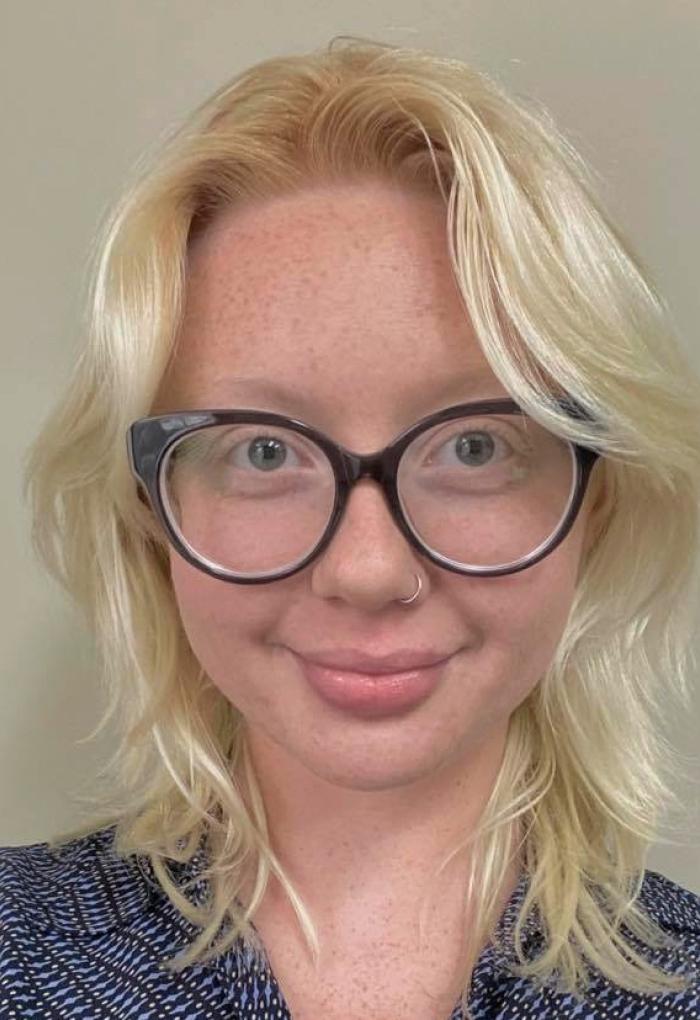
Sunni Patton
Hannah Stuwe, Biochemistry & Biophysics
Stuwe received the Bangsund Scholar Award. She obtained her undergraduate degree from Oregon State, graduating in 2019. Her research interests include biophysics, nuclear magnetic resonance, organic synthesis and natural product chemistry.
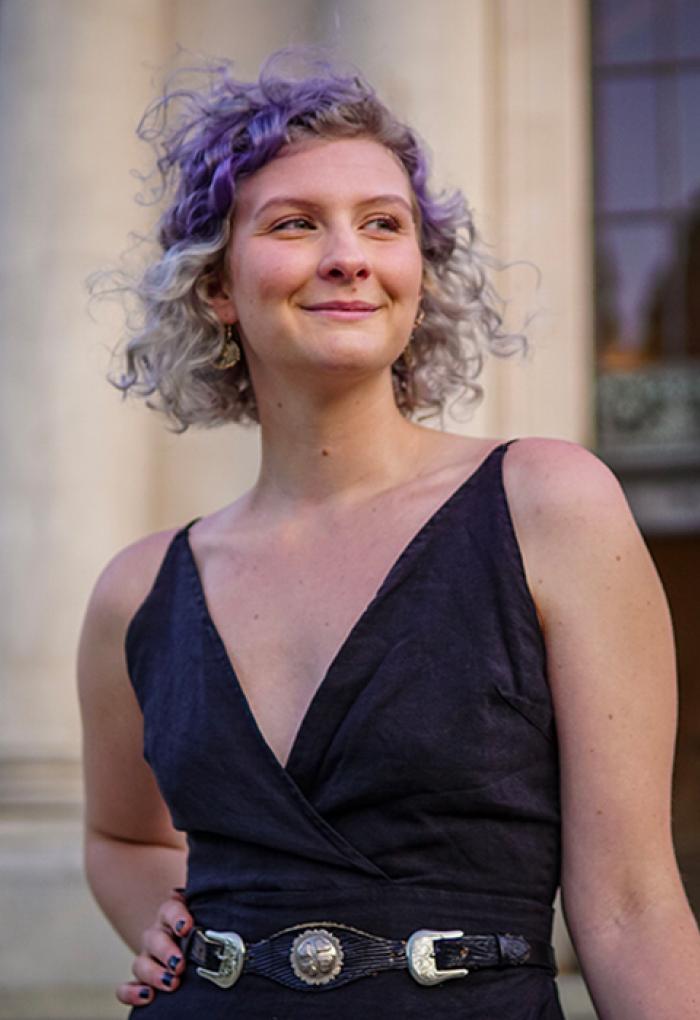
Hannah Stuwe