Students

Students

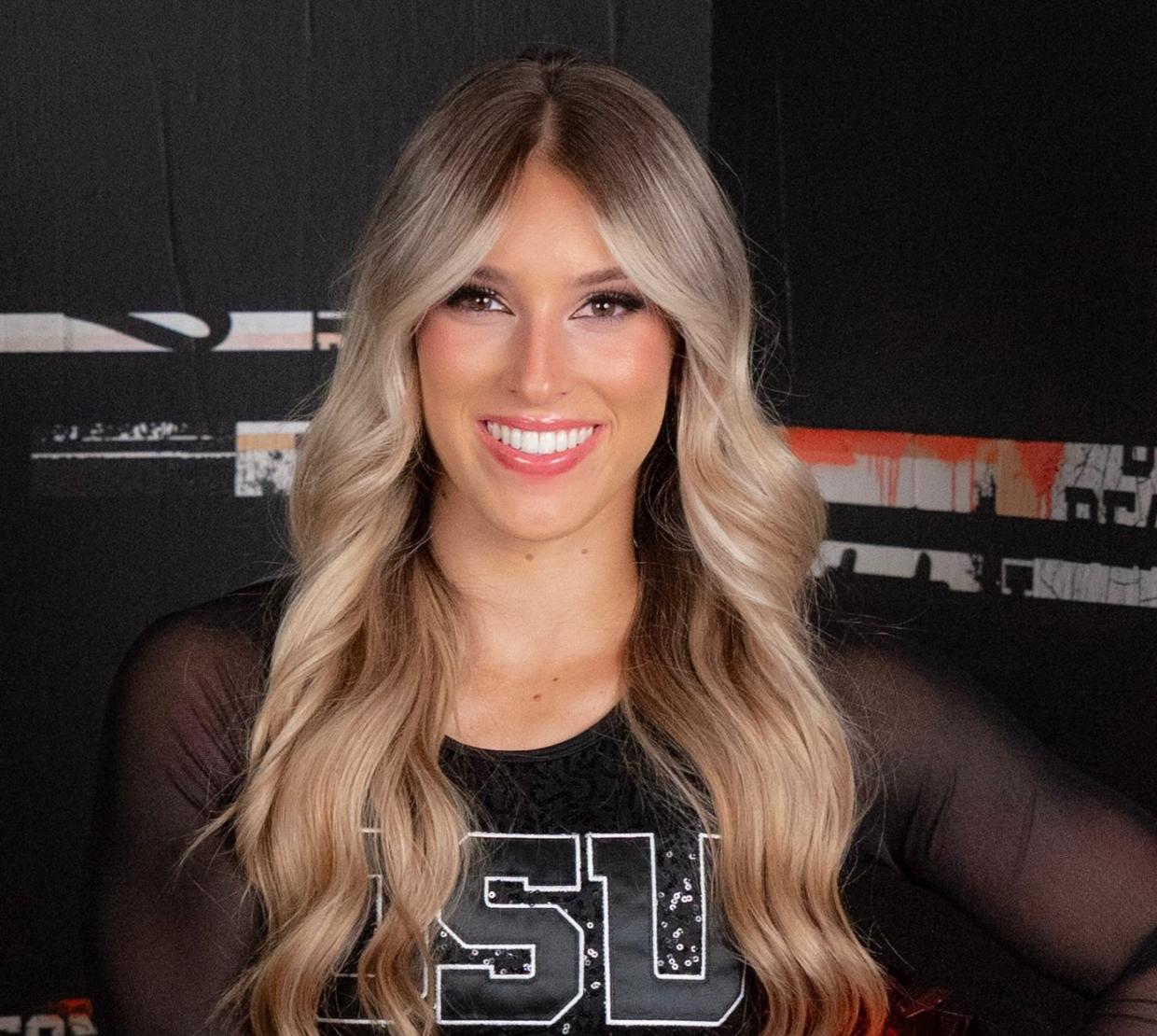
A headshot of a woman with wavy blonde hair smiling at the camera wearing a black OSU cheer uniform.

Samantha LeFore, Class of ‘26: BioHealth Sciences senior, OSU cheer captain, future physician

By Elana Roldan

It takes unique courage to face thousands of people. Performing gravity-defying stunts at the same time would send shudders down most people’s spines. But armed with pompoms and an orange-and-black uniform, Samantha LeFore shines under the eyes of Beaver Nation.

“I remember my first time running out into Reser Stadium, standing in the middle of the field and staring at all these people. It's pretty crazy, but honestly, I love it,” she said. “You can really be in the moment and think, ‘Wow, this is such a unique experience.’”

For the graduating BioHealth Sciences senior, life at Oregon State has been a high-energy balancing act between the intensity of urgent care and the sidelines. As she prepares to transition from the football field to medical school, LeFore is leaving behind a legacy of leadership, resilience and a deep-seated commitment to community.

Drawn to medicine

A career in science wasn’t something LeFore inherited. Growing up in Beaverton, Oregon, neither of her parents worked in medicine, but a high school health-careers program sparked a curiosity that changed her trajectory. After earning her medical assistant certification through the program, she realized she was bound for a health profession.

“I chose the BioHealth Sciences major because it was perfect for pre-med,” she said. “I’ve loved all my classes since.”

At OSU, that curiosity deepened into a fascination with the mechanistic side of the human body. While the complexities of biochemistry and immunology can be intimidating, LeFore thrived in the details.

“I don't like just knowing why something happens,” she explained. “I like to go super detailed and know the exact pathways.”

This drive to understand the "how" behind human health ultimately led her to pursue medical school.
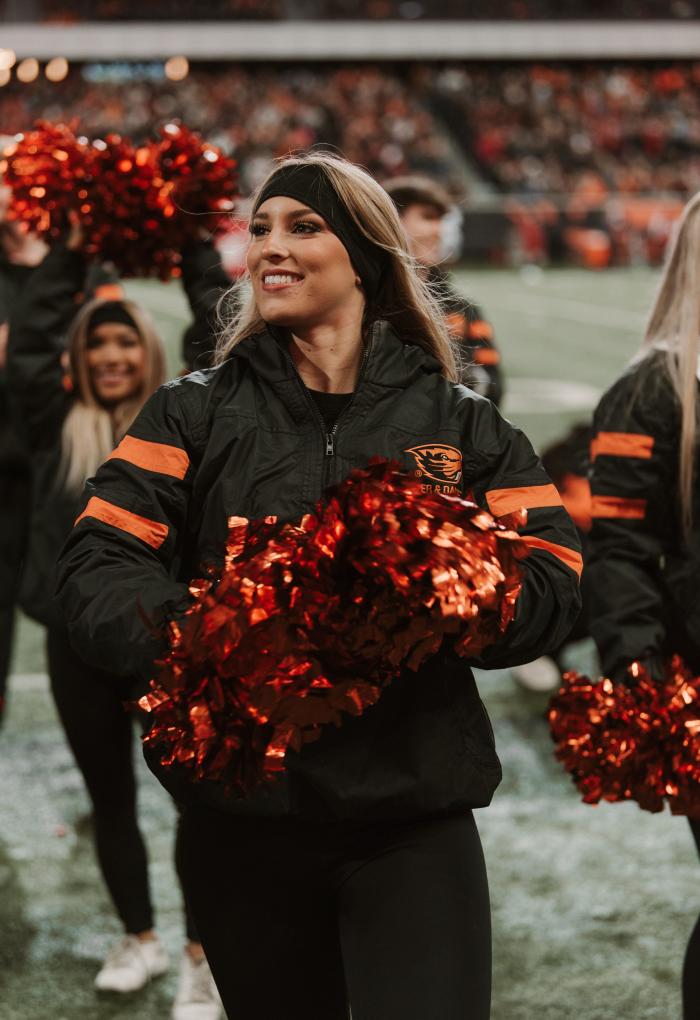

A woman wears a black jacket with orange accents and holds orange-and-black pompoms on a football field, smiling while she looks out to a crowd beyond the camera.

LeFore's leadership is seen on and off the field as cheer team captain and aspiring physician.

LeFore didn't just study science in the classroom. She lived it in the Koley Lab at the Linus Pauling Institute. For more than a year, she has assessed calcium ion-selective electrodes that would provide a noninvasive alternative to drawing blood. This method of measuring calcium in biological samples — such as saliva — can help monitor diseases including arthritis, tooth decay and osteoporosis.

However, the road to innovation was filled with troubleshooting. LeFore recalls spending months on a hydrogel experiment only to have to rebuild the protocol entirely.

“Research is a lot harder than I expected,” she said. “It teaches you to be super resilient and just keep going even though most of the things you do don't work out. It’s made me learn I can do hard things.”

Cheering and leading

While her days are spent using potentiometry to detect calcium concentration in saliva, her evenings are spent stunting. A cheerleader since she was eight, LeFore took a break during her first year before realizing how much she missed the sport. She joined the OSU team as a sophomore and rose to become captain in her senior year.

As captain, she learned that team culture is often more important than performing the most advanced skills. She also found surprising parallels between leading a cheer squad and her future career as a physician.

“Physicians are in a leadership position,” she noted. “I’ve been reflecting a lot about my position, learning from my leadership now so I can apply that in the future.”

Beyond the lab and the stadium, LeFore works in urgent care as a medical assistant. At The Corvallis Clinic, she takes vitals, cleans wounds and administers medications and immunizations. It is here that her scientific background meets her love for the community.

Three woman in orange OSU cheer uniforms stand beside each other, holding pompoms and smiling at the camera in a Portland news studio.

LeFore's wide range of interests have taken her from emergency rooms to Portland news studios.

Working alongside physicians, physician assistants and nurse practitioners has solidified her decision to pursue a medical degree. She is particularly interested in surgical specialties and becoming an OB-GYN, drawn to the balance of performing procedures and building long-term trust with patients.

From captain to doctor

As she navigates the year-long process of medical school applications, LeFore is bolstered by the support systems she’s found as an undergraduate. As a BioHealth Sciences major, the pre-med Canvas page and advising team have been crucial guides during this complicated step on the path to medicine.

“It's a lot at first, but as I've kind of broken it down and been able to use the resources at Oregon State, it's been super helpful."

“It's a lot at first, but as I've kind of broken it down and been able to use the resources at Oregon State, it's been super helpful,” she said. “We have great advisors here, like Maureen Leong-Kee. She has a pre-med Canvas page that lays out the entire application process and walks you through it.”

Aside from emphasizing these resources to prospective students, LeFore encourages anyone aiming for a health profession to dive in early and stay focused on their own journey.

“It’s important to focus on yourself and not the 50 pre-med people in your classes,” she advised. “Once you start accumulating these meaningful experiences, then it’s easier to get other ones.”

For LeFore, the busy schedule and the hard work have all been worth it. She credits her time at Oregon State with making her a more positive person and a more confident leader.

“I feel ready,” she said. “I have a strong ‘why’ for wanting to be a physician that I’ve demonstrated in my real life.”

Find out how the BioHealth Sciences major prepares tomorrow’s healthcare professionals here.

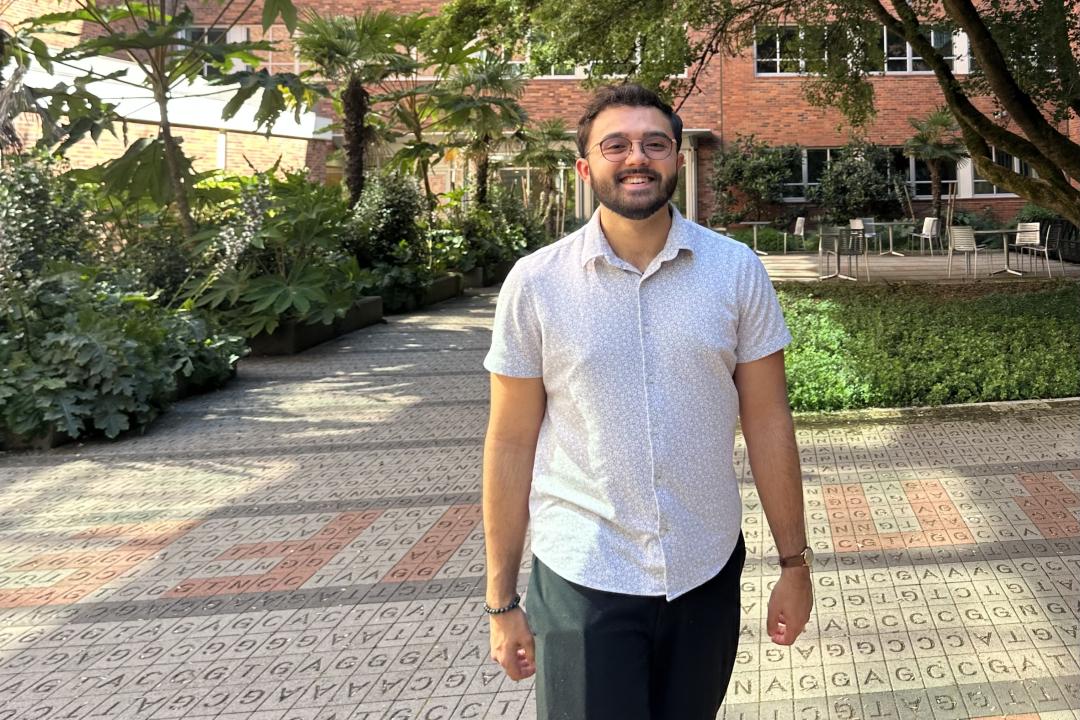
In a busy, sun-lit row lined with research posters, presenters and attendees, a young man in a button-up shirt discusses his poster with two others.

BioHealth Sciences student investigates addiction science at OHSU internship

By Elana Roldan

Qiying Ma was at the intersection of crisis and community. As a volunteer for the Chinese Friendship Association of Portland in January 2022, he navigated the aisles of a community vaccine clinic, acting as a vital link for local community members who did not speak English. Amidst the rush of the pandemic, he gained a spark for a career in healthcare.

“Witnessing how pharmacists provided culturally sensitive care during that particular time inspired me,” he said. “That propelled me forward on this track.”

Now a senior BioHealth Sciences major at Oregon State University, Ma’s journey has evolved from the front lines of community volunteering to bioinformatic research. At the center of that transformation is a prestigious, eight-week internship at Oregon Health & Science University through the OHSU Equity Research Program.

While his roots are in direct patient care, his time at Oregon State revealed a fascination with the molecular mechanics behind medicine. The strong foundation he built in undergraduate research at OSU bridged into the OHSU internship, where he learned to apply his skillset to the complex, exciting world of bioinformatics. After graduating at the end of this term, Ma will continue expanding his toolkit as he dives into pharmacy school in the fall.

Disentangling the data

Ma’s undergraduate research career began at the BEAVERS Lab, which conducts psychophysiological research on stress responses in relation to addiction. His work there focused on human subjects and used electromyography to assess stress responses when paired with alcohol.

“The research experiences at OSU pave a strong foundation for you to conduct research anywhere else,” he said. Now a seasoned member of the BEAVERS Lab, he has moved from student to teacher, mentoring new students with protocols and running experiments. Ma currently assists the lab in investigating how concussions affect stress response levels.

This combination of technical proficiency and leadership provided the ideal launchpad for Ma. By mastering protocols and learning the nuances of data collection, he developed the scientific grit needed to secure a prestigious summer role at one of the region’s top research institutions.

On a sunny day, a large group of people in business-casual attire stand and smile at the camera on a brick campus road lined with trees.

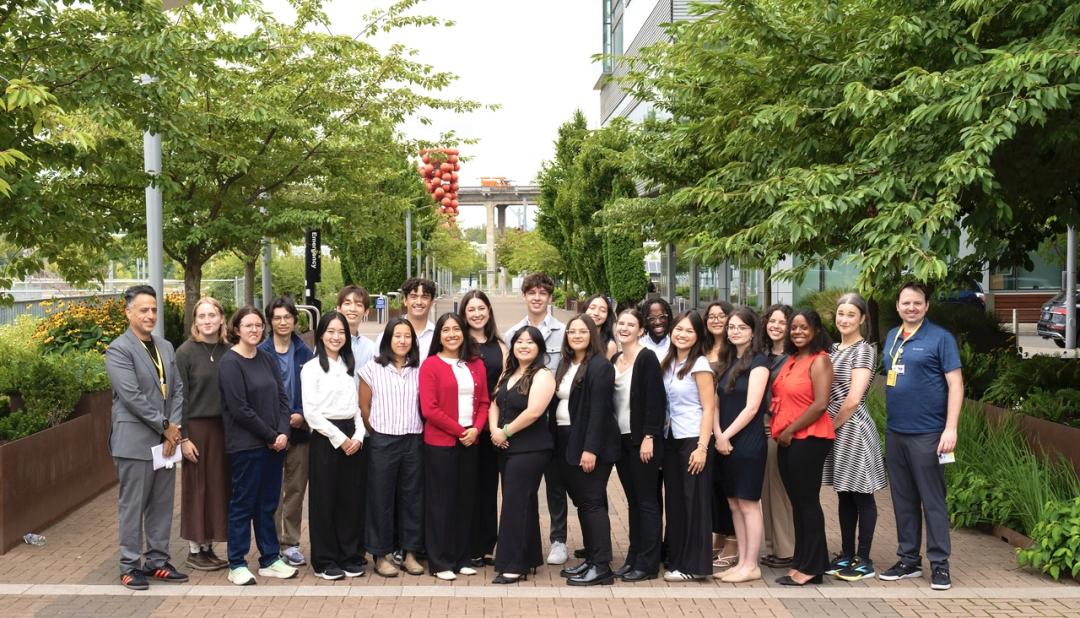
At his internship, Ma joined a cohort of 22 undergraduates from many backgrounds to conduct intensive research over the summer.

As he searched for potential research opportunities for the summer of his third year at Oregon State, Ma stumbled upon the OHSU Equity Internship Program. It quickly stood out as an outstanding opportunity: full-time research, free housing, workshops and networking with program alumni, and mentoring from healthcare professionals. Armed with the skills he learned in the BEAVERS Lab, he was thrilled to be accepted into the program.

Ma spent eight weeks at the Oregon National Primate Research Center, located in OHSU’s West Campus, working within the Bioinformatics and Biostatistics Core (BBC). Under the mentorship of Director Suzanne Fei, Ma pushed his boundaries into the world of big data.The internship focused on a critical question in addiction science: are drinking behaviors more influenced by the biological factors in the blood or the brain tissue itself? To investigate this, he analyzed RNA sequences from the monkey rhesus macaques and compared the data of distinct pre- and post-perfusion treatment groups.

“Perfusion is basically the removal of blood. So for pre-perfusion, blood is still circulating throughout the brain. But for post-perfusion, we remove the blood and instead use a different solution that mimics the components of the blood, keeping the brain cells alive,” he explained.

A man and a woman stand at both ends of a research poster, smiling at the camera. The man is in a button-up shirt and the woman is wearing a turquoise blouse.

Alongside research and networking opportunities, the OHSU program emphasized mentorship. Ma worked with Suzanne Fei, director of the Oregon National Primate Research Center’s Bioinformatics & Biostatistics Core.

This allowed the team to disentangle whether alcohol-associated gene expressions were coming from the blood or the brain tissue. Using a pathway enrichment analysis, a sophisticated computational tool, Ma identified notable differences between the two groups.

In the pre-perfusion group, where blood was still present, the data showed a significant enrichment of genes related to detoxification. In contrast, the post-perfusion group showed genes more heavily involved in developmental processes. His research concluded that blood-related factors play a stronger role than brain tissue in shaping drinking-associated changes in gene expression. This suggests separating blood-derived and tissue-derived signals is critical to understanding how alcohol impacts the brain.

The technical nature of the work was initially daunting. Coming into a bioinformatics role often feels like learning a new language, but Ma found that his background in BioHealth Sciences allowed him to bridge the gap between biological theory and computational output. The experience also highlighted for him the importance of persistence and following where your fascinations lead you.

“You don’t have to be good at everything. Just focus on what you are really interested in — that really helps you concentrate and produce something meaningful,” he said.

A strong foundation for a strong future

While the internship was a masterclass in data science, it also offered a broader professional roadmap. The networking workshops Ma attended helped him forge connections that showed how his interest in bioinformatics could complement his future career as a pharmacist.

“It provided an opportunity to get valuable insights into bioinformatics research and to explore the field as a future career option,” he reflected. “I gained invaluable mentorship and connections that I don’t think I would’ve otherwise.”

Ma’s journey has consistently widened in scope as he progressed, building from the vaccine clinic to his foundational undergraduate research to the summer internship. Yet, his core motivation remains rooted in the community he served during the pandemic. He views science not as an isolated academic pursuit, but as a tool for advocacy and better patient outcomes.

With pharmacy school acceptances already secured, he is ready for his next transition. His advice for prospective students is a testament to the mindset that carried him through eight weeks of intense analysis and four years of rigorous coursework: stay curious, and stay resilient.

“Always seek out opportunities and don’t hesitate to apply to those that align with your interests,” he said. As he looks toward the future, he carries the lessons and expertise he’s gained as a beav with him. “Trust the process, and you will end up where you’re meant to be.”

Applications to the OHSU Equity Research Program were open last year from Nov. 12, 2025 to Jan. 23, 2026.

A man poses for a photo with a mountain in the background.

Hands-on cancer research helps College of Science undergraduate gain confidence in the lab

By Hannah Ashton

Every summer, Oregon State’s Summer Undergraduate Research Experience (SURE) in the College of Science empowers students to turn curiosity into discovery, and in many cases, personal experiences into purpose. Backed by funding that allows them to fully immerse in research, students step into labs across campus to pursue projects that shape their future. From cancer biology to nutrition science, their journeys are defined by mentorship, resilience and the chance to see themselves as scientists.

“SURE gave me the chance to fully commit to the lab and prove to myself that I could do difficult things."

For Matthew Hines, it meant finding his confidence as a researcher.

A year ago, Hines couldn’t see himself doing research. A BioHealth Sciences and BioResource Research double major from Tualatin, Oregon, Hines envisioned a career in healthcare but doubted he had the skills or confidence to thrive in a lab.

That changed thanks to the STEM Leaders Program and SURE. The STEM Leaders Program helped Hines connect with Bo Sun, a professor in the Department of Physics, while SURE allowed him to fully devote his summer to research.

“SURE gave me the chance to fully commit to the lab and prove to myself that I could do difficult things,” Hines said.

Four men pose for a photo wearing pacific islander clothing.

Matthew Hines (far right) poses for a photo before Pasifika Fest 2025. The event celebrates the richness and diversity of Pacific Islander cultures.

Sun’s lab is researching multifocal breast cancer metastasis, a form of cancer in which multiple tumors arise in the same breast, and cancer cell invasion. Hines developed numerous wet lab skills, including making his own breast cancer tumors (spheroids), which are clusters of breast cancer cells used to make samples and replicate actual tumors. He then imaged these samples over several days to track the invasion patterns of the cells using confocal microscopy to look for any persistence and/or biased invasion.

Finally, he performed data analysis by processing the images through a machine learning program that highlighted different phenotypes of the cells and created stacked images of the spheroids to visualize them in 3D.

“It is important to understand how invasion happens, how fast, where it goes, because that knowledge can help healthcare professionals better diagnose and treat cancer,” Hines explained. “It feels good knowing the work could have a real impact.”

The experience wasn’t always easy. To analyze his results, Hines had to learn coding from scratch, something that felt overwhelming at first. “If you mess up one character in your code, it doesn’t work. It was frustrating,” he said. “But focusing on the bigger picture kept me motivated. Every figure I produced showed me I was making progress.”

A man in a backwards hat works at a lab.

Hines monitors the development of his spheroids, clusters of breast cancer cells used to replicate actual tumors.

Beyond technical skills, Hines credits SURE with helping him see failure in a new light. In science, failure is common. “It made me more creative in problem solving and gave me confidence I didn’t have before.”

Mentorship was another defining element. Hines built a stronger relationship with Sun and the graduate students in the lab, who guided him through challenges and encouraged him along the way. “The environment and the people you work with are one of the most important parts of any job,” he said. “Without that mentorship, I don’t think I’d be as motivated to keep doing research.”

Now, Hines plans to continue in Sun’s lab as he works towards his BioResource Research thesis. The experience confirmed his passion for healthcare and sparked a deeper interest in research, something he once thought was out of reach.

Since 2015, the Summer Undergraduate Research Experience (SURE) has funded more than 300 College of Science students to spend their summers immersed in discovery. Undergraduate research is a hallmark of science at Oregon State, with about half of students participating annually through programs like SURE, the Launching Undergraduate Research Experiences (LURE) program during the academic year, discovery-based projects embedded in courses and mentorship in faculty labs. Together, these multiple pathways to hands-on learning prepare students to explore their curiosity and build successful futures in science.

To learn more about undergraduate research opportunities in the College of Science click here.

A man in lab coat and gloves uses a pipet.

Shaping scientific careers through undergraduate research at Oregon State

By Hannah Ashton

Every summer, Oregon State’s Summer Undergraduate Research Experience (SURE) in the College of Science empowers students to turn curiosity into discovery, and in many cases, personal experiences into purpose. Backed by funding that allows them to fully immerse in research, students step into labs across campus to pursue projects that shape their future. From cancer biology to nutrition science, their journeys are defined by mentorship, resilience and the chance to see themselves as scientists.

For Jordan Indrawan, it meant channeling his own battle with cancer into studying the proteins linked to the disease. For Ashley Tran, it was finding a sense of belonging in a lab led by women of color. And for Matthew Hines, it was discovering a passion for research he once thought was out of reach.

Turning personal experience into purpose

At 16, Jordan Indrawan faced a life-changing diagnosis. During his junior year of high school, doctors discovered a germ cell tumor pressing against his lung. After months of chemotherapy and surgery, Indrawan survived the ordeal with a new perspective. “That experience was life-changing, of course, and made me realize that I want to contribute in some way to finding a cure,” he said.

That determination followed him to Oregon State University, where he found a home in the Department of Biochemistry and Biophysics. Originally a bioengineering major with an interest in prosthetics, Indrawan realized during organic chemistry that his true passion lay elsewhere. Encouraged by a friend, he switched majors and eventually joined the Accelerated Master’s Platform in biochemistry and biophysics.

“I’ve read research papers all the time, but I never thought I would be in one — at least at this stage."

A man in a white shirt walks across campus

The Summer Undergraduate Research Experience (SURE) gave Jordan Indrawn the chance to work in biochemist Colin Johnson's lab.

The Summer Undergraduate Research Experience (SURE) gave him the chance to fully immerse himself in lab work. Indrawan joined the research group of biochemistry and biophysics professor Colin Johnson, whose lab studies a family of proteins called Ferlins, which play a role in cell communication, growth and repair. Misregulation of these proteins is linked to conditions ranging from hearing loss to cancer. “Our goal is to understand how these proteins work in the first place,” Indrawan explained. “By knowing how they function, we can hopefully contribute to further research on diseases like cancers, muscular dystrophy and hearing loss.”

SURE funding made a critical difference in his ability to focus on research. Instead of splitting his time between lab and a job, Indrawan was able to spend the summer mastering experimental techniques — from purifying proteins and DNA to cloning cells and running anisotropy experiments on a fluorometer. Ainsotrophy tracks how molecules move and interact.

“All of the different skills I learned can be applied to any molecular laboratory, so it’s very much universal,” he said.

The summer also brought a milestone Indrawan never expected so early in his career: authorship on a scientific paper. After contributing to experiments on otoferlin binding partners, he saw his name included among the authors. “I’ve read research papers all the time, but I never thought I would be in one, at least at this stage,” he said. “Seeing my name felt unreal and rewarding.”

For Indrawan, SURE confirmed his commitment to cancer research. Whether in graduate school or the biotech industry, he hopes to continue contributing to discoveries that will help patients facing the diseases he once fought himself.

Finding inspiration in mentorship

Walking into the lab of Emily Ho, director of the Linus Pauling Institute, Ashley Tran immediately saw something that reshaped how she imagined her future. She found herself among a research team full of accomplished women, led by Ho, an Asian American principal investigator. For Tran, it was a sense of belonging she had never experienced before.

“It really shows that there’s a place for everyone,” Tran said. “I think it’s truly empowering to work in that environment.”

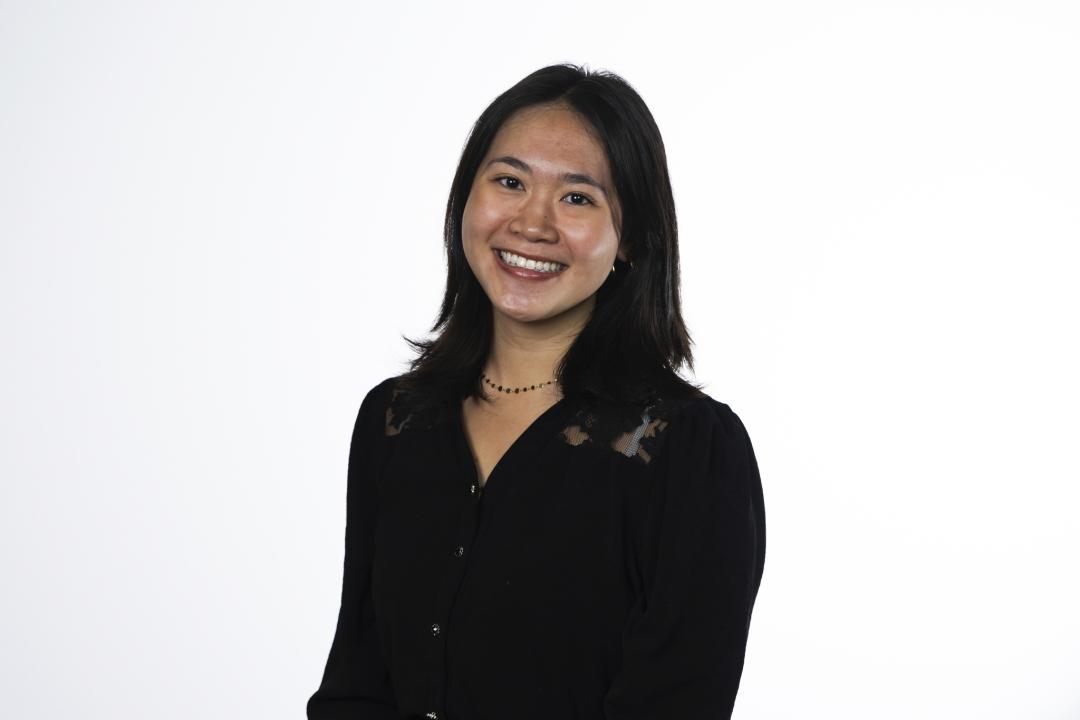
A woman in a black shirt poses for a headshot in front of a white background.

Ashley Tran, a junior biochemistry and molecular biology major, joined a research project investigating how eating walnuts might benefit memory, brain function and gut health in older adults.

A third-year biochemistry and molecular biology major from Tigard, Oregon, Tran was hesitant to try research. “I was a little nervous and definitely intimidated,” she admitted. The STEM Leaders Program, which serves a diverse group of first and second-year students, encouraged Tran to reach out to faculty, which led her to Ho’s health and nutrition lab.

Tran joined a project that was unique for undergraduate lab work, contributing to a clinical trial. Ho and her team are investigating how eating walnuts might benefit memory, brain function and gut health in older adults. Tran prepared walnut and control kits for participants, assembled urine collection supplies and processed samples of blood, stool and urine. “I am proud that I got over the fear of working with human samples,” she said. “At first the idea was shaky, but after a while it gets destigmatized and easier.”

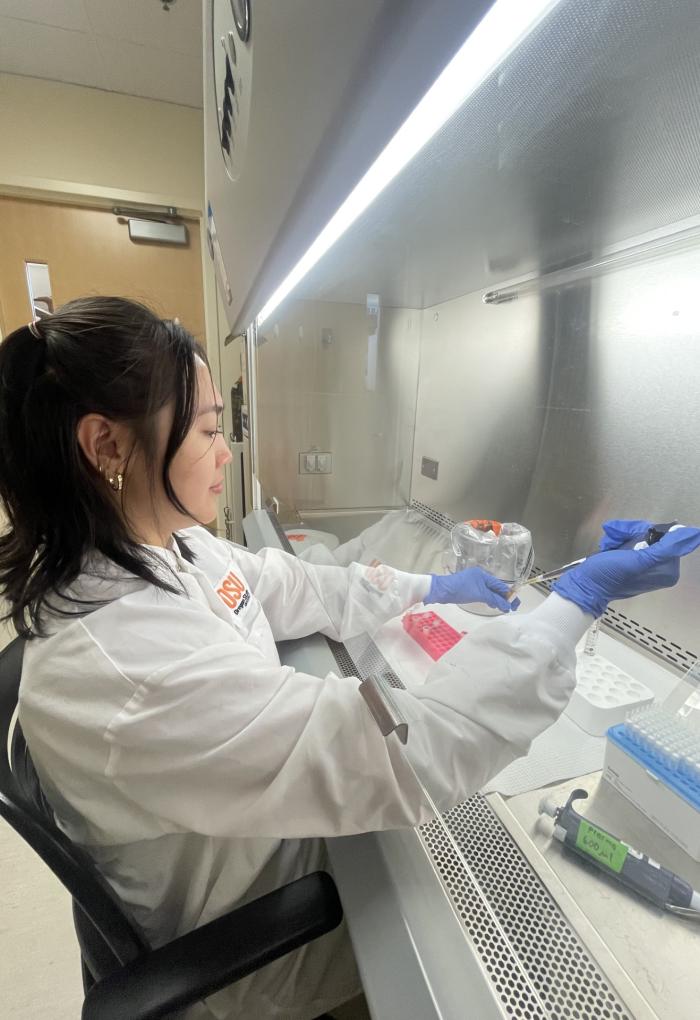
A woman in a lab coat works with a pipet.

Ashley Tran pipets plasma samples after centrifuging the blood from a participant in the walnut study.

The SURE program made it possible for her to commit fully to the project this summer. Commuting between Corvallis and her family in Tigard made unpaid lab work unrealistic. Without SURE, she would have missed more than just hands-on experience; she would have missed the power of mentorship.

Throughout the summer, Tran became close with Laura Beaver, a co-investigator on the study, who helped her find her confidence. “It was intimidating because they’re all incredible people who are very accomplished,” she said. “But once I got over that, it was all fine. You can ask questions because ultimately they want things to run smoothly and for students to succeed.”

That mentorship helped her navigate the challenges that came with the territory and experience personal growth as a scientist. Mistakes in processing samples or timing tasks were a part of the learning process. Tran also noticed how participants interpreted instructions differently, teaching her how variable human data can be.

Two women pose for a selfie holding ice cream.

Tran and her cousin (left) pose for a selfie with ice cream from the on-campus creamery.

Though research isn’t her long-term career path, Tran gained skills and perspectives that will support her future in medicine. She plans to continue shadowing neurologists and applying to medical school while holding on to the lessons she learned from her SURE summer. “Take note of opportunities. Even if you are scared, do it.”

From uncertainty to confidence

A year ago, Matthew Hines couldn’t see himself doing research. A BioHealth Sciences and BioResource Research double major from Tualatin, Oregon, Hines envisioned a career in healthcare but doubted he had the skills or confidence to thrive in a lab.

That changed thanks to the STEM Leaders Program and SURE. The STEM Leaders Program helped Hines connect with Bo Sun, a professor in the Department of Physics, while SURE allowed him to fully devote his summer to research.

“SURE gave me the chance to fully commit to the lab and prove to myself that I could do difficult things,” Hines said.

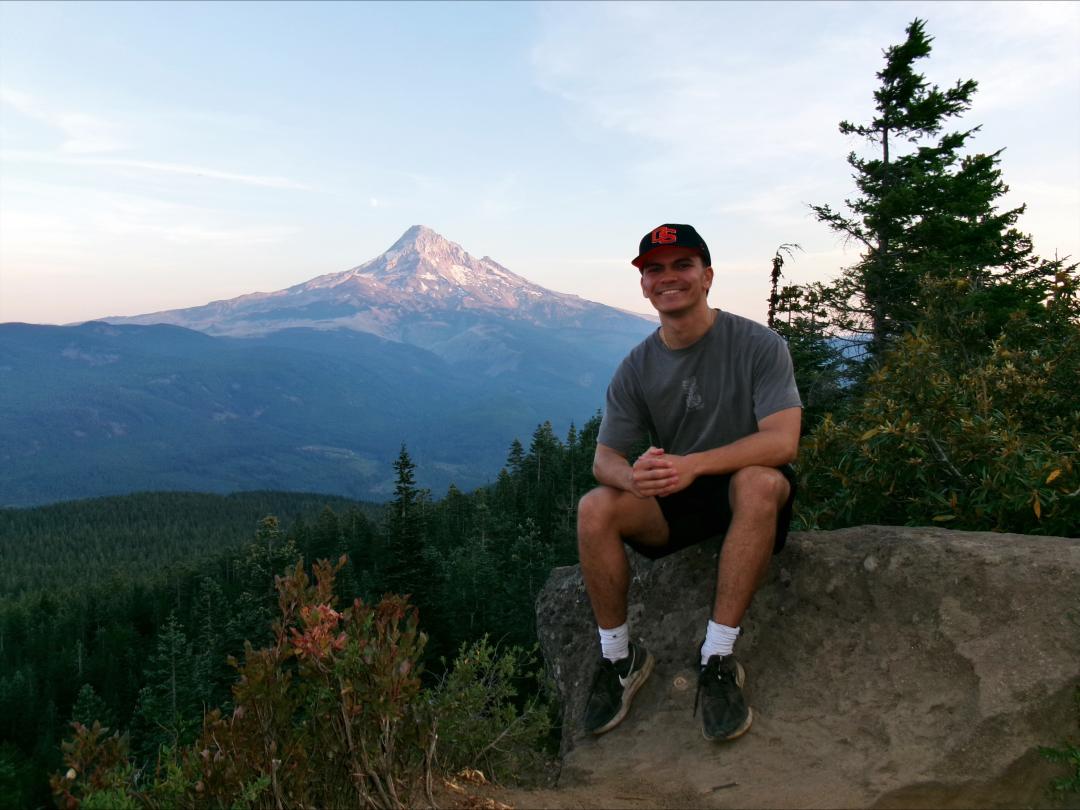
A man poses for a photo with a mountain in the background.

Matthew Hines poses for a photo while camping in Lost Lake, Oregon.

Sun’s lab is researching multifocal breast cancer metastasis, a form of cancer in which multiple tumors arise in the same breast, and cancer cell invasion. Hines developed numerous wet lab skills, including making his own breast cancer tumors (spheroids), which are clusters of breast cancer cells used to make samples and replicate actual tumors. He then imaged these samples over several days to track the invasion patterns of the cells using confocal microscopy to look for any persistence and/or biased invasion.

Finally, he performed data analysis by processing the images through a machine learning program that highlighted different phenotypes of the cells and created stacked images of the spheroids to visualize them in 3D.

“It is important to understand how invasion happens, how fast, where it goes, because that knowledge can help healthcare professionals better diagnose and treat cancer,” Hines explained. “It feels good knowing the work could have a real impact.”

The experience wasn’t always easy. To analyze his results, Hines had to learn coding from scratch, something that felt overwhelming at first. “If you mess up one character in your code, it doesn’t work. It was frustrating,” he said. “But focusing on the bigger picture kept me motivated. Every figure I produced showed me I was making progress.”

Four men pose for a photo wearing pacific islander clothing.

Matthew Hines (far right) poses for a photo before Pasifika Fest 2025. The event celebrates the richness and diversity of Pacific Islander cultures.

Beyond technical skills, Hines credits SURE with helping him see failure in a new light. In science, failure is common. “It made me more creative in problem solving and gave me confidence I didn’t have before.”

Mentorship was another defining element. Hines built a stronger relationship with Sun and the graduate students in the lab, who guided him through challenges and encouraged him along the way. “The environment and the people you work with are one of the most important parts of any job,” he said. “Without that mentorship, I don’t think I’d be as motivated to keep doing research.”

Now, Hines plans to continue in Sun’s lab as he works towards his BioResource Research thesis. The experience confirmed his passion for healthcare and sparked a deeper interest in research, something he once thought was out of reach.

A man in a backwards hat works at a lab.

Hines monitored the development of his spheroids, clusters of breast cancer cells used to replicate actual tumors.

Since 2015, the Summer Undergraduate Research Experience (SURE) has funded more than 300 College of Science students to spend their summers immersed in discovery. Undergraduate research is a hallmark of science at Oregon State, with about half of students participating annually through programs like SURE, the Launching Undergraduate Research Experiences (LURE) program during the academic year, discovery-based projects embedded in courses and mentorship in faculty labs. Together, these multiple pathways to hands-on learning prepare students to explore their curiosity and build successful futures in science.

To learn more about undergraduate research opportunities in the College of Science click here.

Ella Bailey wearing gloves and a mask, working with a teeth model, in a dental simulation lab at the OHSU Summit Program.

Ella Bailey, Class of ’25: BioHealth sciences major trains to be a dentist

By Kaitlyn Hornbuckle

After growing up in Fairbanks, Alaska, Ella Bailey answered a calling that made others smile: training to be a dentist. Thanks to the Western Undergraduate Exchange (WUE) scholarship, she developed a sweet tooth for Oregon State University.

With intensive training, job shadow opportunities and lifelong connections, her dreams were becoming a reality. But after her mother received a breast cancer diagnosis, Bailey wanted to drop out.

“Seeing your mom sick is really hard. I was supposed to come back to Oregon for training and work, but I didn’t end up coming. I was going to drop out and take time off, but my mom said I can’t, I have to go to school,” she said.

With her mother’s encouragement, she didn’t let anything stop her from learning how to be a dentist. She kept going. She built a support network and gained volunteer field experience during her time at Oregon State. And it was worth it.

Bailey is ready to graduate this spring with a bachelor’s degree in biohealth sciences. Over the next 10 years, she plans to complete dental school, own her own dental office and set up free volunteer dental clinics in Alaska.

“Crazy things happen to you in life and you just have to push through because you have no control over it. But after all of that, my mom is okay,” she said. “Now, my mom advocates for women’s health and goes to a conference in Washington D.C every year.”

Connecting with people and practices

Bailey loves challenging the status quo and looks up to her family as her strongest role models. Her grandmother Lisa was one of the first female forest firefighters in Alaska before becoming a middle school English teacher. Bailey’s mother served as a firefighter too.

Bailey was the first to break the generational firefighting chain, making her mark as a woman in science. As a child, she always felt comfortable at the dentist. After seeing how oral health was often overlooked and not accessible to everyone, she wanted to make a difference.

To be successful, Bailey needed a strong support system — and she found that at Oregon State. One of the first people she met became her roommate for three years and invited her to fun Thanksgiving dinners. Her roommate knew exactly what she wanted to do for a career and made it happen as a middle school English teacher, inspiring Bailey to not be afraid to reach for her goals, even if they’re difficult.

Ella Bailey smiles and celebrates with a group of women in colorful dresses.

Bailey (colorful dress, center left) helped plan and run Black Women’s Brunch in Corvallis to build a community.

While taking each stepping stone towards her science degree, Oregon State quickly became Bailey’s second home. Amid the rush of the academic year, one of her professors stood out. Her favorite course is Advanced Human Anatomy and Physiology taught by Integrative Biology Professor Devon Quick.

“I think she's one of the best professors that I've ever had,” she said. “She's very reasonable, open to questions, accommodating and approachable as a professor. She makes you want to attend class, be there, and learn.”

Outside of school, one of Bailey’s favorite outcomes in dentistry is making someone’s day a better one. Once a week, she shadows Dr. Martin Lindner and Dr. Charles Eric Jones at the Timberhill Dental office in Corvallis. One day, an older patient checked in to her appointment and the dentist asked if a student could observe.

“When I came in, she loved me,” Bailey said. “The patient said, “Oh my gosh, I love seeing women in science!” And she was so sweet. She told me that when she was my age, women were not allowed in science.”

If she’s not looking at teeth, Bailey is working in the Lonnie B. Harris Black Cultural Center and participating in an academic club for women called the Society of Scholarly Systems, where they host a variety of volunteer service projects. By collecting supplies and handing them out to the homeless population in Eugene, she found a way to make a difference outside of work and school.

“Everyone's path looks different. Do not judge your path compared to people around you."

Wanting to continue building her professional skills in Alaska, Bailey loves to visit her family and work at the same time. As an assistant at an orthodontist office, she started as a sterilization tech, making sure all of the spaces were clean.

Before long, she began assisting with orthodontic appointments, such as removing braces, holding suction tubes, taking impressions for retainers, and taking photos and x-rays of patient's’ teeth.

“The reason I even got the opportunity to work in orthodontics and became really interested in the dental field is because of the family who owns the office,” she said. Dr. Wentz and his wife Natalie Wentz became important mentors for Bailey. “Because I worked at that office, I was introduced to a number of orthodontists who have all been amazing to work with and learn from.”

Making people smile

Every time she returns to Oregon, Bailey wants to try something new. Inside an RV converted into a mobile dental clinic, she is one of several volunteers that offer free dental services. Anyone can sign up for a slot, and Spanish-to-English translators are available if needed. “It’s very eye-opening because they are really appreciative of us doing extractions or just kind of putting a Band-Aid on where we can,” she said.

Managing oral health can be expensive. Not everyone has a toothbrush or knows how to take care of their teeth, making hygiene difficult for some. People with diabetes are more prone to cavities, and poor oral hygiene can increase blood pressure.

“The first time I volunteered, I was assisting by holding the suction tube and handing instruments,” Bailey said. “This one patient had something that really bothered her and the dentist fixed and extracted her tooth. She turned to me and held my hand, and said, “Thank you so much.””

Ella Bailey wears orange Beaver gear with a group of friends inside the stadium (left) and outside the stadium (right).

Bailey celebrates beaver spirit with her friends at an Oregon State football game.

Throughout her adventures at Oregon State, professional mentors and heartwarming friends always offered a helping hand when she needed it most. When trying to find the right path for her, she found the support, both inside and outside the classroom.

“Everyone's path looks different. Do not judge your path compared to people around you. It’s easy to do that in college, especially in your twenties. Take pride in where you're at and what you're doing,” she said. “You deserve to be here.”

People on top of a mountain.

Auria Lee, Class of ’25: Adventure, research and leadership shape future doctor

By Tom Henderson

Auria Lee plans to go to medical school, but her training as a physician truly began as an undergraduate Honors biochemistry major at Oregon State.

Driven by a deep curiosity and commitment to service, Lee has made the most of her undergraduate years. She co-founded a chapter of an international medical humanities group, interned in cardiovascular research at Michigan Medicine, taught paramedics in India, and climbed Mount Hood through a leadership program—all while completing the Accelerated Master’s Platform in public health. Her wide-ranging experiences have shaped her into a resilient, compassionate and globally minded future physician.

From the forests of Oregon to a hospital in India, these opportunities — made possible through the College of Science — have already done a lot to make her a better future physician. Along the way, she’s built a strong foundation in science, public health and cross-cultural communication that will serve her in medical school and beyond.

"I knew I wanted to be a medical doctor from a young age and was excited to study biochemistry so I could have an in-depth knowledge of how the body works, how it interacts with the environment and how it interacts with medications and treatments I might be prescribing as a doctor someday," Lee said.

"I was curious to know how life works on a deep level and wanted to be able to provide quality care for my future patients," she said.

Headshot of a girl in a white shirt.

Auria Lee is graduating with an Honors degree in biochemistry.

A lifelong calling

Lee, who grew up in Montana and Oregon and graduated from South Eugene High School, said she developed her interest in medicine on her own.

"I always had a sense that I was going to be a doctor, even though I didn't have any doctors in my family or around me," she said. "As I got older, I realized more and more how medicine aligns with who I am. You have the ability to significantly affect patients' lives and play a leadership role in their care, and health care is something that everybody in the world needs."

Medical care is particularly important in rural areas like Montana, she added. "There's a lot of need for medical doctors,” she said. “I was excited to make a difference in communities like mine. I'm interested in living there when I finish medical school."

Lee said she had few interactions with health-care providers until coming to the Honors College at Oregon State. "The dean helped connect me with some Honors College alumni," she said. "They really helped show me what practicing medicine looks like. They're absolutely amazing physicians, so being able to shadow them was definitely influential."

She chose Oregon State over a small private school in Texas.

"Oregon State had so many opportunities," said Lee. "Just the size of the school, being so big, really attracted me. I just thought with so many opportunities at Oregon State that I would be really happy in Corvallis. I found it easier to focus on my studies because I have the support I need here."

A group of students post in medical scrubs.

Auria Lee (second from right) and her lab mates in anatomy pose for a photo.

Growth through outdoor leadership

Although she served as a learning assistant in advanced anatomy and physiology, it was a Wilderness First Aid and Mountaineering course that proved most influential. It led to her involvement in Oregon State's Adventure Leadership Institute. The 78-year-old institute provides students with outdoor adventures and leadership education.

"It made me realize how much the outdoors could add to my own personal growth and the relevance it has to my future career as a doctor and a scientist," said Lee, who also earned a certificate in Adventure Leadership.

"I leaned into that and took an awesome class called Principles in Adventure Leadership with Sheila Evans," she added. "I learned about facilitation of adventure, risk management and other paradigms. It was cool to see the parallels between that and how it will look to walk a patient through a challenging or scary time and have that deeper level of presence."

It also helped her overcome her own fears and be more mentally grounded, she added.

"I was scared and so much was unfamiliar, but learning to navigate that made me a lot more resilient," she said. "I even climbed to the summit of Mount Hood. That shows a lot of growth as a result of what I've learned from the Adventure Leadership Institute."

A woman on a stage teaching students in India.

Auria Lee acts as a volunteer teacher in India while completing a medical observership.

Global experience, local impact

Lee spent August and September of 2023 as an observer and teacher at Ramaiah Medical College in Bengaluru, India. She taught English, anatomy and CPR at the school's program for paramedics.

"I learned a lot from the culture," she said. "I learned how to deliver information across language and culture barriers, just some very important communications principles. I also made some significant connections.

"One of the things observing at the medical school taught me was the importance of community-based care and an expanded health-care model," she added. "The United States is lacking in that regard. We're pretty centered on doctors. However, as more and more scarcity makes it harder to see doctors, I can see those concepts becoming important to apply.

"Overall, I learned how to be extremely adaptable and see through other people's points of view," she said.

The experience also inspired her to pursue becoming a birth doula and provide physical and emotional support and information to parents during the birth process.

A group of student pose for a photo in a classroom.

Auria Lee poses for a photo with her learning assistant team in anatomy.

A leader on campus and beyond

Back in Corvallis, Lee co-founded the Oregon State chapter of Students for Health Humanities, an international group. Chapter members worked with local nonprofits, hosted speakers and generally explored the holistic and humanities side of medicine.

Lee was in the Accelerated Master’s Platform for public health during her senior year. Part of her summer plans include finishing her master's degree in public health online. She also plans to return to Michigan Medicine, the academic medical center of the University of Michigan, where she pursued an internship in cardiovascular medicine last summer.

She conducted registry-based medical research, resulting in a project on the practical and ethical considerations in non-surgical management of acute Type A aortic dissection (where the inner layer of the main artery carrying blood from the heart tears and creates a new channel between the layers of the aorta).

The program emphasizes medical decision-making. This year, she will help manage the program.

Then there is the matter of medical school. She is still deciding between programs.
"I love emergency medicine and family medicine," Lee said. Then again, she added, she won't really know until she gets to medical school. "I can't know what will be the best fit," she said.

Wherever her medical education and career take her, Lee said she laid a solid foundation for it all during her undergraduate years in Corvallis.

"Every step along the way, Oregon State has had so many opportunities for me," she said.

A family stands together in the snow.

Auria and her siblings in their home state of Montana.

Sophie Krueger (right) plays on the newly revived women's polo team when she's not studying biohealth.

OSU Polo Club is back in the saddle this year

By Molly Rosbach

A few weeks ago, you may have noticed a miniature horse standing in the SEC Plaza, munching on a pile of alfalfa and helping draw attention to a student fundraiser.

While Cookie is not an athlete herself, she graciously helped spread the word about the resurgence of OSU’s Polo Club, which is back in competition now after several years of hiatus due to the COVID-19 pandemic.

For arena polo, teams consist of three people on horseback, often standing up in their saddles to swing mallets and send a ball flying through goals at either side of the field. Games are made up of four “chukkers,” each about seven minutes long, and after each chukker, the teams swap out horses for fresh ones so the animals don’t get worn out. Additionally, the teams swap horses with each other, so neither side gains an unfair advantage from a particularly talented mount.

The OSU club originally started in 1923 and has endured despite several lengthy breaks over the decades.

“We had a really strong team before COVID; the men’s team won regionals a couple times in the past, and women’s did really well too,” said Sophie Krueger, a third-year honors biohealth sciences major in the College of Science and the Polo Club vice president. “Since COVID, this is the first year we’re getting back on our feet and getting more consistent members.”

Read the full article on OSU Today.

A collection of booths at the 2022 Health Professions Fair looking to connect students to medical schools.

Jumpstart your healthcare career at OSU’s Health Professions Fair!

By College of Science Communications

Admissions representatives from more than seventy health professions programs across Oregon and the United States will travel to Oregon State to meet with students at the Health Professions Fair.

April 22, 2025
10 a.m. to 2 p.m.
OSU Dixon Recreation Center Lower Gym.


According to U.S. News and other surveys, healthcare is one of the fastest-growing industries. The Bureau of Labor Statistics predicts that employment growth in this sector will be much quicker than the average for all jobs by 2026.

Students interested in this industry can connect with professional schools and graduate programs with specializations in the health-care industry while also learning about graduate education and careers. The Fair hosts schools representing health professions programs in medicine, osteopathy, dentistry, pharmacy, chiropractic medicine, nursing, physical therapy, public health, health management and administration, biomedical sciences and several others. More than 500 students attend the Health Professions Fair each year.

Students are welcome to stop by anytime during the Health Professions Fair, which is free and open to all majors. Volunteers will be on hand with a list of participating schools and a map of their table locations. Students can visit a school’s table to pick up information materials and speak with admission representatives.

Something for everyone

The health fair is open to all undergraduates and alumni.

First and second year students can explore health professions options, build networks and get tips from admission representatives on undergraduate preparation and co-curricular activities.

Juniors, seniors and alumni will have opportunities

  • to learn about specific programs from admissions representatives of various universities,
  • collect application materials and obtain financial aid information, and
  • get tips on writing a personal statement, application, and letters of reference.

Preparing for the Fair

Students can connect with representatives of graduate health programs from schools such as Oregon Health and Science University, University of Southern California, Tufts University, Pacific University, Idaho College of Osteopathic Medicine and many more.

See a list of participating schools


Prioritize your list of schools and brainstorm questions for admissions representatives to make the most of your Fair time. Here are a few ideas to get started:

  • What is unique about program X at your university?
  • What types of courses would I take in program X?
  • What hands on components does program X offer (internships, rotations, etc.)?
  • What does your admissions committee look for in an applicant?
  • I read about X on your website. Can you tell me more about that?

For more information, please visit the Health Professions Fair event page.

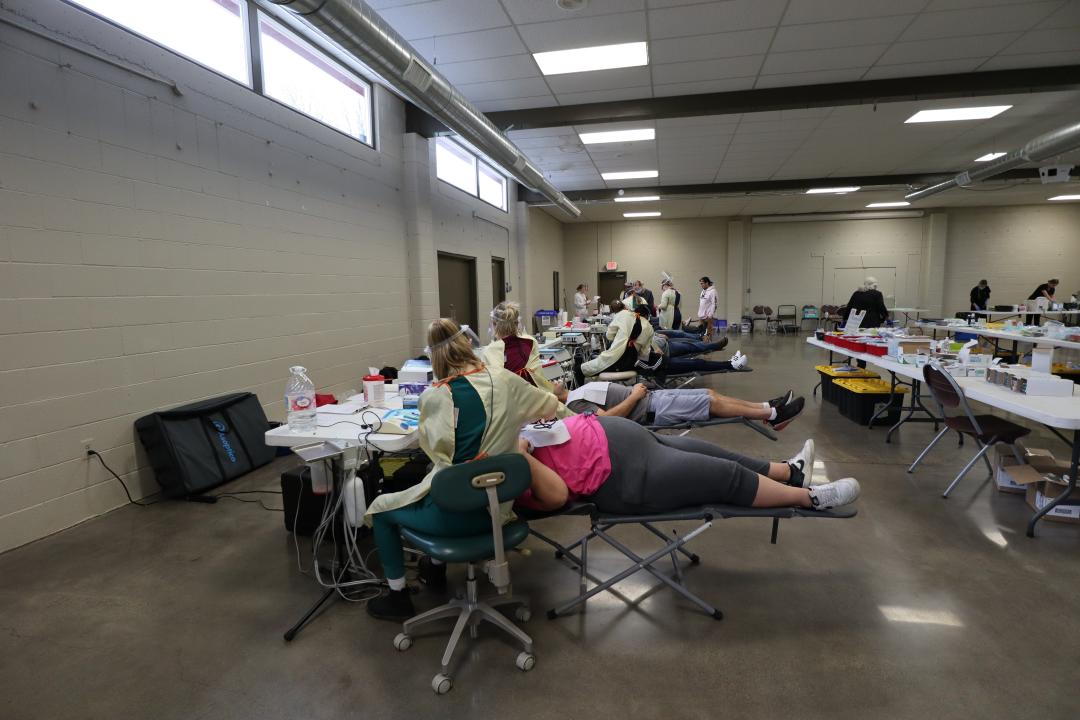
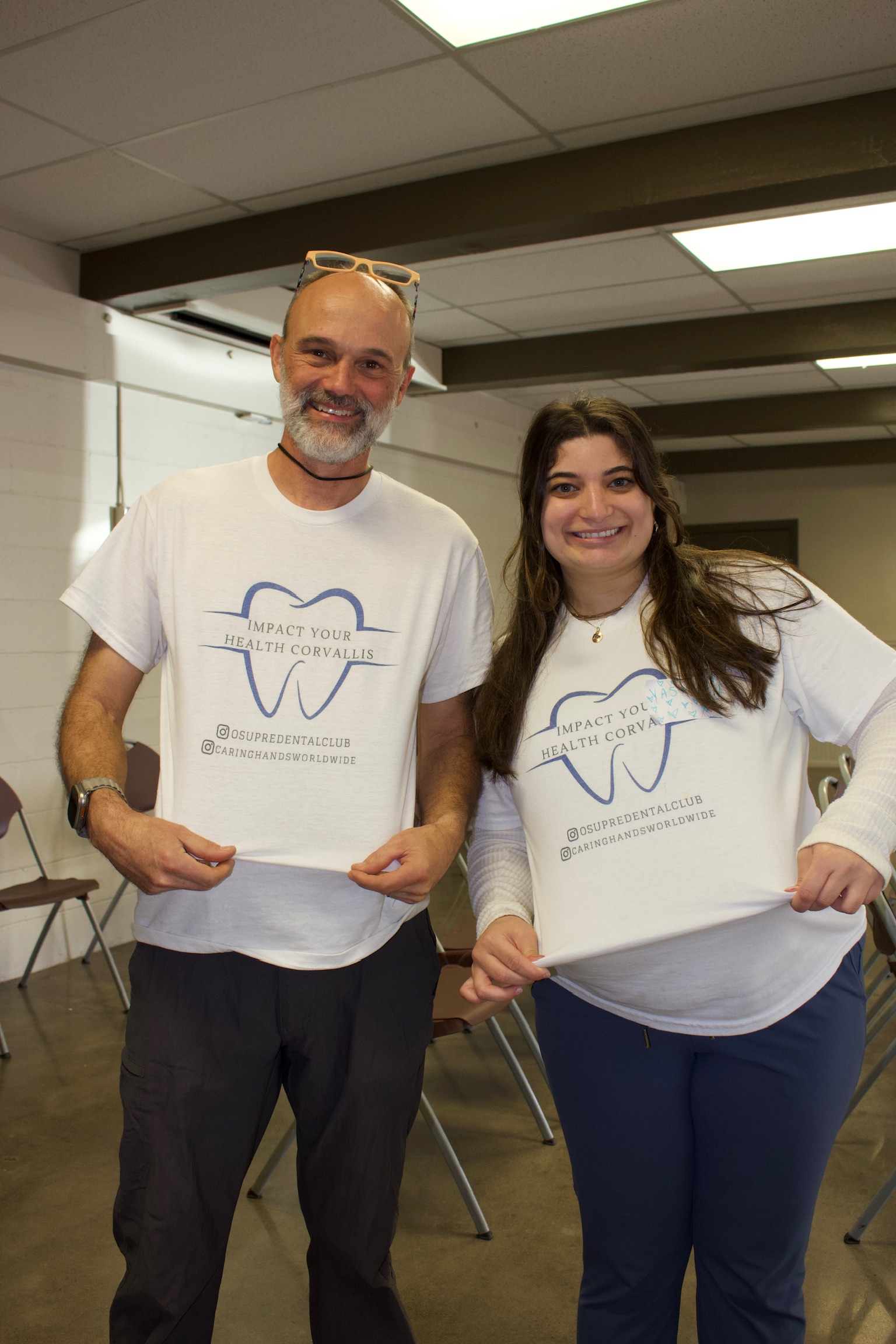
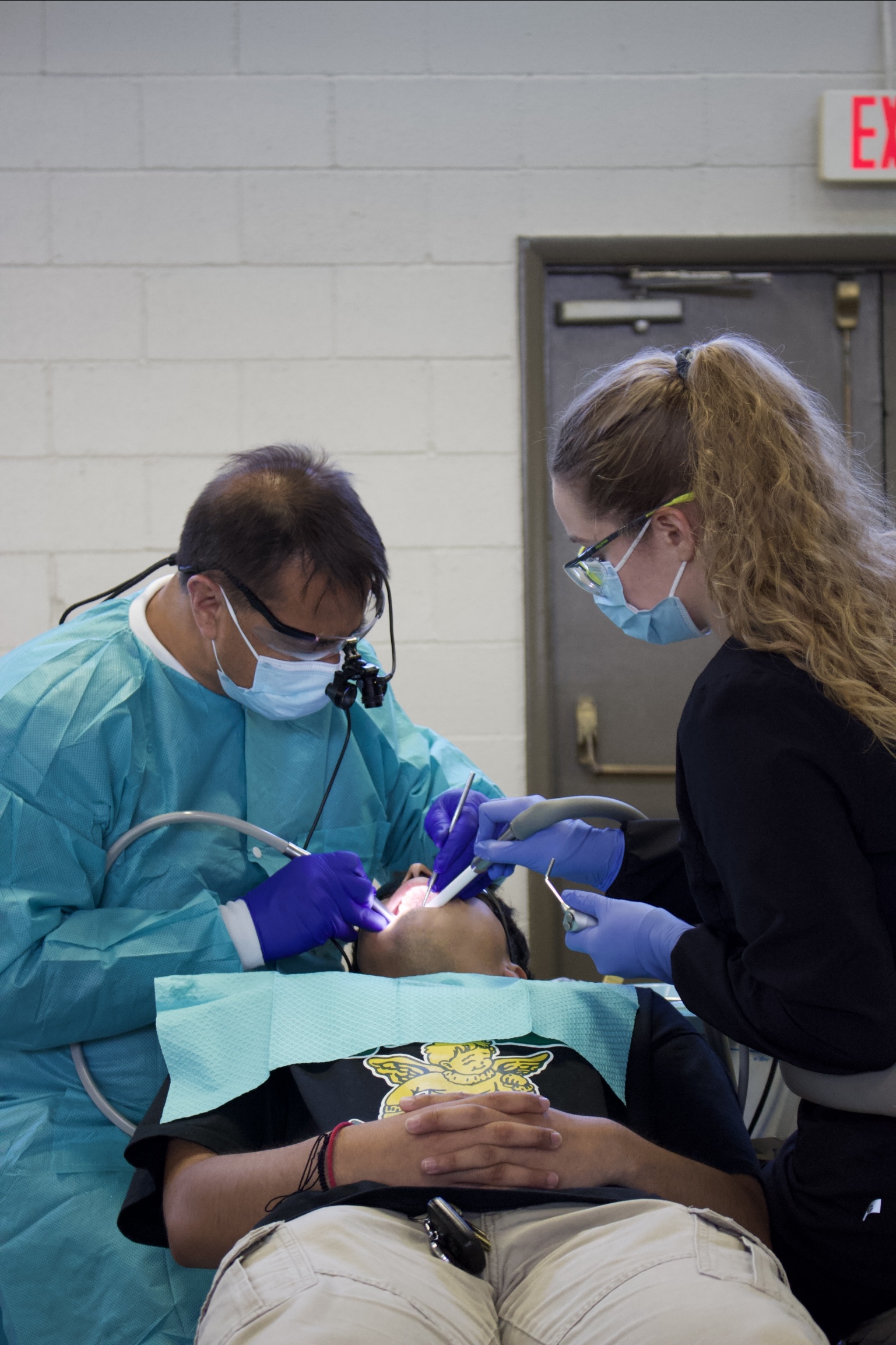
Students help a community member receive dental care.

Oregon State students provide free dental care to those in need

By Tom Henderson

When people lose their homes and incomes, they frequently lose their teeth. Their teeth begin to rot, and without access to dentists and anesthesia, people often pull the teeth out themselves.

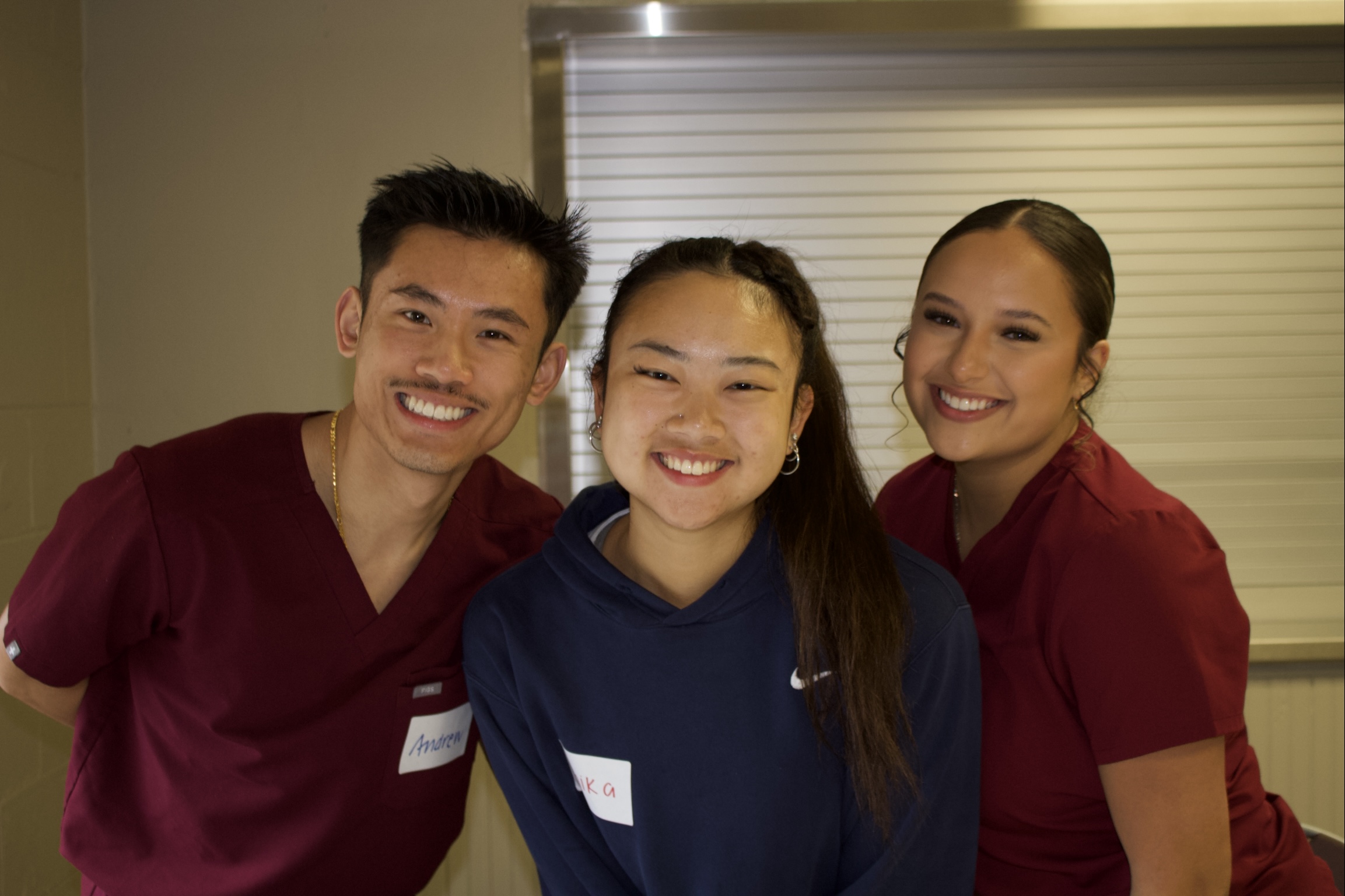
Anika Phuvasate sees such problems firsthand. When she was the president of Oregon State University's Pre-Dental Club in April, she helped coordinate the third-annual Impact Your Health Clinic to provide free dental services to people experiencing poverty.

"A lot of these community members who are coming to our clinic haven't seen a dentist in several years," said Phuvasate, a senior BioHealth major. "They lack the assets, or it could also be due to the stigma that surrounds poor dental health. People are often quick to judge people who have tooth decay and blame it on individual irresponsibility. The reality is there are a lot of social factors that come into play when it comes to someone's oral health."

No one should be ashamed to get dental care, she said.

"It was very rewarding for me to interact with these patients and create a nonjudgmental and compassionate environment for that and perhaps change their typical experience at the dental office," said Phuvasate, who graduated this spring.

The Centers for Disease Control, the nation's leading science-based, data-driven, service organization, reports that gum disease with bone loss is twice as common (at 60%) among adults ages 30 and older with low incomes compared with adults who had higher income (at 30%).

Untreated cavities are about twice as common among working-age adults with no health insurance coverage (43%) compared with those who have private health insurance coverage (18%).

Groundswell, an advocacy organization based in London reports that seven out of 10 people lose teeth after becoming homeless — with 15% of them pulling their own infected and rotting teeth.

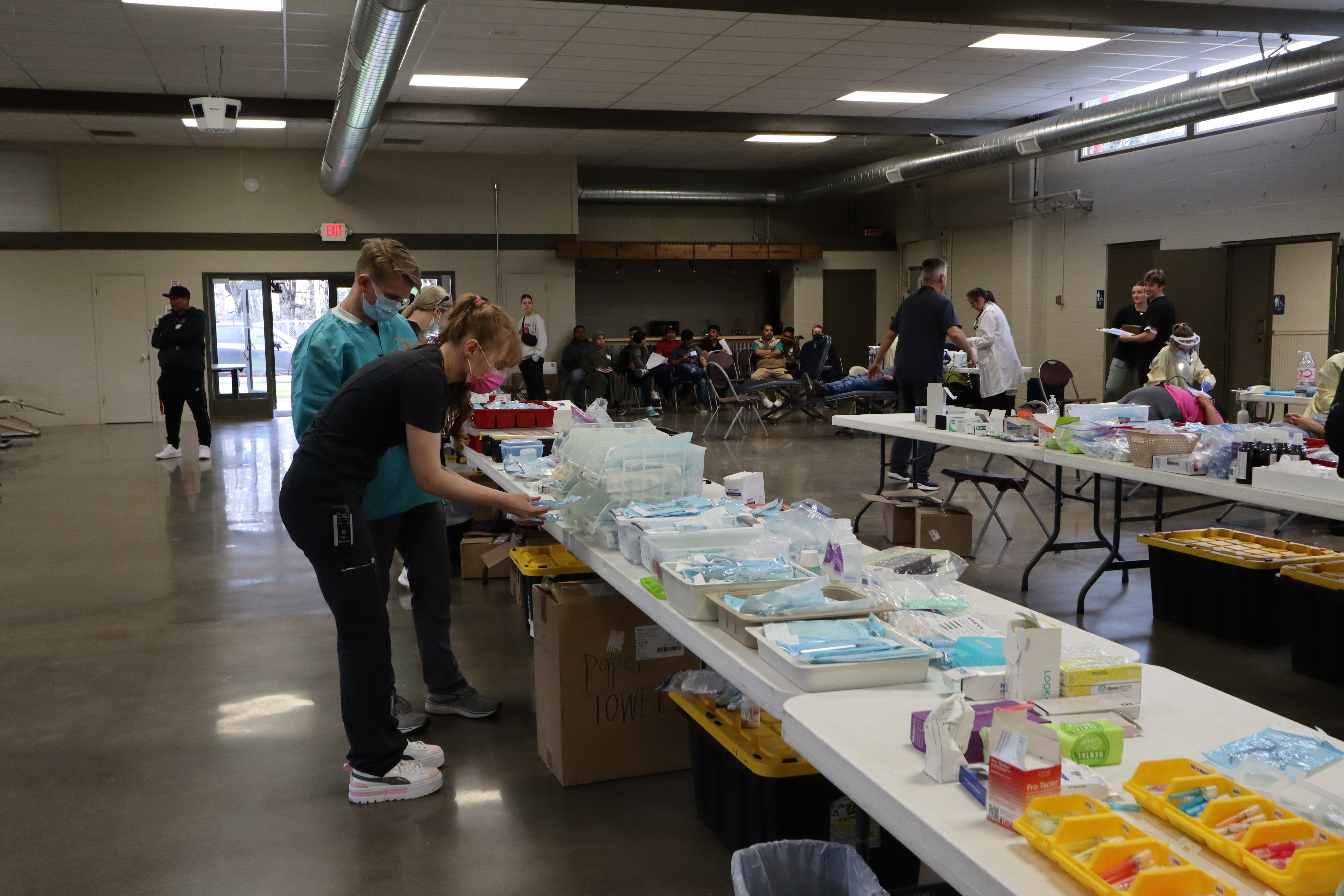
Patients receive dental care during the free dental clinic.

OSU students help community members receive free dental care during the third-annual Impact Your Health Clinic.

Clinics draw people from Oregon Coast and beyond

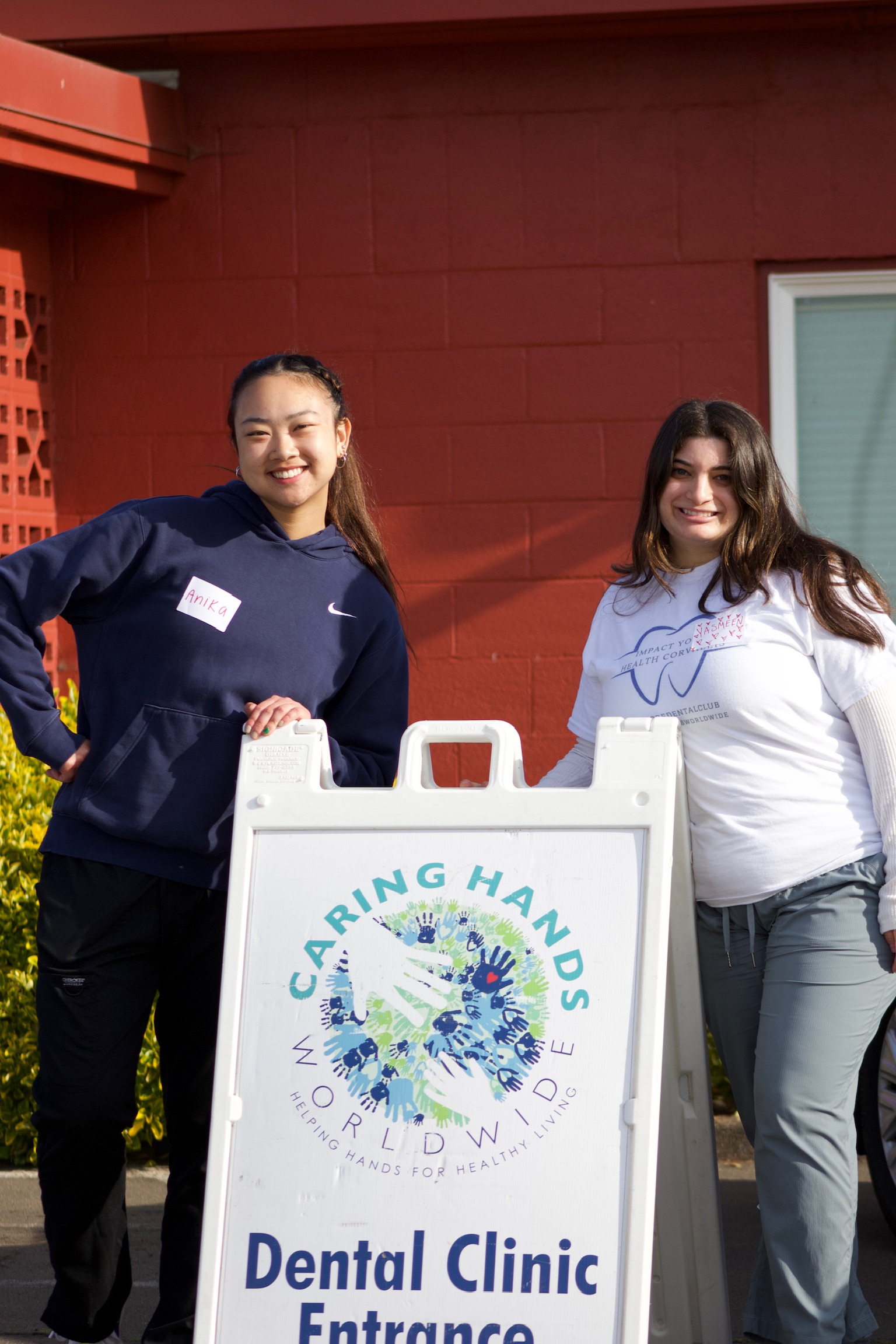
Members of Oregon State's Pre-Dental Club began organizing the annual dental clinic three years ago in partnership with Caring Hands Worldwide, an Oregon-based nonprofit that provides free dental care through similar clinics throughout the Pacific Northwest.

Club members gather dentists, hygienists, dental assistants, translators and other volunteers for the clinic. They perform a variety of tasks such as sterilizing dental instruments and checking in patients. They also raise money for the clinic and spread the word to patients.

A story last spring in the Daily Barometer, Oregon State's student newspaper, went a long way in spreading the word, said club Vice President Yasmeen Koborsi.

"The word really got out on campus, and it was a true community effort," she said. "It was all of these organization leaders on and off campus who came together and wanted to take a moment and help spread the word."

Patients came from Corvallis, Lebanon and Philomath and as far away as the Oregon Coast and The Dalles. "A lot of these people had homes," said Koborsi. "They just didn't have insurance or other means to get dental work done for themselves or their children.”

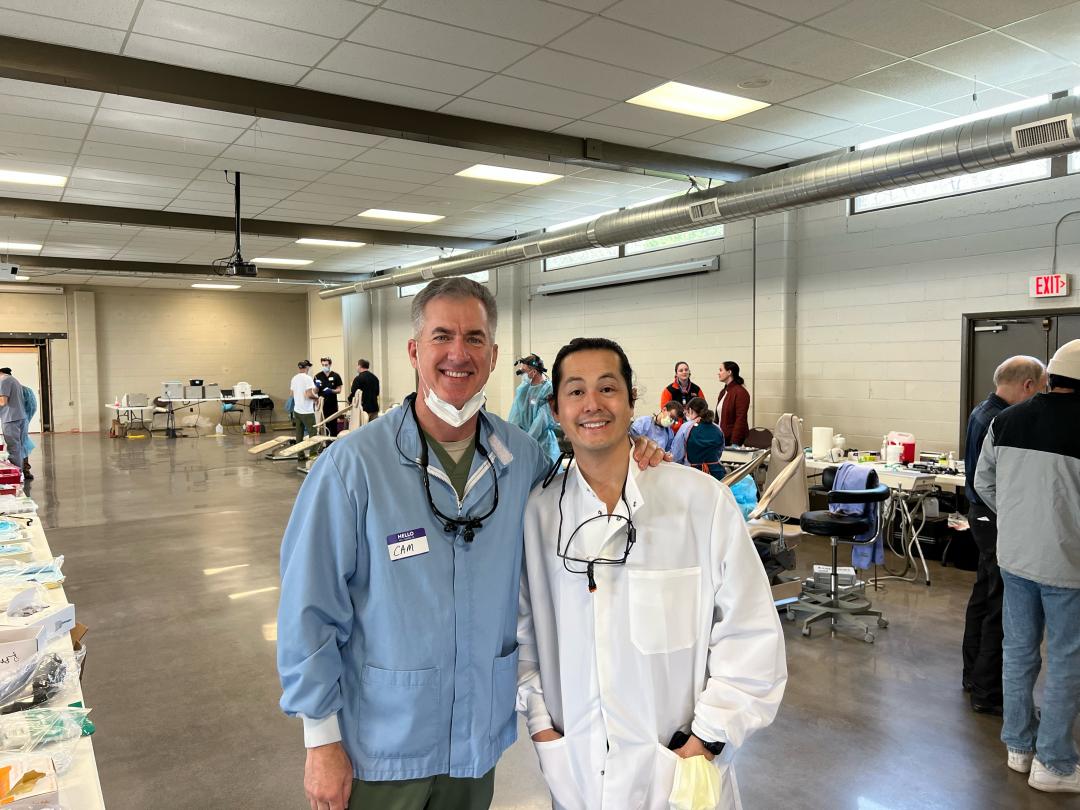
Two men in dentist gear pose for a picture.

Corvallis dentist Dr. Cam Little poses with another dental provider during the clinic. Little is the advisor of the annual clinic.

Pre-Dental club proves rewarding for students

Phuvasate said the clinic is extremely meaningful to her on a personal level. "Volunteering at it for the past three years has helped me reaffirm my decision to go into dentistry," she said.

The Pre-Dental Club is rewarding in general, said Koborsi. "The club shows students different ways to connect with the community through service projects and how to apply to the dental program," she said. "It hopefully deepens their passion for dentistry for their future careers."

Koborsi also graduated this spring. Like Phuvasate, she will be attending Oregon Health & Science University in the fall to complete her dental education.

"I love that through dentistry you are able to give people hope and let them know you care about them," she said. "You show them that, for about one hour in their day, you have dedicated your time to them to make them feel good at the end of it."

Dr. Cam Little, a dentist practicing in Corvallis since 1996, is the advisor of the annual clinic. He works closely with pre-dental students in general. Students interested in careers in dentistry frequently job shadow him.

"I didn't feel that observation only was enough for the students," Little said. "Sometimes I would let them assist me chairside if possible. I found that this gave them real hands-on experience and a better understanding of what it is like to treat a patient."

Little began working with Caring Hands Worldwide in 2018 in Eugene, even before the Pre-Dental Club began organizing the Corvallis clinics.

Avery Esau, the Pre-Dental Club president in 2021, suggested starting clinics in Corvallis. "She took the information back to a club meeting, and they voted to start doing this as their main yearly philanthropic mission," Little said.

Esau and fellow pre-dentistry student Isabella Sandgren rallied a team and held the first clinic at the First Congregational United Church of Christ.

This year's clinic ran April 13 and 14 at the Benton County Fairgrounds and drew 150 patients.

"This event is a real benefit to the community and to those who cannot afford dentistry and have no access to care," Little said. "It is also of great benefit to the pre-dental students of OSU. They get an opportunity to organize and staff a major philanthropic event.”

"It just deepened my passion each year."

Koborsi said she just hopes they helped people. "We tried to make sure every person who came left with more than what they expected," she said.

She became involved in dentistry through the Undergraduate Research, Scholarship & the Arts program at Oregon State.

"I was in Dr. Philip McFadden's lab in the Department of Biochemistry & Biophysics through URSA during my sophomore year," Koborsi said. "That really opened my eyes to how much I love the science, and specifically the chemistry, behind teeth."

She volunteered at the first Impact Your Health Clinic in 2022. "That was the way that I fell in love with dentistry," she said. "It just deepened my passion each year."

Koborsi said she initially wanted to be a pharmacist. "I really enjoyed being able to have a job where I was able to meet with patients and have a connection with them," she said. "As a dentist, I would be able to even deepen those connections. I just really want to have a career where I can build a community and connect with people and make people feel welcome, included, safe and cared for."

A group photo of people participating in the free dental clinic.

Participants of the third-annual free dental clinic pose for a group picture.

Making it less scary to see a dentist

Phuvasate said she also finds the clinics inspirational. "They made me realize that the reason I want to go into dentistry is to help people overcome their feelings of shame and insecurity when they're in the dental chair," she said.

She chose to go into dentistry at the end of high school. "I wasn't entirely set on it," she said. "I started looking into it because I was interested in human biology. I also knew I wanted a career where I could work with the general public. I wasn't drawn to doing research or lab work behind the scenes. I decided to look into health care."

Although she considered being a physician, said Phuvasate, she heard too many physicians complain about burning out from their frustration with the health-care system. "Every dentist I talked with was extremely happy with their work/life balance and the personal connections they're able to make with patients," she said.

"As a kid, I never had any bad interactions with dentists," she added. "I actually looked forward to seeing my dentist. I didn't realize that many people have a phobia about going to the dentist. That also made me realize how much of an impact those interactions can have."

Phuvasate said she hopes some people are already more comfortable seeing a dentist because of the help she and her fellow Pre-Dental Club members provided at the annual clinics.

"Maybe they avoided the dental office because they're so used to being judged for the state of their teeth," she said. "We hopefully made people comfortable enough to talk about their dental health."

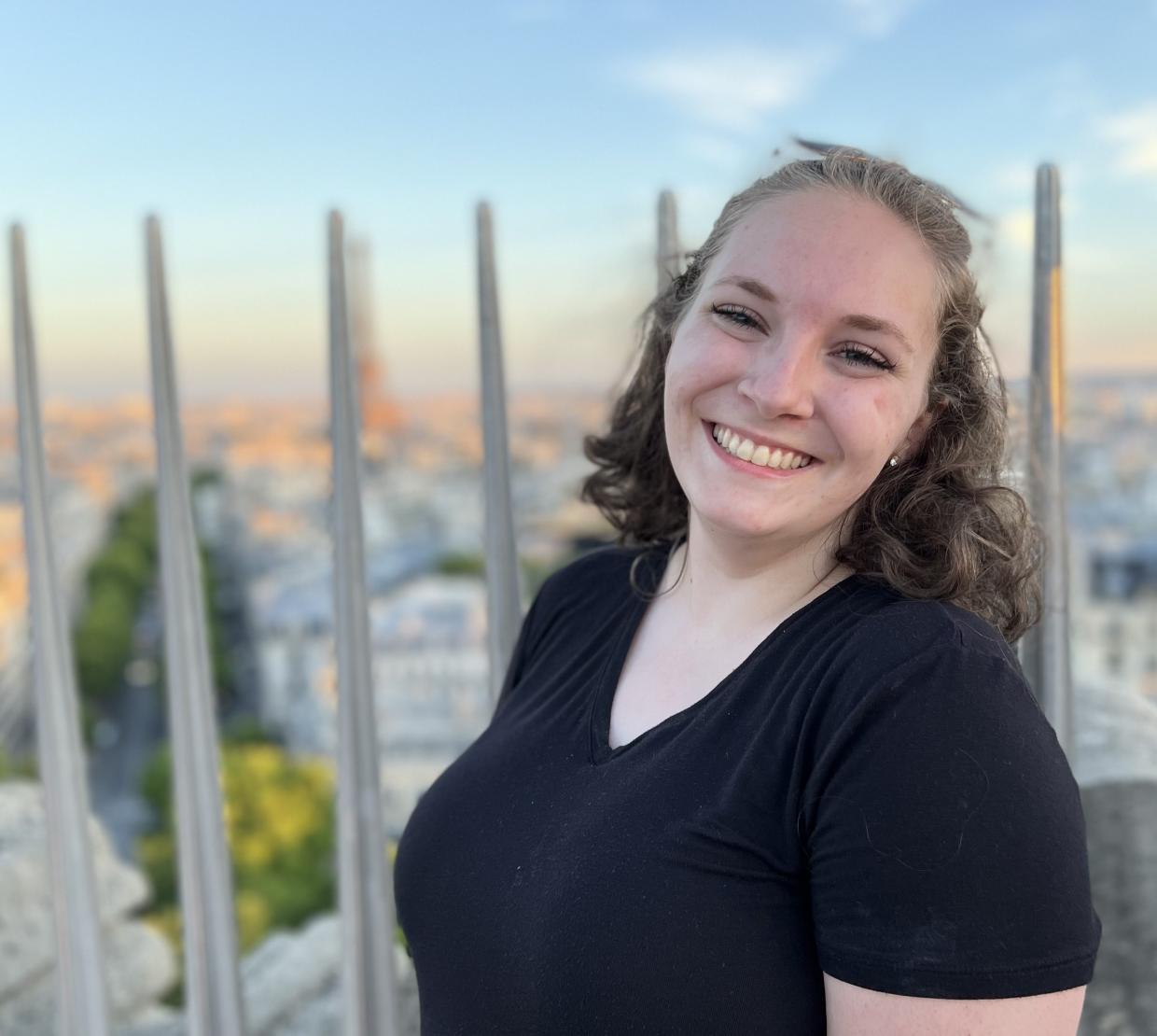
A woman with a dark t-shirt and pulled back hair smiles widely at the camera, the cityscape of Paris blurred in a sunset behind her.

Microbiology pre-med senior pursues passion for patient care

By Elana Roldan

At times, medicine can feel like a paradox. Everything is built around a patient’s well-being, yet, it may gradually become easier for practitioners to focus on physical issues rather than emotional ones.

Microbiology senior Catherine Sterrett remembers a time when medicine for her had boiled down to colorless facts from a book — these symptoms meant this condition which meant this treatment. But after she found herself in a hospital as a patient, not a scientist, her greatest motivation became bringing humanity into medicine.

“You get focused on school and academics and everything from books and paper versus the real human experience of being scared in the hospital, not knowing what's going to happen,” she said. “To me, it highlighted some of the issues that happen when you're the patient in the bed and how I want to go forward to be better.”

After she graduates this June, Sterrett will be heading to Western University of Health Sciences for medical school. The opportunities she’s had and the impact she leaves behind at OSU have built the path forward to her career. Working in this field calls for kindness and trust, Sterrett says, and she plans to bring both in spades.

Two sides of medicine

Before she came to Oregon State, Sterrett took community college courses through her high school for three years. When graduation rolled around and she prepared to head to Corvallis, her plans (much like everyone else’s) were abruptly cut short by the global COVID-19 pandemic. Still, she refused to let this keep her from finding a community.

Sigma Delta Omega is a sorority dedicated to women in STEM and is exclusive to Oregon State University. As an unhoused sorority, it was a perfect match while Sterrett lived in Portland, Oregon during her first year.

“I ended up reaching out and going to recruitment. For me, it was one of the most amazing decisions I could have made,” she said. “I got into the Zoom room and got to talk to people who wanted to talk to me, who were there to make friends. That's the whole point.”

Before she’d even had a year under her belt, Sterrett decided to become the membership development chair for SDO. She organized conversations between other pre-med members and health care alumni, helping students see different routes they could take in medicine and giving them the chance to network with professionals from many fields.

Later, she transitioned into philanthropy co-chair and organized one of the sorority’s most profitable events, a Halloween porch decorating contest, which raised money for the precollege OSU Stem Academy program.

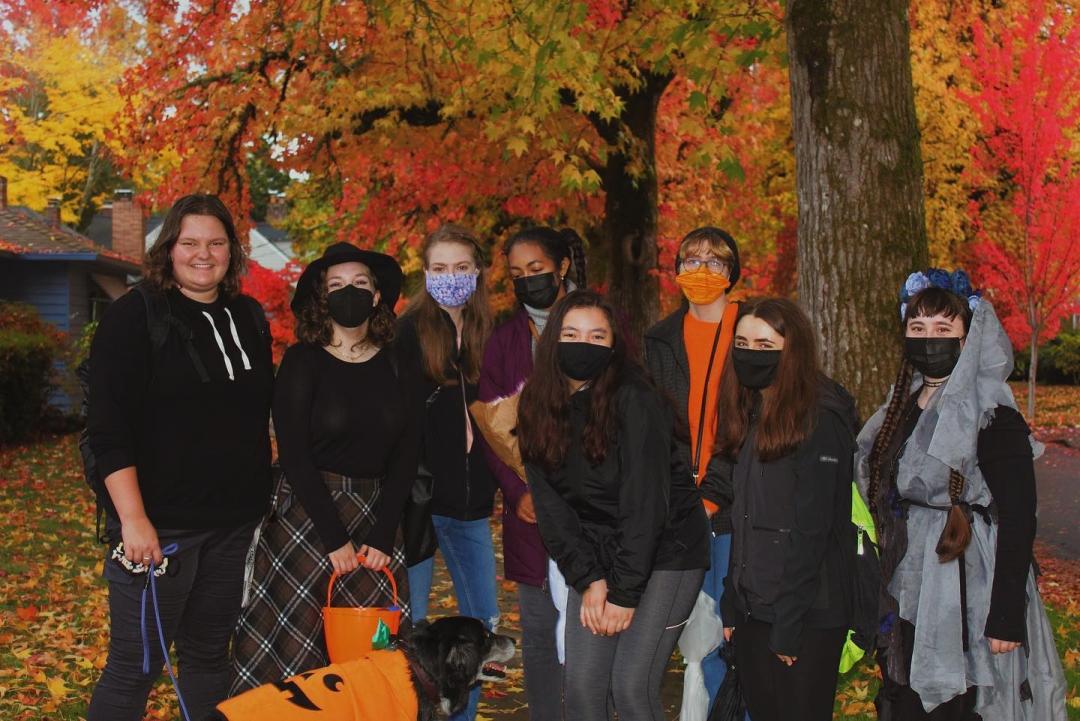
A group of students dressed in dark shirts and jackets, jeans and a few Halloween costumes gather beneath vibrant fall trees. They stand on the sidewalk of a street lined with houses and lawns that are covered in leaves. A black dog with a graying muzzle sits in front of the group wearing a jack-o-lantern costume.

SDO members dress up for the sorority’s first-ever porch decorating competition co-organized by Sterrett.

But halfway through her time at Oregon State, she faced an obstacle she’d never seen coming.

“I unfortunately had to go to the ICU with sepsis and pneumonia and have emergency surgery during winter term of my second year. And boy, does that mess some things up,” she recalled.

Out of the whirlwind of emotions this brought, the most potent were shock and fear. Going from worrying about tests to worrying about the safety of her own body was rattling. While in the hospital, Sterrett saw two very different ways professionals approached patient care.

“I had some medical practitioners who did an extremely good job at interacting with me, explaining things to me and making sure I was in the loop, and then I'd have other people who would basically just do things to me in the hospital. Like, do medical procedures and not even speak a word to me, which is — especially when you can't communicate, because I had oxygen in and I had a very hard time talking for the first week that I was there — is scary and overwhelming,” she said.

Fortunately, her partner, roommate and family were there to help her navigate the difficult circumstances. Several weeks later, she recovered enough to be discharged and eventually resume school. It was an exhausting experience to say the least, but when she did return, her resolve toward quality patient care had grown exponentially stronger. It has even influenced the specialty she wants to pursue.

“I think it can be very easy during pre-med to become very detached,” she said. “I like being able to cultivate that relationship with people and build that trust, which you can do as a family practitioner when you're seeing people over long periods of time.”

Support and success

Now that she’s reached the finish line at Oregon State, Sterrett is especially grateful for the work she’s done with College of Science faculty.

During fall term in 2021, she started working with Ryan Mueller from the microbiology department after meeting him at a research mixer. It was a particularly exciting opportunity because the project they tackled was completely new, meaning they worked together to get it running. She even developed a cost-friendly method of creating anaerobic media for bacteria that would otherwise die in the presence of oxygen, a method also used successfully later in a graduate student’s research.

In her microbiology classes, professors Allison Evans and Linda Bruslind brought a joy to teaching and didn’t hesitate to support students however they could. Evans even wrote her a letter of recommendation for her medical school application.

“Allison Evans and Linda Bruslind are the two best teachers at OSU hands down. They are the best people ever,” she said. “Allison Evans is one of the most friendly people you've ever met. She will talk to you whenever, and she's just so nice. Linda's the same way. They're both so happy and excited to help you.”

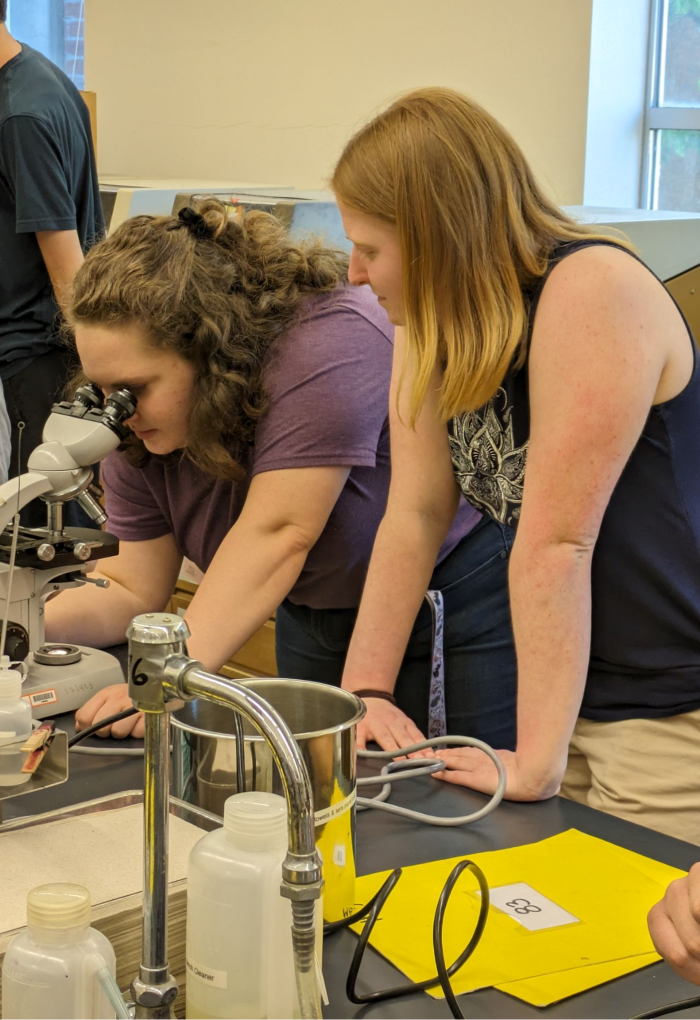
Two people gather at a microscope, one with long, curly hair pulled back looking intently into the lens, one with mid-length hair overlooking the other. The microscope is on a table with various other metal pieces of equipment and plastic bottles.

Sterrett, president of the Microbiology Student Association, uses a microscope at the club's Spring Microscopy Night.

With the support of her science mentors, the skills of a strong leader and a passion for helping those who need it, Sterrett’s leap beyond her bachelor’s is sure to land somewhere she will thrive.

Subscribe to Students